
Driving in Germany requires strict adherence to child safety regulations, where the driver is held fully responsible for the protection of all passengers under 18. This guide explains when a child seat is legally mandatory, the specific requirements for children under 12 or below 150 cm in height, and the legal implications for drivers who fail to comply. Mastering these rules is essential for both passing your theory exam and ensuring safe, lawful driving practices on German roads.
Article content overview
In Germany, the safety of passengers under the age of 18 is a core pillar of traffic law, and the driver of a vehicle holds ultimate legal responsibility for their protection. Under the Straßenverkehrs-Ordnung (StVO), specifically §21a, failing to provide proper child restraint systems is not merely a safety oversight; it is a serious legal violation. Whether you are driving your own children, assisting in a carpool, or transporting the children of friends or family, you must strictly adhere to the established criteria for child seats to remain compliant and avoid significant penalties.
The legislation is clear regarding the threshold for child safety. Children up to the age of 12 who are also smaller than 150 cm in height are required to be secured in an approved, suitable child restraint system (often referred to as a "Kindersitz"). This means that if a child is 11 years old but already 152 cm tall, the mandatory requirement to use a specialized seat is lifted, although they must still wear a seatbelt. Conversely, if a child is 13 years old but only 145 cm tall, they are exempt from the child seat requirement by age, though using a booster seat remains highly recommended for safety.
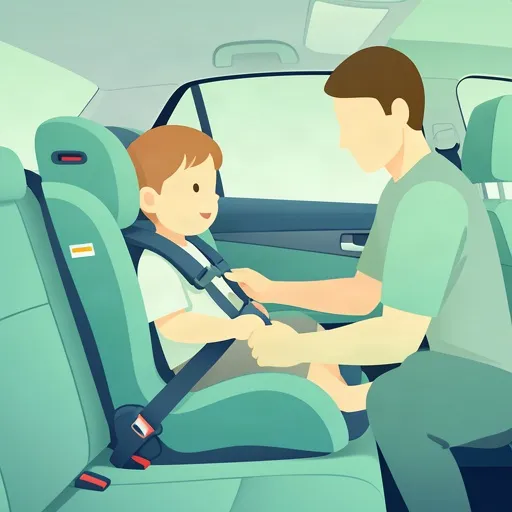
According to §21a StVO, children who have not yet reached the age of 12 and are smaller than 150 cm must be transported using an officially approved and suitable child restraint system (child seat) when traveling in a vehicle where seatbelts are mandatory.
The driver of the vehicle is legally liable for ensuring that all passengers are properly secured before the vehicle enters traffic. This responsibility is absolute; it does not shift to the parents if the driver is a different person. If you are stopped by the police and it is discovered that a child is not properly restrained, you face direct financial penalties and points in the Fahreignungsregister (commonly known as Flensburg points).
The fine for failing to properly secure a child is €60 per child, which is accompanied by one point in the Flensburg register. If multiple children are unrestrained, the penalty increases to €70 per child.
Beyond administrative fines, the implications of an accident are far more severe. If an unrestrained child suffers injuries during a collision, the driver may face criminal charges for "negligent bodily harm" (fahrlässige Körperverletzung), as stipulated in §229 of the German Criminal Code (StGB). Furthermore, insurance providers may significantly reduce or completely deny liability coverage for damages if it is documented that the lack of a proper restraint system directly contributed to the severity of the injuries.
There are very narrow exceptions to the requirement for child seats in German law. For example, in taxis or in vehicles where a legal obligation for passenger transport exists, the requirements are slightly modified to allow for the transport of children without private seats, provided specific weight and seating conditions are met. Additionally, if you are driving a vehicle that is not equipped with seatbelts, children under the age of three are generally not permitted to be transported at all.
| Scenario | Rule Requirement |
|---|---|
| Child < 12 years and < 150 cm | Approved child seat mandatory |
| Child ≥ 12 years OR ≥ 150 cm | Seatbelt is sufficient |
| Taxi (within city limits) | Exempt from child seat requirement |
| Vehicle without seatbelts | No children under 3 years allowed |
In your theoretical driving test, you will likely encounter questions regarding the passenger-in-car regulations. The exam authority focuses heavily on the fact that the driver is responsible for the child regardless of the family relationship. Common exam traps often involve scenarios where the child is "too large" or "old enough" to bypass the rule, or situations where a child is transported in the front passenger seat. Remember that rear-facing child seats are strictly forbidden on seats equipped with an active airbag, as the deployment of the airbag can cause fatal injuries to the child.
Transporting children in Germany is governed by §21a StVO, which mandates that children under 12 years and below 150 cm must use an approved child restraint system. The driver bears complete legal responsibility for securing all passengers under 18, with penalties ranging from €60-70 fines and Flensburg points to potential criminal charges under §229 StGB for negligent bodily harm if an unrestrained child is injured. Key exam traps include the dual-threshold rule, the absolute driver liability regardless of relationship, and the prohibition on rear-facing seats with active airbags. Exceptions are narrow—applying mainly to taxis under specific conditions—and children under 3 cannot be transported in vehicles without seatbelts at all.
A short set of high-value points that capture the most important ideas from this article.
Children must use an approved child seat when they are both under 12 years old AND below 150 cm in height—the rule applies to both conditions simultaneously.
The driver bears full legal responsibility for properly securing child passengers, regardless of their relationship to the child or who owns the vehicle.
Failing to properly restrain a child results in a €60 fine per child (€70 if multiple children are unrestrained) plus one Flensburg point.
Rear-facing child seats are strictly prohibited on seats equipped with an active front passenger airbag due to the risk of fatal injury.
Insurance coverage may be reduced or denied if an unrestrained child's injuries were worsened by the lack of a proper restraint system.
The child seat requirement uses a dual threshold: under 12 years AND below 150 cm—both must be met for the mandatory seat to apply.
If a child meets EITHER the age OR height threshold (12+ years OR 150 cm+), only a seatbelt is legally required, though a booster seat is strongly recommended for safety.
The €60/€70 fines plus Flensburg points are the minimum consequence; drivers can face criminal charges for negligent bodily harm under §229 StGB if an unrestrained child is injured.
Vehicles without seatbelts prohibit transport of children under 3 years entirely; taxis have modified exemptions only within city limits.
The driver is always liable—never the parents or guardians—if a child passenger is not properly secured.
Confusing the rule as age OR height instead of age AND height, leading to incorrect answers when a child meets only one threshold.
Assuming parental responsibility means the driver is not liable, when in fact the driver bears absolute liability regardless of relationship.
Forgetting that rear-facing child seats are forbidden on front passenger seats with active airbags, which is a common exam trap.
Believing that taxis are completely exempt from child seat rules, when in fact they only have modified exemptions within city limits under specific conditions.
Overlooking the insurance implications—many learners focus on fines but forget that liability coverage can be denied if a child seat was required but not used.
Article content overview
A short set of high-value points that capture the most important ideas from this article.
Children must use an approved child seat when they are both under 12 years old AND below 150 cm in height—the rule applies to both conditions simultaneously.
The driver bears full legal responsibility for properly securing child passengers, regardless of their relationship to the child or who owns the vehicle.
Failing to properly restrain a child results in a €60 fine per child (€70 if multiple children are unrestrained) plus one Flensburg point.
Rear-facing child seats are strictly prohibited on seats equipped with an active front passenger airbag due to the risk of fatal injury.
Insurance coverage may be reduced or denied if an unrestrained child's injuries were worsened by the lack of a proper restraint system.
The child seat requirement uses a dual threshold: under 12 years AND below 150 cm—both must be met for the mandatory seat to apply.
If a child meets EITHER the age OR height threshold (12+ years OR 150 cm+), only a seatbelt is legally required, though a booster seat is strongly recommended for safety.
The €60/€70 fines plus Flensburg points are the minimum consequence; drivers can face criminal charges for negligent bodily harm under §229 StGB if an unrestrained child is injured.
Vehicles without seatbelts prohibit transport of children under 3 years entirely; taxis have modified exemptions only within city limits.
The driver is always liable—never the parents or guardians—if a child passenger is not properly secured.
Confusing the rule as age OR height instead of age AND height, leading to incorrect answers when a child meets only one threshold.
Assuming parental responsibility means the driver is not liable, when in fact the driver bears absolute liability regardless of relationship.
Forgetting that rear-facing child seats are forbidden on front passenger seats with active airbags, which is a common exam trap.
Believing that taxis are completely exempt from child seat rules, when in fact they only have modified exemptions within city limits under specific conditions.
Overlooking the insurance implications—many learners focus on fines but forget that liability coverage can be denied if a child seat was required but not used.
Explore related topics, search based questions, and concepts that learners often look up when studying Child Transport Rules in Germany. These themes reflect real search intent and help you understand how this topic connects to wider driving theory knowledge in Germany.
Find clear and practical answers to common questions learners often have about Child Transport Rules in Germany. This section helps explain difficult points, remove confusion, and reinforce the key driving theory concepts that matter for learners in Germany.
Under §21a StVO, children under 12 years of age or under 150 cm in height must use an approved child restraint system. Exceptions exist for taxis and certain commercial transport situations.
The driver of the vehicle is legally responsible for ensuring all passengers under 18 are properly secured, regardless of whether the driver is the parent or guardian of the child.
Failure to properly secure a child in a required restraint system results in a fine of €60 and one penalty point in the Flensburg register.
Yes. Beyond traffic fines, a driver may face criminal liability for negligent bodily harm if the lack of a proper restraint system contributes to the child's injuries, and insurance companies may reduce coverage.
There is no general 'emergency' exception for failing to provide a child seat. Drivers are expected to plan ahead. Very narrow exceptions exist for specific public transport or taxi scenarios where a restraint might be logistically impossible to install.
Didn't find what you were looking for? Continue your German driving theory preparation by exploring related articles, specific road sign categories, or in-depth guides on complex traffic situations. Deepen your understanding before the official test.