
The B196 authorization is a national extension that enables experienced car drivers to operate lightweight motorcycles under specific conditions. You will learn about the required age limit, the necessity of previous Class B experience, and the mandatory training sessions that prepare you for the unique handling dynamics of a motorcycle. This guide clarifies the legal framework defined in the Fahrerlaubnis-Verordnung (FeV) and highlights the limitations of this specific code.
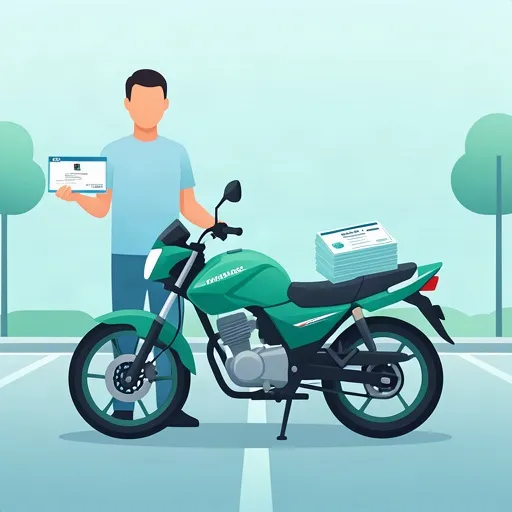
Article content overview
Expanding your driving privileges in Germany to include lightweight motorcycles is an attractive option for many Class B license holders. The B196 entry acts as a national extension, allowing you to ride motorcycles within the A1 category—specifically those with a displacement of up to 125 cubic centimeters and a maximum power output of 11 kilowatts—without the need to pass a formal state-administered theoretical or practical driving test. However, this convenience comes with specific legal prerequisites and geographical limitations that every driver must understand before hitting the road.
The B196 authorization is not an automatic upgrade; it is a regulated entry based on the Fahrerlaubnis-Verordnung (FeV). To be eligible for the registration of this key number on your existing German driving license, you must meet three strict criteria. First, you must be at least 25 years old. Second, you must have held a Class B driving license for a minimum of five years. These conditions ensure that the driver has sufficient road experience before transitioning to the different handling dynamics of a motorcycle.
A driving license category for motor vehicles, except for motorcycles, with a maximum authorized mass not exceeding 3,500 kg and designed and constructed for the carriage of no more than eight passengers in addition to the driver.
It is important to note that the B196 extension is a national code. This means the authorization is valid only within the borders of the Federal Republic of Germany. Unlike a full A1 motorcycle license, which is recognized across the European Union, the B196 entry does not grant you the legal right to operate a 125cc motorcycle in other countries. If you plan to ride abroad, you must check the specific legal requirements of the destination country, as they will likely require a full motorcycle license.
While no state driving test is required, the law mandates a specific training program to ensure you understand the mechanics and hazards of riding a motorcycle. According to Anlage 7b of the FeV, you must complete a formal training course at an authorized driving school. The training is comprehensive, designed to bridge the gap between operating a four-wheeled vehicle and a two-wheeled motorcycle.
The practical training is particularly critical. Driving a motorcycle involves counter-steering, balancing, and advanced braking techniques that are fundamentally different from operating a car. Your instructor will guide you through these maneuvers to ensure you can handle the bike safely in various traffic conditions, including urban environments and rural roads.
The B196 entry is strictly limited to vehicles that fall within the A1 category specs. Exceeding these limits, even slightly, would constitute driving without a valid license, which is a criminal offense in Germany. Always verify the vehicle registration documents (Zulassungsbescheinigung Teil I) to ensure the motorcycle complies with the legal thresholds.
| Technical Specification | Legal Limit for B196 |
|---|---|
| Engine Displacement | Max. 125 ccm |
| Maximum Power Output | Max. 11 kW |
| Power-to-Weight Ratio | Max. 0.1 kW/kg |
The B196 entry is tied to your Class B license. If your Class B license is suspended or revoked for any reason, your B196 authorization is automatically rendered invalid as well. Always keep your physical license and the proof of training in a safe place until the official administrative entry is finalized at your local driver licensing authority (Führerscheinstelle).
Transitioning to a motorcycle requires a shift in mindset. As a car driver, you are protected by a metal cage; on a 125cc motorcycle, you are significantly more vulnerable. You must pay closer attention to road surfaces, especially in wet conditions where tram tracks, leaves, and road markings become slippery hazards. Furthermore, motorcyclists are often overlooked by other drivers in blind spots. Defensive driving is not just a theory exam concept; it is a necessity for your survival on the road.
The B196 license extension enables experienced German Class B drivers (25+ years old with 5+ years of car license experience) to legally ride 125cc motorcycles up to 11kW without taking the standard motorcycle driving test. The pathway requires completing 13.5 hours of mandatory training (4 theoretical and 5 practical units of 90 minutes each) at an authorized driving school under Anlage 7b of the FeV regulations. Once training is completed, you must apply to have key number 196 officially entered on your license at your local Führerscheinstelle within one year. Critically, this authorization is geographically limited to Germany only and does not extend to other EU countries, unlike a full A1 motorcycle license.
A short set of high-value points that capture the most important ideas from this article.
The B196 entry allows Class B license holders to ride 125cc motorcycles (max 11kW) without taking the state theoretical or practical motorcycle test
To qualify, you must be at least 25 years old AND have held your Class B license for a minimum of 5 years
The B196 authorization is valid only within Germany and does not grant riding rights in other EU countries
If your Class B license is suspended or revoked, your B196 authorization automatically becomes invalid as well
You must apply for the official B196 entry on your license within one year of completing the mandatory training
The mandatory training requires exactly 4 theoretical units (90 min each) and 5 practical units (90 min each), totaling 13.5 hours minimum
Technical limits are strict: max 125cc displacement, max 11kW power output, and max 0.1 kW/kg power-to-weight ratio
Verify the motorcycle's specifications against the Zulassungsbescheinigung Teil I before riding
The training must be completed at an authorized driving school and certified by your instructor
Unlike a full A1 license, B196 is a national code only and not recognized across the European Union
Assuming B196 allows riding in other EU countries—it is only valid within Germany's borders
Believing the extension is automatic after training—you must officially apply to the Führerscheinstelle to have key number 196 entered on your license
Not checking if your Class B license is valid before applying for B196, since suspension affects both
Exceeding the technical limits (even slightly) constitutes driving without a valid license
Waiting longer than one year after training to apply for the license entry, which would require re-doing the training
Article content overview
A short set of high-value points that capture the most important ideas from this article.
The B196 entry allows Class B license holders to ride 125cc motorcycles (max 11kW) without taking the state theoretical or practical motorcycle test
To qualify, you must be at least 25 years old AND have held your Class B license for a minimum of 5 years
The B196 authorization is valid only within Germany and does not grant riding rights in other EU countries
If your Class B license is suspended or revoked, your B196 authorization automatically becomes invalid as well
You must apply for the official B196 entry on your license within one year of completing the mandatory training
The mandatory training requires exactly 4 theoretical units (90 min each) and 5 practical units (90 min each), totaling 13.5 hours minimum
Technical limits are strict: max 125cc displacement, max 11kW power output, and max 0.1 kW/kg power-to-weight ratio
Verify the motorcycle's specifications against the Zulassungsbescheinigung Teil I before riding
The training must be completed at an authorized driving school and certified by your instructor
Unlike a full A1 license, B196 is a national code only and not recognized across the European Union
Assuming B196 allows riding in other EU countries—it is only valid within Germany's borders
Believing the extension is automatic after training—you must officially apply to the Führerscheinstelle to have key number 196 entered on your license
Not checking if your Class B license is valid before applying for B196, since suspension affects both
Exceeding the technical limits (even slightly) constitutes driving without a valid license
Waiting longer than one year after training to apply for the license entry, which would require re-doing the training
Explore related topics, search based questions, and concepts that learners often look up when studying B196 License Extension Rules. These themes reflect real search intent and help you understand how this topic connects to wider driving theory knowledge in Germany.
Find clear and practical answers to common questions learners often have about B196 License Extension Rules. This section helps explain difficult points, remove confusion, and reinforce the key driving theory concepts that matter for learners in Germany.
No, a state examination is not required. However, you must complete a mandatory practical and theoretical training program consisting of 4 theoretical units and 5 practical units of 90 minutes each.
You must be at least 25 years old and have held a Category B license for a minimum of five years.
No, the B196 code is a national administrative entry and is valid only within Germany. You should verify international validity before planning to ride outside of Germany.
You are permitted to ride motorcycles (including those with sidecars) with a displacement of up to 125cc and a maximum power of 11 kW, provided the power-to-weight ratio does not exceed 0.1 kW/kg.
Didn't find what you were looking for? Continue your German driving theory preparation by exploring related articles, specific road sign categories, or in-depth guides on complex traffic situations. Deepen your understanding before the official test.