
Navigate Germany's roads safely by understanding the rules for interacting with vulnerable road users and special traffic situations. This unit covers crucial knowledge about pedestrians, cyclists, public transport, and emergency vehicles, all vital for your Category B driving theory exam and everyday safe driving.
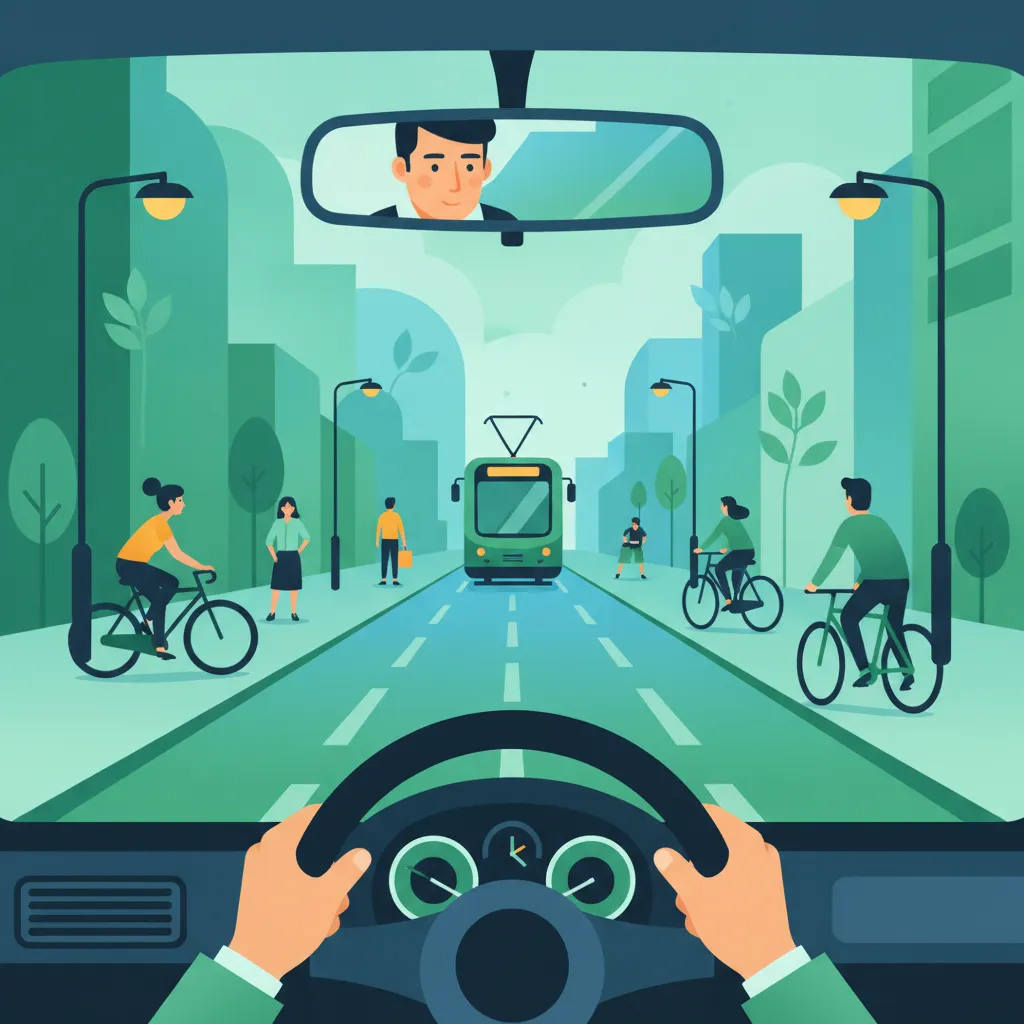
Browse all lessons that make up Vulnerable Road Users, Public Transport and Special Traffic Situations. Each lesson focuses on specific topics, learning objectives, and core concepts, helping you build essential knowledge and follow a clear, structured progression toward your study goals in Germany.
This lesson focuses on the particular care required when driving near pedestrians, with a special emphasis on children and the elderly, whose behavior can be unpredictable. It covers the rules for yielding at zebra crossings and the importance of reducing speed near schools, playgrounds, and residential areas. The goal is to instill a habit of constant vigilance and readiness to stop.
This lesson covers the correct and safe way to interact with cyclists. It explains the different types of bicycle infrastructure, such as dedicated cycle paths and advisory bike lanes on the road. Key topics include maintaining the legally required minimum passing distance, checking for cyclists before turning right, and being aware of the risk of 'dooring' when parked.
This lesson highlights the specific risks associated with motorcyclists, who are less visible and more vulnerable than car drivers. It teaches you to actively look for motorcycles, especially at intersections and during lane changes, as their smaller profile can be easily missed. You will learn about their potential for rapid acceleration and instability, emphasizing the need for extra following distance.
This lesson explains the specific regulations when encountering public transport. It covers the legal requirement to yield to public buses signaling to leave a bus stop and the strict rules for passing school buses with flashing hazard lights. You will also learn about the absolute priority of trams ('Straßenbahn') and how to safely drive on or across their tracks.
This lesson covers safe interaction with special vehicles. It details the challenges of driving near large trucks (LKW), including their extensive blind spots, longer stopping distances, and the effects of wind turbulence when overtaking them. A critical part of the lesson is explaining the correct procedure for reacting to emergency vehicles by creating an emergency corridor ('Rettungsgasse') on multi-lane roads.
This lesson focuses on complex traffic environments where different types of road users share the same space. It provides guidance on situations like driving on streets with integrated tram tracks or where bus and bicycle lanes are part of the roadway. The content emphasizes understanding the specific priority rules and being extra vigilant to anticipate potential conflicts in these busy, shared zones.
Explore high-intent keywords and long-tail search topics learners use when researching Vulnerable Road Users, Public Transport and Special Traffic Situations. These terms reflect how people search for reliable study materials, structured explanations, and unit-level theory preparation support in Germany.
Find clear answers to the most common questions learners ask about Vulnerable Road Users, Public Transport and Special Traffic Situations. Understand how the unit is organized, what learning goals it supports, and how it contributes to your study progression with structured explanations and practical guidance tailored for learners in Germany.
In Germany, when overtaking cyclists, you must maintain a minimum lateral distance of 1.5 meters in built-up areas and 2 meters outside built-up areas. Always ensure it is safe to overtake, checking for oncoming traffic and sufficient space. If you cannot maintain the required distance, you must wait until it is safe or not overtake at all. The theory exam will test your knowledge of these specific safety margins.
When an emergency vehicle with flashing lights (blue light) and siren approaches, you must immediately make way for it. This generally means moving to the right edge of the road and stopping, or exiting the carriageway if possible and safe to do so. Never speed up to get ahead of it, and do not follow it. This rule is crucial for saving lives and is a common exam topic.
You must always yield to pedestrians, especially when they are on or about to enter a pedestrian crossing. This also applies to children, elderly individuals, and people with disabilities who may need more time or assistance. Always be prepared to stop and ensure they have safely crossed before proceeding. Failure to do so is a serious violation and a frequent subject in the driving theory test.
Yes, trams have specific rules. Generally, they have priority, especially when leaving a tram stop or at intersections where they are proceeding straight. You must not overtake a tram that is stopped at a designated stop and passengers are boarding or alighting, unless there is a physical separation. Be aware of tram tracks on the road, as they can be hazardous for two-wheeled vehicles.
When a school bus displays its flashing warning lights, you must stop at a safe distance behind it (unless there is a physical separation) and wait until the lights are switched off and passengers have safely cleared the road. This rule applies to oncoming traffic as well. This is a critical safety measure to protect children and is heavily tested in the theory exam.
Vulnerable road users are individuals who are more exposed to injury in traffic incidents due to their lack of physical protection. This category includes pedestrians (especially children and the elderly), cyclists, motorcyclists, and users of mobility scooters. German driving law emphasizes extra caution and consideration for these road users, which is a significant part of the theory exam.
All included lessons
Lessons in Vulnerable Road Users, Public Transport and Special Traffic Situations
See who benefits most from studying Vulnerable Road Users, Public Transport and Special Traffic Situations. This overview explains how the unit supports different learning needs, what level of knowledge is helpful before starting, and how it fits into the overall study path in Germany.
This unit is essential for all learners preparing for the German Category B driving theory test, particularly those who want to deeply understand interactions with pedestrians, cyclists, and public transport. It is also beneficial for experienced drivers seeking to refresh their knowledge on handling special traffic scenarios safely and legally in Germany.

Ready to prepare for your German driving licence theory exam? Dive into our carefully structured courses to build your knowledge effectively. Select a course that matches your licence category and begin your systematic study path today for confident exam success.
Browse Driving Theory CoursesExplore all units and lessons included in this driving theory course.
Ready to prepare for your German driving licence theory exam? Dive into our carefully structured courses to build your knowledge effectively. Select a course that matches your licence category and begin your systematic study path today for confident exam success.
Browse Driving Theory Courses