
Prepare for the diverse driving environments you'll encounter in Germany with this comprehensive unit. We delve into the specific challenges and rules for rural roads, high-speed Autobahns, and tunnel navigation. You'll also learn vital techniques for driving safely in adverse weather conditions and how to adopt eco-driving practices for environmental and fuel efficiency. This unit is key to your Category B license preparation and safe driving beyond the exam.
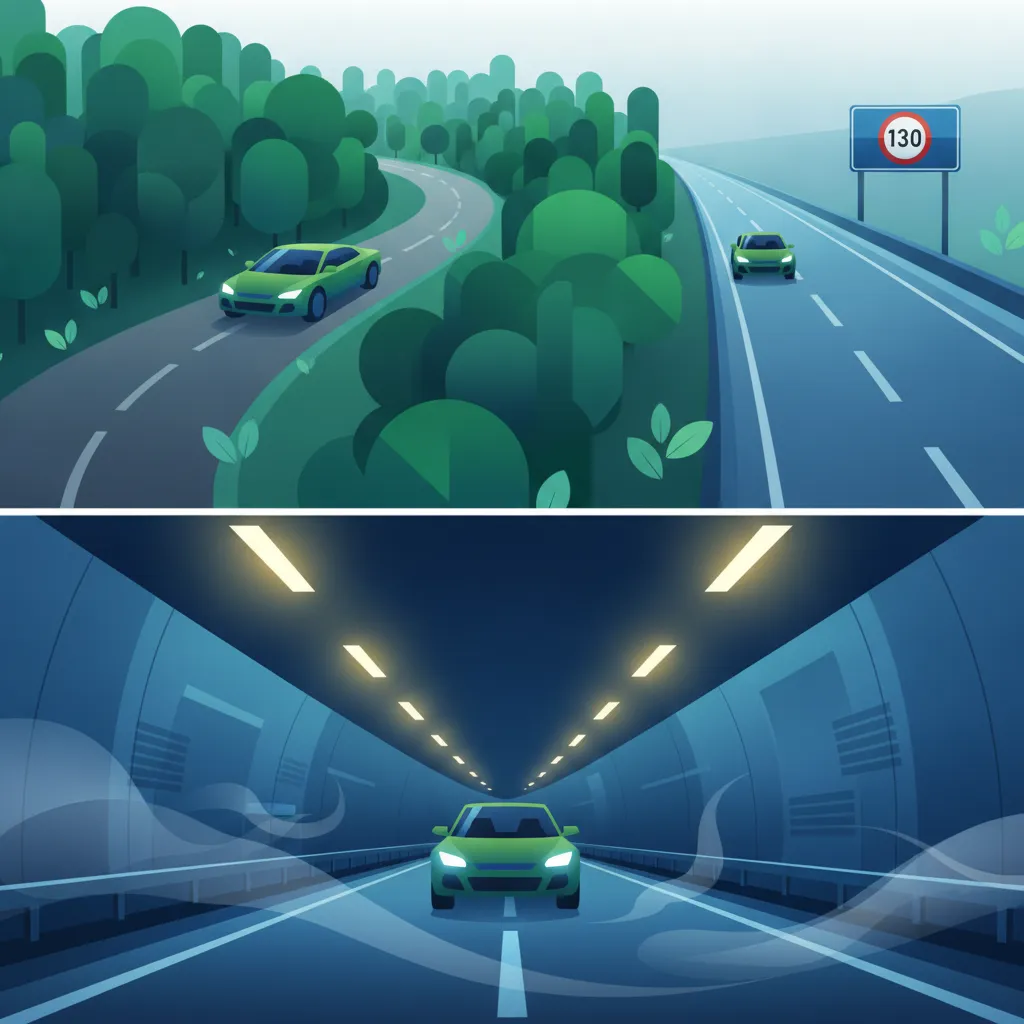
Browse all lessons that make up Rural Roads, Autobahnen, Tunnels, Weather and Environmental Driving. Each lesson focuses on specific topics, learning objectives, and core concepts, helping you build essential knowledge and follow a clear, structured progression toward your study goals in Germany.
This lesson focuses on the specific challenges and dangers associated with driving on rural roads ('Landstraßen'). It highlights common hazards such as sharp, blind corners, unmarked junctions, hidden farm entrances, and the presence of slow-moving agricultural vehicles or wildlife. The lesson emphasizes the need for appropriate speed selection and caution when overtaking in these environments.
This lesson provides a complete guide to driving on the German Autobahn. It covers the correct procedure for entering and exiting via acceleration and deceleration lanes, the strict lane discipline rule of keeping right ('Rechtsfahrgebot'), and the principle of overtaking only on the left. It also explains the recommended speed limit and the critical procedure for forming an emergency corridor ('Rettungsgasse') in a traffic jam.
This lesson covers the specific rules and safety precautions for driving through tunnels. This includes turning on dipped headlights, maintaining a safe distance, and knowing the location and use of emergency exits and equipment. It also addresses the potential hazards on bridges, such as increased risk of ice in winter and susceptibility to strong crosswinds.
This lesson teaches drivers how to safely manage their vehicle in challenging weather. It explains the dangers of aquaplaning in heavy rain, the loss of traction on snow and ice (including 'black ice'), and the severely reduced visibility in fog. You will learn to adjust your speed, increase following distances, and use lights correctly to suit these conditions.
This lesson explains the system of low-emission zones ('Umweltzonen') established in many German cities to improve air quality. It details the different types of emissions stickers ('Feinstaubplakette') based on a vehicle's pollution standard. You will learn how to identify these zones and understand the legal requirement of displaying the correct sticker to be allowed entry.
This lesson focuses on the principles of 'eco-driving,' a driving style that minimizes fuel consumption and environmental impact. It teaches techniques such as gentle acceleration, anticipating traffic flow to avoid unnecessary braking, using higher gears at lower speeds, and utilizing engine braking. These methods not only save fuel and reduce emissions but also lead to a smoother and safer driving experience.
Explore high-intent keywords and long-tail search topics learners use when researching Rural Roads, Autobahnen, Tunnels, Weather and Environmental Driving. These terms reflect how people search for reliable study materials, structured explanations, and unit-level theory preparation support in Germany.
Find clear answers to the most common questions learners ask about Rural Roads, Autobahnen, Tunnels, Weather and Environmental Driving. Understand how the unit is organized, what learning goals it supports, and how it contributes to your study progression with structured explanations and practical guidance tailored for learners in Germany.
Rural roads in Germany present unique hazards. These include sharp, blind corners, narrow lanes, limited visibility due to vegetation or hills, and the potential for encountering slow-moving agricultural vehicles, cyclists, or animals crossing the road. Drivers must anticipate these factors by reducing speed, positioning their vehicle appropriately, and being prepared to react quickly. Understanding priority rules on unmarked country lanes is also crucial.
While there is no general speed limit on many sections of the German Autobahn, a recommended speed ('Richtgeschwindigkeit') of 130 km/h applies. However, many sections have variable or fixed speed limits due to construction, traffic, or environmental reasons. It's essential to always observe posted speed limit signs and adapt your speed to the traffic and weather conditions for safety.
Before entering a tunnel, switch on your dipped headlights to improve visibility for yourself and other drivers. Reduce your speed slightly and increase your following distance. Pay close attention to tunnel-specific signs, speed limits, and lane guidance. If your vehicle is equipped with fog lights, use them if indicated or necessary for visibility within the tunnel. Be aware of potential speed cameras or variable speed limits.
Fog significantly reduces visibility, making it the most critical factor. You must use appropriate lights (fog lights if necessary and legally permitted) and drastically reduce speed, driving at a pace where you can stop within the visible distance. Rain reduces traction and visibility, requiring slower speeds and increased braking distances. Snow and ice severely reduce traction, demanding extremely slow speeds, maximum following distances, gentle acceleration/braking, and often the use of winter tires. Each condition requires a different adjustment of speed and attention.
Eco-driving, or fuel-efficient driving, involves techniques that reduce fuel consumption and emissions. This includes anticipating traffic flow to avoid unnecessary braking and acceleration, driving at moderate speeds, switching off the engine when stationary for extended periods, and ensuring proper tire pressure. While the theory test might not have direct questions labelled 'eco-driving', understanding these principles demonstrates a responsible and aware driving approach, which is valued in assessing overall driver competence and environmental consciousness.
While not always mandatory year-round, winter tires are highly recommended and legally required under specific icy or snowy conditions (winter tire obligation). For rural roads, especially in mountainous or less-maintained areas, tires with good tread depth and appropriate grip are essential for safety in various conditions. Always ensure your tires are in good condition, with adequate tread, regardless of the road type.
All included lessons
Lessons in Rural Roads, Autobahnen, Tunnels, Weather and Environmental Driving
See who benefits most from studying Rural Roads, Autobahnen, Tunnels, Weather and Environmental Driving. This overview explains how the unit supports different learning needs, what level of knowledge is helpful before starting, and how it fits into the overall study path in Germany.
This unit is designed for all learners preparing for the German Category B driving license theory exam. It's particularly beneficial for those who want to gain confidence in navigating challenging road types like rural roads and Autobahns, and for drivers who want to understand how to handle diverse weather conditions safely and efficiently.

Ready to prepare for your German driving licence theory exam? Dive into our carefully structured courses to build your knowledge effectively. Select a course that matches your licence category and begin your systematic study path today for confident exam success.
Browse Driving Theory CoursesExplore all units and lessons included in this driving theory course.
Ready to prepare for your German driving licence theory exam? Dive into our carefully structured courses to build your knowledge effectively. Select a course that matches your licence category and begin your systematic study path today for confident exam success.
Browse Driving Theory Courses