
This lesson guides you through safely sharing the road with special vehicles, including lorries and emergency responders. By understanding specific hazards like blind spots and the legal requirement for creating emergency corridors, you will be well-prepared for these complex scenarios in the German driving theory exam.
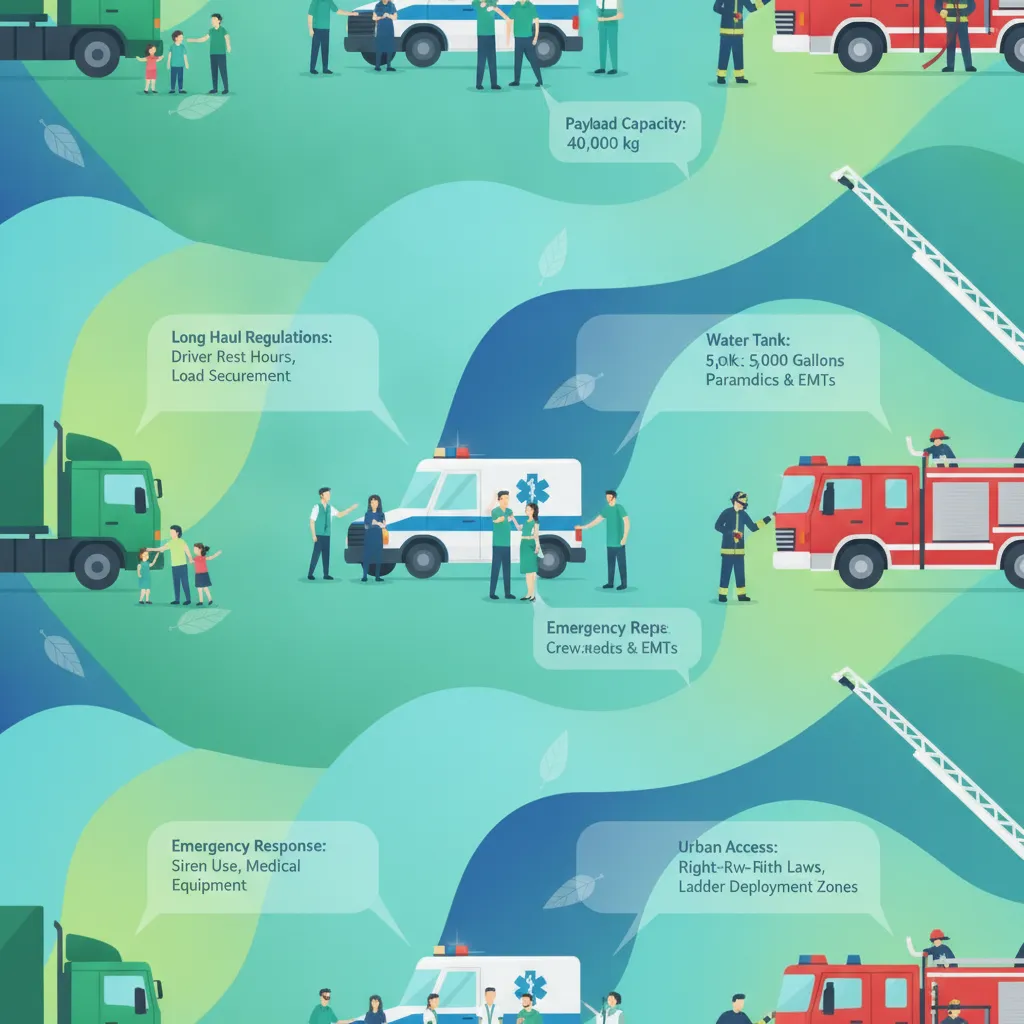
Lesson content overview
Driving on German roads requires a thorough understanding of how to safely interact with all types of road users, including special vehicles such as large commercial lorries (LKW) and emergency vehicles. This comprehensive lesson, part of your German Category B driving license theory course, will equip you with the knowledge to navigate complex situations involving these vehicles, ensuring your safety and the safety of others. We will delve into critical topics like understanding lorry blind spots, the challenges of overtaking heavy goods vehicles, and the vital procedure for forming an emergency corridor (Rettungsgasse) for priority vehicles.
Lorries, known as Lastkraftwagen (LKW) in Germany, are integral to commerce but present unique challenges for other drivers due to their size, weight, and maneuverability. Safe interaction requires specific awareness and adherence to traffic regulations, which differ significantly from those for passenger cars. Ignoring these differences can lead to dangerous situations and serious accidents.
One of the most critical safety aspects when driving near lorries is understanding their extensive blind spots. Unlike passenger cars, lorries have multiple areas around them where the driver cannot see smaller vehicles or pedestrians, even with modern mirror systems. These blind spots can be significantly larger and more numerous, posing a substantial risk during lane changes, turns, and overtaking maneuvers.
Lorry blind spots typically include areas directly in front of the vehicle, immediately behind it, and particularly along both sides. The blind spot on the right side of a lorry, often referred to as the "danger zone" or "dead angle," is particularly perilous, extending significantly along the side and partially to the rear. Even modern lorries equipped with multiple mirrors cannot completely eliminate these areas of reduced visibility.
Drivers must always assume that if they cannot see the lorry driver in their side mirror, the lorry driver cannot see them. This principle is fundamental to preventing collisions, especially during merging or when driving parallel to a lorry. These unseen areas can easily hide a car, bicycle, or motorcycle, leading to catastrophic consequences if the lorry driver initiates a maneuver.
To ensure safety, drivers should actively avoid lingering in a lorry's blind spots. When overtaking, do so quickly and decisively, ensuring you have enough power and space to pass completely and return to your lane well ahead of the lorry. When driving alongside a lorry, either stay significantly behind it where the driver can see you through their main mirrors, or drive ahead of it to be clearly visible.
Always make eye contact: If you can see the lorry driver in their side mirror, they can likely see you. This visual confirmation is a strong indicator that you are outside their immediate blind spots.
When a lorry is turning, especially to the right, it often needs to swing out to the left first to clear the corner. This is known as "Ausscheren." Never attempt to pass a turning lorry on the inside, as you will almost certainly be in its blind spot and risk being crushed against the curb or other obstacles. Always maintain a safe distance and anticipate the lorry's wide turning radius.
Overtaking a lorry requires careful planning and execution. Due to their length and often slower acceleration, the overtaking process can take considerably longer than passing a passenger car. Furthermore, the sheer size of lorries creates significant aerodynamic effects that can impact smaller vehicles.
As you approach a lorry to overtake, you might experience a push from the air pressure building up in front of your vehicle. As you draw level and then pass, a sudden pull towards the lorry can occur due to the vacuum created by its passage through the air. This "wind turbulence" can momentarily affect your steering and vehicle stability, requiring a firm grip on the steering wheel and careful correction. Always ensure there is ample clear road ahead and behind to complete the maneuver safely and smoothly, minimizing the time spent alongside the lorry.
The immense weight of lorries means they require significantly longer distances to stop compared to passenger cars, even when traveling at the same speed. This is a critical factor to consider, especially in heavy traffic, at junctions, or when adverse weather conditions are present. A fully loaded lorry can weigh up to 40 tonnes (t), and its inertia is far greater.
The total distance a vehicle travels from the moment a driver perceives a hazard and decides to brake until the vehicle comes to a complete stop. It comprises reaction distance and braking distance.
Drivers of smaller vehicles must never cut in front of a lorry too closely after overtaking or brake sharply directly in front of one. Doing so puts you at extreme risk, as the lorry driver may not have enough time or distance to react and stop, potentially leading to a rear-end collision. Always maintain a generous following distance behind lorries and allow them ample space ahead.
Overloaded lorries pose serious safety risks and are strictly regulated in Germany. An overloaded LKW has excess weight beyond its legally permissible maximum, which compromises its handling, braking, and overall stability.
The consequences of an overloaded lorry include:
Drivers should be aware that if a lorry appears visibly overloaded (e.g., sagging suspension, tyres visibly bulging), it represents an enhanced hazard. While you cannot directly intervene, recognizing these signs reinforces the need for extra caution and distance when near such vehicles.
German traffic law (StVO) imposes specific rules for heavy goods vehicles, which indirectly affect how other drivers interact with them. For instance, lorries exceeding a certain weight are often subject to speed restrictions, especially on Autobahnen (motorways), and may be prohibited from overtaking on certain stretches of road or during specific hours.
Overtaking bans for lorries: Pay attention to road signs indicating Überholverbot für LKW (No overtaking for lorries). Even if you are in a car, this indicates a section of road where lorries are restricted, often due to visibility, gradients, or heavy traffic, suggesting increased caution is necessary for all vehicles.
Maintaining a safe following distance (Sicherheitsabstand) is paramount when driving behind any vehicle, but especially so for lorries. A good rule of thumb is the "half-speed rule" in metres (e.g., 100 km/h requires 50 metres distance), though more is always better when following an LKW. This distance gives you time to react to sudden braking and allows you to see the road ahead past the lorry.
Emergency vehicles, such as ambulances, fire trucks, and police cars, have special rights (Sonderrechte) when responding to an emergency in Germany. It is every driver's legal and moral obligation to yield the right of way immediately and safely to facilitate their passage. A crucial part of this is the formation of an emergency corridor, or Rettungsgasse.
Emergency vehicles typically signal their special rights by using both blue flashing lights (Blaulicht) and a multi-tone horn (Martinshorn). These signals together indicate that the vehicle is on an urgent mission and requires immediate free passage. A vehicle displaying only blue flashing lights but no Martinshorn may be indicating a dangerous spot or securing a scene, but it does not automatically grant them the right of way over other traffic.
Special rights granted to specific vehicles (e.g., police, fire brigade, ambulance) allowing them to deviate from traffic regulations (e.g., speed limits, right-of-way rules) when performing urgent tasks, provided public safety is not endangered. These rights are typically indicated by blue flashing lights and a multi-tone horn.
Upon hearing or seeing an emergency vehicle with both signals, drivers must react promptly, calmly, and safely. Panic braking or sudden swerving can create further hazards. Your primary goal is to clear the path for the emergency vehicle without endangering yourself or other road users.
When an emergency vehicle with blue lights and a siren approaches, all other road users must immediately make way. This might involve:
Never follow an emergency vehicle closely. This is dangerous and illegal, as you could obstruct other emergency vehicles or become involved in the incident they are responding to.
The Rettungsgasse (emergency corridor) is a legal requirement in Germany and several other European countries. It must be formed on multi-lane roads (Autobahnen and some Bundesstraßen) whenever traffic comes to a standstill or moves very slowly, even before an emergency vehicle is visible or audible. This proactive measure ensures that rescue services can reach the scene of an accident quickly.
A Rettungsgasse must be formed on roads with at least two lanes in one direction.
It is crucial to act early and consistently. Do not wait for an emergency vehicle to appear. As soon as traffic slows significantly or stops on a multi-lane road, establish the Rettungsgasse.
Anticipate and React Early: As soon as traffic begins to slow down or stop on a multi-lane road, prepare to form the corridor. Do not wait for emergency sirens.
Identify Your Lane: Determine if you are in the leftmost lane or any other lane.
Move Safely to the Side:
Maintain Orientation: Keep your wheels pointing straight ahead, ready to move forward if traffic starts to flow again, but remain ready to pull over again if needed.
Avoid Blocking Others: Ensure you do not block access to emergency exits or the path of other vehicles also trying to form the corridor. Maintain a safe distance from the vehicle in front of you to allow for small adjustments.
Stay in Your Vehicle: Do not exit your vehicle while the Rettungsgasse is active, unless instructed by emergency personnel.
Wait for the All-Clear: Only return to normal lane positioning once all emergency vehicles have passed and traffic begins to flow steadily again.
Failing to form a Rettungsgasse or obstructing an emergency vehicle is a serious offense in Germany. It can result in significant fines, penalty points (Punkte in Flensburg), and potentially even a driving ban (Fahrverbot). These penalties reflect the critical importance of ensuring rapid access for emergency services, as delays can have life-threatening consequences.
Beyond the Rettungsgasse, be aware of specific scenarios:
Many accidents and obstructions involving special vehicles stem from common misunderstandings or errors in judgment.
Common Mistakes:
Best Practices:
Safe interaction with special vehicles is a cornerstone of responsible driving in Germany. Understanding the physical constraints and operational requirements of lorries, particularly their blind spots and extended stopping distances, is crucial for preventing collisions. Equally vital is the immediate and correct response to emergency vehicles, especially the mandatory formation of a Rettungsgasse on multi-lane roads. By being vigilant, proactive, and adhering to these specific rules, you contribute significantly to road safety and efficient emergency response.
This lesson covers two essential aspects of German road safety: interacting safely with large lorries and responding correctly to emergency vehicles. You learn about lorry blind spots, which are extensive areas where drivers cannot see other road users, and why lorries need much longer stopping distances due to their weight. The lesson also teaches the mandatory Rettungsgasse procedure for creating an emergency corridor on multi-lane roads, including the specific rules for two-lane versus three-or-more-lane roads. Understanding these procedures is critical for both safe driving and passing the German Category B theory exam, as obstructed emergency vehicles can result in significant fines and penalty points.
A short set of high-value points that capture the most important learning from this lesson.
Large lorries have extensive blind spots on all sides; if you cannot see the lorry driver in their mirror, they cannot see you
When overtaking a lorry, expect wind turbulence effects that can pull your vehicle toward the lorry and maintain a firm grip on the steering wheel
Lorries require significantly longer stopping distances than cars due to their weight (up to 40 tonnes), making it dangerous to cut in front of them
The Rettungsgasse must be formed proactively on multi-lane roads as soon as traffic slows, even before emergency vehicles are visible
Emergency vehicles have Sonderrechte (special rights) only when displaying both blue flashing lights (Blaulicht) and siren (Martinshorn) together
Explore all units and lessons included in this driving theory course.
On a two-lane road: left lane moves left, right lane moves right to create Rettungsgasse; on three or more lanes: leftmost lane moves left, all others move right
Never attempt to pass a turning lorry on the inside (Ausscheren) as you will be in its blind spot and risk being crushed
Eye contact with the lorry driver in their side mirror confirms you are visible to them
If a lorry appears overloaded (sagging suspension, bulging tyres), maintain extra distance as it has reduced braking and stability
Stay in your vehicle once Rettungsgasse is formed unless instructed otherwise by emergency personnel
Lingering in a lorry's blind spot, especially on the right side, assuming the driver can see you
Cutting sharply in front of a lorry after overtaking without allowing sufficient following distance
Waiting until an emergency vehicle is visible or audible before starting to form a Rettungsgasse
Not moving far enough to the side when forming the emergency corridor, leaving it too narrow
Following an emergency vehicle closely, which is both dangerous and illegal
Lesson content overview
A short set of high-value points that capture the most important learning from this lesson.
Large lorries have extensive blind spots on all sides; if you cannot see the lorry driver in their mirror, they cannot see you
When overtaking a lorry, expect wind turbulence effects that can pull your vehicle toward the lorry and maintain a firm grip on the steering wheel
Lorries require significantly longer stopping distances than cars due to their weight (up to 40 tonnes), making it dangerous to cut in front of them
The Rettungsgasse must be formed proactively on multi-lane roads as soon as traffic slows, even before emergency vehicles are visible
Emergency vehicles have Sonderrechte (special rights) only when displaying both blue flashing lights (Blaulicht) and siren (Martinshorn) together
Explore all units and lessons included in this driving theory course.
On a two-lane road: left lane moves left, right lane moves right to create Rettungsgasse; on three or more lanes: leftmost lane moves left, all others move right
Never attempt to pass a turning lorry on the inside (Ausscheren) as you will be in its blind spot and risk being crushed
Eye contact with the lorry driver in their side mirror confirms you are visible to them
If a lorry appears overloaded (sagging suspension, bulging tyres), maintain extra distance as it has reduced braking and stability
Stay in your vehicle once Rettungsgasse is formed unless instructed otherwise by emergency personnel
Lingering in a lorry's blind spot, especially on the right side, assuming the driver can see you
Cutting sharply in front of a lorry after overtaking without allowing sufficient following distance
Waiting until an emergency vehicle is visible or audible before starting to form a Rettungsgasse
Not moving far enough to the side when forming the emergency corridor, leaving it too narrow
Following an emergency vehicle closely, which is both dangerous and illegal
Explore search topics learners often look for when studying Special Vehicles (Lorries, Emergency Vehicles). These topics reflect common questions about road rules, driving situations, safety guidance, and lesson level theory preparation for learners in Germany.
Browse additional driving theory lessons that cover connected traffic rules, road signs, and common driving situations related to this topic. Improve your understanding of how different rules interact across everyday traffic scenarios.
Understand the specific challenges and rules for driving near lorries and reacting to emergency vehicles. Learn about lorry blind spots, safe overtaking, and the crucial 'Rettungsgasse' (emergency corridor) procedure according to German traffic law.
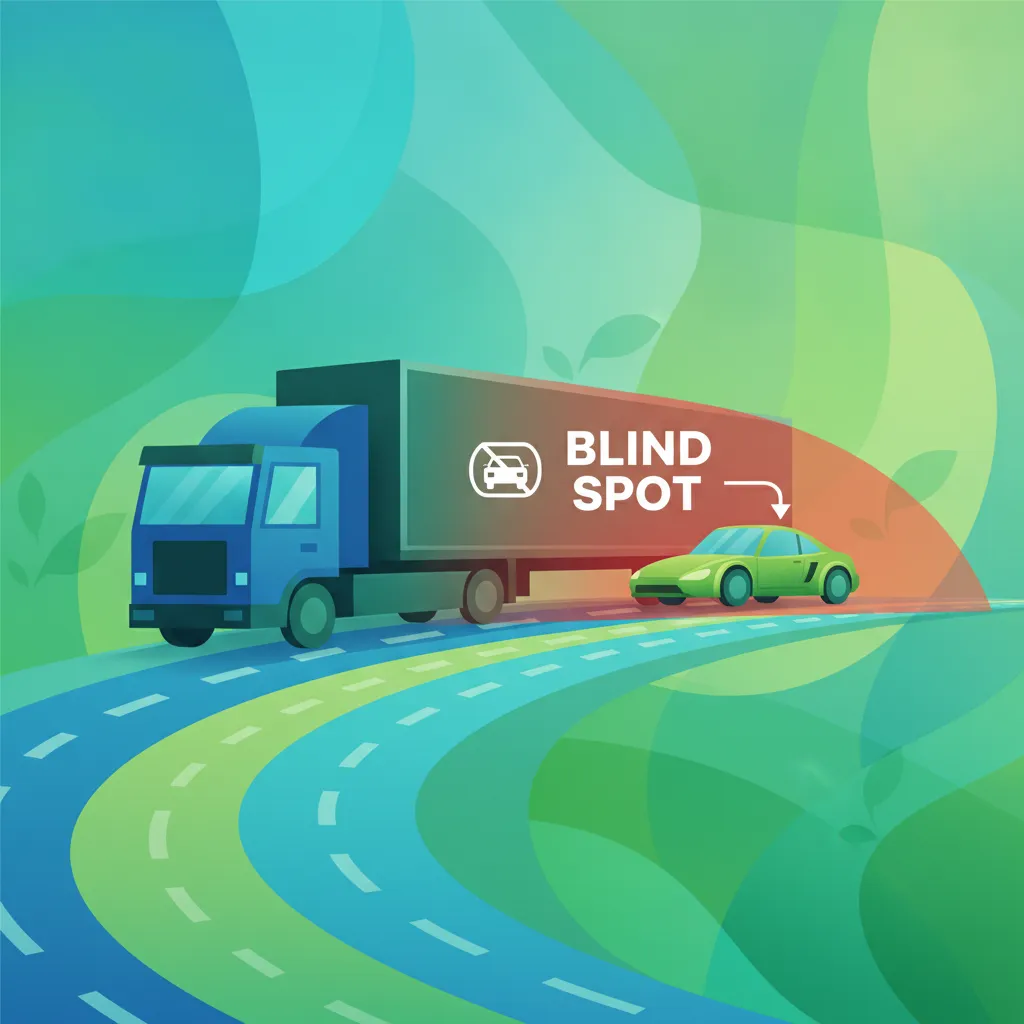
This lesson focuses on the blind spot zones specific to trucks and vehicle combinations, explaining where these zones are located. It covers the use of blind spot mirrors and other aids to enhance driver awareness during lane changes and turns. The content stresses the importance of maintaining safe distances from vulnerable road users.

This lesson provides a comprehensive guide to identifying and managing the significant blind spots around a large passenger vehicle. It covers the correct adjustment and use of all mirrors, supplemented by camera systems, to gain maximum visibility. The importance of performing physical checks ('shoulder checks') before turning or changing lanes is emphasized to detect smaller road users like cyclists and pedestrians who may be hidden from view.
This lesson covers the high-risk maneuver of reversing a large passenger vehicle. It details a systematic approach that includes using all available aids like mirrors, cameras, and audible alarms. The lesson stresses the need for slow, controlled movements, constant scanning of the surroundings, and conducting thorough clearance checks to prevent collisions with objects or people behind the vehicle, advocating for a spotter whenever possible.

This lesson explores the critical role of visibility in safe driving, covering topics such as sight distance, managing blind spots, and the correct use of mirrors. It provides guidance on how to adjust your driving in conditions of reduced visibility, such as at night, in fog, or during heavy rain, including the proper use of headlights. The importance of the over-the-shoulder check ('Schulterblick') is also a key focus.
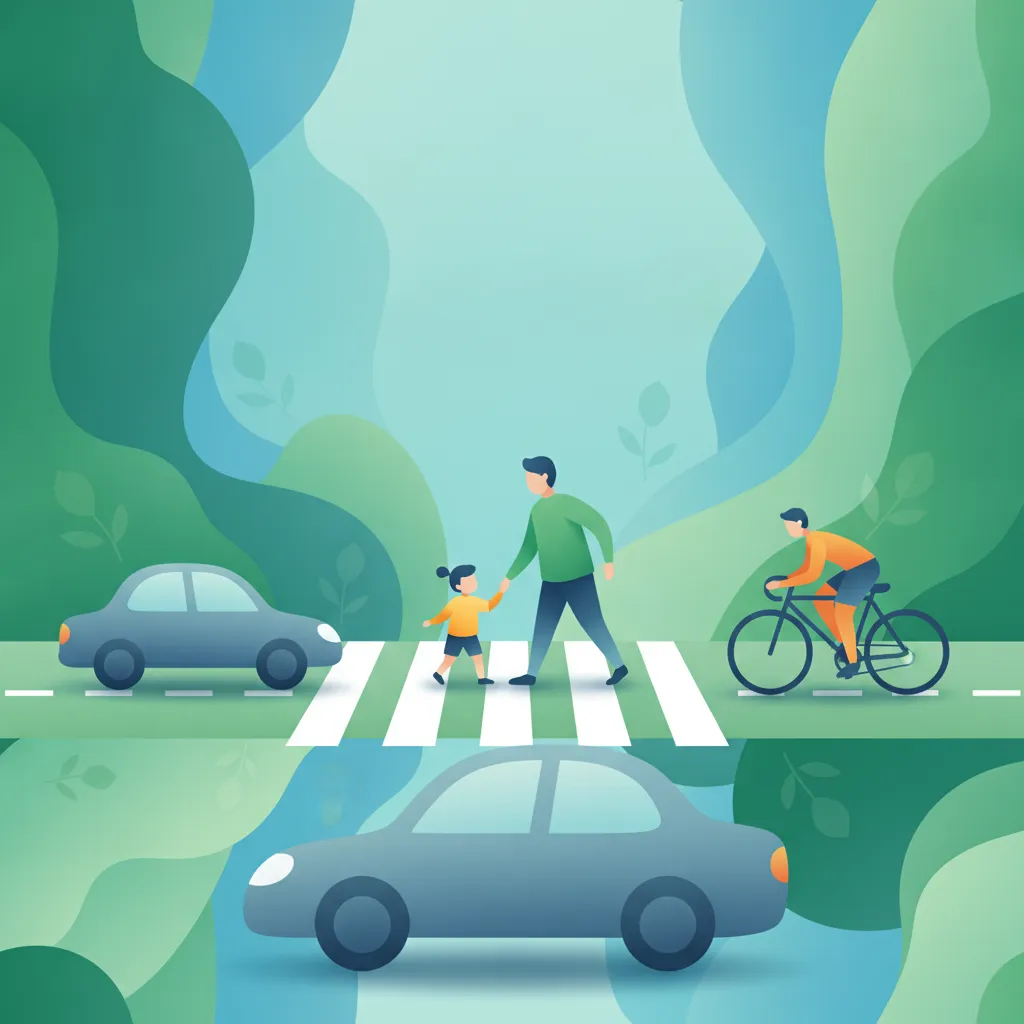
This lesson focuses on the interaction between heavy vehicles and vulnerable road users at crossings, particularly when turning right. It covers the need for heightened vigilance, the importance of properly using mirrors, and correct signaling to alert others. The content highlights legal responsibilities and safe distance requirements to prevent accidents.
This lesson focuses on identifying road users who require special attention and caution, such as children, the elderly, and individuals with disabilities. It details the appropriate behavior when encountering school buses and public transport, which often involve unpredictable pedestrian movement. A critical topic covered is the legal requirement to form an emergency corridor ('Rettungsgasse') for responding emergency vehicles.
This lesson addresses the challenges of maneuvering heavy vehicles in confined spaces such as loading bays and narrow streets. It provides strategies for planning the maneuver, accounting for vehicle dimensions, turning radius, and blind spots. The content emphasizes slow, controlled movements and the need for high situational awareness.

This lesson teaches the proper adjustment of all required mirrors to maximize the field of vision and minimize blind spots. It discusses the limitations of indirect vision and the importance of aligning mirrors based on the driver's seating position. The content also outlines the typical blind zones for heavy vehicles and strategies to mitigate them.
This lesson focuses on the high-risk maneuver of reversing, emphasizing the importance of all-around observation due to limited visibility. It teaches techniques for controlling the vehicle at very low speeds and using mirrors and direct observation to manage large blind spots behind the car. The priority is to ensure the path is clear of pedestrians and obstacles at all times.
This lesson covers the dimensional limits for heavy vehicles, focusing on height, width, and length restrictions. It explains how to interpret clearance signage for bridges, tunnels, and overhead obstacles, and discusses the implications for route planning. The content also addresses the importance of understanding turning radii and swept paths to avoid collisions.
Explore how to safely share the road with pedestrians, cyclists, and public transport like buses. This lesson connects to understanding priority rules and hazard perception when encountering various road users and their specific needs in German traffic.
This lesson focuses on identifying road users who require special attention and caution, such as children, the elderly, and individuals with disabilities. It details the appropriate behavior when encountering school buses and public transport, which often involve unpredictable pedestrian movement. A critical topic covered is the legal requirement to form an emergency corridor ('Rettungsgasse') for responding emergency vehicles.
This lesson provides specific guidance on how to safely share the road with pedestrians and cyclists, who are among the most vulnerable road users. It covers the rules of conduct at zebra crossings, traffic lights for pedestrians, and designated cycle lanes. The content emphasizes the importance of vigilance, yielding right-of-way, and maintaining a safe distance to prevent accidents in urban and rural environments.
This lesson focuses on complex traffic environments where different types of road users share the same space. It provides guidance on situations like driving on streets with integrated tram tracks or where bus and bicycle lanes are part of the roadway. The content emphasizes understanding the specific priority rules and being extra vigilant to anticipate potential conflicts in these busy, shared zones.
This lesson teaches riders how to interact safely and predictably with pedestrians, cyclists, and public transport vehicles. It highlights the importance of yielding at designated crossings, maintaining a safe passing distance, and anticipating the movements of buses and trams. The content emphasizes using eye contact and clear signaling to foster safe and respectful interactions with all road users.
This lesson focuses on the particular care required when driving near pedestrians, with a special emphasis on children and the elderly, whose behavior can be unpredictable. It covers the rules for yielding at zebra crossings and the importance of reducing speed near schools, playgrounds, and residential areas. The goal is to instill a habit of constant vigilance and readiness to stop.
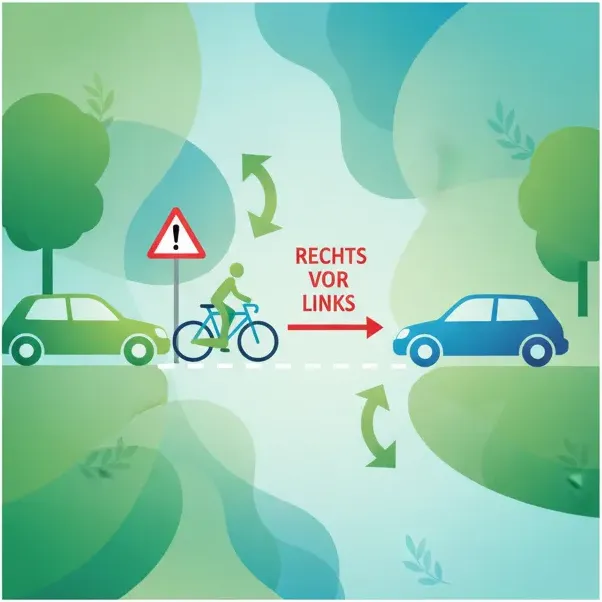
This lesson provides a detailed guide to navigating various types of intersections safely and correctly. It explains how priority is determined by traffic signs (such as the priority road, yield, and stop signs) and traffic lights. The lesson also covers complex scenarios, including the rules for turning left across oncoming traffic, to ensure you can handle any junction with confidence.
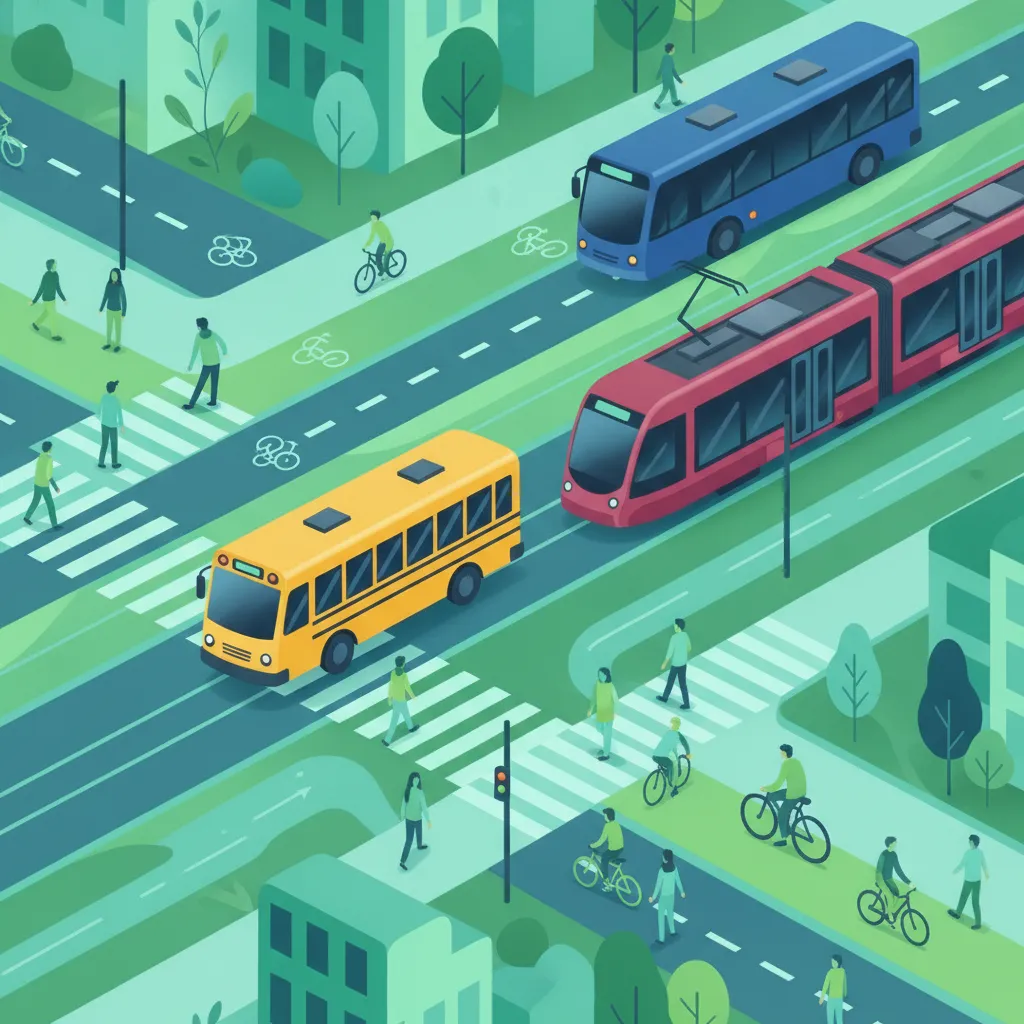
This lesson explains the specific regulations when encountering public transport. It covers the legal requirement to yield to public buses signaling to leave a bus stop and the strict rules for passing school buses with flashing hazard lights. You will also learn about the absolute priority of trams ('Straßenbahn') and how to safely drive on or across their tracks.
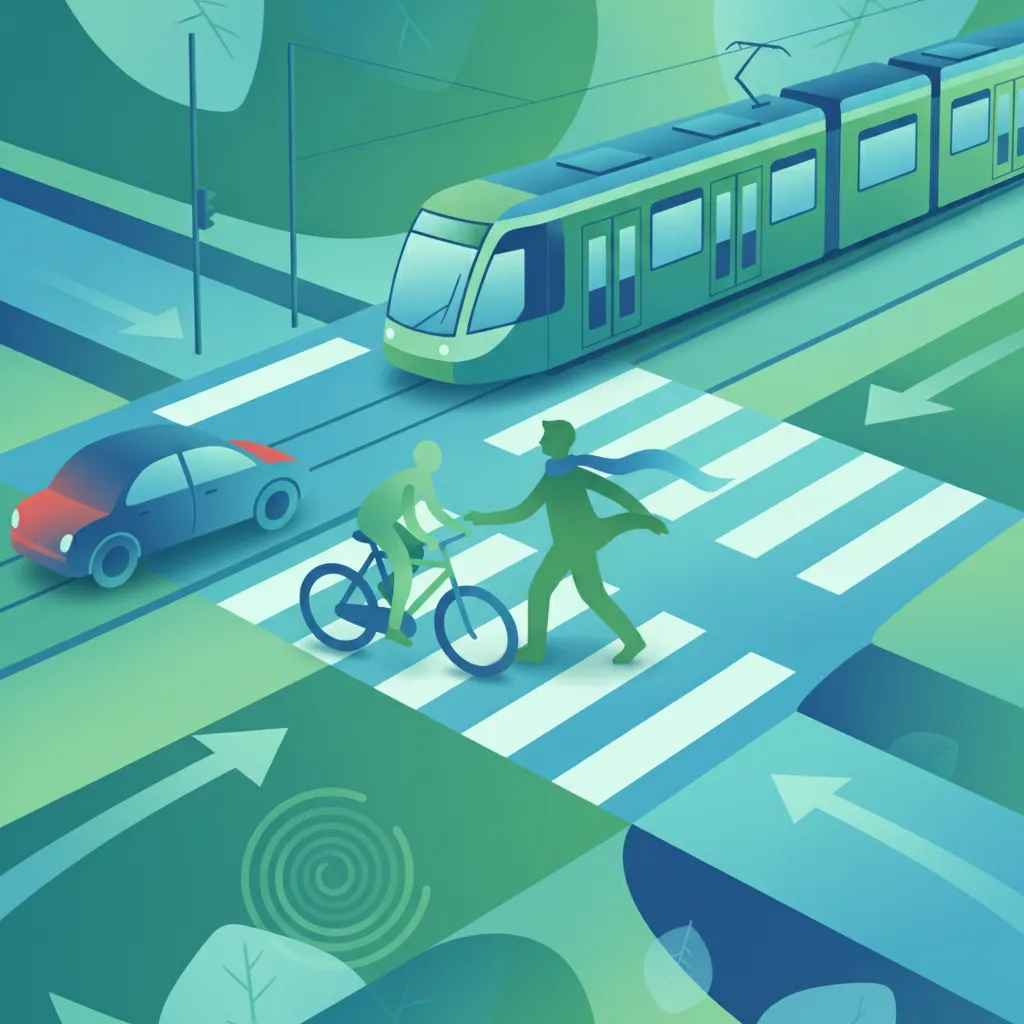
This lesson details the critical right-of-way regulations according to the German StVO. It covers the default 'right before left' rule, the meaning of priority road signs, and specific rules for roundabouts and yielding to pedestrians. A thorough understanding of these priority rules is fundamental for preventing accidents at junctions.
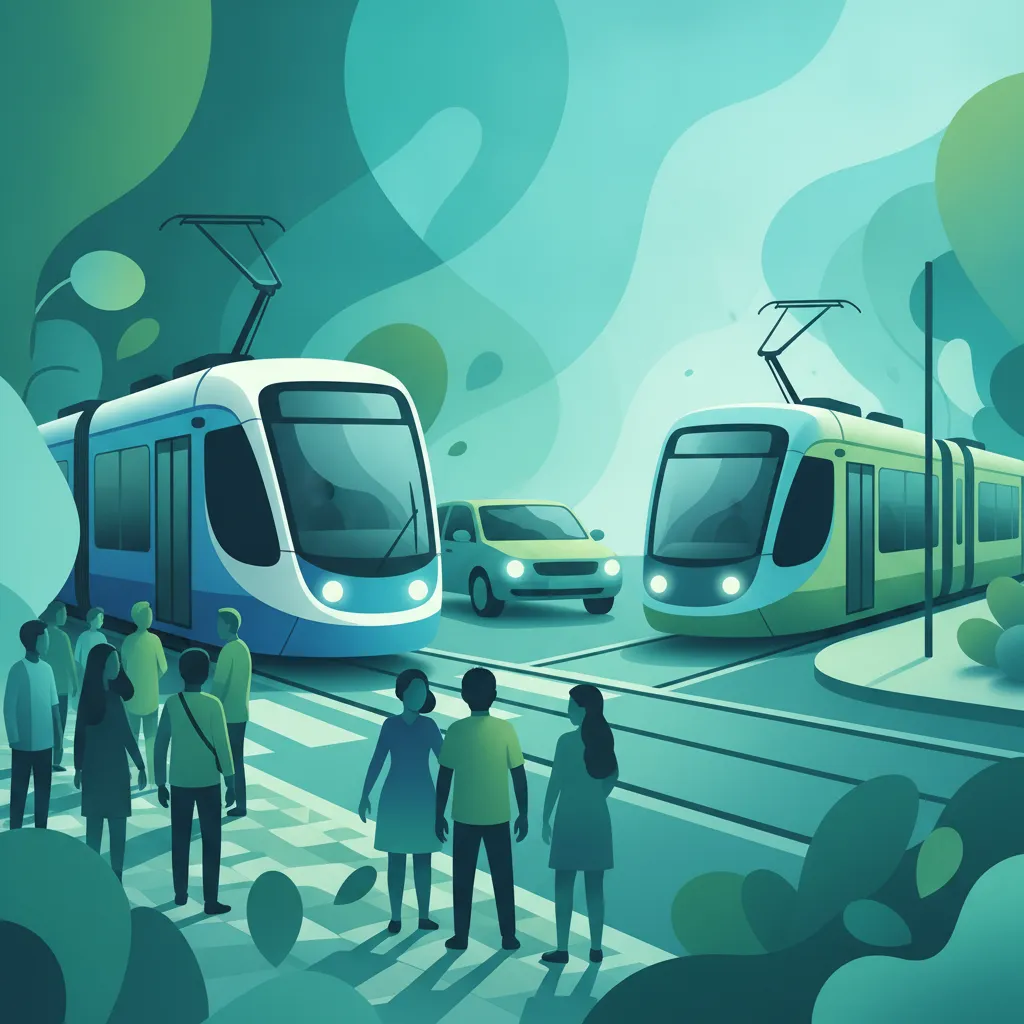
This lesson focuses on the unique challenges and safety protocols required when operating alongside trams and light rail systems. It clarifies the strict right-of-way rules that typically favor trams and explains how to safely navigate shared roadways and cross tracks. Learners will be taught to recognize specific signals and markings related to tramways to prevent conflicts and ensure the safety of all road users.
This lesson trains drivers to proactively identify vulnerable road users and anticipate their often unpredictable behavior. It highlights the specific risks posed by children, elderly pedestrians, cyclists, and e-scooter users, particularly near bus stops and crossings. The goal is to develop a heightened sense of risk perception and apply defensive driving techniques to protect those who are most at risk on the road.
Find clear answers to common questions learners have about Special Vehicles (Lorries, Emergency Vehicles). Learn how the lesson is structured, which driving theory objectives it supports, and how it fits into the overall learning path of units and curriculum progression in Germany. These explanations help you understand key concepts, lesson flow, and exam focused study goals.
On motorways with three or more lanes, vehicles in the leftmost lane must move to the left, while all other lanes move to the right. This creates a clear path for emergency vehicles between the leftmost and adjacent lanes.
Lorries create significant air turbulence that can destabilize smaller vehicles. Additionally, they have large blind spots; if you linger alongside a truck, the driver may not see you, posing a high collision risk.
Yes, if an emergency vehicle is using blue flashing lights, it is signalling an urgent situation. You should facilitate their passage safely, even if the siren is not currently audible, as they may be responding to an incident.
Yes, remember that lorries are significantly heavier than cars, requiring much longer stopping distances. Never cut sharply in front of a lorry, as their physical inability to stop quickly puts you at risk of a rear-end collision.
Begin your targeted revision now. Use our practice search to quickly find specific German driving theory questions. Filter by StVO rules, road signs, or hazard perception to create your focused study plan. Master challenging areas and prepare confidently for your theoretical driving test.