
This lesson details how to safely interact with public transport vehicles, including buses, trams, and school buses, within the German StVO framework. Understanding these specific rules is essential for managing right-of-way and avoiding common hazards in busy urban traffic. You will gain the knowledge needed to handle these complex situations confidently during your driving tests and real-world driving.
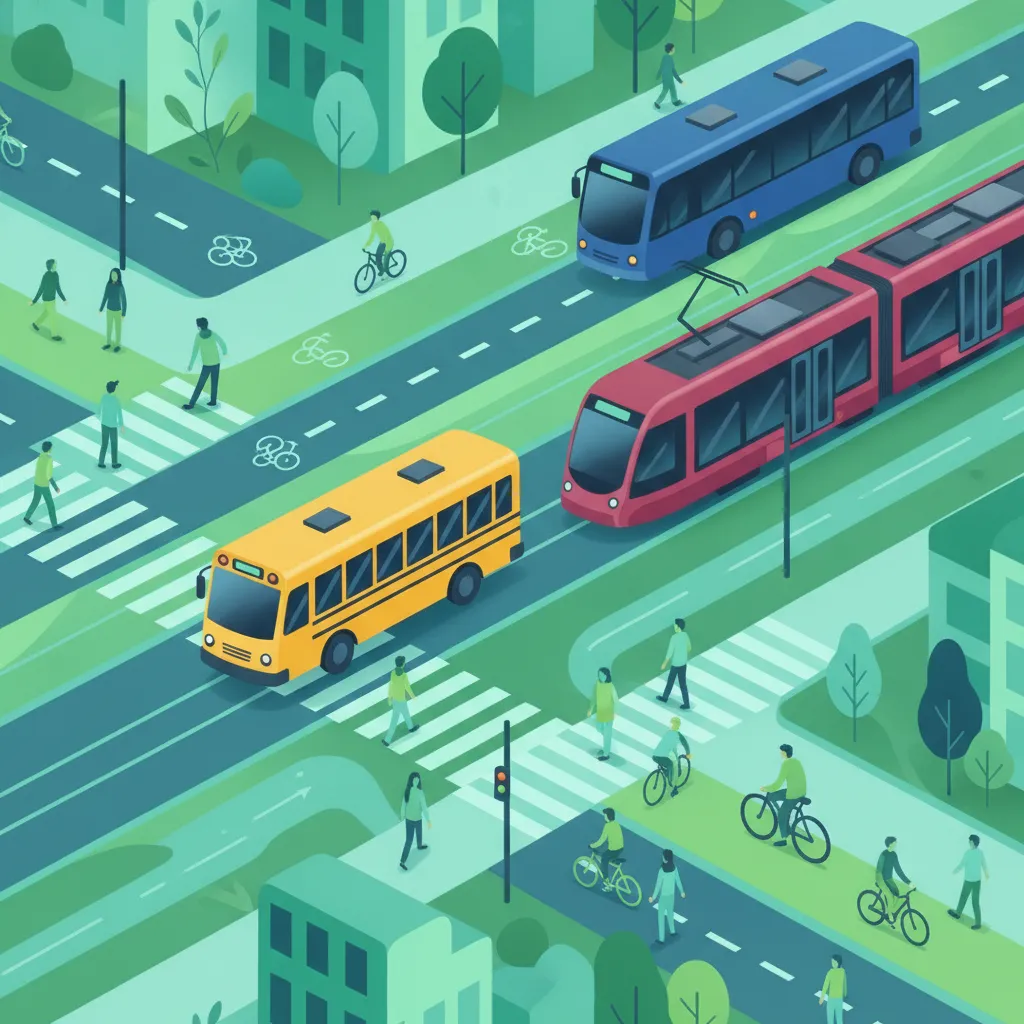
Lesson content overview
Driving safely in Germany requires a thorough understanding of all road traffic regulations, especially those concerning public transport. Buses, trams (Straßenbahn), and school buses carry numerous passengers, many of whom are vulnerable. Due to their vital role in public mobility and the safety of their occupants, these vehicles are afforded specific rights and responsibilities under the German Road Traffic Act (StVO - Straßenverkehrs-Ordnung). This lesson will detail the legal requirements for interacting with public transport, covering yielding rules, priority guidelines, and safe driving practices to ensure the safety of all road users and maintain smooth traffic flow.
Public transport vehicles operate on fixed schedules and often carry a high volume of passengers, including children, elderly citizens, and individuals with disabilities. Granting these vehicles specific rights and priority in certain situations is crucial for several reasons:
Mastering these rules is not only essential for passing your German Category B driving license theory exam but also for becoming a responsible and safe driver on German roads.
One of the most common scenarios involving public transport is encountering a bus at a designated stop. Drivers must be aware of specific yielding requirements when a bus prepares to re-enter traffic.
According to StVO § 42 (3), drivers must yield to regular-service buses and school buses when they indicate their intention to depart from a marked bus stop by activating their flashing hazard lights.
A signaling device used by vehicles, especially public transport, to indicate stopping or yielding. Used by buses when departing from a stop and by school buses when loading or unloading passengers.
This rule is designed to allow buses to merge safely back into the flow of traffic without causing disruption or danger. It acknowledges the bus's difficulty in accelerating and maneuvering, especially when full of passengers.
What to do when a bus signals departure:
Do not assume that flashing lights are merely a warning. For buses at stops, they are a legal command to yield. Ignoring this can lead to dangerous situations and penalties.
This rule applies to all drivers approaching a bus that is signaling its departure, regardless of the direction of travel, though the primary impact is on traffic flowing in the same direction as the bus.
Straßenbahn) Priority in German TrafficTrams (Straßenbahn) operate on fixed tracks and often share the road with other traffic, particularly in urban areas. Due to their limited maneuverability and significant braking distance, trams are granted absolute priority in many situations. Understanding tram priority is critical to preventing collisions and ensuring smooth operation of public transport.
Trams generally have absolute priority at intersections, especially when traffic signs or signals indicate it. This means that other road users must yield to the tram, even if they appear to have the right of way under normal circumstances (e.g., a green traffic light or "right before left" rule).
The absolute right-of-way given to trams at intersections or specific road sections, often indicated by orange traffic lights or specific traffic signs. All other traffic must yield.
Key scenarios for tram priority:
Specific Priority Signs: Look for signs that explicitly grant priority to trams.
While sign 306 generally refers to oncoming traffic, specific supplementary signs or traffic light configurations are used for tram priority. For trams, a triangular sign with a black tram symbol on a white background with a red border (like a Vorrang sign) or a specific tram signal is more common. This will be an image of specific tram priority signs.
Traffic Lights with Tram Signals: Some traffic lights have specific signals for trams, often in the form of white light bars or arrows. If the tram signal indicates it can proceed, other traffic must yield, even if their own light is green.
Unregulated Intersections with Tracks: Even at intersections without explicit signs, drivers must be highly aware of trams. While the "right before left" rule generally applies, a tram on a crossing track typically maintains its priority, especially if it is proceeding straight and other vehicles are turning across its path. Always assume tram priority unless explicitly signaled otherwise.
Practical Steps for Tram Priority:
When driving in areas with trams, always consider the tram as an unmovable object with a fixed path. Your vehicle must adapt to its movements.
Sharing the road with trams also means safely navigating their tracks.
School buses transport some of the most vulnerable road users: children. To ensure their utmost safety during boarding and alighting, very strict rules apply when a school bus activates its hazard lights.
According to StVO § 41, when a school bus or a regular-service bus marked as a school bus activates its hazard warning lights to indicate that children are boarding or alighting, all other motor vehicles must stop completely.
The flashing hazard lights on a school bus or designated public transport bus activated specifically during passenger (children) boarding or alighting. This requires all surrounding traffic to stop.
Key requirements and implications:
Violating the rules regarding school bus hazard lights is a serious offense in Germany, carrying significant fines and penalty points, reflecting the high priority placed on child safety.
The rationale behind this stringent rule is to create a safe zone around the bus, protecting children who might run across the road without looking or emerge from behind the bus.
Misinterpreting or ignoring public transport rules can lead to dangerous situations and legal consequences. Here are common mistakes and how to prevent them:
Ignoring Bus Departure Signals:
Disregarding Tram Priority at Intersections:
Overtaking a School Bus with Flashing Hazard Lights:
Careless Crossing of Tram Tracks:
Stopping on Tram Tracks:
The application of public transport rules can be influenced by various conditions, requiring drivers to exercise extra caution and judgment.
Understanding the why behind these rules – prioritizing safety, especially for vulnerable passengers – reinforces the importance of diligent compliance. By consistently applying these regulations, drivers contribute to a safer and more efficient traffic environment for everyone in Germany.
To deepen your understanding and prepare for your German Category B driving license exam, explore these related topics and practice questions.
This lesson covers the essential StVO rules for interacting with public transport in Germany, focusing on three key areas: yielding to buses signaling departure with hazard lights, respecting the absolute priority of trams at intersections, and the mandatory complete stop requirement for school buses loading or unloading passengers. It provides step-by-step procedures for each scenario, explains the reasoning behind these rules (passenger safety and traffic efficiency), and highlights the specific legal consequences of non-compliance. The content also addresses practical concerns such as safe crossing of tram tracks and the increased vigilance required in adverse weather conditions or when children are present near school buses.
A short set of high-value points that capture the most important learning from this lesson.
Flashing hazard lights on a departing bus are a legal command to yield, not merely a warning, requiring you to slow down and be prepared to stop
School buses with active hazard lights require all traffic to stop completely regardless of direction of approach until lights are deactivated
Trams have absolute priority at intersections with specific signals or signs, meaning you must yield even if your own light is green
When crossing tram tracks, drive at as close to a 90-degree angle as possible to prevent tires from catching or skidding on the rails
Never stop or get stranded on tram tracks, as this blocks an unmovable vehicle with a fixed path
Explore all units and lessons included in this driving theory course.
Bus departure yield rule applies when a bus activates its hazard lights at a marked stop: StVO § 42(3) requires you to give way
School bus hazard lights create a mandatory complete stop zone around the bus in both directions - overtaking and crossing are prohibited
Tram priority is absolute at intersections indicated by specific traffic signs or signals - other traffic must always yield
Always verify no tram is approaching before crossing tracks and ensure you can fully clear the tracks without stopping on them
Adverse weather reduces visibility for spotting public transport signals and vulnerable passengers near stops - increase caution accordingly
Assuming bus flashing lights are optional warnings rather than legal commands to yield, and continuing at speed past departing buses
Proceeding through a green-lit intersection without checking for trams, believing normal right-of-way rules override tram priority
Attempting to pass a school bus with flashing hazard lights due to impatience or misunderstanding that the stop applies in both directions
Turning across tram tracks without checking for approaching trams or confirming there is enough space on the other side to complete the turn
Getting stuck on tram tracks because traffic ahead stopped unexpectedly, blocking the path of an oncoming tram
Lesson content overview
A short set of high-value points that capture the most important learning from this lesson.
Flashing hazard lights on a departing bus are a legal command to yield, not merely a warning, requiring you to slow down and be prepared to stop
School buses with active hazard lights require all traffic to stop completely regardless of direction of approach until lights are deactivated
Trams have absolute priority at intersections with specific signals or signs, meaning you must yield even if your own light is green
When crossing tram tracks, drive at as close to a 90-degree angle as possible to prevent tires from catching or skidding on the rails
Never stop or get stranded on tram tracks, as this blocks an unmovable vehicle with a fixed path
Explore all units and lessons included in this driving theory course.
Bus departure yield rule applies when a bus activates its hazard lights at a marked stop: StVO § 42(3) requires you to give way
School bus hazard lights create a mandatory complete stop zone around the bus in both directions - overtaking and crossing are prohibited
Tram priority is absolute at intersections indicated by specific traffic signs or signals - other traffic must always yield
Always verify no tram is approaching before crossing tracks and ensure you can fully clear the tracks without stopping on them
Adverse weather reduces visibility for spotting public transport signals and vulnerable passengers near stops - increase caution accordingly
Assuming bus flashing lights are optional warnings rather than legal commands to yield, and continuing at speed past departing buses
Proceeding through a green-lit intersection without checking for trams, believing normal right-of-way rules override tram priority
Attempting to pass a school bus with flashing hazard lights due to impatience or misunderstanding that the stop applies in both directions
Turning across tram tracks without checking for approaching trams or confirming there is enough space on the other side to complete the turn
Getting stuck on tram tracks because traffic ahead stopped unexpectedly, blocking the path of an oncoming tram
Explore search topics learners often look for when studying Public Transport (Buses, Trams, School Buses). These topics reflect common questions about road rules, driving situations, safety guidance, and lesson level theory preparation for learners in Germany.
Browse additional driving theory lessons that cover connected traffic rules, road signs, and common driving situations related to this topic. Improve your understanding of how different rules interact across everyday traffic scenarios.
Understand specific German traffic regulations for public transport. Learn about yielding to buses pulling out, safe passing of school buses, and the priority rules for trams and tram tracks according to the StVO.
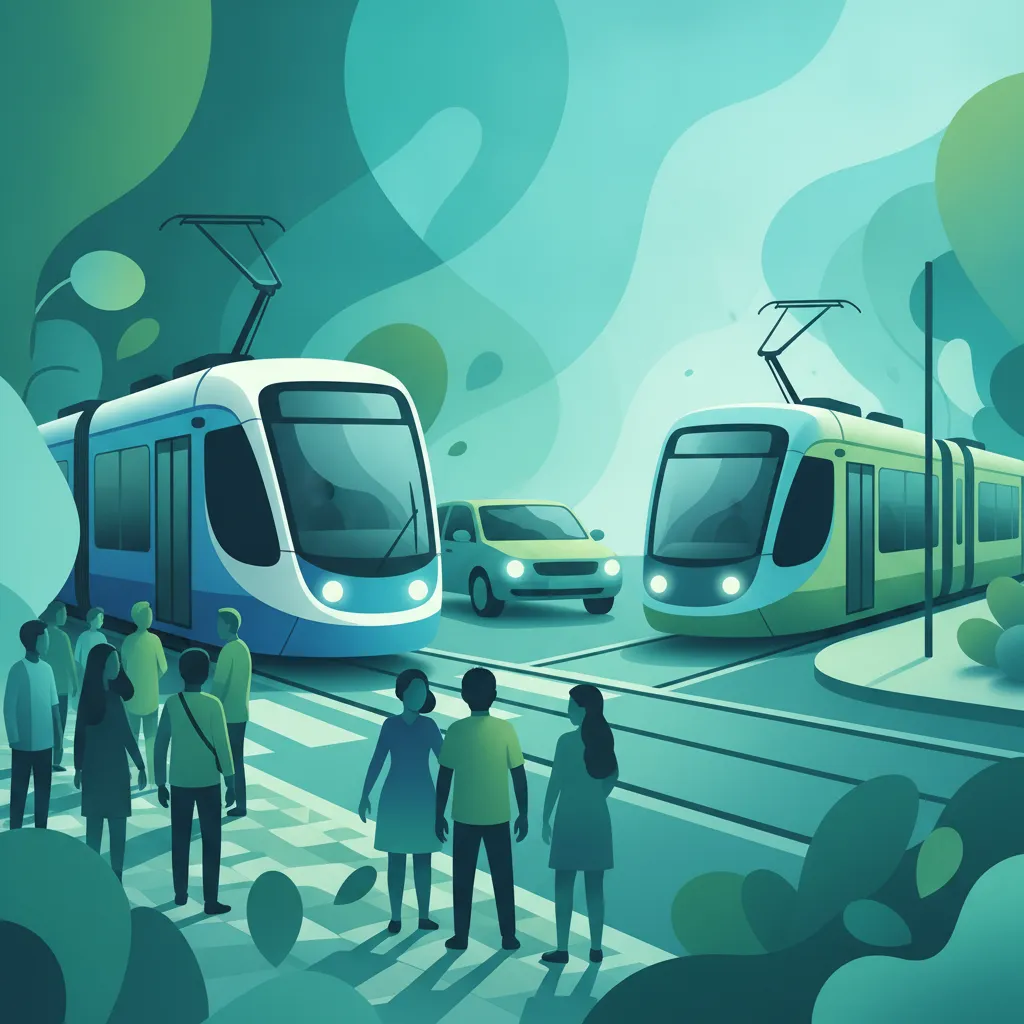
This lesson focuses on the unique challenges and safety protocols required when operating alongside trams and light rail systems. It clarifies the strict right-of-way rules that typically favor trams and explains how to safely navigate shared roadways and cross tracks. Learners will be taught to recognize specific signals and markings related to tramways to prevent conflicts and ensure the safety of all road users.
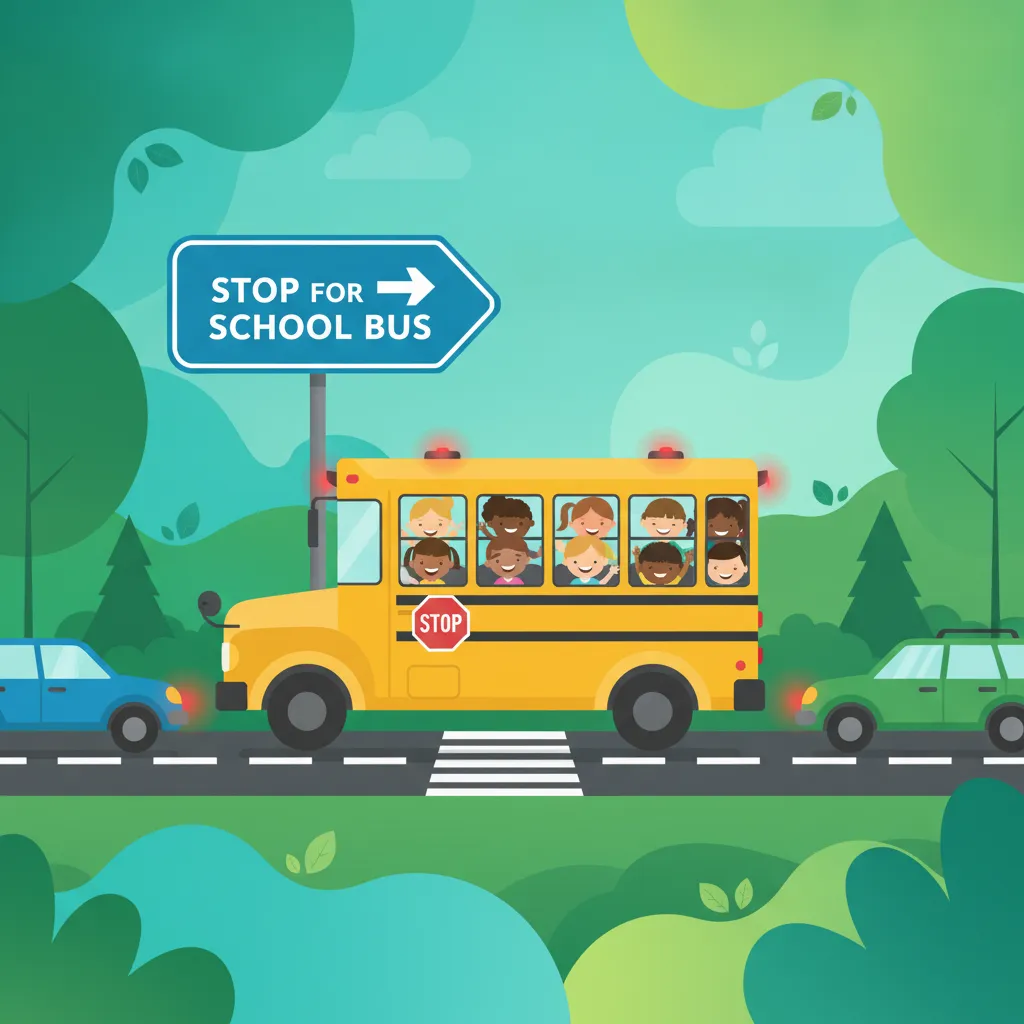
This lesson details the specific legal obligations and safety protocols required for transporting schoolchildren. It covers the correct procedures for pick-up and drop-off, the use of warning lights, and the importance of supervised boarding and alighting. The lesson also explains how to interact with school crossing guards and navigate school zones safely to ensure the highest level of protection for children.
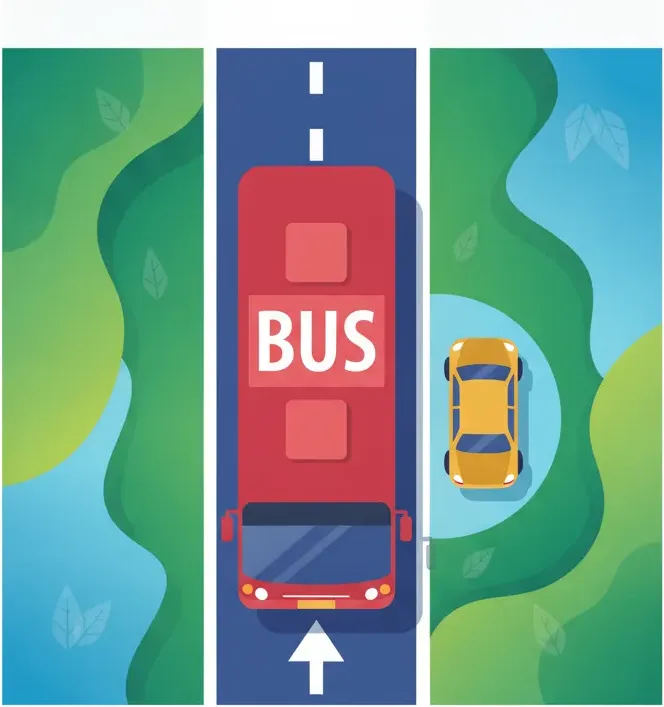
This lesson provides a detailed explanation of the rules governing dedicated bus lanes, including how to interpret markings and adhere to time-based restrictions. It clarifies the priority rules that grant buses precedence in certain traffic situations, such as when pulling out from a stop. Understanding these regulations allows drivers to use bus infrastructure efficiently and legally to maintain schedules and improve traffic flow.
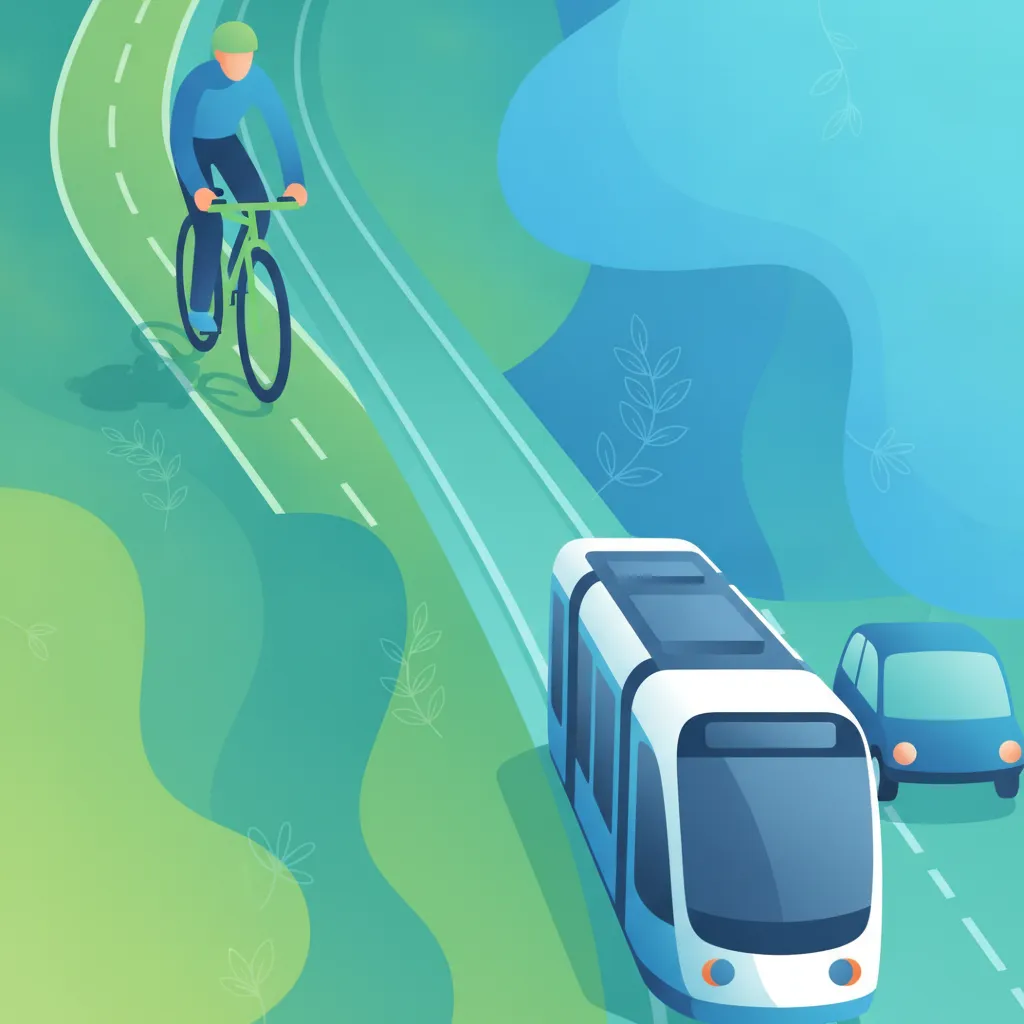
This lesson focuses on complex traffic environments where different types of road users share the same space. It provides guidance on situations like driving on streets with integrated tram tracks or where bus and bicycle lanes are part of the roadway. The content emphasizes understanding the specific priority rules and being extra vigilant to anticipate potential conflicts in these busy, shared zones.

This lesson provides an overview of the various types of bus stops, such as scheduled, request, and marked station stops. It explains the legal regulations governing stopping procedures, including how to interpret official signage and the importance of adhering to the route timetable. Learners will understand their obligations and the correct procedures for each type of stop to ensure legal compliance and efficient service.
This lesson familiarizes drivers with the various special traffic signals and signs that apply exclusively to buses and other public transport vehicles. It covers the interpretation of bus-only signals (often showing bars or letters), flashing priority indicators, and lane-use control signs. Correctly understanding these signals is crucial for legal compliance and for taking advantage of public transport priority measures in urban areas.
This lesson provides instruction on the rules and best practices for operating a large passenger vehicle on the Autobahn. It covers the principles of strict lane discipline, regulations for minimum speed, and correct procedures for overtaking and merging. The importance of maintaining significantly increased following distances at high speeds and planning for exits well in advance is a key focus.
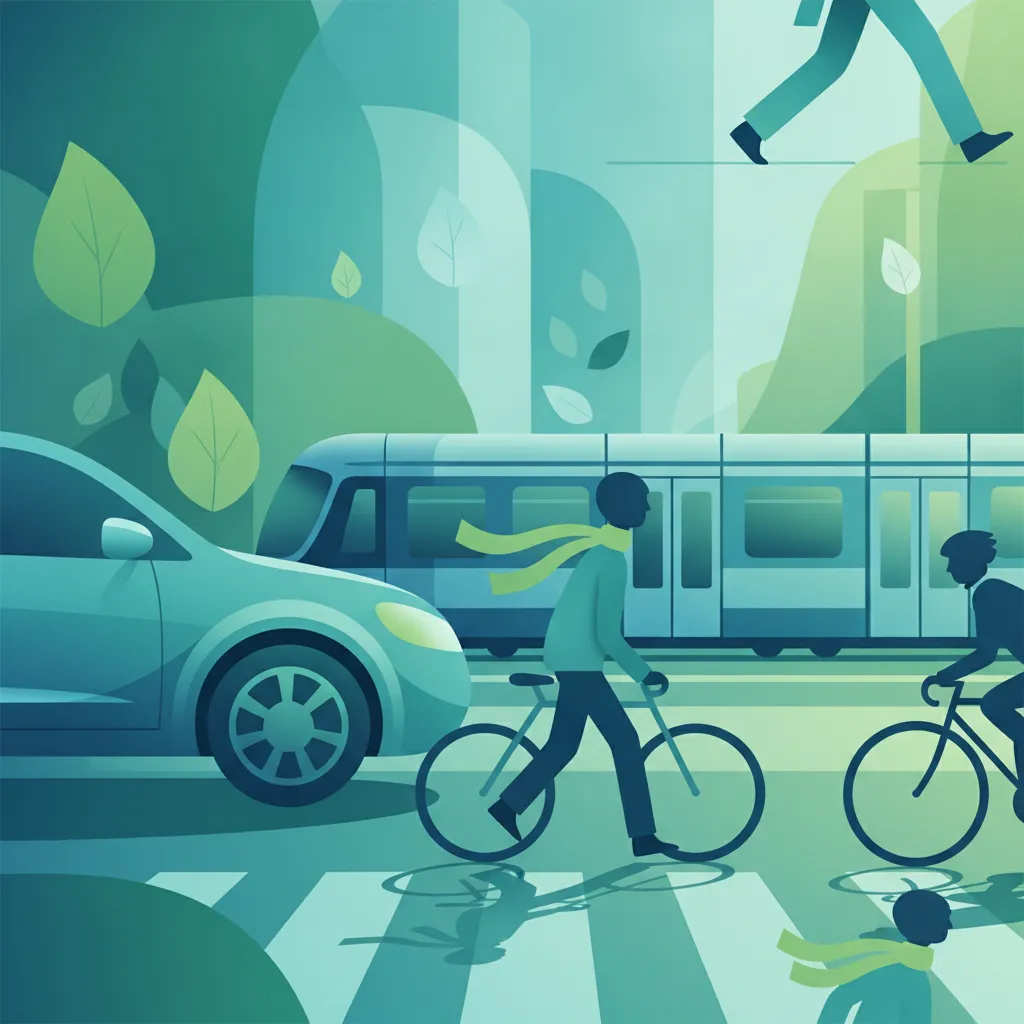
This lesson teaches riders how to interact safely and predictably with pedestrians, cyclists, and public transport vehicles. It highlights the importance of yielding at designated crossings, maintaining a safe passing distance, and anticipating the movements of buses and trams. The content emphasizes using eye contact and clear signaling to foster safe and respectful interactions with all road users.
Detailed explanation of how to safely navigate German roads with tram tracks and bus stops. Covers rules for trams having absolute priority and the correct procedure when buses signal to depart from a designated stop.
This lesson focuses on the unique challenges and safety protocols required when operating alongside trams and light rail systems. It clarifies the strict right-of-way rules that typically favor trams and explains how to safely navigate shared roadways and cross tracks. Learners will be taught to recognize specific signals and markings related to tramways to prevent conflicts and ensure the safety of all road users.
This lesson focuses on complex traffic environments where different types of road users share the same space. It provides guidance on situations like driving on streets with integrated tram tracks or where bus and bicycle lanes are part of the roadway. The content emphasizes understanding the specific priority rules and being extra vigilant to anticipate potential conflicts in these busy, shared zones.
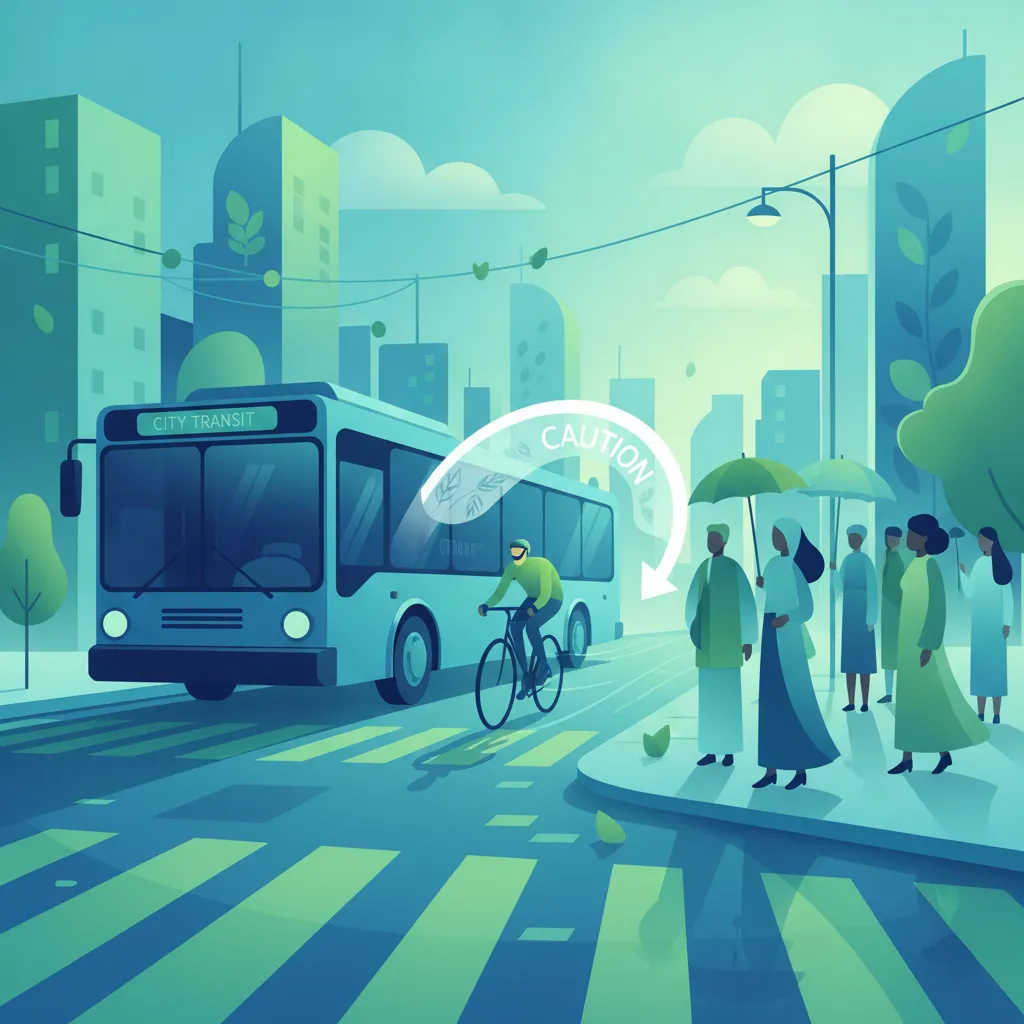
This lesson focuses on the critical moments of interaction with pedestrians and cyclists near bus stops, a common location for accidents. It reinforces the importance of reducing speed, yielding right-of-way, and constantly monitoring blind spots during the stopping process. Learners will practice techniques like making eye contact and using signals to communicate intentions, creating a safer environment for everyone around the vehicle.

This lesson focuses on the particular care required when driving near pedestrians, with a special emphasis on children and the elderly, whose behavior can be unpredictable. It covers the rules for yielding at zebra crossings and the importance of reducing speed near schools, playgrounds, and residential areas. The goal is to instill a habit of constant vigilance and readiness to stop.
This lesson provides a detailed explanation of the rules governing dedicated bus lanes, including how to interpret markings and adhere to time-based restrictions. It clarifies the priority rules that grant buses precedence in certain traffic situations, such as when pulling out from a stop. Understanding these regulations allows drivers to use bus infrastructure efficiently and legally to maintain schedules and improve traffic flow.
This lesson provides an overview of the various types of bus stops, such as scheduled, request, and marked station stops. It explains the legal regulations governing stopping procedures, including how to interpret official signage and the importance of adhering to the route timetable. Learners will understand their obligations and the correct procedures for each type of stop to ensure legal compliance and efficient service.

This lesson teaches the precise techniques for positioning a passenger vehicle at a bus stop to ensure safety and accessibility. It covers proper alignment with the curb, managing approach speed, and positioning the doors in a safe zone away from hazards. Learners will understand how to perform these maneuvers without disrupting traffic flow and while maintaining awareness of pedestrians and cyclists in the vicinity.
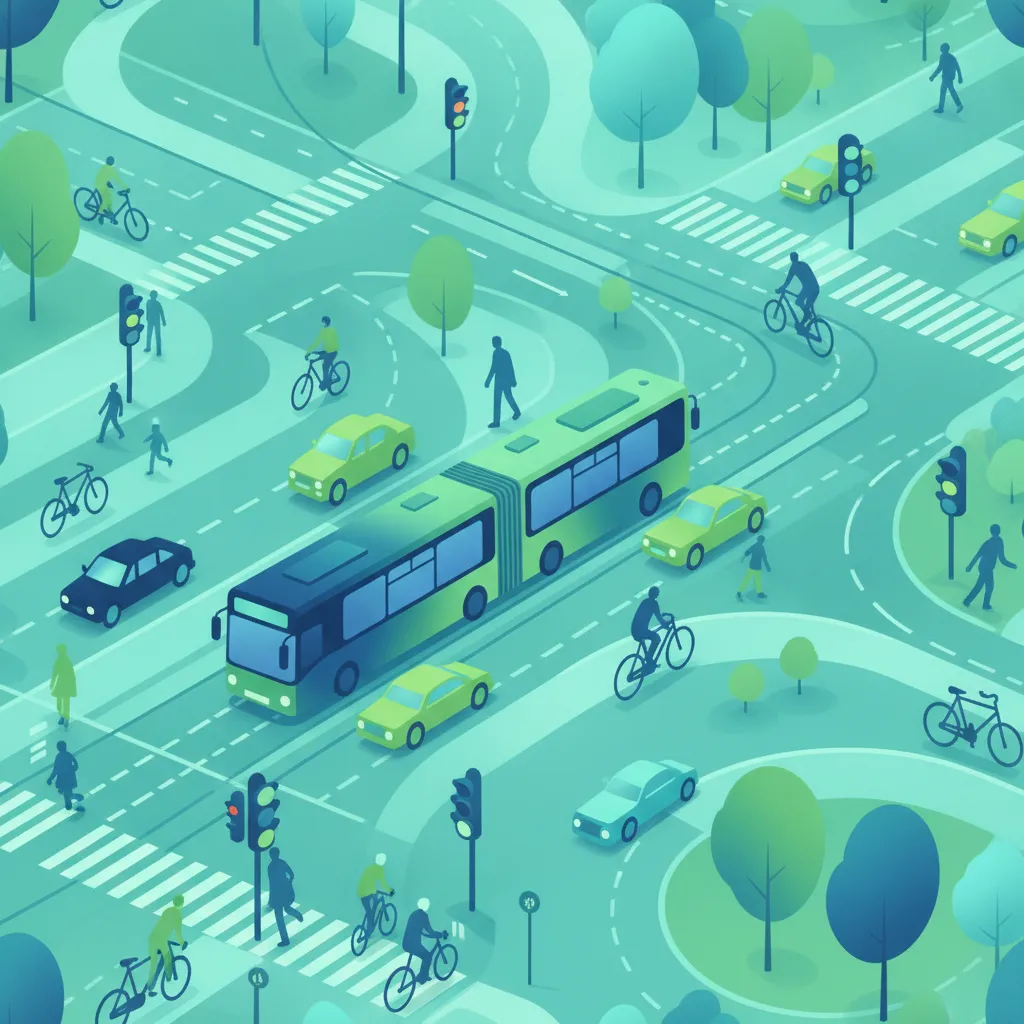
This lesson explores the complex and fast-paced nature of urban traffic environments. It covers topics such as high traffic density, frequent pedestrian crossings, and complex intersections that require heightened awareness. Learners will develop strategies for adapting their speed and lane positioning to navigate these challenges safely, especially during peak rush hour periods and in areas with traffic calming measures.
Find clear answers to common questions learners have about Public Transport (Buses, Trams, School Buses). Learn how the lesson is structured, which driving theory objectives it supports, and how it fits into the overall learning path of units and curriculum progression in Germany. These explanations help you understand key concepts, lesson flow, and exam focused study goals.
If a bus has its indicators on to pull away from a stop, you must yield only if it is actually merging into traffic. You are not required to stop if you can pass safely without hindering the bus, but you must be prepared to slow down if the bus pulls out into your lane.
You must drive at a walking pace (approx. 4-7 km/h) if you are passing a school bus that has turned on its hazard lights to indicate it is letting passengers on or off. This rule applies to traffic in both directions if the road is not physically separated.
Generally, yes. Trams follow a strict priority system under the StVO. You must never obstruct a tram and should always give way when turning or crossing their path unless specific traffic lights or signs clearly state otherwise.
You may drive on or cross tram tracks if there are no signs prohibiting it, provided you do not obstruct the tram. However, you must always watch for the tram's position and move off the tracks immediately when a tram approaches.
Begin your targeted revision now. Use our practice search to quickly find specific German driving theory questions. Filter by StVO rules, road signs, or hazard perception to create your focused study plan. Master challenging areas and prepare confidently for your theoretical driving test.