
This lesson details the critical components of motorcycle protective equipment, focusing on material durability and effective layering strategies. You will learn how to choose gear that maintains both safety and comfort in diverse German weather conditions, essential for your practical and theoretical motorcycle competence.

Lesson content overview
Riding a motorcycle offers unparalleled freedom, but it also comes with inherent risks. To mitigate these risks and ensure both safety and comfort, choosing the right protective clothing is paramount. This lesson provides an in-depth guide to understanding the materials, construction, and layering strategies for motorcycle gear, essential knowledge for anyone undertaking the German Motorcycle Licence Theory Course. Proper equipment can significantly reduce injury severity in an accident and improve your riding experience in all weather conditions, allowing you to maintain focus and control on German roads.
Motorcycle protective clothing is more than just an accessory; it is a critical safety system designed to shield riders from injury during falls or collisions. Beyond impact protection, modern gear also offers crucial abrasion resistance, preventing road rash and severe skin damage when sliding along a surface. Additionally, well-chosen clothing contributes significantly to rider comfort by providing thermal regulation and protection against various weather elements, from rain and wind to extreme heat or cold. This comfort, in turn, helps riders maintain concentration and control, leading to safer riding habits.
One of the primary functions of motorcycle clothing is to protect the skin from abrasion in the event of a slide. Abrasion resistance is the material's ability to resist wear and tear when sliding against the ground or other surfaces. This protection is vital for preventing skin injuries, which can range from minor scrapes to severe degloving injuries requiring extensive medical treatment. The choice of material—primarily leather or specific textiles—directly impacts this protective capability.
Leather has long been the gold standard for motorcycle protective clothing due to its natural strength and excellent abrasion resistance. It is derived from animal hide, primarily cowhide, and processed to enhance its durability and flexibility.
Advantages of Leather:
Disadvantages of Leather:
Textile motorcycle clothing has evolved significantly, offering a versatile alternative to leather, particularly for touring, commuting, and varied weather conditions. These garments are typically made from advanced synthetic fibers such as Cordura®, Kevlar®, or Dynema®, often woven in specific patterns to enhance strength and abrasion resistance.
Advantages of Textile:
Disadvantages of Textile:
The choice between leather and textile often comes down to riding style, typical weather conditions, and personal preference.
| Feature | Leather | Textile |
|---|---|---|
| Abrasion Resistance | Excellent, especially thicker racing leather | Good to excellent, depending on material (e.g., Cordura) |
| Weather Protection | Poor in rain without waterproofing treatment | Often excellent with integrated waterproof membranes |
| Breathability | Limited (can be hot), unless perforated | Generally better, often with adjustable vents |
| Weight | Heavier | Lighter |
| Comfort/Fit | Molds to body over time, snug | More structured, less body-conforming |
| Maintenance | Requires specific cleaning and conditioning | Easier to clean, machine washable (check labels) |
| Cost | Can be higher for top-tier products | Wide range, often more affordable |
For track riding and aggressive sport riding, leather is generally preferred for its superior slide protection. For touring, commuting, or riding in mixed weather, high-quality textile gear with advanced features often provides a better balance of protection, comfort, and versatility. Many riders choose a hybrid approach, combining leather pants with a textile jacket, or vice versa, based on their needs.
Beyond the material's abrasion resistance, impact protection is crucial. This is provided by specialized body armor designed to absorb and dissipate energy from impacts. This armor can either be integrated into the clothing or worn separately.
Integrated armor consists of protective inserts (e.g., for back, shoulders, elbows, hips, and knees) that are sewn directly into dedicated pockets within the garment. These pockets are strategically placed to align the armor with critical body parts.
Advantages:
Disadvantages:
Separate armor refers to protective pieces that are worn independently or can be added to garments that have compatible pockets. Examples include standalone back protectors, chest protectors, or armor worn under a jacket.
Advantages:
Disadvantages:
Regardless of whether armor is integrated or separate, it must meet stringent safety standards. In Germany and across the European Union, protective armor must be CE marked according to the EN 1621 standard.
CE marking indicates that a product conforms with European health, safety, and environmental protection standards. For motorcycle gear, it signifies that armor and garments meet the required impact and abrasion resistance criteria.
Always look for the CE mark on armor and check for the specific EN 1621 level to ensure you are adequately protected.
A well-designed layering system is key to comfort and safety on a motorcycle. It allows riders to adapt their clothing to changing weather conditions, preventing both hypothermia in the cold and overheating in the heat, all without compromising protective qualities. This system typically involves three main layers: a base layer, an insulating middle layer, and an outer shell layer.
Worn directly against the skin, the base layer's primary function is to wick moisture (sweat) away from the body. This keeps the skin dry, which is crucial for both warmth in cold weather and cooling in hot weather.
The middle layer is designed to trap body heat, providing thermal insulation. This layer's thickness can be adjusted based on ambient temperature.
The outer layer is your primary defense against the elements and provides the crucial abrasion and impact protection. It's typically a motorcycle jacket and pants made of leather or abrasion-resistant textile.
When choosing your layering system, ensure each layer fits comfortably without being too bulky, which could restrict movement or impede control of the motorcycle. The outer shell must fit snugly enough to keep armor in place during a slide.
Effective weather adaptation is vital for maintaining comfort, concentration, and ultimately, safety on the road. Motorcycle gear should be versatile enough to handle rain, cold, heat, and wind.
Riding in rain requires gear that keeps you dry without causing you to overheat from trapped sweat.
Cold can quickly sap a rider's concentration and reaction time. Proper thermal management is therefore critical.
Overheating can lead to fatigue, dehydration, and reduced focus. Summer riding demands gear designed for ventilation.
Wind resistance is a constant factor for motorcyclists, causing both discomfort and fatigue.
A thin, multi-layered fabric technology (e.g., Gore-Tex®, eVent®) that prevents liquid water from passing through (keeping rain out) while allowing water vapor (sweat) to escape. This keeps the rider dry from both external rain and internal perspiration.
These membranes are a cornerstone of modern weather-adapted motorcycle gear. They are typically laminated to the outer fabric or used as a separate liner. The microscopic pores in the membrane are too small for water droplets to penetrate but large enough for water vapor molecules to escape. This technology is vital for rider comfort, preventing the cold and clammy feeling that can occur when waterproof gear traps sweat.
In Germany and throughout the EU, protective clothing for motorcyclists is subject to specific safety standards to ensure a minimum level of protection. Compliance with these standards is not only about safety but can also be a legal requirement.
The EN 17092 European standard specifically addresses protective clothing for motorcyclists. It categorizes garments based on their level of protection against abrasion, impact, and tear resistance. This standard has replaced older, less comprehensive certifications.
Always look for the EN 17092 label on your motorcycle gear, indicating which class of protection the garment offers. This will help you choose gear appropriate for your riding style and needs.
While wearing motorcycle-specific protective clothing (beyond a helmet) is not universally mandatory for all riders under German law (StVO), it is strongly recommended and has specific implications for certain rider classes.
For riders obtaining their Class A1 licence, it is mandatory to wear at least one class of protective gear (e.g., a jacket or pants) that meets the EN 17092 standard during practical training and exams. This highlights the importance of standardized protection. Even when not explicitly legally mandated, failing to wear appropriate protective clothing could be considered negligence in the event of an accident, potentially affecting insurance claims or liability assessments.
Always choose gear that is CE certified and meets EN 17092, regardless of specific legal mandates, as it significantly reduces your risk of severe injury.
Protective clothing must fit correctly to be effective. Ill-fitting gear can be dangerous:
When trying on gear, ensure:
Even with the best intentions, riders can make mistakes when choosing or using their protective gear. Understanding these pitfalls can help you make safer choices.
| Violation | Incorrect Action | Correct Action | Potential Consequence |
|---|---|---|---|
| No abrasion-resistant clothing | Riding in jeans and a regular jacket on German roads | Always wearing an EN 17092 certified motorcycle jacket and pants | Severe road rash, broken bones, permanent scarring in a fall |
| Ignoring weather adaptation | Wearing non-waterproof gear in heavy rain or thick insulated gear in summer | Layering with waterproof shell in rain; ventilating in heat | Hypothermia, heatstroke, loss of concentration, accidents |
| Ill-fitting armor | Armor pads are too loose or misaligned | Ensure armor is snug and correctly positioned over joints | Armor shifts during impact, providing no protection |
| Over-layering causing bulk | Wearing too many thick layers under a tight jacket | Choosing thin, effective layers; opening vents | Restricted movement, impeded control, overheating |
| Forgetting separate armor | Leaving your standalone back protector at home | Consistently wearing all CE-marked armor | Increased risk of spinal injury in an accident |
| Neglecting high-visibility | Wearing dark gear at night or in poor weather | Wearing reflective and brightly colored outer layers | Other road users fail to see you, leading to collisions |
Always dress for the slide, not for the ride. Even a short, slow ride carries the risk of a fall. The consequences of not wearing adequate protection far outweigh any minor inconvenience.
Understanding protective clothing materials, the benefits of integrated armor, and the versatility of a layering system is fundamental for any motorcyclist. Abrasion resistance from materials like leather and high-performance textiles, combined with CE-certified impact armor, forms the core of your physical protection. The strategic use of base, insulating, and shell layers, along with breathable waterproof membranes, allows for comfortable and safe riding in all weather conditions prevalent across Germany and beyond.
By adhering to standards like EN 17092, ensuring a proper fit, and adapting your gear to the specific context of your ride – be it urban commuting, long-distance touring, or varying weather – you significantly reduce injury risk, improve comfort, and enhance your overall safety on the road. This comprehensive approach to protective clothing is a critical component of responsible motorcycle riding and preparation for the German Motorcycle Licence Theory Course.
This lesson covers the essential characteristics of motorcycle protective materials, explaining that leather excels in abrasion resistance and slide protection while modern textiles offer superior weather adaptability through breathable waterproof membranes. Learners must understand the European safety framework: EN 1621 for impact armor certification levels and EN 17092 for garment protection classes, with Class A1 riders in Germany required to wear at least one certified garment during training. The three-layer system (moisture-wicking base, thermal insulating middle, and protective outer shell) enables riders to manage diverse German weather conditions while maintaining safety, and proper fit ensures armor remains positioned and controls remain accessible during riding.
A short set of high-value points that capture the most important learning from this lesson.
Leather provides superior abrasion resistance for slide protection, while textile offers better weather versatility and comfort for varied conditions.
All impact armor must be CE certified to EN 1621 standards, with Level 2 back protectors offering higher impact absorption than Level 1.
The three-layer system (base, insulating, outer shell) enables thermal regulation without sacrificing protective qualities.
EN 17092 classifies motorcycle garments from Class AAA (maximum protection) to Class C (impact protection only), helping riders select appropriate gear.
Proper fit is critical: armor must stay positioned during a crash, and clothing must not restrict the rider's ability to control the motorcycle.
Explore all units and lessons included in this driving theory course.
For Class A1 licence holders in Germany, wearing at least one EN 17092-certified garment is mandatory during practical training and exams.
A breathable membrane like Gore-Tex keeps rain out while allowing sweat vapor to escape, preventing both external wetness and internal clamminess.
In warm weather, use moisture-wicking base layers and open ventilation zippers rather than removing protective layers entirely.
Textile gear with waterproof membranes performs better in German rain than untreated leather, which absorbs water and takes long to dry.
Armor that shifts upon impact or clothing that restricts movement can be more dangerous than wearing no gear at all.
Riding in regular clothing (jeans, hoodies) instead of EN 17092-certified motorcycle gear, leaving skin vulnerable to severe road rash in a fall.
Failing to wear CE-certified armor, assuming the garment material alone provides sufficient impact protection.
Wearing cotton base layers, which absorb and retain moisture, causing dangerous chilling in cold or wet conditions.
Choosing gear solely for maximum protection (Class AAA leather suit) without considering climate adaptation, leading to overheating and fatigue.
Skipping reflective and high-visibility elements, particularly in Germany's frequent rainy or low-light driving conditions.
Lesson content overview
A short set of high-value points that capture the most important learning from this lesson.
Leather provides superior abrasion resistance for slide protection, while textile offers better weather versatility and comfort for varied conditions.
All impact armor must be CE certified to EN 1621 standards, with Level 2 back protectors offering higher impact absorption than Level 1.
The three-layer system (base, insulating, outer shell) enables thermal regulation without sacrificing protective qualities.
EN 17092 classifies motorcycle garments from Class AAA (maximum protection) to Class C (impact protection only), helping riders select appropriate gear.
Proper fit is critical: armor must stay positioned during a crash, and clothing must not restrict the rider's ability to control the motorcycle.
Explore all units and lessons included in this driving theory course.
For Class A1 licence holders in Germany, wearing at least one EN 17092-certified garment is mandatory during practical training and exams.
A breathable membrane like Gore-Tex keeps rain out while allowing sweat vapor to escape, preventing both external wetness and internal clamminess.
In warm weather, use moisture-wicking base layers and open ventilation zippers rather than removing protective layers entirely.
Textile gear with waterproof membranes performs better in German rain than untreated leather, which absorbs water and takes long to dry.
Armor that shifts upon impact or clothing that restricts movement can be more dangerous than wearing no gear at all.
Riding in regular clothing (jeans, hoodies) instead of EN 17092-certified motorcycle gear, leaving skin vulnerable to severe road rash in a fall.
Failing to wear CE-certified armor, assuming the garment material alone provides sufficient impact protection.
Wearing cotton base layers, which absorb and retain moisture, causing dangerous chilling in cold or wet conditions.
Choosing gear solely for maximum protection (Class AAA leather suit) without considering climate adaptation, leading to overheating and fatigue.
Skipping reflective and high-visibility elements, particularly in Germany's frequent rainy or low-light driving conditions.
Explore search topics learners often look for when studying Protective Clothing Materials, Layering, and Weather Adaptation. These topics reflect common questions about road rules, driving situations, safety guidance, and lesson level theory preparation for learners in Germany.
Browse additional driving theory lessons that cover connected traffic rules, road signs, and common driving situations related to this topic. Improve your understanding of how different rules interact across everyday traffic scenarios.
Learn about the properties of different materials used in motorcycle gear, including textiles and leather. Understand how effective layering systems enhance comfort and safety in various weather conditions, as required for German driving theory.
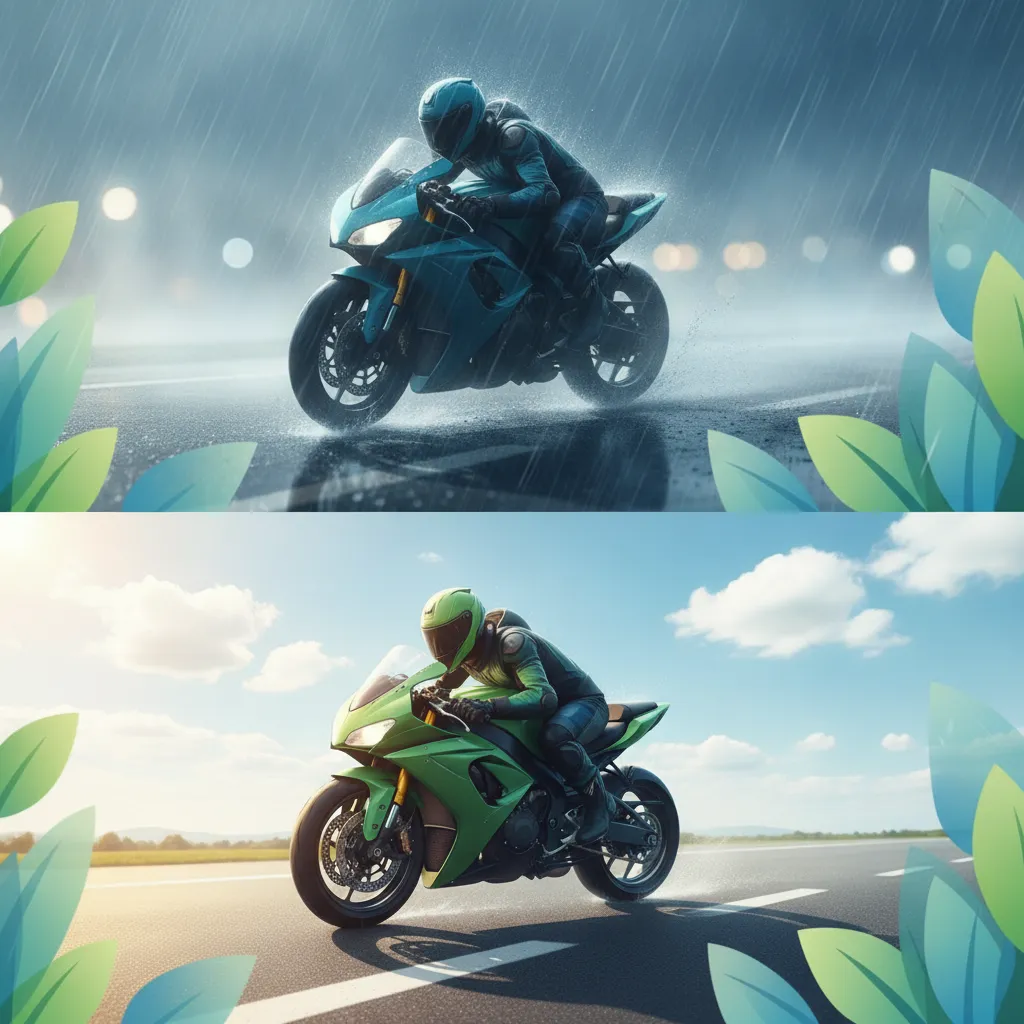
This lesson examines how different weather conditions, such as rain, strong winds, and fog, directly impact motorcycle safety. It explains how wet surfaces reduce tyre grip and increase braking distances, requiring smoother rider inputs. The content also provides strategies for managing reduced visibility and the physical effects of crosswinds on the motorcycle's stability.

This lesson focuses on strategies to enhance a rider's visibility to others, a key aspect of motorcycle safety. It explains how high-visibility gear with neon colors and retroreflective materials functions to make the rider more conspicuous during both day and night. The content covers different types of reflective accessories and their proper placement to maximize effectiveness in traffic.
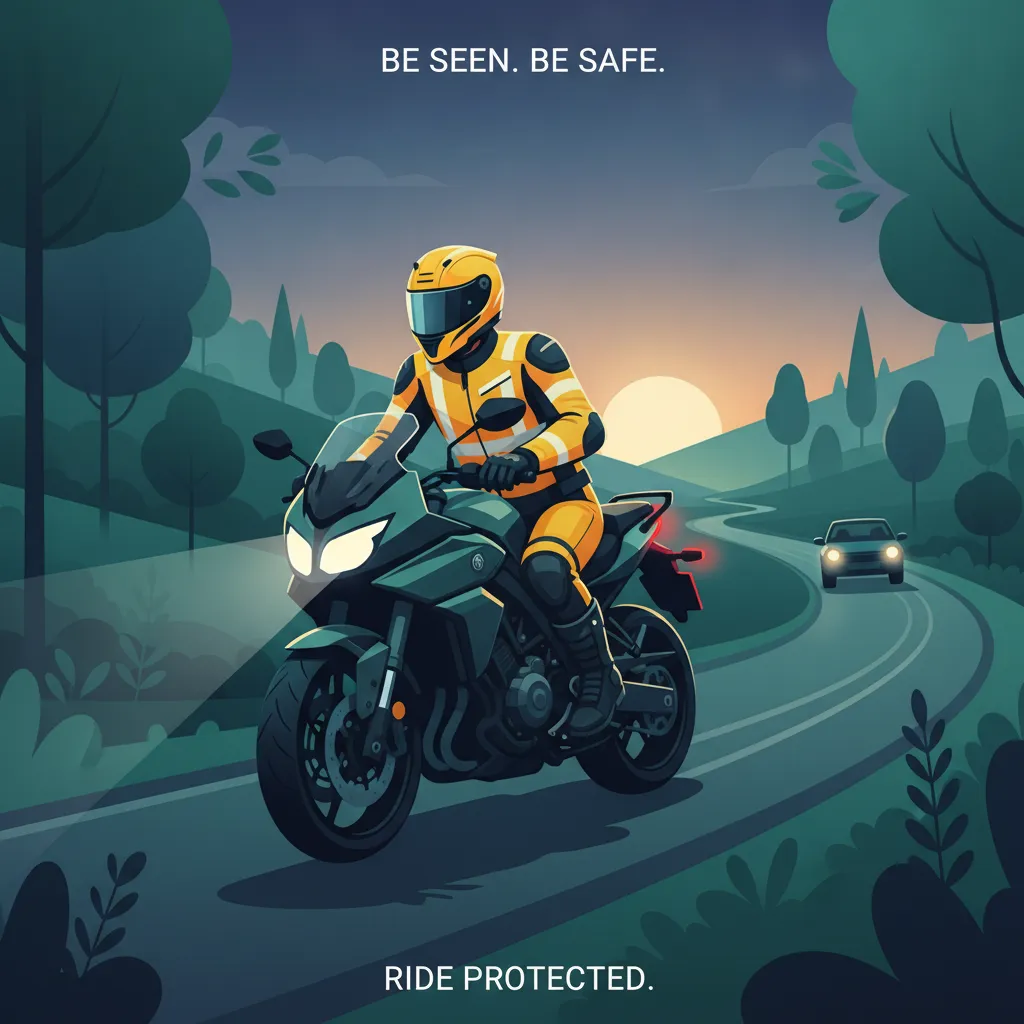
This lesson details the importance of personal protective equipment for rider safety. It covers the legal standards for helmets in Germany, the benefits of wearing abrasion-resistant jackets and gloves, and the value of high-visibility clothing. It also explains the proper use of vehicle lighting systems to ensure visibility to others.

This lesson examines the specific hazards posed by different weather conditions. It explains how rain can lead to hydroplaning and reduced grip, how fog impairs visibility, and how strong winds can affect stability. Riders will learn practical strategies, such as reducing speed and increasing following distance, to mitigate these risks.

This lesson examines the various types of motorcycle helmets and emphasizes selecting a model that meets ECE safety standards. Learners are guided on how to achieve a proper, secure fit, which is critical for the helmet's protective function. The content also covers essential maintenance, such as cleaning the visor and inspecting the retention system to ensure continued safety and comfort.
Understand the importance of safety standards and certification for motorcycle protective clothing, such as CE ratings. This lesson covers essential gear requirements and their role in rider safety according to German traffic regulations for all licence classes.
This lesson examines the various types of motorcycle helmets and emphasizes selecting a model that meets ECE safety standards. Learners are guided on how to achieve a proper, secure fit, which is critical for the helmet's protective function. The content also covers essential maintenance, such as cleaning the visor and inspecting the retention system to ensure continued safety and comfort.
This lesson details the importance of personal protective equipment for rider safety. It covers the legal standards for helmets in Germany, the benefits of wearing abrasion-resistant jackets and gloves, and the value of high-visibility clothing. It also explains the proper use of vehicle lighting systems to ensure visibility to others.
This lesson focuses on strategies to enhance a rider's visibility to others, a key aspect of motorcycle safety. It explains how high-visibility gear with neon colors and retroreflective materials functions to make the rider more conspicuous during both day and night. The content covers different types of reflective accessories and their proper placement to maximize effectiveness in traffic.
This lesson examines how different weather conditions, such as rain, strong winds, and fog, directly impact motorcycle safety. It explains how wet surfaces reduce tyre grip and increase braking distances, requiring smoother rider inputs. The content also provides strategies for managing reduced visibility and the physical effects of crosswinds on the motorcycle's stability.
This lesson highlights the specific risks associated with motorcyclists, who are less visible and more vulnerable than car drivers. It teaches you to actively look for motorcycles, especially at intersections and during lane changes, as their smaller profile can be easily missed. You will learn about their potential for rapid acceleration and instability, emphasizing the need for extra following distance.
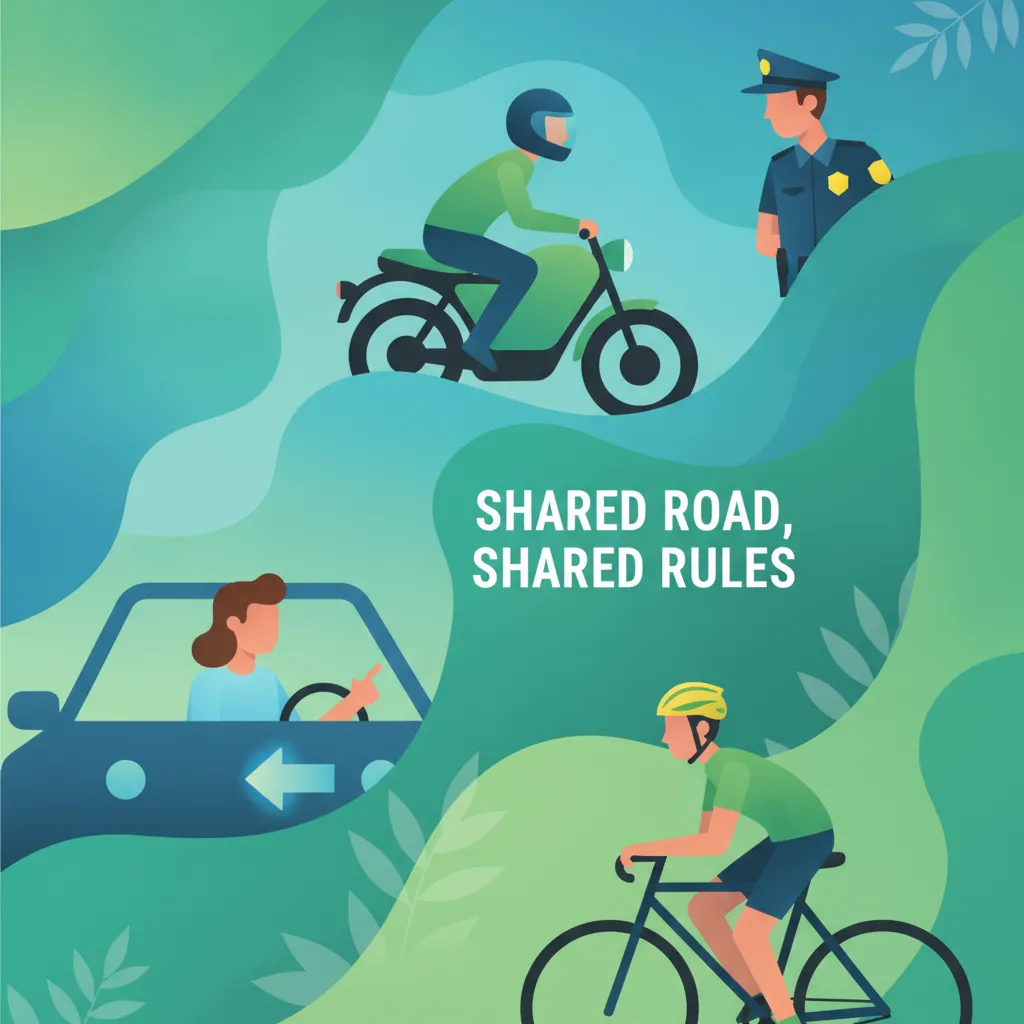
This lesson details the legal obligations every AM licence holder must follow. It emphasizes compliance with the Straßenverkehrs-Ordnung (StVO), including mandatory helmet use and maintaining vehicle roadworthiness. The content covers insurance requirements, accident reporting procedures, and the legal consequences of non-compliance.
Find clear answers to common questions learners have about Protective Clothing Materials, Layering, and Weather Adaptation. Learn how the lesson is structured, which driving theory objectives it supports, and how it fits into the overall learning path of units and curriculum progression in Germany. These explanations help you understand key concepts, lesson flow, and exam focused study goals.
While the law mandates that you must be sufficiently protected, it does not prescribe specific brands. However, for your practical test, examiners strictly verify that you wear certified protective gear, including a helmet, jacket, gloves, and boots.
Leather provides superior abrasion resistance compared to most textiles. In the event of a slide on asphalt, high-quality leather holds up better, significantly reducing the risk of skin and muscle injuries.
Layering allows you to adapt to temperature changes without sacrificing protective layers. If you are too cold, your reaction time slows down; if you are too hot, you may become distracted. Proper layering maintains your physical comfort, which is crucial for maintaining focus on the road.
Always check for CE-certified protectors (EN 1621 standard) in high-impact areas like elbows, shoulders, knees, and the back. These dissipate the force of an impact, protecting your joints and spine during a crash.
Begin your targeted revision now. Use our practice search to quickly find specific German driving theory questions. Filter by StVO rules, road signs, or hazard perception to create your focused study plan. Master challenging areas and prepare confidently for your theoretical driving test.