
This lesson explores the crucial safety equipment required for riders under the AM licence category in Germany. You will learn about legal standards for helmets, the benefits of high-visibility clothing, and how to properly maintain your vehicle's lighting systems to stay safe on the road.
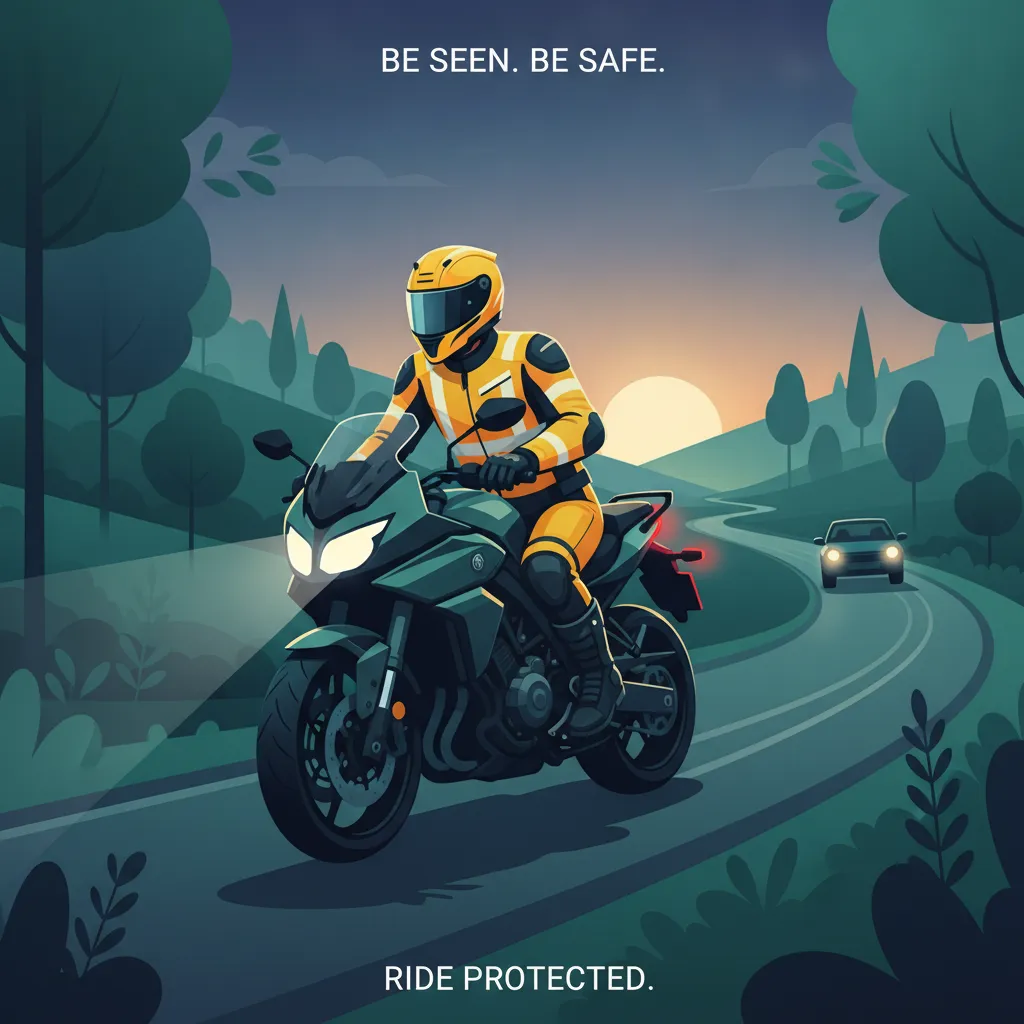
Lesson content overview
This lesson, part of the German Driving Theory Course for AM Licence (Mopeds & Scooters), focuses on the critical role of personal protective equipment and vehicle lighting systems. Mastering these aspects is fundamental for ensuring your safety and the safety of others on the road when operating mopeds, scooters, and light quadricycles in Germany.
Operating a moped or scooter, while offering freedom and efficiency, also comes with inherent risks. Unlike drivers of enclosed vehicles, riders are directly exposed to the environment and other traffic. This vulnerability makes personal protective equipment (PPE) not just a recommendation, but a crucial line of defense against injury in the event of an accident. Appropriate gear significantly reduces the severity of potential injuries, while effective lighting and reflective elements ensure you are seen by other road users, preventing collisions before they occur.
The logic behind comprehensive safety measures is two-fold: physical protection mitigates harm from impacts and abrasions, and enhanced visibility ensures you are detected early by drivers, cyclists, and pedestrians. This lesson will detail the specific requirements and best practices for helmets, protective clothing, reflective materials, and vehicle lighting systems as mandated and recommended by German road safety regulations (Straßenverkehrs-Ordnung – StVO).
The most vital piece of protective equipment for any two-wheeled vehicle rider is the helmet. Its primary purpose is to absorb and distribute the energy from an impact, safeguarding the head and brain from severe injury during a crash. In Germany, wearing a helmet is not just a safety recommendation; it is a strict legal requirement for all riders of mopeds, scooters, and light quadricycles falling under the AM licence category.
According to German law, every rider and passenger on a moped or scooter must wear a suitable protective helmet. This helmet must meet the European standard ECE 22.05 or any newer version (such as ECE 22.06). This standard certifies that the helmet has undergone rigorous testing for impact absorption, penetration resistance, chin strap strength, and peripheral vision. Using a helmet that does not comply with this standard is illegal and offers insufficient protection.
Riding without a legally approved helmet or with a helmet that does not meet the ECE standard is a serious violation of the StVO and can result in significant fines and points on your driving record. More importantly, it dramatically increases the risk of fatal or severe head injuries in an accident.
While all approved helmets offer protection, different types cater to various preferences and riding conditions. Understanding these can help you choose the best option for your needs:
A helmet can only provide maximum protection if it fits correctly. An ill-fitting helmet can shift during an impact, compromising its protective capabilities.
Snug Fit: The helmet should fit snugly around your head without being uncomfortably tight or causing pressure points. It should not move freely when you shake your head.
Chin Strap: The chin strap must always be fastened securely. It should be tight enough so that you can't easily pull the helmet off your head, even when trying to roll it forward from the back.
Peripheral Vision: Ensure the helmet does not obstruct your peripheral vision, which is crucial for observing traffic.
New vs. Used: Always purchase a new helmet. Used helmets may have unseen internal damage from prior impacts or degradation of materials.
Helmets also have a limited lifespan due to material degradation. Manufacturers typically recommend replacing helmets every 3-5 years, or immediately after any significant impact, even if visible damage is not apparent. Do not modify your helmet in any way (e.g., drilling holes, altering the chin strap), as this can compromise its structural integrity.
Ignoring proper helmet usage can have severe consequences:
While not all components of protective clothing are legally mandatory for AM licence holders in Germany (unlike helmets), they are strongly recommended for good reason. In an accident, abrasion against the road surface (often called "road rash") can cause severe and extensive injuries. Proper riding gear significantly reduces the risk of such injuries and can also offer protection against impacts.
Protective jackets and trousers are designed to withstand abrasion and provide impact protection to vulnerable areas of the body.
Your hands are often the first part of your body to make contact with the ground in a fall. Riding gloves are designed to protect them from abrasion, cuts, and impacts.
Being seen by other road users is just as crucial as physical protection. Many accidents involving mopeds and scooters occur because other drivers simply did not see the rider in time. High-visibility clothing and properly placed reflectors are key tools for enhancing your presence on the road, especially in challenging light conditions.
High-visibility clothing is specifically designed to make you stand out from your surroundings, making you more easily detectable by others.
Even during daytime, wearing a brightly coloured jacket or vest can significantly increase your visibility to other road users, reducing the risk of "didn't see them" accidents.
Reflectors are passive safety devices that work by bouncing light back to its source, making objects visible in low-light conditions without generating their own light.
Beyond personal gear, the lighting system of your moped or scooter is your primary means of seeing the road and, critically, being seen by others. Proper functioning and correct use of all lights are essential for safe operation, especially in Germany where regulations are strict.
Your vehicle is equipped with several types of lights, each serving a specific purpose:
The dipped beam is your primary headlight for most riding situations and is subject to strict usage rules in Germany.
The main beam offers the strongest illumination for maximum visibility on unlit roads, but its use comes with crucial restrictions.
Daytime Running Lights (DRL) are designed to make your vehicle more visible during daylight hours.
These lights are crucial for communicating your intentions to other road users, preventing misunderstandings and collisions.
Adhering to the regulations for protective equipment and vehicle lighting is not just about avoiding fines; it's about safeguarding your life and the lives of others. Understanding common violations helps you prevent them.
The effectiveness of your protective gear and lighting system depends heavily on the prevailing riding conditions. Being able to adapt is a hallmark of a responsible rider.
The safety of moped and scooter riders hinges on a combination of effective personal protective equipment and correctly used vehicle lighting systems.
By consistently applying these principles, you significantly reduce your risk of accident and injury, making your experience as an AM licence holder safer and more enjoyable.
This lesson covers essential safety equipment and lighting requirements for AM licence holders (mopeds and scooters) in Germany. Helmets are mandatory and must meet ECE 22.05 or newer standards, properly fitted with the chin strap fastened. While abrasion-resistant clothing with CE-certified armour is strongly recommended for injury prevention, high-visibility fluorescent and retro-reflective gear is crucial for being seen in all conditions. Vehicle lighting follows strict StVO rules: dipped beam is mandatory from sunset to sunrise and in poor visibility, while main beam is restricted to unlit roads without nearby traffic. Understanding and correctly applying these regulations not only ensures legal compliance but significantly reduces the risk of serious injury or fatal accidents on German roads.
A short set of high-value points that capture the most important learning from this lesson.
Helmets are legally mandatory for all AM licence riders in Germany and must meet ECE 22.05 or newer standards.
Protective clothing with CE-certified armour significantly reduces injury severity even though it is not legally required.
Dipped beam (Abblendlicht) must be used from sunset to sunrise and during poor visibility conditions like rain, fog, or snow.
Main beam (Fernlicht) may only be used on completely unlit roads with no traffic ahead within approximately 150 metres.
High-visibility clothing with fluorescent colours and retro-reflective elements dramatically improves detection by other road users in all lighting conditions.
Explore all units and lessons included in this driving theory course.
ECE 22.05 or newer is the mandatory helmet standard for mopeds and scooters in Germany under StVO.
Replace helmets every 3-5 years or immediately after any significant impact, even without visible damage.
Dipped beam is required sunset to sunrise and in poor visibility; main beam is restricted to unlit roads with no oncoming or preceding traffic.
CE Level 1 or Level 2 certification indicates tested impact protection for riding armour in jackets, gloves, and other gear.
Retro-reflective elements work by bouncing light back to its source, making you highly visible when illuminated by vehicle headlights at night.
Riding without a fastened chin strap, which renders the helmet useless in a crash even if it is otherwise properly worn.
Using main beam when approaching or following other vehicles, causing dangerous dazzling that can temporarily blind other road users.
Assuming protective clothing is optional everywhere; while not always mandatory, road rash from inadequate gear can cause severe injuries.
Riding with dark clothing at night or in poor weather without reflective elements, making the rider nearly invisible to other traffic.
Using hazard warning lights for short stops or illegal parking instead of only indicating genuine hazards or breakdowns.
Lesson content overview
A short set of high-value points that capture the most important learning from this lesson.
Helmets are legally mandatory for all AM licence riders in Germany and must meet ECE 22.05 or newer standards.
Protective clothing with CE-certified armour significantly reduces injury severity even though it is not legally required.
Dipped beam (Abblendlicht) must be used from sunset to sunrise and during poor visibility conditions like rain, fog, or snow.
Main beam (Fernlicht) may only be used on completely unlit roads with no traffic ahead within approximately 150 metres.
High-visibility clothing with fluorescent colours and retro-reflective elements dramatically improves detection by other road users in all lighting conditions.
Explore all units and lessons included in this driving theory course.
ECE 22.05 or newer is the mandatory helmet standard for mopeds and scooters in Germany under StVO.
Replace helmets every 3-5 years or immediately after any significant impact, even without visible damage.
Dipped beam is required sunset to sunrise and in poor visibility; main beam is restricted to unlit roads with no oncoming or preceding traffic.
CE Level 1 or Level 2 certification indicates tested impact protection for riding armour in jackets, gloves, and other gear.
Retro-reflective elements work by bouncing light back to its source, making you highly visible when illuminated by vehicle headlights at night.
Riding without a fastened chin strap, which renders the helmet useless in a crash even if it is otherwise properly worn.
Using main beam when approaching or following other vehicles, causing dangerous dazzling that can temporarily blind other road users.
Assuming protective clothing is optional everywhere; while not always mandatory, road rash from inadequate gear can cause severe injuries.
Riding with dark clothing at night or in poor weather without reflective elements, making the rider nearly invisible to other traffic.
Using hazard warning lights for short stops or illegal parking instead of only indicating genuine hazards or breakdowns.
Explore search topics learners often look for when studying Protective Clothing, Helmets, Reflectors, and Lighting Systems. These topics reflect common questions about road rules, driving situations, safety guidance, and lesson level theory preparation for learners in Germany.
Browse additional driving theory lessons that cover connected traffic rules, road signs, and common driving situations related to this topic. Improve your understanding of how different rules interact across everyday traffic scenarios.
Understand the specific legal requirements in Germany for protective helmets, high-visibility clothing, and vehicle lighting systems as mandated by the StVO for AM licence holders. Ensure rider and vehicle compliance.
This lesson provides a comprehensive guide to a vehicle's lighting systems, explaining the purpose and correct usage of each type of light. It covers dipped and main beam headlights, fog lights, and the legally required use of lights during the day or in poor visibility. You will also review the function of brake lights, indicators, and hazard warning lights for communication and safety.

This lesson covers the lighting and reflector requirements for heavy vehicles, including headlamps, side markers, and brake lights. It explains the function of these systems and the necessity of underrun protection to safeguard other road users. The content also discusses regulations governing lighting systems and their importance for safety in all conditions.
This lesson details the legal obligations every AM licence holder must follow. It emphasizes compliance with the Straßenverkehrs-Ordnung (StVO), including mandatory helmet use and maintaining vehicle roadworthiness. The content covers insurance requirements, accident reporting procedures, and the legal consequences of non-compliance.

This lesson provides a detailed overview of the legal framework governing the AM licence in Germany. It explains the classification of vehicles like mopeds and scooters based on engine displacement, power output, and weight. Learners will understand the official age requirements, licensing procedures, and fundamental StVO regulations.
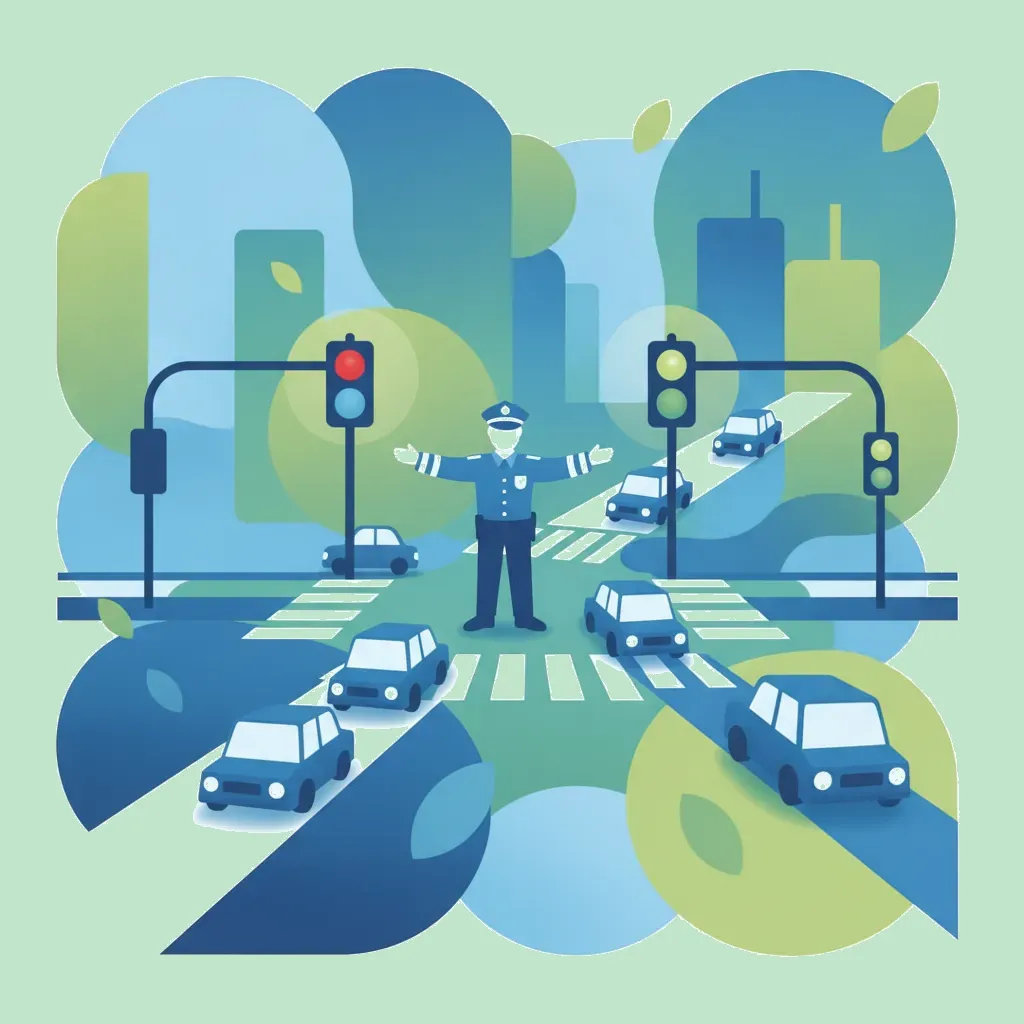
This lesson explains the function and meaning of traffic light signals, including standard cycles, flashing lights, and arrows. It also details how to interpret and obey hand signals given by police officers, which override all other signs and signals. Understanding these instructions is crucial for navigating controlled junctions and emergency situations.
This lesson teaches riders how to conduct a simple but crucial pre-ride inspection of their vehicle. It provides step-by-step guidance on checking tyre pressure and tread depth, verifying brake function, and ensuring all lights are operational. Regular maintenance is presented as a fundamental responsibility for every rider.
This lesson addresses the critical skill of safely interacting with other road users, particularly vulnerable ones like pedestrians and cyclists. It covers rules for yielding at crosswalks, maintaining a safe passing distance, and being aware of the limited visibility of a moped to car drivers. The focus is on fostering a defensive and cooperative mindset in mixed traffic.

This lesson examines the specific technical characteristics that define AM-class vehicles. It covers the design differences between mopeds, scooters, and light quadricycles, including their brake systems, lighting, and power-to-weight ratios. Understanding these technical aspects is crucial for safe handling and maintenance.
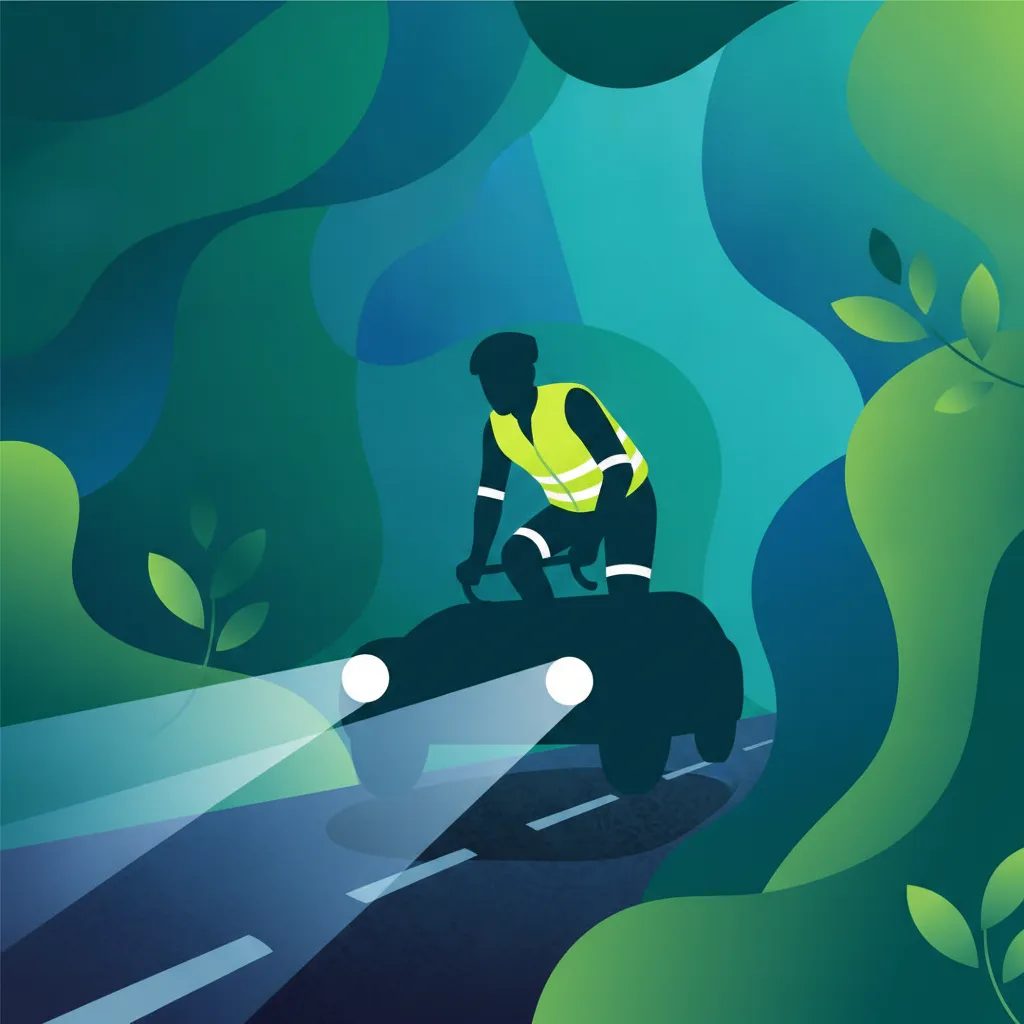
This lesson focuses on strategies to enhance a rider's visibility to others, a key aspect of motorcycle safety. It explains how high-visibility gear with neon colors and retroreflective materials functions to make the rider more conspicuous during both day and night. The content covers different types of reflective accessories and their proper placement to maximize effectiveness in traffic.
This lesson provides comprehensive guidance on using vehicle signals to communicate with other road users. It covers the correct timing and use of turn indicators, the application of hand signals when necessary, and the proper use of hazard lights. Effective signaling is presented as a cornerstone of predictable and safe driving.
Explore how proper use of protective gear and vehicle lighting improves visibility to other road users. Learn about hazard perception and safe interaction strategies with cars and pedestrians on German roads.
This lesson teaches riders how to develop strong visual perception skills for the road. It covers systematic scanning patterns, the correct use of mirrors, and the critical importance of performing a head check to cover blind spots. Understanding the larger blind spots of trucks and buses is also a key safety component.
This lesson focuses on strategic road positioning to enhance safety and visibility. It explains where to ride within a lane under different circumstances, such as approaching intersections or riding alongside parked cars. A key skill covered is anticipating the potential actions of other drivers, cyclists, and pedestrians.

This lesson focuses on identifying and managing internal and external risk factors. It discusses the dangers of distractions like mobile phones, the influence of peer pressure in group riding scenarios, and the impairing effects of fatigue, alcohol, and drugs. The goal is to foster a mature and responsible attitude towards riding.
This lesson addresses the critical skill of safely interacting with other road users, particularly vulnerable ones like pedestrians and cyclists. It covers rules for yielding at crosswalks, maintaining a safe passing distance, and being aware of the limited visibility of a moped to car drivers. The focus is on fostering a defensive and cooperative mindset in mixed traffic.
This lesson focuses on identifying and safely managing various road surface imperfections and hazards. It provides techniques for riding over loose surfaces like gravel, dealing with the low traction of wet leaves or manhole covers, and safely crossing tram tracks. The key is to recognize these hazards early and adjust technique accordingly.
This lesson focuses on maintaining a safe buffer around the vehicle in traffic. It explains the 'two-second rule' as a simple method for ensuring adequate following distance and discusses how to adjust this for adverse conditions. A key focus is on developing hazard anticipation skills through continuous scanning and risk assessment.
This lesson addresses the challenges of operating a small AM vehicle in dense, mixed traffic. It provides strategies for increasing visibility to other drivers, positioning oneself defensively, and safely sharing lanes with cyclists. The content emphasizes awareness of larger vehicles' blind spots and maintaining a safe space cushion.
This lesson examines the specific hazards posed by different weather conditions. It explains how rain can lead to hydroplaning and reduced grip, how fog impairs visibility, and how strong winds can affect stability. Riders will learn practical strategies, such as reducing speed and increasing following distance, to mitigate these risks.
This lesson focuses on how motorcyclists can clearly communicate their intentions to other road users to prevent misunderstandings and collisions. It covers the correct use of indicators, brake lights, and standardized hand signals for turning and stopping. The importance of making eye contact with other drivers to confirm they have seen you is also a key topic for enhancing safety.
This lesson trains drivers to proactively identify vulnerable road users and anticipate their often unpredictable behavior. It highlights the specific risks posed by children, elderly pedestrians, cyclists, and e-scooter users, particularly near bus stops and crossings. The goal is to develop a heightened sense of risk perception and apply defensive driving techniques to protect those who are most at risk on the road.
Find clear answers to common questions learners have about Protective Clothing, Helmets, Reflectors, and Lighting Systems. Learn how the lesson is structured, which driving theory objectives it supports, and how it fits into the overall learning path of units and curriculum progression in Germany. These explanations help you understand key concepts, lesson flow, and exam focused study goals.
Yes, wearing a helmet that meets current safety standards is legally mandatory for all riders of mopeds and light quadricycles in Germany to ensure head protection.
In Germany, your helmet must meet the ECE-R 22.05 or 22.06 standard. Always check for the E-mark label on the chin strap or inside the helmet to confirm compliance for the theory test.
While the law mandates helmets, wearing abrasion-resistant jackets, trousers, gloves, and boots is highly recommended and part of the core safety curriculum for AM riders to reduce injury severity.
Mopeds are smaller and harder to see than cars. High-visibility clothing and reflective materials significantly improve your profile, helping other road users detect you earlier, which is a key concept for hazard avoidance.
Begin your targeted revision now. Use our practice search to quickly find specific German driving theory questions. Filter by StVO rules, road signs, or hazard perception to create your focused study plan. Master challenging areas and prepare confidently for your theoretical driving test.