
This lesson explores the critical relationship between weather conditions and motorcycle safety. You will learn how to adapt your riding style to maintain traction and visibility, preparing you for both the German motorcycle theory exam and real-world hazards.

Lesson content overview
Riding a motorcycle offers unparalleled freedom and exhilaration, but it also demands a heightened awareness of environmental factors, especially weather conditions. For riders preparing for their German Motorcycle Licence Theory Course (Classes A, A1, A2), understanding how different weather phenomena impact road grip, visibility, and vehicle stability is not just a recommendation—it is a critical safety imperative. This lesson delves into the specific challenges posed by rain, fog, and strong winds, equipping you with the knowledge to adapt your riding techniques and adhere to crucial German traffic regulations.
Adverse weather conditions fundamentally alter the dynamics between your motorcycle's tyres and the road surface, as well as your ability to perceive hazards. These changes necessitate significant adjustments to riding behaviour to maintain safety and control.
Traction is the frictional force generated between your tyre and the road surface, essential for acceleration, braking, and cornering. When water is introduced, this crucial force is significantly diminished.
Even a thin film of water on the road can dramatically reduce the available friction. This reduction means your tyres have less purchase on the asphalt, leading to longer braking distances and reduced cornering stability. Light rain, especially after a dry spell, is particularly dangerous as it mixes with oil and road dust to create a greasy, slippery film. Heavy rain then washes away some of this film but introduces deeper water layers and spray.
On a wet surface, the motorcycle's tyres must displace water to maintain contact with the road. The tread pattern on your tyres is specifically designed for this purpose, channeling water away from the contact patch. However, even with good tread, the effectiveness is limited by the amount of water and your speed. Therefore, under wet conditions, your motorcycle will require a greater distance to come to a complete stop, and the maximum safe speed for cornering will be significantly lower.
A hazardous condition where a layer of water builds up between a vehicle's tyres and the road surface, leading to a complete loss of traction, steering, and braking control.
Hydroplaning, also known as aquaplaning, occurs when the water on the road surface cannot be displaced quickly enough by the tyre tread. Instead, a wedge of water forms under the tyre, lifting it off the road surface. This creates a cushion of water, resulting in a complete loss of contact between the tyre and the road.
There are generally two types:
This phenomenon is highly dangerous for motorcyclists because the balance and stability of a two-wheeled vehicle depend entirely on tyre contact. Hydroplaning is more likely at higher speeds, with worn tyre treads, and in deep standing water. The best prevention is to reduce speed significantly in wet conditions, especially when approaching puddles or areas with standing water.
Rider visibility is paramount for anticipating hazards and reacting safely. Adverse weather conditions severely compromise this, directly increasing the risk of accidents.
Fog, heavy rain, and the spray from other vehicles can drastically reduce your ability to see the road ahead, other traffic, and potential hazards.
In such situations, your reaction time is naturally reduced. You must compensate by slowing down, increasing your following distance, and making yourself as visible as possible to other road users. Rely less on visual cues alone and incorporate careful scanning of your surroundings.
Strong winds, particularly crosswinds (lateral winds), present a unique challenge for motorcyclists, directly impacting stability and requiring active management to maintain control.
Crosswinds exert significant lateral force on the motorcycle and rider, attempting to push the vehicle sideways. This effect is more pronounced on motorcycles due to their lighter weight and larger side profile compared to cars.
Managing crosswinds requires active riding input. Riders may need to counter-steer subtly, lean into the wind, and adjust their body position to act as a sail or counterbalance the force. Speed reduction is often the most effective strategy, as lower speeds provide more time to react and make smaller, smoother adjustments. Riding behind larger vehicles can offer temporary shelter but also poses risks if the wind suddenly shifts as you pass them.
The German Road Traffic Regulations (Straßenverkehrs-Ordnung – StVO, which references specific rules like those in RVV 1990) place clear obligations on drivers, including motorcyclists, to adapt their behaviour to prevailing weather conditions. Adherence to these rules is not merely a legal requirement but a fundamental aspect of safe riding.
Drivers must always adapt their speed to the prevailing conditions, including weather. This is a mandatory requirement under §28 of the RVV 1990.
This rule is overarching and applies universally: you must adjust your speed to ensure you can always maintain control of your vehicle and stop safely within your visible stopping distance. In practical terms, this means significantly reducing your speed in rain, fog, snow, ice, or strong winds.
Under §30 of the RVV 1990, low-beam headlights are mandatory in reduced visibility conditions such as fog, heavy rain, or at night. Fog lights may be used when visibility is severely impaired.
Proper lighting is crucial for both your ability to see and, equally important, your ability to be seen by other road users.
While not explicitly a separate paragraph in RVV 1990, the requirement for an increased following distance in adverse conditions is implicit in §28's demand to adapt speed and ensure safe stopping.
Beyond legal compliance, adopting proactive and adaptive riding strategies is key to staying safe when the weather turns sour.
Before even setting out, particularly if adverse weather is forecast, ensure your motorcycle is prepared.
When riding in wet conditions, smooth and deliberate inputs are paramount.
Reduce Speed Significantly: This is the single most important adjustment. Lower speeds give your tyres more time to displace water, increase reaction time, and reduce the severity of impacts if you do lose grip.
Increase Following Distance: Double or even triple your usual following distance to account for longer braking distances and reduced visibility from spray.
Smooth Inputs: Avoid sudden acceleration, hard braking, or abrupt steering inputs. All manoeuvres should be gentle and progressive.
Gentle Braking: Apply brakes smoothly and progressively. Use both front and rear brakes, but be especially cautious with the front brake on slippery surfaces to prevent locking the wheel. If your motorcycle has ABS, trust it, but don't become complacent.
Cornering: Reduce your cornering speed significantly. Initiate turns earlier and finish them later. Maintain a higher degree of lean angle with less speed to achieve the turn, and avoid sudden changes in lean angle mid-corner.
Road Positioning: Look for the least wet part of the road. Often, the centre of the lane (where cars have pushed water aside) or the tracks of vehicles ahead might offer slightly better grip. Avoid painted lines, manhole covers, and metal grates, as these become extremely slippery when wet.
Fog demands extreme caution and specific lighting usage.
Reduce Speed Drastically: Fog severely compresses your stopping sight distance. You must be able to stop within the distance you can see clearly ahead.
Use Proper Lighting: Activate your low-beam headlights. If visibility is severely reduced (e.g., below 50 metres), use your fog lights. Never use high beams in fog, as the light reflects back and reduces visibility further.
Increase Following Distance: Leave a very generous gap to the vehicle in front, as their brake lights might be your only warning of slowing traffic.
Listen Carefully: In low visibility, auditory cues become more important. Listen for other vehicles, horns, or unusual sounds.
Stay Alert: Scan continuously, but avoid staring intently at one spot. Keep your vision moving to detect any changes in the limited visibility field.
Avoid Unnecessary Stops: If you must stop, try to pull completely off the road to avoid being hit from behind.
Managing wind requires a proactive and balanced approach.
Reduce Speed: Lower speeds reduce the effect of wind on the motorcycle and provide more time to react to gusts.
Body Positioning: Lean into the wind (called 'counter-leaning') to balance the forces. You can also shift your body weight to act as a sail or an anchor, depending on the wind direction and strength.
Counter-Steering: Use subtle counter-steering inputs to maintain your desired line. For example, a gust from the left will push you right; a slight push on the left handlebar (counter-steer left) will make the bike lean left, counteracting the wind.
Anticipate Gusts: Be aware of areas where crosswinds are likely to be strong or sudden, such as open fields, bridges, and gaps between buildings or trees. Be prepared for a push or pull as you enter or exit these areas.
Maintain Loose Grip: Hold the handlebars firmly but not rigidly. A relaxed grip allows the bike to move slightly beneath you, absorbing some of the wind's force, rather than transmitting it directly to your body.
Many accidents in bad weather stem from common errors in judgment or technique. Being aware of these pitfalls is the first step to avoiding them.
Understanding the underlying principles reinforces the need for adaptive riding.
By combining an understanding of these physical and psychological effects with practical riding strategies and adherence to German traffic regulations, motorcyclists can significantly enhance their safety when riding in adverse weather conditions.
This lesson covers how weather conditions out your hands—rain reduces tyre grip and increases braking distances, fog compresses your visible stopping distance and distorts depth perception, and crosswinds require active counter-steering to maintain stability. German traffic law mandates speed adaptation under §28 RVV 1990 and proper lighting use under §30 RVV 1990, including low-beam headlights whenever visibility is impaired and fog lights only below 50 metres. Key riding strategies include reducing speed significantly, extending following distances, making smooth progressive inputs, and actively leaning into crosswinds. Common errors include maintaining dry-road speeds, abrupt steering or braking on wet surfaces, and using high-beam headlights in fog.
A short set of high-value points that capture the most important learning from this lesson.
Tyre traction decreases significantly on wet surfaces, requiring longer braking distances and reduced cornering speeds to maintain control.
Hydroplaning occurs when water cannot be displaced from the tyre contact patch, causing partial or complete loss of steering and braking; speed reduction is the primary prevention.
In fog or heavy rain, low-beam headlights are mandatory under §30 RVV 1990, and fog lights may only be used when visibility drops below 50 metres.
Crosswinds require active counter-steering and body positioning to maintain stability, with the rider leaning into the wind direction.
The obligation to adapt speed to conditions under §28 RVV 1990 is absolute: you must always be able to stop within your visible stopping distance.
Explore all units and lessons included in this driving theory course.
Wet road surfaces reduce the coefficient of friction, increasing stopping distances and reducing cornering grip, even with light rain mixing road dust and oil.
The two-second following distance rule should be extended to at least four seconds, or more, in wet or low-visibility conditions.
Avoid painted road markings, manhole covers, and metal grates when wet; these surfaces become extremely slippery compared to asphalt.
High-beam headlights must never be used in fog as light reflects back off water particles, worsening visibility rather than improving it.
Tyre tread depth in Germany has a minimum of 1.6 mm, but motorcycles require more tread for adequate water displacement in wet conditions.
Maintaining dry-weather speed limits on wet or foggy roads, which leaves insufficient distance to stop safely within the visible horizon.
Using abrupt or sudden inputs (hard braking, sharp steering) on wet surfaces, which can cause the wheels to lock or the rear to slide out.
Following too closely in rain, as the combination of longer braking distances and reduced visibility from spray leaves no safety margin.
Riding with worn or underinflated tyres sidewalls, which dramatically increases the risk of hydroplaning and loss of traction.
Failing to anticipate wind gusts when emerging from sheltered areas such as forests, building shadows, or bridges into exposed sections of road.
Lesson content overview
A short set of high-value points that capture the most important learning from this lesson.
Tyre traction decreases significantly on wet surfaces, requiring longer braking distances and reduced cornering speeds to maintain control.
Hydroplaning occurs when water cannot be displaced from the tyre contact patch, causing partial or complete loss of steering and braking; speed reduction is the primary prevention.
In fog or heavy rain, low-beam headlights are mandatory under §30 RVV 1990, and fog lights may only be used when visibility drops below 50 metres.
Crosswinds require active counter-steering and body positioning to maintain stability, with the rider leaning into the wind direction.
The obligation to adapt speed to conditions under §28 RVV 1990 is absolute: you must always be able to stop within your visible stopping distance.
Explore all units and lessons included in this driving theory course.
Wet road surfaces reduce the coefficient of friction, increasing stopping distances and reducing cornering grip, even with light rain mixing road dust and oil.
The two-second following distance rule should be extended to at least four seconds, or more, in wet or low-visibility conditions.
Avoid painted road markings, manhole covers, and metal grates when wet; these surfaces become extremely slippery compared to asphalt.
High-beam headlights must never be used in fog as light reflects back off water particles, worsening visibility rather than improving it.
Tyre tread depth in Germany has a minimum of 1.6 mm, but motorcycles require more tread for adequate water displacement in wet conditions.
Maintaining dry-weather speed limits on wet or foggy roads, which leaves insufficient distance to stop safely within the visible horizon.
Using abrupt or sudden inputs (hard braking, sharp steering) on wet surfaces, which can cause the wheels to lock or the rear to slide out.
Following too closely in rain, as the combination of longer braking distances and reduced visibility from spray leaves no safety margin.
Riding with worn or underinflated tyres sidewalls, which dramatically increases the risk of hydroplaning and loss of traction.
Failing to anticipate wind gusts when emerging from sheltered areas such as forests, building shadows, or bridges into exposed sections of road.
Explore search topics learners often look for when studying Weather Conditions and Their Effects on Road Grip and Rider Visibility. These topics reflect common questions about road rules, driving situations, safety guidance, and lesson level theory preparation for learners in Germany.
Browse additional driving theory lessons that cover connected traffic rules, road signs, and common driving situations related to this topic. Improve your understanding of how different rules interact across everyday traffic scenarios.
Understand the critical impact of weather on motorcycle safety. This lesson explains how rain, wind, and fog affect tyre grip, braking distances, and rider visibility, providing essential knowledge for German driving theory.
This lesson examines the specific hazards posed by different weather conditions. It explains how rain can lead to hydroplaning and reduced grip, how fog impairs visibility, and how strong winds can affect stability. Riders will learn practical strategies, such as reducing speed and increasing following distance, to mitigate these risks.

This lesson teaches drivers how to safely manage their vehicle in challenging weather. It explains the dangers of aquaplaning in heavy rain, the loss of traction on snow and ice (including 'black ice'), and the severely reduced visibility in fog. You will learn to adjust your speed, increase following distances, and use lights correctly to suit these conditions.

This lesson explores how different weather conditions impact driving safety and vehicle performance. It discusses the risks of hydroplaning in heavy rain, reduced visibility in fog, and loss of traction on snow and ice. Drivers will learn how to adapt their speed, increase following distances, and make smooth control inputs to maintain vehicle stability and prevent skids in these challenging conditions.

This lesson examines how various road surfaces and conditions affect tyre grip and traction. It teaches riders to recognize and adapt to hazards like wet patches, loose gravel, or oil spills. The content covers techniques for maintaining control through smooth throttle and brake inputs, preventing traction loss while accelerating, braking, and cornering on compromised surfaces.
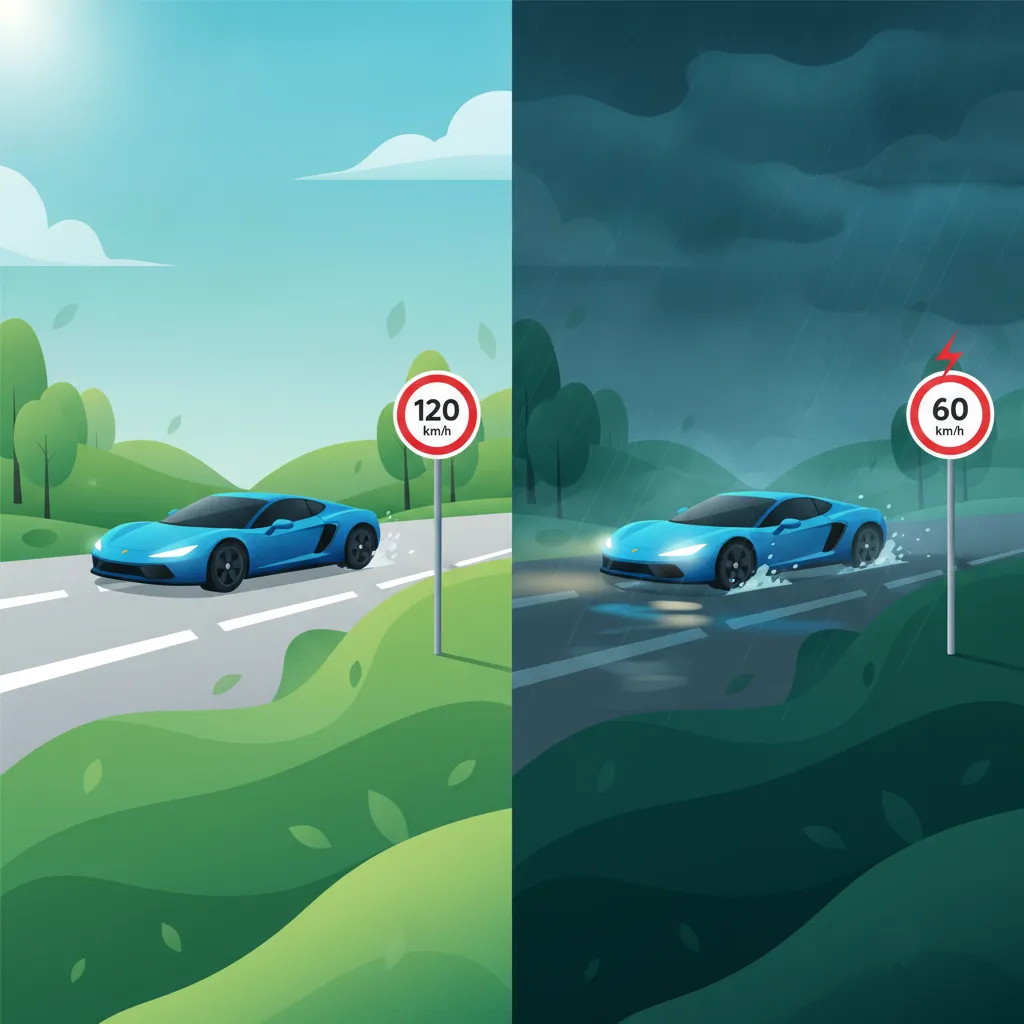
This lesson details the various speed limits applicable in Germany, from urban zones to rural roads. It emphasizes the critical skill of adapting speed to prevailing conditions such as rain, fog, or poor road surfaces. The content explains how external factors significantly impact vehicle handling and stopping distances.

This lesson focuses on how motorcyclists can clearly communicate their intentions to other road users to prevent misunderstandings and collisions. It covers the correct use of indicators, brake lights, and standardized hand signals for turning and stopping. The importance of making eye contact with other drivers to confirm they have seen you is also a key topic for enhancing safety.

This lesson explores the critical role of visibility in safe driving, covering topics such as sight distance, managing blind spots, and the correct use of mirrors. It provides guidance on how to adjust your driving in conditions of reduced visibility, such as at night, in fog, or during heavy rain, including the proper use of headlights. The importance of the over-the-shoulder check ('Schulterblick') is also a key focus.

This lesson focuses on strategies to enhance a rider's visibility to others, a key aspect of motorcycle safety. It explains how high-visibility gear with neon colors and retroreflective materials functions to make the rider more conspicuous during both day and night. The content covers different types of reflective accessories and their proper placement to maximize effectiveness in traffic.
This lesson focuses on identifying and safely managing various road surface imperfections and hazards. It provides techniques for riding over loose surfaces like gravel, dealing with the low traction of wet leaves or manhole covers, and safely crossing tram tracks. The key is to recognize these hazards early and adjust technique accordingly.

This lesson focuses on the importance of strategic road positioning for enhancing safety and visibility. Learners explore different lane positions and understand when to use them to see, be seen, and create a safety buffer. The content emphasizes maintaining a long visual focus down the road to anticipate hazards and avoid target fixation, particularly when cornering.
Learn essential strategies for maintaining control and safety when riding a motorcycle in adverse weather. This lesson covers adjustments to speed, following distance, and rider input needed for rain, wind, and fog, crucial for German theory test preparation.
This lesson examines the specific hazards posed by different weather conditions. It explains how rain can lead to hydroplaning and reduced grip, how fog impairs visibility, and how strong winds can affect stability. Riders will learn practical strategies, such as reducing speed and increasing following distance, to mitigate these risks.
This lesson teaches drivers how to safely manage their vehicle in challenging weather. It explains the dangers of aquaplaning in heavy rain, the loss of traction on snow and ice (including 'black ice'), and the severely reduced visibility in fog. You will learn to adjust your speed, increase following distances, and use lights correctly to suit these conditions.

This lesson focuses on the critical safety practice of maintaining an adequate following distance from the vehicle ahead. It explains how to use the 'two-second rule' as a simple and effective method for judging a safe gap in ideal conditions. The content also covers why this distance must be increased significantly in adverse weather or poor visibility to allow for longer reaction and braking times.
This lesson explores how different weather conditions impact driving safety and vehicle performance. It discusses the risks of hydroplaning in heavy rain, reduced visibility in fog, and loss of traction on snow and ice. Drivers will learn how to adapt their speed, increase following distances, and make smooth control inputs to maintain vehicle stability and prevent skids in these challenging conditions.
This lesson focuses on how motorcyclists can clearly communicate their intentions to other road users to prevent misunderstandings and collisions. It covers the correct use of indicators, brake lights, and standardized hand signals for turning and stopping. The importance of making eye contact with other drivers to confirm they have seen you is also a key topic for enhancing safety.
This lesson focuses on the importance of strategic road positioning for enhancing safety and visibility. Learners explore different lane positions and understand when to use them to see, be seen, and create a safety buffer. The content emphasizes maintaining a long visual focus down the road to anticipate hazards and avoid target fixation, particularly when cornering.
This lesson details the various speed limits applicable in Germany, from urban zones to rural roads. It emphasizes the critical skill of adapting speed to prevailing conditions such as rain, fog, or poor road surfaces. The content explains how external factors significantly impact vehicle handling and stopping distances.

This lesson teaches crucial risk awareness and accident prevention strategies for motorcyclists. It examines common accident scenarios and teaches riders how to identify potential hazards in advance. Key concepts include defensive riding, maintaining situational awareness, and understanding how a proactive mindset contributes to a safer riding experience on the road.
This lesson details the correct procedures for entering a motorway, using the acceleration lane to match traffic speed, and merging safely. It reinforces the strict lane discipline required, including keeping to the right lane except when overtaking. The content also provides guidance on maintaining increased following distances and performing safe lane changes at high speeds.

This lesson teaches the essential observation techniques required for safe riding, focusing on the systematic use of mirrors and shoulder checks to manage blind spots. It emphasizes developing active scanning habits to maintain constant situational awareness of the surrounding traffic environment. Learners will understand how effective head movement and use of peripheral vision are critical for detecting potential hazards early.
Find clear answers to common questions learners have about Weather Conditions and Their Effects on Road Grip and Rider Visibility. Learn how the lesson is structured, which driving theory objectives it supports, and how it fits into the overall learning path of units and curriculum progression in Germany. These explanations help you understand key concepts, lesson flow, and exam focused study goals.
When it first begins to rain, water mixes with accumulated oil, dust, and debris on the road surface to create a slippery film. This significantly reduces tyre grip more than when the road has been thoroughly washed by prolonged rain.
Riders should keep a firm but relaxed grip on the handlebars, maintain a stable speed, and be prepared to counteract the wind by leaning slightly into it. It is also important to increase the distance from large vehicles that create wind turbulence.
No. While ABS helps prevent wheel lock-up during emergency braking, it does not increase the amount of grip available between your tyres and the road. You must still adjust your speed and following distance to account for the longer stopping distances caused by wet surfaces.
Begin your targeted revision now. Use our practice search to quickly find specific German driving theory questions. Filter by StVO rules, road signs, or hazard perception to create your focused study plan. Master challenging areas and prepare confidently for your theoretical driving test.