
This lesson is a critical part of your protective riding foundation, helping you develop the observation habits necessary to navigate German roads safely. You will learn the systematic use of mirrors and shoulder checks, which are essential for managing blind spots and maintaining situational awareness. These skills are vital for passing both your theoretical exam and your practical motorcycle assessment.

Lesson content overview
Safe and confident motorcycle riding on German roads demands an unwavering commitment to effective observation. This lesson delves into the fundamental techniques that form the cornerstone of situational awareness for all German Motorcycle Licence Theory Course (Classes A, A1, A2) candidates: systematic use of mirrors, precise shoulder checks, and continuous scanning. By mastering these skills, motorcyclists can significantly reduce risks, anticipate hazards, and make informed decisions, ensuring their safety and the safety of others.
Observation on a motorcycle is far more than simply looking forward; it is an active, continuous process of gathering, processing, and interpreting visual information from all directions. The goal is to build a comprehensive mental model of the surrounding traffic environment, allowing for proactive rather than reactive riding. This continuous awareness is critical for identifying potential dangers early, supporting timely decision-making, and preventing accidents caused by unnoticed vehicles or road users.
Systematic observation refers to a structured and habitual approach to continuously monitoring the environment around your motorcycle. This isn't just a recommendation; it's a fundamental principle for safe riding in Germany. It ensures that no area around your vehicle is ignored, significantly reducing the risks associated with blind spots and promoting early detection of hazards. Developing a consistent routine for integrating mirror checks, shoulder checks, and scanning into all riding maneuvers is paramount.
Mirrors are vital tools that provide motorcyclists with crucial information about what is happening behind and to the sides. However, they are not a substitute for direct vision and must be used correctly as part of a broader observation strategy.
Motorcycles are typically equipped with at least one mirror, but often two, positioned to offer views of traffic approaching from the rear and sides.
Proper mirror adjustment is crucial for their effectiveness. Before every ride, and especially before starting your engine, ensure your mirrors are correctly positioned to offer the widest possible view without requiring excessive head movement.
Sit on your motorcycle in your normal riding position. Your posture should be natural and comfortable, as this is how you will be viewing the mirrors while riding.
Adjust the left-hand mirror so that you can see a small portion of your left arm or shoulder on the inner edge of the mirror. The majority of the mirror should show the lane directly behind you and the adjacent lane to your left.
If equipped, adjust the right-hand mirror similarly. You should see a small part of your right arm or shoulder, with the rest of the mirror showing the lane behind you and the adjacent lane to your right.
Lean slightly left and right while observing the mirrors. You should be able to see clearly into the lanes next to you. If there are large blind spots immediately adjacent to your motorcycle, further adjustment may be needed.
Mirrors must be functional and correctly adjusted at all times. Riding with obstructed or poorly adjusted mirrors significantly compromises your ability to perceive hazards and is a violation of safety principles.
Regularly check your mirror adjustments throughout your ride, especially after significant changes in riding posture or if the mirrors have been bumped. Even minor misalignments can obscure crucial areas.
An area around your motorcycle that is not visible through your mirrors, even when they are correctly adjusted. These zones are where other vehicles can be present unnoticed.
Blind spots represent critical areas of risk for motorcyclists. Due to the inherent limitations of mirrors and the narrow profile of a motorcycle, there will always be areas around your vehicle that remain unseen without direct head movement.
Blind spots can generally be categorised into two types:
Understanding the existence and location of these blind spots is the first step towards mitigating their danger. Assuming mirrors cover all areas around your motorcycle is a common and dangerous mistake that can lead to collisions, especially during lane changes or turning maneuvers.
Since mirrors cannot cover all blind spots, a critical technique known as the "shoulder check" becomes indispensable. A shoulder check provides a direct, unobstructed view into these otherwise hidden zones, verifying that no vehicle, cyclist, or pedestrian occupies your intended path.
A quick, intentional turn of the head to glance over the shoulder, providing a direct view into the blind spots not visible through mirrors.
Shoulder checks are mandatory for motorcyclists before almost any lateral movement. This includes:
The timing and execution of a shoulder check are crucial. It must be a smooth, brief, and deliberate movement that does not compromise your control of the motorcycle or your forward view for too long.
Signal Your Intention: Activate your turn signal well in advance to alert other road users of your planned maneuver.
Check Relevant Mirror: Briefly glance at the mirror corresponding to the direction you intend to move (e.g., left mirror for a left lane change). This confirms the general traffic situation behind you.
Execute the Shoulder Check: Quickly turn your head to look over your shoulder in the direction of your intended movement. This direct glance should be brief—just long enough to confirm the blind spot is clear.
Confirm and Proceed: If the blind spot is clear and the path is safe, proceed with your maneuver smoothly. If not, abort the maneuver and wait for a safe opportunity.
Scan Forward Immediately: As soon as the shoulder check is complete, return your gaze to the forward road to monitor for any developing hazards.
A common mistake is performing the shoulder check after initiating the lane change or turn. This is dangerous because by the time you check, a vehicle may already be in the blind spot zone, making evasive action difficult or impossible. Always complete the shoulder check before beginning your lateral movement.
Beyond mirrors and shoulder checks, continuous scanning is the overarching observation technique that integrates all visual information into a dynamic understanding of your environment. Scanning involves an ongoing, rhythmic movement of your gaze to monitor the forward view, sides, and rear simultaneously.
Effective scanning prevents "tunnel vision," where a rider fixates on a single point ahead and misses crucial information in their periphery. It's about building a mental picture of traffic flow, identifying developing hazards, and understanding road conditions far in advance.
Developing good scanning habits requires coordinated head movement. Your eyes naturally follow your head, so a slight, continuous movement of your head ensures you are actively surveying your surroundings. Glances should be brief and purposeful, never lingering so long on one area that you miss developments elsewhere.
For example, while cruising on a rural road, a rider should frequently glance at mirrors, then briefly scan left and right for wildlife or intersecting roads, while primarily focusing on the road ahead. This prevents surprises and allows for early hazard perception.
The ability to detect motion and changes in the visual field outside the central focus of your eyes.
Peripheral vision is a powerful ally in supporting your scanning efforts. While you cannot focus sharply on objects in your periphery, your brain is highly adept at detecting movement and significant changes in these outer areas of your vision.
However, over-reliance on peripheral vision without confirming hazards with direct glances is a common mistake. Peripheral vision only alerts; a direct glance is needed to assess the true nature of the threat.
While German traffic laws (StVO) might not explicitly detail every single observation technique, the principles are implicitly mandatory as part of general safety requirements and the expectation of attentive driving.
The effectiveness of your observation techniques depends heavily on your ability to adapt them to changing environmental and traffic conditions.
Cyclists and pedestrians are particularly vulnerable and often positioned in blind spots. Always assume they might be present. Thorough shoulder checks are paramount before any turn at an intersection or lane change, even when mirrors appear clear.
Failing to apply effective observation techniques consistently is a leading cause of motorcycle accidents. Understanding common pitfalls can help riders avoid them.
| Violation | Why It’s Wrong | Correct Behavior | Consequence |
|---|---|---|---|
| Skipping the shoulder check before a lane change. | Mirrors do not cover all blind spots; a vehicle may be present unnoticed. | Perform mirror check, then shoulder check, then change lane if clear. | Increased risk of collision with vehicles in blind spot. |
| Over-reliance on mirrors at high speed. | Mirrors provide delayed information; fast-approaching vehicles can surprise you. | Use mirrors for periodic checks, but prioritize forward scanning and occasional shoulder checks. | Potential surprise by fast-approaching traffic, leading to unsafe lane changes. |
| Failing to adjust mirrors before a trip. | Obstructed views can conceal traffic, leading to missed hazards. | Adjust mirrors before starting the engine to ensure optimal viewing angles. | Delayed reactions to traffic, increasing accident risk. |
| Neglecting to scan during overtaking maneuvers. | Focusing solely on the vehicle ahead may miss traffic approaching from behind or oncoming traffic. | Continuously scan mirrors and surroundings before, during, and after overtaking. | Collision with overtaking vehicles or oncoming traffic. |
| Using peripheral vision alone without verification. | Peripheral vision only alerts to movement; the nature of the hazard may be misunderstood. | After a peripheral alert, perform a direct glance (shoulder check) to verify and assess the hazard. | Misinterpretation of hazard, leading to inappropriate reactions. |
| Performing shoulder checks after initiating a lane change. | By the time the check is made, the motorcycle may already be in the blind spot zone of another vehicle. | Complete the shoulder check before moving the motorcycle into the adjacent lane. | Collision or near-miss with an unseen vehicle. |
| Forgetting to re-scan after overtaking or passing. | The traffic situation behind may have changed, presenting new hazards. | Re-scan mirrors and surroundings immediately after overtaking to reassess traffic flow. | Unexpected approach from behind, leading to unsafe riding conditions. |
Let's look at how these observation techniques are applied in typical German driving scenarios.
Situation: You are riding in the left lane of a three-lane Autobahn and wish to move into the middle lane to maintain a safe following distance behind a slower vehicle.
Process:
Why this is correct: This systematic approach ensures all potential hazards in your path are identified before you commit to the maneuver, minimizing the risk of a collision.
Situation: You are approaching an urban T-junction in Germany, intending to turn left. There is a marked bicycle lane to your left.
Process:
Why this is correct: This comprehensive observation prevents collisions with vulnerable road users who are often difficult to spot and might be positioned in your blind spots at intersections.
Situation: You are on a two-lane rural road in Germany, wishing to overtake a slower-moving agricultural vehicle.
Process:
Why this is correct: This sequence ensures you are aware of all traffic dynamics, both behind and ahead, preventing collisions during the overtaking maneuver.
Effective observation is a continuous, dynamic process that combines three essential techniques for German motorcycle riders:
These techniques, supported by the intelligent use of peripheral vision and adapted to varying conditions, form the bedrock of defensive riding. Consistent practice of this observation triad will significantly enhance your reaction time, reduce accident risk, and cultivate the heightened situational awareness necessary for safe and confident motorcycle riding on German roads.
This lesson teaches the essential observation triad for safe motorcycle riding: systematic mirror usage, mandatory shoulder checks, and continuous scanning. Effective observation is an active, ongoing process—not a one-time glance—because mirrors alone cannot cover short-range blind spots immediately adjacent to the motorcycle. Shoulder checks must always precede lateral movements such as lane changes, turns, merges, and overtaking, while continuous scanning prevents tunnel vision by rhythmically monitoring forward, lateral, and rearward areas. The lesson also covers mirror adjustment procedures, peripheral vision limitations, German licence-specific mirror requirements (right-hand mirror mandatory for A1/A2), and adaptation strategies for weather, road type, and interactions with vulnerable road users.
A short set of high-value points that capture the most important learning from this lesson.
Observation on a motorcycle is an active, continuous process requiring systematic mirror checks, shoulder checks, and scanning—not a passive glance.
Mirrors have inherent blind spot limitations and must be supplemented with shoulder checks before any lateral movement.
A shoulder check provides the only direct view into blind spots and must be completed before initiating lane changes, turns, merges, or overtaking.
Continuous scanning with coordinated head movement prevents tunnel vision and builds a dynamic mental model of the traffic environment.
Peripheral vision detects movement and alerts you to potential hazards, but direct glances are always required to assess and verify the actual threat.
Explore all units and lessons included in this driving theory course.
Right-hand side mirror is mandatory for German A1 and A2 licence holders; optional but recommended for Class A.
Shoulder check timing rule: always check before moving, never after initiating the maneuver.
Adjust mirrors before every ride with a small portion of your own shoulder visible on the inner edge.
Mirror checks give delayed, indirect information—never replace direct vision for close-range blind spots.
Scanning pattern should continuously cycle between near, mid-range, far forward, lateral areas, and mirrors.
Skipping shoulder checks before lane changes and relying solely on mirrors, which leaves short-range blind spots unverified.
Performing the shoulder check after already beginning the lane change or turn, making evasive action impossible if a vehicle is present.
Failing to readjust mirrors after posture changes or if mirrors are bumped, leading to obscured critical viewing areas.
Over-relying on peripheral vision alone without performing a direct shoulder check to verify and assess alerted hazards.
Neglecting to re-scan mirrors and surroundings immediately after completing overtaking, as the traffic situation behind will have changed.
Lesson content overview
A short set of high-value points that capture the most important learning from this lesson.
Observation on a motorcycle is an active, continuous process requiring systematic mirror checks, shoulder checks, and scanning—not a passive glance.
Mirrors have inherent blind spot limitations and must be supplemented with shoulder checks before any lateral movement.
A shoulder check provides the only direct view into blind spots and must be completed before initiating lane changes, turns, merges, or overtaking.
Continuous scanning with coordinated head movement prevents tunnel vision and builds a dynamic mental model of the traffic environment.
Peripheral vision detects movement and alerts you to potential hazards, but direct glances are always required to assess and verify the actual threat.
Explore all units and lessons included in this driving theory course.
Right-hand side mirror is mandatory for German A1 and A2 licence holders; optional but recommended for Class A.
Shoulder check timing rule: always check before moving, never after initiating the maneuver.
Adjust mirrors before every ride with a small portion of your own shoulder visible on the inner edge.
Mirror checks give delayed, indirect information—never replace direct vision for close-range blind spots.
Scanning pattern should continuously cycle between near, mid-range, far forward, lateral areas, and mirrors.
Skipping shoulder checks before lane changes and relying solely on mirrors, which leaves short-range blind spots unverified.
Performing the shoulder check after already beginning the lane change or turn, making evasive action impossible if a vehicle is present.
Failing to readjust mirrors after posture changes or if mirrors are bumped, leading to obscured critical viewing areas.
Over-relying on peripheral vision alone without performing a direct shoulder check to verify and assess alerted hazards.
Neglecting to re-scan mirrors and surroundings immediately after completing overtaking, as the traffic situation behind will have changed.
Explore search topics learners often look for when studying Effective Observation: Mirrors, Shoulder Checks, and Scanning Techniques. These topics reflect common questions about road rules, driving situations, safety guidance, and lesson level theory preparation for learners in Germany.
Browse additional driving theory lessons that cover connected traffic rules, road signs, and common driving situations related to this topic. Improve your understanding of how different rules interact across everyday traffic scenarios.
Explore advanced techniques for motorcycle observation, including continuous scanning and hazard perception. Learn how to anticipate traffic flow and potential dangers on German roads to enhance your riding safety and prepare for your theory test.

This lesson teaches the systematic observation techniques required for safe driving, starting with how to scan the road far ahead, nearby, and to the sides. It details the correct frequency for checking interior and exterior mirrors to maintain situational awareness. The lesson highlights the indispensable over-the-shoulder check ('Schulterblick') to cover the vehicle's blind spot before any change in direction.

This lesson teaches riders how to develop strong visual perception skills for the road. It covers systematic scanning patterns, the correct use of mirrors, and the critical importance of performing a head check to cover blind spots. Understanding the larger blind spots of trucks and buses is also a key safety component.

This lesson teaches crucial risk awareness and accident prevention strategies for motorcyclists. It examines common accident scenarios and teaches riders how to identify potential hazards in advance. Key concepts include defensive riding, maintaining situational awareness, and understanding how a proactive mindset contributes to a safer riding experience on the road.

This lesson builds on defensive driving by focusing specifically on hazard perception ('Gefahrenerkennung'). It teaches you how to actively scan the driving environment for potential risks, not just immediate dangers. You will learn to anticipate the likely actions of other road users and identify clues that signal a developing hazardous situation, allowing you to react early and safely.

This lesson focuses on maintaining a safe buffer around the vehicle in traffic. It explains the 'two-second rule' as a simple method for ensuring adequate following distance and discusses how to adjust this for adverse conditions. A key focus is on developing hazard anticipation skills through continuous scanning and risk assessment.

This lesson focuses on the importance of strategic road positioning for enhancing safety and visibility. Learners explore different lane positions and understand when to use them to see, be seen, and create a safety buffer. The content emphasizes maintaining a long visual focus down the road to anticipate hazards and avoid target fixation, particularly when cornering.

This lesson provides a systematic approach to safely negotiating blind corners where visibility is limited. It teaches riders to control their entry speed, adopt a defensive lane position, and use visual scanning techniques to assess the road ahead. The content emphasizes adjusting lean angle and being prepared for unexpected hazards that may be hidden around the bend.

This lesson focuses on how motorcyclists can clearly communicate their intentions to other road users to prevent misunderstandings and collisions. It covers the correct use of indicators, brake lights, and standardized hand signals for turning and stopping. The importance of making eye contact with other drivers to confirm they have seen you is also a key topic for enhancing safety.

This lesson examines the specific hazards posed by different weather conditions. It explains how rain can lead to hydroplaning and reduced grip, how fog impairs visibility, and how strong winds can affect stability. Riders will learn practical strategies, such as reducing speed and increasing following distance, to mitigate these risks.

This lesson highlights the specific risks associated with motorcyclists, who are less visible and more vulnerable than car drivers. It teaches you to actively look for motorcycles, especially at intersections and during lane changes, as their smaller profile can be easily missed. You will learn about their potential for rapid acceleration and instability, emphasizing the need for extra following distance.
Understand how to manage motorcycle blind spots using proper mirror adjustment and systematic shoulder checks. This lesson covers essential observation skills for safe lane changes and maneuvers according to German traffic law.
This lesson teaches riders how to develop strong visual perception skills for the road. It covers systematic scanning patterns, the correct use of mirrors, and the critical importance of performing a head check to cover blind spots. Understanding the larger blind spots of trucks and buses is also a key safety component.

This lesson teaches the proper adjustment of all required mirrors to maximize the field of vision and minimize blind spots. It discusses the limitations of indirect vision and the importance of aligning mirrors based on the driver's seating position. The content also outlines the typical blind zones for heavy vehicles and strategies to mitigate them.
This lesson provides a systematic approach to safely negotiating blind corners where visibility is limited. It teaches riders to control their entry speed, adopt a defensive lane position, and use visual scanning techniques to assess the road ahead. The content emphasizes adjusting lean angle and being prepared for unexpected hazards that may be hidden around the bend.

This lesson provides a comprehensive guide to identifying and managing the significant blind spots around a large passenger vehicle. It covers the correct adjustment and use of all mirrors, supplemented by camera systems, to gain maximum visibility. The importance of performing physical checks ('shoulder checks') before turning or changing lanes is emphasized to detect smaller road users like cyclists and pedestrians who may be hidden from view.
This lesson focuses on how motorcyclists can clearly communicate their intentions to other road users to prevent misunderstandings and collisions. It covers the correct use of indicators, brake lights, and standardized hand signals for turning and stopping. The importance of making eye contact with other drivers to confirm they have seen you is also a key topic for enhancing safety.
This lesson focuses on the importance of strategic road positioning for enhancing safety and visibility. Learners explore different lane positions and understand when to use them to see, be seen, and create a safety buffer. The content emphasizes maintaining a long visual focus down the road to anticipate hazards and avoid target fixation, particularly when cornering.
This lesson teaches the systematic observation techniques required for safe driving, starting with how to scan the road far ahead, nearby, and to the sides. It details the correct frequency for checking interior and exterior mirrors to maintain situational awareness. The lesson highlights the indispensable over-the-shoulder check ('Schulterblick') to cover the vehicle's blind spot before any change in direction.
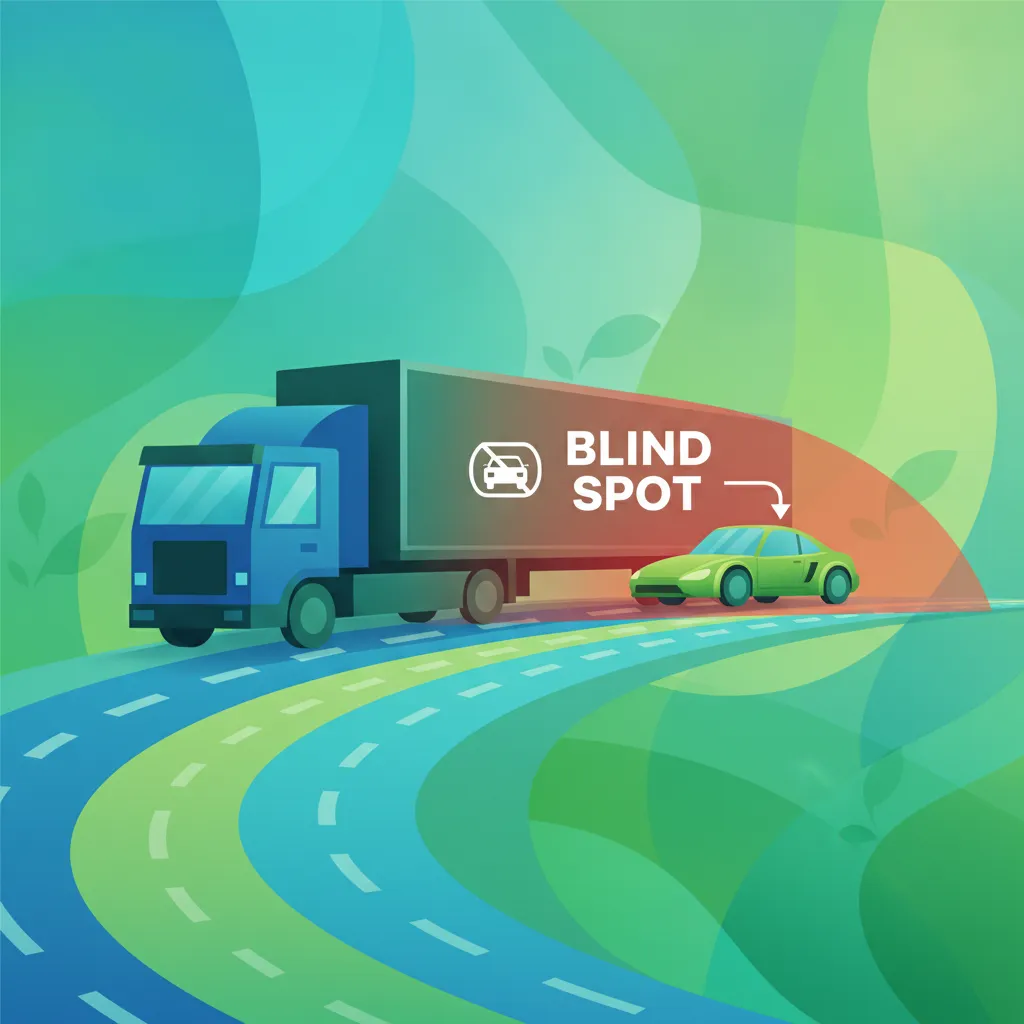
This lesson focuses on the blind spot zones specific to trucks and vehicle combinations, explaining where these zones are located. It covers the use of blind spot mirrors and other aids to enhance driver awareness during lane changes and turns. The content stresses the importance of maintaining safe distances from vulnerable road users.

This lesson focuses on strategies to enhance a rider's visibility to others, a key aspect of motorcycle safety. It explains how high-visibility gear with neon colors and retroreflective materials functions to make the rider more conspicuous during both day and night. The content covers different types of reflective accessories and their proper placement to maximize effectiveness in traffic.

This lesson focuses on the high-risk maneuver of reversing, emphasizing the importance of all-around observation due to limited visibility. It teaches techniques for controlling the vehicle at very low speeds and using mirrors and direct observation to manage large blind spots behind the car. The priority is to ensure the path is clear of pedestrians and obstacles at all times.
Find clear answers to common questions learners have about Effective Observation: Mirrors, Shoulder Checks, and Scanning Techniques. Learn how the lesson is structured, which driving theory objectives it supports, and how it fits into the overall learning path of units and curriculum progression in Germany. These explanations help you understand key concepts, lesson flow, and exam focused study goals.
On a motorcycle, your head is exposed and your field of vision is restricted by your helmet. A quick shoulder check is the only way to physically verify that a blind spot is clear before moving laterally, which is a key requirement for safety and passing your practical exam.
You should develop a habit of regular 'scanning'—checking your mirrors every few seconds and especially before any change in speed or direction. This keeps you aware of traffic approaching from behind or rapidly closing gaps.
Yes, many hazard perception questions in the German theory exam are based on whether you can identify risks that would only be visible if you had properly scanned the scene. This lesson prepares you to think like an observant rider.
No. While peripheral vision helps you notice sudden movements, it cannot provide the detail required to judge the speed and distance of other vehicles. You must always use your mirrors and direct shoulder checks in combination.
Begin your targeted revision now. Use our practice search to quickly find specific German driving theory questions. Filter by StVO rules, road signs, or hazard perception to create your focused study plan. Master challenging areas and prepare confidently for your theoretical driving test.