
This unit delves into the critical advanced maneuvering skills essential for professional passenger vehicle drivers, specifically for D1E and DE license categories. You will learn precise techniques for turning, managing extensive blind spots, and executing safe reversing procedures, along with the specific challenges of handling vehicle-trailer combinations, particularly in terminal environments.
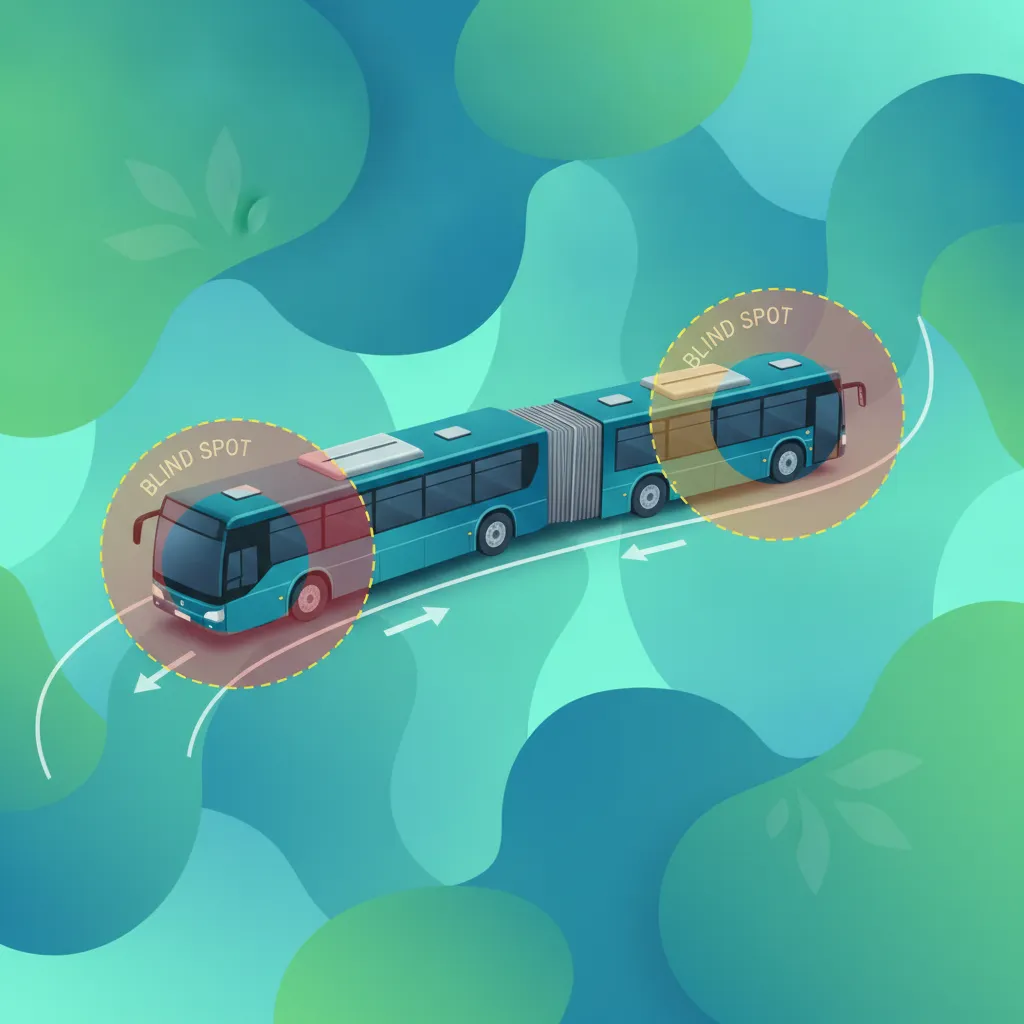
Browse all lessons that make up Turning, Blind Spots, Reversing, Terminals and Vehicle Combinations. Each lesson focuses on specific topics, learning objectives, and core concepts, helping you build essential knowledge and follow a clear, structured progression toward your study goals in Germany.
This lesson teaches the fundamental techniques for safely turning a large passenger vehicle. It explains the concepts of turning radius, swept path, and off-tracking, where the rear wheels follow a tighter path than the front wheels. Learners will understand how to position the vehicle correctly before a turn and manage their speed to navigate corners without encroaching on other lanes or hitting curbs.
This lesson provides a comprehensive guide to identifying and managing the significant blind spots around a large passenger vehicle. It covers the correct adjustment and use of all mirrors, supplemented by camera systems, to gain maximum visibility. The importance of performing physical checks ('shoulder checks') before turning or changing lanes is emphasized to detect smaller road users like cyclists and pedestrians who may be hidden from view.
This lesson covers the high-risk maneuver of reversing a large passenger vehicle. It details a systematic approach that includes using all available aids like mirrors, cameras, and audible alarms. The lesson stresses the need for slow, controlled movements, constant scanning of the surroundings, and conducting thorough clearance checks to prevent collisions with objects or people behind the vehicle, advocating for a spotter whenever possible.
This lesson focuses on the specific skills needed to operate within the confined spaces of a bus terminal or station. It provides instruction on precise docking maneuvers for aligning with platforms, managing speed and position in tight lanes, and ensuring passenger safety during loading. The importance of clear communication with ground personnel and using any available docking aids is also a key component of the training.
This lesson provides specialized instruction for drivers of D1E and DE category vehicles, which involve towing a trailer. It covers the physics of vehicle combinations, including the effects of the articulation point on turning and reversing. Learners will understand principles of split braking systems, proper load distribution to prevent trailer sway, and the additional safety checks required before operating such a combination.
Explore high-intent keywords and long-tail search topics learners use when researching Turning, Blind Spots, Reversing, Terminals and Vehicle Combinations. These terms reflect how people search for reliable study materials, structured explanations, and unit-level theory preparation support in Germany.
Find clear answers to the most common questions learners ask about Turning, Blind Spots, Reversing, Terminals and Vehicle Combinations. Understand how the unit is organized, what learning goals it supports, and how it contributes to your study progression with structured explanations and practical guidance tailored for learners in Germany.
Large passenger vehicles have significantly larger turning radii and wider swing paths, especially at the rear. Drivers must account for multiple lanes, potential obstacles like curbs, street furniture, and other vehicles. For articulated buses (DE category), the pivot point between the two sections adds complexity. Proper use of mirrors, awareness of the vehicle's full dimensions, and often slower speeds are essential for safe execution.
German traffic law mandates drivers use all available mirrors (side mirrors, wide-angle mirrors) and potentially camera systems to monitor blind spots. Regular checks are crucial, especially during lane changes and turns. Understanding the 'no-zone' areas around the vehicle is key. For trailer combinations (D1E, DE), additional mirror adjustments and constant awareness of the trailer's path are critical.
Always reverse slowly and with extreme caution, using mirrors and visual checks. If possible, have a guide. For trailer combinations, remember that the trailer's direction is opposite to the steering wheel input. Practice in controlled environments is recommended. In Germany, specific rules apply to reversing on public roads, often requiring special care and consideration for other traffic.
The German theory exam for D1E and DE categories assesses your understanding of how attaching a trailer affects vehicle length, weight distribution, braking distance, and handling (especially cornering and reversing). You'll need to know how to safely couple and uncouple, manage the combined vehicle's dynamics, and comply with specific regulations for driving with trailers.
Terminal environments refer to areas like bus depots, depots, large transfer stations, or specific loading/unloading zones where maneuvering space can be tight and complex. These areas often involve dense traffic of large vehicles, pedestrians, and specific operational procedures. Safe navigation requires precise control, spatial awareness, and adherence to site-specific rules.
All included lessons
Lessons in Turning, Blind Spots, Reversing, Terminals and Vehicle Combinations
See who benefits most from studying Turning, Blind Spots, Reversing, Terminals and Vehicle Combinations. This overview explains how the unit supports different learning needs, what level of knowledge is helpful before starting, and how it fits into the overall study path in Germany.
This unit is crucial for drivers pursuing or holding German D1E, D, or DE passenger vehicle licenses who need to master advanced practical maneuvering skills. It's particularly beneficial for exam candidates needing to solidify their understanding of complex situations involving large vehicles and trailer combinations, and for new professional drivers to ensure safe operation.

Ready to prepare for your German driving licence theory exam? Dive into our carefully structured courses to build your knowledge effectively. Select a course that matches your licence category and begin your systematic study path today for confident exam success.
Browse Driving Theory CoursesExplore all units and lessons included in this driving theory course.
Ready to prepare for your German driving licence theory exam? Dive into our carefully structured courses to build your knowledge effectively. Select a course that matches your licence category and begin your systematic study path today for confident exam success.
Browse Driving Theory Courses