
This lesson provides essential training on navigating the restricted spaces of bus terminals and transport hubs. You will learn the precise techniques required to dock safely at platforms and communicate effectively with ground personnel, ensuring professional standards for your D1, D, or DE licence.

Lesson content overview
Operating large passenger vehicles like buses within the confined and often bustling environment of a terminal or station demands a specialized set of driving skills. This lesson, crucial for professional drivers pursuing German passenger vehicle licenses (Categories D1, D1E, D, DE), delves into the specific techniques and considerations required for safely navigating these spaces. It focuses on precise docking, meticulous speed control, effective communication with ground personnel, and the strategic use of vehicle aids, all while prioritizing passenger safety and operational efficiency.
Terminal maneuvers are a cornerstone of professional passenger transport. These operations are not merely about parking; they are about orchestrating the safe, efficient, and comfortable boarding and alighting of passengers, often under time pressure and in areas with high pedestrian and vehicle traffic. A driver's proficiency in these maneuvers directly impacts passenger safety, prevents damage to vehicles and infrastructure, and ensures the smooth flow of public transport.
These skills build upon foundational knowledge of vehicle dimensions, blind spot management, and basic stopping and reversing techniques, as covered in earlier modules. Mastering terminal maneuvers means consistently delivering passengers to their destination with professionalism and safety, from the open road right up to the final stop.
Successful terminal operations hinge on four fundamental principles. Adhering to these ensures both the safety of passengers and the efficient functioning of the terminal environment.
The primary goal in a terminal is to position the passenger vehicle accurately at its designated stopping point or platform. This precision is vital for several reasons:
Achieving this requires meticulous speed control, highly accurate steering adjustments, and a constant awareness of the vehicle's overall dimensions, including its length, width, and overhangs.
Within terminals, speeds must be significantly reduced and carefully controlled. The confined nature of these spaces, coupled with the presence of pedestrians and other vehicles, necessitates a cautious approach.
This involves using appropriate low gears, applying gentle acceleration and braking, and continuously scanning the immediate surroundings.
Clear and unambiguous communication is essential in busy terminals to coordinate movements and prevent misunderstandings.
This principle mandates the appropriate use of vehicle signals, such as the horn (briefly and sparingly), flashing lights, and standardized hand signals, as required by terminal protocols.
Modern passenger vehicles are often equipped with various aids designed to assist drivers, particularly in tight maneuvering situations.
While these aids are invaluable, it is crucial to remember that they are supplements to the driver's primary observation skills. Over-reliance on technology without direct visual confirmation is a common mistake that can lead to misjudgments.
Mastering terminal maneuvers involves a series of coordinated actions, each requiring specific attention and technique.
Precise docking is the act of bringing the vehicle to a stop exactly at its designated point, ensuring optimal alignment with the platform for passenger boarding and alighting.
The driver must carefully assess the available space, the vehicle's dimensions, and the required stopping point. This often involves a slow approach, making small, continuous steering adjustments, and using side mirrors to judge the distance to the platform.
Speed control is paramount within terminal environments. The general rule is to drive as slowly as necessary to ensure safety and precision.
Low speeds provide the driver with more processing time to react to dynamic situations, such as pedestrians unexpectedly stepping into the vehicle's path, or other vehicles maneuvering nearby. It also significantly reduces the severity of any potential impact, should an incident occur. Posted speed limits in terminals are typically very low, often 10 km/h or less, and must be strictly observed.
Effective communication prevents confusion and enhances safety, especially in busy terminals where ground personnel direct traffic or assist with operations.
In situations where direct visual or verbal communication is possible, established hand signals (e.g., for stopping, moving forward, or indicating a specific direction) with ground personnel are invaluable. Always ensure the ground personnel clearly understands your signal and that you understand theirs. Some terminals may also use radio communication systems.
Modern passenger vehicles incorporate various technological aids to assist drivers in maneuvering, particularly in areas with restricted visibility.
While these aids significantly enhance a driver's perception, they should never replace direct visual checks. Always scan the environment manually, using mirrors and turning your head, especially before initiating movement or significant changes in direction. Technology can fail or have limitations; human observation is the ultimate safeguard.
Adherence to specific regulations ensures safety and order within German passenger vehicle terminals. Professional drivers must be intimately familiar with these rules.
Drivers of passenger vehicles must bring their vehicle to a complete stop fully within the marked docking area or designated stopping point in terminals.
Vehicles operating within terminal boundaries must travel at significantly reduced speeds, as indicated by explicit signage.
Drivers are required to use appropriate signals to clearly indicate their intention to stop, dock, or depart from a terminal area.
Even experienced drivers can make mistakes in the demanding environment of a terminal. Awareness of common pitfalls is the first step towards prevention.
Terminal maneuvers are dynamic and require adaptability based on changing conditions.
Terminals are public spaces with high pedestrian traffic. Always be aware of pedestrians, even those not actively using designated crossings.
Mastery of terminal maneuvers is deeply intertwined with several other critical skills learned in the Professional German Passenger-Vehicle Theory course:
Applying theoretical knowledge to real-world situations is key to becoming a proficient professional driver.
A city bus approaches a busy terminal platform in Germany with a posted speed limit of 10 km/h. The driver, operating a Category D vehicle, has multiple passengers waiting, including one requiring wheelchair access.
While slowly maneuvering a D1 category vehicle through a terminal lane, a pedestrian unexpectedly steps out from behind another bus, distracted by their phone. The speed limit is 10 km/h.
Terminal maneuvers are a critical aspect of professional passenger transport, demanding a blend of precision, caution, and clear communication. Drivers must master the art of precise docking, maintain extremely low and controlled speeds, communicate effectively with ground personnel, and strategically utilize all available docking aids while never neglecting direct visual observation.
By consistently applying these principles, professional drivers ensure the highest standards of safety, efficiency, and comfort for all passengers within the bustling environment of a bus or coach terminal.
This lesson covers the essential skills for professional German bus and coach drivers operating in confined terminal environments. It emphasizes precise docking techniques involving both lateral and longitudinal alignment with platforms, critical for passenger safety and infrastructure protection. The content stresses maintaining drastically reduced speeds (typically 10 km/h or less) within terminals and using appropriate gear selection and braking techniques. Effective communication with ground personnel through signals, lights, and hand gestures is highlighted as essential for coordinated operations. While modern docking aids enhance driver perception, they must always be combined with direct visual observation to ensure comprehensive awareness of the surrounding environment.
A short set of high-value points that capture the most important learning from this lesson.
Precise docking requires both lateral alignment (parallel to platform edge) and longitudinal alignment (correct stopping point), essential for wheelchair access and passenger safety.
Speed in terminal areas must be drastically reduced—typically 10 km/h or less—providing reaction time and enabling fine corrections during maneuvers.
Effective communication with ground personnel using signals, lights, and hand gestures prevents confusion and coordinates safe vehicle movements.
Docking aids such as cameras, mirrors, and sensors supplement but never replace direct visual observation by the driver.
Drivers must ensure vehicles stop fully within marked docking areas without blocking traffic lanes or emergency pathways.
Explore all units and lessons included in this driving theory course.
Lateral alignment = side-to-side positioning; longitudinal alignment = front-to-back positioning relative to platform markings.
Posted terminal speed limits are typically 10 km/h or less and are legally binding in German terminals.
Turn signals, headlight flashes, and horn signals must be used appropriately to communicate docking, departure, or emergency intentions.
Technology aids are supplements to observation—always combine mirror checks with direct visual scanning including head turns.
Vehicle overhang (portion beyond axles) must be considered when judging clearance during turns and docking.
Approaching the docking point too quickly and either overshooting the marked stopping position or requiring harsh last-minute braking.
Failing to signal intentions to ground personnel or other drivers, leading to misunderstandings and potential collisions.
Stopping with part of the vehicle extending into traffic lanes or beyond designated boundaries, obstructing other terminal traffic.
Over-reliance on electronic aids like cameras or sensors without performing manual visual checks, which can miss hazards not detected by technology.
Using excessive steering input (oversteering) during docking, causing misalignment with the platform.
Lesson content overview
A short set of high-value points that capture the most important learning from this lesson.
Precise docking requires both lateral alignment (parallel to platform edge) and longitudinal alignment (correct stopping point), essential for wheelchair access and passenger safety.
Speed in terminal areas must be drastically reduced—typically 10 km/h or less—providing reaction time and enabling fine corrections during maneuvers.
Effective communication with ground personnel using signals, lights, and hand gestures prevents confusion and coordinates safe vehicle movements.
Docking aids such as cameras, mirrors, and sensors supplement but never replace direct visual observation by the driver.
Drivers must ensure vehicles stop fully within marked docking areas without blocking traffic lanes or emergency pathways.
Explore all units and lessons included in this driving theory course.
Lateral alignment = side-to-side positioning; longitudinal alignment = front-to-back positioning relative to platform markings.
Posted terminal speed limits are typically 10 km/h or less and are legally binding in German terminals.
Turn signals, headlight flashes, and horn signals must be used appropriately to communicate docking, departure, or emergency intentions.
Technology aids are supplements to observation—always combine mirror checks with direct visual scanning including head turns.
Vehicle overhang (portion beyond axles) must be considered when judging clearance during turns and docking.
Approaching the docking point too quickly and either overshooting the marked stopping position or requiring harsh last-minute braking.
Failing to signal intentions to ground personnel or other drivers, leading to misunderstandings and potential collisions.
Stopping with part of the vehicle extending into traffic lanes or beyond designated boundaries, obstructing other terminal traffic.
Over-reliance on electronic aids like cameras or sensors without performing manual visual checks, which can miss hazards not detected by technology.
Using excessive steering input (oversteering) during docking, causing misalignment with the platform.
Explore search topics learners often look for when studying Terminal Maneuvers. These topics reflect common questions about road rules, driving situations, safety guidance, and lesson level theory preparation for learners in Germany.
Browse additional driving theory lessons that cover connected traffic rules, road signs, and common driving situations related to this topic. Improve your understanding of how different rules interact across everyday traffic scenarios.
Learn essential theory for precise maneuvering in bus terminals and at loading docks. This lesson covers docking, vehicle positioning, and communication with ground staff for D, D1, and DE licence holders in German theory.

This lesson details the structured process for managing passenger boarding and alighting. It covers coordinating passenger flow to prevent crowding and providing clear instructions or assistance when needed. The procedures for deploying ramps or kneeling systems for passengers with reduced mobility are also covered to ensure a safe, dignified, and efficient exchange process at every stop.
This lesson teaches the driving techniques required for smooth operation, which is essential for passenger comfort and vehicle stability. It covers progressive application of the accelerator and brakes to avoid jolts and abrupt movements. The principles of anticipatory driving are also explored, showing how looking ahead and planning maneuvers contributes to a smoother ride, better fuel efficiency, and increased safety.

This lesson teaches the precise techniques for positioning a passenger vehicle at a bus stop to ensure safety and accessibility. It covers proper alignment with the curb, managing approach speed, and positioning the doors in a safe zone away from hazards. Learners will understand how to perform these maneuvers without disrupting traffic flow and while maintaining awareness of pedestrians and cyclists in the vicinity.

This lesson covers the high-risk maneuver of reversing a large passenger vehicle. It details a systematic approach that includes using all available aids like mirrors, cameras, and audible alarms. The lesson stresses the need for slow, controlled movements, constant scanning of the surroundings, and conducting thorough clearance checks to prevent collisions with objects or people behind the vehicle, advocating for a spotter whenever possible.

This lesson teaches the fundamental techniques for safely turning a large passenger vehicle. It explains the concepts of turning radius, swept path, and off-tracking, where the rear wheels follow a tighter path than the front wheels. Learners will understand how to position the vehicle correctly before a turn and manage their speed to navigate corners without encroaching on other lanes or hitting curbs.
This lesson covers the principles of effective route planning and the practical skills for navigating different types of junctions. It provides guidance on using navigation aids and understanding the specific challenges large vehicles face at roundabouts and complex intersections. Emphasis is placed on correct lane selection and positioning well in advance of a turn to execute the maneuver safely and without impeding other traffic.
Explore the theoretical aspects of maneuvering large vehicles beyond basic driving. This covers turning, blind spots, reversing, and terminal operations relevant to D1E and DE licence categories in Germany.

This lesson addresses the challenges of maneuvering heavy vehicles in confined spaces such as loading bays and narrow streets. It provides strategies for planning the maneuver, accounting for vehicle dimensions, turning radius, and blind spots. The content emphasizes slow, controlled movements and the need for high situational awareness.

This lesson examines the concepts of turning radius and swept path, explaining how a heavy vehicle's size influences the space required for a turn. It highlights the importance of maintaining proper lane positioning to accommodate the vehicle's dimensions. The content provides guidance on planning maneuvers and accounting for off-tracking during cornering.
This lesson teaches the fundamental techniques for safely turning a large passenger vehicle. It explains the concepts of turning radius, swept path, and off-tracking, where the rear wheels follow a tighter path than the front wheels. Learners will understand how to position the vehicle correctly before a turn and manage their speed to navigate corners without encroaching on other lanes or hitting curbs.
This lesson covers the high-risk maneuver of reversing a large passenger vehicle. It details a systematic approach that includes using all available aids like mirrors, cameras, and audible alarms. The lesson stresses the need for slow, controlled movements, constant scanning of the surroundings, and conducting thorough clearance checks to prevent collisions with objects or people behind the vehicle, advocating for a spotter whenever possible.
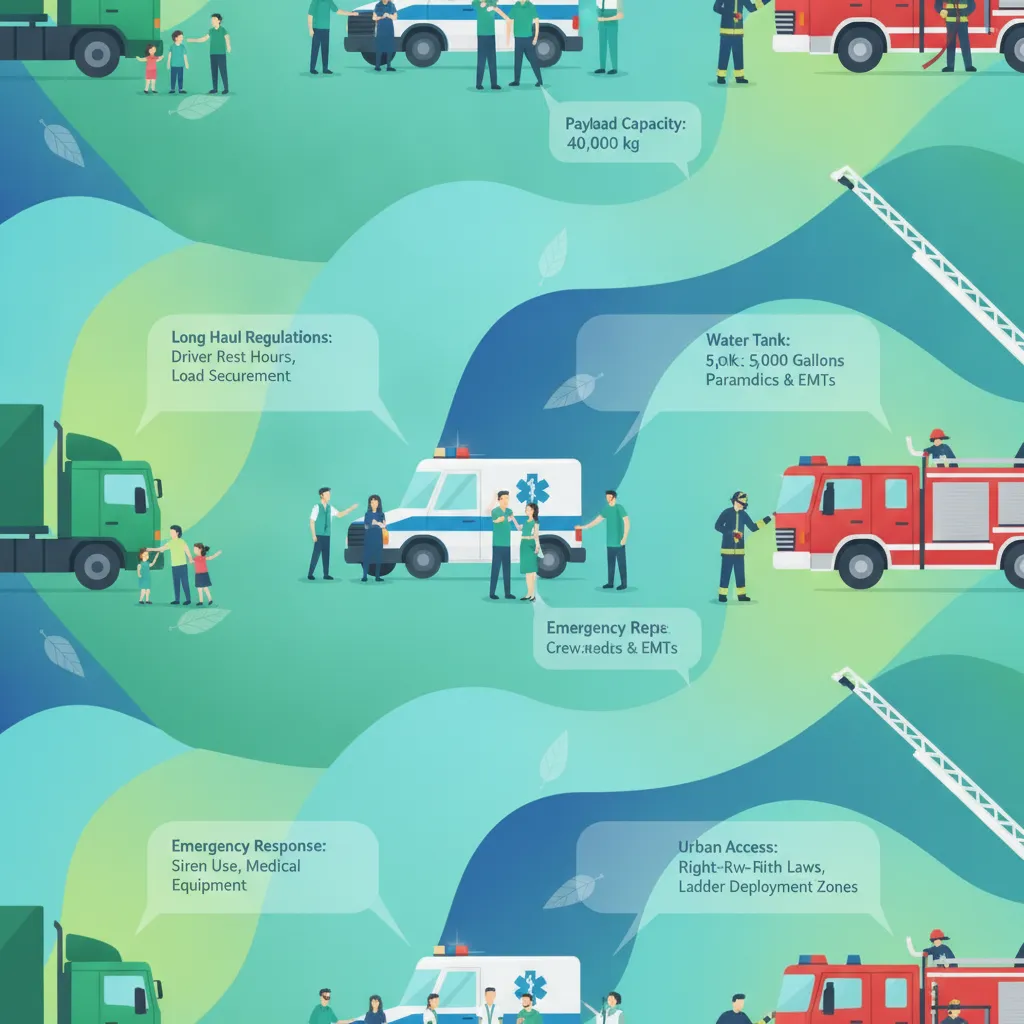
This lesson covers safe interaction with special vehicles. It details the challenges of driving near large trucks (LKW), including their extensive blind spots, longer stopping distances, and the effects of wind turbulence when overtaking them. A critical part of the lesson is explaining the correct procedure for reacting to emergency vehicles by creating an emergency corridor ('Rettungsgasse') on multi-lane roads.

This lesson examines the direct impact of a passenger vehicle's dimensions on its operation. It explains key concepts such as turning radius, swept path, and rear overhang, which are crucial for safe maneuvering in confined areas. Learners will understand how to account for these characteristics when positioning the vehicle in a lane, making turns, and navigating challenging urban environments to avoid collisions.
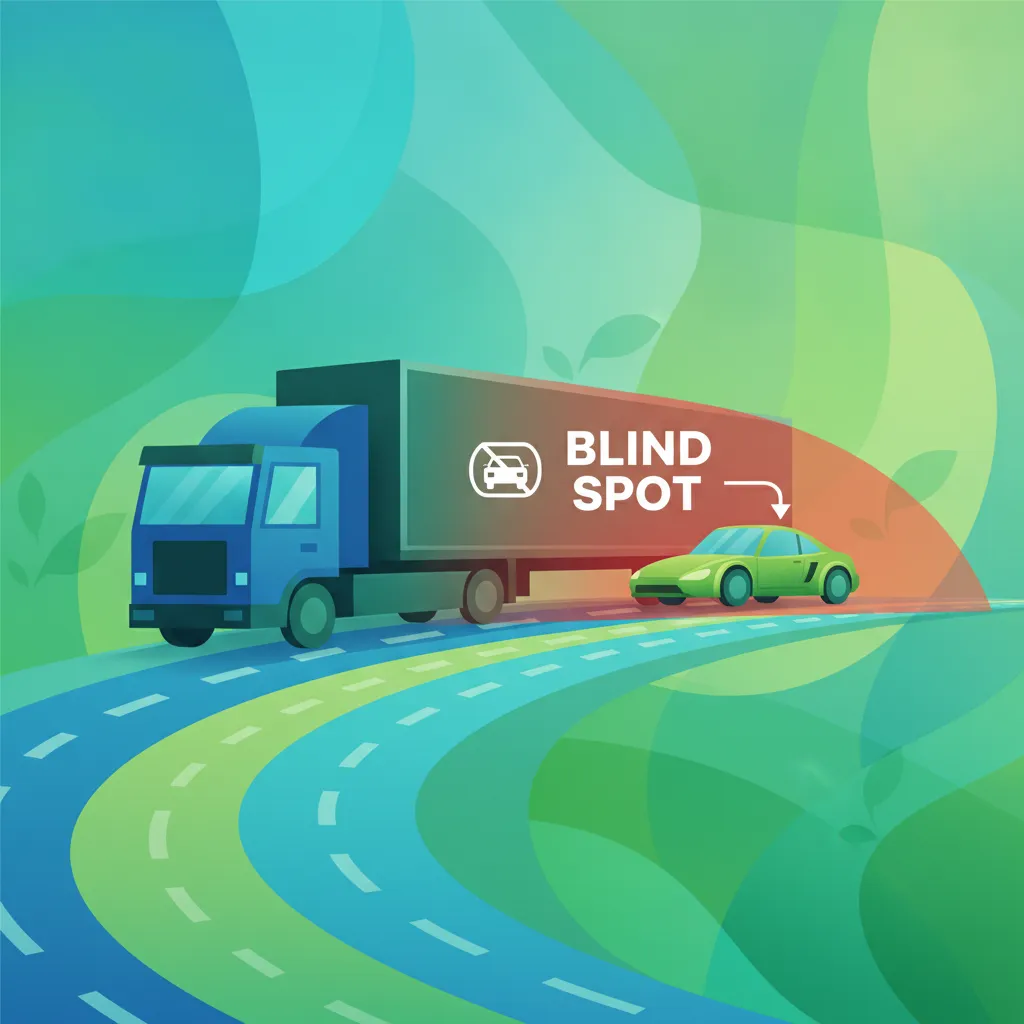
This lesson focuses on the blind spot zones specific to trucks and vehicle combinations, explaining where these zones are located. It covers the use of blind spot mirrors and other aids to enhance driver awareness during lane changes and turns. The content stresses the importance of maintaining safe distances from vulnerable road users.
This lesson covers the principles of effective route planning and the practical skills for navigating different types of junctions. It provides guidance on using navigation aids and understanding the specific challenges large vehicles face at roundabouts and complex intersections. Emphasis is placed on correct lane selection and positioning well in advance of a turn to execute the maneuver safely and without impeding other traffic.

This lesson focuses on the risks of jackknifing and trailer swing, particularly during braking and on downhill descents. It provides recommendations for safe speed management, proper braking techniques, and maintaining vehicle stability. The content also addresses safe reversing practices and the importance of monitoring blind spots during maneuvers.
Find clear answers to common questions learners have about Terminal Maneuvers. Learn how the lesson is structured, which driving theory objectives it supports, and how it fits into the overall learning path of units and curriculum progression in Germany. These explanations help you understand key concepts, lesson flow, and exam focused study goals.
Terminals involve fixed platform edges, narrow lanes, and high pedestrian traffic. You must focus on vertical and lateral clearance to avoid hitting platforms, which requires specific techniques for aligning your wheels and mirrors that are tested in the professional licence exams.
Many drivers misjudge the tail swing of the vehicle, leading to contact with the platform or adjacent vehicles. Correctly using your mirrors to monitor the rear overhang throughout the entire docking maneuver is critical for both the exam and vehicle safety.
Yes, while the driver is always responsible for the vehicle, clear communication with ground staff using hand signals or pre-agreed indicators is vital in large terminals to prevent accidents in your blind spots.
Longer vehicles, especially in D and DE categories, have larger swept paths. You must account for the rear-end swing, which can deviate significantly from the path of the front wheels, making the approach angle to the platform critical.
Begin your targeted revision now. Use our practice search to quickly find specific German driving theory questions. Filter by StVO rules, road signs, or hazard perception to create your focused study plan. Master challenging areas and prepare confidently for your theoretical driving test.