
This lesson provides a critical look at managing extensive blind spots when operating large passenger vehicles under categories D1, D1E, D, and DE. By building on your general vehicle knowledge, you will learn how to combine professional mirror configurations with modern camera systems to maximize your visibility. Mastering these techniques is essential for ensuring passenger safety and passing the professional German theory examination.

Lesson content overview
Operating large passenger vehicles, such as buses and coaches falling under Licence Categories D1, D1E, D, and DE, demands an elevated level of situational awareness. One of the most critical aspects of maintaining safety for passengers and other road users is effective blind spot management. This lesson delves into the intricacies of identifying, understanding, and actively managing the areas around your vehicle that are obscured from direct view. By mastering proper mirror adjustment, executing precise physical checks, and utilizing supplementary camera systems, professional drivers can significantly reduce collision risks, especially when interacting with vulnerable road users.
Blind spots, also known as blind zones, are inherent challenges in driving, particularly magnified in vehicles of significant size and length. These unseen areas pose a constant threat, making comprehensive visibility a top priority for professional drivers.
An area around a vehicle that cannot be directly observed by the driver through the standard rearview or side mirrors, nor through the front or side windows.
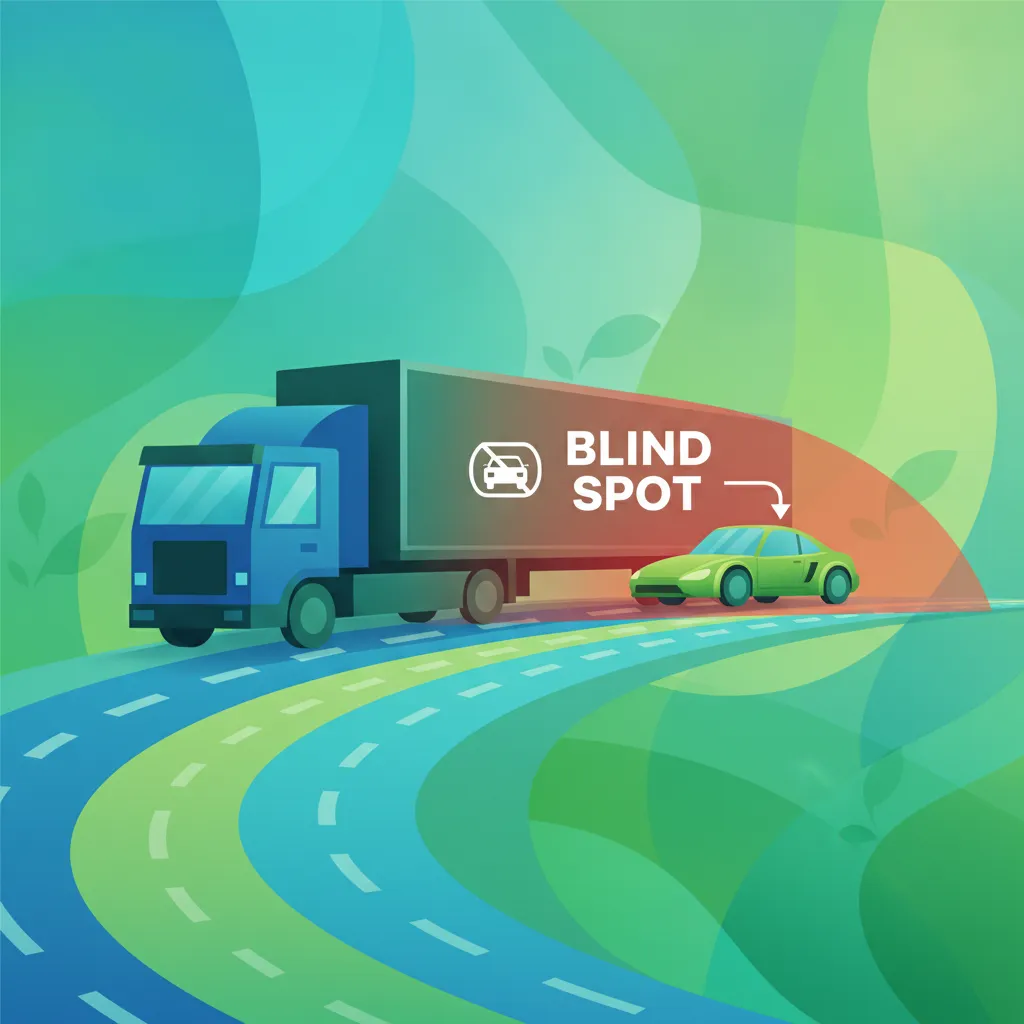
A blind spot refers to any area immediately surrounding your vehicle that you cannot see directly. While all vehicles have blind spots, their size and complexity increase dramatically with the dimensions of the vehicle. For a large passenger vehicle, these zones can be extensive, hiding entire smaller vehicles, motorcycles, cyclists, or pedestrians. They exist on all sides:
For drivers of professional passenger vehicles, understanding and actively managing blind spots is not just a best practice; it is a fundamental aspect of their duty of care and professional responsibility. The sheer size of buses and coaches means their blind spots are considerably larger than those of standard cars. This increases the risk of serious collisions, especially in urban environments where interaction with vulnerable road users (cyclists, pedestrians, motorcyclists) is frequent.
An unmanaged blind spot can lead to:
Effective blind spot management is intrinsically linked to broader concepts covered in this curriculum, such as vehicle dimensions, turning techniques, speed management, and the protection of vulnerable road users. It reinforces the professional driver’s legal obligations and commitment to ensuring passenger safety.
The first line of defense against blind spots is the proper adjustment of your vehicle’s mirrors. While mirrors cannot eliminate blind spots entirely, correctly set mirrors significantly expand your field of view and minimize the reliance on physical checks alone.
Achieving the widest possible field of view requires meticulous mirror adjustment. This procedure should be performed before every journey, and re-checked if the driver changes or the seating position is altered.
Adjust your seating position first: Ensure you are comfortably seated with a clear view of the road ahead and easy access to all controls. Your mirrors should then be adjusted relative to this fixed position.
Adjust exterior side mirrors (left and right):
Adjust interior rearview mirror:
The goal is to create overlapping fields of view between the interior mirror (if applicable) and the side mirrors, extending the visual coverage around the vehicle without significant gaps. Properly adjusted mirrors reduce the size of blind zones, but crucially, they do not eliminate them.
Many drivers make common errors when adjusting mirrors, inadvertently creating or enlarging blind spots.
Common Mistake: Setting side mirrors too far inward, showing too much of the vehicle's own side. Consequence: This reduces the view of adjacent lanes, creating large blind spots where a vehicle or cyclist could be hidden. It also creates unnecessary overlap with the rearview mirror.
Another common misunderstanding is believing that extremely wide-angle side mirrors, while providing a broad view, eliminate all blind spots. While helpful, these mirrors can also introduce distortion, making objects appear further away than they are or hiding near-field objects. A professional driver must understand these limitations and compensate with other checks.
Even with perfectly adjusted mirrors and advanced camera systems, a small yet critical blind spot always remains. This residual blind spot can perfectly conceal smaller, fast-moving road users such as cyclists, motorcyclists, or pedestrians, especially just before a lane change or turn. This is where the physical check, commonly known as a shoulder check or blind spot check, becomes absolutely mandatory.
A shoulder check is a quick, deliberate turn of the head to physically look into the blind zone. It is a vital supplement to mirror usage and should be integrated seamlessly into your observation routine before any lateral movement.
Scan mirrors first: Before initiating a maneuver, scan your rearview and side mirrors to assess traffic conditions.
Signal your intention: Activate your turn signal well in advance to inform other road users of your planned movement.
Quick head turn: Just before changing lanes or turning, make a quick, sharp glance over your shoulder in the direction of the intended movement.
Return focus to the road ahead: The check should be brief, no more than a second, ensuring your eyes quickly return to the road ahead to maintain forward observation.
The purpose of this brief glance is to confirm that the blind spot is clear. This action becomes even more critical in large passenger vehicles, where the potential blind zone can be significant enough to hide an entire motorcycle.
Mandatory Before Any Lateral Movement: Shoulder checks are legally required and paramount for safety before initiating any lane change, turning maneuver, or pulling out from the side of the road.
Reliance on mirrors alone is insufficient because of:
In Germany, the Straßenverkehrs-Ordnung (StVO) implicitly requires drivers to ensure no one is endangered when performing maneuvers, which includes checking blind spots. Failure to perform a shoulder check is considered negligent and can lead to severe consequences in the event of an accident.
Modern large passenger vehicles are increasingly equipped with advanced camera systems and driver assistance technologies designed to augment a driver's perception. While these systems offer valuable supplementary information, it is crucial to understand their role as aids rather than replacements for fundamental driving skills like mirror adjustment and physical checks.
Many professional passenger vehicles feature:
These systems are particularly beneficial for large vehicles, where the sheer scale can make traditional mirror checks more challenging, especially in complex environments like bus terminals or crowded urban streets. They offer an additional layer of information, enhancing the driver's overall situational awareness.
While technology is a powerful ally, it comes with limitations that professional drivers must acknowledge:
Technology is a Supplement, Not a Replacement: Always remember that camera systems and blind spot monitors are aids. They enhance your perception but do not replace the fundamental requirements for proper mirror adjustment and physical shoulder checks. Your eyes and active observation remain the primary safety tools.
The physical size of a large passenger vehicle directly dictates the extent and complexity of its blind spots. Understanding this relationship is fundamental for professional drivers to adapt their observation techniques accordingly.
Compared to a passenger car, a bus or coach has:
These enlarged blind zones necessitate more diligent and frequent observation from the driver. Maneuvers that might be straightforward in a smaller vehicle require meticulous planning and execution in a large passenger vehicle, with constant vigilance regarding blind spots.
The loading of a passenger vehicle can also influence visibility and blind spot management:
Drivers must be aware that any alteration to the vehicle's usual configuration or load distribution might necessitate a re-evaluation of mirror settings and a heightened focus on blind spot checks. Regular pre-trip inspections should include verification that all mirrors and camera systems are clear and operational.
Adherence to German traffic laws (StVO, StVZO) regarding visibility and safe vehicle operation is non-negotiable for professional passenger vehicle drivers. These regulations underpin the best practices for blind spot management.
German traffic law places a strong emphasis on ensuring safe vehicle operation, which inherently includes comprehensive visibility.
The principle "Safety First" ("Sicherheit geht vor") is paramount in German traffic law. Any maneuver must only be undertaken when it is clear that no one will be endangered.
Neglecting blind spot management can lead to severe consequences, both legal and practical:
Effective blind spot management is not a static process; it must be dynamic and adaptable to various driving conditions and environments.
Environmental factors can significantly impact visibility and the effectiveness of observation techniques:
Urban areas present unique challenges due to high traffic density and the prevalence of vulnerable road users:
To solidify understanding, let's consider practical scenarios that professional drivers might encounter:
1. Merging onto a Highway
2. Turning Left at a City Intersection with a Cycle Lane
3. Changing Lanes on a Motorway at Night
Blind spots are an unavoidable reality in driving, especially for large passenger vehicles like those in Licence Categories D1, D1E, D, and DE. Effective management is a multi-layered approach involving technical setup, physical actions, and intelligent use of technology.
Adherence to these principles is fundamental for the safe, professional operation of passenger vehicles, ensuring the well-being of your passengers and all other road users.
This lesson covers comprehensive blind spot management for professional drivers of large passenger vehicles under German D and DE licence categories. It explains that blind spots extend on all sides of a vehicle and are significantly larger than in standard cars, particularly along the sides and rear. The content details proper mirror adjustment procedures to maximize visibility, emphasizes that shoulder checks are legally required and indispensable before any lateral movement, and clarifies that while modern camera systems and blind spot monitors are helpful supplements, they cannot replace manual observation. Key legal references to StVO and StVZO reinforce that drivers must ensure no one is endangered during maneuvers, with failure to check blind spots considered negligent. The lesson also addresses adapting observation techniques to adverse weather, night driving, and urban environments where vulnerable road users are most at risk.
A short set of high-value points that capture the most important learning from this lesson.
Blind spots are areas around a vehicle that cannot be seen through mirrors or windows, and their size increases dramatically with vehicle dimensions.
Proper mirror adjustment is the first line of defense but cannot eliminate blind spots entirely—additional checks are always required.
Physical shoulder checks are mandatory before any lane change, turn, or lateral maneuver to detect vulnerable road users hidden in blind spots.
Camera systems and blind spot monitors are valuable supplements to observation but cannot replace fundamental mirror and physical checks.
Urban environments with cyclists and pedestrians demand heightened vigilance because their smaller profile makes them especially prone to being hidden in large vehicle blind spots.
Explore all units and lessons included in this driving theory course.
Side mirrors should be adjusted so only a sliver of your own vehicle's body is visible, maximizing the view of adjacent lanes.
The 'vanishing point' phenomenon means objects can move from your rearview mirror's view into a blind spot not covered by side mirrors.
Always perform shoulder checks immediately before—not after—signaling and initiating any lateral movement.
German StVO requires drivers to ensure no road user is endangered during maneuvers, which mandates thorough blind spot checks.
Even with technology aids, mirrors must be clean and functional; sensors can be obscured by dirt, snow, or condensation.
Setting side mirrors too far inward, showing too much of the vehicle's own body, which creates large blind spots in adjacent lanes.
Relying solely on mirrors and skipping shoulder checks, assuming the blind spot is clear without physical verification.
Over-relying on camera systems or blind spot monitors and neglecting fundamental mirror checks and shoulder inspections.
Performing shoulder checks too early (before scanning mirrors) or failing to return focus quickly to the road ahead.
Assuming wide-angle mirrors eliminate blind spots; these can introduce distortion and hide near-field objects.
Lesson content overview
A short set of high-value points that capture the most important learning from this lesson.
Blind spots are areas around a vehicle that cannot be seen through mirrors or windows, and their size increases dramatically with vehicle dimensions.
Proper mirror adjustment is the first line of defense but cannot eliminate blind spots entirely—additional checks are always required.
Physical shoulder checks are mandatory before any lane change, turn, or lateral maneuver to detect vulnerable road users hidden in blind spots.
Camera systems and blind spot monitors are valuable supplements to observation but cannot replace fundamental mirror and physical checks.
Urban environments with cyclists and pedestrians demand heightened vigilance because their smaller profile makes them especially prone to being hidden in large vehicle blind spots.
Explore all units and lessons included in this driving theory course.
Side mirrors should be adjusted so only a sliver of your own vehicle's body is visible, maximizing the view of adjacent lanes.
The 'vanishing point' phenomenon means objects can move from your rearview mirror's view into a blind spot not covered by side mirrors.
Always perform shoulder checks immediately before—not after—signaling and initiating any lateral movement.
German StVO requires drivers to ensure no road user is endangered during maneuvers, which mandates thorough blind spot checks.
Even with technology aids, mirrors must be clean and functional; sensors can be obscured by dirt, snow, or condensation.
Setting side mirrors too far inward, showing too much of the vehicle's own body, which creates large blind spots in adjacent lanes.
Relying solely on mirrors and skipping shoulder checks, assuming the blind spot is clear without physical verification.
Over-relying on camera systems or blind spot monitors and neglecting fundamental mirror checks and shoulder inspections.
Performing shoulder checks too early (before scanning mirrors) or failing to return focus quickly to the road ahead.
Assuming wide-angle mirrors eliminate blind spots; these can introduce distortion and hide near-field objects.
Explore search topics learners often look for when studying Blind Spot Management. These topics reflect common questions about road rules, driving situations, safety guidance, and lesson level theory preparation for learners in Germany.
Browse additional driving theory lessons that cover connected traffic rules, road signs, and common driving situations related to this topic. Improve your understanding of how different rules interact across everyday traffic scenarios.
Explore advanced techniques for managing blind spots in large passenger vehicles (D, DE licence). This lesson focuses on optimizing mirror and camera systems and understanding their limitations for safe German driving theory.
This lesson focuses on the blind spot zones specific to trucks and vehicle combinations, explaining where these zones are located. It covers the use of blind spot mirrors and other aids to enhance driver awareness during lane changes and turns. The content stresses the importance of maintaining safe distances from vulnerable road users.

This lesson teaches the proper adjustment of all required mirrors to maximize the field of vision and minimize blind spots. It discusses the limitations of indirect vision and the importance of aligning mirrors based on the driver's seating position. The content also outlines the typical blind zones for heavy vehicles and strategies to mitigate them.

This lesson teaches riders how to develop strong visual perception skills for the road. It covers systematic scanning patterns, the correct use of mirrors, and the critical importance of performing a head check to cover blind spots. Understanding the larger blind spots of trucks and buses is also a key safety component.

This lesson teaches the systematic observation techniques required for safe driving, starting with how to scan the road far ahead, nearby, and to the sides. It details the correct frequency for checking interior and exterior mirrors to maintain situational awareness. The lesson highlights the indispensable over-the-shoulder check ('Schulterblick') to cover the vehicle's blind spot before any change in direction.

This lesson covers the high-risk maneuver of reversing a large passenger vehicle. It details a systematic approach that includes using all available aids like mirrors, cameras, and audible alarms. The lesson stresses the need for slow, controlled movements, constant scanning of the surroundings, and conducting thorough clearance checks to prevent collisions with objects or people behind the vehicle, advocating for a spotter whenever possible.

This lesson focuses on the high-risk maneuver of reversing, emphasizing the importance of all-around observation due to limited visibility. It teaches techniques for controlling the vehicle at very low speeds and using mirrors and direct observation to manage large blind spots behind the car. The priority is to ensure the path is clear of pedestrians and obstacles at all times.

This lesson covers safe reversing techniques for both rigid trucks and articulated combinations, emphasizing the use of mirrors and cameras. It discusses the risks of jackknifing during reversal and the importance of speed control and safety checks. The content outlines best practices for planning a safe reversing path, potentially with a guide person.

This lesson explores the critical role of visibility in safe driving, covering topics such as sight distance, managing blind spots, and the correct use of mirrors. It provides guidance on how to adjust your driving in conditions of reduced visibility, such as at night, in fog, or during heavy rain, including the proper use of headlights. The importance of the over-the-shoulder check ('Schulterblick') is also a key focus.
Learn critical theory for identifying pedestrians, cyclists, and other vulnerable road users hidden in the blind spots of large passenger vehicles. Essential knowledge for safe driving and passenger duty of care in German traffic scenarios.

This lesson focuses on the critical moments of interaction with pedestrians and cyclists near bus stops, a common location for accidents. It reinforces the importance of reducing speed, yielding right-of-way, and constantly monitoring blind spots during the stopping process. Learners will practice techniques like making eye contact and using signals to communicate intentions, creating a safer environment for everyone around the vehicle.

This lesson trains drivers to proactively identify vulnerable road users and anticipate their often unpredictable behavior. It highlights the specific risks posed by children, elderly pedestrians, cyclists, and e-scooter users, particularly near bus stops and crossings. The goal is to develop a heightened sense of risk perception and apply defensive driving techniques to protect those who are most at risk on the road.

This lesson focuses on identifying road users who require special attention and caution, such as children, the elderly, and individuals with disabilities. It details the appropriate behavior when encountering school buses and public transport, which often involve unpredictable pedestrian movement. A critical topic covered is the legal requirement to form an emergency corridor ('Rettungsgasse') for responding emergency vehicles.
This lesson teaches riders how to develop strong visual perception skills for the road. It covers systematic scanning patterns, the correct use of mirrors, and the critical importance of performing a head check to cover blind spots. Understanding the larger blind spots of trucks and buses is also a key safety component.
This lesson focuses on the blind spot zones specific to trucks and vehicle combinations, explaining where these zones are located. It covers the use of blind spot mirrors and other aids to enhance driver awareness during lane changes and turns. The content stresses the importance of maintaining safe distances from vulnerable road users.

This lesson focuses on the particular care required when driving near pedestrians, with a special emphasis on children and the elderly, whose behavior can be unpredictable. It covers the rules for yielding at zebra crossings and the importance of reducing speed near schools, playgrounds, and residential areas. The goal is to instill a habit of constant vigilance and readiness to stop.

This lesson teaches riders how to interact safely and predictably with pedestrians, cyclists, and public transport vehicles. It highlights the importance of yielding at designated crossings, maintaining a safe passing distance, and anticipating the movements of buses and trams. The content emphasizes using eye contact and clear signaling to foster safe and respectful interactions with all road users.

This lesson focuses on the interaction between heavy vehicles and vulnerable road users at crossings, particularly when turning right. It covers the need for heightened vigilance, the importance of properly using mirrors, and correct signaling to alert others. The content highlights legal responsibilities and safe distance requirements to prevent accidents.

This lesson provides specific guidance on how to safely share the road with pedestrians and cyclists, who are among the most vulnerable road users. It covers the rules of conduct at zebra crossings, traffic lights for pedestrians, and designated cycle lanes. The content emphasizes the importance of vigilance, yielding right-of-way, and maintaining a safe distance to prevent accidents in urban and rural environments.
This lesson explores the critical role of visibility in safe driving, covering topics such as sight distance, managing blind spots, and the correct use of mirrors. It provides guidance on how to adjust your driving in conditions of reduced visibility, such as at night, in fog, or during heavy rain, including the proper use of headlights. The importance of the over-the-shoulder check ('Schulterblick') is also a key focus.
Find clear answers to common questions learners have about Blind Spot Management. Learn how the lesson is structured, which driving theory objectives it supports, and how it fits into the overall learning path of units and curriculum progression in Germany. These explanations help you understand key concepts, lesson flow, and exam focused study goals.
Mirrors and cameras create digital and optical blind spots, especially at specific angles near the vehicle's body. A physical shoulder check is the only way to ensure no small road users, such as cyclists or children, are present in those remaining gaps before you begin a maneuver.
Mirrors must be adjusted while the vehicle is stationary, before you start your journey. If you change drivers or if your seating position has shifted, you must re-adjust them to ensure your view of the road and the vehicle's side is optimized for your specific height and build.
While the physical principles are the same, larger D category vehicles typically have more extensive blind spots due to their length and width. You must adapt your observation habits to the specific dimensions of the vehicle you are driving, as larger passenger vehicles require more significant mirror coverage.
The exam often uses video and static images of complex junctions. You will be evaluated on your ability to recognize if a vehicle is positioned correctly and whether the driver has taken sufficient measures to account for blind spots before executing a turn or lane change.
Begin your targeted revision now. Use our practice search to quickly find specific German driving theory questions. Filter by StVO rules, road signs, or hazard perception to create your focused study plan. Master challenging areas and prepare confidently for your theoretical driving test.