
This lesson teaches the complex procedures for reversing and shunting large passenger vehicles as required for D1, D1E, D, and DE licence categories. You will learn to integrate technical aids with manual checks to maintain complete control and ensure passenger safety during high-risk maneuvers. Mastering these skills is essential for both your professional theory examination and safe everyday operation.

Lesson content overview
Reversing and shunting maneuvers are among the most challenging and potentially hazardous operations for professional drivers of large passenger vehicles, including those in Licence Categories D1, D1E, D, and DE. The sheer size, weight, and inherent blind spots of these vehicles mean that even minor misjudgments can lead to serious collisions, causing property damage, injury, or even loss of life. This lesson provides a systematic and comprehensive approach to executing these maneuvers safely and efficiently, emphasizing controlled movement, thorough environmental scanning, and the strategic use of all available safety aids. Mastery of these techniques is crucial for maintaining passenger safety and upholding professional standards in passenger transport operations, particularly in confined spaces such as terminals, bus depots, and parking lots.
The act of moving a large passenger vehicle backward introduces significant challenges not present during forward driving. The driver's direct field of vision to the rear is severely limited, creating extensive blind spots where obstacles, pedestrians, or other vehicles can easily be hidden. The vehicle's dimensions, including its length and width, change how the rear of the vehicle swings and its turning radius, demanding precise control. Furthermore, the environment where reversing often occurs—such as busy bus terminals, passenger pick-up/drop-off zones, or service depots—can be dynamic and unpredictable, increasing the likelihood of encountering unexpected hazards.
Without a disciplined approach, the risk of collision skyrockets. Therefore, a proactive and systematic strategy is essential to mitigate these inherent dangers and ensure every reversing or shunting maneuver is completed without incident.
Successful and safe reversing relies on adherence to several fundamental principles that guide driver behavior and decision-making. These principles are designed to compensate for the inherent difficulties of moving large vehicles backward and form the bedrock of responsible passenger transport.
Maintaining a consistently low, steady speed throughout the entire reversing maneuver is paramount. This "crawl" speed allows the driver ample time to react to unexpected obstacles or movements in the vehicle's path. By reducing the kinetic energy of the vehicle, the potential impact force of any collision is minimized, and the stopping distance is significantly shortened, enabling quick and effective corrective actions. Professional drivers must resist the urge to accelerate, especially when visibility is limited or when people are present in the vicinity of the vehicle.
Comprehensive scanning involves the continuous and systematic checking of all available visual aids and direct observations. This means not relying on a single mirror or camera feed but integrating information from rear-view mirrors, side mirrors, camera displays, and direct head-turns to thoroughly survey the vehicle's surroundings. The purpose is to detect any obstacles, pedestrians, cyclists, or other road users that might enter the vehicle's path, especially those hidden in blind spots. This constant vigilance helps to build a complete mental picture of the environment.
Safety is enhanced by utilizing multiple, overlapping warning systems. This principle mandates the concurrent use of both visual aids (mirrors, cameras) and auditory signals (backup alarms). Visual systems help the driver perceive hazards, while auditory alarms serve to alert external individuals—pedestrians, cyclists, and other workers—to the vehicle's backward movement. This redundancy ensures that even if one warning system is compromised or a hazard is missed visually, another system can still prevent an incident.
Before initiating any reverse movement, and continuously throughout the maneuver, the driver must confirm that the entire intended path, from the vehicle's current position to its final stopping point, is completely free of obstacles. This isn't merely a glance at the immediate rear; it requires a thorough assessment of the destination area. This proactive confirmation prevents unexpected collisions during the vehicle's trajectory and ensures a clear, safe route.
Implementing the core principles requires specific techniques that professional drivers must master. These techniques are tailored to the unique challenges posed by large passenger vehicles.
Operating a heavy passenger vehicle in reverse demands exceptional throttle and brake control. The goal is to move the vehicle at a speed low enough to stop almost instantly if a hazard is detected. This typically means engaging the clutch slowly, or using minimal accelerator pedal input in an automatic transmission, allowing the vehicle to "inch" backward. The driver should always be prepared to cover the brake pedal, ready for an immediate stop.
When reversing, use the lowest gear appropriate for the vehicle's speed (often idle or first gear in manual vehicles) and minimize throttle input. Let the vehicle's idle speed or slight clutch engagement provide the momentum, using the brakes for precise speed modulation.
Common mistakes include accelerating too quickly, which significantly reduces reaction time, and assuming that mirrors alone provide sufficient information to detect fast-approaching hazards. Always prioritize precision over speed.
Effective scanning is a dynamic process that must adapt to the evolving environment during a reverse maneuver.
Initial Assessment: Before moving, physically exit the vehicle if necessary to walk around and visually inspect the entire area behind and to the sides of the vehicle. Look for low-lying obstacles, poles, people, or other vehicles.
Mirror Scanning: Once in motion, constantly cycle your gaze through all available mirrors: both large side mirrors, any convex mirrors, and the internal rear-view mirror if equipped. These provide crucial information on the sides and immediate rear.
Rear Camera Review: If your vehicle is equipped with a rear-view camera system, continuously monitor its feed. These cameras often provide a wider angle of view directly behind the vehicle, supplementing mirror information.
Direct Observation (Head-Turns): Periodically, and especially before making significant turns while reversing, perform a quick but thorough head-turn to look directly over your shoulder. This eliminates crucial blind spots that mirrors or cameras might miss, particularly areas close to the vehicle's corners or directly beneath the rear window line.
Avoid the mistake of over-relying on any single visual aid. Each provides a piece of the puzzle, and only by integrating all sources can a complete picture be formed.
Modern passenger vehicles are equipped with various safety features designed to assist during reversing. These features are not optional; they are integral components of a safe maneuvering strategy.
The backup alarm is a critical auditory warning system that automatically activates when the vehicle is put into reverse and moves beyond a minimal speed. This distinct tone alerts pedestrians, cyclists, and other drivers to the vehicle's backward movement, especially vital in busy or noisy environments where visual cues might be missed.
Never disable or intentionally obstruct a backup alarm. Doing so significantly compromises safety and may violate mandatory regulations, increasing collision risk.
Beyond the basic legal requirements, modern buses often feature advanced camera systems, including multiple cameras covering different angles, sometimes with object detection or proximity sensors. Always ensure these systems are clean, functional, and calibrated correctly. Use them in conjunction with your traditional mirrors for maximum coverage.
This technique goes beyond initial scanning and becomes an ongoing verification process.
The continuous process of ensuring the entire trajectory, from the vehicle's current position to its intended final resting spot during a reverse maneuver, remains clear of any obstacles or hazards.
Before starting, map out your intended path mentally. As you move, continuously verify that path. If the path becomes obstructed, stop immediately, reassess, and only proceed once the path is clear again. Never assume a path remains clear simply because it was clear a moment ago. People and objects can move into your path surprisingly quickly.
While not always legally mandated, the use of a spotter is a highly recommended best practice in complex, high-risk reversing scenarios. A spotter provides an invaluable additional set of eyes, particularly for blind spots that are extensive in large vehicles.
An additional person positioned safely outside the vehicle, who communicates with the driver (verbally or via agreed-upon hand signals) to provide real-time visual information about the vehicle's blind spots and proximity to obstacles during reversing maneuvers.
When working with a spotter:
Adhering to specific traffic regulations and recommended practices is critical for professional drivers in Germany. These rules are designed to prevent accidents and ensure the safety of all road users.
German regulations (and broader European standards) mandate that commercial vehicles of certain sizes, including passenger buses, must be equipped with and activate a backup alarm when reversing. This alarm must sound automatically when the vehicle moves backward beyond a minimal speed.
Failure to activate or maintain a functional backup alarm is a serious offense that significantly increases the risk of collision with unaware pedestrians or other vehicles.
It is a legal requirement for drivers to ensure that the path behind their vehicle is clear before initiating any reversing maneuver. This includes checking for people, other vehicles, and stationary obstacles. This check must be thorough and not merely a superficial glance.
While specific numerical speed limits for reversing are often not explicitly stated in German law beyond general principles of "safe speed," the overarching principle is that the vehicle must be operated at a speed low enough to stop instantly if a hazard appears. This applies universally but is especially critical in populated areas, depots, and terminals.
For large vehicles with extensive blind spots, the continuous and effective use of all available mirrors and camera systems during reversing is mandatory. These aids are crucial for expanding the driver's field of vision and detecting hazards that would otherwise be hidden.
While not always legally mandated, the use of spotters is strongly recommended by safety organizations and transport operators in Germany for complex or high-risk reversing scenarios, such as maneuvering in tight loading bays, busy depots, or congested terminals. While the driver is ultimately responsible, utilizing a spotter is considered a best practice for enhanced safety.
Even experienced drivers can make mistakes or face challenging situations during reversing. Understanding common pitfalls can help prevent them.
The principles and techniques for reversing must be adapted based on various environmental and operational factors.
Always exercise maximum caution when reversing in areas where vulnerable road users (pedestrians, cyclists, children, individuals with mobility impairments) are present. Areas near schools, bus stops, or pedestrian crossings require heightened vigilance and, ideally, a spotter. The backup alarm is particularly vital in these scenarios.
Understanding how specific actions (or inactions) lead to outcomes reinforces the importance of safe practices.
Mastering reversing and shunting is non-negotiable for professional drivers of large passenger vehicles in Professional German Passenger-Vehicle Theory – Licence Categories D1, D1E, D, DE.
By diligently applying these principles and techniques, professional drivers can significantly reduce the inherent risks associated with reversing and shunting, ensuring the safety of passengers, other road users, and property.
Reversing and shunting large passenger vehicles presents significant hazards due to limited rear visibility and vehicle blind spots. Safe execution depends on four core principles: maintaining controlled crawl speed, performing continuous comprehensive scanning through mirrors and cameras, utilizing redundant warning systems including mandatory backup alarms, and confirming an unobstructed path throughout the entire maneuver. Professional drivers must adapt procedures based on weather, lighting, vehicle load, and environment, and should employ spotters for high-risk scenarios while retaining full responsibility for the vehicle. German regulations mandate backup alarm activation and a clear reverse path check, with best practices emphasizing systematic procedures over convenience or speed.
A short set of high-value points that capture the most important learning from this lesson.
Controlled speed is the foundation of safe reversing—maintaining a low crawl speed allows instant stopping and minimizes collision impact force.
Comprehensive scanning must integrate all visual aids (mirrors, cameras, head-turns) plus direct observation to build a complete mental picture of the environment.
Redundant warning systems combining visual aids and backup alarms provide overlapping safety coverage that compensates for the limitations of any single method.
Unobstructed path confirmation is an ongoing process, not a one-time check—the entire trajectory to the final stopping point must remain verified throughout the maneuver.
Spotters provide critical external perspective for complex reversing scenarios, but the driver retains ultimate responsibility for the vehicle.
Explore all units and lessons included in this driving theory course.
Never disable or neglect the backup alarm—it is a mandatory safety system that alerts pedestrians and other road users to backward movement.
Use lowest appropriate gear (idle or first gear) when reversing and minimize throttle input, letting the vehicle inch while covering the brake pedal.
A spotter must maintain eye contact with the driver; if contact is lost, the driver must stop immediately.
When reversing with a trailer (D1E/DE), the trailer moves opposite to steering input, requiring significantly more space and planning.
Weather and lighting conditions demand increased scanning frequency, slower speeds, and verified functionality of all lighting systems.
Accelerating too quickly during reversing, which drastically reduces reaction time and increases collision severity.
Relying solely on mirrors without performing head-turns, missing blind spot hazards that mirrors cannot cover.
Only checking the immediate area behind the vehicle instead of verifying the entire intended path to the final stopping point.
Assuming a previously clear path remains clear—people and objects can move into the reverse trajectory unexpectedly.
Ignoring or dismissing a spotter's hazard warnings, which removes a critical safety layer in complex maneuvers.
Lesson content overview
A short set of high-value points that capture the most important learning from this lesson.
Controlled speed is the foundation of safe reversing—maintaining a low crawl speed allows instant stopping and minimizes collision impact force.
Comprehensive scanning must integrate all visual aids (mirrors, cameras, head-turns) plus direct observation to build a complete mental picture of the environment.
Redundant warning systems combining visual aids and backup alarms provide overlapping safety coverage that compensates for the limitations of any single method.
Unobstructed path confirmation is an ongoing process, not a one-time check—the entire trajectory to the final stopping point must remain verified throughout the maneuver.
Spotters provide critical external perspective for complex reversing scenarios, but the driver retains ultimate responsibility for the vehicle.
Explore all units and lessons included in this driving theory course.
Never disable or neglect the backup alarm—it is a mandatory safety system that alerts pedestrians and other road users to backward movement.
Use lowest appropriate gear (idle or first gear) when reversing and minimize throttle input, letting the vehicle inch while covering the brake pedal.
A spotter must maintain eye contact with the driver; if contact is lost, the driver must stop immediately.
When reversing with a trailer (D1E/DE), the trailer moves opposite to steering input, requiring significantly more space and planning.
Weather and lighting conditions demand increased scanning frequency, slower speeds, and verified functionality of all lighting systems.
Accelerating too quickly during reversing, which drastically reduces reaction time and increases collision severity.
Relying solely on mirrors without performing head-turns, missing blind spot hazards that mirrors cannot cover.
Only checking the immediate area behind the vehicle instead of verifying the entire intended path to the final stopping point.
Assuming a previously clear path remains clear—people and objects can move into the reverse trajectory unexpectedly.
Ignoring or dismissing a spotter's hazard warnings, which removes a critical safety layer in complex maneuvers.
Explore search topics learners often look for when studying Reversing and Shunting. These topics reflect common questions about road rules, driving situations, safety guidance, and lesson level theory preparation for learners in Germany.
Browse additional driving theory lessons that cover connected traffic rules, road signs, and common driving situations related to this topic. Improve your understanding of how different rules interact across everyday traffic scenarios.
Learn essential driving theory for large vehicles regarding blind spots. This lesson explains techniques to safely navigate and check blind areas during reversing and shunting maneuvers, crucial for D1, D, and DE licence holders in Germany.

This lesson focuses on the high-risk maneuver of reversing, emphasizing the importance of all-around observation due to limited visibility. It teaches techniques for controlling the vehicle at very low speeds and using mirrors and direct observation to manage large blind spots behind the car. The priority is to ensure the path is clear of pedestrians and obstacles at all times.

This lesson provides a comprehensive guide to identifying and managing the significant blind spots around a large passenger vehicle. It covers the correct adjustment and use of all mirrors, supplemented by camera systems, to gain maximum visibility. The importance of performing physical checks ('shoulder checks') before turning or changing lanes is emphasized to detect smaller road users like cyclists and pedestrians who may be hidden from view.

This lesson focuses on the blind spot zones specific to trucks and vehicle combinations, explaining where these zones are located. It covers the use of blind spot mirrors and other aids to enhance driver awareness during lane changes and turns. The content stresses the importance of maintaining safe distances from vulnerable road users.

This lesson covers safe reversing techniques for both rigid trucks and articulated combinations, emphasizing the use of mirrors and cameras. It discusses the risks of jackknifing during reversal and the importance of speed control and safety checks. The content outlines best practices for planning a safe reversing path, potentially with a guide person.

This lesson teaches the proper adjustment of all required mirrors to maximize the field of vision and minimize blind spots. It discusses the limitations of indirect vision and the importance of aligning mirrors based on the driver's seating position. The content also outlines the typical blind zones for heavy vehicles and strategies to mitigate them.

This lesson addresses the challenges of maneuvering heavy vehicles in confined spaces such as loading bays and narrow streets. It provides strategies for planning the maneuver, accounting for vehicle dimensions, turning radius, and blind spots. The content emphasizes slow, controlled movements and the need for high situational awareness.

This lesson teaches riders how to develop strong visual perception skills for the road. It covers systematic scanning patterns, the correct use of mirrors, and the critical importance of performing a head check to cover blind spots. Understanding the larger blind spots of trucks and buses is also a key safety component.

This lesson teaches the fundamental techniques for safely turning a large passenger vehicle. It explains the concepts of turning radius, swept path, and off-tracking, where the rear wheels follow a tighter path than the front wheels. Learners will understand how to position the vehicle correctly before a turn and manage their speed to navigate corners without encroaching on other lanes or hitting curbs.
This lesson covers safe interaction with special vehicles. It details the challenges of driving near large trucks (LKW), including their extensive blind spots, longer stopping distances, and the effects of wind turbulence when overtaking them. A critical part of the lesson is explaining the correct procedure for reacting to emergency vehicles by creating an emergency corridor ('Rettungsgasse') on multi-lane roads.

This lesson explores the critical role of visibility in safe driving, covering topics such as sight distance, managing blind spots, and the correct use of mirrors. It provides guidance on how to adjust your driving in conditions of reduced visibility, such as at night, in fog, or during heavy rain, including the proper use of headlights. The importance of the over-the-shoulder check ('Schulterblick') is also a key focus.
Explore the theory behind safe maneuvering and shunting for passenger vehicles like buses and coaches. This lesson covers systematic approaches, use of aids like cameras and alarms, and the importance of clearance checks according to German traffic law.

This lesson details the structured process for managing passenger boarding and alighting. It covers coordinating passenger flow to prevent crowding and providing clear instructions or assistance when needed. The procedures for deploying ramps or kneeling systems for passengers with reduced mobility are also covered to ensure a safe, dignified, and efficient exchange process at every stop.
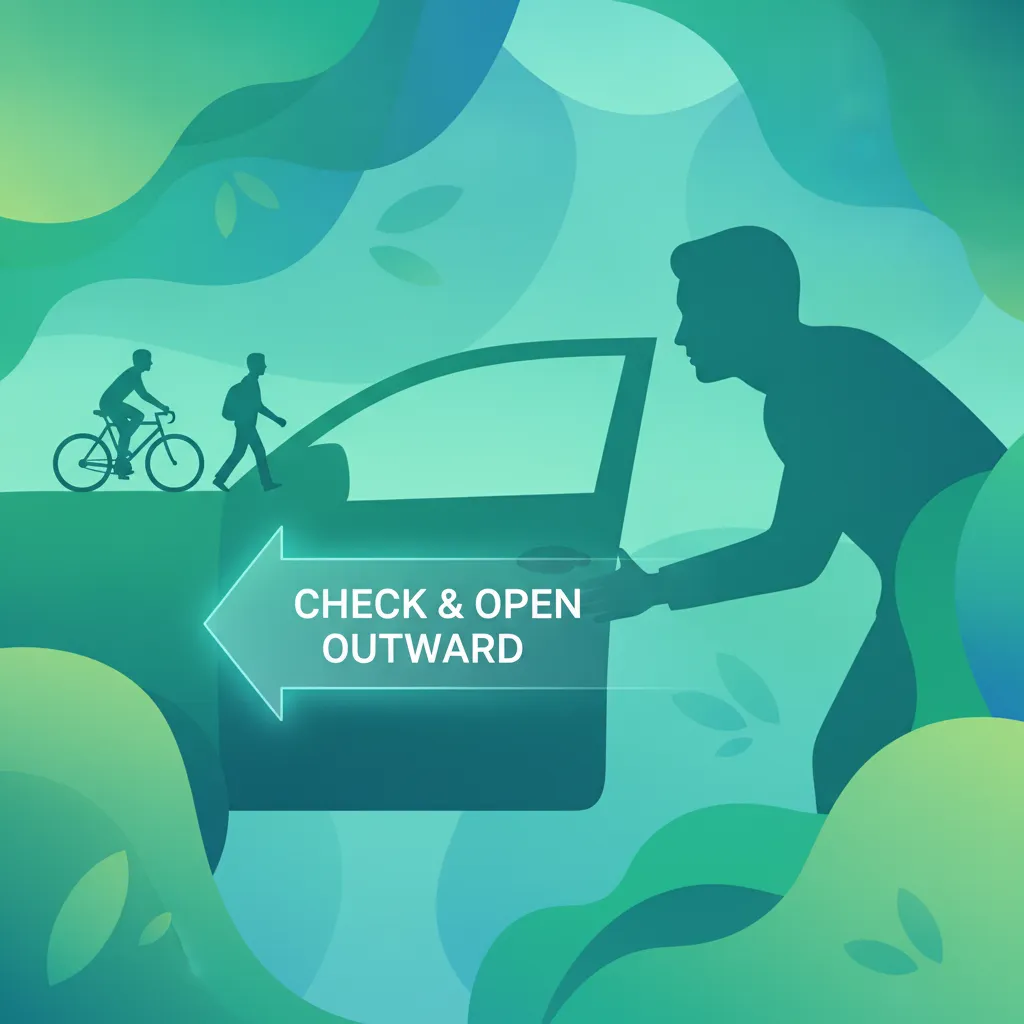
This lesson focuses on the safe operation of passenger doors, a critical aspect of daily duties. It explains the function of safety interlocks that prevent the vehicle from moving while doors are open and the importance of visually monitoring passengers. Learners will master the sequence of checking for obstructions, confirming all passengers are clear, and securely closing doors before departure.

This lesson covers the proper management of items brought on board by passengers, including luggage, prams, and mobility aids. It teaches how to use designated storage areas and racks correctly to prevent items from becoming hazards. The procedures for securing wheelchairs and other mobility devices are detailed to ensure they are stable and do not move during transit, complying with safety and accessibility standards.

This lesson outlines a clear, systematic procedure for managing a vehicle breakdown safely and efficiently. It covers immediate actions such as activating hazard lights, placing a warning triangle, and moving the vehicle to a safe location if possible. Learners will understand how to communicate the situation to passengers, decide if an evacuation is necessary, and contact the appropriate breakdown services for assistance.

This lesson teaches the driving techniques required for smooth operation, which is essential for passenger comfort and vehicle stability. It covers progressive application of the accelerator and brakes to avoid jolts and abrupt movements. The principles of anticipatory driving are also explored, showing how looking ahead and planning maneuvers contributes to a smoother ride, better fuel efficiency, and increased safety.

This lesson provides strategies for proactively managing passenger behavior to maintain a safe environment for everyone. It covers techniques for supervising passengers, enforcing rules on seat belt use, smoking, and alcohol, and managing luggage placement. The lesson also addresses how to handle disruptive behavior and the driver's role in assisting passengers during an emergency evacuation to ensure an orderly process.

This lesson focuses on fire safety protocols for passenger vehicles, covering both prevention and response. It teaches the location and proper use of fire extinguishers and the importance of recognizing potential fire hazards during pre-trip inspections. A primary focus is on the procedure for a calm and orderly evacuation, including how to operate emergency exits and guide all passengers, including those with mobility issues, to a safe location.

This lesson addresses the specific safety protocols required when transporting standing passengers. It explains the importance of ensuring passengers have access to handholds and are distributed evenly to maintain vehicle stability. Learners will understand their responsibility to drive smoothly, make announcements about sudden stops, and adhere to legal capacity limits for standing passengers.

This lesson explains the legal framework for ensuring a passenger vehicle's roadworthiness, focusing on periodic technical inspections (TÜV) and scheduled maintenance. It identifies critical wear components, such as brakes and tires, that require regular monitoring and replacement. The importance of adhering to service intervals and maintaining accurate maintenance logs for regulatory compliance is also thoroughly covered.

This lesson details the various seating configurations and restraint systems found in passenger vehicles, including three-point and lap belts. It explains the legal regulations surrounding seat belt usage and provides strategies to ensure passenger compliance for maximum safety. The correct application of child safety seats and the importance of secure fastening for all restraint systems are also emphasized to prevent injuries.
Find clear answers to common questions learners have about Reversing and Shunting. Learn how the lesson is structured, which driving theory objectives it supports, and how it fits into the overall learning path of units and curriculum progression in Germany. These explanations help you understand key concepts, lesson flow, and exam focused study goals.
Even with advanced camera systems and mirrors, large vehicles have significant blind spots. A spotter provides a second perspective to identify hazards that the driver cannot see, ensuring the safety of pedestrians and preventing damage to the vehicle.
A common mistake is failing to perform a full, systematic sweep of all mirrors and cameras before and during movement. The exam tests whether you understand that technology aids are supplements to, not replacements for, continuous visual awareness.
Yes, for D1E and DE categories, you must account for the articulation or trailer. The pivot point changes, requiring wider turning radii and slower, more deliberate steering inputs compared to rigid D-category vehicles.
Audible alarms are a safety feature for others to notice your intent, but you remain fully responsible for the movement. Never rely solely on the alarm to clear your path; you must ensure the area is truly vacant before moving.
Begin your targeted revision now. Use our practice search to quickly find specific German driving theory questions. Filter by StVO rules, road signs, or hazard perception to create your focused study plan. Master challenging areas and prepare confidently for your theoretical driving test.