
This lesson delves into the complexities of urban traffic, specifically focusing on how to safely and legally interact with public transport and navigate school zones. Understanding these priorities is crucial for smooth traffic flow and ensuring the safety of all road users in Iceland's towns and cities. It builds upon general priority rules to address specific urban scenarios.
Lesson content overview
Navigating the bustling streets of urban Iceland requires more than just knowing basic road signs. Drivers must understand the intricate dynamics of urban traffic flow, especially when interacting with public transport systems and vulnerable road users like schoolchildren. This lesson delves into the specific rules and priorities designed to ensure safety and efficiency in densely populated areas, crucial knowledge for anyone taking the Official Icelandic Driving License B Theory Course.
These regulations are not merely suggestions; they are legally binding principles established by Icelandic traffic law, aimed at protecting the most vulnerable and facilitating smooth public transport operations. Mastering these concepts is fundamental to safe driving, preventing accidents, and avoiding legal penalties.
Urban environments are complex ecosystems where various road users—private vehicles, public transport, pedestrians, and cyclists—share limited space. To manage this interaction effectively and minimize conflict, a clear hierarchy of road users is established. This hierarchy dictates who has the right-of-way in specific situations, ensuring that the most vulnerable road users are protected and essential services like public transport can operate efficiently.
The underlying logic for these priority schemes is twofold:
Understanding these priorities is crucial for all drivers in Iceland. It builds upon foundational knowledge of basic priority rules at intersections, road markings, and general urban traffic flow.
Bus priority lanes, often referred to simply as bus lanes, are a fundamental traffic calming measure designed to improve the reliability and speed of public bus services. These lanes are explicitly reserved for buses, and sometimes taxis, during specified hours. They are typically demarcated by solid white lines on the road surface and distinct signage.
A bus lane is a dedicated section of the road that private vehicles are generally prohibited from using. Their primary purpose is to allow buses to bypass congestion, maintain schedules, and offer a more attractive and efficient public transport option. This ultimately helps to reduce overall traffic and emissions in urban areas.
Bus lanes in Iceland can operate under different conditions:
Drivers must pay close attention to the accompanying signage. A sign-post indicating "BUS" along with a clock or a time-range specifies the hours of operation.
Key Rules for Bus Lanes:
A frequent mistake drivers make is assuming a bus lane is optional, or using it for a quick overtake when traffic is heavy. It's crucial to remember that the restriction is legally enforced, regardless of immediate bus presence or traffic conditions. Another common error is failing to notice the time-restriction signage, leading to violations outside of what the driver perceives as "peak hours." Always check the signs carefully.
While Iceland currently does not have trams, this section is included for the benefit of students who may drive in countries with tram systems or in anticipation of future infrastructure developments. Understanding tram priority is a common element in international driving theory and ensures drivers are prepared for various urban driving scenarios.
Trams are rail-bound vehicles that operate on fixed tracks within city streets. Due to their inability to deviate laterally, trams generally have absolute precedence over all other road users, including cars, unless traffic signs or signals explicitly indicate otherwise.
Drivers might mistakenly assume they can pass a stationary tram, or that a general green light automatically grants them right-of-way over an approaching tram. In most jurisdictions, trams operate on a strict priority system due to the severe consequences of a collision. The inability of a tram to swerve makes them particularly vulnerable, placing the onus on other road users to yield.
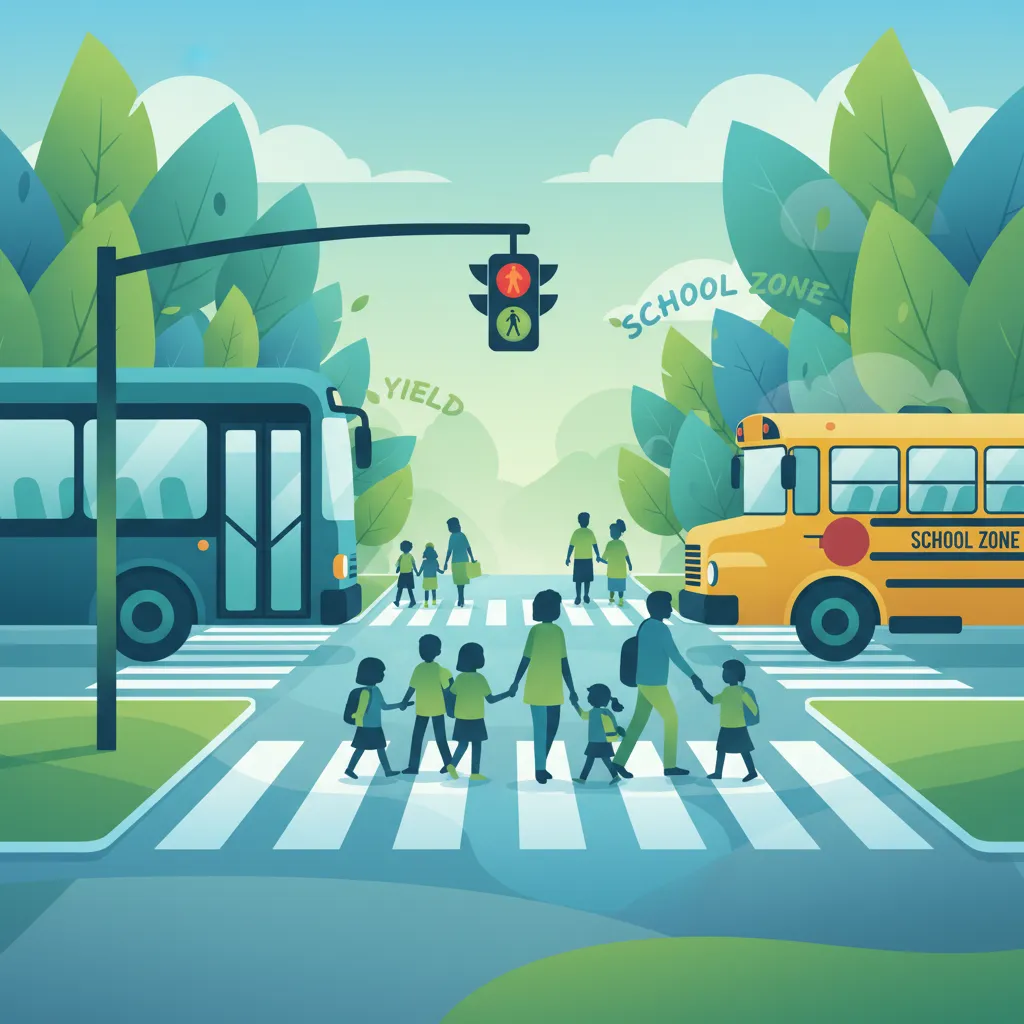
School zones are critical areas where the safety of children is paramount. These zones have specific, reduced speed limits and additional warnings to ensure drivers have ample time to react to the unpredictable movements of children.
School zones are designated areas around schools where the maximum permissible speed is significantly reduced, typically to 30 km/h in Iceland, unless otherwise signposted. The primary purpose is to reduce stopping distances and give drivers more reaction time, thereby drastically lowering the risk and severity of accidents involving children.
Drivers will encounter specific signage indicating a school zone:
These signs, often accompanied by a pictogram of school children, mark the beginning of a school zone.
There are usually two types of school zones:
Children, due to their smaller stature, developing peripheral vision, and often impulsive behavior, are highly vulnerable road users. They may dart into the road unexpectedly, emerge from behind parked cars, or misjudge the speed and distance of approaching vehicles. Therefore, maintaining the designated low speed in a school zone is an absolute requirement, not just a guideline contingent on visible children. This strict enforcement aims to create a safe buffer zone where a driver’s reaction time is maximized, and stopping distance is minimized.
Pedestrian islands, also known as pedestrian refuges, are a common feature on wider or multi-lane roads. They are central islands located on the road, designed to enhance pedestrian safety by allowing individuals to cross one direction of traffic at a time, providing a safe waiting point in the middle.
Pedestrian islands break up a long, wide crossing into two shorter, safer segments. Instead of having to judge gaps in traffic from multiple directions simultaneously, pedestrians can cross the first set of lanes, wait safely on the island, and then cross the remaining lanes. This is particularly beneficial on roads without traffic lights or where traffic volume is high.
When approaching a pedestrian island, drivers have specific responsibilities to ensure the safety of pedestrians:
A common misconception is that a driver only needs to yield if the pedestrian is crossing their specific lane. However, once a pedestrian has committed to crossing by stepping onto the island, they have established their intent, and drivers from both directions should be prepared to yield as the pedestrian continues their journey across the road.
Anticipation is a critical skill for safe driving, particularly in dynamic urban environments. It involves the proactive assessment of traffic conditions to predict the actions of other road users and adjust your driving accordingly. It's not about guessing, but about observing cues and understanding typical traffic behavior.
Good anticipation means constantly scanning the road ahead, to the sides, and in your mirrors, looking for potential hazards or changes in traffic flow. This includes:
By applying anticipation, drivers can:
Adherence to specific rules and regulations is mandatory for all drivers in Iceland. These rules are designed to prevent conflicts and ensure safety for all road users, particularly the most vulnerable.
Rule 1: Use of Bus Lanes
Rule 2: Yielding to Trams
Rule 3: School Zone Speed Limit
Rule 4: Pedestrian Island Right-of-Way
Rule 5: Anticipation Requirement
Failing to observe the rules related to public transport priorities and school zones can lead to significant risks and legal consequences. Understanding common violations helps drivers identify and correct potentially dangerous habits.
| Violation | Why It’s Wrong | Correct Behavior | Typical Consequence |
|---|---|---|---|
| Entering a bus lane during restricted hours | Impedes public transport, causing delays and is an illegal use of an exclusive lane. | Stay in the regular lane unless signage explicitly permits deviation (e.g., for an immediate turn). | Fine; possible demerit points. |
| Proceeding across tram tracks while a tram is signaling or approaching | Trams have inherent right-of-way; collisions with trams are high-risk due to their fixed path and mass. | Stop before the crossing line, allow the tram to pass completely. | Fine; severe risk of crash, injury, and extensive property damage. |
| Exceeding 30 km/h in a school zone with no children visible | The speed limit is absolute and applies regardless of immediate pedestrian presence, as children can appear unexpectedly. | Reduce speed to the posted limit (e.g., 30 km/h) upon entering the school zone marker. | Fine; increased risk of accident, potential license points. |
| Failing to yield to a pedestrian on a pedestrian island | Endangers the pedestrian who has already committed to crossing and is in a vulnerable position. | Stop and give full right-of-way until the pedestrian clears the island. | Fine; possible accident liability and injury. |
| Sudden braking at the last moment when approaching a bus stopping | Lack of anticipation leads to abrupt stops, increasing the risk of rear-end collisions for following vehicles. | Anticipate bus stops well in advance, adjust speed gradually and early. | Rear-end collision; potential injuries and vehicle damage. |
| Ignoring temporary flashing school zone signs outside regular school hours | Temporary signs are enforceable when active, even if outside typical school hours (e.g., for an evening event). | Observe all flashing signs and reduce speed accordingly. | Fine; endangering children. |
| Overtaking a stopped school bus with flashing lights activated | Icelandic law prohibits overtaking when children are boarding or exiting a school bus. | Remain stopped behind the bus until the lights stop flashing and the bus moves. | Fine; possible increased penalties, severe risk to children. |
| Assuming right-of-way on a tram crossing when a traffic light is green for vehicles | Tram-specific signals or local laws may grant trams priority, overriding general vehicle traffic lights. | Observe all tram-specific signals; if the tram has right-of-way, yield. | Fine; significant safety hazard. |
| Driving at the speed limit in a school zone but not adjusting for wet conditions | Wet roads significantly increase stopping distances; the posted limit may be unsafe in adverse conditions. | Reduce speed further than the limit as needed for prevailing road and weather conditions. | Increased accident risk; liability in case of an incident. |
Driving rules are not static; they require flexible application based on prevailing conditions. Factors such as weather, lighting, road type, and vehicle state can significantly alter how you should interpret and apply the principles of public transport priorities and school zones.
Understanding the rules and the reasons behind them fosters a safer and more efficient urban driving environment. Each regulation is underpinned by fundamental safety and traffic management principles.
Following Bus Lane Rules:
Yielding to Trams:
Observing School Zone Speed Limits:
Respecting Pedestrian Islands:
Applying the Anticipation Principle:
This lesson covers critical urban driving rules in Iceland focusing on public transport priorities and school zone safety. Bus lanes are legally reserved for buses during designated hours, with fines for unauthorized use. School zones enforce reduced speed limits (typically 30 km/h) that apply immediately upon entering the marked area, regardless of visible children. Pedestrian islands require drivers to yield to pedestrians who have committed to crossing and prohibit overtaking stopped vehicles at these crossings. While Iceland currently has no trams, understanding tram right-of-way is covered because trams have absolute priority due to their fixed tracks. The overarching principle is anticipation—proactively assessing traffic conditions and adjusting behavior before hazards materialize, not merely reacting to them.
A short set of high-value points that capture the most important learning from this lesson.
Bus lanes are reserved for public transport during posted hours, and private vehicles must not enter them when active regardless of whether a bus is visible
School zones require a reduced speed limit (typically 30 km/h) that applies immediately upon entering the marked zone, even when no children are visible
Trams have absolute right-of-way at crossings because they cannot deviate from their fixed tracks, requiring drivers to stop before tracks when a tram approaches
Pedestrian islands require drivers to yield to pedestrians who have committed to crossing, stopping until they fully clear the island from both directions
Anticipation is an obligatory duty of care—drivers must proactively adjust speed and position near bus stops, school zones, and pedestrian crossings rather than reacting at the last moment
Explore all units and lessons included in this driving theory course.
Bus lanes marked with solid white lines and 'BUS' signage operate either during specific hours (check the clock/time range) or 24/7—always verify before entering
School zone speed limits are mandatory and absolute; reduce to the posted limit before crossing the zone entry sign, not after you see children
Once a pedestrian steps onto a pedestrian island, they have established their crossing intent and drivers from both directions must be prepared to yield as they continue
Adverse weather conditions (rain, snow, ice, fog) require even greater following distances and earlier braking near public transport stops and school zones
Flashing lights on school zone signs indicate active enforcement periods, but general duty of care applies whenever the zone is marked
Assuming bus lane restrictions are optional or only apply when a bus is actually present in the lane
Entering a school zone at full speed and only braking when children become visible rather than reducing speed upon seeing the zone sign
Believing that a green traffic light for vehicles automatically grants right-of-way over an approaching tram
Overtaking a vehicle that has stopped for a pedestrian at an island, which is prohibited and extremely dangerous
Last-minute braking when approaching a bus stop instead of anticipating the stop and adjusting speed gradually in advance
Lesson content overview
A short set of high-value points that capture the most important learning from this lesson.
Bus lanes are reserved for public transport during posted hours, and private vehicles must not enter them when active regardless of whether a bus is visible
School zones require a reduced speed limit (typically 30 km/h) that applies immediately upon entering the marked zone, even when no children are visible
Trams have absolute right-of-way at crossings because they cannot deviate from their fixed tracks, requiring drivers to stop before tracks when a tram approaches
Pedestrian islands require drivers to yield to pedestrians who have committed to crossing, stopping until they fully clear the island from both directions
Anticipation is an obligatory duty of care—drivers must proactively adjust speed and position near bus stops, school zones, and pedestrian crossings rather than reacting at the last moment
Explore all units and lessons included in this driving theory course.
Bus lanes marked with solid white lines and 'BUS' signage operate either during specific hours (check the clock/time range) or 24/7—always verify before entering
School zone speed limits are mandatory and absolute; reduce to the posted limit before crossing the zone entry sign, not after you see children
Once a pedestrian steps onto a pedestrian island, they have established their crossing intent and drivers from both directions must be prepared to yield as they continue
Adverse weather conditions (rain, snow, ice, fog) require even greater following distances and earlier braking near public transport stops and school zones
Flashing lights on school zone signs indicate active enforcement periods, but general duty of care applies whenever the zone is marked
Assuming bus lane restrictions are optional or only apply when a bus is actually present in the lane
Entering a school zone at full speed and only braking when children become visible rather than reducing speed upon seeing the zone sign
Believing that a green traffic light for vehicles automatically grants right-of-way over an approaching tram
Overtaking a vehicle that has stopped for a pedestrian at an island, which is prohibited and extremely dangerous
Last-minute braking when approaching a bus stop instead of anticipating the stop and adjusting speed gradually in advance
Explore search topics learners often look for when studying Public Transport Priorities and School Zones. These topics reflect common questions about road rules, driving situations, safety guidance, and lesson level theory preparation for learners in Iceland.
Browse additional driving theory lessons that cover connected traffic rules, road signs, and common driving situations related to this topic. Improve your understanding of how different rules interact across everyday traffic scenarios.
Understand Icelandic driving theory rules for bus priority lanes, yielding to public transport, and navigating urban traffic dynamics. Essential knowledge for safe city driving and ensuring public transport efficiency.
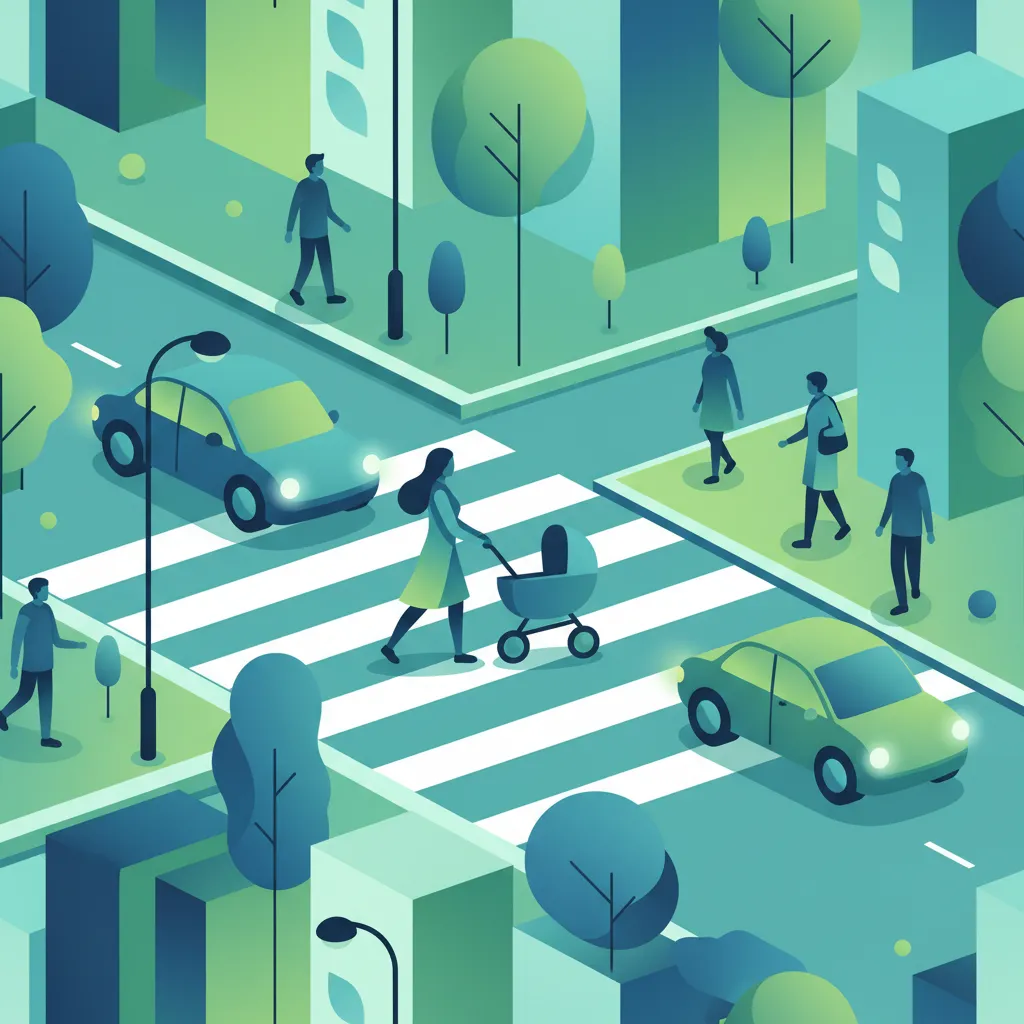
This lesson outlines the regulations governing pedestrian crossings, including zebra crossings, pedestrian traffic lights, and the driver’s obligations to yield. Learners will study how to identify crosswalk markings, interpret pedestrian signal phases, and understand the enhanced caution required in school zones and areas with high foot traffic. The content also emphasizes the need for drivers to anticipate vulnerable pedestrians and provide additional yielding in low-visibility conditions.
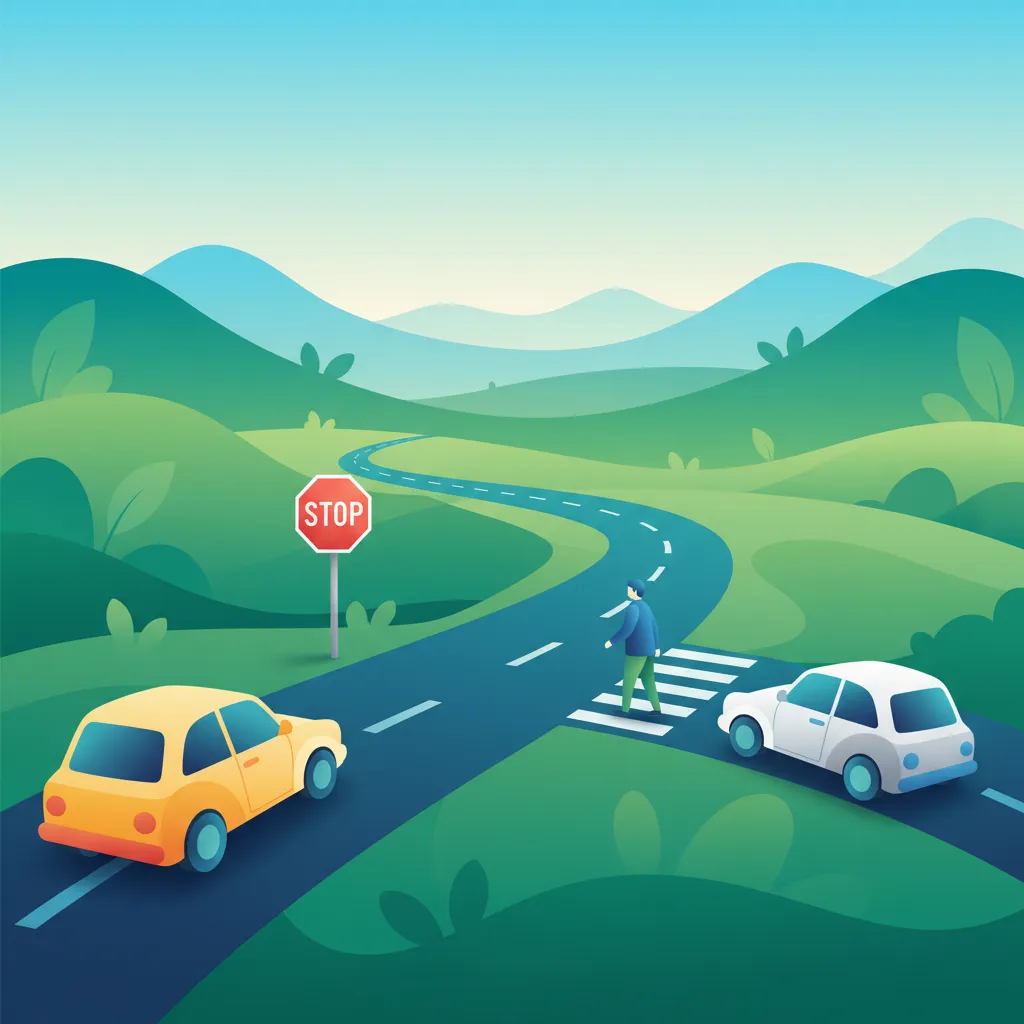
This lesson introduces the fundamental concepts of right-of-way in Iceland, explaining the priority hierarchy that dictates when a driver must yield to others. Learners study the meaning of give-way and yield signs, the distinction between main and side roads, and how stop signs and markings affect vehicle positioning. By understanding these legal obligations, students will be able to determine correct actions at any junction, reducing the risk of collisions.
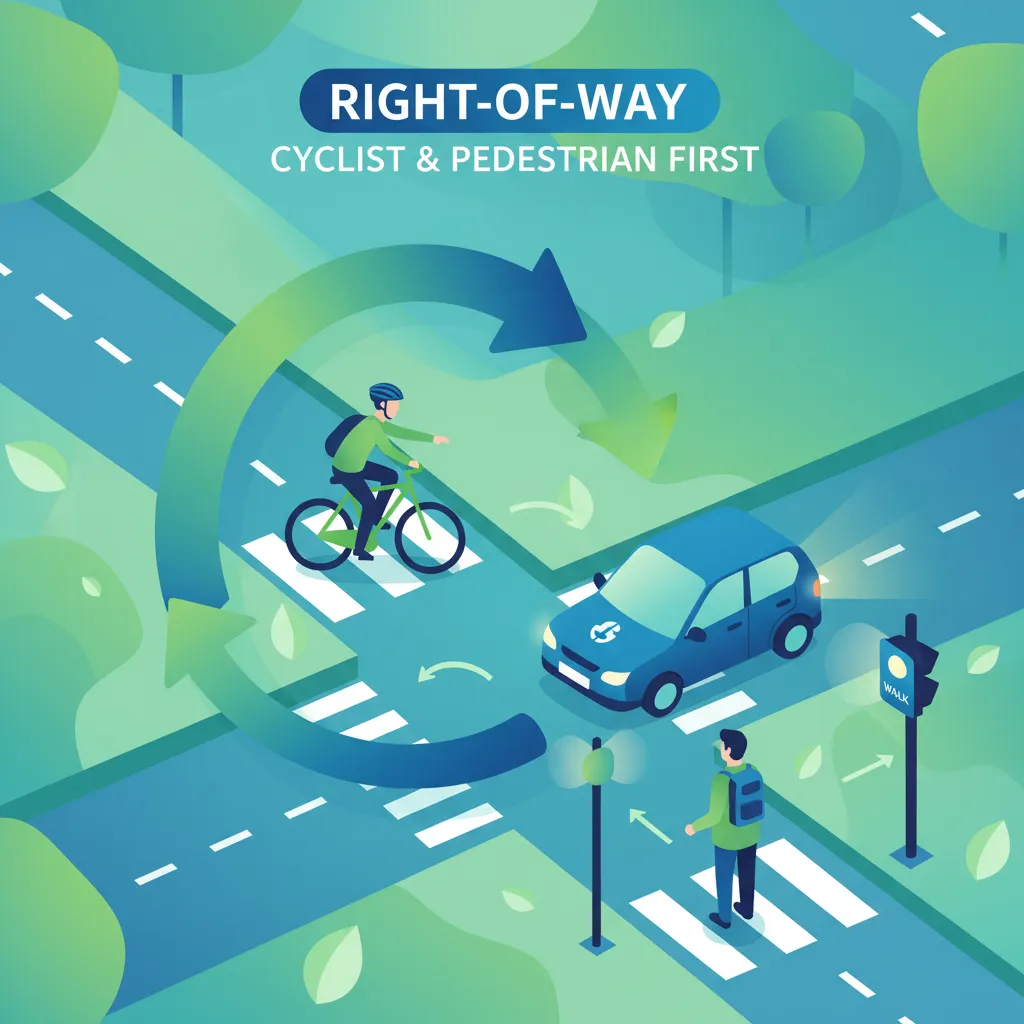
This lesson examines the legal framework defining right-of-way, distinguishing between priority and secondary roads, and detailing yielding responsibilities. It teaches riders how to assess intersections and approach safely based on Icelandic traffic law. Understanding these principles is critical for preventing collisions and ensuring smooth traffic flow at all types of junctions.
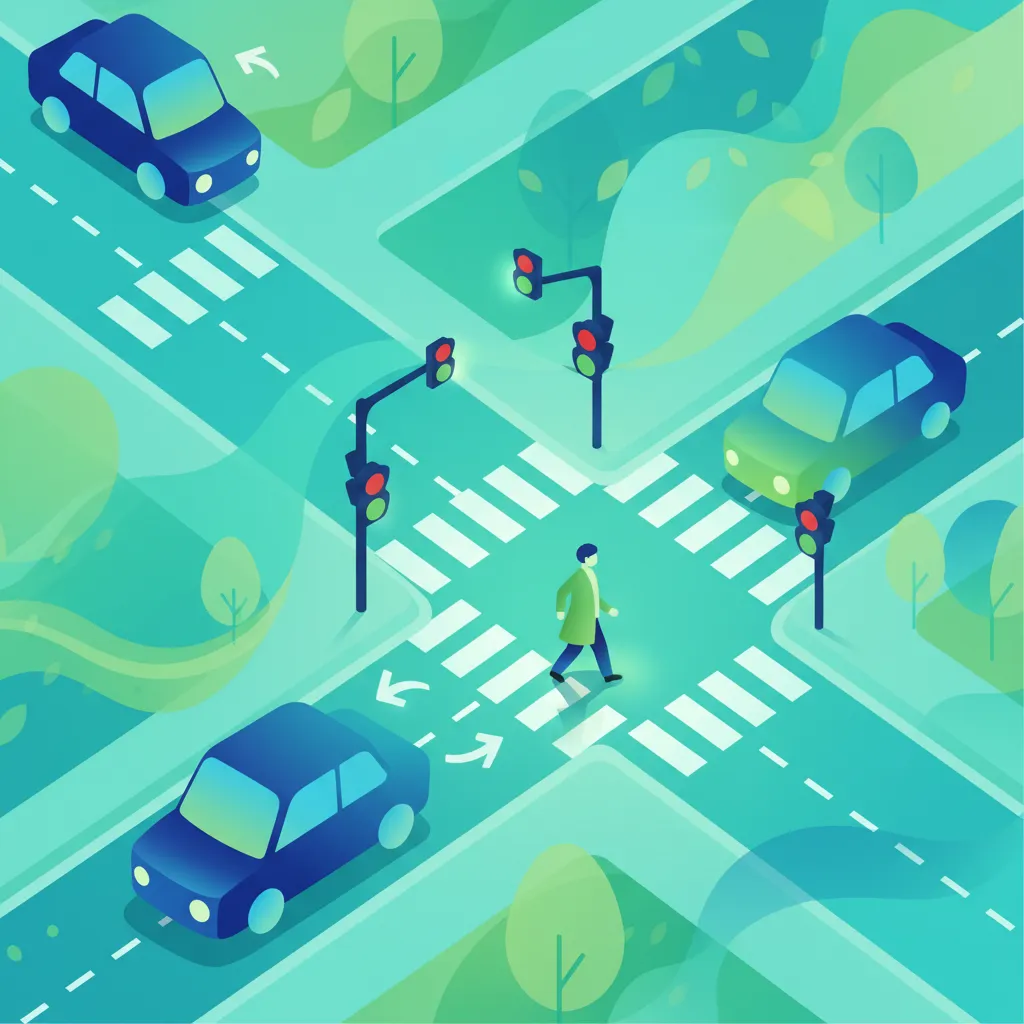
This lesson examines various intersection configurations in Iceland, including those controlled by traffic lights, four-way stops, and uncontrolled intersections without signals. Learners study how priority is determined in each scenario through signage, road markings, and the relative position of vehicles. The lesson also covers specific turning regulations and highlights the importance of assessing sight lines to ensure safe passage through complex junctions.
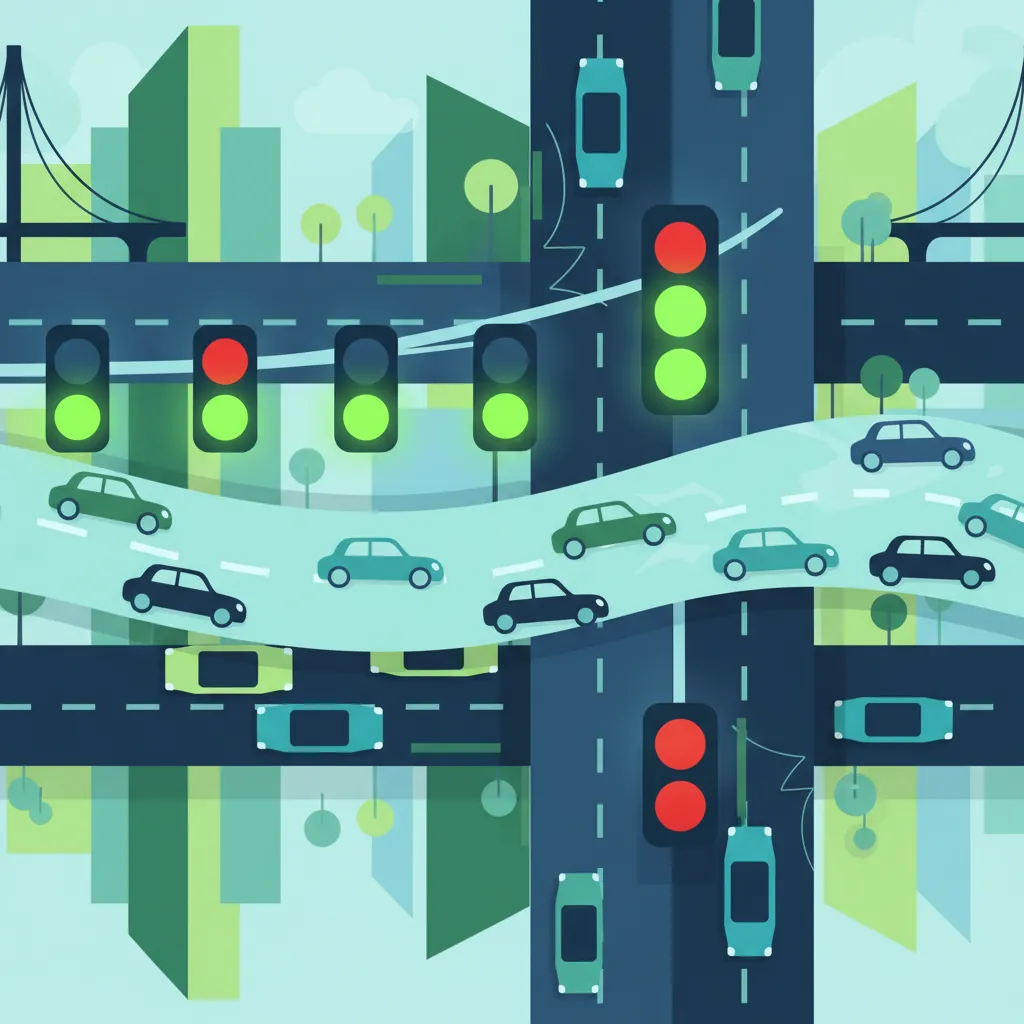
This lesson focuses on the operation of traffic lights in Iceland, describing standard three-phase cycles (red, amber, green) and variations such as flashing amber for yielding. Learners will also explore dedicated signals for pedestrians, cyclists, and turning movements, including arrow indications. The lesson explains how signal timing integrates with right-of-way rules at intersections, ensuring drivers can interpret and respond to each light state to maintain safety.
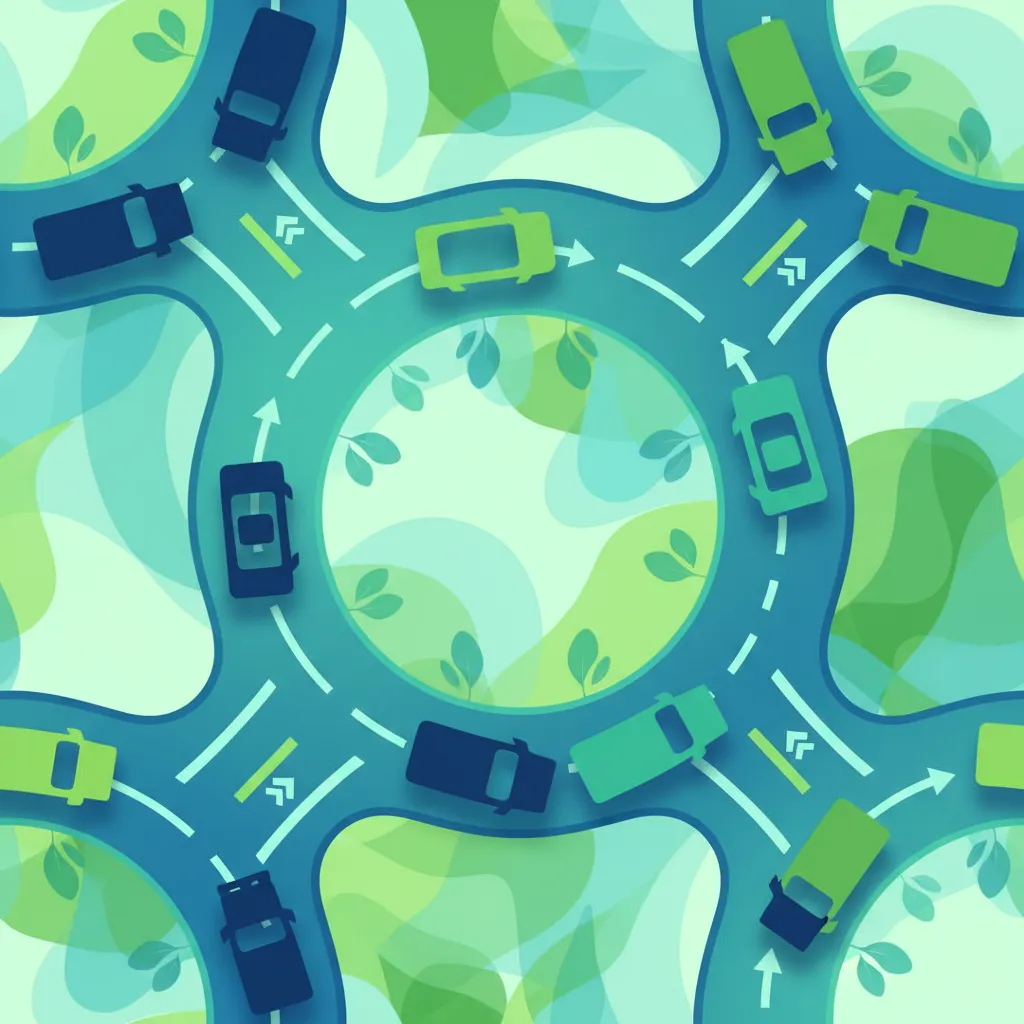
This lesson focuses on the operation of roundabouts, which are common in Icelandic towns and rural areas, and explains how drivers must yield to circulating traffic upon entry. The content covers how to interpret roundabout signage and follow lane markings to maintain correct positioning. Students also learn strategies for safe exit, handling multi-lane roundabouts, and recognizing deceptive entries that require heightened vigilance for smooth navigation.
This lesson explores the proper use of lane markings to maintain correct vehicle centering and adherence to the prescribed traffic flow direction in Iceland. The content describes how to interpret solid and broken lines, maintain safe following distances within a lane, and avoid unintended lane departures. Learners also examine the legal prohibitions on using the road shoulder for general travel, ensuring compliance with lane discipline rules for overall traffic safety.
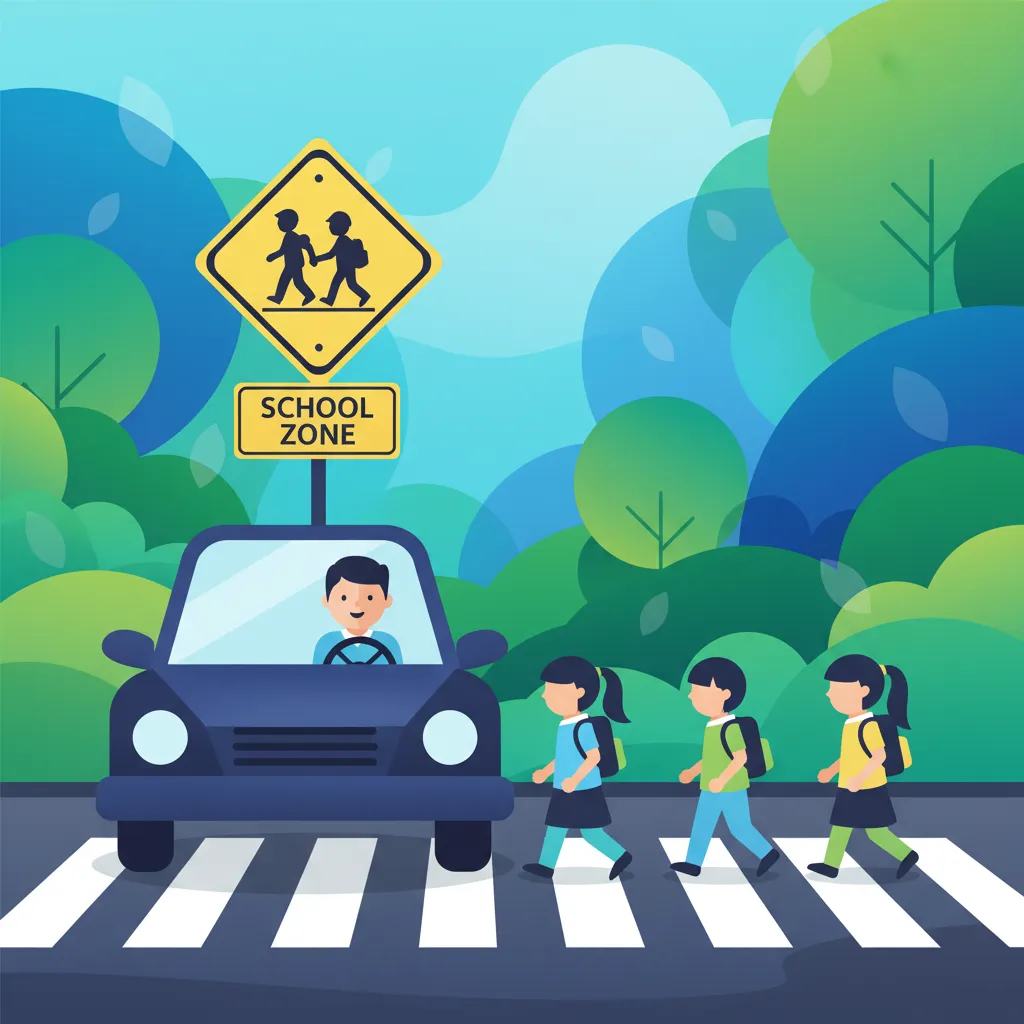
This lesson covers the strict rules governing pedestrian crossings and school zones, where riders have a heightened duty of care. It details the obligation to yield to pedestrians, recognize school zone signage, and reduce speed significantly. Riders learn to be extra vigilant for the unpredictable movements of children and other vulnerable road users in these sensitive areas.
This lesson focuses on the rules governing vehicle parking throughout Iceland, including the correct use of parallel and angle parking and compliance with time-limited zones. Learners will review signage indicating disabled parking spaces, restrictions on roadside parking, and rules about parking on sidewalks or in narrow rural areas. The content also details the legal consequences and penalties for illegal parking and the impact of infractions on vehicle inspection records.
This lesson focuses on interpreting road surface markings, including solid and broken lines that govern lane changes and positioning. Learners will understand the rules associated with turning arrows, pedestrian crossings, and markings for dedicated lanes. Correctly reading these markings is essential for maintaining proper lane discipline and navigating complex road layouts safely.
Learn Icelandic driving theory on school zones, pedestrian islands, and child safety. Understand specific speed limits and the importance of anticipation to protect vulnerable road users in urban areas.
This lesson outlines the regulations governing pedestrian crossings, including zebra crossings, pedestrian traffic lights, and the driver’s obligations to yield. Learners will study how to identify crosswalk markings, interpret pedestrian signal phases, and understand the enhanced caution required in school zones and areas with high foot traffic. The content also emphasizes the need for drivers to anticipate vulnerable pedestrians and provide additional yielding in low-visibility conditions.
This lesson covers the strict rules governing pedestrian crossings and school zones, where riders have a heightened duty of care. It details the obligation to yield to pedestrians, recognize school zone signage, and reduce speed significantly. Riders learn to be extra vigilant for the unpredictable movements of children and other vulnerable road users in these sensitive areas.
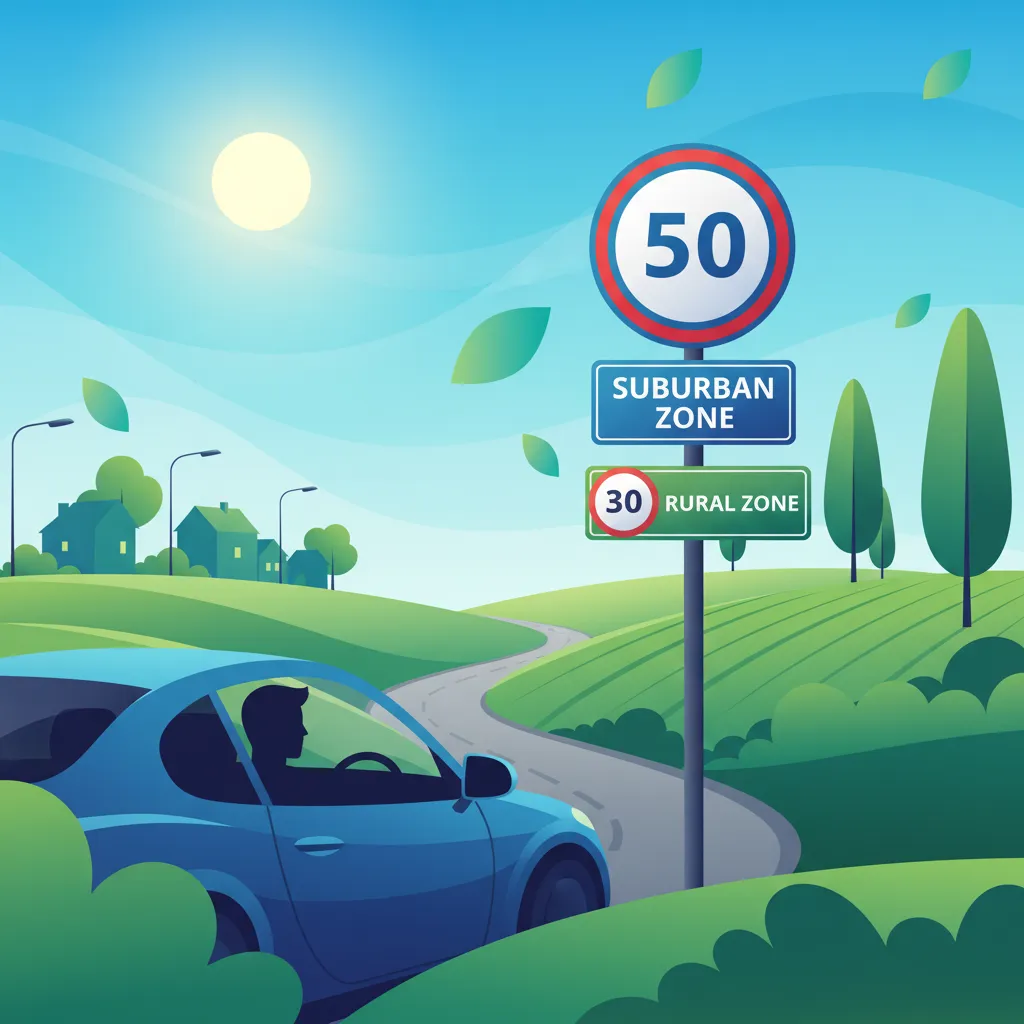
This lesson outlines the speed limits applicable to various road types in Iceland, from urban streets to rural highways and special zones like tunnels. Learners will interpret speed sign markings, understand variable speed limits that adjust for weather, and recognize when temporary speed reductions are enforced. The content also covers speed monitoring devices and the legal consequences of exceeding limits, emphasizing speed awareness in all driving contexts.
This lesson focuses on the operation of traffic lights in Iceland, describing standard three-phase cycles (red, amber, green) and variations such as flashing amber for yielding. Learners will also explore dedicated signals for pedestrians, cyclists, and turning movements, including arrow indications. The lesson explains how signal timing integrates with right-of-way rules at intersections, ensuring drivers can interpret and respond to each light state to maintain safety.
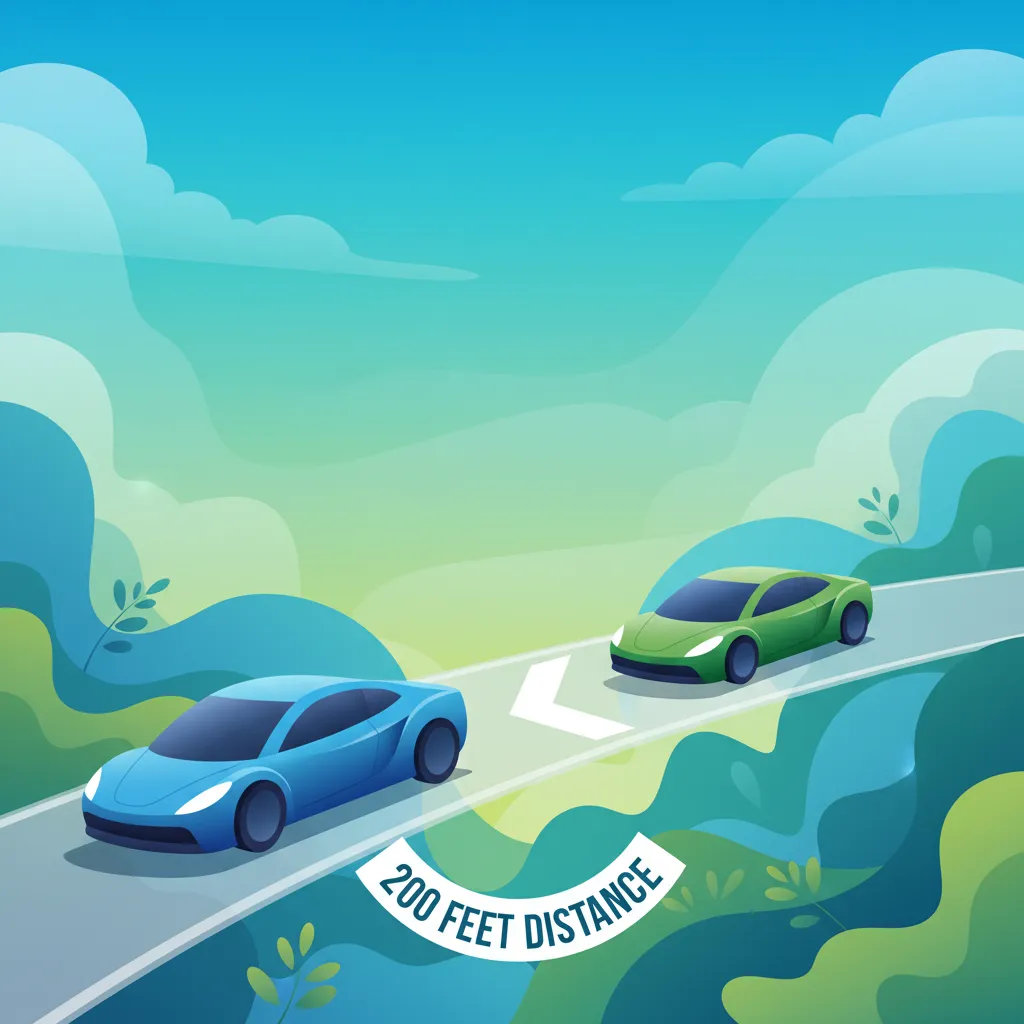
This lesson examines the calculation of safe following distances using the two-second rule and formulas that factor in vehicle speed and road conditions. The content explains how reaction time, weather conditions like ice or rain, and vehicle load affect braking zones. Students also learn specific techniques for stopping on hills and how to avoid tailgating, thereby maintaining sufficient safety margins under all Icelandic weather conditions.
This lesson helps learners develop an understanding of how drivers perceive and assess risks on Icelandic roads, particularly under variable weather and lighting conditions. The content discusses mental models used to anticipate the actions of other road users and the importance of identifying subtle hazards. By analysing environmental cues and applying systematic hazard perception strategies, students learn to enhance their situational awareness and make safer driving decisions.
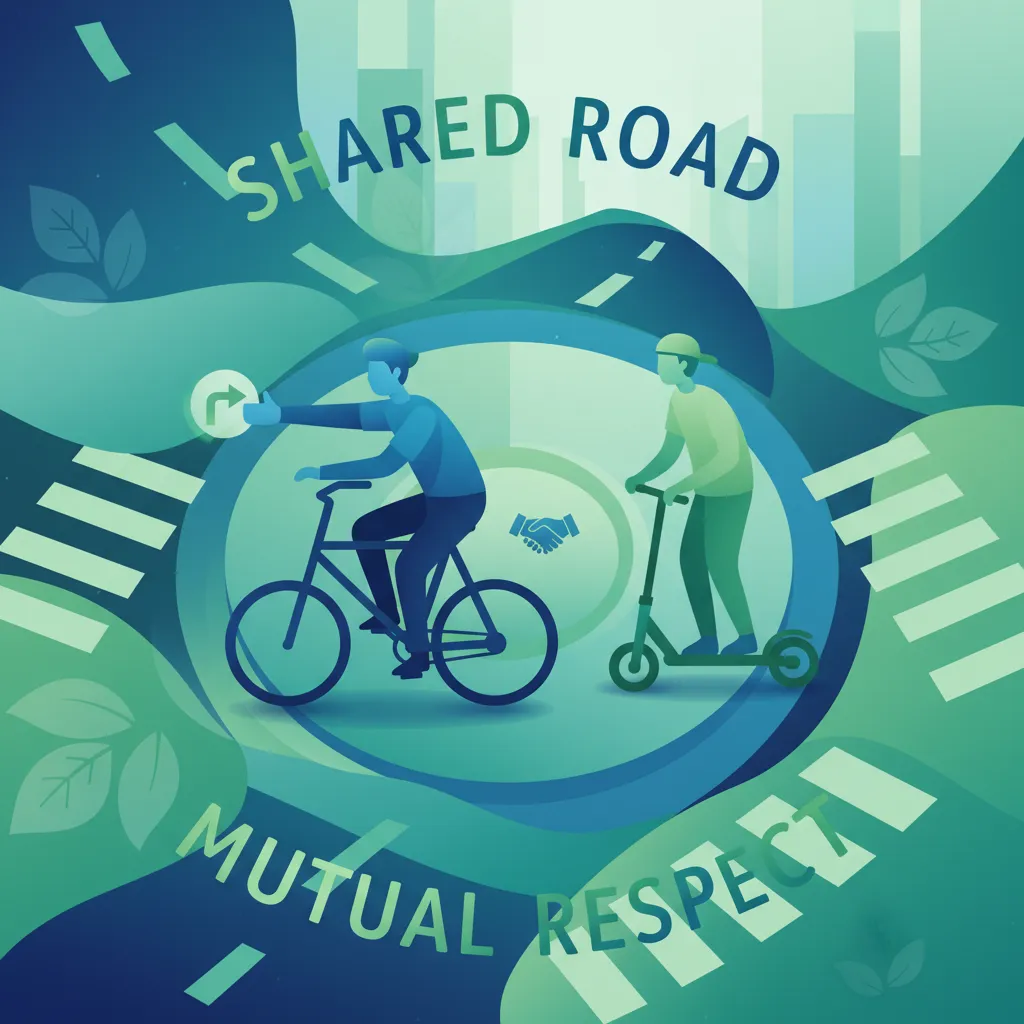
This lesson focuses on the interaction between motor vehicles and cyclists or e-scooter users on Icelandic roads, exploring the dedicated cyclist lane system and safe overtaking regulations. The content covers the required minimum passing distance, the legal status of e-scooters, and the importance of awareness when sharing narrow urban streets. Recommended signaling practices are also discussed to alert vulnerable users of your intentions, especially during nighttime riding.
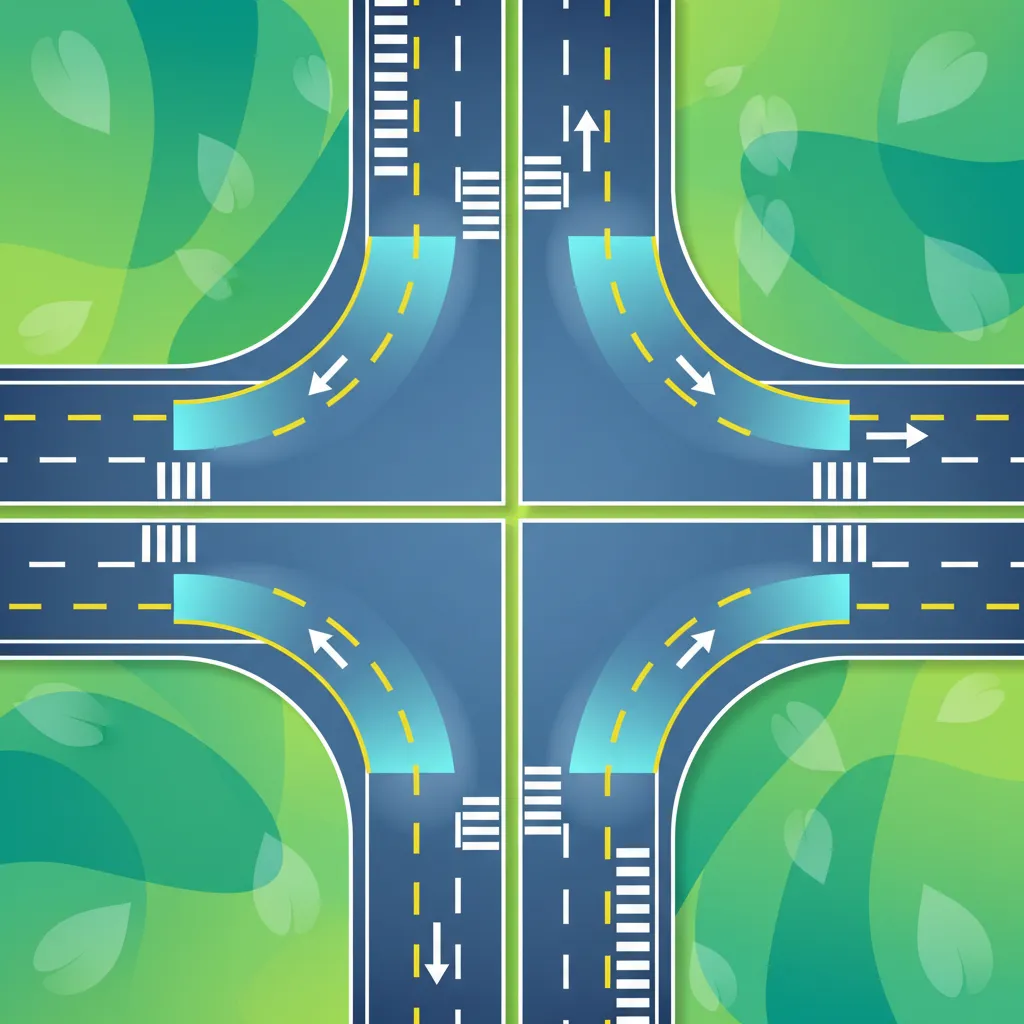
This lesson provides a comprehensive overview of the road markings found on Icelandic roads, from solid and broken lane lines to symbols indicating turning lanes and pedestrian crossings. The content details the visual meanings of each marking, such as solid lines indicating no crossing and broken lines permitting lane changes. Additionally, the lesson addresses the purpose of reflective markers and surface textures used in low-visibility or icy conditions, providing a framework for interpreting pavement cues.
This lesson examines various intersection configurations in Iceland, including those controlled by traffic lights, four-way stops, and uncontrolled intersections without signals. Learners study how priority is determined in each scenario through signage, road markings, and the relative position of vehicles. The lesson also covers specific turning regulations and highlights the importance of assessing sight lines to ensure safe passage through complex junctions.
This lesson focuses on interpreting road surface markings, including solid and broken lines that govern lane changes and positioning. Learners will understand the rules associated with turning arrows, pedestrian crossings, and markings for dedicated lanes. Correctly reading these markings is essential for maintaining proper lane discipline and navigating complex road layouts safely.
Find clear answers to common questions learners have about Public Transport Priorities and School Zones. Learn how the lesson is structured, which driving theory objectives it supports, and how it fits into the overall learning path of units and curriculum progression in Iceland. These explanations help you understand key concepts, lesson flow, and exam focused study goals.
In Iceland, you must yield to a bus if it is signalling to pull out from a bus stop or a bus priority lane and intends to enter the traffic lane you are using. Always be prepared to slow down or stop to let the bus merge safely, especially in built-up areas.
School zones in Iceland are marked with specific signs indicating reduced speed limits, typically 30 km/h. Drivers must exercise extreme caution, be prepared to stop suddenly for children crossing, and pay close attention to any temporary traffic control measures like flashing lights or crossing guards.
Yes, drivers must generally yield to trams, as trams often have priority. Be aware of tram tracks on the road and anticipate their movements. Where trams share lanes with vehicles, specific signage or traffic lights will usually indicate priority.
Pedestrian islands (or refuges) are raised areas in the road designed to provide a safe waiting place for pedestrians crossing wide streets. They also help to divide traffic, often channelling vehicles into specific lanes and clarifying priority at junctions. Always respect their function and do not block them.
Bus priority lanes are designated for public transport and may have specific operating hours. If you are not permitted to use them, you must stay out. If allowed at certain times or for specific purposes (e.g., turning), be aware that buses within them have priority and you must allow them to merge or proceed.
Utilize our advanced practice set search to pinpoint the exact Icelandic driving theory topics you need to review. Filter by subject, difficulty, or question type to create a highly effective study plan and ensure you are fully prepared for your official driving licence test in Iceland.