
Welcome to the lesson on Pedestrian Crossings and Right-of-Way, a crucial topic within the 'Urban Driving' unit of your Icelandic Category B driving theory course. This lesson will build upon your understanding of basic traffic rules to focus specifically on how to interact safely with pedestrians and their designated crossing areas. Mastering these rules is essential for both passing your theory exam and ensuring the safety of everyone on Icelandic roads.
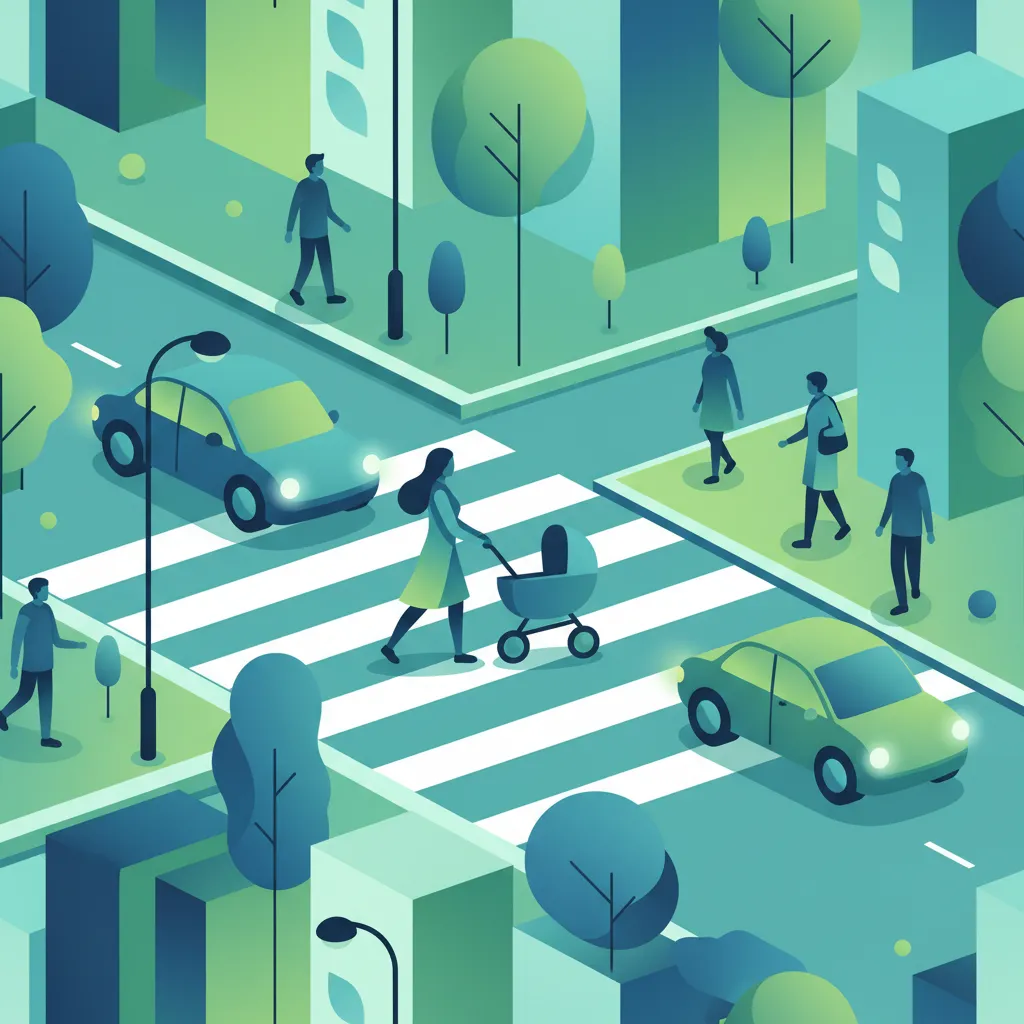
Lesson content overview
Navigating the roads safely in Iceland requires a thorough understanding of pedestrian crossings and the associated right-of-way rules. Pedestrians are among the most vulnerable road users, and drivers bear a significant responsibility to ensure their safety. This comprehensive guide, essential for the Official Icelandic Driving License B Theory Course, outlines the various types of pedestrian crossings, specific traffic regulations, and the critical obligations of drivers. Mastering these principles is crucial for preventing accidents and successfully passing your Icelandic driving theory test.
Pedestrian crossings are specially designated areas where foot traffic is granted structured priority over vehicles. The core idea is to harmonize the movement of different road users, providing clear, predictable points for pedestrians to cross and unambiguous expectations for drivers. This systematic approach is fundamental to road safety, significantly reducing the risk of collisions involving vulnerable pedestrians.
The primary responsibility for safety at pedestrian crossings rests with the driver. Key principles guide this obligation:
Different types of pedestrian crossings are designed to manage traffic flow and pedestrian safety in various environments. Understanding each type is essential for correct driver behavior.
A Zebra Crossing is easily identifiable by its distinctive alternating white longitudinal stripes painted across the road, often accompanied by a zig-zag white line approaching the crossing. These markings clearly designate a legally protected crossing point for pedestrians.
A Pelican Crossing (Pedestrian Light Controlled) is a signal-controlled crossing equipped with push-button controls for pedestrians and traffic lights for both pedestrians and vehicles.
Always interpret a flashing amber vehicle signal as a warning to be prepared to stop. Do not assume it grants automatic permission to proceed without confirming the crossing is entirely clear of pedestrians.
Puffin Crossings (Pedestrian User-Friendly Intelligent) are advanced pedestrian crossings that utilize sensors to detect pedestrian presence. Unlike older pelican crossings, puffin crossings can dynamically adjust signal timings based on real-time pedestrian detection.
Toucan Crossings (from "two can cross") are specifically designed for both pedestrians and cyclists to cross simultaneously. They are usually wider than standard pedestrian crossings and marked with distinctive symbols for both users.
School Zone Crossings are designated areas, typically around schools, where children are likely to be present. These zones often feature additional signage, flashing lights, and reduced speed limits to enhance safety for young, often unpredictable, pedestrians.
An Advanced Stop Line is a stop line positioned further back from the actual intersection or crossing point than a standard stop line. It is often accompanied by a pedestrian beacon, which is a flashing white light designed to alert drivers of a pedestrian crossing ahead, particularly where approach speeds might be higher.
Temporary Crossings are installed for specific durations, such as during road works, festivals, or special events. While not permanent, these crossings carry the same legal significance and require the same driver adherence as permanent ones.
Beyond identifying different crossing types, drivers must understand the specific actions required to ensure safety.
The core obligation at any marked pedestrian crossing is to yield or stop.
At Zebra Crossings: Stop if a pedestrian is on the crossing or clearly waiting to cross. Always stop before the solid white stop line.
At Signal-Controlled Crossings (Pelican, Puffin, Toucan): Stop when the vehicle traffic light shows red. Be prepared to stop on a flashing amber signal if pedestrians are still on the crossing or if the signal is about to change.
At Advanced Stop Lines with Beacons: Stop at the advanced stop line when the white pedestrian beacon is flashing.
Never overtake a vehicle that has stopped at a pedestrian crossing unless the way ahead is completely clear and safe. This is a critical safety rule.
Overtaking a stopped vehicle at a crossing is extremely dangerous. The stopped vehicle may be obscuring a pedestrian, and an overtaking driver might not see them until it's too late. Always assume a stopped vehicle is yielding to a pedestrian. Wait patiently behind the stopped vehicle until it moves, and only then proceed if the crossing is fully clear.
When turning at an intersection that includes a pedestrian crossing, drivers must exercise extreme caution:
Icelandic weather can change rapidly, and conditions such as heavy rain, snow, fog, or darkness significantly reduce visibility and increase stopping distances.
Failing to adhere to pedestrian crossing rules carries significant risks and legal penalties in Iceland.
| Situation | Why It’s Wrong | Correct Behaviour | Potential Consequence |
|---|---|---|---|
| Failing to stop at a red vehicle light at a signal-controlled crossing | Violates mandatory stop rule, endangers pedestrians. | Full stop behind stop line; wait for green vehicle signal. | Fine, demerit points, collision, serious injury/fatality. |
| Overtaking a vehicle stopped for a zebra crossing | Reduces reaction time, may collide with hidden pedestrians. | Wait behind stopped vehicle; only overtake if crossing is completely clear. | Penalty, increased risk of collision. |
| Proceeding on a flashing amber signal without confirming pedestrian presence | Misinterprets signal; can cause collisions. | Reduce speed, scan crossing, proceed only if unobstructed. | Fine, reduced safety margin. |
| Driving at normal speed through a school zone during school hours | Violates reduced speed requirement; children are unpredictable. | Reduce speed to mandated limit; increase vigilance. | Higher risk of fatal collision, significant penalty. |
| Ignoring a pedestrian beacon's flashing light | Indicates pedestrians are crossing; leads to danger. | Stop at the advanced stop line when the beacon flashes. | Potential accident, legal liability. |
| Driving with high-beam headlights directly into a dark crossing | Glare blinds pedestrians and reduces their visibility. | Switch to low-beam when approaching a crossing. | Accidental hit due to reduced pedestrian visibility. |
| Turning right at a crosswalk while pedestrians are crossing | Right-turning vehicles must yield to crossing pedestrians. | Wait for pedestrians to complete crossing before turning. | Collision with pedestrians, violation of right-of-way. |
| Approaching a crossing too fast in wet conditions, unable to stop in time | Reduced friction lengthens stopping distance; risk of collision. | Reduce speed according to road surface; increase following distance. | Potential crash, fines for reckless driving. |
Safe driving at pedestrian crossings is highly dependent on context.
The rules surrounding pedestrian crossings are founded on scientific principles and extensive safety research.
A comprehensive understanding of pedestrian crossings and right-of-way rules is paramount for safe driving in Iceland. By accurately identifying different crossing types, interpreting traffic signals, and strictly adhering to yielding obligations, drivers play a vital role in protecting vulnerable road users. Always adapt your driving to prevailing conditions, pay extra attention in enhanced caution zones, and be prepared to stop.
This lesson forms a crucial foundation for understanding interactions with other vulnerable road users. The principles of yielding, visibility, and anticipation will be further expanded upon in upcoming modules such as "Cyclist and E-scooter Interactions" and "Public Transport Priorities and School Zones," where these concepts apply to an even broader range of road users.
This lesson details the hierarchy of road‑user priority at pedestrian crossings, emphasizing that drivers must always yield to pedestrians on marked crossings and at signal‑controlled points. It explains how to recognize and correctly respond to Zebra, Pelican, Puffin, Toucan, school‑zone, and advanced‑stop‑line crossings, including the meaning of traffic light phases and pedestrian beacons. Special attention is given to heightened caution in school zones, low‑visibility conditions, and adverse weather, with practical guidance on speed adaptation, headlight use, and safe overtaking. By mastering these rules, learners will be prepared for exam questions and for safer everyday driving in Icelandic urban environments.
A short set of high-value points that capture the most important learning from this lesson.
Pedestrians have the legal right‑of‑way at all designated crossings; drivers must stop and yield even if no traffic light is present.
Zebra crossings are identified by alternating white stripes and a solid stop line; drivers must stop before the line and let pedestrians clear before proceeding.
At signal‑controlled crossings (Pelican/Puffin/Toucan) drivers must obey the vehicle traffic light—stop on red, proceed only when green and the crossing is clear; a flashing amber means be prepared to stop.
School zones require reduced speeds (typically 20‑30 km/h) during operating hours and heightened vigilance because children may act unpredictably.
Adverse weather and low visibility demand lower approach speeds, low‑beam headlights, and increased following distance to maintain safe stopping capability.
Explore all units and lessons included in this driving theory course.
A flashing white pedestrian beacon means stop at the advanced stop line, regardless of vehicle traffic light status.
Toucan crossings allow both pedestrians and cyclists; yield to all users, not just walkers.
Never overtake a vehicle that has stopped for a pedestrian crossing – the pedestrian may be hidden behind it.
Even with a green vehicle light, pedestrians already on the zebra crossing have priority; you must wait for them to finish.
Switch to low‑beam headlights within about 150 m of a crossing to avoid dazzling pedestrians.
Assuming a green vehicle light at a zebra crossing overrides pedestrian priority, and proceeding without yielding.
Misinterpreting a flashing amber signal as an automatic go; failing to check that the crossing is clear of pedestrians before proceeding.
Overtaking a stopped vehicle at a crossing because the driver thinks the way ahead is clear.
Driving at normal speed through a school zone during school hours, ignoring mandatory reduced limits.
Ignoring a flashing pedestrian beacon or failing to stop at the advanced stop line when it is active.
Lesson content overview
A short set of high-value points that capture the most important learning from this lesson.
Pedestrians have the legal right‑of‑way at all designated crossings; drivers must stop and yield even if no traffic light is present.
Zebra crossings are identified by alternating white stripes and a solid stop line; drivers must stop before the line and let pedestrians clear before proceeding.
At signal‑controlled crossings (Pelican/Puffin/Toucan) drivers must obey the vehicle traffic light—stop on red, proceed only when green and the crossing is clear; a flashing amber means be prepared to stop.
School zones require reduced speeds (typically 20‑30 km/h) during operating hours and heightened vigilance because children may act unpredictably.
Adverse weather and low visibility demand lower approach speeds, low‑beam headlights, and increased following distance to maintain safe stopping capability.
Explore all units and lessons included in this driving theory course.
A flashing white pedestrian beacon means stop at the advanced stop line, regardless of vehicle traffic light status.
Toucan crossings allow both pedestrians and cyclists; yield to all users, not just walkers.
Never overtake a vehicle that has stopped for a pedestrian crossing – the pedestrian may be hidden behind it.
Even with a green vehicle light, pedestrians already on the zebra crossing have priority; you must wait for them to finish.
Switch to low‑beam headlights within about 150 m of a crossing to avoid dazzling pedestrians.
Assuming a green vehicle light at a zebra crossing overrides pedestrian priority, and proceeding without yielding.
Misinterpreting a flashing amber signal as an automatic go; failing to check that the crossing is clear of pedestrians before proceeding.
Overtaking a stopped vehicle at a crossing because the driver thinks the way ahead is clear.
Driving at normal speed through a school zone during school hours, ignoring mandatory reduced limits.
Ignoring a flashing pedestrian beacon or failing to stop at the advanced stop line when it is active.
Explore search topics learners often look for when studying Pedestrian Crossings and Right‑of‑Way. These topics reflect common questions about road rules, driving situations, safety guidance, and lesson level theory preparation for learners in Iceland.
Browse additional driving theory lessons that cover connected traffic rules, road signs, and common driving situations related to this topic. Improve your understanding of how different rules interact across everyday traffic scenarios.
Explore complex scenarios and advanced rules for pedestrian crossings in Iceland. Understand specific driver obligations in adverse weather, low visibility, and urban environments to ensure pedestrian safety and comply with traffic law.
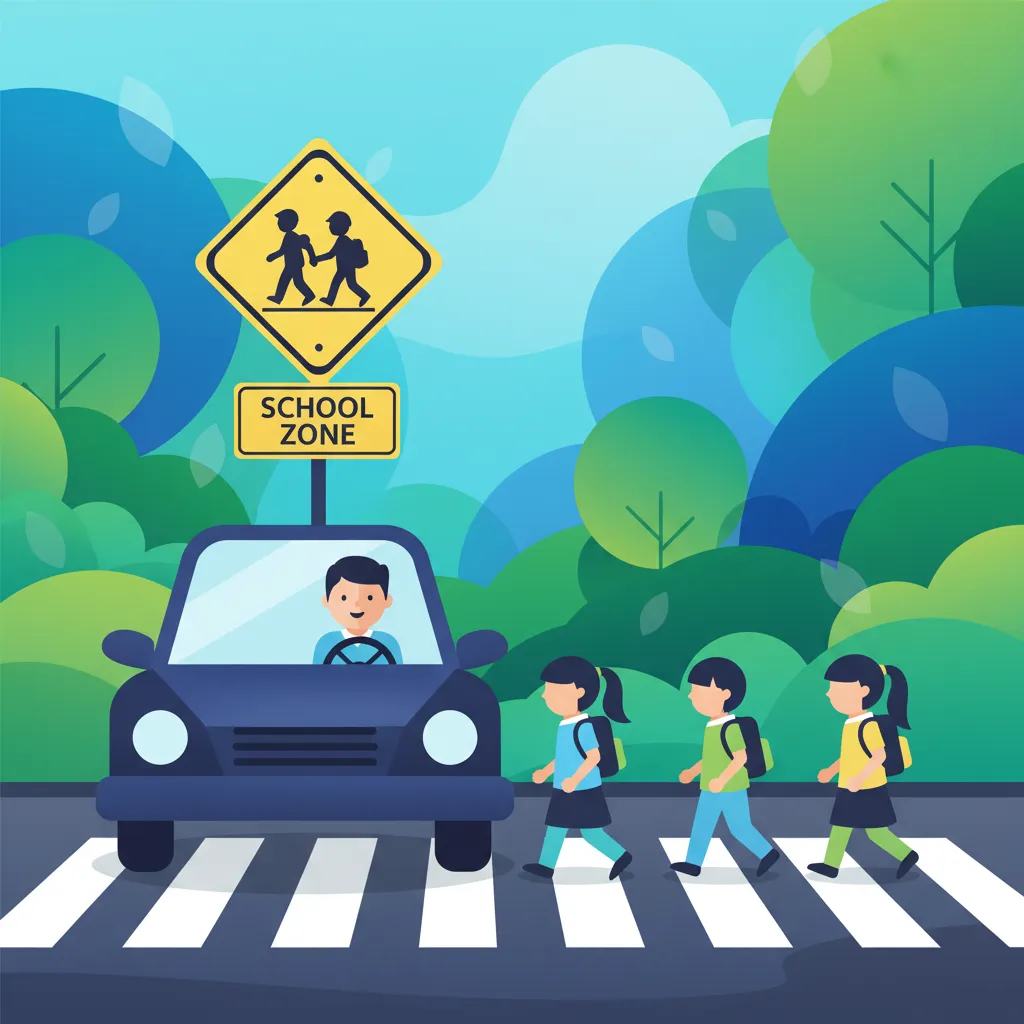
This lesson covers the strict rules governing pedestrian crossings and school zones, where riders have a heightened duty of care. It details the obligation to yield to pedestrians, recognize school zone signage, and reduce speed significantly. Riders learn to be extra vigilant for the unpredictable movements of children and other vulnerable road users in these sensitive areas.
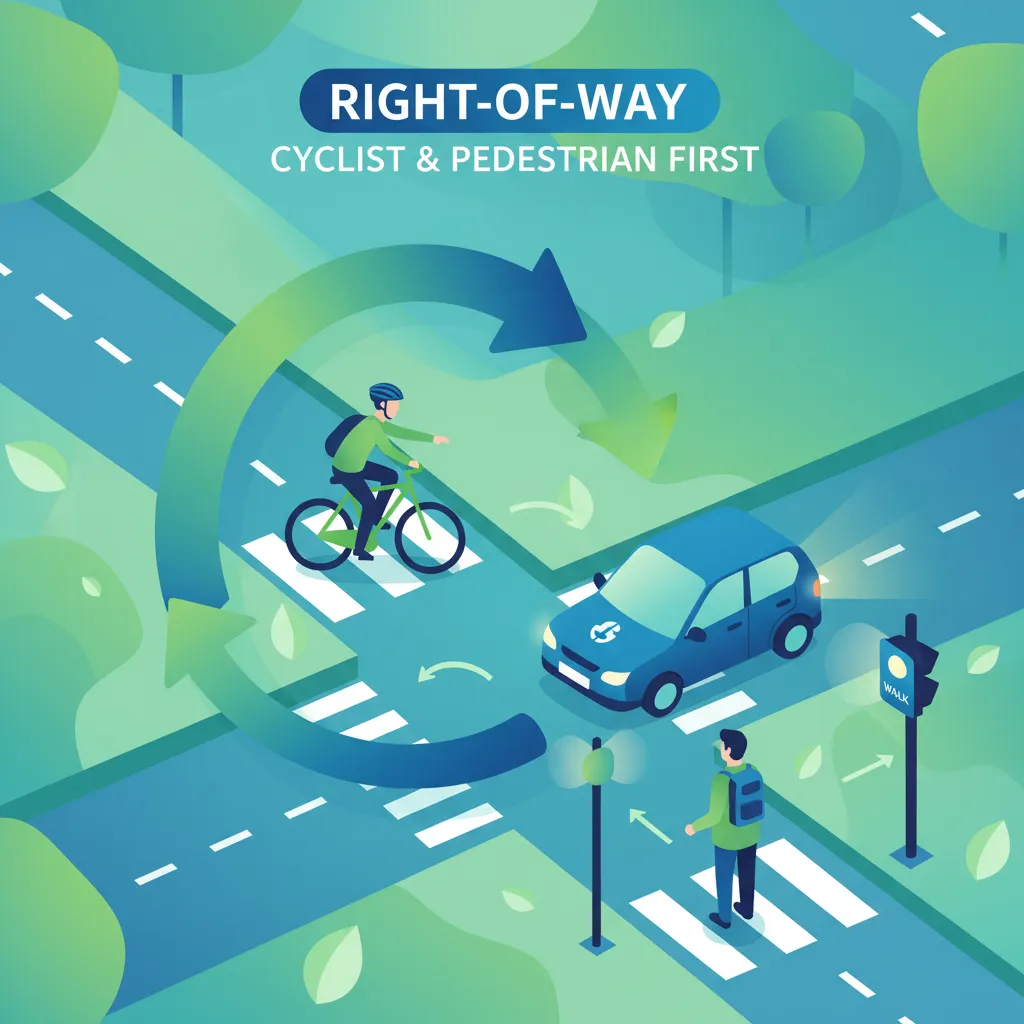
This lesson examines the legal framework defining right-of-way, distinguishing between priority and secondary roads, and detailing yielding responsibilities. It teaches riders how to assess intersections and approach safely based on Icelandic traffic law. Understanding these principles is critical for preventing collisions and ensuring smooth traffic flow at all types of junctions.
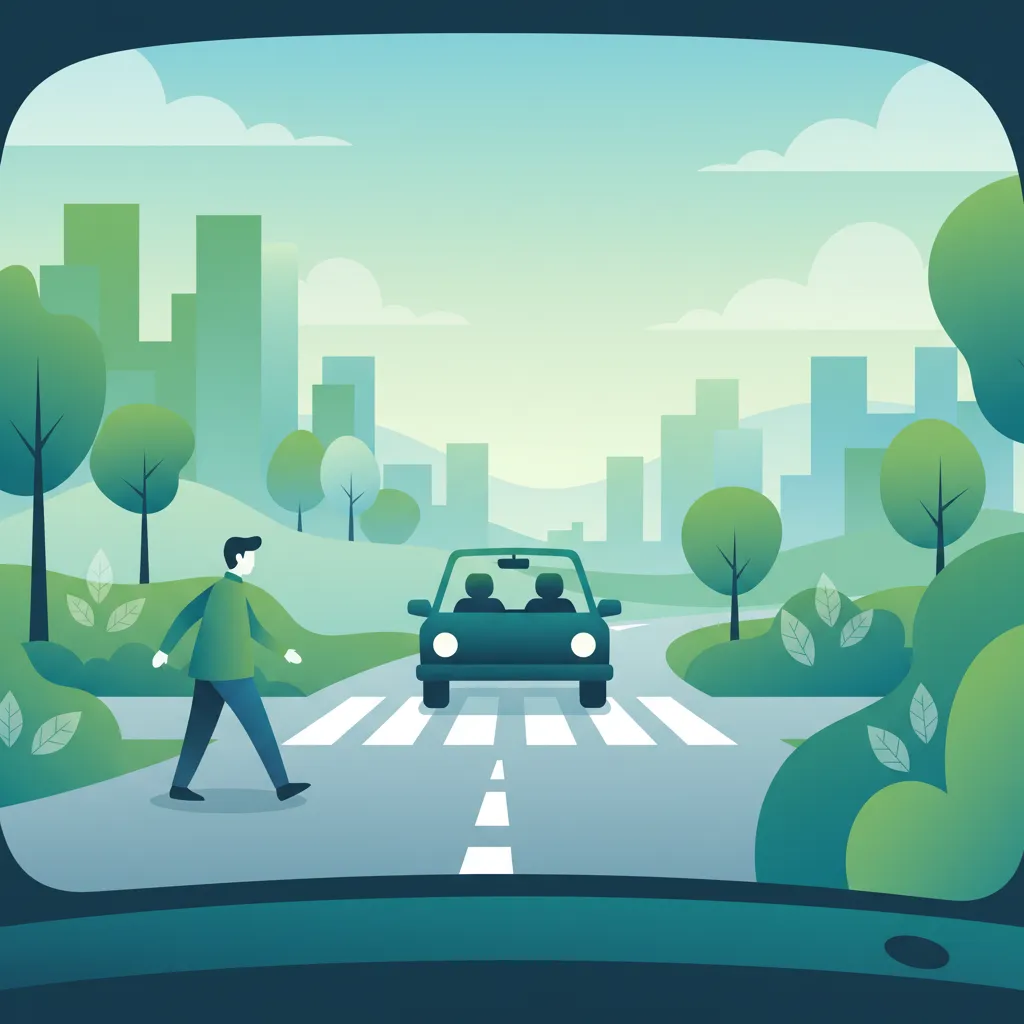
This lesson explores the conduct required at uncontrolled crossings where the right-hand rule typically applies. It emphasizes the need to reduce speed, be prepared to stop, and establish clear communication with other road users. Riders will learn to assess the situation carefully and proceed only when it is confirmed to be safe, a critical skill for rural and residential areas.
This lesson introduces the fundamental concepts of right-of-way in Iceland, explaining the priority hierarchy that dictates when a driver must yield to others. Learners study the meaning of give-way and yield signs, the distinction between main and side roads, and how stop signs and markings affect vehicle positioning. By understanding these legal obligations, students will be able to determine correct actions at any junction, reducing the risk of collisions.
This lesson examines various intersection configurations in Iceland, including those controlled by traffic lights, four-way stops, and uncontrolled intersections without signals. Learners study how priority is determined in each scenario through signage, road markings, and the relative position of vehicles. The lesson also covers specific turning regulations and highlights the importance of assessing sight lines to ensure safe passage through complex junctions.
This lesson focuses on the operation of traffic lights in Iceland, describing standard three-phase cycles (red, amber, green) and variations such as flashing amber for yielding. Learners will also explore dedicated signals for pedestrians, cyclists, and turning movements, including arrow indications. The lesson explains how signal timing integrates with right-of-way rules at intersections, ensuring drivers can interpret and respond to each light state to maintain safety.
This lesson examines the broader dynamics of urban traffic flow, focusing on interactions with public transport, pedestrian islands, and traffic calming measures. Content includes the rules for navigating bus priority lanes, yielding to trams, and handling congested intersections safely. Learners also study speed restrictions in school zones and the use of pedestrian islands to manage cross-traffic, emphasizing the importance of anticipation in complex urban settings.
This lesson focuses on the operation of roundabouts, which are common in Icelandic towns and rural areas, and explains how drivers must yield to circulating traffic upon entry. The content covers how to interpret roundabout signage and follow lane markings to maintain correct positioning. Students also learn strategies for safe exit, handling multi-lane roundabouts, and recognizing deceptive entries that require heightened vigilance for smooth navigation.
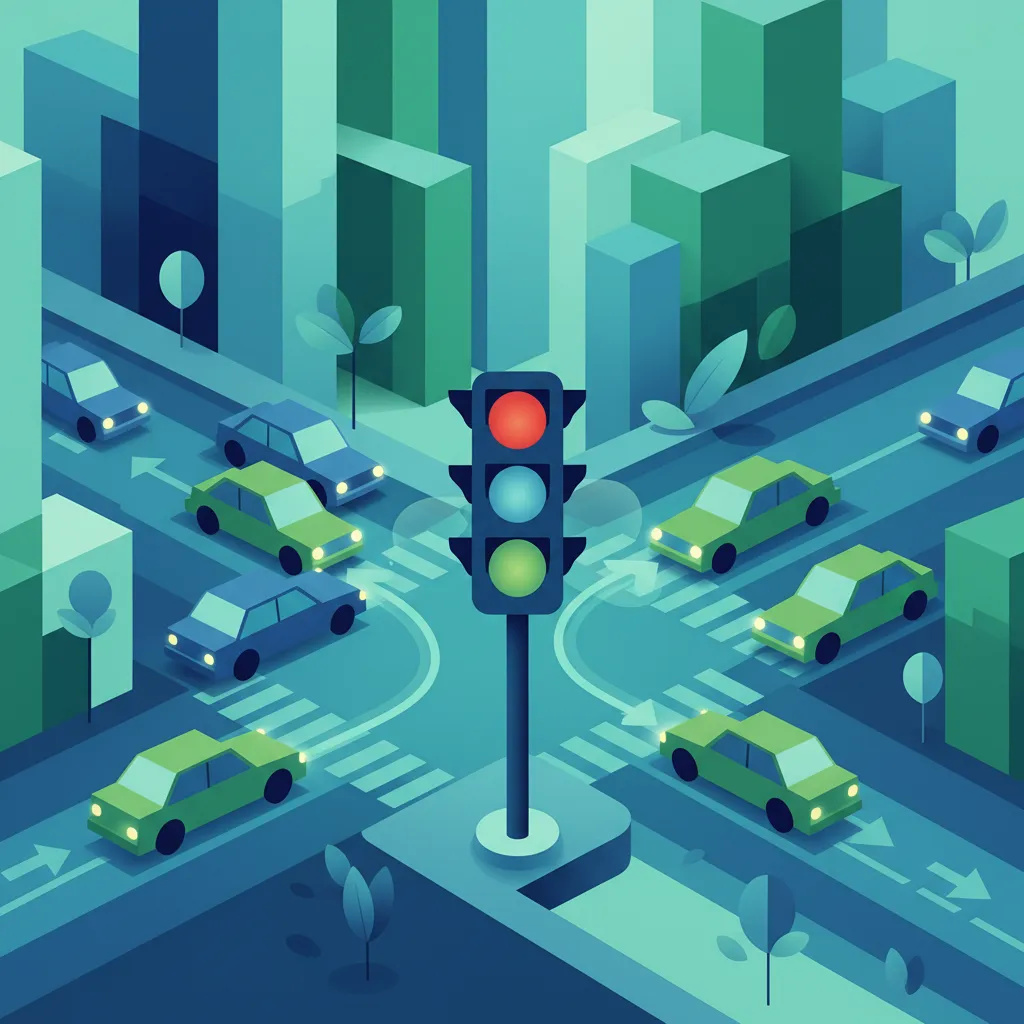
This lesson dissects the three-color traffic light system, detailing the meaning of red, amber, and green signals, including flashing lights and directional arrows. It explains how signal timing impacts moped riders and the legal requirement to obey all signals at intersections. Proper interpretation is crucial for navigating signalized junctions safely and avoiding conflicts with other traffic.
This lesson focuses on interpreting road surface markings, including solid and broken lines that govern lane changes and positioning. Learners will understand the rules associated with turning arrows, pedestrian crossings, and markings for dedicated lanes. Correctly reading these markings is essential for maintaining proper lane discipline and navigating complex road layouts safely.
Learn how to safely interact with vulnerable road users, including pedestrians, cyclists, and children, in various Icelandic traffic situations. Understand specific rules for school zones and urban areas to prevent accidents and ensure safe passage.
This lesson covers the strict rules governing pedestrian crossings and school zones, where riders have a heightened duty of care. It details the obligation to yield to pedestrians, recognize school zone signage, and reduce speed significantly. Riders learn to be extra vigilant for the unpredictable movements of children and other vulnerable road users in these sensitive areas.
This lesson examines the broader dynamics of urban traffic flow, focusing on interactions with public transport, pedestrian islands, and traffic calming measures. Content includes the rules for navigating bus priority lanes, yielding to trams, and handling congested intersections safely. Learners also study speed restrictions in school zones and the use of pedestrian islands to manage cross-traffic, emphasizing the importance of anticipation in complex urban settings.
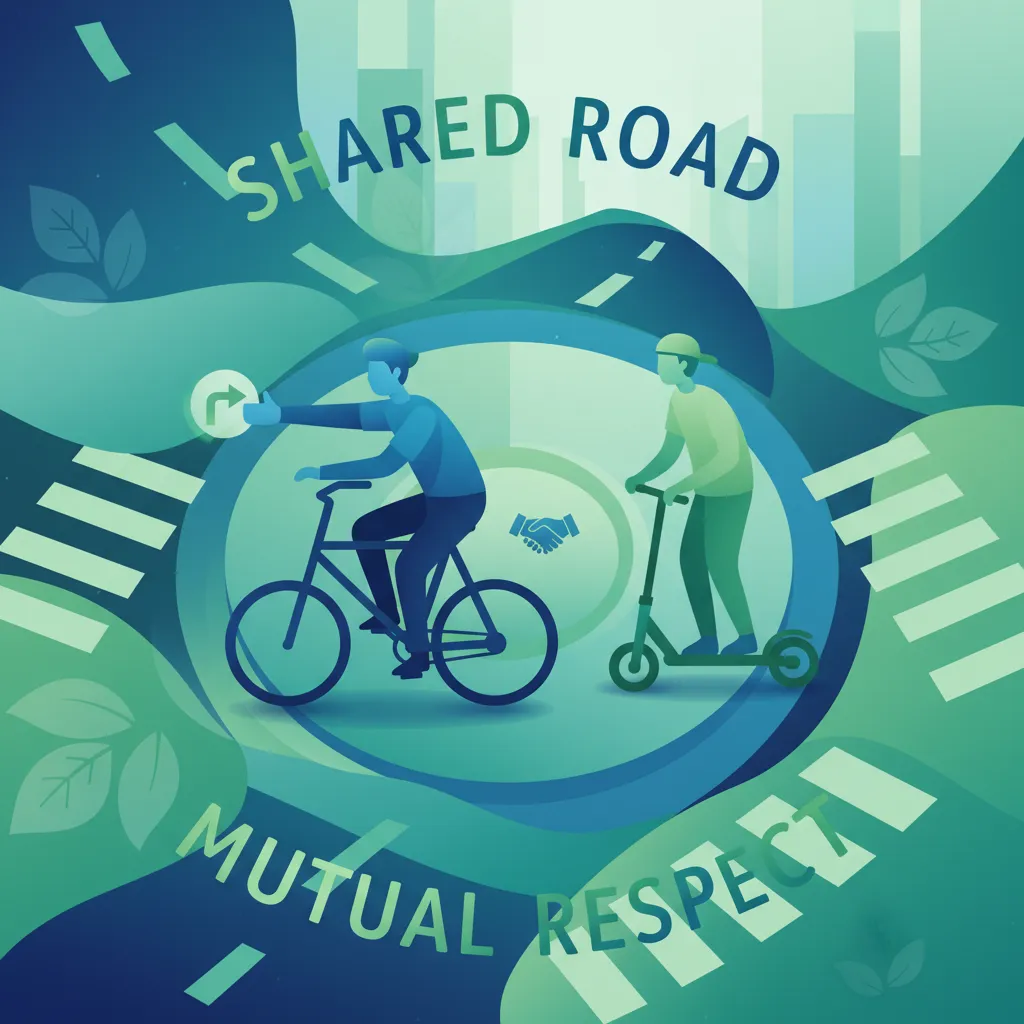
This lesson focuses on the interaction between motor vehicles and cyclists or e-scooter users on Icelandic roads, exploring the dedicated cyclist lane system and safe overtaking regulations. The content covers the required minimum passing distance, the legal status of e-scooters, and the importance of awareness when sharing narrow urban streets. Recommended signaling practices are also discussed to alert vulnerable users of your intentions, especially during nighttime riding.
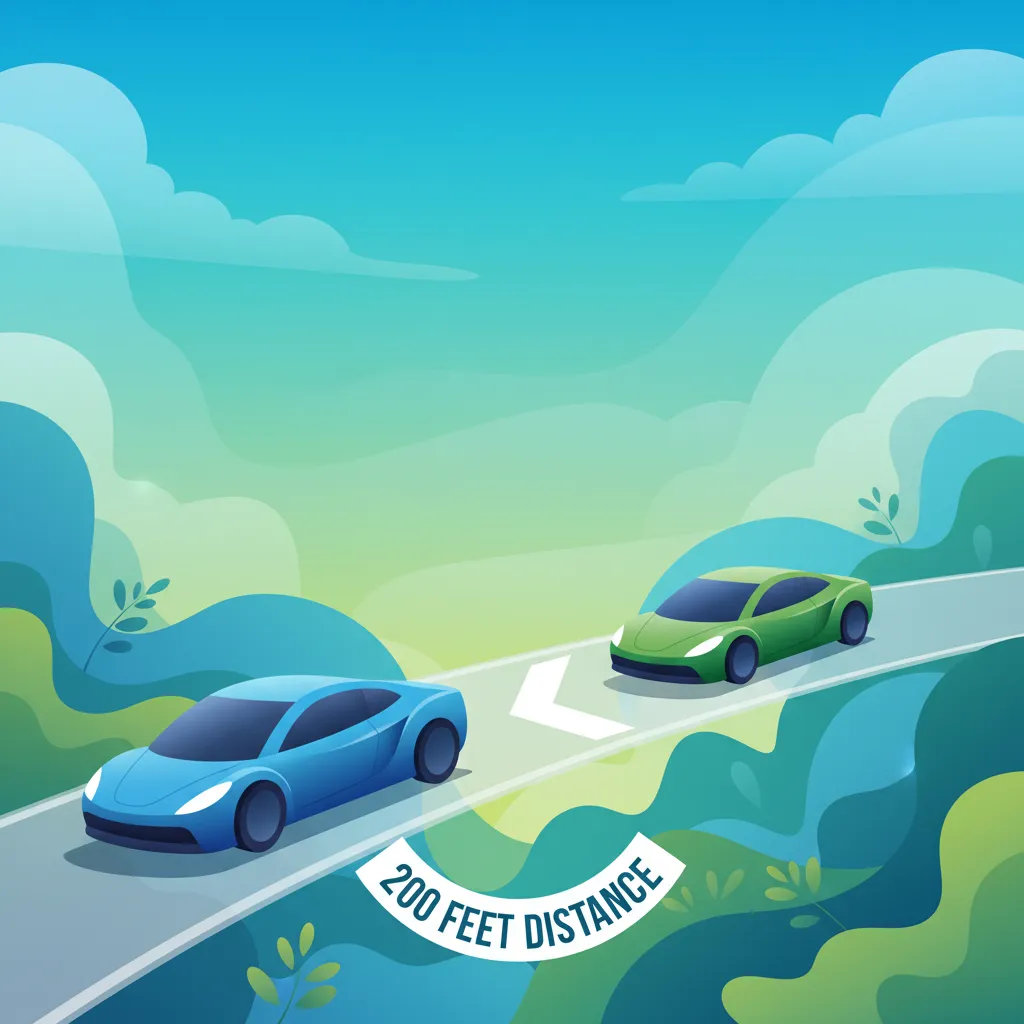
This lesson examines the calculation of safe following distances using the two-second rule and formulas that factor in vehicle speed and road conditions. The content explains how reaction time, weather conditions like ice or rain, and vehicle load affect braking zones. Students also learn specific techniques for stopping on hills and how to avoid tailgating, thereby maintaining sufficient safety margins under all Icelandic weather conditions.
This lesson explores the proper use of lane markings to maintain correct vehicle centering and adherence to the prescribed traffic flow direction in Iceland. The content describes how to interpret solid and broken lines, maintain safe following distances within a lane, and avoid unintended lane departures. Learners also examine the legal prohibitions on using the road shoulder for general travel, ensuring compliance with lane discipline rules for overall traffic safety.
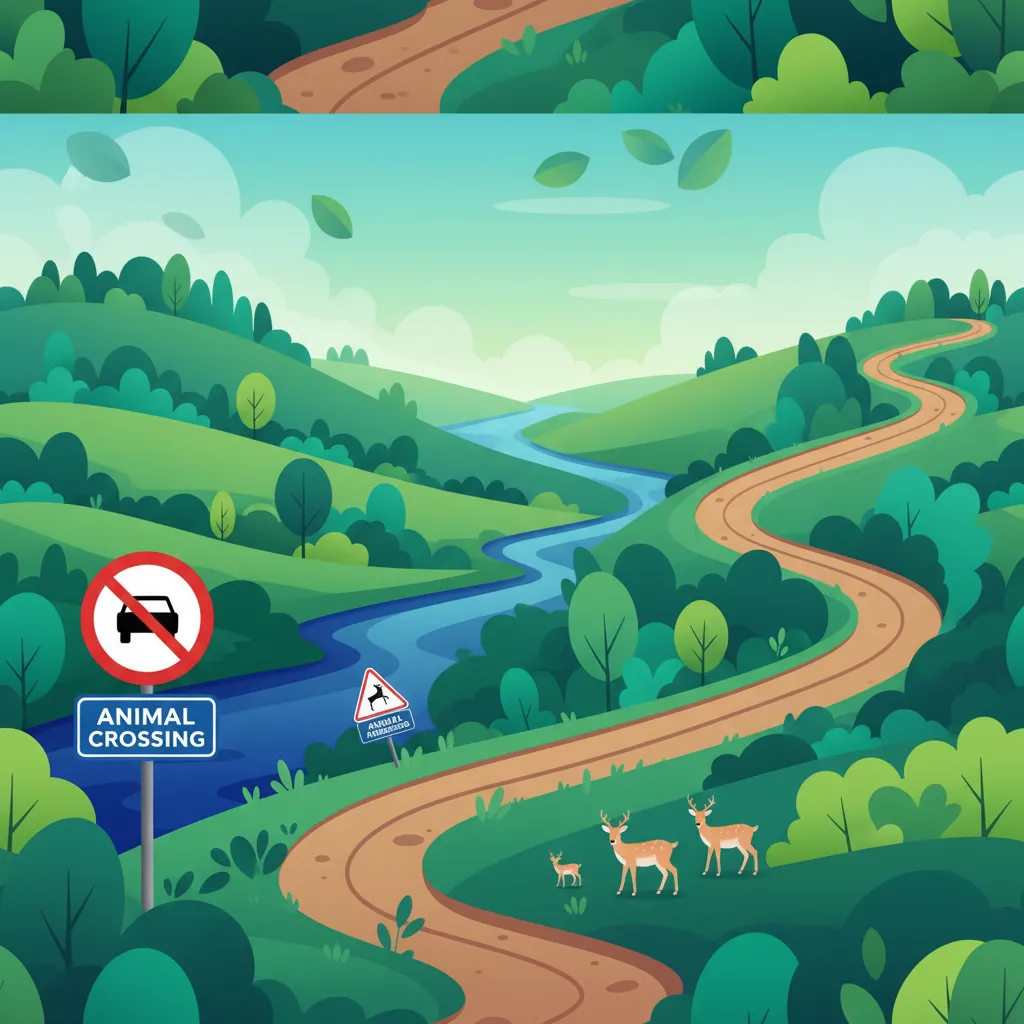
This lesson focuses on the regulations governing highland travel and off-road restrictions, including environmental protections that prohibit off-road driving in certain zones. The lesson details how to interpret highland road signage, understand restrictions related to wildlife crossings like reindeer and sheep, and adhere to road width management guidelines. Learners are also instructed on using emergency contact points in sparsely populated regions.
This lesson focuses on the operation of traffic lights in Iceland, describing standard three-phase cycles (red, amber, green) and variations such as flashing amber for yielding. Learners will also explore dedicated signals for pedestrians, cyclists, and turning movements, including arrow indications. The lesson explains how signal timing integrates with right-of-way rules at intersections, ensuring drivers can interpret and respond to each light state to maintain safety.
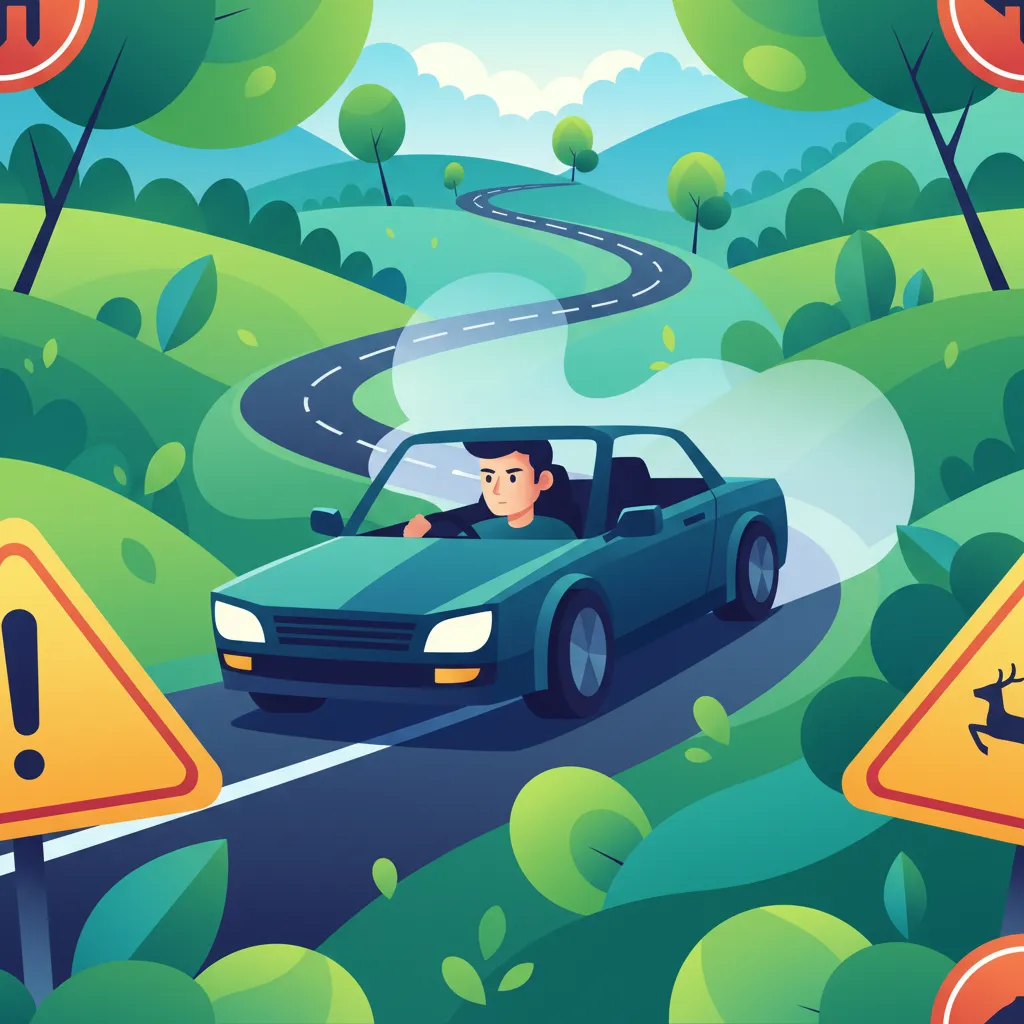
This lesson helps learners develop an understanding of how drivers perceive and assess risks on Icelandic roads, particularly under variable weather and lighting conditions. The content discusses mental models used to anticipate the actions of other road users and the importance of identifying subtle hazards. By analysing environmental cues and applying systematic hazard perception strategies, students learn to enhance their situational awareness and make safer driving decisions.
This lesson focuses on the operation of roundabouts, which are common in Icelandic towns and rural areas, and explains how drivers must yield to circulating traffic upon entry. The content covers how to interpret roundabout signage and follow lane markings to maintain correct positioning. Students also learn strategies for safe exit, handling multi-lane roundabouts, and recognizing deceptive entries that require heightened vigilance for smooth navigation.
This lesson focuses on the principles of executing safe turns, highlighting the correct use of turn signals and lane positioning before initiating a turn. Learners examine the timing required for signaling, the rules governing right-turns and left-turn yields, and the importance of checking blind spots and cyclist lanes. The lesson also addresses the concept of turning radius to ensure drivers can complete turns without compromising the safety of others on the road.
Find clear answers to common questions learners have about Pedestrian Crossings and Right‑of‑Way. Learn how the lesson is structured, which driving theory objectives it supports, and how it fits into the overall learning path of units and curriculum progression in Iceland. These explanations help you understand key concepts, lesson flow, and exam focused study goals.
In Iceland, you are legally required to stop and yield to pedestrians who are on or entering a marked pedestrian crossing (zebra crossing) or a pedestrian light-controlled crossing. This applies whether they are already crossing or are waiting to cross. Always be prepared to stop and give way.
A zebra crossing is a specifically marked area on the road with white stripes, indicating a designated place for pedestrians to cross. Other pedestrian areas might include crossings controlled by traffic lights specifically for pedestrians, or areas where drivers are expected to show extra caution, like school zones, even if markings are less prominent.
Even if a pedestrian is only waiting at the edge of the road near a crossing, you should reduce your speed and be prepared to stop. Pedestrians, especially children or the elderly, might step out unexpectedly. Demonstrating caution and willingness to yield is crucial for road safety and exam success.
Yes, if there is a pedestrian traffic light and it is green for pedestrians (indicating they have permission to cross) and red for vehicles, you must stop. Never proceed through an intersection if pedestrians are legally crossing, regardless of your own signal.
In low-visibility conditions (rain, fog, snow, dusk, dawn) or in school zones, drivers must exercise significantly increased caution. Slow down, be prepared for pedestrians to appear suddenly, and ensure your headlights are on. In school zones, watch carefully for children who may be less aware of traffic.
Utilize our advanced practice set search to pinpoint the exact Icelandic driving theory topics you need to review. Filter by subject, difficulty, or question type to create a highly effective study plan and ensure you are fully prepared for your official driving licence test in Iceland.