
This lesson, part of the 'Urban Driving' unit, focuses on the crucial interactions between motor vehicles and cyclists or e-scooter users on Icelandic roads. Understanding these dynamics is vital for safe urban navigation and is frequently tested in the Category B theory exam. We’ll cover dedicated cycle lanes and safe overtaking, ensuring you’re prepared for these common road scenarios.
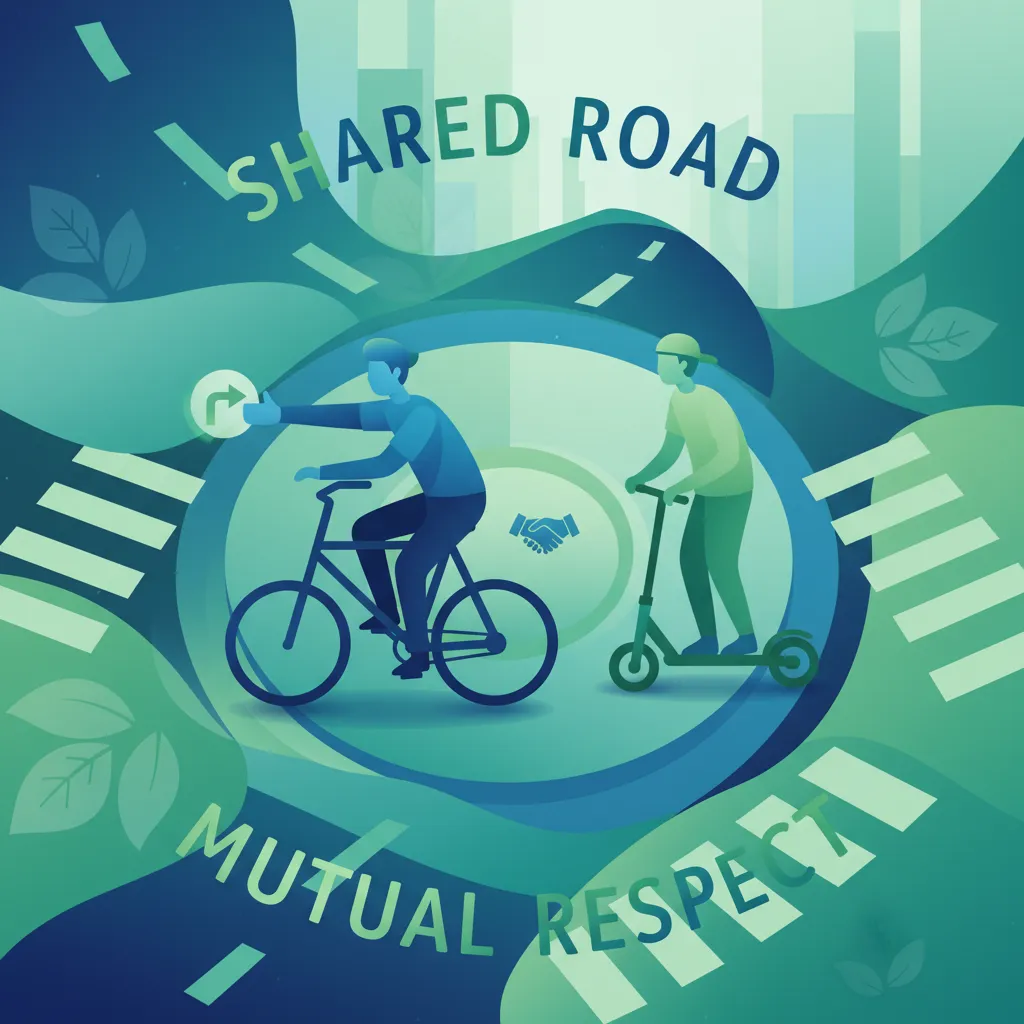
Lesson content overview
Navigating the roads of Iceland, particularly in urban areas, requires a keen understanding of how to safely interact with all road users. Among the most vulnerable are cyclists and electric scooter (e-scooter) riders. This lesson, crucial for the Official Icelandic Driving License B Theory Course, details the specific rules, best practices, and legal obligations for motor vehicle drivers to ensure the safety of these vulnerable road users (VRUs). By adhering to these guidelines, drivers can reduce collision risks, comply with Icelandic traffic law, and contribute to a safer, more predictable traffic environment for everyone.
Vulnerable road users (VRUs) are defined as individuals who have less protection than occupants of motor vehicles. This category primarily includes pedestrians, cyclists, and e-scooter riders. Due to their lack of protective enclosures and often lower visibility, VRUs are at significantly higher risk of severe injury or fatality in the event of a collision with a motor vehicle. Icelandic traffic law provides specific protections and rules designed to safeguard these users, recognizing their inherent vulnerability in mixed traffic environments.
The core idea behind these regulations is to establish a clear framework for interaction, emphasizing that the safety of VRUs depends heavily on the attentive and predictable behavior of motor vehicle drivers. This includes adequate space allocation through dedicated lanes, sufficient clearance during overtaking, and clear communication of intentions through signaling.
Iceland's urban infrastructure increasingly incorporates a system of dedicated cyclist lanes designed to provide a predictable and safer space for bicycles and e-scooters. These lanes are specifically marked to separate them from general motor vehicle traffic, reducing conflict points and enhancing the safety of vulnerable users.
Dedicated cyclist lanes, often referred to as bike lanes, are pathways reserved exclusively for cyclists and e-scooter users. They are typically indicated by a solid white line separating them from the adjacent motor vehicle lane, a distinct cyclist lane symbol painted on the pavement, and sometimes a different pavement texture or colour.
There are primarily two subcategories of these lanes:
According to the Icelandic Road Traffic Act, motor vehicles are generally prohibited from driving in a dedicated cyclist lane. These lanes are not to be used as regular driving lanes, even if traffic is light or there appears to be ample space. Their exclusive purpose is to provide a safe passage for cyclists and e-scooters.
Drivers may only enter a cyclist lane under specific, limited circumstances:
A common misunderstanding among drivers is the belief that they can "share" a cyclist lane when traffic volume is low. This is incorrect and explicitly prohibited, as it compromises the safety and designated space of vulnerable road users.
One of the most critical aspects of safe interaction with cyclists and e-scooters is maintaining an adequate passing distance when overtaking. Insufficient lateral clearance is a primary cause of collisions and can lead to serious injury for vulnerable road users. Icelandic traffic law specifies minimum distances to ensure safety.
The required lateral clearance between a motor vehicle and a cyclist or e-scooter during an overtaking manoeuvre depends on the width of the lane:
These distances are not arbitrary; they are based on safety physics and practical considerations:
It is essential for drivers to actively assess the road and traffic conditions before attempting to overtake. If the required minimum safe passing distance cannot be achieved safely, the driver must refrain from overtaking and wait for a more suitable opportunity. This might involve slowing down, waiting behind the cyclist, or even temporarily changing lanes if permissible and safe.
The rise of electric scooters (e-scooters) as a mode of urban transport has necessitated clear legal frameworks to ensure their safe integration into traffic. In Iceland, e-scooters are specifically classified under the category of "light electric vehicles" and are largely treated similarly to bicycles under traffic law.
Under Icelandic law, an e-scooter is generally defined as an electric personal mobility device with the following characteristics:
Due to this classification, e-scooters are subject to the same traffic rules and regulations as cyclists. This means that e-scooter riders must:
For safety, especially during low-light conditions, e-scooters must be adequately equipped:
It is a common misconception for drivers to treat e-scooter riders as pedestrians or to underestimate their speed. Drivers must remember that e-scooters are vehicles on the road, subject to the same protections as cyclists, and must be treated with the same respect for space and safety.
Clear communication and mutual visibility are cornerstones of safe interaction between motor vehicles and vulnerable road users. Drivers must make their intentions explicit, and cyclists/e-scooters must ensure they can be seen, especially when natural light is low.
The use of vehicle lights and turn signals by drivers is paramount in alerting VRUs to upcoming manoeuvres:
A critical rule for overtaking VRUs is the timing of your signal: Drivers are legally required to activate their turn signal at least 100 metres before commencing an overtaking manoeuvre of a cyclist or e-scooter. This generous warning distance is specifically designed to provide VRUs with ample reaction time.
Vulnerable road users also have obligations regarding their visibility:
Drivers must actively look for VRUs, particularly checking blind spots before turning or changing lanes. Being aware of the potential presence of cyclists and e-scooters, especially at dusk, dawn, or in shadowed areas, is crucial for preventing collisions.
Many urban areas in Iceland feature older streets or residential zones where road widths are insufficient to provide dedicated lanes for motor vehicles and cyclists. In these "shared narrow urban streets," a different set of expectations and rules applies, prioritizing the safety of the more vulnerable user.
When encountering a cyclist or e-scooter on a street where separate lanes are not feasible or marked, drivers must adopt a highly cautious and cooperative approach:
Under the Icelandic Road Traffic Act, when a road is too narrow for both motor vehicles and cyclists (or e-scooters) to travel side-by-side safely, the vulnerable road users generally have priority. This means motor vehicle drivers are legally obligated to yield to them. This rule protects VRUs who have less ability to quickly maneuver or stop.
These situations require patience and a defensive driving mindset. The aim is to ensure the safety of the cyclist or e-scooter rider above all else, even if it means a momentary delay in your journey.
Driving conditions can significantly impact the dynamics of interaction with vulnerable road users. Nighttime, along with various weather conditions, demands extra vigilance and adjustments to driving behavior.
The reduced visibility at night dramatically increases the risk of collisions. As discussed, cyclists and e-scooters must use front white and rear red lights from sunset to sunrise. For drivers:
Adverse weather and specific road types introduce additional hazards:
In all these scenarios, the overarching principle is to prioritize safety by increasing awareness, reducing speed, and providing ample space and clear communication to vulnerable road users.
Understanding and avoiding common mistakes is key to safe driving and passing the Icelandic Category B theory exam. Here are some frequent violations related to cyclist and e-scooter interactions and how to prevent them:
The following table summarizes the core rules and regulations governing interactions with cyclists and e-scooters, derived from the Icelandic Road Traffic Act. Adherence to these is mandatory for all drivers.
The primary legislation governing all aspects of road traffic in Iceland, including driver conduct, vehicle requirements, and road user responsibilities.
Successful interaction with cyclists and e-scooter users on Icelandic roads hinges on a combination of legal adherence, proactive safety measures, and a strong understanding of vulnerability.
By internalizing these principles and practices, drivers can ensure their own safety and, crucially, the safety of the most vulnerable road users in Iceland.
This lesson covers the essential rules for safely interacting with cyclists and e-scooter riders on Icelandic roads, with particular focus on lane discipline, overtaking distances, and legal classifications. E-scooters are classified as light electric vehicles (max 250W, 25 km/h) and must follow the same rules as bicycles. When overtaking, drivers must maintain a minimum lateral clearance of 1.5m on narrow lanes or 1.0m on wider lanes, and must signal at least 100m in advance. On narrow streets without dedicated lanes, cyclists and e-scooters have priority, meaning drivers must yield and reduce speed. Nighttime and adverse weather conditions require increased vigilance, lower speeds, and greater passing distances to protect these vulnerable road users.
A short set of high-value points that capture the most important learning from this lesson.
Dedicated cyclist lanes are exclusive pathways for VRUs; motor vehicles may only enter briefly to overtake or execute a permitted turn.
Minimum passing distance is 1.5 metres when lane width is under 3 metres, and 1.0 metre when lane width is 3 metres or more with clear visibility.
E-scooters are classified as light electric vehicles under Icelandic law and must follow the same traffic rules as cyclists, including lane usage and equipment requirements.
Drivers must activate turn signals at least 100 metres before overtaking a cyclist or e-scooter.
On narrow streets where separate lanes are not feasible, cyclists and e-scooter riders have priority over motor vehicles.
Explore all units and lessons included in this driving theory course.
Lane width determines passing distance: below 3m requires 1.5m clearance; 3m or wider requires 1.0m clearance.
E-scooter limits: max 250W motor, max 25 km/h design speed, treated as bicycle in traffic law.
From sunset to sunrise, cyclists and e-scooter riders must have a white front light and red rear light illuminated.
VRU stands for Vulnerable Road User: pedestrians, cyclists, and e-scooter riders with less protection than motor vehicle occupants.
On narrow urban streets without dedicated lanes, drivers must reduce speed, be prepared to yield, and never force VRUs off the carriageway.
Driving in a cyclist lane as a regular lane, even briefly, is prohibited and creates direct conflict with vulnerable users.
Overtaking without maintaining the legally mandated minimum clearance, which risks side-swiping the VRU and causing them to fall.
Failing to signal at least 100 metres before overtaking a cyclist or e-scooter, leaving them insufficient reaction time.
Passing a VRU on the right side instead of the left, which is unexpected and can cause confusion or collision.
Underestimating e-scooter speed or treating riders as pedestrians; they are vehicles subject to the same protections as cyclists.
Lesson content overview
A short set of high-value points that capture the most important learning from this lesson.
Dedicated cyclist lanes are exclusive pathways for VRUs; motor vehicles may only enter briefly to overtake or execute a permitted turn.
Minimum passing distance is 1.5 metres when lane width is under 3 metres, and 1.0 metre when lane width is 3 metres or more with clear visibility.
E-scooters are classified as light electric vehicles under Icelandic law and must follow the same traffic rules as cyclists, including lane usage and equipment requirements.
Drivers must activate turn signals at least 100 metres before overtaking a cyclist or e-scooter.
On narrow streets where separate lanes are not feasible, cyclists and e-scooter riders have priority over motor vehicles.
Explore all units and lessons included in this driving theory course.
Lane width determines passing distance: below 3m requires 1.5m clearance; 3m or wider requires 1.0m clearance.
E-scooter limits: max 250W motor, max 25 km/h design speed, treated as bicycle in traffic law.
From sunset to sunrise, cyclists and e-scooter riders must have a white front light and red rear light illuminated.
VRU stands for Vulnerable Road User: pedestrians, cyclists, and e-scooter riders with less protection than motor vehicle occupants.
On narrow urban streets without dedicated lanes, drivers must reduce speed, be prepared to yield, and never force VRUs off the carriageway.
Driving in a cyclist lane as a regular lane, even briefly, is prohibited and creates direct conflict with vulnerable users.
Overtaking without maintaining the legally mandated minimum clearance, which risks side-swiping the VRU and causing them to fall.
Failing to signal at least 100 metres before overtaking a cyclist or e-scooter, leaving them insufficient reaction time.
Passing a VRU on the right side instead of the left, which is unexpected and can cause confusion or collision.
Underestimating e-scooter speed or treating riders as pedestrians; they are vehicles subject to the same protections as cyclists.
Explore search topics learners often look for when studying Cyclist and E‑scooter Interactions. These topics reflect common questions about road rules, driving situations, safety guidance, and lesson level theory preparation for learners in Iceland.
Browse additional driving theory lessons that cover connected traffic rules, road signs, and common driving situations related to this topic. Improve your understanding of how different rules interact across everyday traffic scenarios.
Explore complex scenarios and advanced legal requirements for drivers interacting with cyclists and e-scooters on Icelandic roads. Understand nuanced priority situations and specific conditions beyond basic rules.
This lesson provides a contextual overview of Iceland's traffic law hierarchy, explaining how national statutes, road codes, and local rules interact. Learners will understand the precedence of national laws and how to interpret regulations in different jurisdictions. This knowledge ensures riders can correctly apply the relevant rules in any driving scenario, ensuring consistent legal compliance.
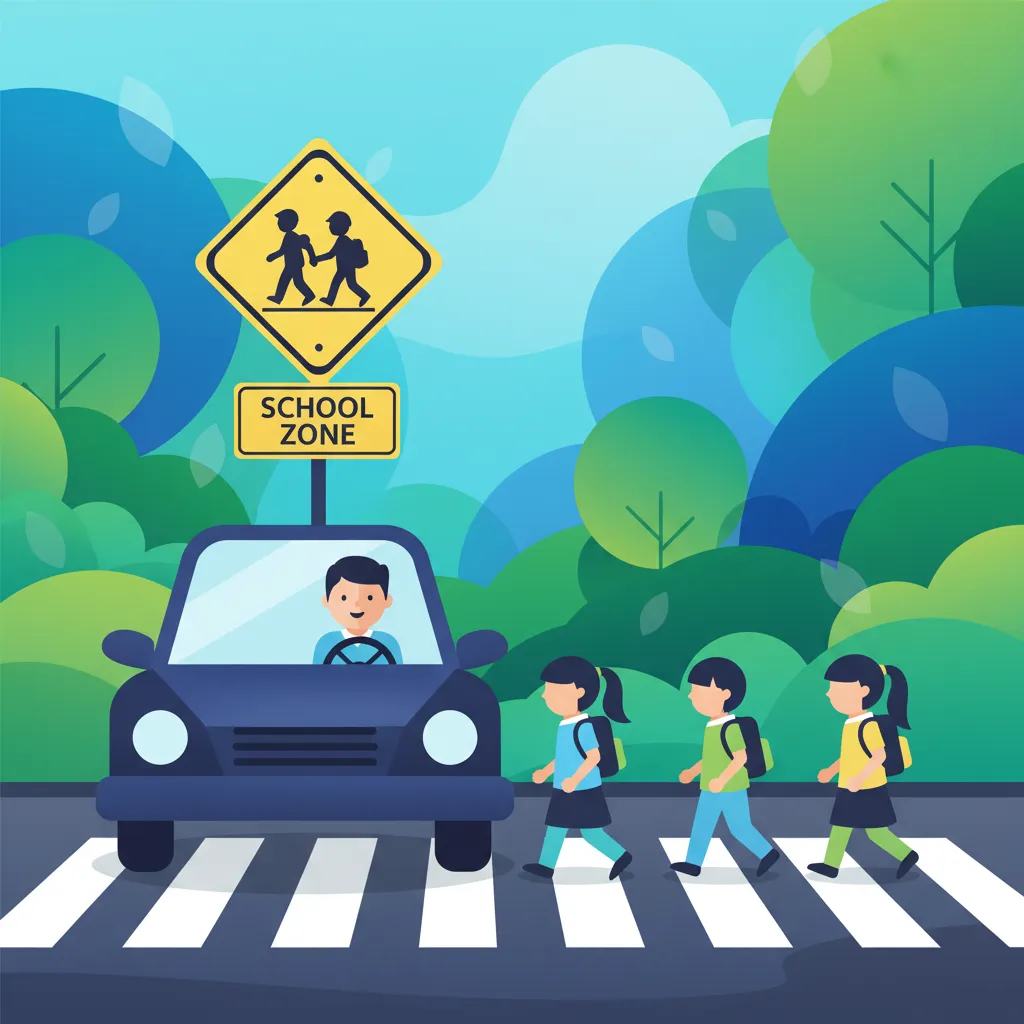
This lesson covers the strict rules governing pedestrian crossings and school zones, where riders have a heightened duty of care. It details the obligation to yield to pedestrians, recognize school zone signage, and reduce speed significantly. Riders learn to be extra vigilant for the unpredictable movements of children and other vulnerable road users in these sensitive areas.
This lesson provides an overview of the legal penalties for traffic violations and outlines the correct procedures to follow after an accident. It covers how to secure an accident scene, contact emergency services using 112, and provide basic first aid. Riders will also learn about their legal obligations for reporting incidents and the initial steps for making an insurance claim.
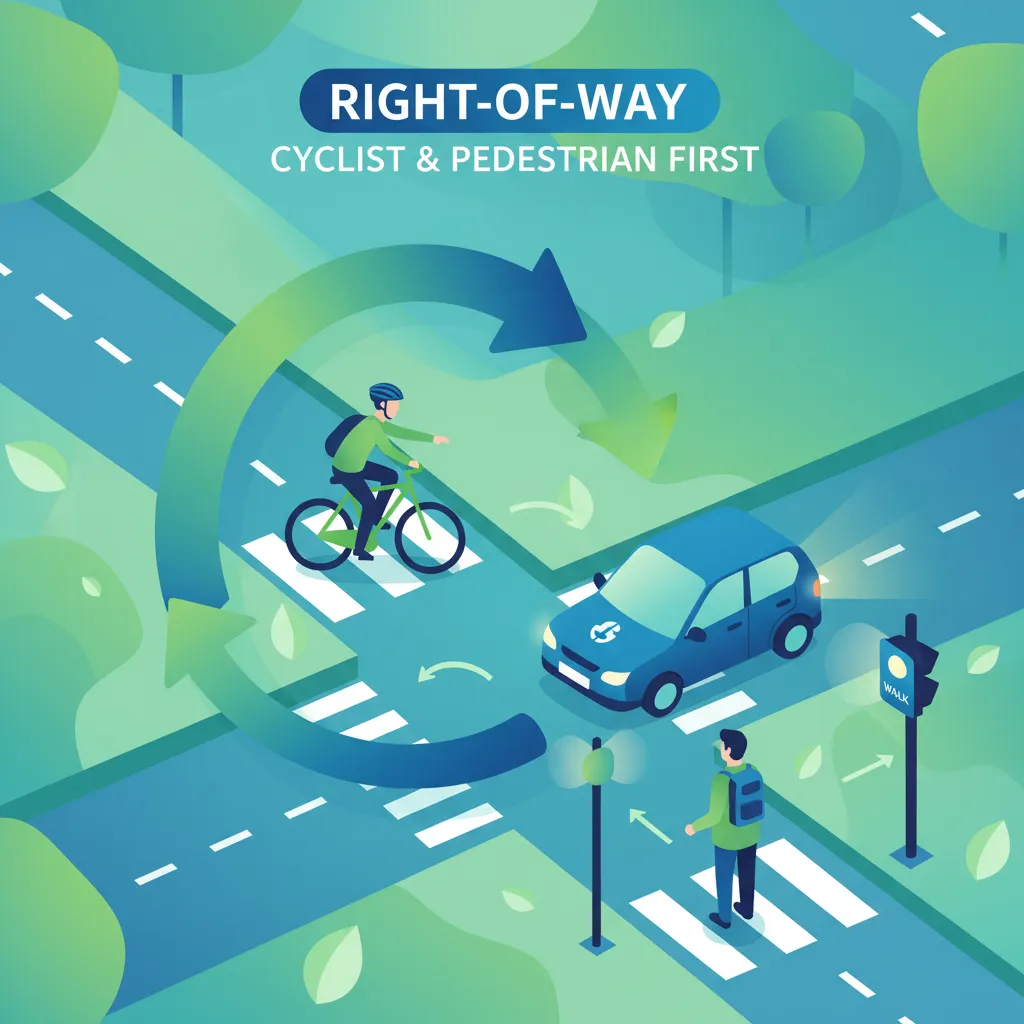
This lesson examines the legal framework defining right-of-way, distinguishing between priority and secondary roads, and detailing yielding responsibilities. It teaches riders how to assess intersections and approach safely based on Icelandic traffic law. Understanding these principles is critical for preventing collisions and ensuring smooth traffic flow at all types of junctions.

This lesson explores the conduct required at uncontrolled crossings where the right-hand rule typically applies. It emphasizes the need to reduce speed, be prepared to stop, and establish clear communication with other road users. Riders will learn to assess the situation carefully and proceed only when it is confirmed to be safe, a critical skill for rural and residential areas.

This lesson outlines the regulations governing pedestrian crossings, including zebra crossings, pedestrian traffic lights, and the driver’s obligations to yield. Learners will study how to identify crosswalk markings, interpret pedestrian signal phases, and understand the enhanced caution required in school zones and areas with high foot traffic. The content also emphasizes the need for drivers to anticipate vulnerable pedestrians and provide additional yielding in low-visibility conditions.
This lesson focuses on interpreting road surface markings, including solid and broken lines that govern lane changes and positioning. Learners will understand the rules associated with turning arrows, pedestrian crossings, and markings for dedicated lanes. Correctly reading these markings is essential for maintaining proper lane discipline and navigating complex road layouts safely.
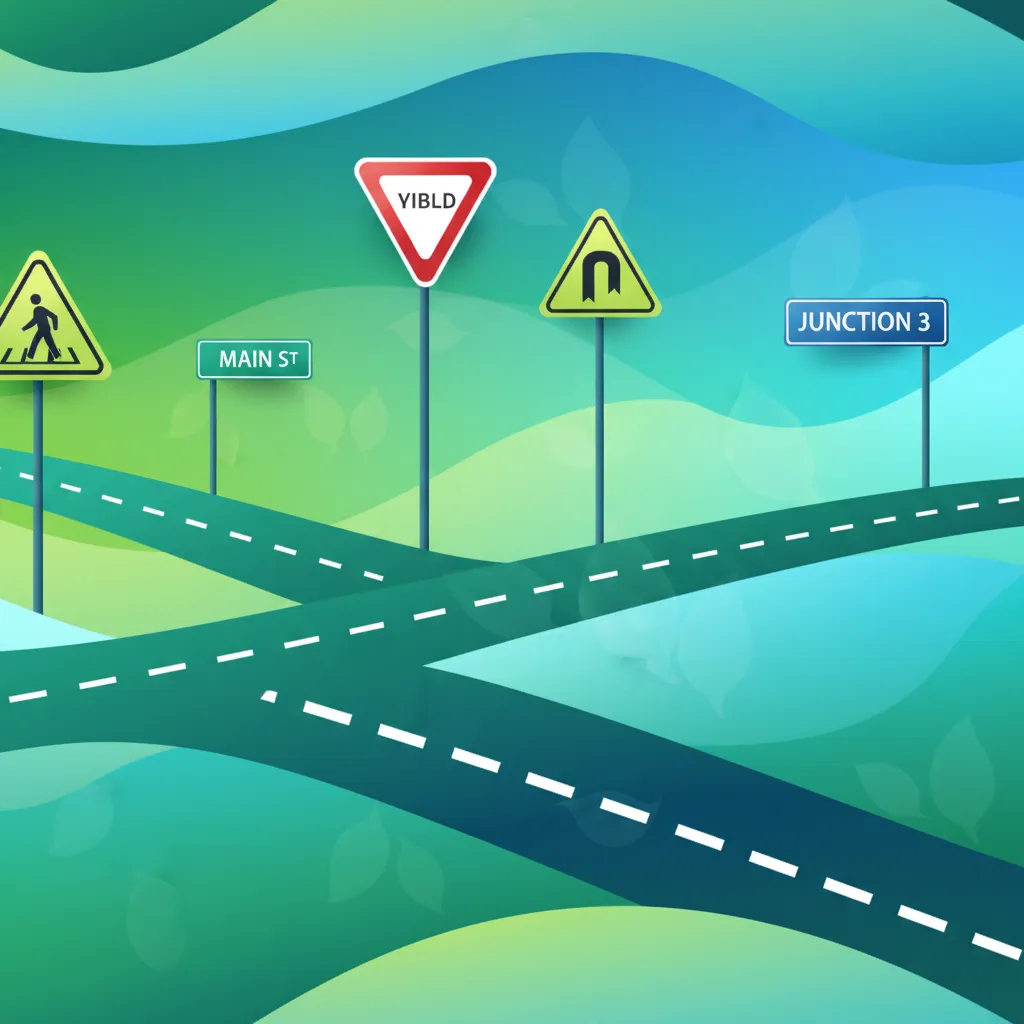
This lesson familiarizes learners with signs that warn of upcoming hazards, such as sharp curves, slippery surfaces, or animal crossings. It emphasizes the importance of early hazard recognition and response, which is especially critical for vulnerable moped riders. Understanding these signs allows riders to anticipate road conditions and adjust their riding strategy accordingly for increased safety.

This lesson dissects the three-color traffic light system, detailing the meaning of red, amber, and green signals, including flashing lights and directional arrows. It explains how signal timing impacts moped riders and the legal requirement to obey all signals at intersections. Proper interpretation is crucial for navigating signalized junctions safely and avoiding conflicts with other traffic.
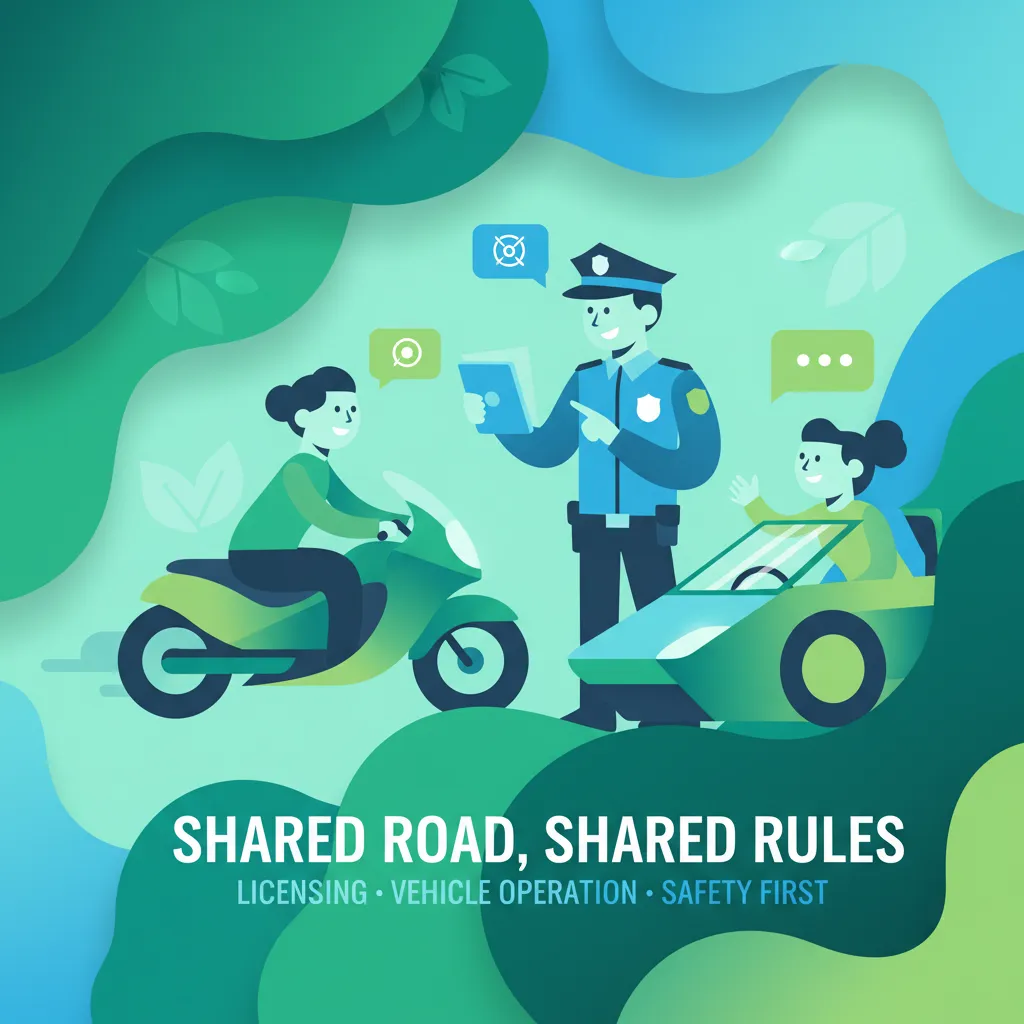
This lesson covers the extensive obligations that come with riding a moped, emphasizing the duty of care to other road users. It details specific legal requirements, such as mandatory helmet use, adherence to speed limits, and correct signaling protocols. Understanding these responsibilities helps riders grasp the consequences of non-compliance and fosters a culture of safety on the road.
Learn essential driving theory about maintaining visibility and using proper signaling techniques to safely interact with cyclists, e-scooters, and other vulnerable road users in Iceland, especially during low light or adverse conditions.

This lesson focuses on methods to enhance a rider's visibility, covering high-visibility clothing, reflective materials, and strategic lighting. Learners will understand how to use daytime running lights and position themselves to minimize time in others' blind spots. These proactive techniques are essential for being seen by other road users, significantly reducing the risk of collisions.
This lesson addresses the challenges of driving in rain and fog, focusing on strategies to maintain visibility and vehicle control. Learners will explore the correct use of windshield wipers, defoggers, and appropriate headlight settings, including when to use fog lights. The content also covers the increased risk of hydroplaning, the importance of adjusting speed in wet conditions, and the need to extend following distances to account for longer stopping distances.
This lesson outlines the regulations governing pedestrian crossings, including zebra crossings, pedestrian traffic lights, and the driver’s obligations to yield. Learners will study how to identify crosswalk markings, interpret pedestrian signal phases, and understand the enhanced caution required in school zones and areas with high foot traffic. The content also emphasizes the need for drivers to anticipate vulnerable pedestrians and provide additional yielding in low-visibility conditions.
This lesson focuses on the operation of traffic lights in Iceland, describing standard three-phase cycles (red, amber, green) and variations such as flashing amber for yielding. Learners will also explore dedicated signals for pedestrians, cyclists, and turning movements, including arrow indications. The lesson explains how signal timing integrates with right-of-way rules at intersections, ensuring drivers can interpret and respond to each light state to maintain safety.
This lesson addresses the unique challenges of riding at night, including reduced visibility and altered depth perception. It covers the correct use of lighting systems, the critical role of reflective gear, and strategies to maximize conspicuity. Riders will also learn to identify hazards specific to low-light conditions, such as animals or unlit obstacles on the road.
This lesson focuses on the principles of executing safe turns, highlighting the correct use of turn signals and lane positioning before initiating a turn. Learners examine the timing required for signaling, the rules governing right-turns and left-turn yields, and the importance of checking blind spots and cyclist lanes. The lesson also addresses the concept of turning radius to ensure drivers can complete turns without compromising the safety of others on the road.
This lesson familiarizes learners with signs that warn of upcoming hazards, such as sharp curves, slippery surfaces, or animal crossings. It emphasizes the importance of early hazard recognition and response, which is especially critical for vulnerable moped riders. Understanding these signs allows riders to anticipate road conditions and adjust their riding strategy accordingly for increased safety.
This lesson dissects the three-color traffic light system, detailing the meaning of red, amber, and green signals, including flashing lights and directional arrows. It explains how signal timing impacts moped riders and the legal requirement to obey all signals at intersections. Proper interpretation is crucial for navigating signalized junctions safely and avoiding conflicts with other traffic.
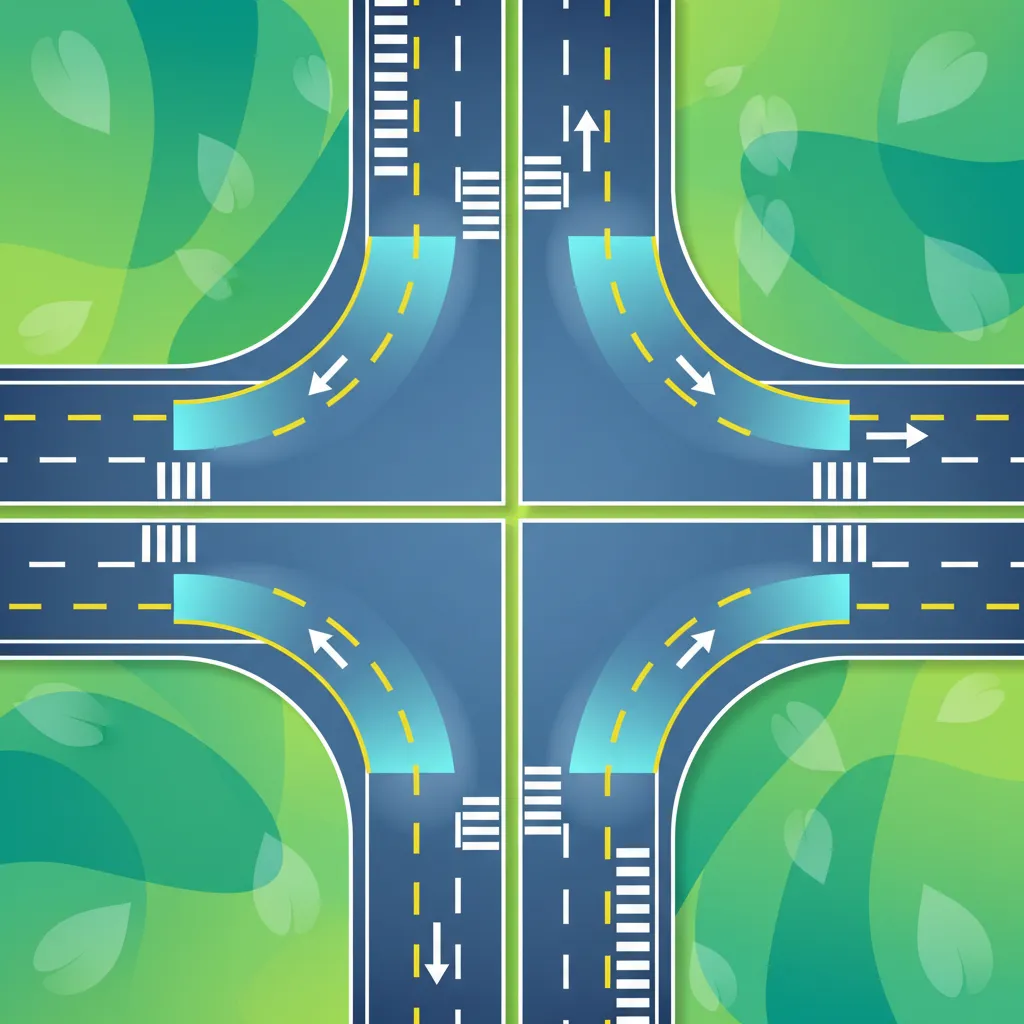
This lesson provides a comprehensive overview of the road markings found on Icelandic roads, from solid and broken lane lines to symbols indicating turning lanes and pedestrian crossings. The content details the visual meanings of each marking, such as solid lines indicating no crossing and broken lines permitting lane changes. Additionally, the lesson addresses the purpose of reflective markers and surface textures used in low-visibility or icy conditions, providing a framework for interpreting pavement cues.
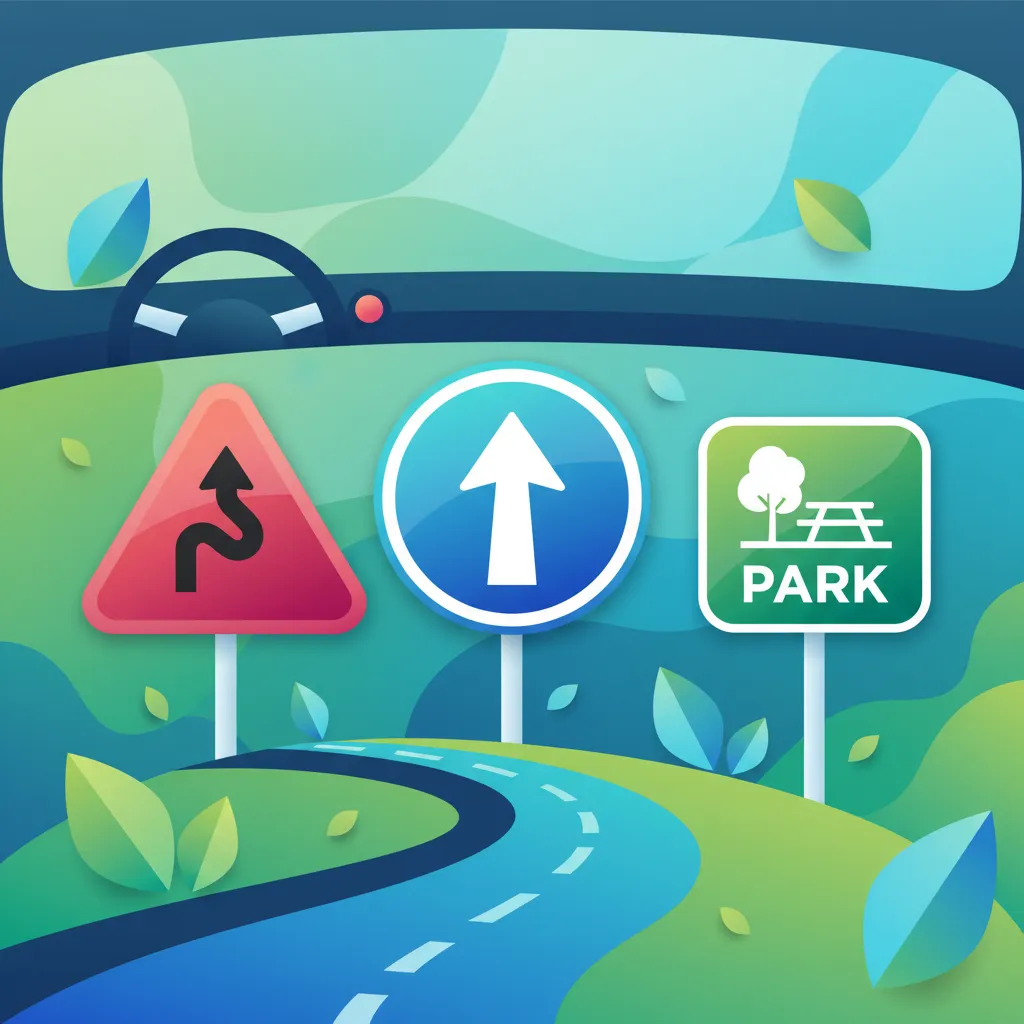
This lesson categorizes Icelandic road signs into regulatory signs that dictate mandatory actions, warning signs that alert drivers to hazards, and informational signs that provide guidance. It explains the distinctive shapes and colour schemes for each category, such as circles for prohibitions and triangles for warnings. By mastering these conventions, students will be able to interpret sign intent instantly and adapt their driving behaviour accordingly to comply with legal obligations.
Find clear answers to common questions learners have about Cyclist and E‑scooter Interactions. Learn how the lesson is structured, which driving theory objectives it supports, and how it fits into the overall learning path of units and curriculum progression in Iceland. These explanations help you understand key concepts, lesson flow, and exam focused study goals.
In Iceland, when overtaking a cyclist or an e-scooter user, you must maintain a minimum safe passing distance of 1.5 meters. This ensures sufficient space for them to manoeuvre without being endangered by your vehicle's passage.
Generally, e-scooters in Iceland are treated as vehicles that share the road with cyclists and motor vehicles. Their specific placement on the road (e.g., in cycle lanes, on the carriageway) depends on local regulations and the presence of specific infrastructure, but they are considered vulnerable road users requiring caution.
Dedicated cyclist lanes are exclusively for bicycles and often e-scooters. As a motor vehicle driver, you should not drive in or block a cyclist lane unless you are actively turning or parking and it is absolutely necessary and safe to do so, after checking thoroughly for cyclists.
Always use your turn signals well in advance when intending to turn or change lanes near cyclists or e-scooter riders. Make eye contact if possible and ensure they have seen your signal and are reacting appropriately before proceeding with your manoeuvre.
At night, cyclists may have lights, but their visibility can still be limited. Slow down when approaching cyclists, ensure your headlights are on correctly, and be extra vigilant for their presence. Avoid sudden movements and give them ample space.
Utilize our advanced practice set search to pinpoint the exact Icelandic driving theory topics you need to review. Filter by subject, difficulty, or question type to create a highly effective study plan and ensure you are fully prepared for your official driving licence test in Iceland.