
The 418.3 sign indicates a mandatory separated path for pedestrians and cyclists, meaning you must follow the specific direction or side designated for these users. This sign is crucial for maintaining order and safety where pedestrian and cycle traffic needs to be kept distinct from vehicular traffic. Always obey the arrows and physical road layout, as ignoring this sign can lead to dangerous conflicts with other road users.
This mandatory sign dictates specific traffic flow, ensuring safety by separating pedestrians and cyclists from other vehicles. Familiarise yourself with its meaning for effective theory test revision and safe navigation in Iceland.
Separated Path for Pedestrians and Cyclists is a mandatory sign used where traffic has to move in a particular way to stay safe and orderly. It often appears at islands, central refuges, one-way arrangements, path networks, and places where separating traffic streams matters more than driver preference. The sign should be read together with arrows, lane markings, kerbs, and the physical road layout because those details show exactly how the instruction is applied on site. Ignoring a mandatory sign can place you into direct conflict with opposing traffic, pedestrians, cyclists, or a protected part of the road space.
This sign makes separated path for pedestrians and cyclists compulsory for the road user or lane concerned. You must follow the direction, side, or path shown instead of choosing your own line through the location.
Get clear, practical answers to the most common questions about the 418.3 - Separated Path for Pedestrians and Cyclists road sign. Learn how the sign works, what rules it represents, and how it affects real driving situations. This FAQ strengthens your understanding and supports accurate decision making for the Icelandic driving theory exam in Iceland.
This sign is a mandatory traffic sign that requires you to follow a specific path or side that is separated for pedestrians and cyclists. You must adhere to the direction shown by the sign and any accompanying arrows or markings, rather than choosing your own route.
You are prohibited from choosing a different direction than what the sign mandates, driving on the wrong side of an obstruction, or entering a path specifically reserved for pedestrians or cyclists. Late swerving to correct a missed mandatory movement or ignoring the sign because the road appears wide enough are also forbidden.
You should position your vehicle early to follow the compulsory movement indicated by the sign. Always follow the side, path, or lane shown by the symbol and use your mirrors and signals appropriately. Adapt your speed to ensure you can smoothly execute the mandatory manoeuvre.
A common exam trap is assuming you can improvise or use part of the separated path if it seems convenient or if you've missed the intended route. Remember, this is a mandatory sign, and deviating from the indicated path can lead to dangerous situations and points deduction in the theory test.
The 418.3 sign should always be read in conjunction with arrows, lane markings, kerbs, and the actual road layout. These elements provide the precise details on how the mandatory separation of paths is applied on site. The sign indicates the requirement, while the physical infrastructure shows the exact way to comply.
A clear reference image of the 418.3 - Separated Path for Pedestrians and Cyclists road sign used in Iceland.
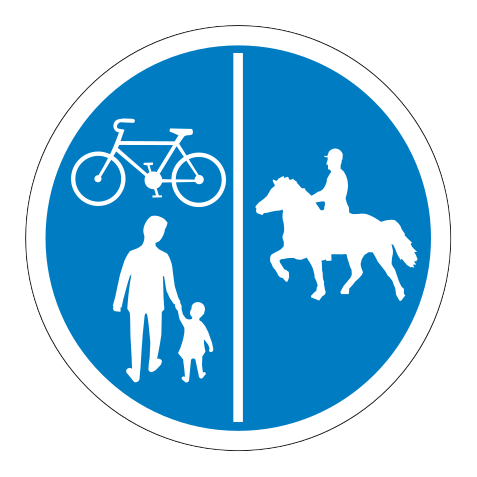
The 418.3 - Separated Path for Pedestrians and Cyclists road sign may also be known by these alternative names or terms.
The 418.3 - Separated Path for Pedestrians and Cyclists road sign is part of the Mandatory Direction Signs category, which groups together signs with similar rules and functions.
By reviewing related road signs, you can solidify your understanding and improve recognition accuracy. This targeted theory test revision helps you distinguish between similar traffic signs, leading to fewer errors during your exam preparation.
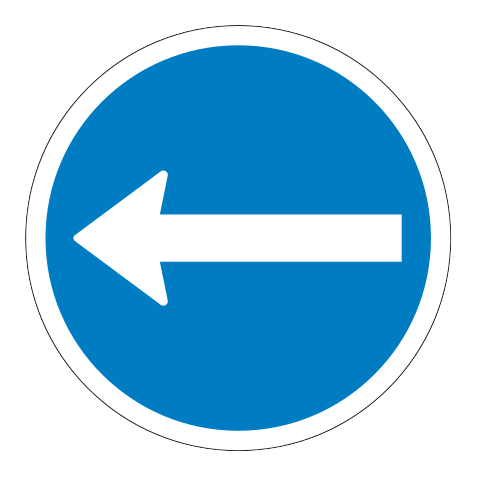
You MUST turn left when you see this compulsory direction sign.
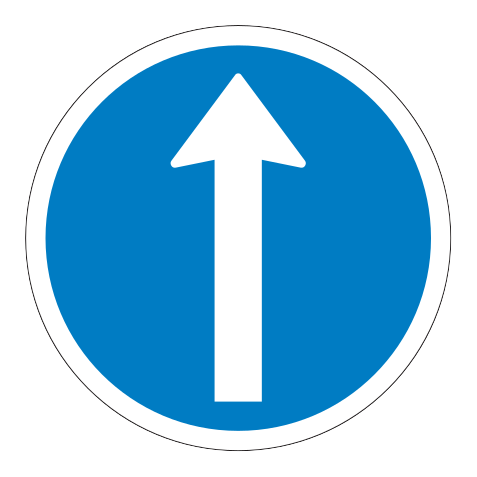
Understand the 'Straight Ahead Only' Mandatory Direction Sign (402.3)
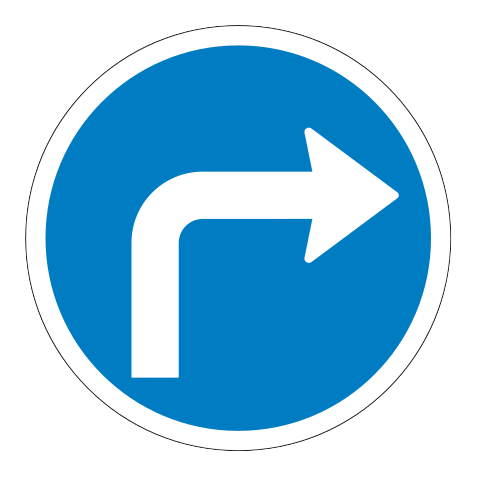
Understand the 'Turn Right Only' Mandatory Direction Sign (402.4)
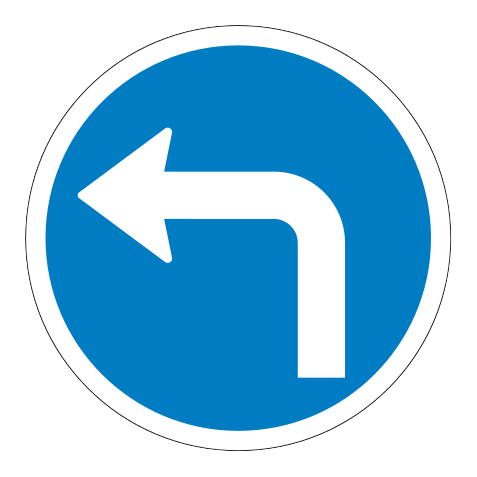
Mandatory Turn Left Ahead Only Traffic Sign Explained
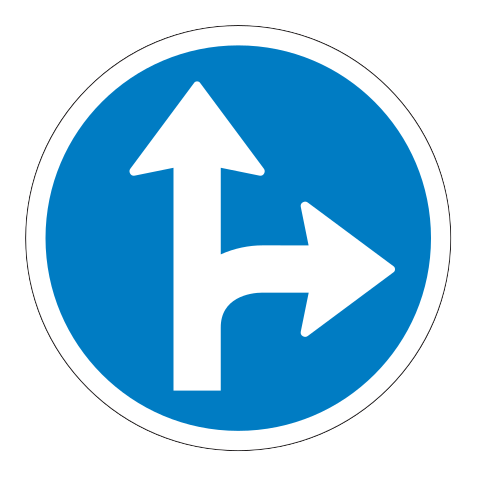
Mandatory Movement: Follow the Arrow or Go Straight Ahead!
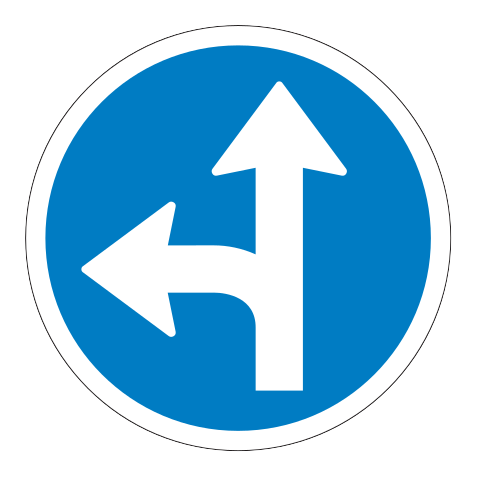
Mandatory Traffic Direction: Straight Ahead or Turn Left
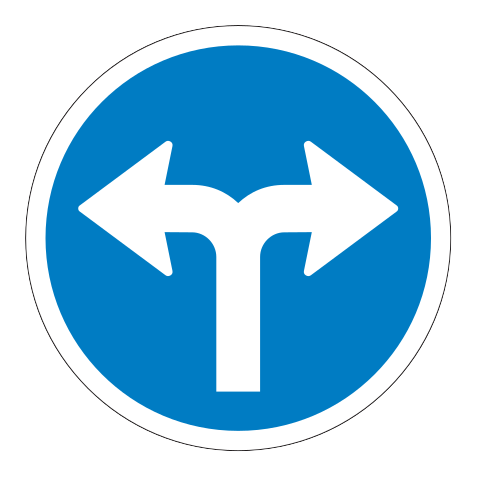
Understand the Mandatory 'Pass Either Side' Traffic Sign (402.8)

U-Turn Only: Follow the Mandatory Direction!
Explore curated theory modules and safety procedures that clarify how specific road signs dictate right-of-way and vehicle conduct on Icelandic roads. Apply this knowledge to your driving theory test preparation by linking visual signage to real-world traffic laws.
Don't let a false sense of security put you at risk on Icelandic roads.
Deciphering your Icelandic driving licence categories is essential for legal and safe operation of vehicles. This guide will clarify the scope of common categories like B, BE, and A, detailing vehicle and trailer weight restrictions. Gaining a clear understanding of these entitlements prepares you for the demands of Icelandic traffic and the official theory examination.
Master Icelandic Crosswalk Rules for a Safer Drive and Exam Success
Navigating intersections without signs can be confusing, but Iceland's 'Hægri Regla' provides a clear priority system. This article explains how to yield to traffic from the right in such situations and outlines the hierarchy of traffic controls, from police officers to road signs. Understanding these principles is essential for safe driving and success in your Icelandic driving theory test.
Shared Path for Pedestrians and Cyclists is a mandatory sign used where traffic has to move in a particular way to stay safe and orderly. It often appears at islands, central refuges, one-way arrangements, path networks, and places where separating traffic streams matters more than driver preference. The sign should be read together with arrows, lane markings, kerbs, and the physical road layout because those details show exactly how the instruction is applied on site. Ignoring a mandatory sign can place you into direct conflict with opposing traffic, pedestrians, cyclists, or a protected part of the road space.
Shared Path for Pedestrians and Cyclists is a mandatory sign used where traffic has to move in a particular way to stay safe and orderly. It often appears at islands, central refuges, one-way arrangements, path networks, and places where separating traffic streams matters more than driver preference. The sign should be read together with arrows, lane markings, kerbs, and the physical road layout because those details show exactly how the instruction is applied on site. Ignoring a mandatory sign can place you into direct conflict with opposing traffic, pedestrians, cyclists, or a protected part of the road space.
After reviewing the full list of Icelandic road signs, reinforce your learning with targeted practice. Explore our sign group categories or take a specific quiz to test your recognition and recall. Ensure you're fully prepared to identify and interpret all traffic signs for your upcoming driving theory exam.
View All Icelandic Road Signs