Learn exactly what is required to participate in the Guida Accompagnata program, from mandatory training hours to the specific vehicle requirements mandated by the Italian traffic authorities. This guide clarifies the role of the mentor, the limitations on vehicle usage, and the legal framework that prepares young learners for their final B license exam. By mastering these regulations, you can start building valuable driving experience safely and legally before you turn eighteen.
Article content overview
The Guida Accompagnata (GA) program is a specialized initiative under the Italian Codice della Strada designed to help 17-year-olds build practical driving experience before they become eligible for a full Category B license at eighteen. By participating in this program, young drivers can gain crucial road confidence under the supervision of an experienced mentor, ensuring that their eventual transition to independent driving is safer and more structured. This pathway is not merely about gaining extra hours behind the wheel; it is a formal, regulated process that requires strict adherence to legal standards and safety protocols.
To qualify for the Guida Accompagnata program, candidates must meet several specific criteria. Primarily, the minor must already hold a valid Category A1 or B1 driving license. Without these foundational licenses, you cannot apply for the GA authorization. The process requires a formal application to be submitted by a parent or legal guardian to the local Motorizzazione Civile (the Italian Department for Transport).
Once the administrative authorization is granted, the young driver must complete a mandatory training course. This is not optional; you must undertake at least ten hours of practical training at a certified driving school (autoscuola). These hours are specifically designed to build high-level skills, including four hours dedicated to motorway or rural road driving and two hours of night driving.
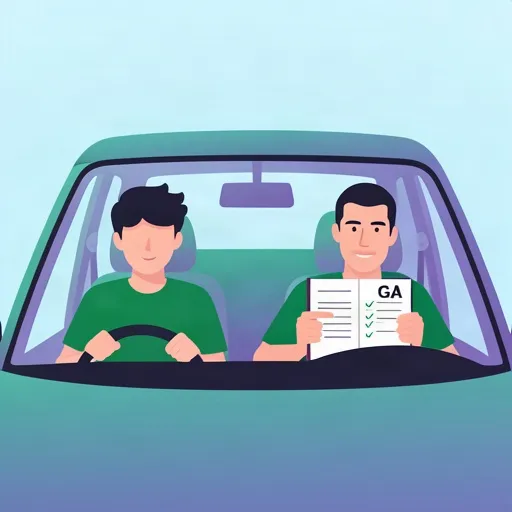
The mentor, or accompanying driver, acts as an unofficial instructor and holds significant responsibility during every GA session. Under the Codice della Strada, the accompanying driver must be under the age of 65 and possess a Category B license or higher, which must have been issued at least ten years prior to the session. Furthermore, the mentor must have a clean driving record, meaning no suspensions or revocations of their license in the preceding five years.
One of the most important rules for learners to remember is the restriction on passengers. During a Guida Accompagnata session, no one other than the mentor and the learner may be inside the vehicle. Adding passengers is a violation of the law and can lead to severe penalties, including the potential revocation of your GA authorization.
Safety is the core of the GA program, and this is reflected in the strict rules regarding vehicle identification. Any car used for these training sessions must clearly display the 'GA' signage, which stands for Guida Accompagnata. This informs other road users that a learner is behind the wheel, ensuring they maintain a cautious distance and remain aware of the situation.
It is also important to note that the vehicle must be suitable for a learner driver. The Codice della Strada places limits on the power-to-weight ratio for vehicles driven by newly licensed drivers, and these principles are strictly enforced within the context of the GA program to ensure the vehicle remains manageable at all times.
In the theory test, questions regarding the Guida Accompagnata often focus on the specific constraints of the mentor and the training requirements. Candidates frequently make mistakes regarding the age of the mentor or the required number of night-driving hours. Always remember that the 10-hour requirement is a minimum; many instructors recommend additional practice to ensure full competency before attempting the official Category B examination.
Violation of the rules set out in Article 115 of the Codice della Strada regarding the GA program can lead to immediate administrative sanctions. This includes fines and the risk of being barred from taking the official driving test for a significant period. Always ensure your GA badge is correctly displayed and your mentor meets all age and licensing criteria.
The Guida Accompagnata program is a formal pathway under the Codice della Strada enabling 17-year-olds with an A1 or B1 license to gain supervised driving experience before taking the Category B exam. Candidates must submit an application through their guardian to the Motorizzazione Civile and complete 10 hours of certified training at an autoscuola, with mandatory night driving and motorway or rural road components. The mentor must be under 65, hold a B license for at least 10 years, and have a clean record. Vehicles must display official GA signage, and only the learner and mentor may occupy the vehicle during sessions. Violations of these rules can result in fines and exclusion from the official driving test.
A short set of high-value points that capture the most important ideas from this article.
The Guida Accompagnata program allows 17-year-olds with an A1 or B1 license to practice driving under supervision before taking the full Category B exam.
Candidates must complete a mandatory 10-hour certified training course, including 4 hours on motorways or rural roads and 2 hours of night driving.
The accompanying mentor must be under 65 years old, hold a Category B license for at least 10 years, and have a clean driving record with no suspensions in the previous 5 years.
The official 'GA' signage must be displayed on the rear of the vehicle during all supervised driving sessions.
Only the learner and mentor are permitted in the vehicle during GA sessions; carrying additional passengers violates the law.
The GA program is governed by Article 115 of the Codice della Strada, and violations can result in fines and barment from the official driving test.
The minimum 10 training hours is mandatory; additional practice is strongly recommended by instructors for full competency.
The mentor's B license must have been issued at least ten years before the GA session, not just ten years of general driving experience.
Vehicle power-to-weight ratio limits for novice drivers also apply within the GA program.
Applications must be submitted by a parent or legal guardian to the local Motorizzazione Civile.
Confusing the mentor age limit (under 65) with other age-related driving rules in Italian traffic law.
Forgetting that the 10-hour minimum includes specific mandatory components: 4 hours of motorway/rural driving and 2 hours of night driving.
Believing additional passengers such as friends or siblings are permitted during GA sessions, which is a legal violation.
Assuming any licensed driver can act as a mentor without checking the 10-year license holding requirement.
Neglecting to display the GA sign or displaying it incorrectly, leading to administrative penalties.
Article content overview
A short set of high-value points that capture the most important ideas from this article.
The Guida Accompagnata program allows 17-year-olds with an A1 or B1 license to practice driving under supervision before taking the full Category B exam.
Candidates must complete a mandatory 10-hour certified training course, including 4 hours on motorways or rural roads and 2 hours of night driving.
The accompanying mentor must be under 65 years old, hold a Category B license for at least 10 years, and have a clean driving record with no suspensions in the previous 5 years.
The official 'GA' signage must be displayed on the rear of the vehicle during all supervised driving sessions.
Only the learner and mentor are permitted in the vehicle during GA sessions; carrying additional passengers violates the law.
The GA program is governed by Article 115 of the Codice della Strada, and violations can result in fines and barment from the official driving test.
The minimum 10 training hours is mandatory; additional practice is strongly recommended by instructors for full competency.
The mentor's B license must have been issued at least ten years before the GA session, not just ten years of general driving experience.
Vehicle power-to-weight ratio limits for novice drivers also apply within the GA program.
Applications must be submitted by a parent or legal guardian to the local Motorizzazione Civile.
Confusing the mentor age limit (under 65) with other age-related driving rules in Italian traffic law.
Forgetting that the 10-hour minimum includes specific mandatory components: 4 hours of motorway/rural driving and 2 hours of night driving.
Believing additional passengers such as friends or siblings are permitted during GA sessions, which is a legal violation.
Assuming any licensed driver can act as a mentor without checking the 10-year license holding requirement.
Neglecting to display the GA sign or displaying it incorrectly, leading to administrative penalties.
Explore related topics, search based questions, and concepts that learners often look up when studying Italy Guida Accompagnata Rules. These themes reflect real search intent and help you understand how this topic connects to wider driving theory knowledge in Italy.
Find clear and practical answers to common questions learners often have about Italy Guida Accompagnata Rules. This section helps explain difficult points, remove confusion, and reinforce the key driving theory concepts that matter for learners in Italy.
You must hold a valid category A1 or B1 license to be eligible for the Guida Accompagnata program.
The law mandates at least ten hours of practical driving lessons with an authorized instructor at a driving school, including specific hours on motorways and in night conditions.
The 'GA' sign stands for Guida Accompagnata and is a mandatory marking that must be displayed on the vehicle to indicate that a minor is practicing driving with an accompanying person.
Your mentor must hold a category B license (or higher) obtained at least ten years ago, be under 65 years of age, and have a clean driving record free of suspensions or revocations in the last five years.
No, you are strictly prohibited from transporting any passengers other than the designated accompanying driver during these practice sessions.
Refine your search or explore related Italian driving theory articles to build a stronger foundation for your exam. Dive deeper into specific traffic regulations, road signs, and practical driving scenarios that are essential for passing your official licence test.