
Understanding the complex regulations of the Italian autostrada network is a fundamental requirement for passing your theory test. This guide breaks down the essential legal framework, including speed management systems, emergency procedures, and the role of major arterial routes like the A1 and A14 in national traffic. By mastering these concepts, you will gain the knowledge needed to handle high-speed motorway scenarios confidently and accurately during your examination.
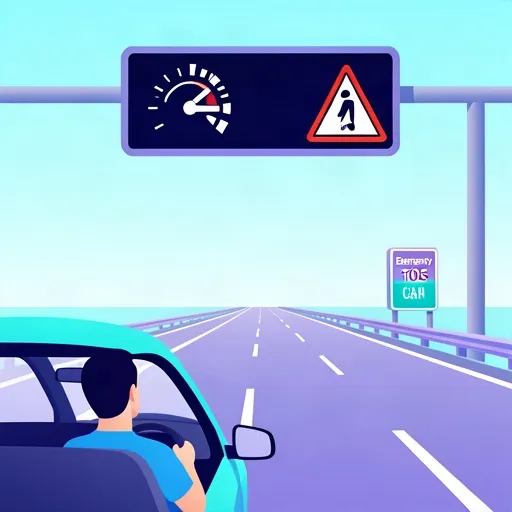
Article content overview
Navigating the Italian autostrada network is a core component of the Italian driving theory exam. As a driver in Italy, you must understand that the autostrada is a high-speed, controlled-access road designed for long-distance travel, subject to specific regulations under the Codice della Strada. Mastering these rules is not only vital for passing your exam but is also essential for your safety and the safety of other road users.
Italy’s autostrada network spans thousands of kilometers, connecting the industrial north with the southern regions. The most famous artery is the A1, known as the Autostrada del Sole, which stretches from Milan to Naples. Other vital routes include the A4, which serves as a major east-west corridor across Northern Italy, and the A14, or Adriatica, which runs along the eastern coast from Bologna to Taranto.
These roads are managed by various concessionaires under the oversight of the Ministry of Infrastructure and Transport (MIT). For your theory exam, you must recognize that while autostrade allow for higher travel speeds, they also impose strict requirements regarding vehicle types, minimum speed capacities, and specific behavioral protocols that differ significantly from urban or rural roads.
One of the most important concepts for any learner is the Tutor system. Unlike a standard speed camera that measures your velocity at a single point, the Tutor system calculates your average speed over a pre-defined distance between two gantries. If your average speed exceeds the legal limit, you will be penalized.
Always remember that the Tutor system is designed to encourage consistent driving speeds across long stretches of the A1, A14, and other major routes. Exceeding the limit between two gantries is a common trap in theory exam questions, so always focus on the concept of average speed rather than instantaneous speed.
Driving on the autostrada requires absolute focus on hazard perception and adherence to lane discipline. You must always maintain the correct distance from the vehicle in front and use the emergency lane only in cases of absolute necessity, such as a vehicle breakdown. In the event of an emergency, you should rely on established mechanical rescue services, such as ACI (803-116), which is authorized to operate across the entire network.
The emergency lane is strictly reserved for vehicles experiencing mechanical failure or health emergencies; driving in this lane for any other purpose is a severe violation of the Codice della Strada.
The autogrill is a staple of the Italian motorway experience, serving as a critical safety feature that encourages drivers to take regular breaks. On the theory test, you might encounter questions regarding the importance of stopping for rest to avoid fatigue, which is a leading cause of motorway accidents. Using these facilities helps ensure you maintain the necessary cognitive performance to handle high-speed driving conditions.
This guide covers the essential Italian autostrada regulations required for the driving theory exam, focusing on the unique Tutor average-speed monitoring system that distinguishes it from ordinary speed cameras. It details the step-by-step procedure for vehicle breakdowns including hazard light activation, high-visibility vest use, warning triangle placement, and contacting authorized rescue services via SOS columns or ACI. The content explains key terminology including autostrada, corsia di emergenza, distanza di sicurezza, and concessionario, while emphasizing that emergency lanes are strictly for genuine emergencies. Major routes like the A1 (Autostrada del Sole), A4, and A14 serve as critical corridors connecting Italy's regions and fall under MIT-supervised concessionaire management.
A short set of high-value points that capture the most important ideas from this article.
The Tutor system measures average speed between two gantries, not instantaneous speed at a single point
The autostrada is a controlled-access motorway with strict vehicle type restrictions and minimum speed requirements
Emergency lane (corsia di emergenza) is reserved strictly for breakdowns and health emergencies
Major routes include the A1 (Autostrada del Sole), A4 (east-west northern corridor), and A14 (Adriatica coastal route)
All autostrada regulations fall under the Codice della Strada framework and are enforced by MIT-overseen concessionaires
The A1 connects Milan to Naples and the A14 runs from Bologna to Taranto along the Adriatic coast
ACI (803-116) is the authorized mechanical rescue service across the entire autostrada network
When breaking down, activate hazard lights first, then vest, then triangle, then call for assistance
Emergency SOS columns are available for requesting authorized assistance
Autogrill rest stops exist to prevent fatigue, a leading cause of motorway accidents
Confusing Tutor with a standard speed camera—Tutor calculates average speed over a distance, not spot speed
Using the emergency lane for purposes other than genuine breakdowns or health emergencies
Forgetting to wear the high-visibility vest before exiting the vehicle during a breakdown
Placing the warning triangle at incorrect distance behind the vehicle
Assuming all autostrade have the same speed limits without checking specific signage for each section
Article content overview
A short set of high-value points that capture the most important ideas from this article.
The Tutor system measures average speed between two gantries, not instantaneous speed at a single point
The autostrada is a controlled-access motorway with strict vehicle type restrictions and minimum speed requirements
Emergency lane (corsia di emergenza) is reserved strictly for breakdowns and health emergencies
Major routes include the A1 (Autostrada del Sole), A4 (east-west northern corridor), and A14 (Adriatica coastal route)
All autostrada regulations fall under the Codice della Strada framework and are enforced by MIT-overseen concessionaires
The A1 connects Milan to Naples and the A14 runs from Bologna to Taranto along the Adriatic coast
ACI (803-116) is the authorized mechanical rescue service across the entire autostrada network
When breaking down, activate hazard lights first, then vest, then triangle, then call for assistance
Emergency SOS columns are available for requesting authorized assistance
Autogrill rest stops exist to prevent fatigue, a leading cause of motorway accidents
Confusing Tutor with a standard speed camera—Tutor calculates average speed over a distance, not spot speed
Using the emergency lane for purposes other than genuine breakdowns or health emergencies
Forgetting to wear the high-visibility vest before exiting the vehicle during a breakdown
Placing the warning triangle at incorrect distance behind the vehicle
Assuming all autostrade have the same speed limits without checking specific signage for each section
Explore related topics, search based questions, and concepts that learners often look up when studying Guide to Italian Autostrada Rules. These themes reflect real search intent and help you understand how this topic connects to wider driving theory knowledge in Italy.
Find clear and practical answers to common questions learners often have about Guide to Italian Autostrada Rules. This section helps explain difficult points, remove confusion, and reinforce the key driving theory concepts that matter for learners in Italy.
The primary system is 'Tutor', which calculates a vehicle's average speed between two points on the motorway to ensure drivers do not exceed the speed limit over a long stretch, rather than just at a specific point.
If you experience a breakdown, you should move to the emergency lane, activate hazard lights, put on a high-visibility vest, and contact an authorized mechanical assistance service like ACI using the dedicated emergency telephones or their respective contact numbers.
Yes, autostrade have strict regulations including higher speed limits, specific requirements for vehicle entry, prohibitions for certain low-powered vehicles, and mandatory rules regarding lane usage and emergency stopping.
An Autogrill is a motorway service area offering fuel, food, and rest facilities, which are essential for long-distance travel on routes like the A1 to prevent driver fatigue.
Refine your search or explore related Italian driving theory articles to build a stronger foundation for your exam. Dive deeper into specific traffic regulations, road signs, and practical driving scenarios that are essential for passing your official licence test.