
Understanding how to correctly identify and use designated parking zones is a fundamental part of the Italian driving theory test. This article breaks down the requirements for paid parking, free zones, and reserved areas, ensuring you understand your obligations under the Codice della Strada. You will learn the correct procedures for display requirements and why certain common parking behaviors can result in significant penalties.
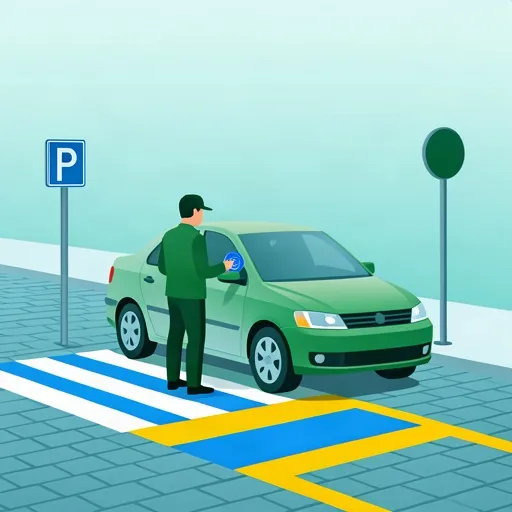
Article content overview
Navigating the streets of Italy requires more than just good driving skills; it demands a thorough understanding of the local road marking system. Whether you are driving through the historic center of Rome or along a suburban road in Milan, the color of the parking lines—known as stalli—dictates exactly what you can and cannot do. Misinterpreting these regulations is one of the most common reasons drivers receive fines, and it is a frequent topic in the Italian driving theory exam.
The Italian Codice della Strada utilizes a clear, color-coded system to manage street parking. Understanding these colors is the first step toward becoming a responsible and legal driver in Italy. By observing the pavement markings, you can immediately determine if a space is free, requires payment, or is strictly off-limits to the general public.
| Parking Color | Meaning |
|---|---|
| White | Free parking (no payment required). |
| Blue | Paid parking (subject to hourly fees). |
| Yellow | Reserved parking (e.g., disabled, taxi, resident). |
White strisce (lines) indicate that parking is free of charge. However, do not assume that these spots have no rules. You must always check for nearby vertical signage. In many urban areas, white lines are regulated by time limits, which are indicated by a supplemental panel. In these specific cases, you are required to use a parking disc, or disco orario, to indicate your arrival time. If no time limit is specified by a sign, you may generally park without charge or time constraints, provided you are not causing an obstruction.
When you see blue strisce, you are in a zone where parking is subject to a fee. These areas, often referred to as sosta a rotazione, are designed to ensure vehicle turnover. To park here legally, you must purchase a ticket from a nearby parchimetro (parking meter) or use an authorized mobile application. Once you have paid, you must display the receipt clearly on your dashboard so that it is visible to enforcement officers. Failure to display a valid ticket, even if you have paid via an app, can lead to significant penalties.
Yellow lines identify spaces that are strictly reserved for specific categories of users. These may include parking for people with disabilities, public transport vehicles like buses, taxis, or residents with specific municipal permits. It is illegal for unauthorized vehicles to park in these stalls at any time.
Never park in a stall marked with yellow lines unless you possess the specific authorization, such as a valid disabled parking badge (contrassegno disabili). Parking in a reserved space is considered a serious infringement and often results in immediate fines or vehicle removal.
The disco orario is a mandatory tool for any driver in Italy. In areas where parking is free but limited by time, you must display this disc—or a piece of paper clearly stating your arrival time—on your dashboard. The rules for these zones are simple: you set the disc to your time of arrival, and you must vacate the spot before the maximum allowed duration expires.
Common exam questions often test your knowledge of this procedure. Remember that you cannot simply "reset" the disc without moving the vehicle to circumvent the time limit. If you are only stopping to allow a passenger to get in or out, this is considered a fermata (stop), not sosta (parking), and different rules regarding obstruction apply.
A common misconception among new drivers is that parking on the marciapiede (pavement/sidewalk) is acceptable if you see others doing it. In reality, the Codice della Strada strictly prohibits parking on sidewalks unless specific painted lines or vertical signs explicitly authorize it. While you may witness widespread non-compliance in large cities, this does not make the act legal. Enforcement authorities frequently issue fines for this behavior, and it is vital to prioritize finding a legal stallo over the convenience of an illegal sidewalk spot.
Italian street parking uses a color-coded system where white lines indicate free parking (often with time limits requiring a disco orario), blue lines require payment at a parchimetro or via app with visible ticket display, and yellow lines mark spaces reserved exclusively for disabled drivers, taxis, buses, or authorized residents. The parking disc must reflect your true arrival time and cannot be reset to extend your stay without moving the vehicle. Pavement parking is generally illegal unless explicitly authorized, and widespread non-compliance in some cities does not affect its legal status under the Codice della Strada.
A short set of high-value points that capture the most important ideas from this article.
Italian parking is organized by a three-color line system: white means free, blue means paid, and yellow means reserved for specific users.
Blue-line parking requires both purchasing a ticket and displaying it visibly on your dashboard — payment alone is insufficient.
Yellow-line spaces are strictly off-limits to unauthorized vehicles at any time, regardless of circumstances.
The disco orario must be set to your actual arrival time in time-limited zones; simply resetting it without moving your vehicle is illegal.
Pavement parking is prohibited under the Codice della Strada unless painted lines or signs explicitly authorize it — the behavior of others does not make it legal.
White lines = free parking but always check for supplementary time-limit signs and required disco orario use.
Blue lines = paid sosta a rotazione zones requiring a ticket from a parchimetro or authorized app displayed on the dashboard.
Yellow lines = reserved stalls only for disabled badge holders, taxis, buses, or permit-holding residents.
Fermata is a temporary stop for passenger boarding; sosta is prolonged parking — different rules apply to each.
If a time limit is posted near white lines, you must use the disco orario and vacate before the maximum duration expires.
Believing white-line zones have no restrictions — time limits and disco orario requirements often apply.
Paying for blue parking via mobile app but failing to display the ticket receipt on the dashboard.
Attempting to reset the disco orario without moving the vehicle to circumvent the time limit, which is illegal.
Parking on sidewalks because it is commonly observed in large cities — this does not make it compliant with traffic law.
Confusing a fermata (stop) with sosta (parking) when evaluating what rules apply to a given situation.
Article content overview
A short set of high-value points that capture the most important ideas from this article.
Italian parking is organized by a three-color line system: white means free, blue means paid, and yellow means reserved for specific users.
Blue-line parking requires both purchasing a ticket and displaying it visibly on your dashboard — payment alone is insufficient.
Yellow-line spaces are strictly off-limits to unauthorized vehicles at any time, regardless of circumstances.
The disco orario must be set to your actual arrival time in time-limited zones; simply resetting it without moving your vehicle is illegal.
Pavement parking is prohibited under the Codice della Strada unless painted lines or signs explicitly authorize it — the behavior of others does not make it legal.
White lines = free parking but always check for supplementary time-limit signs and required disco orario use.
Blue lines = paid sosta a rotazione zones requiring a ticket from a parchimetro or authorized app displayed on the dashboard.
Yellow lines = reserved stalls only for disabled badge holders, taxis, buses, or permit-holding residents.
Fermata is a temporary stop for passenger boarding; sosta is prolonged parking — different rules apply to each.
If a time limit is posted near white lines, you must use the disco orario and vacate before the maximum duration expires.
Believing white-line zones have no restrictions — time limits and disco orario requirements often apply.
Paying for blue parking via mobile app but failing to display the ticket receipt on the dashboard.
Attempting to reset the disco orario without moving the vehicle to circumvent the time limit, which is illegal.
Parking on sidewalks because it is commonly observed in large cities — this does not make it compliant with traffic law.
Confusing a fermata (stop) with sosta (parking) when evaluating what rules apply to a given situation.
Explore related topics, search based questions, and concepts that learners often look up when studying Italian Parking Rules Explained. These themes reflect real search intent and help you understand how this topic connects to wider driving theory knowledge in Italy.
Find clear and practical answers to common questions learners often have about Italian Parking Rules Explained. This section helps explain difficult points, remove confusion, and reinforce the key driving theory concepts that matter for learners in Italy.
Blue lines (strisce blu) indicate paid parking zones. White lines (strisce bianche) indicate free parking unless otherwise signed. Yellow lines (strisce gialle) indicate spaces reserved for specific vehicles, such as disabled drivers, residents, or delivery vehicles.
The disco orario is a parking disc used in time-limited free parking zones. You must set it to your time of arrival and display it clearly on your dashboard so authorities can verify you are within the allowed time limit.
No, parking on the pavement (marciapiede) is prohibited by the Italian Codice della Strada. Although it is a common sight in some cities, it is a traffic violation subject to fines.
You must display a valid ticket purchased from a local parking meter (parchimetro) or a digital payment receipt from a mobile parking app on your dashboard, ensuring it is clearly visible from the outside.
Refine your search or explore related Italian driving theory articles to build a stronger foundation for your exam. Dive deeper into specific traffic regulations, road signs, and practical driving scenarios that are essential for passing your official licence test.