
Navigating intersections without signage is a core competency for the Italian driving license theory test. This guide clarifies the legal application of priority rules under the Codice della Strada, specifically at T-junctions where road size does not dictate right-of-way. You will learn how to identify the correct order of passage to ensure safety and exam success.
Article content overview
Navigating intersections is one of the most critical topics for your Patente B theory exam. Among the various scenarios, unmarked T-junctions often cause confusion for students because they rely on fundamental legal principles rather than specific traffic signals. To pass the ministerial exam, you must strip away assumptions about road width or vehicle speed and focus strictly on the Codice della Strada regulations regarding priority.
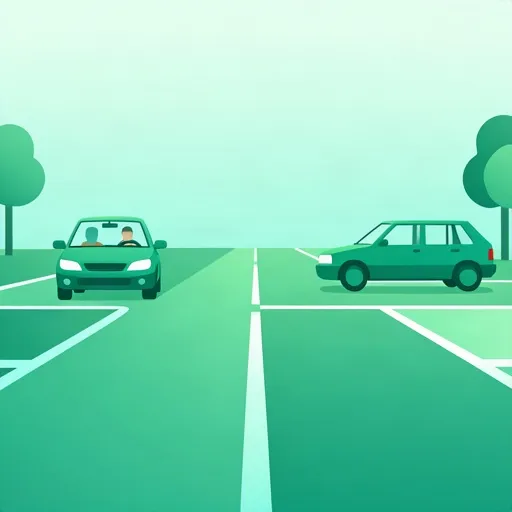
In Italy, the default rule for all intersections where no specific signs are present is the precedenza a destra, or priority to the right. This means that when two vehicles are about to occupy an intersection and their paths might intersect, the driver approaching from the left must yield to the vehicle approaching from the right. This rule applies universally, regardless of the relative sizes of the roads or the visual appearance of the junction.
A common mistake is the belief that the road forming the top of the "T" has automatic priority over the road forming the stem. In the eyes of the law, if the intersection is not regulated by specific signs like a "Stop," "Yield," or "Priority Road" sign, it is considered a junction of equal importance. Therefore, if you are driving on the stem of the T, you are legally required to grant priority to any vehicle approaching from either the left or the right on the cross-road.
The legal obligation to yield to any vehicle approaching an intersection from your right side when no traffic signs or signals specify otherwise.
One of the most frequent traps in the MIT theory quiz relates to the physical width of the road. Many learners incorrectly assume that a wider road is inherently a "main" road and thus holds the right-of-way over a narrower one. Under Italian legislation, this is categorically false. Unless there is a sign explicitly designating a road as a priority route, all roads entering an unmarked intersection are equal.
Never assume priority based on road surface quality, lane width, or perceived vehicle speed. The only valid indicators of priority are vertical road signs, pavement markings, and, in their absence, the fundamental rule of yielding to the right.
When you encounter an unmarked T-junction, your decision-making process must be methodical. If you are on the stem of the T, you must yield to everyone because you have vehicles to your right and potentially to your left. If you are on the cross-road, you must still be prepared to yield to any vehicle approaching from your right. This logic remains consistent even if it seems counter-intuitive based on the layout.
While this article focuses on unmarked intersections, knowing the signage that overrides the precedenza a destra rule is essential for exam success. These signs legally define the hierarchy and remove the ambiguity of the default rules.
| Scenario | Priority Rule |
|---|---|
| No signs present | Yield to the right (Precedenza a destra) |
| Priority road sign (B1) | You have priority |
| Stop or Yield sign | You must yield to all cross-traffic |
The Italian ministerial exam often uses complex, high-pressure questions to test your understanding of these rules. You might be presented with an image of a T-junction and asked which vehicle passes first. Always check for signs first. If the image shows no signs, the answer is invariably based on who has the libera la destra (free right side).
This article teaches the precedenza a destra rule, Italy's default priority-to-the-right principle that applies at every unmarked intersection, including T-junctions. The critical point is that road size, surface quality, or visual appearance never determines priority—only official signs or the fundamental yielding-to-the-right rule apply. When approaching an unmarked T-junction from the stem, you must yield to all cross-traffic; from the cross-road, you yield only to vehicles on your right. For exam success, always check for B1, P4, and P2 signs first before applying the default rule, and remember that "free right side" is the decisive factor in unmarked scenarios.
A short set of high-value points that capture the most important ideas from this article.
The precedenza a destra rule is the default at every unmarked intersection in Italy—you must yield to any vehicle approaching from your right
Road width, surface quality, lane count, and perceived vehicle importance have no legal bearing on priority at unmarked junctions
If you are driving on the stem of an unmarked T-junction, you must yield to all cross-traffic because vehicles on the cross-road are to your right
Always scan for vertical signs first—B1 (Priority Road), P4 (Stop), and P2 (Give Way) legally override the default precedenza a destra rule
In exam scenarios with no signs visible, priority is determined solely by which vehicle has the right side clear
Precedenza a destra is the universal default rule under the Codice della Strada when no signs or signals regulate an intersection
B1 (Priority Road) grants priority until an end-of-priority sign appears; P4 (Stop) requires a full halt; P2 (Yield) requires slowing but not necessarily stopping
At an unmarked T-junction, the stem road has no inherent priority over the cross-road—treat all arms as equal
The phrase libera la destra (free right side) is the key principle for determining priority in exam questions showing no signs
A Stop sign always requires coming to a complete stop behind the line, unlike a Yield sign which only requires slowing if the path is clear
Assuming a wider or busier road has automatic priority—this is the most common trap in the theory quiz
Forgetting to check for signs and jumping straight to applying precedenza a destra when signs might already determine priority
Believing the road forming the top of the T has inherent priority over the stem—this is legally incorrect
Failing to yield to vehicles on your left when actually on the cross-road at a T-junction—you still yield to your right
Confusing Stop and Give Way signs—the P4 Stop requires a mandatory full stop, while P2 Give Way does not
Article content overview
A short set of high-value points that capture the most important ideas from this article.
The precedenza a destra rule is the default at every unmarked intersection in Italy—you must yield to any vehicle approaching from your right
Road width, surface quality, lane count, and perceived vehicle importance have no legal bearing on priority at unmarked junctions
If you are driving on the stem of an unmarked T-junction, you must yield to all cross-traffic because vehicles on the cross-road are to your right
Always scan for vertical signs first—B1 (Priority Road), P4 (Stop), and P2 (Give Way) legally override the default precedenza a destra rule
In exam scenarios with no signs visible, priority is determined solely by which vehicle has the right side clear
Precedenza a destra is the universal default rule under the Codice della Strada when no signs or signals regulate an intersection
B1 (Priority Road) grants priority until an end-of-priority sign appears; P4 (Stop) requires a full halt; P2 (Yield) requires slowing but not necessarily stopping
At an unmarked T-junction, the stem road has no inherent priority over the cross-road—treat all arms as equal
The phrase libera la destra (free right side) is the key principle for determining priority in exam questions showing no signs
A Stop sign always requires coming to a complete stop behind the line, unlike a Yield sign which only requires slowing if the path is clear
Assuming a wider or busier road has automatic priority—this is the most common trap in the theory quiz
Forgetting to check for signs and jumping straight to applying precedenza a destra when signs might already determine priority
Believing the road forming the top of the T has inherent priority over the stem—this is legally incorrect
Failing to yield to vehicles on your left when actually on the cross-road at a T-junction—you still yield to your right
Confusing Stop and Give Way signs—the P4 Stop requires a mandatory full stop, while P2 Give Way does not
Explore related topics, search based questions, and concepts that learners often look up when studying T-Junction Priority Rules. These themes reflect real search intent and help you understand how this topic connects to wider driving theory knowledge in Italy.
Find clear and practical answers to common questions learners often have about T-Junction Priority Rules. This section helps explain difficult points, remove confusion, and reinforce the key driving theory concepts that matter for learners in Italy.
No. In Italy, the width of a road does not determine priority. At an unmarked junction, the 'precedenza a destra' rule applies equally to all roads regardless of their physical size.
It is the fundamental rule of the Italian Highway Code stating that, at an intersection, you must yield to vehicles arriving from your right, unless specifically indicated otherwise by road signs.
You must treat it as an equal-priority intersection. Any vehicle approaching from the right on the top part of the T has priority over you if you are on the stem of the T, and you must yield accordingly.
If you see a priority road sign (the yellow diamond), it establishes that you have the right of way over all vehicles entering from side roads, overriding the general right-hand priority rule.
Refine your search or explore related Italian driving theory articles to build a stronger foundation for your exam. Dive deeper into specific traffic regulations, road signs, and practical driving scenarios that are essential for passing your official licence test.