
To maintain a valid Italian driving license, every driver must periodically verify their physical and mental fitness through a formal medical examination. This guide clarifies the regulatory standards set by the Codice della Strada, explains when you need to visit a medical commission versus an authorized practitioner, and outlines the age-specific renewal timelines required to keep your driving privileges active.
Article content overview
Obtaining and maintaining a driving license in Italy is not merely a matter of passing the theoretical and practical exams; it is fundamentally tied to your ongoing physical and mental fitness to operate a vehicle safely. The Codice della Strada (Italian Highway Code), specifically under Article 119, mandates that all drivers demonstrate a consistent level of health to ensure they do not pose a danger to themselves or others on the road. Whether you are a new learner or an experienced driver looking to renew your license, understanding these legal obligations is essential for staying compliant with Italian road law.
The Italian system requires every applicant to certify that they are free from any physical or mental condition—including anatomical or functional limitations—that could impede the safe operation of a motor vehicle. This assessment is not a one-time event; it is a recurring requirement that scales with the age of the driver. Authorities utilize these check-ups to verify essential sensory and cognitive faculties, such as vision, hearing, and reaction times, which are critical for navigating complex urban environments or high-speed motorways.
The official certification of physical and mental fitness required by law to obtain, confirm, or review a driving license in Italy. It ensures the driver possesses the necessary health standards to operate a vehicle safely under various traffic conditions.
Failure to meet these standards can result in the denial of a license or the imposition of specific limitations, such as driving only during daylight hours or using vehicles equipped with specialized adaptations. In more severe cases, or when a driver’s health history suggests a potential risk, the case is referred to a specialized medical board.
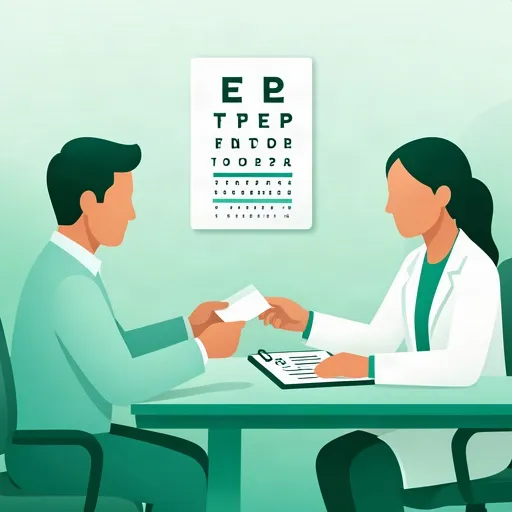
Depending on your health status and age, you will undergo your medical examination at different locations. Most standard renewals are handled by a medico monocratico (a single authorized medical practitioner), often found at local health centers (ASL) or through driving schools that coordinate these visits. This process is straightforward and typically involves a standard check of your visual acuity and general medical history.
However, if you have specific medical conditions, or if you have reached a certain age for specific license categories (like C or D), you may be required to undergo an assessment by the Commissione Medica Locale (CML). This local medical commission is a multi-member board responsible for evaluating more complex cases.
The validity of your Italian driving license is directly linked to your age and the category of vehicle you are licensed to operate. As you grow older, the frequency of these mandatory medical check-ups increases to account for natural changes in health. For standard Category A and B licenses, the following intervals apply under current legislation.
| Age of Driver | Validity Period for Category A & B |
|---|---|
| Up to 50 years | 10 years |
| 50 to 70 years | 5 years |
| 70 to 80 years | 3 years |
| Over 80 years | 2 years |
Always verify the expiry date printed on your physical license. If you are approaching your renewal date, you must begin the process early to avoid a lapse in your driving privileges, as driving with an expired license is a serious offense under the Codice della Strada.
Beyond standard renewals, the Italian system also mandates medical re-evaluation in cases of license revision. This usually occurs if there are significant doubts regarding a driver's continued ability to drive safely, often following a serious traffic violation or an accident where physical or mental incapacity is suspected. If a driver refuses to undergo an ordered medical examination, the consequences can include immediate suspension of the driving license or even more severe legal repercussions under the Codice della Strada.
Italian driving license holders must periodically prove their physical and mental fitness (Idoneità Psicofisica) as mandated by Article 119 of the Codice della Strada. Routine renewals are processed through local health authorities (ASL) or authorized practitioners, while complex cases involving disabilities, professional licenses, or suspected incapacity require assessment by the Commissione Medica Locale (CML). The validity period of Category A and B licenses shortens with age—from 10 years for drivers under 50 to just 2 years for those over 80—with renewal deadlines enforced strictly under Italian traffic law.
A short set of high-value points that capture the most important ideas from this article.
Medical fitness (Idoneità Psicofisica) is a legal requirement under Article 119 of the Codice della Strada, not a one-time exam
Standard renewals for Category A and B licenses are handled by ASL or a medico monocratico (single authorized practitioner)
Complex medical cases, disabilities, and professional license holders (C/D categories) must consult the Commissione Medica Locale (CML)
Renewal intervals shorten progressively with age: 10 years up to 50, then 5 years, 3 years, and 2 years after 80
Driving with an expired license is a serious offense under Italian traffic law
Idoneità Psicofisica is the official certification of physical and mental fitness required to hold a driving license
CML (Commissione Medica Locale) handles complex cases: disabilities, age limit exceedances, and referrals from the Prefect or DTT
Key age thresholds for Category A & B renewals: 50 (5 years), 70 (3 years), 80 (2 years) validity periods
ASL (Azienda Sanitaria Locale) is the local health authority responsible for routine medical certifications
License revision can be ordered after serious violations or accidents where incapacity is suspected
Assuming all renewals go through the same process regardless of age or health status
Confusing ASL (routine renewals) with CML (complex cases) and visiting the wrong authority
Waiting until the printed expiry date to start the renewal process, risking a lapse in driving privileges
Not knowing that professional licenses (C and D categories) have stricter age limits and different requirements
Assuming a standard fitness check is sufficient when CML assessment is legally required for specific conditions
Article content overview
A short set of high-value points that capture the most important ideas from this article.
Medical fitness (Idoneità Psicofisica) is a legal requirement under Article 119 of the Codice della Strada, not a one-time exam
Standard renewals for Category A and B licenses are handled by ASL or a medico monocratico (single authorized practitioner)
Complex medical cases, disabilities, and professional license holders (C/D categories) must consult the Commissione Medica Locale (CML)
Renewal intervals shorten progressively with age: 10 years up to 50, then 5 years, 3 years, and 2 years after 80
Driving with an expired license is a serious offense under Italian traffic law
Idoneità Psicofisica is the official certification of physical and mental fitness required to hold a driving license
CML (Commissione Medica Locale) handles complex cases: disabilities, age limit exceedances, and referrals from the Prefect or DTT
Key age thresholds for Category A & B renewals: 50 (5 years), 70 (3 years), 80 (2 years) validity periods
ASL (Azienda Sanitaria Locale) is the local health authority responsible for routine medical certifications
License revision can be ordered after serious violations or accidents where incapacity is suspected
Assuming all renewals go through the same process regardless of age or health status
Confusing ASL (routine renewals) with CML (complex cases) and visiting the wrong authority
Waiting until the printed expiry date to start the renewal process, risking a lapse in driving privileges
Not knowing that professional licenses (C and D categories) have stricter age limits and different requirements
Assuming a standard fitness check is sufficient when CML assessment is legally required for specific conditions
Explore related topics, search based questions, and concepts that learners often look up when studying Medical Requirements and Renewal. These themes reflect real search intent and help you understand how this topic connects to wider driving theory knowledge in Italy.
Find clear and practical answers to common questions learners often have about Medical Requirements and Renewal. This section helps explain difficult points, remove confusion, and reinforce the key driving theory concepts that matter for learners in Italy.
The renewal interval depends on your age and license category. For a standard Category B license, the validity is 10 years for those under 50, 5 years for ages 50–70, 3 years for ages 70–80, and 2 years for those over 80.
The exam is performed by authorized medical practitioners, such as those at the ASL (Azienda Sanitaria Locale) or through specific designated medical facilities.
The CML is required for specific cases, including drivers with certain health conditions, those who have exceeded specific age thresholds for higher categories, or when there is doubt regarding the driver's fitness.
Yes, demonstrating physical and mental fitness is a mandatory legal prerequisite for both obtaining a new driving license and for all subsequent periodic renewals.
Refine your search or explore related Italian driving theory articles to build a stronger foundation for your exam. Dive deeper into specific traffic regulations, road signs, and practical driving scenarios that are essential for passing your official licence test.