
Driving while distracted by a mobile device is a major cause of accidents and is strictly regulated by Italian law. You will learn the difference between permitted hands-free usage and prohibited manual interaction, as well as the legal repercussions defined by the recent reform. This knowledge is crucial for both passing your theory exam and maintaining a valid driving license.
Article content overview
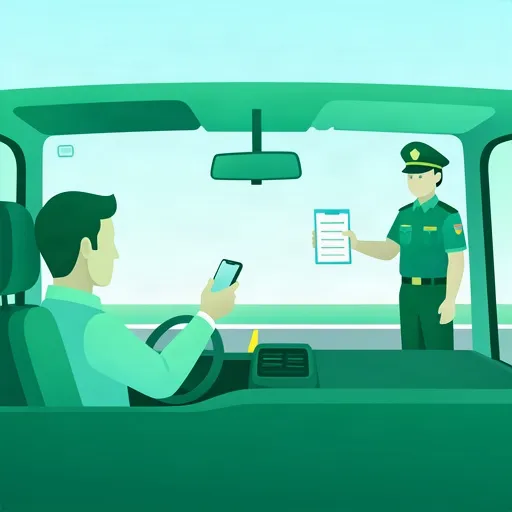
Driving on Italian roads requires your undivided attention. With the increasing reliance on smartphones, the Italian authorities have implemented strict regulations under Article 173 of the Codice della Strada to combat the rise of distracted driving. As a learner preparing for your theory exam, it is vital to understand that holding a device while behind the wheel is not just a safety hazard—it is a serious traffic violation that carries heavy administrative and legal consequences.
Article 173 of the Italian Highway Code explicitly prohibits the use of radiotelephonic devices, smartphones, tablets, or any electronic device that requires the driver to engage their hands while the vehicle is in motion. The law aims to eliminate "sciagurata disattenzione" (disastrous inattention), which is identified as one of the leading causes of road accidents, including those with fatal outcomes. Even glancing at your phone for a few seconds can mean traveling dozens of meters "blind," as your reaction time to sudden hazards like pedestrians or abrupt braking by the car in front significantly increases.
Using a mobile phone while driving is only permitted if the driver utilizes a hands-free device or an earpiece, provided that these do not impede the ability to hear surrounding traffic and emergency signals. You must never hold the device in your hand or cradle it between your head and shoulder while driving.
Italy has adopted a "zero-tolerance" approach toward mobile phone usage. Following recent reforms to the Codice della Strada, the penalties for violating Article 173 have been significantly tightened. For a first-time offense, drivers face substantial monetary fines, the loss of five license points, and the possibility of a mandatory license suspension. This approach is designed to discourage the habit of checking notifications, browsing social media, or texting while navigating urban traffic or high-speed motorways.
The severity of the punishment escalates if the behavior is repeated. The Italian legal system tracks these infractions within a two-year period; a second offense within this timeframe triggers much harsher sanctions, including higher fines and longer periods of license suspension.
| Offense | Fine Amount (approx.) | Point Deduction | License Suspension |
|---|---|---|---|
| First Offense | €422 – €1,697 | 5 points | Mandatory 7 days |
| Repeat (within 2 years) | €644 – €2,588 | 10 points | 1 to 3 months |
Many candidates ask if using a smartphone as a satellite navigation system (GPS) is legal. The law permits the use of a device for navigation purposes, provided it is securely mounted on the dashboard or windshield in a location that does not obstruct the driver's field of vision. Crucially, you must set your route before you begin driving. You are strictly forbidden from touching, tapping, or interacting with the screen while the vehicle is in motion. If you need to change your destination or adjust settings, you must pull over safely in a designated parking area first.
In the Italian driving theory exam, you will encounter questions aimed at identifying whether you understand the gravity of distracted driving. Common traps include questions about whether it is acceptable to use a phone while stopped at a red light or in a traffic jam; the correct answer is always that you must remain focused on the road, as the vehicle is still considered "in traffic" even when stationary.
Any activity that diverts the driver's attention from the primary task of driving safely, including the use of mobile devices, eating, or adjusting complex infotainment systems while the vehicle is in motion.
Italian law under Article 173 of the Codice della Strada strictly prohibits manual use of mobile phones while driving, permitting only hands-free devices that do not impair hearing. The 2021 reform introduced escalating penalties, with first-time offenders facing fines up to €1,697 and 5-point deductions, while repeat offenses within two years can result in fines up to €2,588, 10-point deductions, and license suspension lasting up to three months. Navigation via smartphone is allowed if the device is securely mounted and the route is programmed before departure, but touching the screen while driving is forbidden. The vehicle is considered in traffic even when stationary, meaning phone use at traffic lights remains illegal and is a common exam trap.
A short set of high-value points that capture the most important ideas from this article.
Holding a mobile phone while driving is strictly prohibited; only hands-free devices or earpieces are permitted under Article 173 of the Codice della Strada
Using a smartphone as a GPS is allowed only if the device is securely mounted and the route is set before driving begins
Drivers face significant penalties including fines up to €2,588, loss of up to 10 points, and license suspension for mobile phone violations
A second offense within two years triggers substantially harsher consequences, including suspension lasting up to three months
The vehicle is considered 'in traffic' even when stationary at a red light, so phone use remains prohibited in these situations
Article 173 prohibits manual interaction with any electronic device while the vehicle is in motion
Hands-free calling is permitted only if the earpiece does not block hearing of emergency signals or surrounding traffic
GPS devices must be positioned where they do not obstruct the driver's field of vision
First offense penalties: €422–€1,697 fine, 5 points deducted, 7-day mandatory suspension
Recidiva (repeat offense within 2 years) results in doubled fines and suspension of 1–3 months
Believing it is acceptable to use a phone while stopped at a red light or in a traffic jam
Thinking a quick glance or brief touch of the phone is negligible and unlikely to be penalized
Assuming holding a phone between head and shoulder counts as hands-free usage
Incorrectly believing that adjusting a GPS route while driving is permissible
Not understanding that the vehicle being stationary does not exempt the driver from mobile phone restrictions
Article content overview
A short set of high-value points that capture the most important ideas from this article.
Holding a mobile phone while driving is strictly prohibited; only hands-free devices or earpieces are permitted under Article 173 of the Codice della Strada
Using a smartphone as a GPS is allowed only if the device is securely mounted and the route is set before driving begins
Drivers face significant penalties including fines up to €2,588, loss of up to 10 points, and license suspension for mobile phone violations
A second offense within two years triggers substantially harsher consequences, including suspension lasting up to three months
The vehicle is considered 'in traffic' even when stationary at a red light, so phone use remains prohibited in these situations
Article 173 prohibits manual interaction with any electronic device while the vehicle is in motion
Hands-free calling is permitted only if the earpiece does not block hearing of emergency signals or surrounding traffic
GPS devices must be positioned where they do not obstruct the driver's field of vision
First offense penalties: €422–€1,697 fine, 5 points deducted, 7-day mandatory suspension
Recidiva (repeat offense within 2 years) results in doubled fines and suspension of 1–3 months
Believing it is acceptable to use a phone while stopped at a red light or in a traffic jam
Thinking a quick glance or brief touch of the phone is negligible and unlikely to be penalized
Assuming holding a phone between head and shoulder counts as hands-free usage
Incorrectly believing that adjusting a GPS route while driving is permissible
Not understanding that the vehicle being stationary does not exempt the driver from mobile phone restrictions
Explore related topics, search based questions, and concepts that learners often look up when studying Italian Mobile Phone Driving Rules. These themes reflect real search intent and help you understand how this topic connects to wider driving theory knowledge in Italy.
Find clear and practical answers to common questions learners often have about Italian Mobile Phone Driving Rules. This section helps explain difficult points, remove confusion, and reinforce the key driving theory concepts that matter for learners in Italy.
No. You cannot manually interact with a device while driving. Even if mounted, you must not touch the screen or use the device in a way that requires manual input.
You face a significant administrative fine, the deduction of 5 license points, and a mandatory license suspension of at least 7 days for a first offense.
Yes, hands-free systems that allow you to keep both hands on the steering wheel and your eyes on the road are legally permitted.
Yes, under current regulations, the violation of Article 173 carries a mandatory period of administrative license suspension.
Refine your search or explore related Italian driving theory articles to build a stronger foundation for your exam. Dive deeper into specific traffic regulations, road signs, and practical driving scenarios that are essential for passing your official licence test.