
Blind spots are areas around your vehicle that cannot be seen directly through your mirrors or typical field of vision. These unseen zones pose significant risks, especially during critical maneuvers like changing lanes or turning. Understanding how to identify and effectively check blind spots is crucial for safe driving in Poland and for successfully passing your theory test.
Theory topic content overview
Read the full theory topic guide for Blind Spots with structured, easy-to-scan content built for learners in Poland. This detailed section explains the exact rule, meaning, traffic context, comparison points, and exam logic behind this Polish driving theory topic so you can study faster, understand the concept more clearly, and avoid common interpretation mistakes on the theory test.
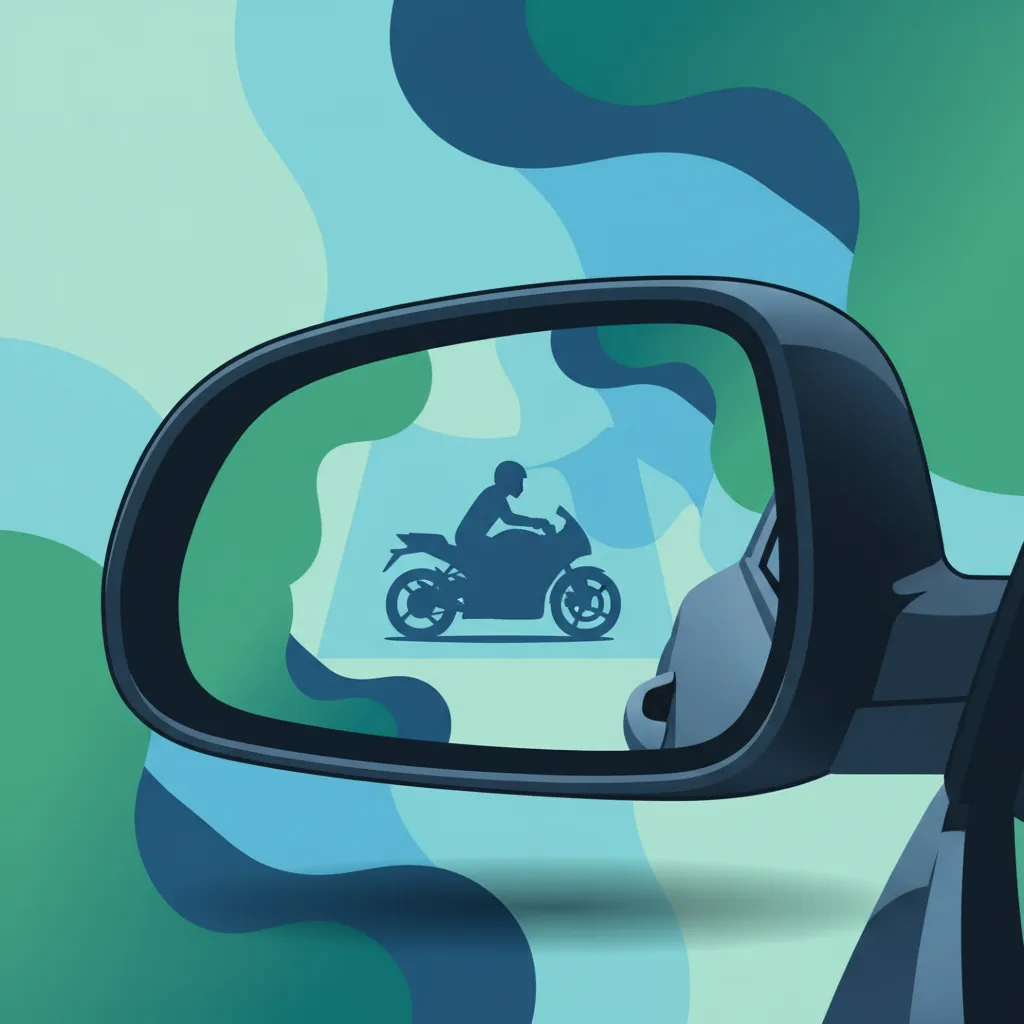
A blind spot is any area around your vehicle that cannot be seen directly through your mirrors (rear-view or side mirrors) or by simply looking forward through your windscreen. These hidden zones are a direct consequence of your vehicle's physical structure, such as door pillars, and the inherent limitations of mirrors, no matter how well they are adjusted.
Essentially, a blind spot is a gap in your field of vision, making it impossible to see certain other road users who may be travelling alongside or slightly behind you.
Ignoring blind spots is a leading cause of collisions, especially during maneuvers where you change your vehicle's lateral position on the road. For drivers in Poland, understanding and actively checking blind spots is not just a matter of safety; it's a fundamental requirement for passing the Polish driving theory exam and for safe navigation on Polish roads.
Since mirrors cannot cover every angle, drivers must actively perform a shoulder check, sometimes referred to as a "blind spot check" or in Polish contexts, a "kontrola ramienia". This is a quick, decisive glance over your shoulder to confirm the area directly beside and slightly behind your vehicle is clear.
The shoulder check is an integral part of the Mirror, Signal, Shoulder Check, Manoeuvre (MSSM) routine:
When to Perform a Shoulder Check:
Several factors can affect the size and danger of blind spots:
It's vital for a Polish driving licence holder to distinguish between mirror checks and blind spot checks:
Both are essential, but one cannot replace the other. Relying solely on mirrors will inevitably lead to missed road users in your blind spots.
Many learner drivers, particularly during their initial training and theory exam preparation in Poland, make predictable errors regarding blind spots:
In the context of the Polish driving theory exam, a significant emphasis is placed on comprehensive observation. Questions will often present scenarios testing your understanding of the correct sequence of checks required before maneuvers. You might see questions with diagrams or descriptions that require you to identify the moment when a blind spot check is absolutely necessary, especially when interaction with other road users like cyclists is implied.
The exam often highlights the dangers to vulnerable road users who are frequently present on Polish roads, reinforcing the need for thorough observation, including the critical shoulder check, to ensure their safety. Mastering this concept is crucial for demonstrating a responsible and aware driving attitude.
To drive safely on Polish roads and confidently pass your driving theory exam, embed the principle of "verify the unseen" into your driving habits. Always assume there could be something in your blind spot. Make the shoulder check a natural and automatic part of every lane change, merge, and turn. This simple, quick glance can prevent serious accidents and prove your readiness as a responsible driver.
Blind spots are hidden zones around your vehicle created by door pillars and mirror limitations, making it impossible to see vehicles, cyclists, or pedestrians directly beside or behind you. The Mirror, Signal, Shoulder Check, Manoeuvre (MSSM) routine is essential before any lateral movement, and a quick shoulder check confirms what mirrors cannot show. Cyclists and motorcyclists are especially at risk in blind spots due to their smaller size, which is why the Polish driving theory exam frequently tests your understanding of proper observation sequences in scenarios involving these vulnerable road users. Larger vehicles have bigger blind spots, and proper mirror adjustment alone never eliminates the need for a physical shoulder check.
A short set of high-value points that capture the most important ideas from this theory explanation.
Blind spots are areas around your vehicle that mirrors and windscreen cannot show, created by vehicle structure and mirror limitations
The MSSM routine (Mirror, Signal, Shoulder Check, Manoeuvre) is the mandatory observation sequence before any lateral movement
Cyclists and motorcyclists are especially vulnerable in blind spots due to their smaller profile and prevalence on Polish roads
Larger vehicles like trucks and buses have significantly larger blind spots extending to the front and sides
A shoulder check is a quick, decisive glance—not a prolonged head turn—and must never be skipped even with perfectly adjusted mirrors
Perform a shoulder check before changing lanes, merging, turning, pulling from the kerb, and overtaking
Vehicle type, mirror adjustment, cargo load, and road user size all affect blind spot danger
Mirror checks give distance overview; shoulder checks confirm the immediate adjacent area mirrors cannot show
Never assume a blind spot is clear based solely on mirror observations
Heavily loaded vehicles or cargo blocking the rear window can expand blind spots significantly
Over-relying on mirrors and believing they eliminate the need for a shoulder check
Forgetting the shoulder check entirely when focused on other aspects of a maneuver
Performing a prolonged or excessive head turn that takes attention away from the road ahead
Failing to specifically anticipate cyclists or motorcyclists in blind spot scenarios
Assuming the blind spot is empty because nothing was visible in the mirrors
Start with a short, direct summary of Blind Spots before reading the full explanation below.
A blind spot is an area outside your vehicle that is not visible in your mirrors or through your front windscreen. These hidden zones are dangerous because they can conceal other road users, such as cars, motorcycles, or cyclists, leading to collisions if not properly checked. Always perform a quick shoulder check before changing lanes, merging, or turning to ensure the area is clear.
Review the most important terms, rule signals, and traffic concepts linked to Blind Spots.
Explore related theory topic pages connected to Blind Spots and continue with the next useful rule explanation.
See the common search queries learners use when trying to understand Blind Spots in Poland.

Continue your preparation by exploring specific Polish driving theory topics in detail. Review each section to reinforce your understanding of traffic rules, road signs, and safe driving practices. Our comprehensive explanations are structured to support your learning journey and help you confidently approach the official driving licence theory exam.
Polish Driving Theory TopicsTheory topic content overview
A short set of high-value points that capture the most important ideas from this theory explanation.
Blind spots are areas around your vehicle that mirrors and windscreen cannot show, created by vehicle structure and mirror limitations
The MSSM routine (Mirror, Signal, Shoulder Check, Manoeuvre) is the mandatory observation sequence before any lateral movement
Cyclists and motorcyclists are especially vulnerable in blind spots due to their smaller profile and prevalence on Polish roads
Larger vehicles like trucks and buses have significantly larger blind spots extending to the front and sides
A shoulder check is a quick, decisive glance—not a prolonged head turn—and must never be skipped even with perfectly adjusted mirrors
Perform a shoulder check before changing lanes, merging, turning, pulling from the kerb, and overtaking
Vehicle type, mirror adjustment, cargo load, and road user size all affect blind spot danger
Mirror checks give distance overview; shoulder checks confirm the immediate adjacent area mirrors cannot show
Never assume a blind spot is clear based solely on mirror observations
Heavily loaded vehicles or cargo blocking the rear window can expand blind spots significantly
Over-relying on mirrors and believing they eliminate the need for a shoulder check
Forgetting the shoulder check entirely when focused on other aspects of a maneuver
Performing a prolonged or excessive head turn that takes attention away from the road ahead
Failing to specifically anticipate cyclists or motorcyclists in blind spot scenarios
Assuming the blind spot is empty because nothing was visible in the mirrors
Start with a short, direct summary of Blind Spots before reading the full explanation below.
A blind spot is an area outside your vehicle that is not visible in your mirrors or through your front windscreen. These hidden zones are dangerous because they can conceal other road users, such as cars, motorcycles, or cyclists, leading to collisions if not properly checked. Always perform a quick shoulder check before changing lanes, merging, or turning to ensure the area is clear.
Review the most important terms, rule signals, and traffic concepts linked to Blind Spots.
Explore related theory topic pages connected to Blind Spots and continue with the next useful rule explanation.
See the common search queries learners use when trying to understand Blind Spots in Poland.
Continue your preparation by exploring specific Polish driving theory topics in detail. Review each section to reinforce your understanding of traffic rules, road signs, and safe driving practices. Our comprehensive explanations are structured to support your learning journey and help you confidently approach the official driving licence theory exam.
Polish Driving Theory TopicsUse this exam-focused revision tip to understand how Blind Spots is likely to appear in theory questions for learners in Poland. This section helps you identify the most testable part of the rule, avoid common traps, and remember the concept more effectively during Polish driving theory exam preparation.
In the Polish driving theory exam, questions often involve images or scenarios where you must identify the correct observation sequence before a maneuver. Remember the 'mirror, signal, shoulder check, maneuver' routine. Pay extra attention to scenarios involving cyclists or motorcyclists; they are frequently used to test your blind spot awareness.
Read direct answers to the most common learner questions about Blind Spots in Poland. This FAQ focuses on rule confusion, practical meaning, comparison with similar concepts, and the exact uncertainties that appear most often in Polish driving theory revision and exam preparation.
A blind spot is an area around your vehicle that you cannot see using your rearview or side mirrors, nor with a quick glance forward. It's a hidden zone where other road users can be completely out of your sight.
Blind spots are dangerous because they can hide other vehicles, motorcycles, or cyclists, especially when you are changing lanes, merging, or turning. Failing to check them can lead to unexpected collisions.
To check your blind spot, perform a quick glance over your shoulder in the direction you intend to move. This 'shoulder check' should be done after checking your mirrors and signaling, just before initiating the maneuver.
No, even with properly adjusted mirrors, some blind spots will always exist due to the physical structure of your vehicle. Mirrors help, but they cannot completely cover these areas, making a shoulder check indispensable.
Blind spots are particularly critical when interacting with smaller road users like cyclists and motorcyclists, who can easily be hidden from view. Given the prevalence of cyclists in Polish cities, drivers must be extra vigilant.
You should always perform a blind spot check before changing lanes, merging onto a road, making a turn where your path might cross another lane, or moving sideways in traffic.
Failing to check your blind spot during a maneuver, particularly lane changes or turns, is considered a serious fault during the Polish driving test and can result in immediate failure or penalty points.
Build custom practice sessions tailored precisely to your needs. Focus on areas requiring improvement, review specific Polish road signs, or master complex traffic rules to ensure full preparation for your official driving license exam.