
Motorways and expressways in Poland are designed for high-speed traffic, requiring specific lane use rules to ensure safety and maintain smooth traffic flow. Mastering these rules helps prevent congestion, reduces the risk of accidents, and ensures predictable driving behaviour. This page explains the key principles of lane positioning, overtaking procedures, and general conduct on multi-lane high-speed roads.
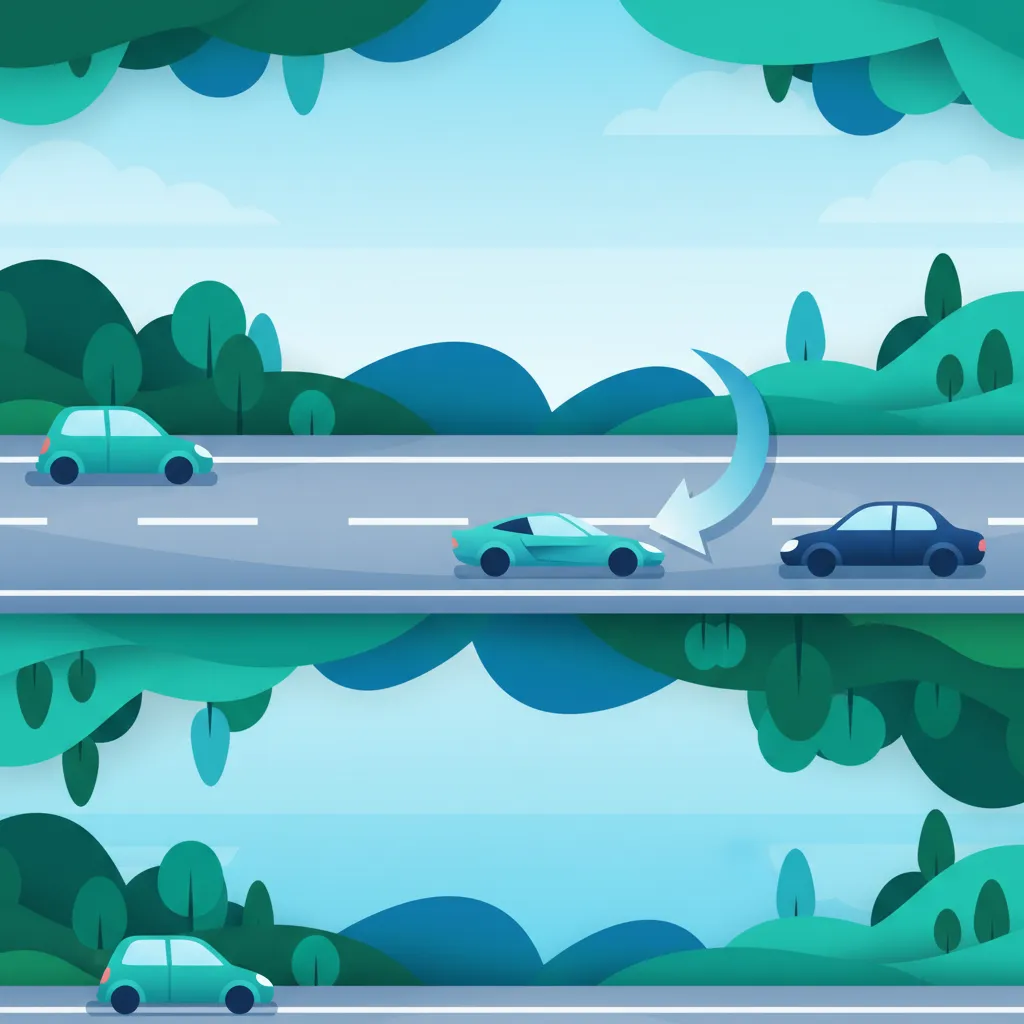
Theory topic content overview
Read the full theory topic guide for Motorway Lane Use Rules with structured, easy-to-scan content built for learners in Poland. This detailed section explains the exact rule, meaning, traffic context, comparison points, and exam logic behind this Polish driving theory topic so you can study faster, understand the concept more clearly, and avoid common interpretation mistakes on the theory test.
Motorways (autostrady) and expressways (drogi ekspresowe) in Poland are designed for high-speed, high-volume traffic. Efficient and safe lane use, often referred to as lane discipline, is fundamental to maintaining smooth traffic flow, preventing congestion, and significantly reducing the risk of accidents. Mastering the rules for motorway lane use in Poland is not only crucial for practical driving but also a frequently tested topic in the Polish driving theory exam.
Motorway lane use refers to the specific rules and safe practices drivers must follow when positioning their vehicle and changing lanes on multi-lane high-speed roads. The core principle on Polish motorways and expressways is the obligatory right-hand driving rule (obowiązek jazdy prawym pasem ruchu): drivers must primarily use the rightmost available lane. Other lanes are generally reserved for specific manoeuvres like overtaking.
Misunderstanding or ignoring lane discipline is a major cause of congestion and dangerous situations on autostrady and drogi ekspresowe.
Obowiązek jazdy prawym pasem ruchu)Unless you are actively overtaking, preparing to overtake, or facilitating traffic merging from an acceleration lane, you must drive in the rightmost available lane. This applies even if the right lane appears empty for long stretches. This fundamental rule is paramount for traffic efficiency and safety.
martwe pole) thoroughly. Signal your intention well in advance.If you are driving in a left lane and you see vehicles attempting to join the motorway or expressway from an acceleration lane (pas włączania), you should, if safe and practical, move into another lane to the left to create space for them to merge. This is a courtesy that significantly improves traffic flow and safety.
Frequent or aggressive lane changes, often called "weaving," are dangerous on high-speed roads. They increase the risk of collisions and create unpredictability for other drivers. Plan your route and lane positioning well in advance, especially when approaching exits.
In Poland, there is a specific rule regarding the minimum safe distance from the vehicle ahead on expressways (drogi ekspresowe):
On motorways and expressways with three or more lanes in one direction, certain vehicles, such as HGVs or vehicles with trailers exceeding specified weights/lengths, may be prohibited from using the leftmost lane. Always observe overhead gantries and road signs for specific local restrictions.
Adverse weather conditions (rain, snow, ice, fog) drastically reduce grip and visibility. In such conditions, you must:
While the general lane use principles are similar, remember the specific "half your speed in metres" rule applies explicitly to expressways (drogi ekspresowe) for minimum distance. Speed limits also differ.
In Poland, you generally overtake on the left. Undertaking (passing a vehicle on its right) is prohibited under normal circumstances on motorways and expressways. Exceptions: Undertaking is permissible in specific situations, such as when traffic is moving slowly or is congested in all lanes, or when you are approaching an exit on the right and correctly positioned in the rightmost lane. However, the default rule remains: overtake on the left.
blokowanie lewego pasa) is remaining in an overtaking lane when the rightmost lane is clear and it would be safe and practical to return to it. This is a common mistake and creates hazards.Blokowanie Lewego Pasa): The most common mistake. Many learners (and experienced drivers) remain in the middle or left lane unnecessarily, even when the right lane is clear. This is inefficient and dangerous.On Polish motorways and expressways, remember the "Right is default, Left is temporary" principle. Your primary position is always the rightmost available lane. Use left lanes solely for overtaking and always return to the right when safe to do so. Critically, internalize the minimum distance rule on expressways (half your speed in metres), as this is a key safety measure and a recurring exam topic. By adhering to these rules, you contribute to a safer and more efficient road network for everyone.
Polish motorway and expressway lane discipline follows the mandatory right-hand driving rule (obowiązek jazdy prawym pasem ruchu), meaning drivers must primarily use the rightmost lane and only use left lanes temporarily for overtaking. The key safety rule on expressways is maintaining at least half your speed in metres as a minimum following distance. Overtaking must always be done on the left, while undertaking is generally prohibited. Lane hogging, insufficient observation, and aggressive lane weaving are the most common and dangerous mistakes learners make on high-speed roads in Poland.
A short set of high-value points that capture the most important ideas from this theory explanation.
The rightmost lane is your default position on Polish motorways and expressways; left lanes are only for overtaking
After completing an overtake, you must return to the rightmost lane as soon as it is safe and practical
On expressways (drogi ekspresowe), the minimum following distance equals half your speed in metres (100 km/h = 50m)
You overtake on the left only; undertaking (passing on the right) is generally prohibited under normal circumstances
Lane hogging (blokowanie lewego pasa) is a dangerous and illegal practice that congests traffic flow
Right is default, left is temporary - keep to the rightmost lane unless actively overtaking
Expressway minimum distance = half your speed in metres (e.g., 120 km/h = 60m)
Always check mirrors and blind spots thoroughly before any lane change
HGVs may be prohibited from using the leftmost lane on multi-lane roads - check overhead gantries
Move left to create space for merging traffic when safe and practical
Lane hogging: remaining in an overtaking lane even when the right lane is clear
Failing to return to the right lane promptly after completing an overtake
Confusing the minimum distance rule or forgetting to apply 'half your speed in metres' on expressways
Insufficient observation before lane changes, leading to sudden unsafe manoeuvres
Aggressive 'weaving' with multiple rapid lane changes to gain small advantages
Start with a short, direct summary of Motorway Lane Use Rules before reading the full explanation below.
On Polish motorways and expressways, drivers should primarily use the rightmost available lane and only move to the left lanes for overtaking or when necessary to facilitate traffic joining from an acceleration lane. After overtaking, you must return to the right lane as soon as it is safe and practical. Maintaining proper lane discipline is essential for safety, reducing congestion, and ensuring predictable driving for all road users, particularly given the higher speeds involved.
Review the most important terms, rule signals, and traffic concepts linked to Motorway Lane Use Rules.
Explore related theory topic pages connected to Motorway Lane Use Rules and continue with the next useful rule explanation.
See the common search queries learners use when trying to understand Motorway Lane Use Rules in Poland.

Continue your preparation by exploring specific Polish driving theory topics in detail. Review each section to reinforce your understanding of traffic rules, road signs, and safe driving practices. Our comprehensive explanations are structured to support your learning journey and help you confidently approach the official driving licence theory exam.
Polish Driving Theory TopicsTheory topic content overview
A short set of high-value points that capture the most important ideas from this theory explanation.
The rightmost lane is your default position on Polish motorways and expressways; left lanes are only for overtaking
After completing an overtake, you must return to the rightmost lane as soon as it is safe and practical
On expressways (drogi ekspresowe), the minimum following distance equals half your speed in metres (100 km/h = 50m)
You overtake on the left only; undertaking (passing on the right) is generally prohibited under normal circumstances
Lane hogging (blokowanie lewego pasa) is a dangerous and illegal practice that congests traffic flow
Right is default, left is temporary - keep to the rightmost lane unless actively overtaking
Expressway minimum distance = half your speed in metres (e.g., 120 km/h = 60m)
Always check mirrors and blind spots thoroughly before any lane change
HGVs may be prohibited from using the leftmost lane on multi-lane roads - check overhead gantries
Move left to create space for merging traffic when safe and practical
Lane hogging: remaining in an overtaking lane even when the right lane is clear
Failing to return to the right lane promptly after completing an overtake
Confusing the minimum distance rule or forgetting to apply 'half your speed in metres' on expressways
Insufficient observation before lane changes, leading to sudden unsafe manoeuvres
Aggressive 'weaving' with multiple rapid lane changes to gain small advantages
Start with a short, direct summary of Motorway Lane Use Rules before reading the full explanation below.
On Polish motorways and expressways, drivers should primarily use the rightmost available lane and only move to the left lanes for overtaking or when necessary to facilitate traffic joining from an acceleration lane. After overtaking, you must return to the right lane as soon as it is safe and practical. Maintaining proper lane discipline is essential for safety, reducing congestion, and ensuring predictable driving for all road users, particularly given the higher speeds involved.
Review the most important terms, rule signals, and traffic concepts linked to Motorway Lane Use Rules.
Explore related theory topic pages connected to Motorway Lane Use Rules and continue with the next useful rule explanation.
See the common search queries learners use when trying to understand Motorway Lane Use Rules in Poland.
Continue your preparation by exploring specific Polish driving theory topics in detail. Review each section to reinforce your understanding of traffic rules, road signs, and safe driving practices. Our comprehensive explanations are structured to support your learning journey and help you confidently approach the official driving licence theory exam.
Polish Driving Theory TopicsUse this exam-focused revision tip to understand how Motorway Lane Use Rules is likely to appear in theory questions for learners in Poland. This section helps you identify the most testable part of the rule, avoid common traps, and remember the concept more effectively during Polish driving theory exam preparation.
When approaching motorway questions in the Polish theory exam, pay close attention to scenarios involving lane discipline and overtaking. Remember the 'keep right unless overtaking' rule and the specific minimum distance requirement on expressways (half your speed in metres). Examiners often test understanding of safe observation and the return to the right lane after an overtake, as well as the dangers of lane hogging.
Read direct answers to the most common learner questions about Motorway Lane Use Rules in Poland. This FAQ focuses on rule confusion, practical meaning, comparison with similar concepts, and the exact uncertainties that appear most often in Polish driving theory revision and exam preparation.
The fundamental rule is to drive in the rightmost available lane. You should only move to a left lane to overtake a slower vehicle or when traffic conditions, such as facilitating merging vehicles, require it. Once you have safely overtaken, you must return to the right lane.
You can use left lanes primarily for overtaking other vehicles. You may also use them if the right lane is blocked or to allow vehicles merging onto the motorway to enter safely. After completing your maneuver, you should return to the rightmost lane suitable for your speed.
Yes, on expressways (drogi ekspresowe), drivers are required to keep a strict minimum distance from the preceding vehicle. This distance should be at least half the speed you are travelling in metres (e.g., if driving at 100 km/h, maintain 50m distance).
When overtaking, you should use the left lane(s), pass the slower vehicle, and then move back to the rightmost lane once you have enough space and visibility. Always ensure you have sufficient visibility and space before overtaking, without obstructing other drivers.
Unnecessarily remaining in an overtaking lane (left lane) on a Polish motorway can impede faster traffic, cause congestion, and increase frustration among other drivers. This practice, known as 'lane hogging', is considered poor driving etiquette and can be dangerous.
If possible and safe, you should move to an adjacent left lane to create space for vehicles merging from the acceleration lane. If changing lanes is not possible, adjust your speed to allow them to merge safely.
Yes, certain large vehicles, such as trucks and buses over a specific weight or length, may be restricted to using only the rightmost lanes on some sections of motorways or expressways. Always pay attention to road signs indicating such restrictions.
Frequent or abrupt lane changes on high-speed roads increase the risk of collisions, as other drivers may not anticipate your movement. It disrupts traffic flow and makes it harder for others to maintain safe distances, especially in Polish motorway conditions.
Build custom practice sessions tailored precisely to your needs. Focus on areas requiring improvement, review specific Polish road signs, or master complex traffic rules to ensure full preparation for your official driving license exam.