
Reaction distance is the journey your vehicle makes while you perceive a hazard, decide to act, and physically move to apply the brakes. In Poland, understanding this interval is fundamental for safe driving and mastering the theory exam, as it directly influences your ability to prevent collisions. This section clarifies the factors that prolong this vital distance and why even a slight delay can have significant consequences.
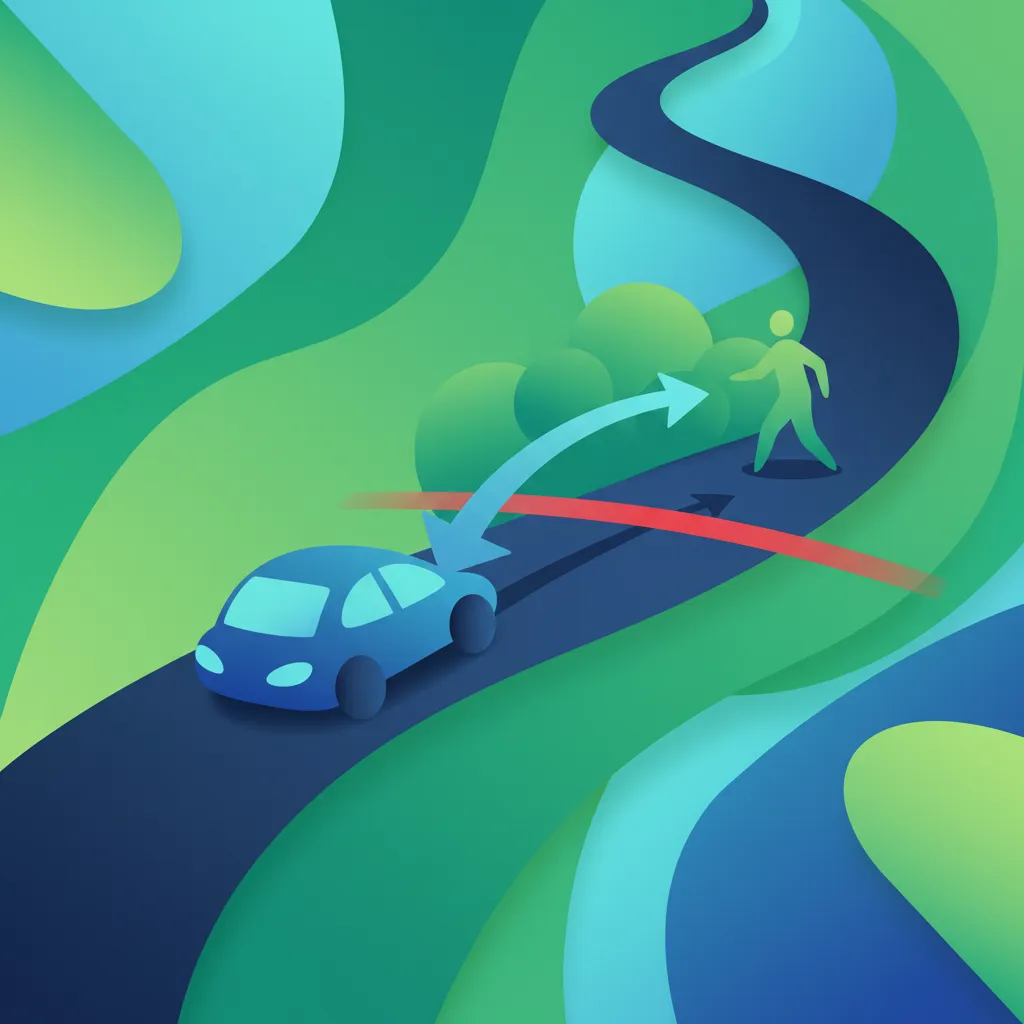
Theory topic content overview
Read the full theory topic guide for Reaction Distance with structured, easy-to-scan content built for learners in Poland. This detailed section explains the exact rule, meaning, traffic context, comparison points, and exam logic behind this Polish driving theory topic so you can study faster, understand the concept more clearly, and avoid common interpretation mistakes on the theory test.
Reaction distance is a fundamental concept in driving theory, particularly vital for the Polish driving licence exam (teoria jazdy) and ensuring road safety on Polish roads. It defines the distance your vehicle travels from the precise moment you detect a hazard until you physically begin to apply the brakes. This often-underestimated segment of your journey is entirely dependent on your speed and your state as a driver, directly influencing your ability to avoid a collision.
Misjudging reaction distance is a leading cause of collisions, especially in unexpected situations. On busy Polish roads, from city centers to high-speed expressways (drogi ekspresowe), every meter counts. Understanding reaction distance helps you:
bezpieczny odstęp).teoria jazdy frequently features questions testing your knowledge of reaction distance, its relationship with speed, and factors that increase it. These questions often highlight the consequences of delayed reactions.Your reaction time, which determines reaction distance, isn't instantaneous. It involves a sequence of mental and physical events:
For an attentive driver, this entire process usually takes about one second. However, this average can vary significantly, leading to a much longer reaction distance.
Several critical factors directly extend your reaction time, consequently increasing the distance your vehicle travels before braking begins:
These terms are often confused but are distinct and crucial for understanding road safety:
Understanding this clear distinction is fundamental for the teoria jazdy and for safe driving in Poland. Remember, the vehicle is still moving at its original speed during the reaction distance phase.
Consider these common scenarios demonstrating the impact of reaction distance:
bezpieczny odstęp (safe following distance), especially the Reguła Trzech Sekund (Three-Second Rule) often taught in Poland, this short reaction interval leaves very little room for error.Learners preparing for the Polish driving theory exam often struggle with these aspects of reaction distance:
The Polish teoria jazdy places a strong emphasis on understanding reaction distance because it's directly tied to proactive safe driving and hazard perception. You will likely encounter questions that:
To drive safely and confidently on Polish roads, always be mindful of reaction distance. It's the "invisible journey" your vehicle takes while your brain and body prepare to react.
bezpieczny odstęp), remembering the Reguła Trzech Sekund as a practical guideline.By understanding and respecting reaction distance, you take a significant step towards becoming a safer and more responsible driver in Poland.
Reaction distance is the distance your vehicle travels from the moment you perceive a hazard until you physically begin braking, typically spanning about one second for an attentive driver. This distance increases linearly with speed, so at 50 km/h you cover approximately 14 meters, while at 120 km/h you cover about 33 meters before braking even starts. The three phases of reaction time—perception, decision, and physical response—are affected by factors like fatigue, distraction, alcohol, and poor visibility, all of which can significantly lengthen this critical distance. Understanding reaction distance is essential because it forms the first component of total stopping distance, which also includes braking distance, and mastering this distinction is crucial for the Polish teoria jazdy exam and safe driving on Polish roads.
A short set of high-value points that capture the most important ideas from this theory explanation.
Reaction distance is the distance your vehicle travels from hazard perception to the start of braking, entirely dependent on your speed and alertness.
At 50 km/h, your vehicle covers approximately 14 meters in one second of reaction time; at 100 km/h, it covers about 28 meters.
Reaction distance increases linearly with speed, meaning doubling your speed doubles your reaction distance.
Fatigue, distraction, alcohol, and poor visibility all dramatically extend reaction time and increase the distance traveled before braking begins.
Reaction distance is only one component of total stopping distance, which also includes the braking distance.
A typical attentive driver takes about one second to react, during which the vehicle continues at full speed.
The Reguła Trzech Sekund (Three-Second Rule) teaches safe following distance by ensuring adequate reaction time.
Reaction distance ends precisely when you begin applying the brakes; braking distance begins at that moment.
At 50 km/h: ~14m; at 90 km/h: ~25m; at 120 km/h: ~33m covered during one second of reaction time.
Driver state (fatigue, distraction, impairment) can double or triple normal reaction time, not just add a few meters.
Assuming braking begins almost instantly, underestimating how far the car travels during that initial second.
Failing to understand the linear relationship—doubling speed doubles reaction distance, not just increases it slightly.
Focusing only on external conditions while ignoring how personal state (fatigue, stress, distraction) critically affects reaction time.
Confusing reaction distance with braking distance on scenario-based exam questions.
Not maintaining sufficient following distance because they don't account for the vehicle traveling at speed during the reaction phase.
Start with a short, direct summary of Reaction Distance before reading the full explanation below.
Reaction distance is the space a vehicle covers from the moment a driver identifies a hazard until they physically begin to apply the brakes. It encompasses perception, decision-making, and physical reaction time. A typical reaction time is about one second, during which the vehicle continues at speed. Factors like fatigue, distraction, or high speed can significantly lengthen this distance, making it a critical component of safe driving in Poland.
Review the most important terms, rule signals, and traffic concepts linked to Reaction Distance.
Explore related theory topic pages connected to Reaction Distance and continue with the next useful rule explanation.
See the common search queries learners use when trying to understand Reaction Distance in Poland.

Continue your preparation by exploring specific Polish driving theory topics in detail. Review each section to reinforce your understanding of traffic rules, road signs, and safe driving practices. Our comprehensive explanations are structured to support your learning journey and help you confidently approach the official driving licence theory exam.
Polish Driving Theory TopicsTheory topic content overview
A short set of high-value points that capture the most important ideas from this theory explanation.
Reaction distance is the distance your vehicle travels from hazard perception to the start of braking, entirely dependent on your speed and alertness.
At 50 km/h, your vehicle covers approximately 14 meters in one second of reaction time; at 100 km/h, it covers about 28 meters.
Reaction distance increases linearly with speed, meaning doubling your speed doubles your reaction distance.
Fatigue, distraction, alcohol, and poor visibility all dramatically extend reaction time and increase the distance traveled before braking begins.
Reaction distance is only one component of total stopping distance, which also includes the braking distance.
A typical attentive driver takes about one second to react, during which the vehicle continues at full speed.
The Reguła Trzech Sekund (Three-Second Rule) teaches safe following distance by ensuring adequate reaction time.
Reaction distance ends precisely when you begin applying the brakes; braking distance begins at that moment.
At 50 km/h: ~14m; at 90 km/h: ~25m; at 120 km/h: ~33m covered during one second of reaction time.
Driver state (fatigue, distraction, impairment) can double or triple normal reaction time, not just add a few meters.
Assuming braking begins almost instantly, underestimating how far the car travels during that initial second.
Failing to understand the linear relationship—doubling speed doubles reaction distance, not just increases it slightly.
Focusing only on external conditions while ignoring how personal state (fatigue, stress, distraction) critically affects reaction time.
Confusing reaction distance with braking distance on scenario-based exam questions.
Not maintaining sufficient following distance because they don't account for the vehicle traveling at speed during the reaction phase.
Start with a short, direct summary of Reaction Distance before reading the full explanation below.
Reaction distance is the space a vehicle covers from the moment a driver identifies a hazard until they physically begin to apply the brakes. It encompasses perception, decision-making, and physical reaction time. A typical reaction time is about one second, during which the vehicle continues at speed. Factors like fatigue, distraction, or high speed can significantly lengthen this distance, making it a critical component of safe driving in Poland.
Review the most important terms, rule signals, and traffic concepts linked to Reaction Distance.
Explore related theory topic pages connected to Reaction Distance and continue with the next useful rule explanation.
See the common search queries learners use when trying to understand Reaction Distance in Poland.
Continue your preparation by exploring specific Polish driving theory topics in detail. Review each section to reinforce your understanding of traffic rules, road signs, and safe driving practices. Our comprehensive explanations are structured to support your learning journey and help you confidently approach the official driving licence theory exam.
Polish Driving Theory TopicsUse this exam-focused revision tip to understand how Reaction Distance is likely to appear in theory questions for learners in Poland. This section helps you identify the most testable part of the rule, avoid common traps, and remember the concept more effectively during Polish driving theory exam preparation.
Many Polish theory exam questions test your understanding of reaction distance, particularly how it's affected by vehicle speed and driver state. Remember that your vehicle travels a significant distance *before* you even start braking, and any distraction or impairment will dramatically increase this initial travel, severely impacting total stopping distance.
Read direct answers to the most common learner questions about Reaction Distance in Poland. This FAQ focuses on rule confusion, practical meaning, comparison with similar concepts, and the exact uncertainties that appear most often in Polish driving theory revision and exam preparation.
Reaction distance is the distance your vehicle travels during the time it takes for you to notice a hazard, decide to brake, and move your foot to the brake pedal. It's the first phase of total stopping distance.
The three phases are: perception (identifying the hazard), decision (choosing to brake), and physical reaction (moving your foot from the accelerator to the brake).
Reaction distance increases directly with speed. If you double your speed, your reaction distance also doubles, because the vehicle covers more ground in the same amount of reaction time.
Factors such as fatigue, distraction (e.g., mobile phone use), alcohol or drug impairment, stress, and poor visibility significantly increase a driver's reaction time and, consequently, the reaction distance.
Reaction distance is the distance traveled *before* braking begins. Braking distance is the distance traveled *after* the brakes are applied until the vehicle stops. Together, they make up the total stopping distance.
Polish driving theory exams often include questions on how various factors, especially speed and driver state, affect reaction time and overall stopping distance. Understanding the concept is key to answering these questions correctly.
Build custom practice sessions tailored precisely to your needs. Focus on areas requiring improvement, review specific Polish road signs, or master complex traffic rules to ensure full preparation for your official driving license exam.