
Slippery roads drastically reduce the friction between your tires and the road surface, making it challenging to control your vehicle. In Poland, drivers frequently encounter diverse conditions, from winter ice and snow to rain and loose gravel. This section explains how to adapt your driving to these hazards, ensuring you maintain stability and avoid dangerous situations.
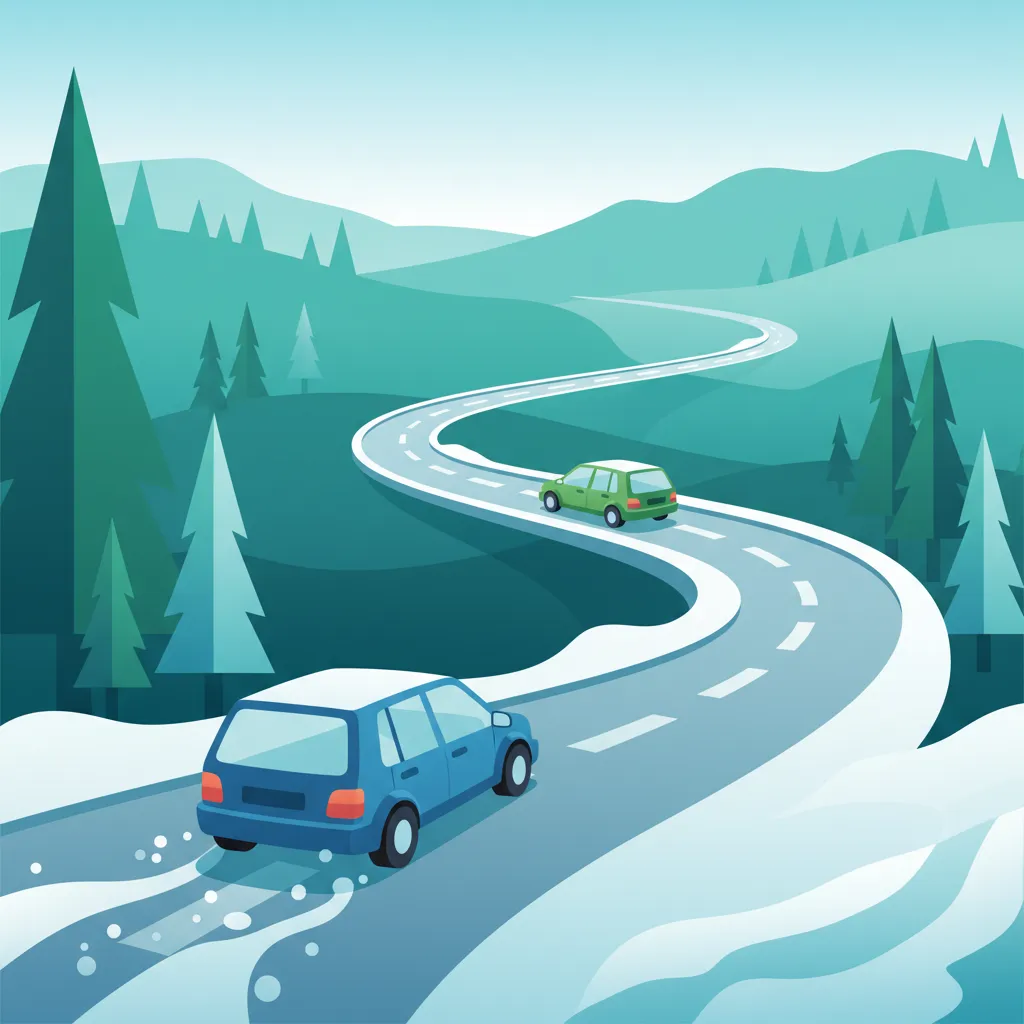
Theory topic content overview
Read the full theory topic guide for Driving in Slippery Conditions with structured, easy-to-scan content built for learners in Poland. This detailed section explains the exact rule, meaning, traffic context, comparison points, and exam logic behind this Polish driving theory topic so you can study faster, understand the concept more clearly, and avoid common interpretation mistakes on the theory test.
Slippery road conditions arise when the friction (or grip) between your vehicle's tyres and the road surface is significantly reduced. This loss of traction makes it much harder for a driver to accelerate, steer, or brake effectively, dramatically increasing the risk of losing control, known as skidding or poślizg in Polish. Understanding the causes and consequences of reduced grip is fundamental for safe driving in Poland, where diverse seasonal weather impacts road conditions.
Poland experiences a wide range of weather conditions throughout the year, from heavy winter snow and ice to torrential summer rains and autumn leaf fall. These conditions make slippery roads a frequent challenge and a critical topic in the Polish driving theory exam. Misjudging grip levels can lead to:
Mastering how to react to and anticipate slippery conditions is not just about passing your exam; it's about ensuring your safety and the safety of others on Polish roads.
Various factors can turn a seemingly normal road into a hazardous, low-traction surface. In Poland, drivers must be particularly aware of:
When roads are slippery, the fundamental forces that allow your car to accelerate, brake, and steer are compromised.
Adapting your driving style is paramount when encountering low-grip conditions. The key principle is smoothness and anticipation.
Modern vehicles are equipped with sophisticated systems designed to enhance safety, especially on low-grip surfaces. Understanding their function is important for Polish drivers:
While these systems are invaluable, they do not defy the laws of physics. They assist, but cannot fully compensate for excessive speed or reckless driving on extremely slippery roads.
Polish driving theory exams often test an understanding of common errors. Be aware of these pitfalls:
For your Polish driving license theory exam, remember that safe driving on slippery roads boils down to anticipation, smooth control, and a significant reduction in speed. Expect questions testing your knowledge of:
Always remember that in Poland, adapting your driving to the prevailing conditions is not just a recommendation, but a crucial element of road safety and a key part of responsible driving.
Slippery road conditions arise from ice, snow, rain, and loose materials that reduce friction between tyres and road surface. In Poland, drivers must master smooth, gentle inputs and significantly reduce speed to maintain control, as braking distances increase dramatically on wet roads and can increase tenfold on ice. Engine braking is the recommended technique for slippery descents because it slows the vehicle evenly without risking wheel lockup. Vehicle systems like ASR help prevent wheel spin during acceleration, but they cannot compensate for excessive speed or sudden driver inputs. The key to safe driving and exam success is anticipation, smooth control, and recognising hazards such as black ice and initial rainfall.
A short set of high-value points that capture the most important ideas from this theory explanation.
Slippery roads drastically reduce tire traction, with braking distance increasing up to 10x on ice compared to dry surfaces
The first rainfall is the most dangerous phase because water mixes with oil, dirt, and rubber residue creating a highly slippery film
Black ice forms invisibly on bridges, shaded areas, and less-travelled roads when temperatures drop around freezing
Engine braking is the safest technique for slippery descents because it applies even force without risking wheel lockup
Electronic safety systems (ASR, ESP, ABS) assist drivers but cannot overcome excessive speed or sudden inputs on low-grip surfaces
Reduce speed significantly on slippery surfaces - speeds of 40 km/h or less are often recommended on icy roads in Polish guidance
Increase following distance substantially to compensate for greatly extended braking distances
All driver inputs must be smooth and gentle - harsh braking, rapid acceleration, or sudden steering cause skids
Scan the road far ahead to anticipate patches of ice, standing water, or debris early
Winter tyres provide significantly better grip on snow and ice compared to summer tyres
Sudden inputs are the primary cause of skidding - harsh braking, sharp steering, or rapid acceleration destroy traction
Over-relying on electronic systems like ABS, ASR, and ESP as if they make the car invincible on slippery roads
Not reducing speed sufficiently for conditions, leaving insufficient time and distance to react
Ignoring that road surfaces (especially bridges) can be frozen even when air temperature is slightly above freezing
Driving in wheel ruts during heavy rain increases the risk of aquaplaning due to accumulated water
Start with a short, direct summary of Driving in Slippery Conditions before reading the full explanation below.
Slippery roads occur when conditions like ice, snow, heavy rain, or loose materials reduce tire grip, increasing the risk of skidding. Drivers must reduce speed, increase following distance, and apply smooth, gentle inputs for steering, braking, and acceleration to prevent loss of control. Proper adaptation is essential for safe driving and passing the Polish theory exam.
Review the most important terms, rule signals, and traffic concepts linked to Driving in Slippery Conditions.
Explore related theory topic pages connected to Driving in Slippery Conditions and continue with the next useful rule explanation.
See the common search queries learners use when trying to understand Driving in Slippery Conditions in Poland.

Continue your preparation by exploring specific Polish driving theory topics in detail. Review each section to reinforce your understanding of traffic rules, road signs, and safe driving practices. Our comprehensive explanations are structured to support your learning journey and help you confidently approach the official driving licence theory exam.
Polish Driving Theory TopicsTheory topic content overview
A short set of high-value points that capture the most important ideas from this theory explanation.
Slippery roads drastically reduce tire traction, with braking distance increasing up to 10x on ice compared to dry surfaces
The first rainfall is the most dangerous phase because water mixes with oil, dirt, and rubber residue creating a highly slippery film
Black ice forms invisibly on bridges, shaded areas, and less-travelled roads when temperatures drop around freezing
Engine braking is the safest technique for slippery descents because it applies even force without risking wheel lockup
Electronic safety systems (ASR, ESP, ABS) assist drivers but cannot overcome excessive speed or sudden inputs on low-grip surfaces
Reduce speed significantly on slippery surfaces - speeds of 40 km/h or less are often recommended on icy roads in Polish guidance
Increase following distance substantially to compensate for greatly extended braking distances
All driver inputs must be smooth and gentle - harsh braking, rapid acceleration, or sudden steering cause skids
Scan the road far ahead to anticipate patches of ice, standing water, or debris early
Winter tyres provide significantly better grip on snow and ice compared to summer tyres
Sudden inputs are the primary cause of skidding - harsh braking, sharp steering, or rapid acceleration destroy traction
Over-relying on electronic systems like ABS, ASR, and ESP as if they make the car invincible on slippery roads
Not reducing speed sufficiently for conditions, leaving insufficient time and distance to react
Ignoring that road surfaces (especially bridges) can be frozen even when air temperature is slightly above freezing
Driving in wheel ruts during heavy rain increases the risk of aquaplaning due to accumulated water
Start with a short, direct summary of Driving in Slippery Conditions before reading the full explanation below.
Slippery roads occur when conditions like ice, snow, heavy rain, or loose materials reduce tire grip, increasing the risk of skidding. Drivers must reduce speed, increase following distance, and apply smooth, gentle inputs for steering, braking, and acceleration to prevent loss of control. Proper adaptation is essential for safe driving and passing the Polish theory exam.
Review the most important terms, rule signals, and traffic concepts linked to Driving in Slippery Conditions.
Explore related theory topic pages connected to Driving in Slippery Conditions and continue with the next useful rule explanation.
See the common search queries learners use when trying to understand Driving in Slippery Conditions in Poland.
Continue your preparation by exploring specific Polish driving theory topics in detail. Review each section to reinforce your understanding of traffic rules, road signs, and safe driving practices. Our comprehensive explanations are structured to support your learning journey and help you confidently approach the official driving licence theory exam.
Polish Driving Theory TopicsUse this exam-focused revision tip to understand how Driving in Slippery Conditions is likely to appear in theory questions for learners in Poland. This section helps you identify the most testable part of the rule, avoid common traps, and remember the concept more effectively during Polish driving theory exam preparation.
In the Polish theory exam, questions about slippery roads often test your understanding of proper driver reactions and vehicle control systems. Remember that sudden actions (braking, steering, acceleration) are your biggest enemy. Focus on smooth inputs and maintaining increased distance, especially when considering systems like ASR.
Read direct answers to the most common learner questions about Driving in Slippery Conditions in Poland. This FAQ focuses on rule confusion, practical meaning, comparison with similar concepts, and the exact uncertainties that appear most often in Polish driving theory revision and exam preparation.
Roads become slippery when substances like water, ice, snow, oil, or loose materials like gravel reduce the friction needed for tires to grip the surface effectively.
In Poland, the initial phase of rainfall is often the most dangerous because rainwater mixes with accumulated oil and dirt on the road, creating a slick film that significantly reduces traction.
'Poślizg' is the Polish term for skidding, which occurs when a vehicle's tires lose traction and it slides uncontrollably. To prevent it, reduce your speed, avoid sudden steering, braking, or acceleration, and maintain a safe following distance.
Yes, engine braking (slowing down by downshifting and using the engine's resistance) is highly recommended on slippery roads in Poland. It provides a smoother, more controlled deceleration than heavy use of the foot brake, reducing the risk of skidding.
Yes, ABS (Anti-lock Braking System) prevents wheels from locking up during braking, allowing steering control. ASR (Acceleration Slip Regulation) prevents drive wheels from spinning during acceleration on low-grip surfaces, both significantly aiding control on slippery roads.
If your vehicle skids, remain calm. Look and steer gently in the direction you want the vehicle to go, avoiding sudden, harsh movements of the steering wheel or pedals. This can help regain traction.
Build custom practice sessions tailored precisely to your needs. Focus on areas requiring improvement, review specific Polish road signs, or master complex traffic rules to ensure full preparation for your official driving license exam.