
Traffic lights are essential for controlling vehicle and pedestrian movement, especially at busy intersections. In Poland, understanding not only the basic red, yellow, and green signals but also their specific nuances and priority rules is crucial. This includes knowing when a green light does not permit entry and how to react safely to a yellow signal to avoid fines and ensure road safety.
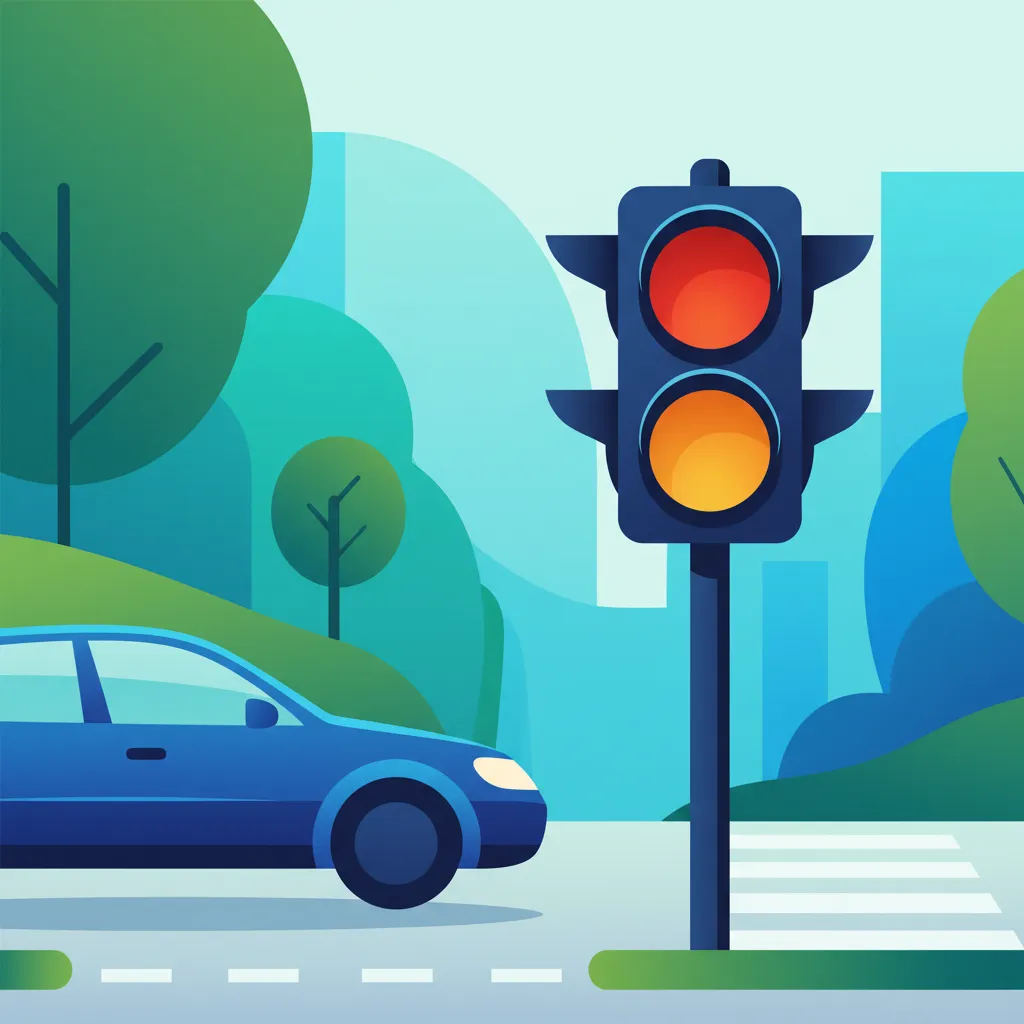
Theory topic content overview
Read the full theory topic guide for Polish Traffic Signals with structured, easy-to-scan content built for learners in Poland. This detailed section explains the exact rule, meaning, traffic context, comparison points, and exam logic behind this Polish driving theory topic so you can study faster, understand the concept more clearly, and avoid common interpretation mistakes on the theory test.
Traffic lights, known in Poland as sygnalizacja świetlna, are essential devices used to control and regulate the flow of vehicles, trams, and pedestrians at intersections, pedestrian crossings, and other conflict points on Polish roads. Their primary purpose is to organize traffic, prevent collisions, and ensure the efficient movement of all road users.
Understanding the precise meaning of each signal and the correct driver response is fundamental for both road safety in Poland and successfully passing the Polish driving theory exam.
Traffic lights are more than just indicators; they are legally binding instructions. Misinterpreting or disregarding traffic signals in Poland can lead to serious accidents, significant fines, and points on your driving license. For Polish driving licence candidates, this topic is heavily tested, particularly the nuances of the yellow light and the restrictions on entering an intersection even on a green light.
In Poland, sygnalizacja świetlna generally takes precedence over road signs that regulate priority, such as 'Give Way' (Ustąp pierwszeństwa) or 'Stop'. However, instructions from a traffic police officer or other authorised personnel always override traffic light signals and road signs. This hierarchy of control is a key concept for Polish drivers.
Polish traffic lights use a specific sequence and interpretation for each colour. It’s vital to understand not just the basic meaning, but also the conditions and exceptions for each signal.
A green light indicates that you may proceed, but with significant conditions in Poland:
green light does not grant you the right to block the intersection. If traffic conditions ahead (within or beyond the intersection) mean you cannot clear the intersection before the light potentially changes, you must not enter. This rule is paramount for preventing gridlock in Polish cities and is a common exam trap.green signal, even if your vehicle's light is green. You also cannot enter if your movement would hinder their exit from the roadway.The yellow light in Poland has a very specific and strict interpretation, often misunderstood by learners:
yellow light fundamentally means prohibition to enter the intersection or pass the signal.yellow light illuminates, your vehicle is so close to the signal that you cannot stop safely before it without harsh braking. In such a situation, you may proceed with extreme caution. This requires a judgment call based on your speed, road conditions, and following traffic.red light will appear shortly.Common Mistake: Many learners incorrectly assume a yellow light simply means "hurry up to cross." In Poland, it's a stop signal unless a sudden stop would be dangerous.
A red light is an absolute prohibition to enter the intersection or pass the signal line. You must stop before the stop line, or if there is no stop line, before the traffic light itself in a position that does not impede traffic or obscure the view of the light for others.
This is a distinctive Polish traffic light phase:
red light, the simultaneous red and yellow signal is a prohibition to enter the intersection or pass the signal.green light is about to appear. Drivers should prepare to move, but must not begin to proceed until the green light alone is displayed.This red and yellow warning phase helps drivers anticipate the signal change and ensures a smoother start of traffic flow once green appears.
Your reaction to traffic lights must always consider the prevailing conditions:
stop safely on a yellow light. High speed reduces your reaction time and increases braking distance.Polish roads require significantly longer stopping distances, influencing your decision to proceed or stop on yellow.traffic light change, requiring increased vigilance.urban traffic in Poland, the don't block the intersection rule on a green light becomes particularly crucial to prevent gridlock.braking distances and different acceleration characteristics, which must be factored in.Traffic lights play a dominant role in priority, but it's essential to understand their hierarchy:
traffic police officer's instructions always take precedence over traffic lights and road signs.traffic lights regulating an intersection override priority signs (such as 'Give Way' or 'Stop') at that same intersection.traffic lights are operational, the right-hand priority rule does not apply. If the lights are out of order, flashing yellow, or not present, then the right-hand rule or priority signs would apply.Polish DriversWarsaw urban traffic. The light ahead turns yellow. You are 20 metres from the stop line.
Kraków with a green light. However, traffic on the other side of the intersection is bumper-to-bumper, and you see there's no space for your vehicle to clear the intersection.
red light in Poznań. The light changes to red and yellow simultaneously.
green only.Polish Learners Make with Traffic LightsPolish driving exam.yellow light as a signal to speed up rather than a prohibition to enter (unless stopping is unsafe).Red and Yellow for Green: Moving off when the red and yellow lights are displayed together, instead of waiting for the solid green.traffic officer's signals because the traffic light is green, or vice-versa.Polish Traffic LightsMastering Polish traffic lights (sygnalizacja świetlna) means more than just knowing red means stop and green means go. It requires proactive observation, judgment, and adherence to specific Polish rules. Always ask yourself: "Can I stop safely on yellow?" and "Can I clear the intersection completely on green without blocking it?" By internalising these principles, you will drive safer and be well-prepared for your Polish driving theory test.
Polish traffic lights (sygnalizacja świetlna) regulate vehicle and pedestrian flow at intersections with specific signal meanings drivers must master. A green light permits entry only if the intersection can be cleared, a yellow light requires stopping unless already too close to do so safely, and the combined red+yellow phase warns of imminent green while prohibiting entry. Traffic lights override priority signs and the right-hand rule when operational, but a traffic officer's directions always take precedence. Understanding these nuances, including the no-blocking rule and pedestrian/cyclist obligations, is essential for safe driving and passing the Polish driving theory exam.
A short set of high-value points that capture the most important ideas from this theory explanation.
A yellow light means you must stop unless your vehicle is already so close that stopping would require harsh braking
Never enter an intersection on green if you cannot clear it completely before the light changes
A simultaneous red and yellow signal prohibits entry even though green is about to appear
Traffic lights override road signs and the right-hand priority rule when operational
Always yield to pedestrians and cyclists who are still crossing even when your light is green
Yellow = stop (prohibition to enter) unless safe stopping is no longer possible
Red+yellow = prepare to move but do not proceed yet
Green light does not give right to block the intersection
A traffic officer's instructions always override traffic lights and road signs
On yellow, your decision depends on speed, road conditions, and following traffic
Entering an intersection on green when there is no space to clear it, causing gridlock
Treating yellow as a signal to accelerate rather than a stop signal
Moving forward when red and yellow are displayed together instead of waiting for solid green
Proceeding on green without checking whether pedestrians or cyclists are still clearing the crossing
Disregarding a traffic officer's hand signals because the traffic light shows green
Start with a short, direct summary of Polish Traffic Signals before reading the full explanation below.
Traffic lights in Poland use red, yellow, and green signals to regulate flow. A red light means stop, a green light means proceed if safe and the intersection is clear, and a yellow light indicates the signal is changing to red, requiring you to stop unless doing so abruptly would be unsafe. A simultaneous red and yellow signal warns that the green light is about to appear, but entry is still prohibited.
Review the most important terms, rule signals, and traffic concepts linked to Polish Traffic Signals.
Explore related theory topic pages connected to Polish Traffic Signals and continue with the next useful rule explanation.
See the common search queries learners use when trying to understand Polish Traffic Signals in Poland.

Continue your preparation by exploring specific Polish driving theory topics in detail. Review each section to reinforce your understanding of traffic rules, road signs, and safe driving practices. Our comprehensive explanations are structured to support your learning journey and help you confidently approach the official driving licence theory exam.
Polish Driving Theory TopicsTheory topic content overview
A short set of high-value points that capture the most important ideas from this theory explanation.
A yellow light means you must stop unless your vehicle is already so close that stopping would require harsh braking
Never enter an intersection on green if you cannot clear it completely before the light changes
A simultaneous red and yellow signal prohibits entry even though green is about to appear
Traffic lights override road signs and the right-hand priority rule when operational
Always yield to pedestrians and cyclists who are still crossing even when your light is green
Yellow = stop (prohibition to enter) unless safe stopping is no longer possible
Red+yellow = prepare to move but do not proceed yet
Green light does not give right to block the intersection
A traffic officer's instructions always override traffic lights and road signs
On yellow, your decision depends on speed, road conditions, and following traffic
Entering an intersection on green when there is no space to clear it, causing gridlock
Treating yellow as a signal to accelerate rather than a stop signal
Moving forward when red and yellow are displayed together instead of waiting for solid green
Proceeding on green without checking whether pedestrians or cyclists are still clearing the crossing
Disregarding a traffic officer's hand signals because the traffic light shows green
Start with a short, direct summary of Polish Traffic Signals before reading the full explanation below.
Traffic lights in Poland use red, yellow, and green signals to regulate flow. A red light means stop, a green light means proceed if safe and the intersection is clear, and a yellow light indicates the signal is changing to red, requiring you to stop unless doing so abruptly would be unsafe. A simultaneous red and yellow signal warns that the green light is about to appear, but entry is still prohibited.
Review the most important terms, rule signals, and traffic concepts linked to Polish Traffic Signals.
Explore related theory topic pages connected to Polish Traffic Signals and continue with the next useful rule explanation.
See the common search queries learners use when trying to understand Polish Traffic Signals in Poland.
Continue your preparation by exploring specific Polish driving theory topics in detail. Review each section to reinforce your understanding of traffic rules, road signs, and safe driving practices. Our comprehensive explanations are structured to support your learning journey and help you confidently approach the official driving licence theory exam.
Polish Driving Theory TopicsUse this exam-focused revision tip to understand how Polish Traffic Signals is likely to appear in theory questions for learners in Poland. This section helps you identify the most testable part of the rule, avoid common traps, and remember the concept more effectively during Polish driving theory exam preparation.
Pay close attention to the yellow light rule and the 'red and yellow' phase in the Polish exam. A common mistake is not knowing when it's permissible to proceed on yellow, or forgetting that a green light doesn't grant you the right to block the intersection. Always assess if you can safely clear the intersection before entering.
Read direct answers to the most common learner questions about Polish Traffic Signals in Poland. This FAQ focuses on rule confusion, practical meaning, comparison with similar concepts, and the exact uncertainties that appear most often in Polish driving theory revision and exam preparation.
In Poland, a red light means you must stop before the stop line or signal. A yellow light indicates the signal is changing to red, requiring you to stop unless you are too close to stop safely. A green light allows you to proceed, provided the intersection is clear and you won't obstruct traffic or pedestrians.
A yellow light means 'prohibition from entering beyond the signal'. You must stop unless, at the moment the yellow light appears, you are so close to the signal that you cannot stop safely without sudden braking. It also indicates that a red light will appear shortly.
When red and yellow lights are displayed together, it means entry beyond the signal is prohibited, but it also indicates that a green light will appear shortly. This serves as a warning for drivers to prepare to move.
No. Even on a green light, you are prohibited from entering the intersection if your vehicle would obstruct the movement of pedestrians or cyclists, or if traffic conditions prevent you from clearing the intersection before the green light ends. This is a critical rule to prevent gridlock.
Traffic lights (sygnały świetlne) take precedence over road signs (znaki drogowe) that regulate the right of way. However, directions given by a traffic police officer or authorized personnel always have the highest priority, overriding both traffic lights and road signs.
A 'sygnalizator' refers to the traffic light device itself. The rules often refer to entering 'za sygnalizator', meaning beyond the traffic light or the stop line associated with it.
Build custom practice sessions tailored precisely to your needs. Focus on areas requiring improvement, review specific Polish road signs, or master complex traffic rules to ensure full preparation for your official driving license exam.