
This lesson focuses on the unique risks and requirements of operating large goods vehicles on rural roads. You will learn to manage narrow lanes, unpredictable surface conditions, and potential animal hazards to ensure safety and regulatory compliance.
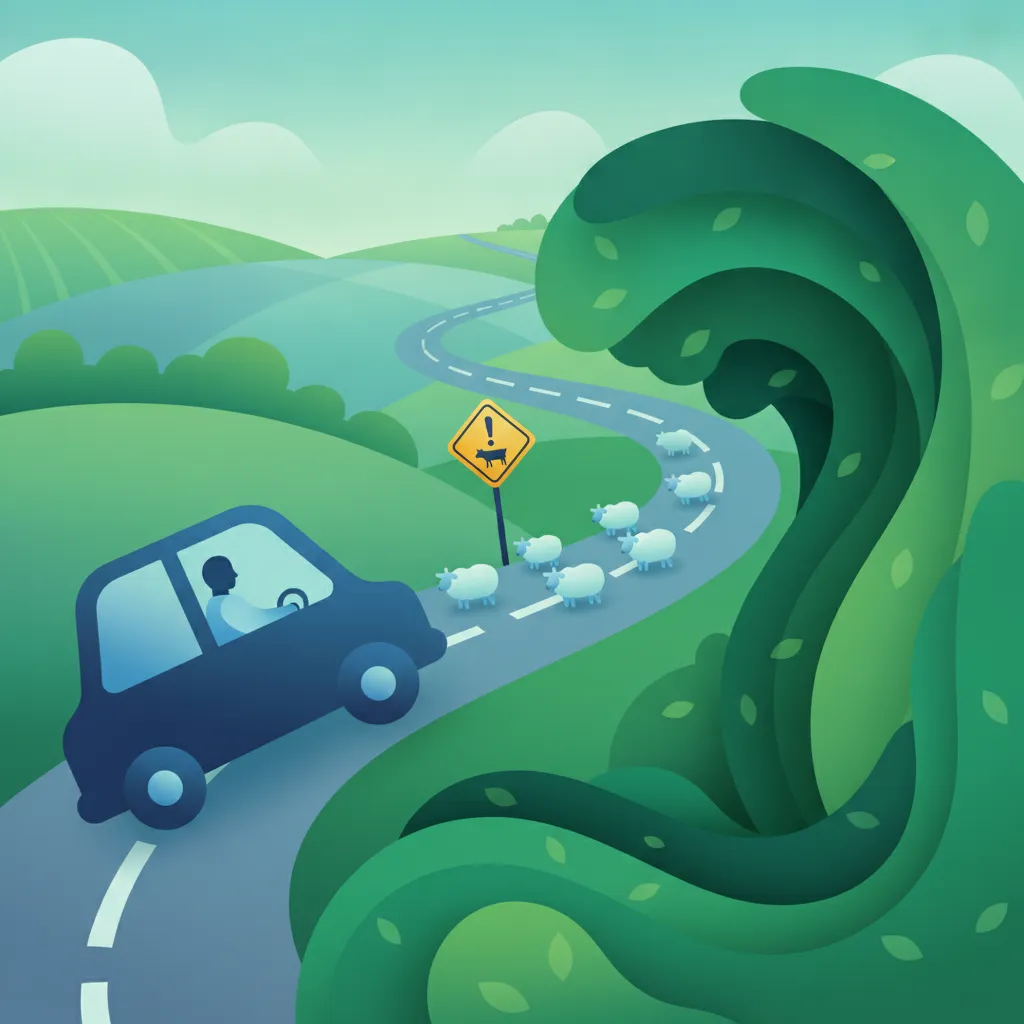
Lesson content overview
Operating heavy goods vehicles (HGVs) such as trucks, lorries, and articulated vehicle combinations (C1, C, C1E, CE license categories) requires a high level of specialized skill. While motorways (otoyollar) and state highways (devlet yolları) offer wide lanes and predictable layouts, rural roads—including provincial roads (il yolları) and village paths (köy yolları)—present a completely different operating environment.
According to the Turkish Highway Traffic Regulation (Karayolları Trafik Yönetmeliği), professional drivers must continuously adapt their speed and road positioning to the physical constraints of the infrastructure. Rural routes in Turkey are characterized by narrow lanes, sharp curves, steep gradients, unpredictable agricultural traffic, and varying road surfaces. This lesson explores the hazards associated with rural driving and details the defensive driving strategies required to navigate these routes safely without compromising cargo stability or vehicle control.
Rural roads lack the structural uniformity of modern highways. They are designed to follow the natural contours of the landscape, resulting in frequent elevation changes, blind crests, and sharp bends. For a driver operating a vehicle with a gross vehicle weight (GVW) exceeding 3.5 tonnes, these physical characteristics significantly reduce the margin for error.
When driving a vehicle of substantial width and length, narrow rural roads demand absolute concentration. Standard trucks can measure up to 2.55 metres in width (excluding mirrors), leaving very little clearance on a typical provincial road.
On roads that lack painted center lines, you must position your vehicle as far to the right as safe driving practices allow. However, you must avoid driving too close to the outer edge.
If your passenger-side tires slip off the paved surface onto a soft banket, the weight of your vehicle can cause the shoulder to collapse. This often results in the vehicle being pulled into the ditch (şarampol), leading to a severe rollover accident.
The unpaved or paved section immediately adjacent to the active driving lane on rural roads, intended for emergency use and pedestrian movement, but often structurally incapable of supporting heavy axle loads.
When two vehicles encounter each other on a narrow rural road where passing is impossible, specific priority rules apply under Article 56 of the Turkish Highway Traffic Regulation.
On steep slopes, the descending vehicle must yield the right-of-way to the ascending vehicle. If passing is still impossible, the descending vehicle must reverse to a safe passing point, unless there is a designated lay-by closer to the ascending vehicle.
Furthermore, when different classes of vehicles meet on narrow roads where passing is difficult, the larger or less maneuverable vehicle must generally yield to the smaller, more agile vehicle to keep traffic flowing safely. Under standard Turkish rules, the hierarchy of yielding (from the vehicle that must give way first to the one that has priority) is:
As a professional truck driver, you are operating a heavy vehicle that sits high up in this hierarchy. This means you must be prepared to yield to passenger cars, minibuses, and light commercial vehicles when encountering tight bottlenecks on rural roads.
Sharp curves are a primary cause of single-vehicle rollover accidents on rural routes. Heavy goods vehicles are highly susceptible to centrifugal forces due to their high center of gravity (CoG), especially when carrying top-heavy or liquid cargo.
When a vehicle enters a turn, centrifugal force pushes it outward, away from the center of the curve. The strength of this force increases quadratically with speed (doubling your speed quadruples the centrifugal force).
Because a truck's center of gravity is much higher than that of a passenger car, this lateral force can easily cause the vehicle to roll over before the tires begin to slide.
Articulated vehicles (CE category) and long rigid trucks experience significant off-tracking during tight turns. Off-tracking occurs when the rear wheels of a vehicle do not follow the same path as the front wheels; instead, they cut inward toward the inside of the bend.
To navigate curves safely, you must complete all braking maneuvers while traveling in a straight line before entering the bend.
Rural roads in Turkey frequently cross agricultural lands and grazing regions. Livestock herds (such as sheep, goats, and cattle) and wild animals represent a major hazard, particularly in rural Anatolia.
Under the Turkish Highway Traffic Regulation, drivers must exercise extreme caution when approaching herds of animals. Animals do not understand traffic dynamics and can behave unpredictably when startled.
When driving at night in rural forested areas, use your high-beam headlights where permitted. If you spot an animal on the road, switch to dipped beams immediately. Intense high beams can blind and temporarily paralyze wild animals, causing them to freeze in the middle of your lane.
The quality of road surfaces in rural Turkey varies significantly. Unlike primary highways, which are constructed with High-Quality Bituminous Hot Mix (BSK), many rural and provincial roads are paved with surface-treated chip seal (sathi kaplama) or consist of loose gravel and dirt.
Loose gravel drastically reduces the coefficient of friction between your vehicle's tires and the road surface. This lack of grip has immediate consequences for heavy vehicle handling:
During agricultural harvesting seasons, tractors and farm machinery often track mud, clay, and wet straw onto rural roads. When mixed with light rain, this creates a slick, grease-like layer on the road surface.
Additionally, during hot Turkish summers, extreme heat can cause the asphalt binder on chip-sealed roads to melt and rise to the surface. This phenomenon, known as bitumen bleeding (asfalt kusması), creates an incredibly slippery, glass-like surface. If rain falls on melted bitumen, traction drops to near-zero levels.
Water runoff, heavy winter frosts, and unregulated truck axle weights lead to severe potholing and edge deterioration on rural roads.
The hazards of rural roads are compounded by environmental and operational changes. Professional drivers must dynamically adjust their driving style based on these variables:
| Operational Variable | Primary Physical Hazard | Required Driver Action |
|---|---|---|
| Wet or Icy Weather | Aquaplaning, severe loss of traction, invisible black ice in shaded mountain valleys. | Reduce speed by at least 50%, increase following distance to at least 6 seconds, and use auxiliary brakes (retarders) with caution to prevent drive-wheel lockup. |
| Mountainous Terrain | Brake fade due to overheating on long, steep descents. | Shift to a lower gear before starting the descent to utilize engine braking. Supplement with your retarder or exhaust brake, saving the service brakes for emergency slowing. |
| Fully Loaded Vehicle | Extremely high center of gravity and significantly increased kinetic energy. | Reduce cornering speeds significantly below the posted advisory limits. Begin braking much earlier for bends and junctions. |
| Dusk and Nighttime | Poor visibility, active wildlife, unlit agricultural vehicles (tractors without working rear lights). | Drive at a speed that allows you to stop safely within the distance illuminated by your headlights. Watch for slow-moving farm machinery. |
Analyzing common errors made by goods vehicle drivers on rural roads highlights the behaviors that lead to catastrophic accidents.
Many drivers rely on the advisory speed limit signs designed for passenger cars. A speed that is perfectly safe for a car can easily exceed the rollover threshold of a fully loaded heavy truck. Always travel well below the posted limit when hauling top-heavy loads.
Drivers often fail to account for the width of their vehicle when negotiating tight passes or narrow bridges. This leads to mirror-to-mirror collisions with oncoming vehicles or forces the passenger-side wheels off the paved road surface.
While engine retarders (such as Jake brakes or hydraulic retarders) are excellent for controlling speed on descents, applying them at high settings on wet, icy, or gravel-strewn rural roads can cause the drive wheels to lock up. This can result in a jackknife (makaslama) for articulated vehicles.
Tractors and harvesters often pull out of farm gates or field access points onto rural roads without warning. These vehicles may be unlit or obscured by dust. Professional drivers must treat every blind field entrance as a potential hazard.
Safely operating a goods vehicle on rural roads requires a shift from passive driving to active hazard anticipation. By understanding the unique physics of heavy vehicles and respecting the limitations of rural infrastructure, you can prevent accidents, protect your cargo, and ensure your safety and the safety of other road users.
This lesson covers the unique hazards of driving heavy goods vehicles on Turkish rural roads, including narrow lanes, soft shoulders (banket), sharp curves, and varying road surfaces. Key learning points include the legal yielding hierarchy under Article 56 for narrow roads, vehicle dynamics such as off-tracking and centrifugal force that increase rollover risk, and the critical importance of completing all braking before entering curves. Learners also gain practical guidance on animal crossings, surface condition management (loose gravel, bitumen bleeding, mud), and environmental adaptations required for wet, mountainous, or nighttime driving. The content prepares candidates specifically for C and CE licence theory exams by addressing defensive driving strategies and common violation patterns.
A short set of high-value points that capture the most important learning from this lesson.
On narrow rural roads, the descending vehicle must yield to the ascending vehicle, and larger vehicles must yield to smaller, more agile ones per Article 56
Soft shoulders (banket) cannot support heavy axle loads and should never be driven on, as this can cause rollover into ditches
Centrifugal force increases quadratically with speed, making heavy vehicles with high centers of gravity highly susceptible to rollover on sharp curves
Off-tracking causes rear wheels to cut inward on left turns and requires the cab to swing into opposing lanes on right turns
All braking must be completed before entering a curve; braking mid-turn can destabilize the load and cause rollover
Explore all units and lessons included in this driving theory course.
The vehicle yielding hierarchy on narrow bottlenecks runs from work machinery (first to yield) down to passenger cars (last to yield)
Braking distances on loose gravel can double or triple compared to dry asphalt, and top-heavy loads require speeds well below posted advisory limits
When encountering animals, stop and wait; use dipped beams at night and never honk, as panicked animals may bolt into your path
Retarders and exhaust brakes must be used cautiously on wet, icy, or gravel surfaces to prevent drive-wheel lockup and jackknifing
Use engine braking on mountain descents and save service brakes for emergencies only to prevent brake fade
Relying on advisory speed limits designed for cars, which can exceed the rollover threshold of a loaded heavy truck
Failing to account for vehicle width on narrow bridges or passes, leading to mirror collisions or driving onto soft shoulders
Applying auxiliary brakes at high settings on slippery rural surfaces, which can lock drive wheels and cause jackknifing
Expecting tractors and farm machinery to have working lights; every blind field entrance should be treated as a potential hazard
Swerving suddenly to avoid potholes, which can shift cargo and destabilize a heavy vehicle
Lesson content overview
A short set of high-value points that capture the most important learning from this lesson.
On narrow rural roads, the descending vehicle must yield to the ascending vehicle, and larger vehicles must yield to smaller, more agile ones per Article 56
Soft shoulders (banket) cannot support heavy axle loads and should never be driven on, as this can cause rollover into ditches
Centrifugal force increases quadratically with speed, making heavy vehicles with high centers of gravity highly susceptible to rollover on sharp curves
Off-tracking causes rear wheels to cut inward on left turns and requires the cab to swing into opposing lanes on right turns
All braking must be completed before entering a curve; braking mid-turn can destabilize the load and cause rollover
Explore all units and lessons included in this driving theory course.
The vehicle yielding hierarchy on narrow bottlenecks runs from work machinery (first to yield) down to passenger cars (last to yield)
Braking distances on loose gravel can double or triple compared to dry asphalt, and top-heavy loads require speeds well below posted advisory limits
When encountering animals, stop and wait; use dipped beams at night and never honk, as panicked animals may bolt into your path
Retarders and exhaust brakes must be used cautiously on wet, icy, or gravel surfaces to prevent drive-wheel lockup and jackknifing
Use engine braking on mountain descents and save service brakes for emergencies only to prevent brake fade
Relying on advisory speed limits designed for cars, which can exceed the rollover threshold of a loaded heavy truck
Failing to account for vehicle width on narrow bridges or passes, leading to mirror collisions or driving onto soft shoulders
Applying auxiliary brakes at high settings on slippery rural surfaces, which can lock drive wheels and cause jackknifing
Expecting tractors and farm machinery to have working lights; every blind field entrance should be treated as a potential hazard
Swerving suddenly to avoid potholes, which can shift cargo and destabilize a heavy vehicle
Explore search topics learners often look for when studying Rural Road Challenges and Navigation. These topics reflect common questions about road rules, driving situations, safety guidance, and lesson level theory preparation for learners in Turkey.
Browse additional driving theory lessons that cover connected traffic rules, road signs, and common driving situations related to this topic. Improve your understanding of how different rules interact across everyday traffic scenarios.
Learn the specific regulations and defensive driving strategies for operating heavy goods vehicles on motorways. This lesson covers lane discipline, motorway speed limits, merging techniques, and vehicle safety protocols required for professional C and CE licence holders navigating high-speed Turkish road networks.
This lesson addresses the specific considerations for goods vehicle operation on highways and expressways, covering speed limits, lane discipline, safe merging, and overtaking. Learners will learn how to adapt to traffic flow, manage heavy vehicle dynamics at higher speeds, and ensure safe operation. The lesson emphasizes the importance of vigilance and proper lane usage to prevent accidents.

This lesson focuses on the unique requirements and best practices for operating passenger vehicles on highways and expressways. Topics include maintaining appropriate speed, adhering to lane discipline, executing safe overtaking maneuvers, and managing merges and exits. Emphasis is placed on ensuring a smooth ride for passengers while integrating safely with faster-moving traffic.
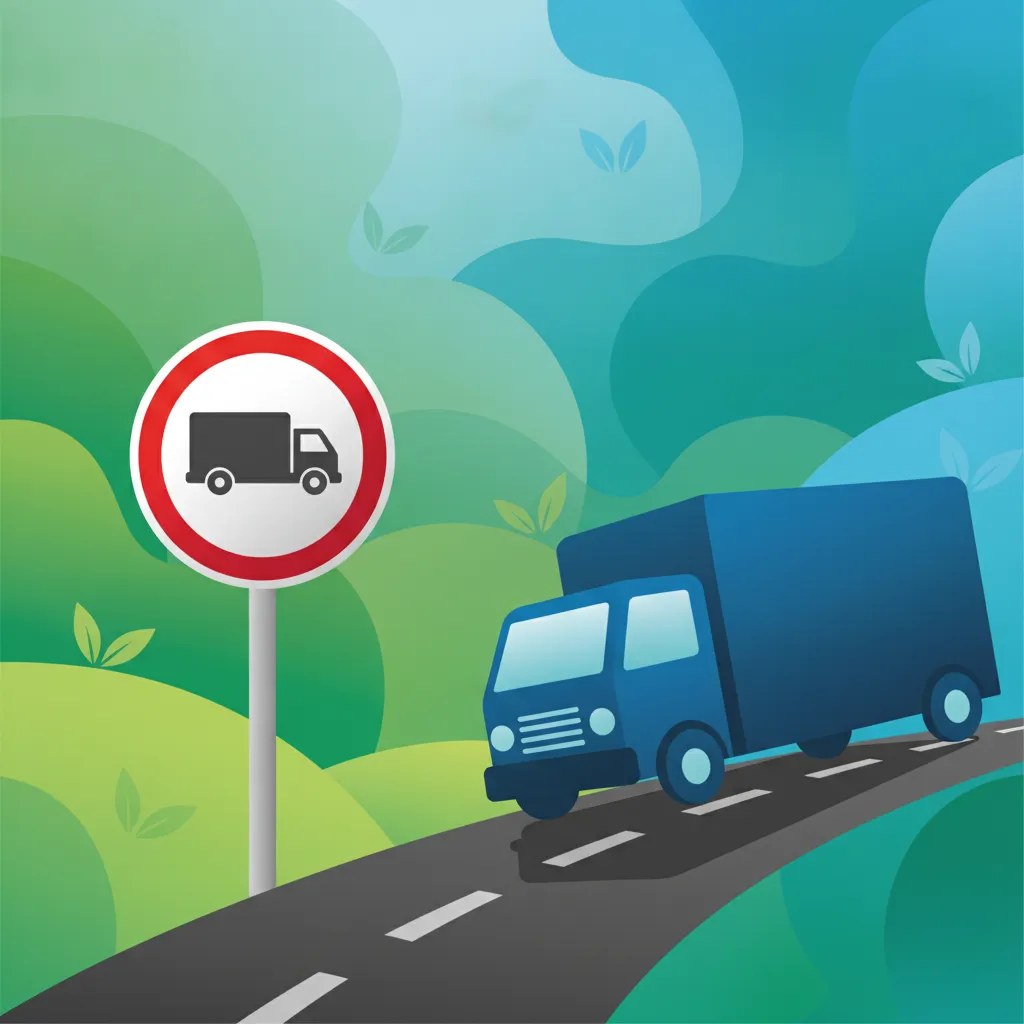
This lesson focuses on traffic signs and road markings that are specifically relevant to goods vehicles in Turkey. Learners will become familiar with signs indicating prohibited routes, weight limits, height restrictions, hazardous material transport, and lane usage regulations. The lesson emphasizes the importance of accurately interpreting these signs to ensure compliance with traffic laws.
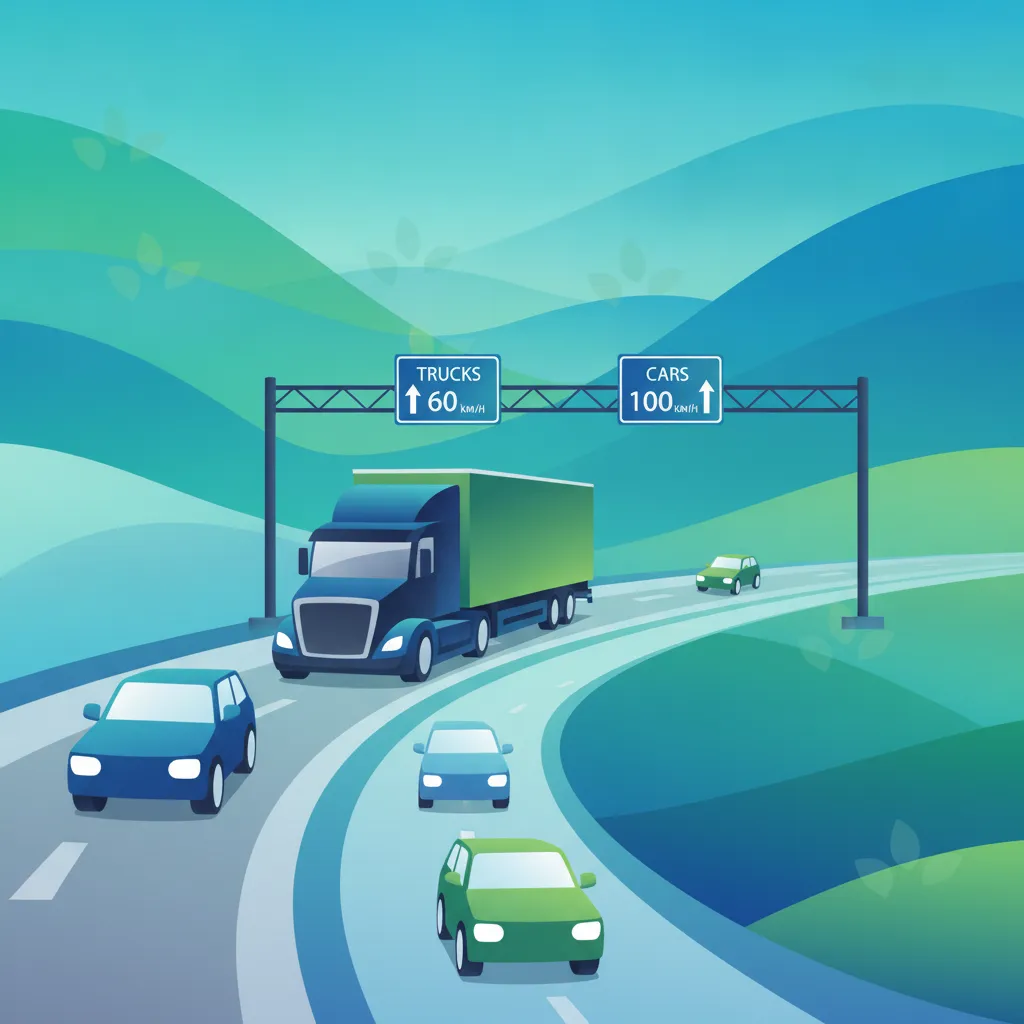
This lesson focuses on speed regulation for goods vehicles, highlighting how vehicle weight, load, and road conditions influence safe operating speeds. Learners will understand legal speed limits for various road types and the necessity of adapting speed to traffic flow and environmental conditions. The lesson also emphasizes the importance of maintaining appropriate speed to ensure vehicle control.
This lesson explains the specific rules, driving etiquette, and safety protocols for operating a vehicle on high-speed Turkish motorways. It covers correct lane usage, overtaking procedures, emergency lane restrictions, and how to maintain consistent high speeds safely. Drivers will learn to avoid dangerous tailgating and sudden lane changes.
This lesson focuses on the various access restrictions imposed on heavy goods vehicles within Turkish road networks. Learners will understand the reasons for restrictions such as low bridge clearances, tunnel usage, construction zones, and urban delivery area limitations. The lesson also covers how to recognize and comply with legal notices and signage indicating restricted commercial zones.

This lesson focuses on the importance of maintaining safe following distances for goods vehicles, taking into account longer braking distances and increased load. Learners will learn how to calculate appropriate gaps based on speed, road conditions, and vehicle dynamics. The lesson emphasizes safe following practices to prevent rear-end collisions and improve overall traffic safety in Turkey.

This lesson focuses on the critical importance of lane discipline and proper lane usage for large goods vehicles. Learners will understand the challenges posed by wider vehicle dimensions, the necessity of maintaining adequate lane occupancy, and the need for precise lane keeping. Emphasis is placed on selecting appropriate lanes, adhering to traffic flow, and ensuring general highway safety.

This lesson focuses on the challenges of driving goods vehicles in adverse weather conditions, such as rain, fog, snow, and strong wind. Learners will explore safe speed management, increased following distances, proper use of headlights and windshield wipers, and techniques to maintain traction. The lesson emphasizes the importance of adapting driving behavior to the specific weather conditions.

This lesson provides a detailed overview of the classification system for goods vehicles in Turkey, focusing on the specific dimensional limits for each category. Learners will become familiar with the maximum allowable length, width, and height for these vehicles, as defined by Turkish law. Understanding these limits is crucial for ensuring compliance with road regulations and avoiding serious violations.
Understand the impact of center of gravity, load distribution, and cargo security on heavy vehicle handling. This guide explains how physical forces affect braking, cornering, and rollover risks for professional drivers operating large vehicles on varying road surfaces in Turkey.
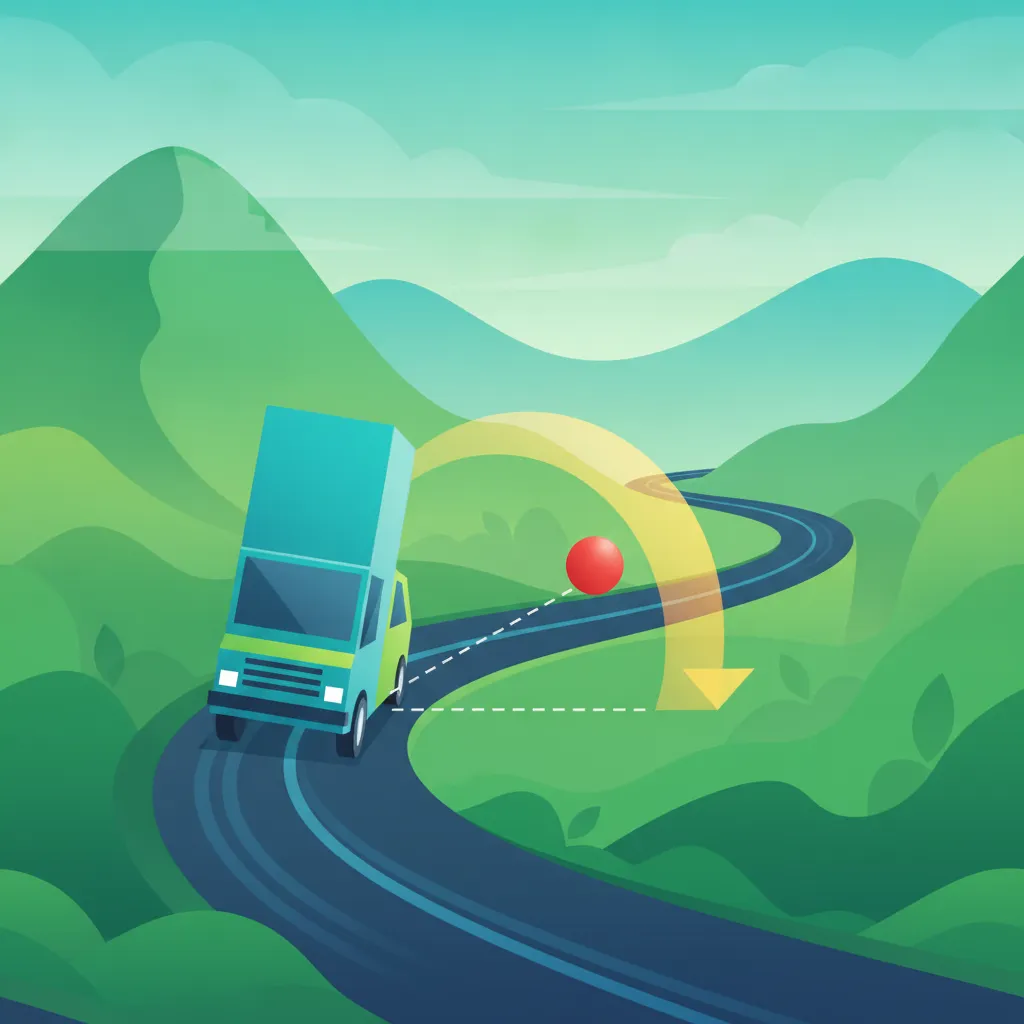
This lesson delves into the concept of centre of gravity and its critical impact on the stability of goods vehicles. Learners will explore how load height and distribution affect side and dynamic stability, particularly during braking, cornering, and evasive maneuvers. The lesson explains the increased rollover risk associated with a high centre of gravity and provides strategies for managing weight.
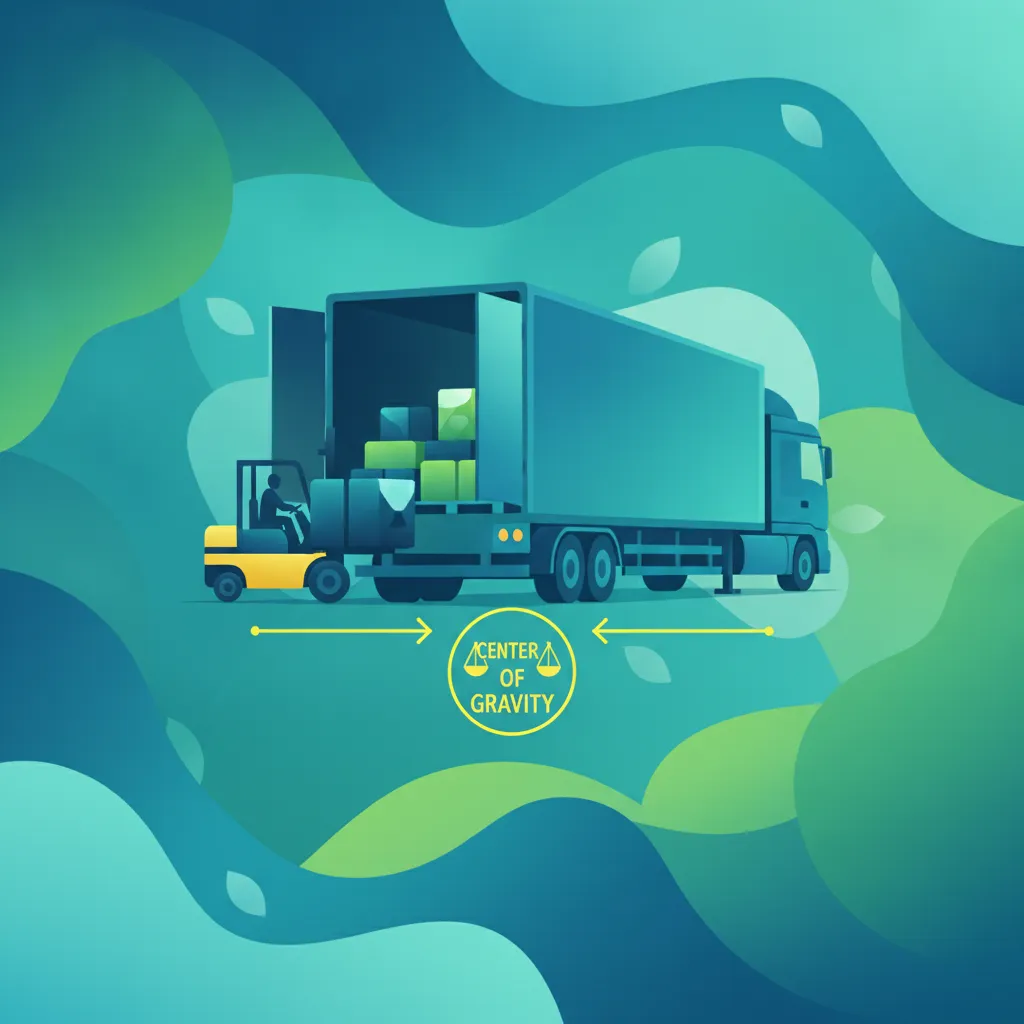
This lesson focuses on the essential principles of load planning and weight distribution for goods vehicles. Learners will understand how to assess cargo weight, determine optimal placement, and maintain a low centre of gravity to ensure vehicle stability. The lesson emphasizes legal load limits, the dangers of overloading, and the impact of uneven load distribution on handling and braking.

This lesson delves into the principles of weight distribution and load limits for goods vehicles, emphasizing the impact on vehicle stability and safety. It examines the concept of Gross Vehicle Weight (GVW) and the legal limits imposed on individual axles to prevent overloading. Learners will explore how improper weight distribution affects the centre of gravity, braking performance, and handling characteristics.

This lesson examines the effects of load dynamics on vehicle stability during acceleration and deceleration. Learners will learn how cargo can shift and affect handling, particularly during sudden speed changes or emergency braking situations. The lesson emphasizes proper load securing, gradual acceleration, and controlled braking to maintain stability and prevent serious accidents.
Find clear answers to common questions learners have about Rural Road Challenges and Navigation. Learn how the lesson is structured, which driving theory objectives it supports, and how it fits into the overall learning path of units and curriculum progression in Turkey. These explanations help you understand key concepts, lesson flow, and exam focused study goals.
The primary risk is the limited road width which reduces the room for error, especially when meeting oncoming vehicles. You must adjust your speed, pull over where safe, and be prepared for soft or unpaved road edges.
You must treat these signs as a warning to actively scan the verges. For a heavy vehicle with long stopping distances, reducing your speed proactively is the best way to avoid a collision if an animal enters the path.
Yes, heavy goods vehicles are subject to specific lower speed limits compared to passenger cars. You must strictly adhere to the designated limits for your vehicle category on rural single-carriageway roads.
On sharp or uneven rural curves, the load's centre of gravity can cause instability. You should reduce speed well before the turn and maintain a steady gear to prevent swaying or tipping.
Use our comprehensive practice search to find exactly the Turkish driving theory questions you need to master. Whether reviewing specific road signs, traffic rules, or first aid scenarios, select your perfect practice set and boost your confidence for the official ehliyet sınavı.