
This lesson guides you through the complexities of lane discipline and correct vehicle positioning for heavy goods vehicles in Turkey. You will learn how to maintain safe occupancy, manage the increased width of your vehicle, and navigate multi-lane roads effectively to ensure professional standards and exam success.

Lesson content overview
Operating a heavy commercial vehicle—such as a rigid truck (C1, C) or an articulated combination (C1E, CE)—demands a level of precision far exceeding that required for passenger cars. Because of their massive physical dimensions, weight, and slower acceleration, large goods vehicles (LGVs) have a profound impact on the safety and efficiency of the road network.
In Turkey, the Turkish Highway Traffic Regulation (Karayolları Trafik Yönetmeliği) sets strict standards for how heavy vehicles must navigate lanes. Proper lane discipline and precise lane occupancy are not just defensive driving concepts; they are legal mandates designed to prevent catastrophic sideswipes, rear-end collisions, and traffic bottlenecks.
To understand why lane discipline is so critical, professional drivers must first understand the relationship between a vehicle's physical footprint and standard road infrastructure.
Under standard Turkish and European regulations, the maximum allowable width for a standard goods vehicle is 2.55 metres. For temperature-controlled (refrigerated) vehicles with specialized thick-wall bodies (frigorifik taşıtlar), this limit is extended slightly to 2.60 metres. These measurements exclude the side-view mirrors, which extend significantly further on both sides.
Now, consider the width of the lanes you will navigate:
Because of these tight tolerances, even minor steering deviations can cause your vehicle or trailer to encroach on adjacent lanes or run off the road shoulder. Encroaching on another lane, even by a few centimetres, forces other road users to swerve or brake suddenly, creating a high risk of multi-vehicle collisions.
Professional driving theory distinguishes between "lane occupancy" and "lane discipline." While often used interchangeably, they represent two distinct aspects of heavy vehicle control.
The physical act of keeping the entirety of your vehicle, including any trailers and cargo overhangs, within the boundary lines of a single, designated traffic lane.
The continuous cognitive process and physical steering adjustments required to maintain a safe, centered, and predictable position within the lane, alongside the correct selection of lanes according to traffic laws and route conditions.
Under normal driving conditions, professional drivers must practice Center Lane Occupancy. This means keeping the tractor and trailer perfectly centered between the left and right lane markings.
However, there are specific, temporary situations where Offset Lane Occupancy is necessary for safety. In these scenarios, you deliberately position your vehicle slightly to the left or right of the center, while still remaining entirely within your lane boundaries.
In all cases, offset positioning must never cause your tires to touch or cross the lane markings unless you are executing a legal lane change or turn.
Maintaining a steady trajectory in a heavy vehicle requires a different set of visual habits than driving a passenger car. Because of the elevated seating position in a cab-over-engine (COE) or conventional truck, drivers often fall into the trap of looking immediately in front of the vehicle's bumper. This leads to continuous, over-corrective steering adjustments, commonly referred to as "weaving."
To maintain excellent lane discipline, you must look far ahead. Train your eyes to focus 15 to 20 seconds ahead of your current position. On a highway at 80 km/h, this translates to looking roughly 330 to 440 metres down the road.
By focusing far ahead, your brain naturally calculates a straight, centered path, and your steering inputs will automatically become smoother and more incremental. Use your peripheral vision and your side mirrors to monitor your position relative to the lane lines closer to the vehicle.
Look far ahead (15-20 seconds down the road) to establish your target trajectory.
Glance at the left side-mirror to check the distance between your trailer's rear dual tires and the left lane marking.
Return your eyes to the road ahead to verify traffic flow and alignment.
Glance at the right side-mirror to check your clearance from the right shoulder or adjacent lane.
Repeat this scanning cycle every 5 to 8 seconds, adjusting your steering smoothly as needed.
The Turkish Highway Traffic Regulation (Karayolları Trafik Yönetmeliği) dictates specific lane restrictions for heavy goods vehicles to maintain traffic flow and minimize the severity of highway accidents.
On standard multi-lane highways, heavy vehicles (trucks, lorries, and road trains) must generally travel in the rightmost lane (en sağ şerit). This keeps the faster middle and left lanes open for passenger vehicles and lighter transport.
On highways with three or more lanes in the same direction, heavy goods vehicles with a maximum authorized mass (MAM) exceeding 3.5 tonnes are strictly prohibited from using the leftmost lane.
Legal Mandate: Under Turkish traffic law, C and CE license holders must only use the leftmost lane on a 3+ lane highway in emergencies or under the direct instruction of traffic authorities/signs. Overtaking must be executed using the middle lane, and the vehicle must return to the rightmost lane as soon as the maneuver is safely completed.
When approaching junctions or roundabouts, professional drivers must select their turning lane much earlier than passenger car drivers. Due to your vehicle's length, changing lanes at the last minute can block multiple lanes of traffic and cause side-swipe collisions.
Maintaining lane discipline is not solely a matter of steering precision; it is also a battle against the laws of physics. LGVs have a high center of gravity (CoG), a large surface area, and dynamic cargo behaviors that can easily pull a vehicle out of its lane.
High-sided vehicles (such as box trailers, tautliners, or double-deck car transporters) act like giant sails. When crossing exposed areas—such as viaducts, coastal highways, or bridges (e.g., the Yavuz Sultan Selim Bridge in Istanbul)—sudden lateral gusts of wind can push your vehicle sideways, forcing an involuntary lane departure.
To combat crosswinds:
If you are transporting liquids in non-baffled tankers, or carrying a hanging meat load, your cargo will shift laterally during cornering or lane adjustments. This is known as liquid surge or dynamic load transfer. If you steer too sharply to maintain lane position, the momentum of the shifting load can roll the truck over or push the prime mover completely out of the lane.
Understanding where drivers commonly fail helps you actively avoid the same mistakes.
This occurs when a driver continuously rides the dashed white line between lanes. It is often caused by fatigue, distractions, or a lack of confidence in managing the vehicle's width. Straddling effectively renders two lanes useless to other traffic and is a primary cause of sideswipe accidents.
When navigating sharp curves on winding Turkish state roads (such as the mountain passes in the Taurus or Black Sea regions), drivers often fail to account for offtracking (the trailer wheels cutting a tighter path than the front steering wheels).
If you turn the steering wheel too early, your trailer wheels will cross the solid center line into oncoming traffic, or drop off the right shoulder of the road.
A professional driver must adapt their lane discipline strategy to the specific environment they are traversing.
| Environment / Road Type | Primary Lane Challenge | Professional Driving Strategy |
|---|---|---|
| Autobans / High-Speed Highways | High-speed wind turbulence and high-velocity passing traffic. | Maintain strict rightmost-lane discipline. Use the middle lane only for overtaking. Avoid rapid steering adjustments when overtaken by high-speed buses. |
| Urban Delivery Routes | Narrow lanes, parked vehicles, delivery vans, and vulnerable road users. | Reduce speed significantly. Drive with a slight left-offset if the right shoulder is crowded with pedestrians/bicycles, provided the left side is clear. |
| Mountain Passes / Declines | Offtracking on hairpins, brake fade risk, and slow uphill speeds. | Utilize crawler lanes (tırmanma şeridi) when loaded and moving slowly. On sharp curves, use a "late apex" steering path to keep the trailer from crossing lane lines. |
| Active Roadworks (Yol Çalışması) | Narrowed lanes, temporary barriers, yellow temporary lane markings. | Drive at reduced speed. Align your vehicle with the temporary yellow markings, not the faded white ones. Expect lane widths of exactly 3.0 metres. |
Why is lane discipline heavily policed and emphasized during professional C/CE licensing?
To maintain the highest standards of safety and professionalism on Turkish roads:
This lesson covers lane discipline requirements for large goods vehicles in Turkey under the Karayolları Trafik Yönetmeliği, emphasizing that LGVs must use the rightmost lane and avoid the leftmost lane on highways with three or more lanes. The 2.55-metre width of standard heavy vehicles demands precise lane occupancy, achievable through the 15-second focal point technique and regular mirror scanning cycles. Drivers must account for physical challenges including crosswinds, offtracking on curves, and liquid surge in tankers. Common violations such as lane straddling and corner cutting cause dangerous situations for both the driver and vulnerable road users sharing the road margins.
A short set of high-value points that capture the most important learning from this lesson.
Heavy goods vehicles must keep to the rightmost lane on multi-lane highways; the leftmost lane is prohibited on roads with three or more lanes in the same direction.
Your vehicle's 2.55-metre width leaves only 22.5–60 centimetres of lateral clearance depending on lane width, demanding constant precise steering control.
Use the 15-second focal point technique—looking 330–440 metres ahead at highway speeds—to maintain smooth, centered lane positioning.
Understand the difference between lane occupancy (keeping within markings) and lane discipline (correct lane selection and continuous adjustment).
Account for physics: crosswinds on high-sided vehicles, offtracking on curves, and liquid surge in tankers can all force unplanned lane departures.
Explore all units and lessons included in this driving theory course.
Maximum vehicle width is 2.55 metres (2.60m for refrigerated vehicles), excluding mirrors; standard lane widths range from 3.75m on highways to 3.00m in urban areas.
Offset lane occupancy is only temporary—bias left when hazards exist on the right shoulder, or right on undivided roads to create buffer from oncoming traffic.
Lane changes for turning must be selected much earlier than for passenger cars due to vehicle length; last-minute changes block multiple lanes.
Offtracking means trailer wheels cut a tighter path than front wheels on curves—turn steering later to keep the trailer within your lane.
Crosswind gusts on bridges and viaducts can push high-sided vehicles sideways; reduce speed and keep both hands firmly on the wheel.
Lane straddling—riding the dashed line between lanes—which creates a two-lane blockage and is a primary cause of sideswipe collisions.
Looking too close to the vehicle's front bumper, leading to continuous over-corrective steering adjustments and visible weaving.
Turning the steering wheel too early on curves, causing offtracking that pushes trailer wheels across the centre line into oncoming traffic.
Failing to return to the rightmost lane immediately after overtaking on a multi-lane highway, violating Turkish traffic law.
Not adjusting speed for crosswind exposure or dynamic cargo loads, which can shift the vehicle's centre of gravity unexpectedly.
Lesson content overview
A short set of high-value points that capture the most important learning from this lesson.
Heavy goods vehicles must keep to the rightmost lane on multi-lane highways; the leftmost lane is prohibited on roads with three or more lanes in the same direction.
Your vehicle's 2.55-metre width leaves only 22.5–60 centimetres of lateral clearance depending on lane width, demanding constant precise steering control.
Use the 15-second focal point technique—looking 330–440 metres ahead at highway speeds—to maintain smooth, centered lane positioning.
Understand the difference between lane occupancy (keeping within markings) and lane discipline (correct lane selection and continuous adjustment).
Account for physics: crosswinds on high-sided vehicles, offtracking on curves, and liquid surge in tankers can all force unplanned lane departures.
Explore all units and lessons included in this driving theory course.
Maximum vehicle width is 2.55 metres (2.60m for refrigerated vehicles), excluding mirrors; standard lane widths range from 3.75m on highways to 3.00m in urban areas.
Offset lane occupancy is only temporary—bias left when hazards exist on the right shoulder, or right on undivided roads to create buffer from oncoming traffic.
Lane changes for turning must be selected much earlier than for passenger cars due to vehicle length; last-minute changes block multiple lanes.
Offtracking means trailer wheels cut a tighter path than front wheels on curves—turn steering later to keep the trailer within your lane.
Crosswind gusts on bridges and viaducts can push high-sided vehicles sideways; reduce speed and keep both hands firmly on the wheel.
Lane straddling—riding the dashed line between lanes—which creates a two-lane blockage and is a primary cause of sideswipe collisions.
Looking too close to the vehicle's front bumper, leading to continuous over-corrective steering adjustments and visible weaving.
Turning the steering wheel too early on curves, causing offtracking that pushes trailer wheels across the centre line into oncoming traffic.
Failing to return to the rightmost lane immediately after overtaking on a multi-lane highway, violating Turkish traffic law.
Not adjusting speed for crosswind exposure or dynamic cargo loads, which can shift the vehicle's centre of gravity unexpectedly.
Explore search topics learners often look for when studying Lane Discipline and Occupancy for Large Vehicles. These topics reflect common questions about road rules, driving situations, safety guidance, and lesson level theory preparation for learners in Turkey.
Browse additional driving theory lessons that cover connected traffic rules, road signs, and common driving situations related to this topic. Improve your understanding of how different rules interact across everyday traffic scenarios.
Learn the essential techniques for navigating turns and managing vehicle length in restricted spaces. This guide explains how to prevent offtracking, avoid trailer encroachment, and execute safe maneuvers in urban and highway environments while adhering to official Turkish driving theory requirements for C and CE license holders.
This lesson explores effective turning strategies for goods vehicles, focusing on managing the larger turn radius required due to vehicle size and load. Learners will understand how to approach corners safely, adjust speed, use signals appropriately, and compensate for off-tracking. The lesson also highlights how load distribution impacts turning dynamics and the importance of vehicle control.
This lesson focuses on the challenges and techniques required when maneuvering goods vehicles in confined spaces such as loading docks, narrow streets, and urban environments. It addresses the importance of spatial awareness, precision driving, and understanding vehicle dimensions to avoid collisions. Learners will explore strategies for effective parking, reversing, and handling blind spots safely.

This lesson delves into specific manoeuvring strategies required when navigating both tight urban environments and open rural roads with large passenger vehicles. Learners will explore techniques for handling narrow streets, tight turns, and intersections, while maintaining safety and efficiency. The content emphasizes planning and execution of manoeuvres based on road conditions and vehicle dimensions.
This lesson focuses on the execution of safe right and left turns with large passenger vehicles, emphasizing the identification and management of blind spots. Learners will understand the correct use of turn signals, proper positioning within the turn, and the importance of thorough observation before and during turning. Strategies for minimizing blind spot exposure are also covered.
This lesson addresses the specific considerations for goods vehicle operation on highways and expressways, covering speed limits, lane discipline, safe merging, and overtaking. Learners will learn how to adapt to traffic flow, manage heavy vehicle dynamics at higher speeds, and ensure safe operation. The lesson emphasizes the importance of vigilance and proper lane usage to prevent accidents.
This lesson focuses on effectively managing road closures and detours that affect goods vehicle routes. Learners will explore strategies for obtaining real-time information, updating navigation systems, and planning alternate routes to maintain efficiency and compliance. Emphasis is placed on safety considerations, communication with dispatch centers, and adhering to traffic management.

This lesson addresses the challenges of safely reversing a goods vehicle, including the identification of blind spots and rear visibility limitations. It covers proper mirror and rearview camera usage, as well as strategies for maintaining awareness of obstacles and the trailer's path. The lesson also emphasizes the importance of reversing alarms and slow, controlled vehicle movements.

This lesson covers the techniques and safety considerations for docking a goods vehicle in loading areas and performing precision parking maneuvers. Learners will learn how to align the vehicle correctly, use reverse gears effectively, and communicate with spotters when necessary. Emphasis is placed on maintaining situational awareness, checking for obstacles, and ensuring secure dock operations.

This lesson focuses on the specific manoeuvring techniques required when operating articulated vehicles or those towing trailers. Learners will understand the dynamics of pivot points, the causes and mitigation of trailer sway, and how to execute turns safely with a trailer attached. Proper coupling checks and trailer length considerations are emphasized for safe operations on public roads.
This lesson examines the specific road space requirements necessary for large goods vehicles to operate safely and efficiently. Topics include the need for adequate lane width, lateral clearance, and turning lanes to accommodate wider and longer vehicles. Learners will explore the proper use of shoulders, overtaking procedures, and the impact of large vehicles on overall road capacity in traffic.
Understand the legal framework for lane usage, speed regulations, and safety protocols for heavy goods vehicles on Turkish motorways. This lesson covers critical topics including overtaking prohibitions, using crawler lanes on gradients, and navigating through construction zones in accordance with the Turkish Highway Traffic Regulation.
This lesson focuses on the various access restrictions imposed on heavy goods vehicles within Turkish road networks. Learners will understand the reasons for restrictions such as low bridge clearances, tunnel usage, construction zones, and urban delivery area limitations. The lesson also covers how to recognize and comply with legal notices and signage indicating restricted commercial zones.
This lesson addresses the specific considerations for goods vehicle operation on highways and expressways, covering speed limits, lane discipline, safe merging, and overtaking. Learners will learn how to adapt to traffic flow, manage heavy vehicle dynamics at higher speeds, and ensure safe operation. The lesson emphasizes the importance of vigilance and proper lane usage to prevent accidents.
This lesson focuses on traffic signs and road markings that are specifically relevant to goods vehicles in Turkey. Learners will become familiar with signs indicating prohibited routes, weight limits, height restrictions, hazardous material transport, and lane usage regulations. The lesson emphasizes the importance of accurately interpreting these signs to ensure compliance with traffic laws.
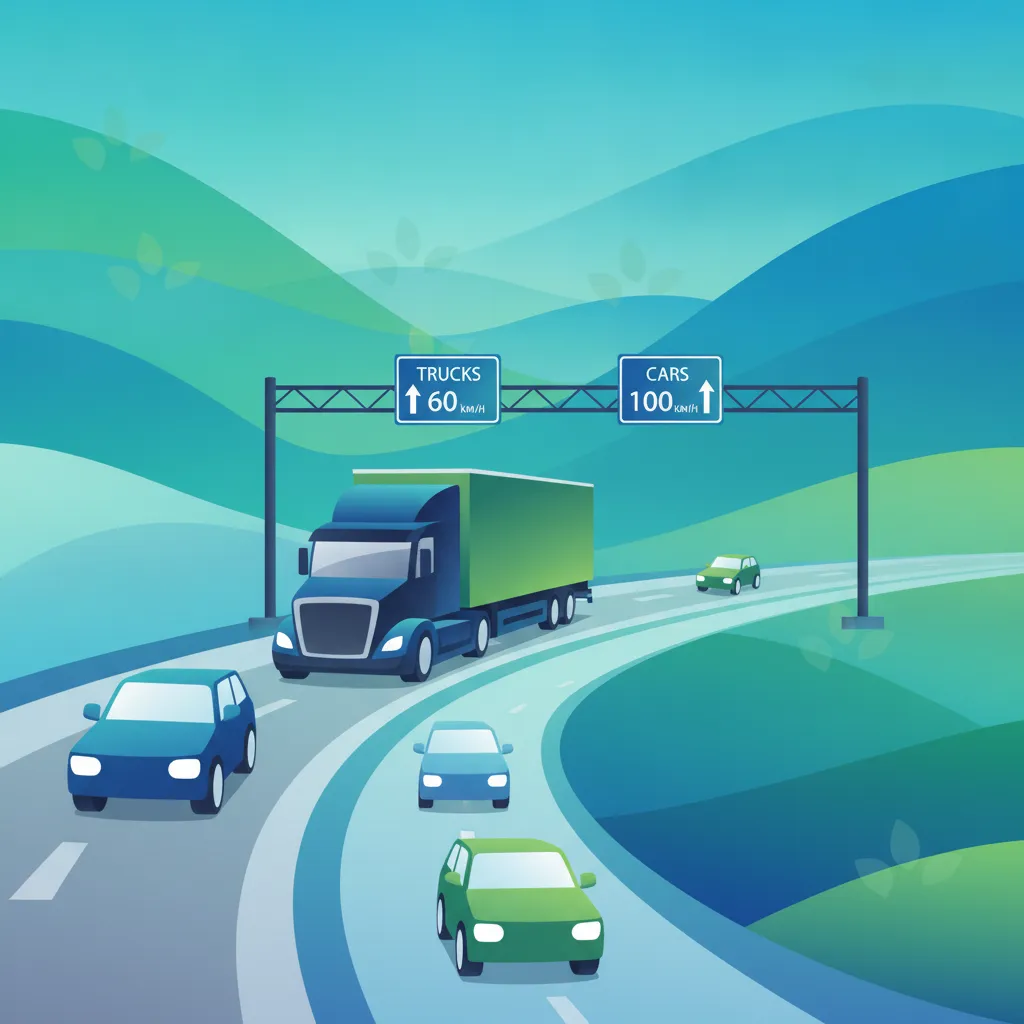
This lesson focuses on speed regulation for goods vehicles, highlighting how vehicle weight, load, and road conditions influence safe operating speeds. Learners will understand legal speed limits for various road types and the necessity of adapting speed to traffic flow and environmental conditions. The lesson also emphasizes the importance of maintaining appropriate speed to ensure vehicle control.
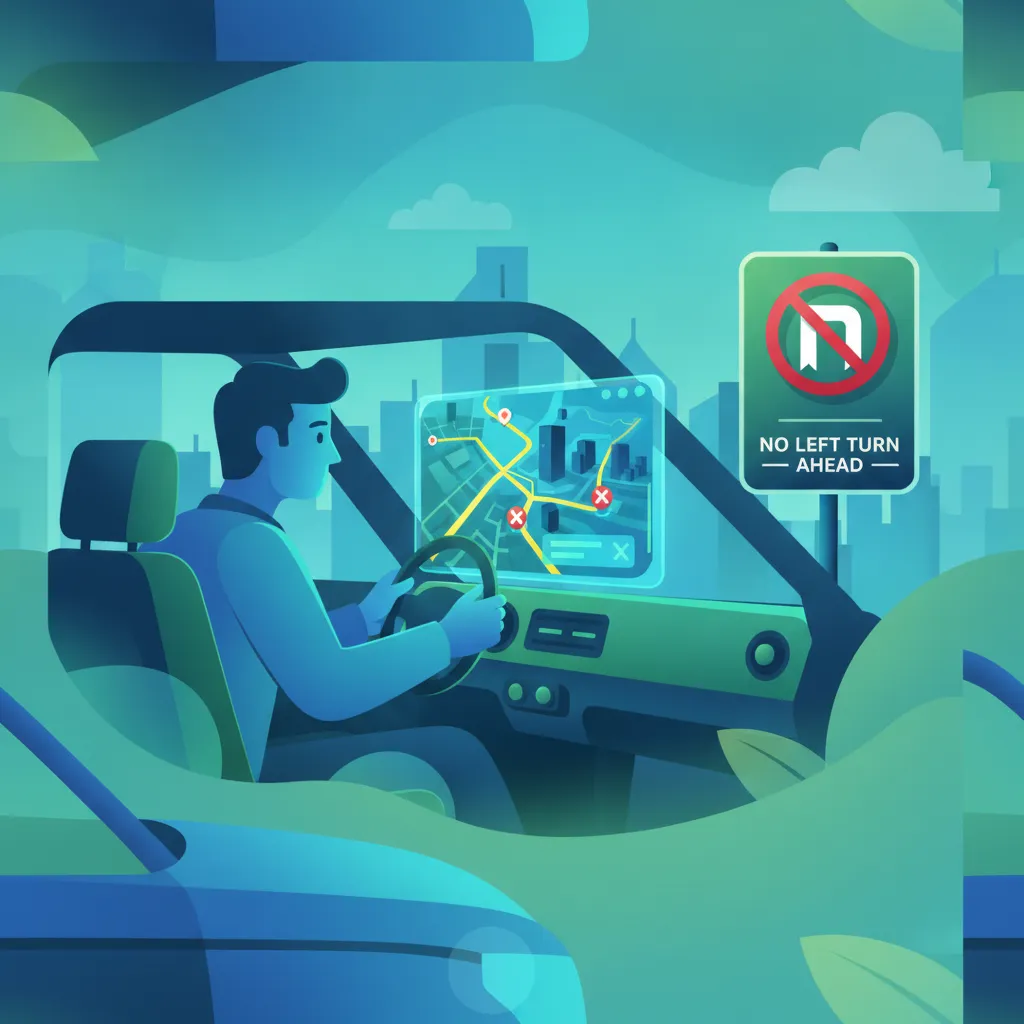
This lesson explores the legal and practical aspects of route planning for goods vehicles, emphasizing the importance of selecting suitable routes that adhere to road restrictions. Learners will learn how to identify roads with weight limits, height clearance, and prohibited zones for heavy vehicles. They will also discover how to use navigation systems and truck-specific GPS effectively.

This lesson provides a detailed overview of the classification system for goods vehicles in Turkey, focusing on the specific dimensional limits for each category. Learners will become familiar with the maximum allowable length, width, and height for these vehicles, as defined by Turkish law. Understanding these limits is crucial for ensuring compliance with road regulations and avoiding serious violations.
This lesson focuses on effectively managing road closures and detours that affect goods vehicle routes. Learners will explore strategies for obtaining real-time information, updating navigation systems, and planning alternate routes to maintain efficiency and compliance. Emphasis is placed on safety considerations, communication with dispatch centers, and adhering to traffic management.
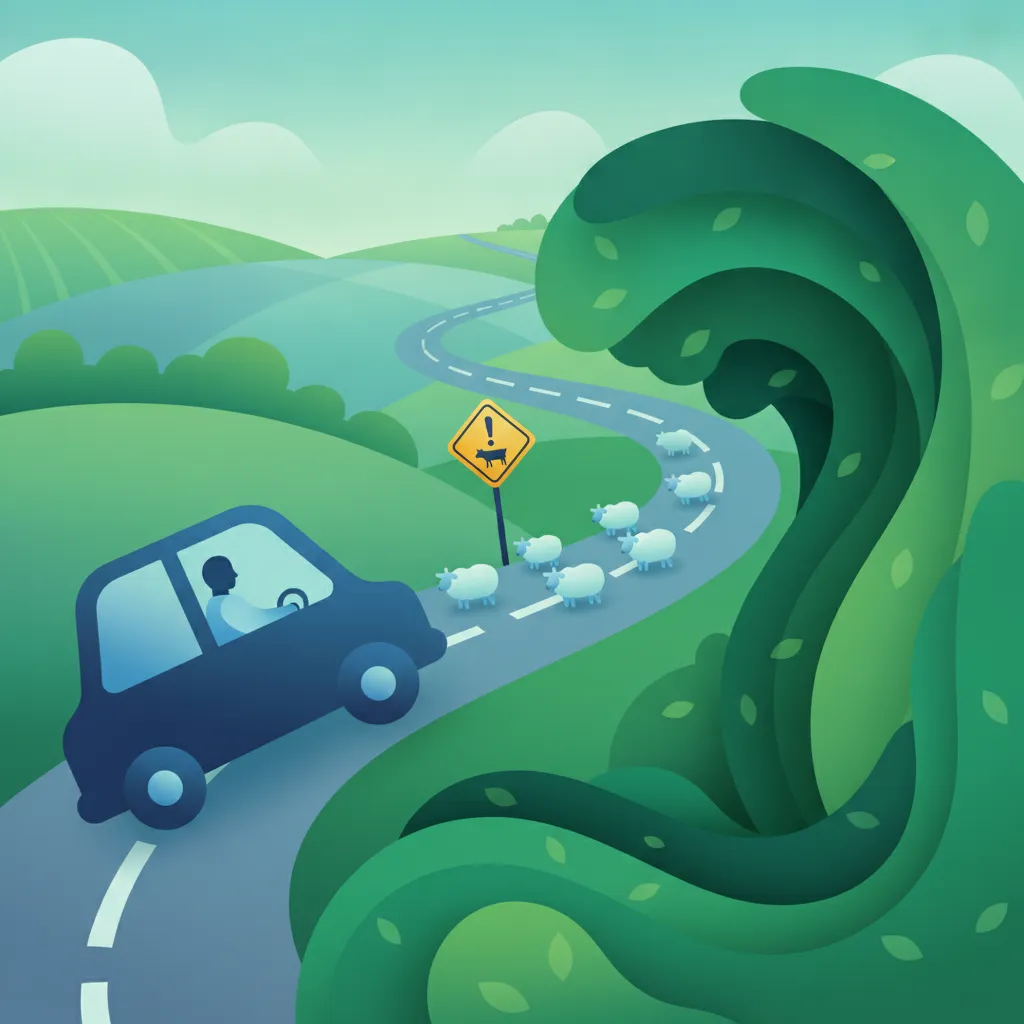
This lesson explores the unique challenges encountered when driving goods vehicles on rural roads, including narrow widths, sharp curves, animal crossings, and varying road surface conditions. Learners will understand the importance of adjusting speed, maintaining vigilance, and respecting road markings. Emphasis is placed on safe navigation practices to mitigate risks associated with rural areas.
This lesson examines the specific road space requirements necessary for large goods vehicles to operate safely and efficiently. Topics include the need for adequate lane width, lateral clearance, and turning lanes to accommodate wider and longer vehicles. Learners will explore the proper use of shoulders, overtaking procedures, and the impact of large vehicles on overall road capacity in traffic.
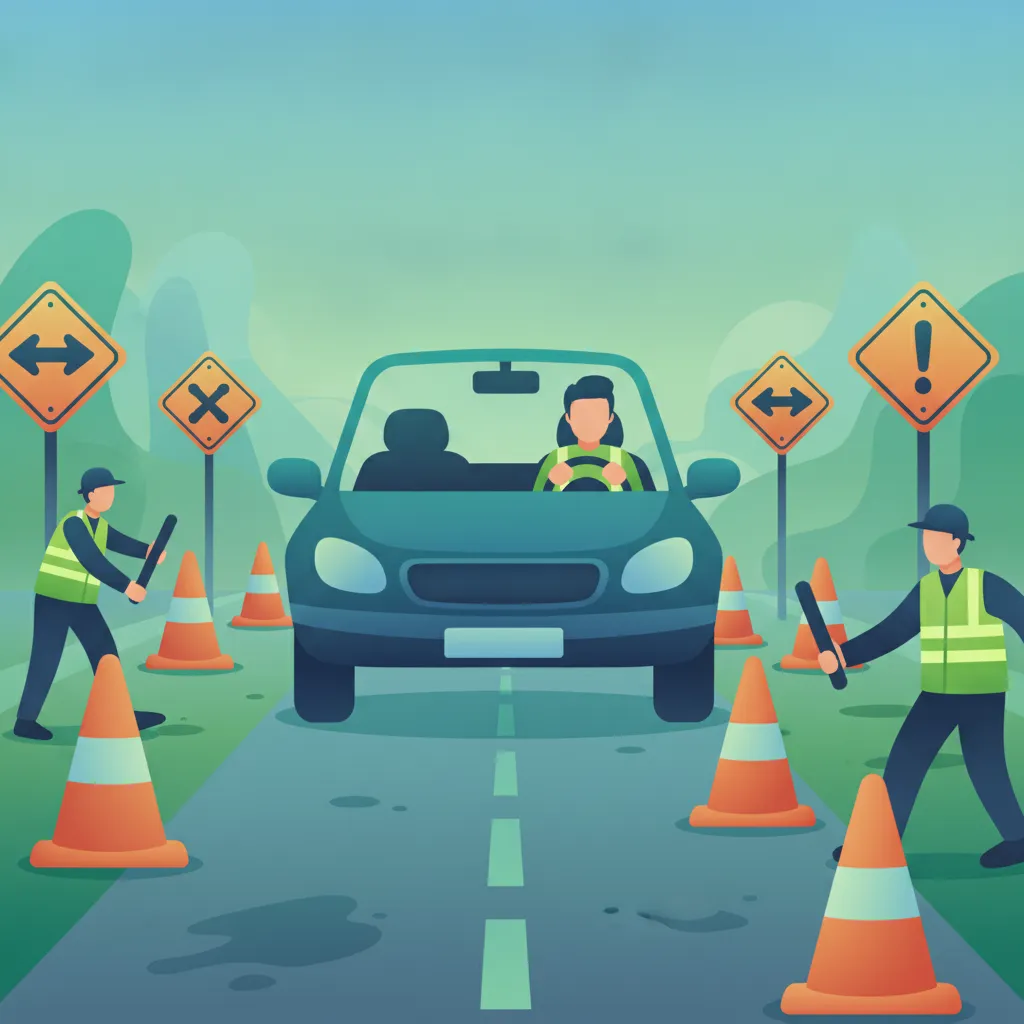
This lesson focuses on the safe navigation of goods vehicles through roadworks and construction zones. Learners will examine the importance of recognizing temporary signs, adhering to reduced speed limits, and maintaining heightened caution around workers and equipment. The lesson emphasizes the need for special attention due to the altered road environment and hazards specific to heavy vehicles.
Find clear answers to common questions learners have about Lane Discipline and Occupancy for Large Vehicles. Learn how the lesson is structured, which driving theory objectives it supports, and how it fits into the overall learning path of units and curriculum progression in Turkey. These explanations help you understand key concepts, lesson flow, and exam focused study goals.
No, professional goods vehicles are generally restricted to specific lanes on multi-lane highways in Turkey. You must stay in the right-hand lane except when overtaking or where traffic signs explicitly permit the use of other lanes.
Because of the width of goods vehicles, you must remain centered within your lane markings. Drifting toward the edges increases the risk of side-swipe accidents, especially near barriers or other road users.
Yes, CE vehicles have a larger turn radius and blind spot area. Maintaining strict lane discipline is even more critical to ensure that your trailer does not encroach into adjacent lanes during turns or lane changes.
In urban delivery, lane positioning is critical for visibility. By maintaining a steady position, you make your intentions predictable to vulnerable road users like cyclists and motorcyclists who may be attempting to pass.
Use our comprehensive practice search to find exactly the Turkish driving theory questions you need to master. Whether reviewing specific road signs, traffic rules, or first aid scenarios, select your perfect practice set and boost your confidence for the official ehliyet sınavı.