
This lesson explores the specific traffic signs, road markings, and legal restrictions that professional goods vehicle drivers must identify on Turkish roads. By mastering these regulatory cues, you will ensure compliance with weight, height, and access limitations while navigating professional transport routes. This knowledge is essential for both your theory exam success and safe, lawful daily operations.
Lesson content overview
Operating a heavy goods vehicle (HGV) in Turkey requires more than just vehicle handling skills; it demands an absolute mastery of the specialized traffic signs and road markings that govern commercial transport. Under the Turkish Highway Traffic Regulation (Karayolları Trafik Yönetmeliği), drivers of vehicles in categories C1, C, C1E, and CE must navigate a complex network of physical, environmental, and legal restrictions.
Heavy vehicles differ significantly from passenger cars in weight, stopping distance, height, and maneuverability. Consequently, specific road signs are deployed to protect infrastructure, manage traffic flow, and ensure public safety. Ignoring these signs is not only a serious traffic violation but also a major hazard that can lead to structural damage, severe accidents, and the loss of your professional driver’s license (Sürücü Belgesi).
Traffic signs for goods vehicles are not arbitrary; they are rooted in civil engineering and traffic physics. Understanding the "why" behind these signs helps professional drivers make safer decisions on the road.
Bridges, overpasses, and tunnels are designed to withstand specific maximum loads and dimensional limits. Repetitive overstressing from overweight vehicles accelerates structural fatigue, while single extreme overloads can cause catastrophic failure. Similarly, low overpasses and tunnels present hard physical barriers.
Heavy vehicles generate significant noise, vibration, and emissions. In dense residential areas, historic city centers, or environmentally sensitive zones, specific restrictions are put in place to maintain local air quality, reduce noise pollution during night hours, and prevent structural damage to older buildings caused by ground vibrations.
Because of their size and slower acceleration, large trucks can severely disrupt traffic flow if they use inappropriate lanes or routes. Signs designating mandatory lanes or restricting overtaking maneuvers are designed to optimize the capacity of the road network and reduce the likelihood of high-speed rear-end collisions.
A prohibited route sign explicitly bars certain classifications of goods vehicles from entering a specific road, street, or zone. In Turkey, these restrictions are vital for keeping heavy traffic out of narrow urban centers, historic areas, and structurally unsuitable rural roads.
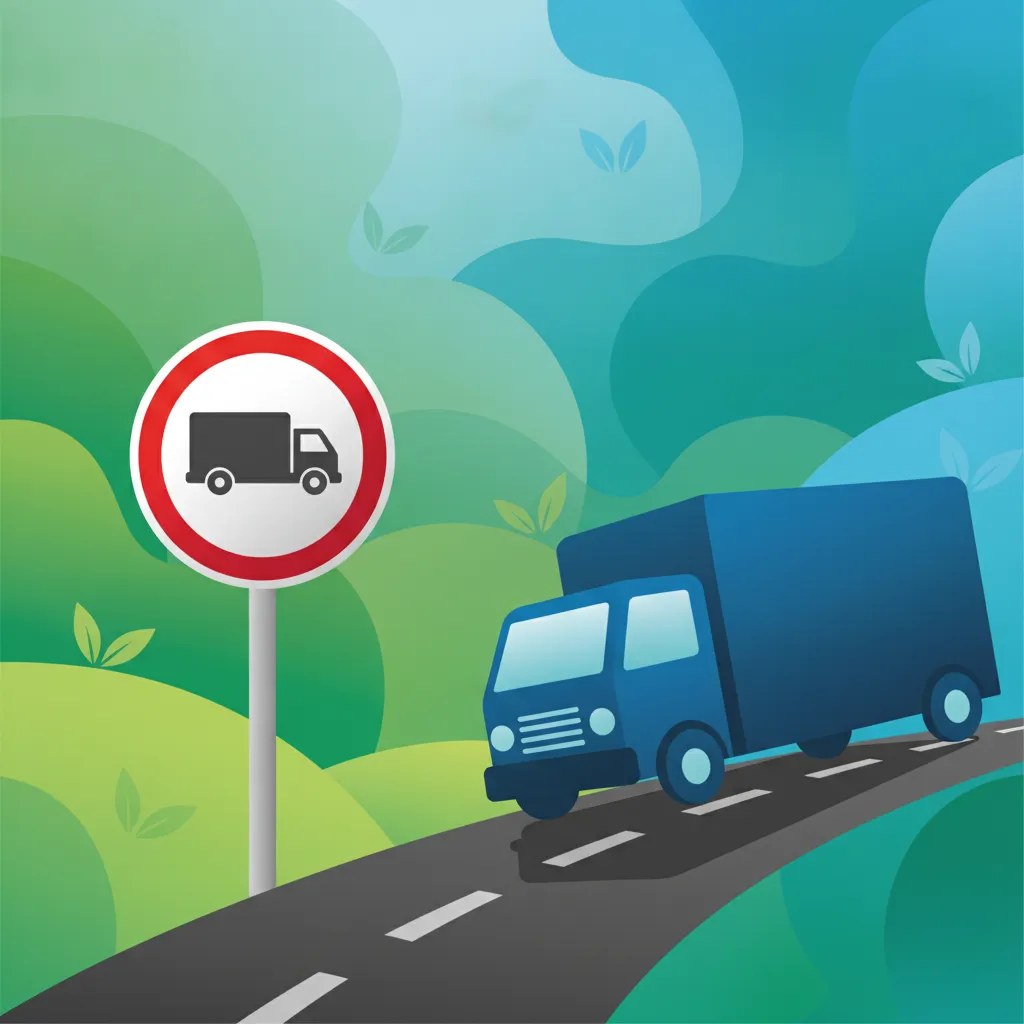
When you see the standard sign showing a truck silhouette inside a red border, it represents a blanket prohibition for goods vehicles. This applies directly to the vehicle's official registration classification, regardless of whether the vehicle is currently carrying cargo or running empty.
Common Misunderstanding: Many novice drivers assume that if their truck is empty (boş), they can enter a prohibited route. This is incorrect. The restriction applies to the vehicle classification and its Maximum Authorized Mass (MAM), not its instantaneous weight.
Frequently, the general prohibition is modified by an additional panel or an inscription inside the sign indicating a specific weight limit (for example, "7.5 t"). This means only goods vehicles with a maximum authorized mass exceeding that limit are prohibited. If your vehicle falls below the specified threshold, you may proceed, provided no other restrictions apply.
Weight limit restrictions are critical for protecting highway pavements, bridge spans, and underground utility infrastructure. In Turkey, these signs are heavily enforced by both roadside traffic police and automated Weigh-in-Motion (WIM) sensors.
Professional drivers must distinguish between the total gross weight of the vehicle and the individual axle weight.
While a bridge might be compromised by an excessive total weight, road surfaces and asphalt pavement are primarily damaged by high individual axle loads. High axle weight causes deep rutting, cracking, and sub-base failure. Under Article 77 of the Turkish Highway Traffic Regulation, exceeding these posted limits will result in severe financial penalties, license points, and immediate grounding of the vehicle until the excess load is transferred to another truck.
Dimensional restrictions, known locally in Turkey as Gabari limits, are safety-critical boundaries that must never be guessed or estimated.
Height limit signs are commonly placed before low-clearance tunnels, underpasses, old stone bridges, and overhead utility lines. The indicated height (e.g., "3.5 m") is the maximum safe clearance.
Measure your vehicle's physical height accurately from the ground to the highest point of the vehicle or load before departing. Do not rely solely on the vehicle manual, as tire wear, suspension settings, and cargo can alter the actual height.
Always account for specialized equipment mounted on the roof, such as cooling units, exhaust stacks, or wind deflectors.
If your dynamic load height changes during a journey (e.g., transport of machinery or securing loose covers), stop in a safe area and re-measure.
Step 4: When approaching a clearance sign, compare your measured height to the posted limit. If your vehicle is taller, you must immediately divert to an alternate route.
Road surfaces can change over time. For example, resurfacing works may add a new layer of asphalt, reducing the actual vertical clearance of an underpass without the physical sign immediately being updated. Professional drivers must maintain a safety margin of at least 10–15 centimeters whenever possible.
Lane discipline is essential for heavy vehicles, especially on multi-lane highways (Otoyol) and steep mountain passes where speed differentials between commercial trucks and passenger cars are extreme.
This sign displays a red car on the left and a red truck on the right inside a circular border. When this sign is present, professional truck drivers are strictly prohibited from changing lanes to overtake slower-moving traffic. This ban is typically enforced on:
On many Turkish highways, heavy vehicles are legally required to use only the rightmost lane (slow lane), except under specific conditions or when preparing for a left turn in urban environments. Using the fast (far-left) lane while pulling a trailer is a serious violation under Article 81 of the Highway Traffic Regulation and is highly dangerous due to the speed variance.
Vehicles carrying dangerous goods require specialized routing to avoid densely populated zones, sensitive water protection areas, and enclosed spaces like tunnels where an incident could be catastrophic.
The primary hazardous materials restriction sign features an orange truck silhouette or an explosive/hazardous symbol inside a red circle. This sign indicates that the route ahead is closed to any vehicle required by law to carry orange hazardous material plates (ADR).
In some scenic or agricultural regions of Turkey, you may encounter specific variations of this sign that explicitly prohibit vehicles carrying water-polluting substances. This is designed to protect local reservoirs, rivers, and agricultural irrigation networks.
Professional Responsibility: Drivers carrying hazardous cargo must carefully plan their routes before departure using the official ADR tunnel codes and national hazardous cargo route maps provided by the Ministry of Transport and Infrastructure (Ulaştırma ve Altyapı Bakanlığı).
To balance economic delivery needs with urban livability, many municipal authorities in Turkey implement temporary or time-based access restrictions.
These signs are often accompanied by an additional rectangular plate showing specific hours (e.g., "07:00 - 10:00" and "16:00 - 20:00"). These time windows correspond to peak commuter rush hours, during which heavy trucks are banned from entering city streets to prevent gridlock.
When a permanent or temporary restriction blocks a goods vehicle, highway authorities place orange or yellow detour signs showing a truck silhouette pointing toward an alternate, safe route. Following these detours is mandatory under Article 84 of the Turkish Highway Traffic Regulation.
Construction zones present unique hazards for heavy vehicles due to narrowed lanes, temporary road surfaces, and sudden merges.
During roadworks, lane widths are often reduced to accommodate construction equipment. Temporary signs will indicate the exact width of the temporary lanes. Heavy vehicles, which typically measure 2.5 to 2.6 meters in width, may be physically unable to use these narrowed lanes and may be directed to a single shared lane or a detour.
Because construction bypasses often use temporary bridges or unpaved shoulders, lower weight and speed limits are strictly enforced. Heavy vehicles exert extreme pressure on the road surface; ignoring temporary limits in roadwork zones can lead to the collapse of temporary structures or the sinking of the vehicle into soft ground.
Professional drivers frequently make critical mistakes when interpreting signs. Understanding these edge cases is key to maintaining a clean driving record.
| Sign Type | Primary Purpose | Key Target Parameter | Common Local Term |
|---|---|---|---|
| Prohibited Route | Keeps heavy commercial vehicles out of restricted zones | Vehicle registration category / MAM | Kamyon Giremez |
| Weight Limit | Protects bridges and structural road components | Total actual vehicle weight | Maksimum Tonaj |
| Axle Limit | Protects pavement surfaces from deformation | Actual weight per individual axle | Dingil Ağırlığı |
| Height Limit | Prevents collisions with overhead obstacles | Physical top-to-bottom vehicle height | Yükseklik Gabarisi |
| Hazardous Restriction | Prevents dangerous chemical incidents in sensitive zones | Class of hazardous cargo carried | Tehlikeli Madde Yasağı |
To ensure compliance, the Turkish National Police (Türk Polis Teşkilatı) and highway inspectors enforce strict penalties for sign violations. Under the Turkish Highway Traffic Law No. 2918 (Karayolları Trafik Kanunu), the following articles apply:
This lesson covers the specialized traffic signs and regulations governing goods vehicles in Turkey under the Turkish Highway Traffic Regulation. Professional drivers must understand prohibited route signs that bar heavy vehicles based on registration category, weight limit signs that distinguish between total vehicle weight and individual axle loads for protecting different infrastructure, and Gabari (dimensional) limits that restrict vehicle height, width, and length. The content also addresses lane discipline requirements on motorways, hazardous materials transport restrictions under ADR agreements, and time-based urban access limitations. Key legal consequences under Articles 77, 79, 80, and 81 include severe fines, vehicle grounding for weight violations, and license points for prohibited route or lane infractions. Understanding these signs is essential for both passing the professional theory exam and ensuring legal, safe daily operations.
A short set of high-value points that capture the most important learning from this lesson.
Heavy vehicle traffic signs protect three core interests: civil infrastructure (bridges, tunnels), environmental/community welfare, and traffic flow safety
Prohibited route signs apply based on the vehicle's registered classification and Maximum Authorized Mass, not whether the truck is currently carrying cargo
Total weight limits and axle weight limits serve different engineering purposes—total weight protects bridges while axle limits protect road pavement surfaces
Height limits (Gabari) must be measured from ground to the highest point including roof equipment, load, and accounting for tire wear and suspension settings
Hazardous materials transport signage restricts vehicles carrying goods that require orange ADR plates from sensitive zones, tunnels, and water protection areas
Explore all units and lessons included in this driving theory course.
The 'Kamyon Giremez' (No Goods Vehicles) sign applies to the vehicle's registration category regardless of load state—empty trucks are not exempt
When a weight limit sign shows a tonnage figure inside a red circle, it restricts total actual weight (vehicle + cargo + fuel + passengers)
An axle weight sign displays an axle icon with tonnage and restricts the weight transmitted by any single axle or axle group, not the vehicle's total mass
Always maintain a 10–15 cm safety margin below posted height limits because road resurfacing can reduce actual clearance without immediate sign updates
Lane restrictions for heavy vehicles on Turkish Otoyol motorways require using the rightmost slow lane except for turning preparation in urban areas
Assuming empty trucks can enter prohibited routes because the vehicle is not carrying cargo at that moment
Confusing total weight restrictions with axle weight restrictions—for example, entering a 6-tonne axle limit bridge with a two-axle truck carrying 15 tonnes distributed evenly
Failing to re-measure vehicle height after loading machinery or equipment on a flatbed, which can increase overall height significantly
Attempting to overtake slower vehicles in restricted lanes during adverse weather when jackknifing risk is already elevated
Relying solely on the vehicle manual for height measurements without accounting for tire wear, suspension settings, or roof-mounted accessories
Lesson content overview
A short set of high-value points that capture the most important learning from this lesson.
Heavy vehicle traffic signs protect three core interests: civil infrastructure (bridges, tunnels), environmental/community welfare, and traffic flow safety
Prohibited route signs apply based on the vehicle's registered classification and Maximum Authorized Mass, not whether the truck is currently carrying cargo
Total weight limits and axle weight limits serve different engineering purposes—total weight protects bridges while axle limits protect road pavement surfaces
Height limits (Gabari) must be measured from ground to the highest point including roof equipment, load, and accounting for tire wear and suspension settings
Hazardous materials transport signage restricts vehicles carrying goods that require orange ADR plates from sensitive zones, tunnels, and water protection areas
Explore all units and lessons included in this driving theory course.
The 'Kamyon Giremez' (No Goods Vehicles) sign applies to the vehicle's registration category regardless of load state—empty trucks are not exempt
When a weight limit sign shows a tonnage figure inside a red circle, it restricts total actual weight (vehicle + cargo + fuel + passengers)
An axle weight sign displays an axle icon with tonnage and restricts the weight transmitted by any single axle or axle group, not the vehicle's total mass
Always maintain a 10–15 cm safety margin below posted height limits because road resurfacing can reduce actual clearance without immediate sign updates
Lane restrictions for heavy vehicles on Turkish Otoyol motorways require using the rightmost slow lane except for turning preparation in urban areas
Assuming empty trucks can enter prohibited routes because the vehicle is not carrying cargo at that moment
Confusing total weight restrictions with axle weight restrictions—for example, entering a 6-tonne axle limit bridge with a two-axle truck carrying 15 tonnes distributed evenly
Failing to re-measure vehicle height after loading machinery or equipment on a flatbed, which can increase overall height significantly
Attempting to overtake slower vehicles in restricted lanes during adverse weather when jackknifing risk is already elevated
Relying solely on the vehicle manual for height measurements without accounting for tire wear, suspension settings, or roof-mounted accessories
Explore search topics learners often look for when studying Traffic Signs Specific to Goods Vehicles. These topics reflect common questions about road rules, driving situations, safety guidance, and lesson level theory preparation for learners in Turkey.
Browse additional driving theory lessons that cover connected traffic rules, road signs, and common driving situations related to this topic. Improve your understanding of how different rules interact across everyday traffic scenarios.
Learn the theory behind safely navigating large trucks through restricted urban environments, loading docks, and narrow roadways. This guide explains essential strategies for turn radius management, trailer positioning, and reversing in confined spaces to ensure professional safety and compliance with Turkish transport regulations.
This lesson focuses on the challenges and techniques required when maneuvering goods vehicles in confined spaces such as loading docks, narrow streets, and urban environments. It addresses the importance of spatial awareness, precision driving, and understanding vehicle dimensions to avoid collisions. Learners will explore strategies for effective parking, reversing, and handling blind spots safely.
This lesson explores effective turning strategies for goods vehicles, focusing on managing the larger turn radius required due to vehicle size and load. Learners will understand how to approach corners safely, adjust speed, use signals appropriately, and compensate for off-tracking. The lesson also highlights how load distribution impacts turning dynamics and the importance of vehicle control.
This lesson focuses on the safe navigation of goods vehicles through roadworks and construction zones. Learners will examine the importance of recognizing temporary signs, adhering to reduced speed limits, and maintaining heightened caution around workers and equipment. The lesson emphasizes the need for special attention due to the altered road environment and hazards specific to heavy vehicles.

This lesson addresses the challenges of safely reversing a goods vehicle, including the identification of blind spots and rear visibility limitations. It covers proper mirror and rearview camera usage, as well as strategies for maintaining awareness of obstacles and the trailer's path. The lesson also emphasizes the importance of reversing alarms and slow, controlled vehicle movements.

This lesson covers the techniques and safety considerations for docking a goods vehicle in loading areas and performing precision parking maneuvers. Learners will learn how to align the vehicle correctly, use reverse gears effectively, and communicate with spotters when necessary. Emphasis is placed on maintaining situational awareness, checking for obstacles, and ensuring secure dock operations.
This lesson delves into specific manoeuvring strategies required when navigating both tight urban environments and open rural roads with large passenger vehicles. Learners will explore techniques for handling narrow streets, tight turns, and intersections, while maintaining safety and efficiency. The content emphasizes planning and execution of manoeuvres based on road conditions and vehicle dimensions.
This lesson focuses on the critical importance of lane discipline and proper lane usage for large goods vehicles. Learners will understand the challenges posed by wider vehicle dimensions, the necessity of maintaining adequate lane occupancy, and the need for precise lane keeping. Emphasis is placed on selecting appropriate lanes, adhering to traffic flow, and ensuring general highway safety.

This lesson addresses the techniques required for safely navigating grades and slopes with heavy goods vehicles. Learners will explore the use of engine braking, proper gear selection, and auxiliary retarders to manage speed on steep downhill sections. The lesson also covers strategies for starting on uphill grades without rollback, considering vehicle weight and load distribution.
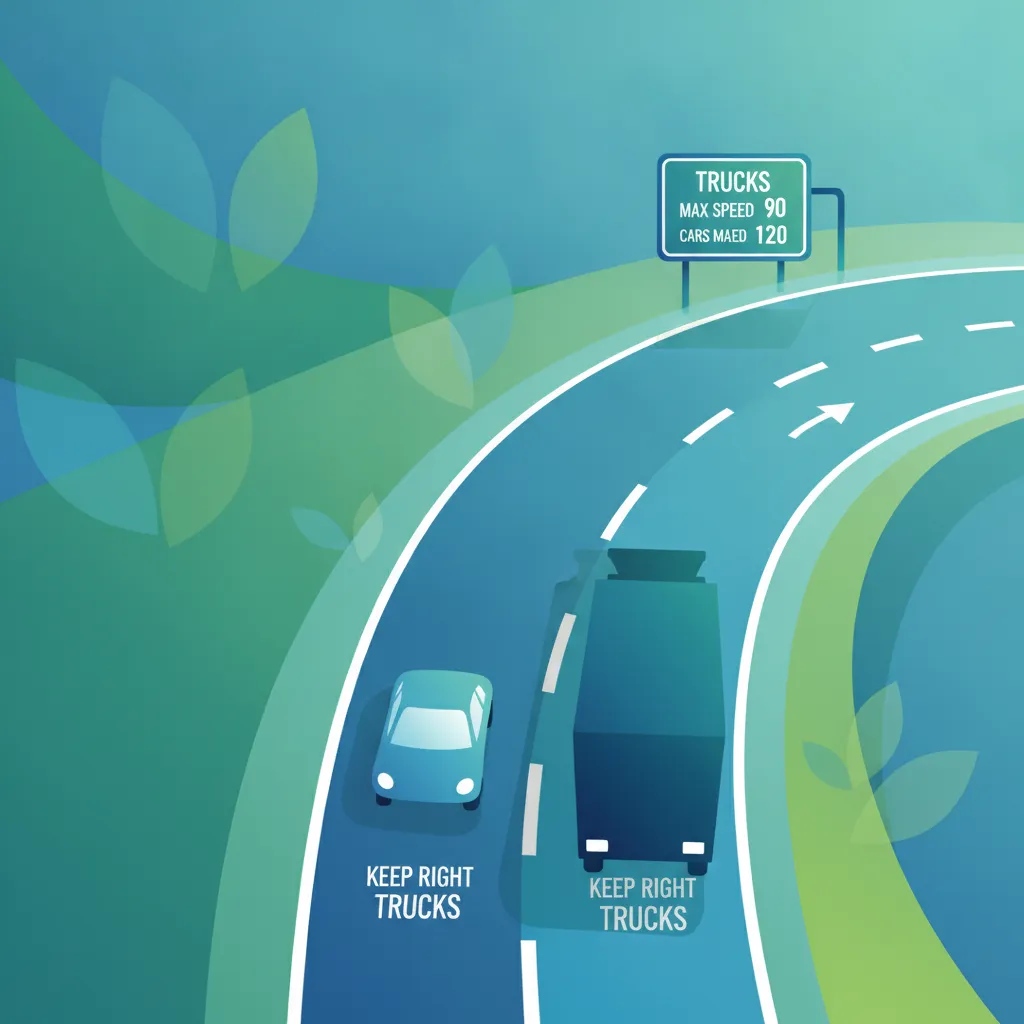
This lesson addresses the specific considerations for goods vehicle operation on highways and expressways, covering speed limits, lane discipline, safe merging, and overtaking. Learners will learn how to adapt to traffic flow, manage heavy vehicle dynamics at higher speeds, and ensure safe operation. The lesson emphasizes the importance of vigilance and proper lane usage to prevent accidents.
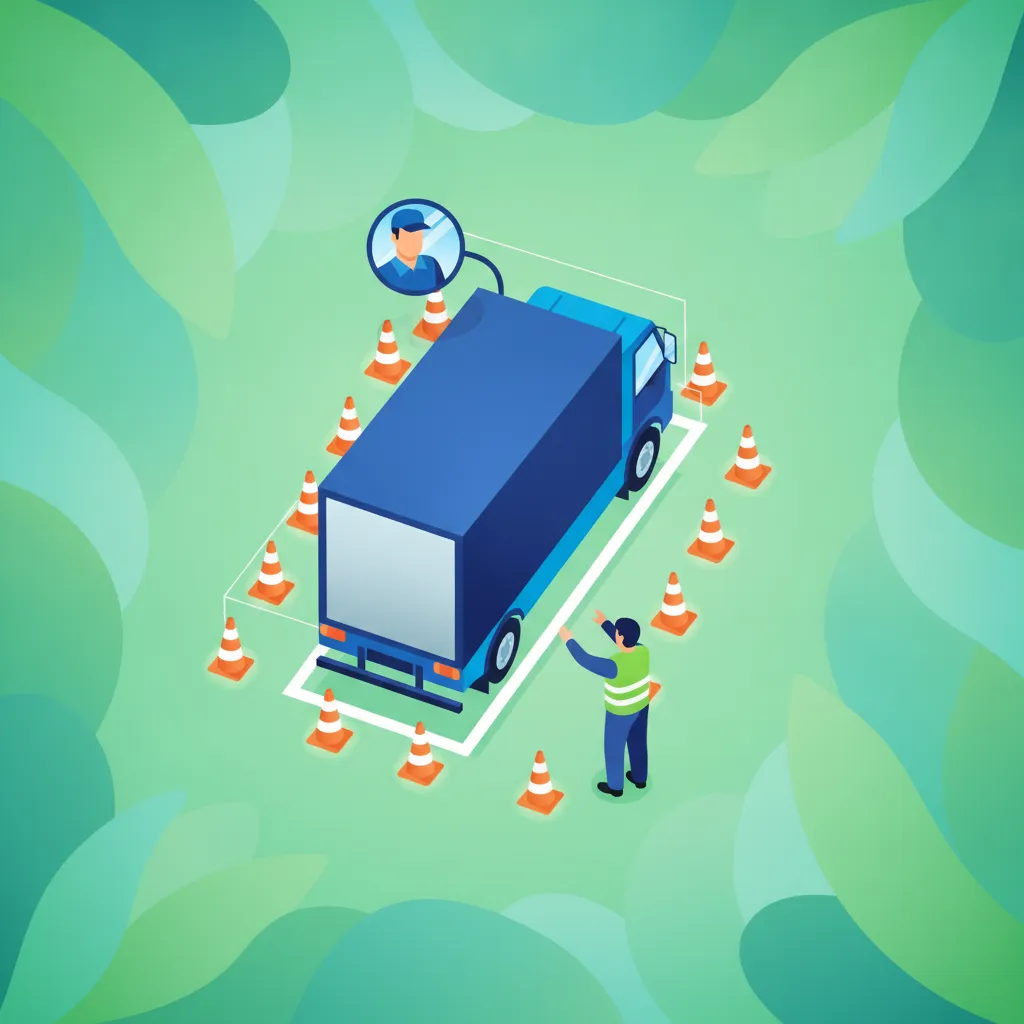
Learners will acquire skills for safely reversing large passenger vehicles in limited spaces, such as bus bays and loading docks. The lesson covers the effective use of mirrors, rear-view cameras, and precise steering inputs to navigate obstacles. Emphasis is placed on slow, controlled movements and constant observation to avoid collisions.
Understand the specific highway and expressway regulations for professional drivers in Turkey, focusing on lane discipline, tunnel safety, and speed adaptations for heavy cargo transport. This lesson covers key legal requirements and hazard avoidance techniques for driving large commercial vehicles in complex road infrastructure.
This lesson addresses the specific considerations for goods vehicle operation on highways and expressways, covering speed limits, lane discipline, safe merging, and overtaking. Learners will learn how to adapt to traffic flow, manage heavy vehicle dynamics at higher speeds, and ensure safe operation. The lesson emphasizes the importance of vigilance and proper lane usage to prevent accidents.
This lesson focuses on the critical importance of lane discipline and proper lane usage for large goods vehicles. Learners will understand the challenges posed by wider vehicle dimensions, the necessity of maintaining adequate lane occupancy, and the need for precise lane keeping. Emphasis is placed on selecting appropriate lanes, adhering to traffic flow, and ensuring general highway safety.
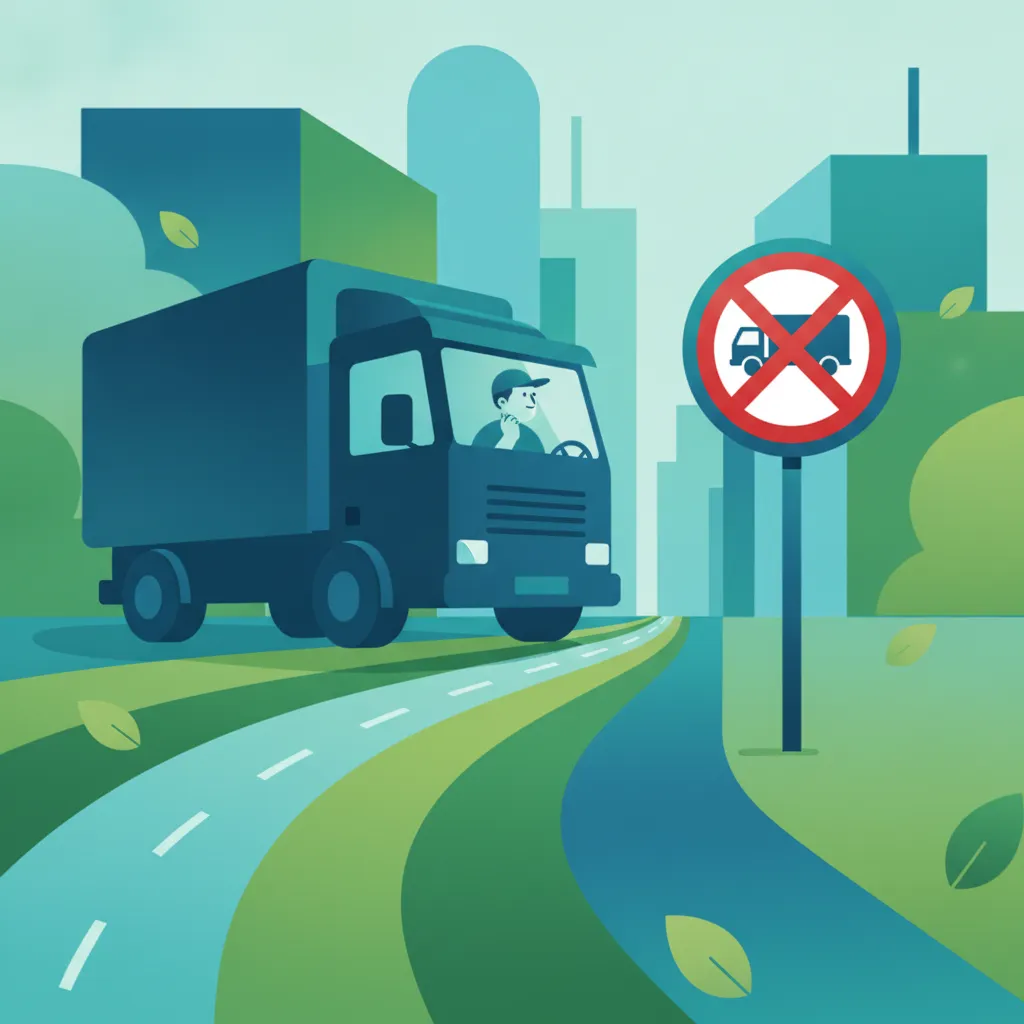
This lesson focuses on the various access restrictions imposed on heavy goods vehicles within Turkish road networks. Learners will understand the reasons for restrictions such as low bridge clearances, tunnel usage, construction zones, and urban delivery area limitations. The lesson also covers how to recognize and comply with legal notices and signage indicating restricted commercial zones.
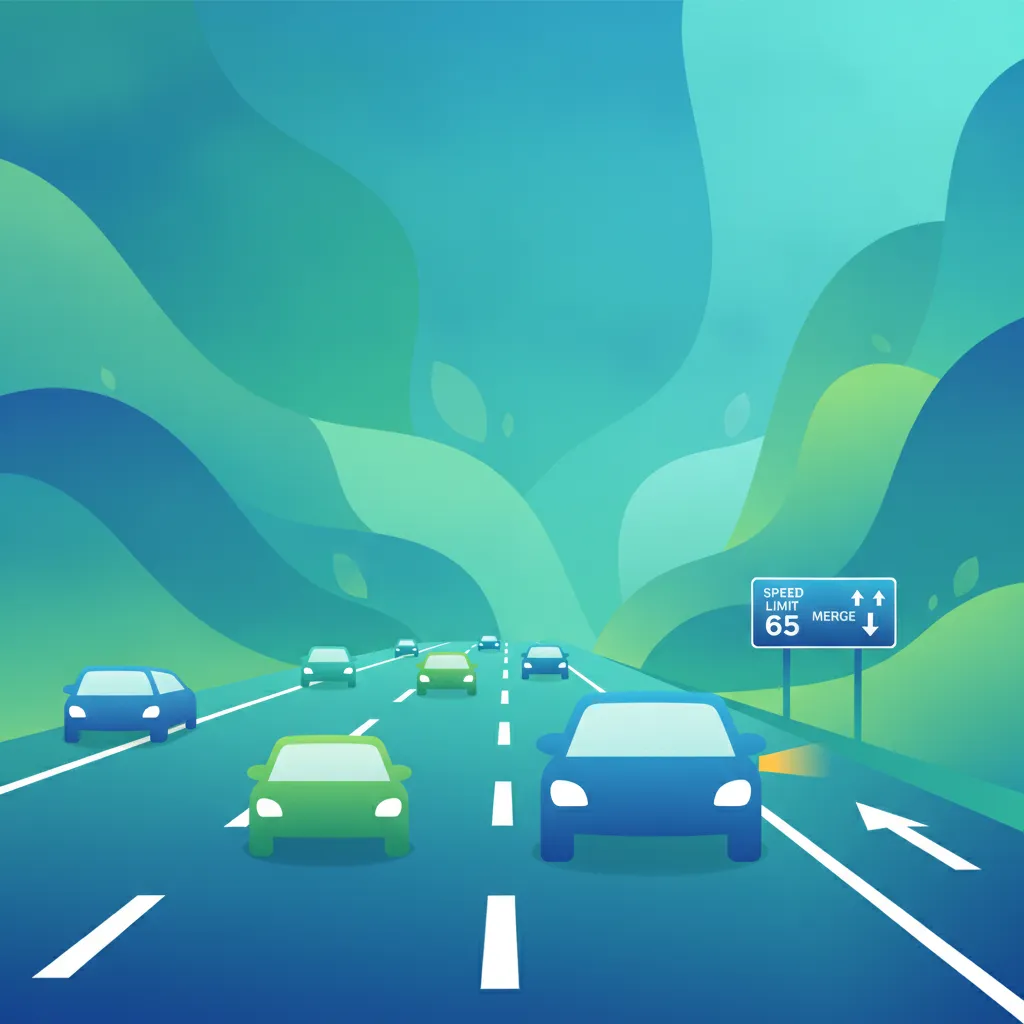
This lesson focuses on the unique requirements and best practices for operating passenger vehicles on highways and expressways. Topics include maintaining appropriate speed, adhering to lane discipline, executing safe overtaking maneuvers, and managing merges and exits. Emphasis is placed on ensuring a smooth ride for passengers while integrating safely with faster-moving traffic.
This lesson focuses on the importance of maintaining safe following distances for goods vehicles, taking into account longer braking distances and increased load. Learners will learn how to calculate appropriate gaps based on speed, road conditions, and vehicle dynamics. The lesson emphasizes safe following practices to prevent rear-end collisions and improve overall traffic safety in Turkey.
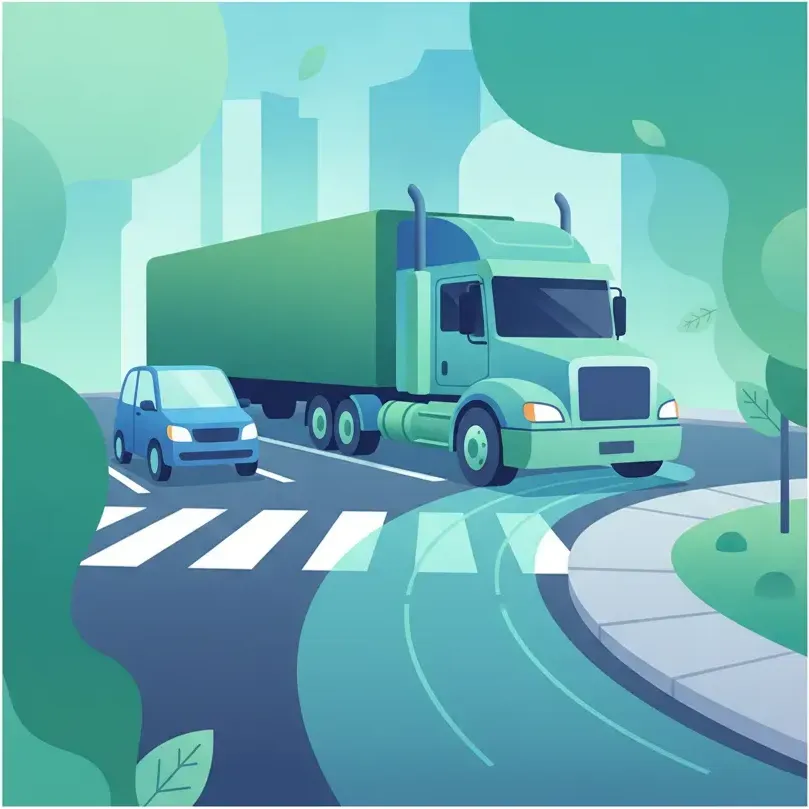
This lesson examines the specific road space requirements necessary for large goods vehicles to operate safely and efficiently. Topics include the need for adequate lane width, lateral clearance, and turning lanes to accommodate wider and longer vehicles. Learners will explore the proper use of shoulders, overtaking procedures, and the impact of large vehicles on overall road capacity in traffic.
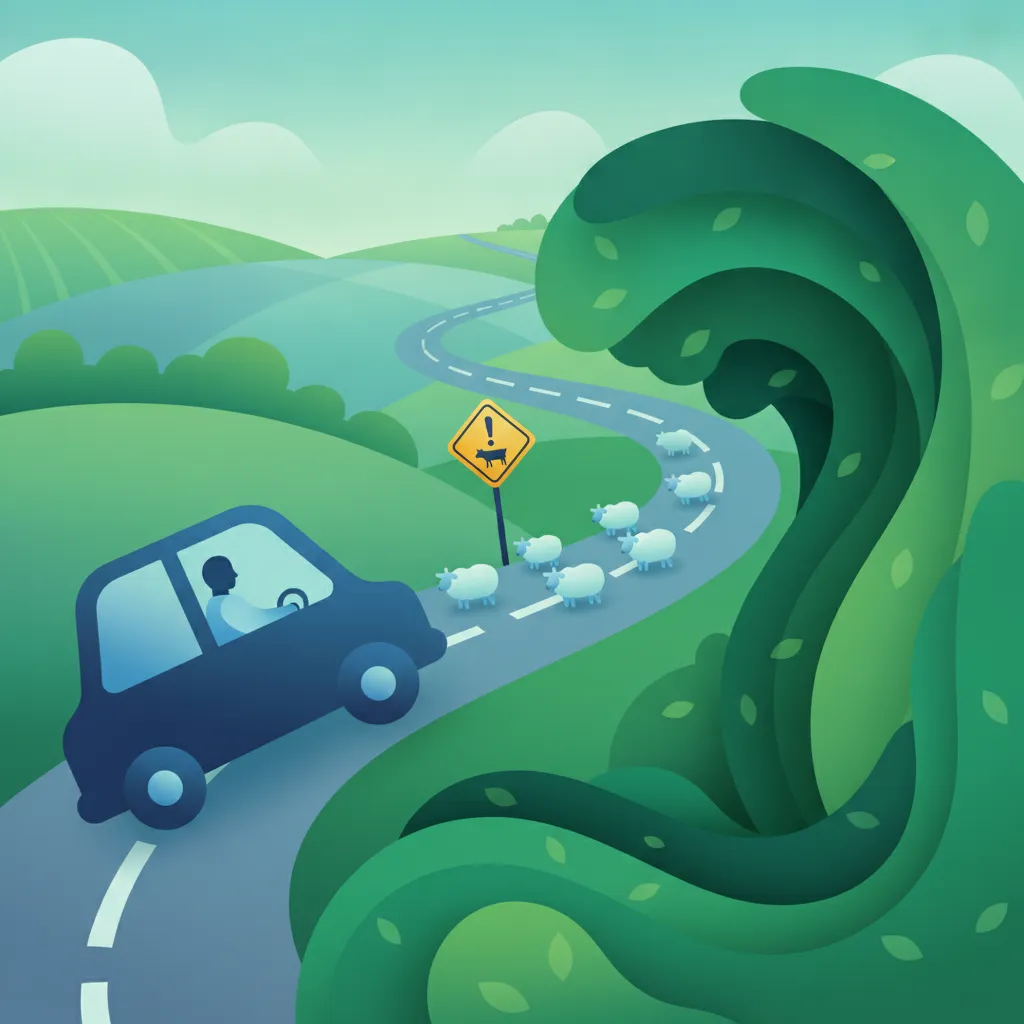
This lesson explores the unique challenges encountered when driving goods vehicles on rural roads, including narrow widths, sharp curves, animal crossings, and varying road surface conditions. Learners will understand the importance of adjusting speed, maintaining vigilance, and respecting road markings. Emphasis is placed on safe navigation practices to mitigate risks associated with rural areas.
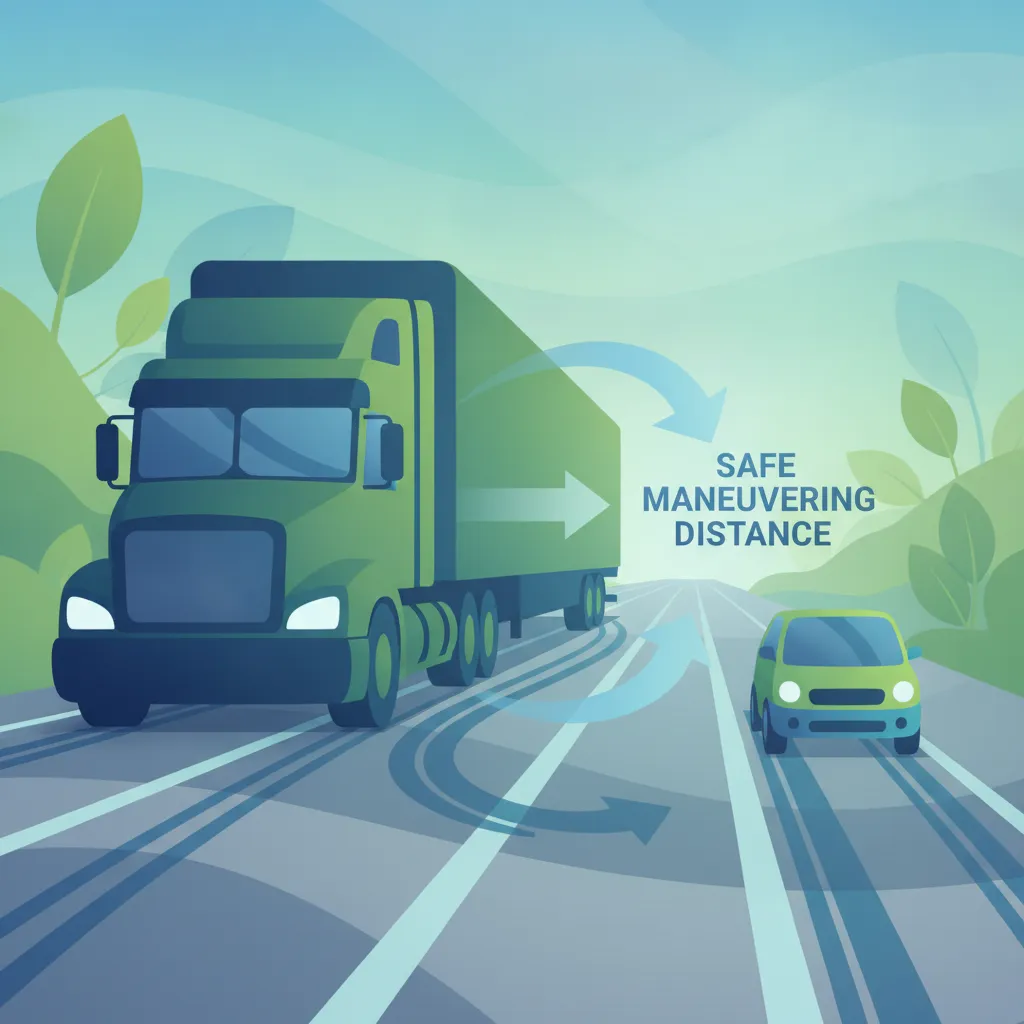
This lesson focuses on how the size and dimensions of goods vehicles influence their interaction with road infrastructure and overall traffic flow. It discusses the increased road space occupancy, especially in urban settings, and the implications for lane usage, bridge clearances, and tunnel dimensions. Learners will gain insight into the infrastructure challenges posed by large vehicles, including wear on road surfaces.
This lesson addresses the techniques required for safely navigating grades and slopes with heavy goods vehicles. Learners will explore the use of engine braking, proper gear selection, and auxiliary retarders to manage speed on steep downhill sections. The lesson also covers strategies for starting on uphill grades without rollback, considering vehicle weight and load distribution.
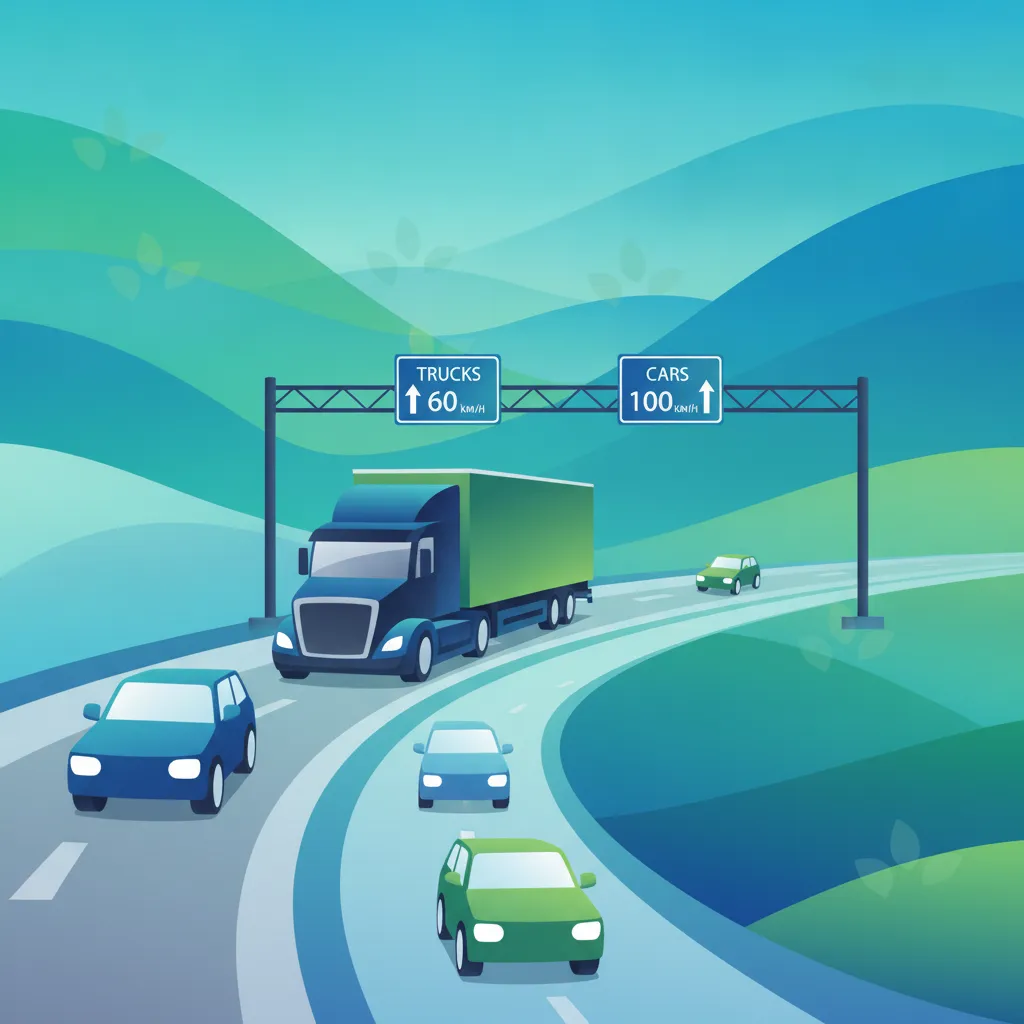
This lesson focuses on speed regulation for goods vehicles, highlighting how vehicle weight, load, and road conditions influence safe operating speeds. Learners will understand legal speed limits for various road types and the necessity of adapting speed to traffic flow and environmental conditions. The lesson also emphasizes the importance of maintaining appropriate speed to ensure vehicle control.
Find clear answers to common questions learners have about Traffic Signs Specific to Goods Vehicles. Learn how the lesson is structured, which driving theory objectives it supports, and how it fits into the overall learning path of units and curriculum progression in Turkey. These explanations help you understand key concepts, lesson flow, and exam focused study goals.
No, specific signs are often accompanied by a sub-plate showing a truck symbol. These signs explicitly restrict entry or specify limits based on the vehicle type or gross weight, which differs from standard light vehicle restrictions.
Look for regulatory circular signs with a red border and a truck icon. If you see this in conjunction with a weight, height, or width limit, it indicates that vehicles exceeding those specific parameters are strictly prohibited from entering that route.
Yes, specific signs indicate routes where vehicles carrying dangerous goods are restricted. Professional drivers must identify these to comply with safety regulations and avoid potential environmental or public safety hazards.
You must immediately find a safe location to pull over or turn around if allowed. Ignoring height restriction signs can lead to severe structural damage to the vehicle and infrastructure, as well as significant legal penalties.
Use our comprehensive practice search to find exactly the Turkish driving theory questions you need to master. Whether reviewing specific road signs, traffic rules, or first aid scenarios, select your perfect practice set and boost your confidence for the official ehliyet sınavı.