
This lesson teaches you how to determine appropriate following distances for heavy goods vehicles, considering their unique braking characteristics and load weight. It is a critical component of unit 5, designed to ensure you understand the physics of stopping in various conditions to pass your professional licence theory exam.
Lesson content overview
In commercial transport, maintaining a safe buffer zone between your vehicle and the traffic ahead is one of the most critical defensive driving practices. For professional drivers operating heavy goods vehicles (HGVs) under C1, C, C1E, or CE licenses in Turkey, this practice is not just a safety recommendation—it is a legal obligation governed by the Turkish Highway Traffic Regulation (Karayolları Trafik Yönetmeliği).
Heavy vehicles possess immense mass, which drastically alters their braking dynamics compared to passenger cars. Understanding how to calculate, adjust, and maintain appropriate following distances (takip mesafesi) under varying loads, speeds, and environmental conditions is essential for preventing devastating rear-end collisions and ensuring overall road safety.
To appreciate why large commercial vehicles require extensive following gaps, you must understand the components of Total Stopping Distance (Durma Mesafesi). Total stopping distance is not instantaneous; it is the sum of two distinct phases: reaction distance and braking distance.
The total distance a vehicle travels from the moment the driver perceives a hazard to the exact moment the vehicle comes to a complete stop. It is calculated as:
Reaction time (reaksiyon/intikal süresi) is the interval between the moment your eyes perceive a hazard (such as brake lights ahead) and the moment your foot physically applies pressure to the brake pedal.
Braking distance (fren mesafesi) is the distance the vehicle travels after the brakes have been applied until it comes to a complete halt. This is heavily governed by physics, specifically kinetic energy ().
Because kinetic energy increases with the square of the speed, doubling your speed quadruples your braking distance. Furthermore, because a heavy goods vehicle has immense mass (), its kinetic energy is exponentially higher than that of a passenger car traveling at the same speed. Consequently, heavy trucks require much longer distances to dissipate this energy through their braking systems.
While traffic laws sometimes refer to distances in static metres, human beings are notoriously poor at estimating exact physical distances while moving at high speeds. Therefore, professional drivers use the Time-Distance Principle to establish a safe safety bubble.
Using time instead of physical distance ensures that your safety buffer automatically scales up as your speed increases.
Select a fixed marker on or near the road ahead, such as a road sign, a gantry, a bridge, or a shadow.
As soon as the rear bumper of the vehicle ahead passes that marker, begin counting in seconds: "One-thousand-and-one, one-thousand-and-two..."
If your front bumper reaches the same marker before you finish counting your target seconds, you are following too closely and must ease off the accelerator to increase the gap.
Air Brake Lag: Unlike hydraulic brakes in passenger cars, air brakes in heavy trucks have a mechanical delay (typically 0.4 to 1 second) while compressed air travels through the lines to activate the brake drums or discs. This lag must be compensated for by maintaining a wider following gap.
A key component of the Turkey Professional Goods Vehicle Theory Course is mastering how cargo loading affects vehicle control. A fully loaded commercial vehicle behaves very differently from an empty (unladen) one.
While a loaded truck has more downward force (which can sometimes increase tire traction on dry asphalt), the sheer momentum of a high gross vehicle weight (GVW) severely overpowers standard braking capacities. The brakes must work significantly harder to convert kinetic energy into thermal energy (heat).
An incorrectly distributed load alters the vehicle's center of gravity. If the cargo shifts during sudden braking, it can cause:
A static following distance is a hazard in itself. Safe drivers constantly reassess their surroundings and adjust their dynamic following gaps based on environmental variables.
Rain creates a thin film of water between the tires and the asphalt, which can lead to aquaplaning (su yastığı etkisi) and reduced traction.
Ice reduces tire grip to near zero, making braking distances up to ten times longer than on dry roads.
In many rural freight routes across Turkey, loose gravel (gevşek malzeme) is common, especially during roadworks.
Turkey’s diverse topography includes steep mountain passes (such as the Pozantı Pass in the Taurus Mountains or the Bolu Mountain Pass). Operating heavy goods vehicles on these long gradients requires specialized spatial management.
When descending a grade, gravity continuously pulls your heavy vehicle forward, accelerating it naturally. This drastically increases your stopping distance because the brakes must combat both vehicle momentum and gravity.
While gravity assists in stopping your vehicle when traveling uphill, the vehicle ahead of you may experience sudden power loss or struggle to climb, especially under-powered heavy trucks.
The Turkish Highway Traffic Regulation (Karayolları Trafik Yönetmeliği) mandates safe driving distances to protect all road users and maintain smooth traffic flow.
Under Article 56 of the Turkish Highway Traffic Regulation, drivers must maintain a following distance that is at least half of their current speed expressed in metres under normal conditions.
While this "half-the-speed" rule is the legal baseline, professional safety organizations strongly advise using the 3-to-4-second rule, as 40 metres at 80 km/h is covered in just 1.8 seconds—leaving very little room for a professional truck driver to react and stop a heavily loaded vehicle.
For vehicles transporting hazardous materials (such as fuel tankers or chemical carriers), the law is much more stringent.
Fines and Penalties: Failure to maintain a safe following distance is a citable offense in Turkey. It can result in administrative monetary fines, penalty points on your professional driver's license, and civil liability in the event of a rear-end collision, where the following vehicle is almost always deemed primarily at fault (asli kusurlu).
Despite the clear dangers, tailgating remains one of the most common causes of commercial vehicle accidents on Turkish transit routes. Professional drivers must guard against these common psychological and physical traps:
In heavy traffic, drivers often feel pressured to close the gap to prevent other vehicles from cutting in front of them.
Drivers often assume that because their truck is empty (unladen), they can follow other vehicles closely.
Articulated trucks and road trains have complex articulation points. If you are forced to slam on your brakes due to a short following distance, the trailer can push the tractor unit sideways, leading to a jackknife. Always maintain an extended buffer zone (+1 second over rigid vehicles) when towing a trailer.
Safety on the road is built on margins. As a professional goods vehicle driver in Turkey, your following distance is your primary safety margin. By consistently applying the time-distance principle, adjusting for cargo weight and weather, and adhering to the Turkish Highway Traffic Regulation, you ensure that you always have the time and space needed to react to the unexpected.
To deepen your understanding of heavy vehicle control, speed adaptation, and braking dynamics, explore the following resources and practice sessions:
This lesson teaches professional goods vehicle drivers how to calculate and maintain safe following distances based on the physics of stopping, Turkish law, and real-world conditions. Heavy vehicles require longer gaps due to greater mass, kinetic energy, and air brake lag, with the 3-to-4-second time-distance rule being safer than the legal minimum formula. Drivers must dynamically adjust their buffer for cargo weight, weather conditions, gradients, and dangerous goods transport, while avoiding common traps such as the unloaded truck assumption and traffic flow pressure. Mastery of these principles is essential for passing the MTSK e-sınav and ensuring road safety in Turkey.
A short set of high-value points that capture the most important learning from this lesson.
Total stopping distance equals reaction distance plus braking distance, and both increase with vehicle mass and speed.
Heavy goods vehicles must maintain a minimum 3-second gap (ideally 4 seconds for CE combinations) versus the 2-second rule for passenger cars.
Air brake systems in trucks introduce a mechanical lag of 0.4 to 1 second that must be compensated by wider following distances.
Environmental conditions dramatically alter required gaps: wet roads need 5-6 seconds, icy roads need 8-10 seconds.
Under Article 56 of the Turkish Highway Traffic Regulation, the legal minimum following distance equals half your speed in metres, but safety guidelines recommend using the time-distance method instead.
Explore all units and lessons included in this driving theory course.
Kinetic energy increases with the square of speed, so doubling your speed quadruples braking distance.
Add at least 1 additional second per 500 kg of load over unladen weight when operating near maximum capacity.
On steep downhill grades, add 1 to 2 seconds to your normal following distance and use auxiliary braking systems.
Hazardous goods vehicles must maintain a minimum 50-metre following distance outside built-up areas regardless of speed.
An empty (unladen) truck has less rear axle traction than a loaded one and requires the same spacing respect.
Assuming the legal minimum (half your speed in metres) provides adequate safety margin when professional guidelines recommend the 3-to-4-second rule.
Ignoring air brake lag and expecting braking to engage instantly, leading to rear-end collisions.
Driving an empty truck with the same close following distance as a loaded vehicle, risking early wheel lockup and loss of directional stability.
Failing to increase following distance on wet or icy surfaces, where braking distances can be two to ten times longer than on dry roads.
Closing the gap when other vehicles cut in during heavy traffic rather than calmly restoring the safety buffer.
Lesson content overview
A short set of high-value points that capture the most important learning from this lesson.
Total stopping distance equals reaction distance plus braking distance, and both increase with vehicle mass and speed.
Heavy goods vehicles must maintain a minimum 3-second gap (ideally 4 seconds for CE combinations) versus the 2-second rule for passenger cars.
Air brake systems in trucks introduce a mechanical lag of 0.4 to 1 second that must be compensated by wider following distances.
Environmental conditions dramatically alter required gaps: wet roads need 5-6 seconds, icy roads need 8-10 seconds.
Under Article 56 of the Turkish Highway Traffic Regulation, the legal minimum following distance equals half your speed in metres, but safety guidelines recommend using the time-distance method instead.
Explore all units and lessons included in this driving theory course.
Kinetic energy increases with the square of speed, so doubling your speed quadruples braking distance.
Add at least 1 additional second per 500 kg of load over unladen weight when operating near maximum capacity.
On steep downhill grades, add 1 to 2 seconds to your normal following distance and use auxiliary braking systems.
Hazardous goods vehicles must maintain a minimum 50-metre following distance outside built-up areas regardless of speed.
An empty (unladen) truck has less rear axle traction than a loaded one and requires the same spacing respect.
Assuming the legal minimum (half your speed in metres) provides adequate safety margin when professional guidelines recommend the 3-to-4-second rule.
Ignoring air brake lag and expecting braking to engage instantly, leading to rear-end collisions.
Driving an empty truck with the same close following distance as a loaded vehicle, risking early wheel lockup and loss of directional stability.
Failing to increase following distance on wet or icy surfaces, where braking distances can be two to ten times longer than on dry roads.
Closing the gap when other vehicles cut in during heavy traffic rather than calmly restoring the safety buffer.
Explore search topics learners often look for when studying Maintaining Safe Following Distances. These topics reflect common questions about road rules, driving situations, safety guidance, and lesson level theory preparation for learners in Turkey.
Browse additional driving theory lessons that cover connected traffic rules, road signs, and common driving situations related to this topic. Improve your understanding of how different rules interact across everyday traffic scenarios.
Learn the mechanics of air brake systems and how total stopping distance is affected by vehicle mass and kinetic energy. This theory guide covers professional braking techniques and load management principles necessary for C and CE category drivers to maintain control and safety on steep gradients and varying road surfaces.

This lesson provides an in-depth understanding of the braking systems used in goods vehicles, including air and hydraulic brakes. Learners will explore the limitations of these systems, such as brake fade and overheating, especially under heavy loads. The lesson also covers essential maintenance practices and regular brake inspections to ensure optimal performance and safe stopping distances.

This lesson presents effective braking strategies designed to safeguard passengers and prevent wheel lock-up or skidding. Learners will become familiar with progressive braking, the use of ABS, and techniques for maintaining vehicle stability during sudden stops. Proper braking ensures passenger comfort and reduces accident risk, especially in adverse road conditions.

This lesson examines the effects of load dynamics on vehicle stability during acceleration and deceleration. Learners will learn how cargo can shift and affect handling, particularly during sudden speed changes or emergency braking situations. The lesson emphasizes proper load securing, gradual acceleration, and controlled braking to maintain stability and prevent serious accidents.
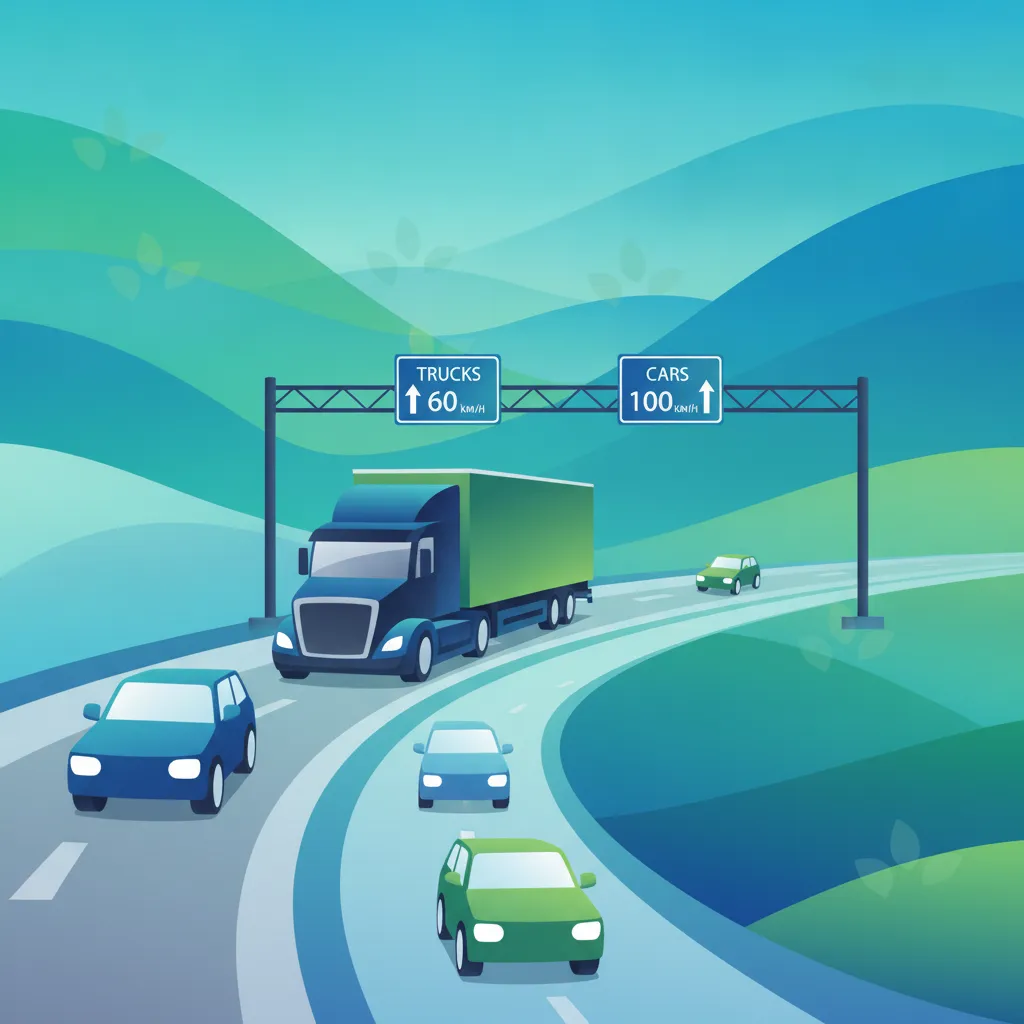
This lesson focuses on speed regulation for goods vehicles, highlighting how vehicle weight, load, and road conditions influence safe operating speeds. Learners will understand legal speed limits for various road types and the necessity of adapting speed to traffic flow and environmental conditions. The lesson also emphasizes the importance of maintaining appropriate speed to ensure vehicle control.

Learners will explore methods for achieving smooth acceleration and deceleration, focusing on gradual throttle application and progressive brake pressure to maintain passenger comfort and vehicle stability. The lesson highlights the importance of anticipating road conditions and traffic flow to avoid abrupt speed changes, thereby enhancing safety and reducing fuel consumption.
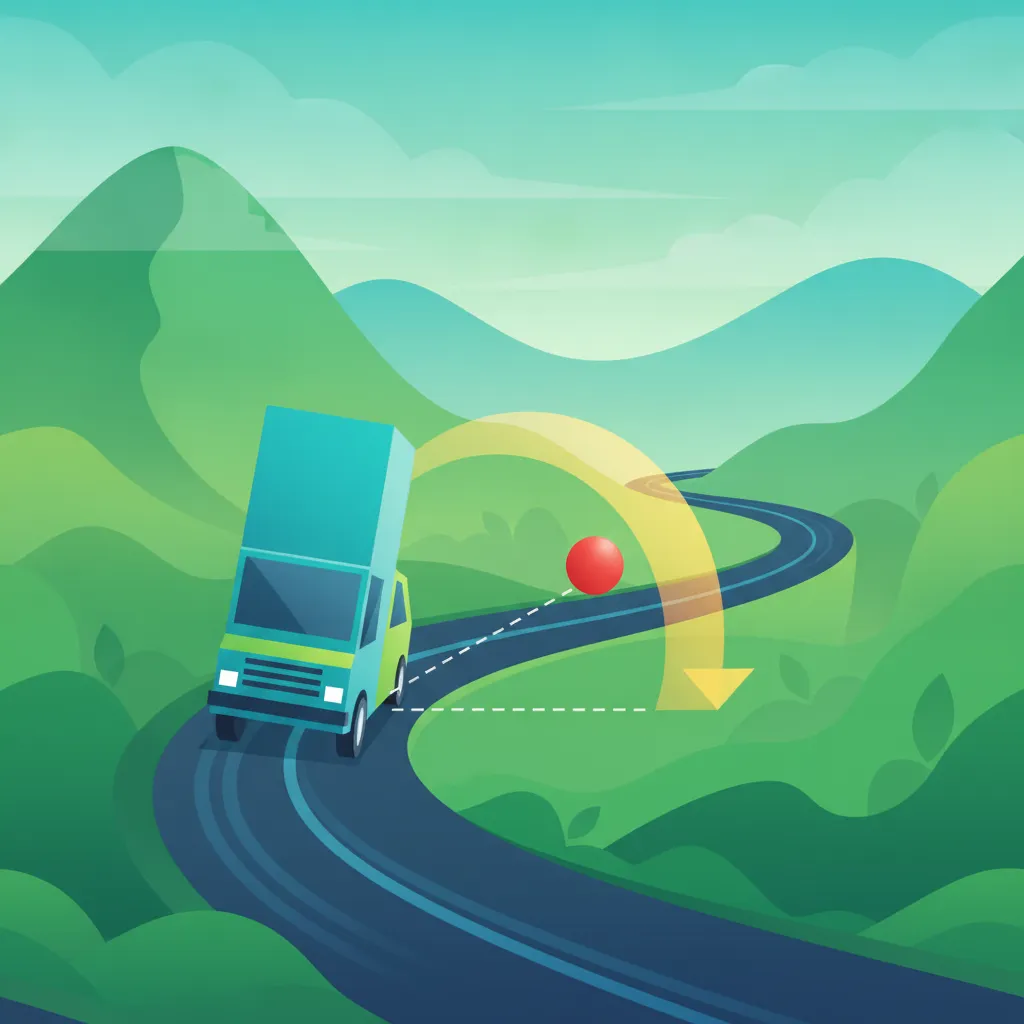
This lesson delves into the concept of centre of gravity and its critical impact on the stability of goods vehicles. Learners will explore how load height and distribution affect side and dynamic stability, particularly during braking, cornering, and evasive maneuvers. The lesson explains the increased rollover risk associated with a high centre of gravity and provides strategies for managing weight.

Learners will explore techniques for adjusting driving styles based on different road surface conditions, such as gravel, potholes, and wet pavement. The lesson emphasizes the importance of adapting speed, braking, and steering inputs to maintain vehicle control and passenger comfort. Strategies for detecting and responding to road hazards are discussed to ensure safety across diverse driving environments.

This lesson delves into the principles of weight distribution and load limits for goods vehicles, emphasizing the impact on vehicle stability and safety. It examines the concept of Gross Vehicle Weight (GVW) and the legal limits imposed on individual axles to prevent overloading. Learners will explore how improper weight distribution affects the centre of gravity, braking performance, and handling characteristics.

This lesson explains the legal guidelines and safety physics for carrying passengers and securing cargo inside or on top of a vehicle. It details how excess weight or poorly distributed cargo negatively affects vehicle handling, braking, and fuel efficiency. Drivers will learn the legal payload limits specified under Turkish Category B regulations.

This lesson addresses the techniques required for safely navigating grades and slopes with heavy goods vehicles. Learners will explore the use of engine braking, proper gear selection, and auxiliary retarders to manage speed on steep downhill sections. The lesson also covers strategies for starting on uphill grades without rollback, considering vehicle weight and load distribution.
Understand the legal framework for operating heavy commercial vehicles on Turkish motorways and highways. This lesson explains mandatory documentation, driver conduct, and specific traffic regulations for goods transport that every professional driver must follow to ensure compliance and safety according to the Turkish Highway Traffic Regulation.
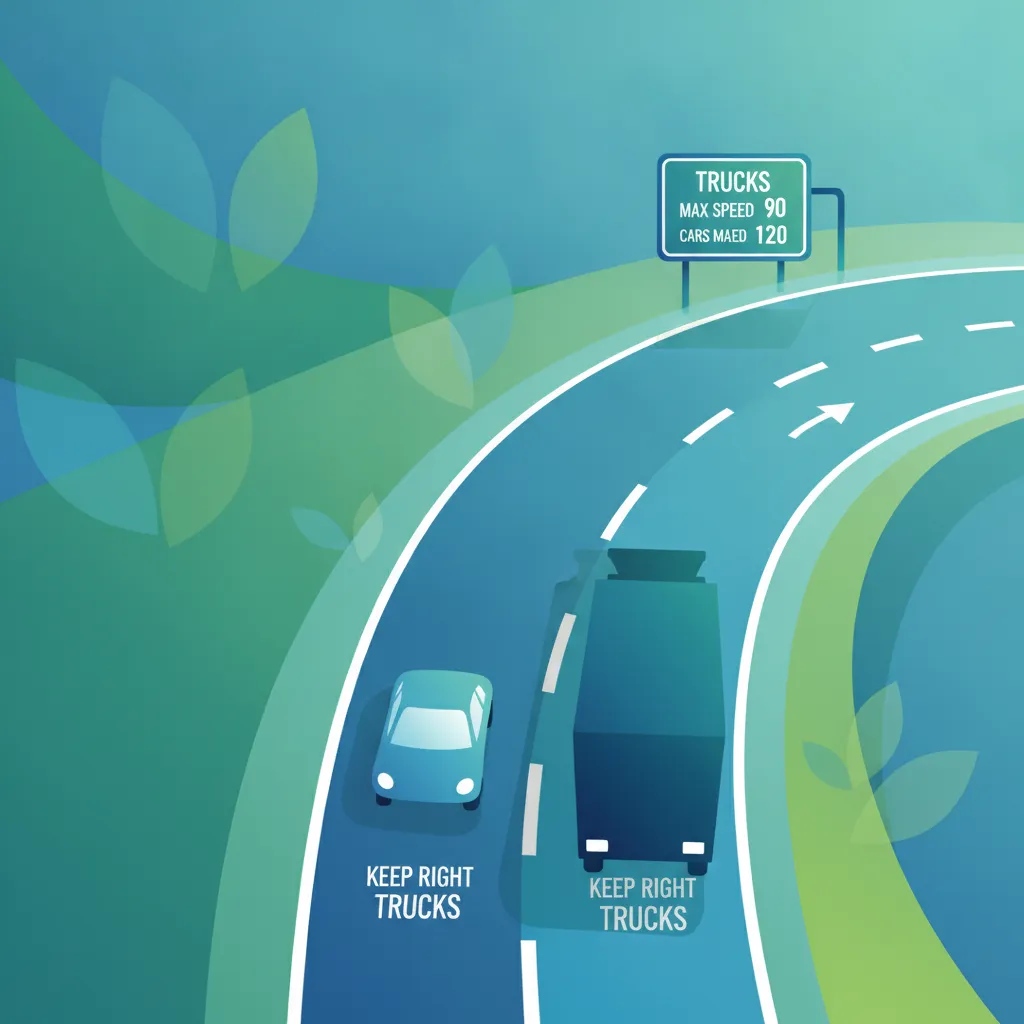
This lesson addresses the specific considerations for goods vehicle operation on highways and expressways, covering speed limits, lane discipline, safe merging, and overtaking. Learners will learn how to adapt to traffic flow, manage heavy vehicle dynamics at higher speeds, and ensure safe operation. The lesson emphasizes the importance of vigilance and proper lane usage to prevent accidents.
This lesson focuses on traffic signs and road markings that are specifically relevant to goods vehicles in Turkey. Learners will become familiar with signs indicating prohibited routes, weight limits, height restrictions, hazardous material transport, and lane usage regulations. The lesson emphasizes the importance of accurately interpreting these signs to ensure compliance with traffic laws.
This lesson focuses on speed regulation for goods vehicles, highlighting how vehicle weight, load, and road conditions influence safe operating speeds. Learners will understand legal speed limits for various road types and the necessity of adapting speed to traffic flow and environmental conditions. The lesson also emphasizes the importance of maintaining appropriate speed to ensure vehicle control.
This lesson focuses on the various access restrictions imposed on heavy goods vehicles within Turkish road networks. Learners will understand the reasons for restrictions such as low bridge clearances, tunnel usage, construction zones, and urban delivery area limitations. The lesson also covers how to recognize and comply with legal notices and signage indicating restricted commercial zones.
This lesson focuses on the critical importance of lane discipline and proper lane usage for large goods vehicles. Learners will understand the challenges posed by wider vehicle dimensions, the necessity of maintaining adequate lane occupancy, and the need for precise lane keeping. Emphasis is placed on selecting appropriate lanes, adhering to traffic flow, and ensuring general highway safety.

This lesson provides a detailed overview of the classification system for goods vehicles in Turkey, focusing on the specific dimensional limits for each category. Learners will become familiar with the maximum allowable length, width, and height for these vehicles, as defined by Turkish law. Understanding these limits is crucial for ensuring compliance with road regulations and avoiding serious violations.
This lesson focuses on effectively managing road closures and detours that affect goods vehicle routes. Learners will explore strategies for obtaining real-time information, updating navigation systems, and planning alternate routes to maintain efficiency and compliance. Emphasis is placed on safety considerations, communication with dispatch centers, and adhering to traffic management.

This lesson focuses on the unique requirements and best practices for operating passenger vehicles on highways and expressways. Topics include maintaining appropriate speed, adhering to lane discipline, executing safe overtaking maneuvers, and managing merges and exits. Emphasis is placed on ensuring a smooth ride for passengers while integrating safely with faster-moving traffic.
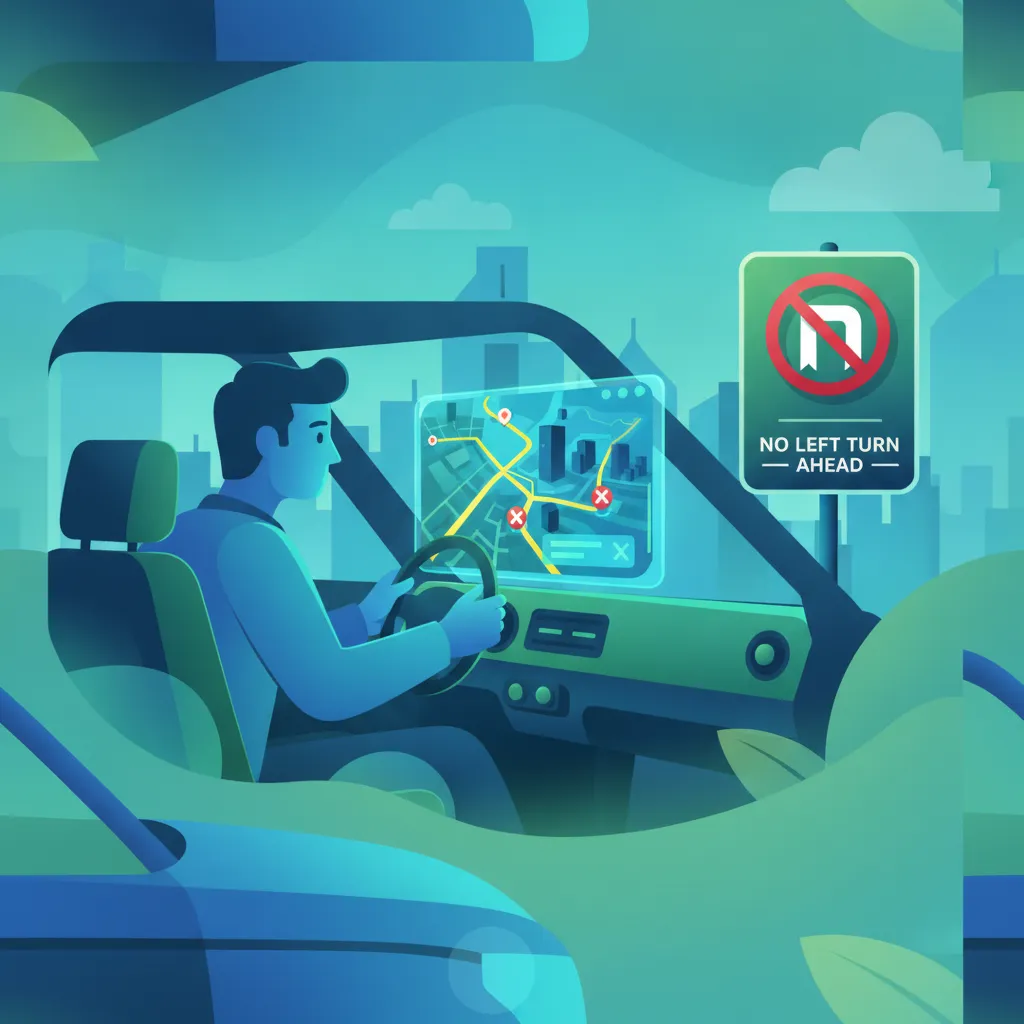
This lesson explores the legal and practical aspects of route planning for goods vehicles, emphasizing the importance of selecting suitable routes that adhere to road restrictions. Learners will learn how to identify roads with weight limits, height clearance, and prohibited zones for heavy vehicles. They will also discover how to use navigation systems and truck-specific GPS effectively.
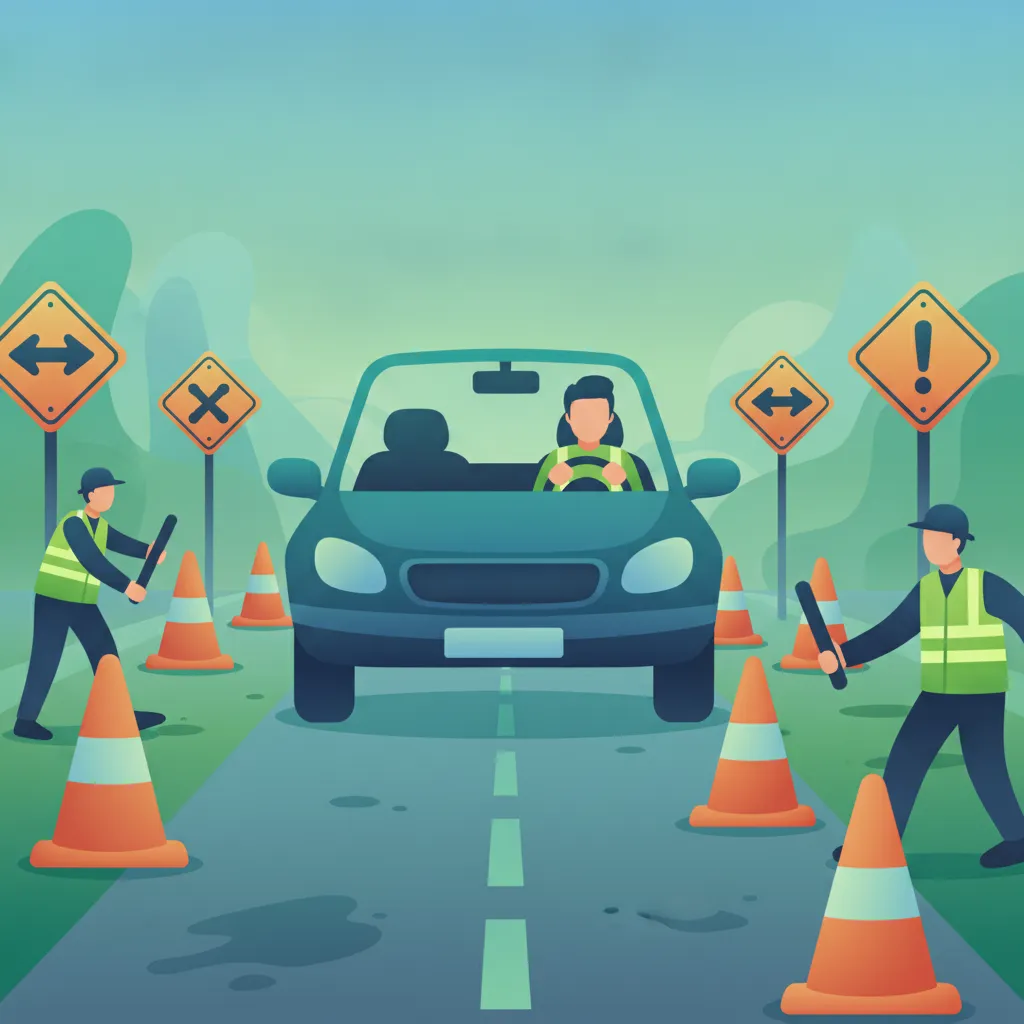
This lesson focuses on the safe navigation of goods vehicles through roadworks and construction zones. Learners will examine the importance of recognizing temporary signs, adhering to reduced speed limits, and maintaining heightened caution around workers and equipment. The lesson emphasizes the need for special attention due to the altered road environment and hazards specific to heavy vehicles.
Find clear answers to common questions learners have about Maintaining Safe Following Distances. Learn how the lesson is structured, which driving theory objectives it supports, and how it fits into the overall learning path of units and curriculum progression in Turkey. These explanations help you understand key concepts, lesson flow, and exam focused study goals.
Heavy goods vehicles have significantly greater mass and inertia, which results in much longer braking distances. You must maintain a larger gap to account for the time it takes for heavy braking systems to activate and decelerate the vehicle.
The heavier your cargo, the more momentum your vehicle carries. Always increase your following distance proportionately to your current gross weight to ensure you can stop safely in an emergency.
Yes, rain, snow, or fog reduces road grip and visibility, requiring you to at least double your normal following distance. In Turkey, road safety regulations expect professional drivers to adapt their speed and gap to these conditions.
While the rule often involves the 'two-second rule' for cars, for heavy goods vehicles, you should aim for a significantly larger time-based gap, often three seconds or more depending on speed and conditions, to stay within safety parameters.
Use our comprehensive practice search to find exactly the Turkish driving theory questions you need to master. Whether reviewing specific road signs, traffic rules, or first aid scenarios, select your perfect practice set and boost your confidence for the official ehliyet sınavı.