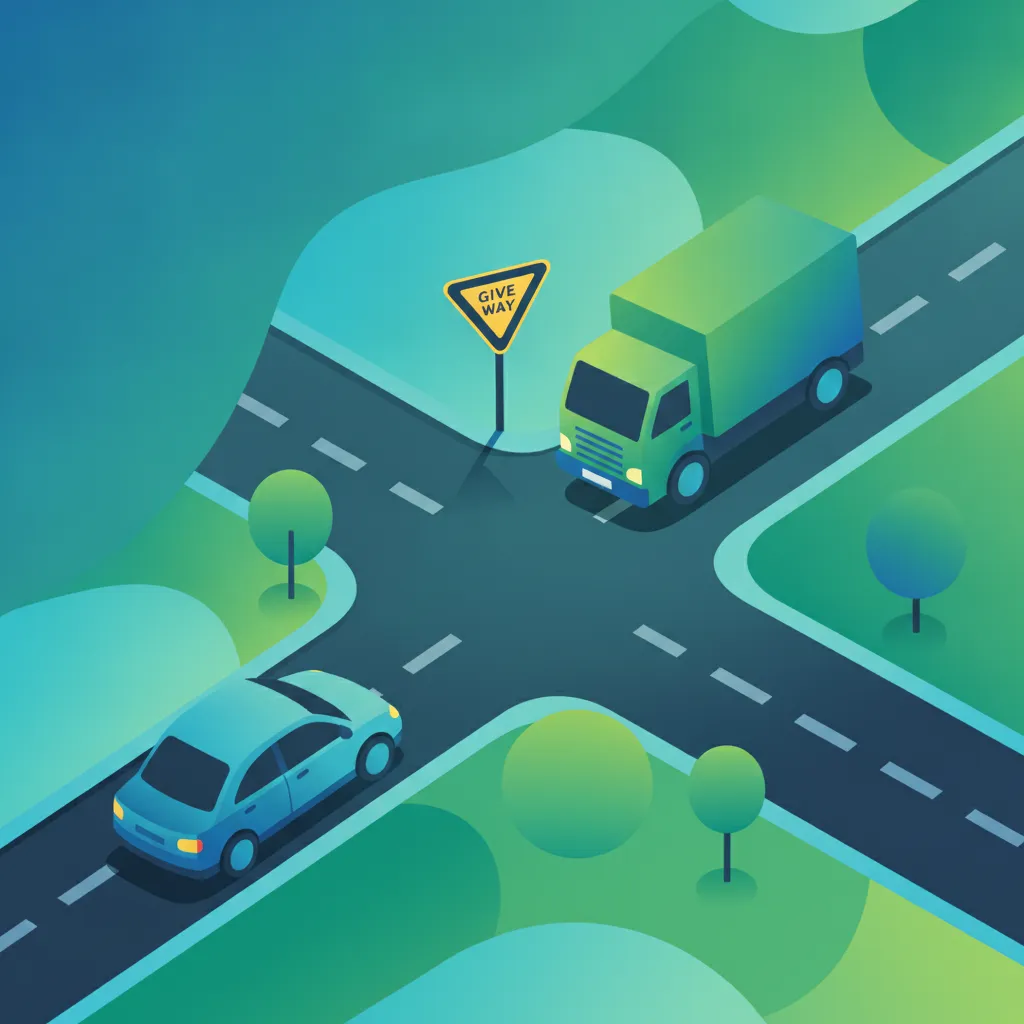
The Give Way sign, known as 'Yol Ver' in Turkish, is a fundamental traffic sign that instructs drivers to yield to traffic on another road before entering or crossing. Unlike a Stop sign, you don't always need to halt completely, but you must always be prepared to stop and ensure the path is clear. Mastering the interpretation of this sign is vital for safely navigating Turkish roads and passing your ehliyet theory exam.
Theory topic content overview
Read the full theory topic guide for Give Way Sign with structured, easy-to-scan content built for learners in Turkey. This detailed section explains the exact rule, meaning, traffic context, comparison points, and exam logic behind this Turkish driving theory topic so you can study faster, understand the concept more clearly, and avoid common interpretation mistakes on the theory test.
The Give Way sign, officially known as Yol Ver (Yol Ver İşareti) in Turkish traffic law, is a crucial inverted triangular road sign that instructs drivers to yield priority to other traffic. Its primary purpose is to ensure that vehicles on a priority road can proceed uninterrupted, enhancing safety and smooth traffic flow, especially at junctions and intersections in Türkiye.
When you encounter a Give Way sign, it means you do not have the right of way and must give precedence to vehicles approaching on the intersecting road or from a specified direction. Unlike a Stop sign (Dur İşareti), a complete halt is not always mandatory if the path is genuinely clear and safe to proceed. However, you must always be prepared to stop.
Mastering the Give Way rule is fundamental for anyone driving in Türkiye, especially for those preparing for their ehliyet (driving licence) theory exam.
Yol Ver sign is a leading cause of collisions at intersections. By yielding, you prevent forcing other drivers to brake or swerve.Ehliyet Exam Success: The Turkish driving theory test (ehliyet sınavı) frequently includes scenarios involving Give Way signs, often testing your ability to differentiate it from a Stop sign and make correct priority judgments.The Give Way sign demands careful observation and proactive decision-making. Here's a step-by-step approach for safe navigation:
Yol Ver sign, reduce your speed significantly. This gives you more time to assess the situation and react if necessary.Remember, the goal is to enter the traffic stream without causing any disruption to priority vehicles.
Several factors demand extra caution when approaching a Give Way sign:
yol ver çizgisi). This line indicates where you should yield.Yol Ver) vs. Stop (Dur) SignThis is a frequently confused point for ehliyet exam candidates and a critical distinction for safe driving in Türkiye.
Give Way (Yol Ver) Sign (Inverted Triangle):
Stop (Dur) Sign (Red Octagon):
The key difference lies in the mandatory full stop. A Dur sign offers no discretion; a Yol Ver sign requires judgment, but always with the readiness to stop.
Let's look at common situations where you'll encounter and apply the Give Way rule in Türkiye:
Yol Ver sign indicates you must yield to the continuous flow of traffic on the main avenue. You must wait for a sufficient gap before turning onto or crossing the main road.Döner Kavşak): In many Turkish roundabouts, traffic already circulating within the roundabout has priority. A Yol Ver sign at the entry point means you must yield to vehicles already on the roundabout before entering the circular flow.Yol Ver sign directs you to yield to all traffic on the main road before merging. This requires assessing speeds and distances carefully.Yol Ver SignsLearners in Türkiye often make specific errors when encountering Give Way signs during their ehliyet training and exams:
Yol Ver sign as if it always requires a full stop, which can unnecessarily impede traffic flow behind you when the path is clear. Conversely, treating a Dur sign as a Yol Ver is extremely dangerous.yol ver çizgisi on the road, which clearly marks the point where you should yield.Yol Ver (Give Way)The Give Way (Yol Ver) sign is a fundamental pillar of safe and orderly traffic in Türkiye. It places the responsibility on your shoulders to assess the situation and ensure your actions do not impede or endanger other road users.
Always remember the core principle: Reduce speed, observe diligently, and only proceed when you are absolutely certain that you can do so without forcing any priority traffic to slow down or change direction. When in doubt, it's always safer to slow down further or stop completely. This cautious approach will serve you well on your ehliyet exam and throughout your driving career in Türkiye.
Start with a short, direct summary of Give Way Sign before reading the full explanation below.
The Give Way sign requires drivers to yield to traffic on the priority road. This means you must slow down, observe traffic approaching from the priority direction, and only proceed when it is safe to do so without forcing other vehicles to slow down or change direction. While a full stop is not always mandatory like at a Stop sign, you must always be ready to stop if necessary to ensure safety and comply with Turkish traffic laws.
Review the most important terms, rule signals, and traffic concepts linked to Give Way Sign.
Explore related theory topic pages connected to Give Way Sign and continue with the next useful rule explanation.
See the common search queries learners use when trying to understand Give Way Sign in Turkey.

Dive deeper into specific Turkish driving theory topics like traffic signs, first aid, or vehicle mechanics. Each section offers clear explanations to enhance your understanding of official traffic legislation and prepare you effectively for every aspect of your upcoming ehliyet exam in Türkiye.
Explore Turkish Driving Theory TopicsTheory topic content overview
Start with a short, direct summary of Give Way Sign before reading the full explanation below.
The Give Way sign requires drivers to yield to traffic on the priority road. This means you must slow down, observe traffic approaching from the priority direction, and only proceed when it is safe to do so without forcing other vehicles to slow down or change direction. While a full stop is not always mandatory like at a Stop sign, you must always be ready to stop if necessary to ensure safety and comply with Turkish traffic laws.
Review the most important terms, rule signals, and traffic concepts linked to Give Way Sign.
Explore related theory topic pages connected to Give Way Sign and continue with the next useful rule explanation.
See the common search queries learners use when trying to understand Give Way Sign in Turkey.
Dive deeper into specific Turkish driving theory topics like traffic signs, first aid, or vehicle mechanics. Each section offers clear explanations to enhance your understanding of official traffic legislation and prepare you effectively for every aspect of your upcoming ehliyet exam in Türkiye.
Explore Turkish Driving Theory TopicsUse this exam-focused revision tip to understand how Give Way Sign is likely to appear in theory questions for learners in Turkey. This section helps you identify the most testable part of the rule, avoid common traps, and remember the concept more effectively during Turkish driving theory exam preparation.
Many ehliyet exam questions test your understanding of Give Way sign scenarios, especially comparing them with Stop signs. Remember: Give Way means be prepared to stop and yield if necessary, but Stop means you *must* stop completely first, then yield. Pay close attention to traffic flow and vehicle distances in exam images.
Read direct answers to the most common learner questions about Give Way Sign in Turkey. This FAQ focuses on rule confusion, practical meaning, comparison with similar concepts, and the exact uncertainties that appear most often in Turkish driving theory revision and exam preparation.
The Give Way sign's primary purpose is to ensure that drivers yield priority to traffic on another road, allowing for a safe and uninterrupted flow of vehicles already on the priority route.
No, a full stop is not always required. You must slow down significantly, observe traffic, and only stop if necessary to yield to priority vehicles or ensure the path is clear before proceeding.
A Give Way sign (Yol Ver) requires you to yield, stopping only if traffic demands it, while a Stop sign (Dur) mandates a complete stop before the stop line, regardless of traffic, then yielding.
Yielding means giving way to other vehicles that have priority, ensuring your entry into the intersection or crossing does not force them to brake or alter their course. You must only proceed when it is safe and clear.
Give Way signs are frequently placed at junctions where a minor road merges into a major road, at roundabouts, or where different traffic streams need clear priority coordination.
Yes, failing to obey a Give Way sign (Yol Ver işareti) by not yielding to priority traffic can result in fines and penalty points on your ehliyet, as it's a serious traffic violation.
Use our comprehensive practice search to find exactly the Turkish driving theory questions you need to master. Whether reviewing specific road signs, traffic rules, or first aid scenarios, select your perfect practice set and boost your confidence for the official ehliyet sınavı.