This lesson explores why light vehicles like scooters and cyclomoteurs are inherently vulnerable in French traffic. You will learn how to anticipate hazards caused by your smaller profile and how to maintain safety around larger vehicles.
Lesson content overview
Navigating French roads on a Category AM vehicle—such as a moped (cyclomoteur) under 50 cm³ or a light quadricycle (voiturette)—demands a deep appreciation of your physical vulnerability in mixed traffic. Unlike passenger cars or heavy-goods vehicles (poids lourds), small motorized vehicles lack a protective metal envelope, have limited physical presence, and operate with significantly less power.
Understanding the dynamics of this vulnerability is not merely a theoretical requirement for passing your Code de la route exam; it is the foundation of defensive riding. This lesson details the physical forces, visibility challenges, and environmental hazards that directly affect your safety on French roads, empowering you to make proactive, life-saving decisions in traffic.
To understand why collisions involving light vehicles result in disproportionately severe outcomes, you must look at the physical laws governing motion. In any traffic accident, the severity of the damage and injury is dictated by the transfer of kinetic energy.
Kinetic energy () is the energy an object possesses due to its motion. It is mathematically defined as:
Where:
Because velocity is squared, even a minor increase in speed dramatically multiplies the kinetic energy. However, the critical factor for Category AM riders is mass ().
A standard moped with its rider typically weighs between 150 kg and 200 kg combined. In contrast, an average mid-sized passenger car weighs roughly 1,500 kg, and a loaded commercial truck can weigh up to 40,000 kg (40 tonnes).
When a light vehicle collides with a heavier vehicle, the law of conservation of momentum dictates that the lighter object will undergo a violent change in velocity and direction. The heavier vehicle absorbs relatively little of the impact force, while the light vehicle—and its rider—absorbs the vast majority of the transferred energy.
The energy accumulated by a moving body. Because it increases with the square of the speed, doubling your velocity quadruples the destructive energy released in an impact.
Passenger cars are designed with crumple zones, reinforced steel frames, seatbelts, and airbags to absorb impact forces and shield the occupants. On a moped or scooter, your body is the outermost surface.
There is no structural protection envelope to mitigate the impact. When a collision occurs, the rider is typically ejected from the vehicle or crushed against the obstacle, leading to direct tissue, bone, and organ damage. This makes even low-speed impacts (e.g., 20 km/h to 30 km/h) potentially life-threatening for AM riders.
One of the greatest hazards on the road is the lack of conspicuity (perceptibilité)—the ease with which a vehicle can be spotted by other motorists. Because of their narrow silhouette, Category AM vehicles are frequently missed by drivers who are subconsciously scanning the road only for larger, car-sized targets.
Human drivers suffer from a cognitive phenomenon known as "looked-but-failed-to-see" errors. When a driver approaches an intersection, their brain is trained to look for immediate threats: large, heavy objects like oncoming cars and trucks. A narrow two-wheeler occupies a very small portion of a driver's visual field, making it easy for the driver's brain to filter it out.
Additionally, because of the small size of your vehicle, other drivers struggle to judge your speed and distance accurately. They may pull out in front of you at junctions, mistakenly believing you are further away or traveling slower than you actually are.
To counteract this lack of natural visibility, French traffic law mandates that all mopeds must operate with their low-beam headlights (feux de croisement) turned on at all times, both day and night.
Riding a moped during the day without your low-beam headlights on is a violation of the French traffic code (Code de la route). This rule is designed specifically to make your narrow profile stand out against complex urban backgrounds.
While daytime headlight usage helps, it does not guarantee that you are seen. Glare from the sun, reflections on wet asphalt, and the high-mounted headlights of oncoming SUVs or trucks can still easily drown out the single, low-positioned headlight of a light vehicle.
Every vehicle has blind spots—areas around the chassis where the driver’s direct line of sight and mirrors fail to show surrounding traffic. Because of your vehicle's small physical footprint, a Category AM vehicle can easily disappear entirely inside these blind spots (angles morts).
The blind spots around heavy-goods vehicles, buses, and large utility vans are massive. In France, heavy vehicles over 3.5 tonnes are legally required to display warning stickers illustrating their blind spots to alert vulnerable road users. However, the responsibility to stay out of these zones rests heavily on you.
There are four primary blind spots around a large truck or bus:
To protect yourself around larger vehicles, you must adhere to strict defensive positioning principles:
Establish Eye Contact: If you cannot see the driver's face in their side-view mirror, they absolutely cannot see you.
Avoid Lingering: Never ride alongside a truck or bus. Either pass them quickly and safely (if legally permitted) or drop back to maintain a wide safety buffer.
Anticipate Wide Turns: Large vehicles must swing wide to make tight turns. Never attempt to squeeze between a turning truck and the curb.
A light vehicle’s stability is highly susceptible to external physical forces. Unlike a four-wheeled passenger car, a two-wheeled moped relies on gyroscopic forces, steering input, and rider balance to remain upright.
When a large, fast-moving vehicle passes you (or when you pass one), it displaces a massive volume of air. This creates a two-phase aerodynamic force:
To combat this, the Code de la route establishes safe lateral passing distances.
When overtaking a two-wheeler, or when an AM rider passes another vulnerable road user, a minimum lateral clearance must be maintained:
Open bridges, highway overpasses, gaps in hedges, and coastal roads are prone to sudden, severe crosswinds. Because a Category AM vehicle is lightweight, a strong gust (rafale) can physically displace your vehicle by a metre or more across the lane, pushing you into oncoming traffic or off the roadway.
If you encounter strong winds:
A common misconception among new riders is that because a moped is light, it can stop instantly. In reality, stopping distances are influenced by complex human and mechanical factors that often place the light vehicle operator at a disadvantage.
The total stopping distance (distance d'arrêt) is the sum of two components:
While a light moped has less mass to halt than a car, it also has a much smaller "contact patch" (the tiny area of rubber where the tires meet the road). Furthermore, Category AM vehicles are not typically equipped with advanced cornering ABS (anti-lock braking systems). Hard, panicked braking can easily lock the wheels, leading to an immediate slide and loss of control.
Wet roads cut tire grip in half. Because light vehicles are highly sensitive to surface traction, your braking distance will double on wet asphalt.
[Dry Road Stopping Distance] ──> Reaction (1s) + Normal Braking
[Wet Road Stopping Distance] ──> Reaction (1s) + DOUBLE Braking Distance (High risk of wheel lock)
If a larger vehicle behind you tailgates, you are at extreme risk. Heavy vehicles require a much longer distance to stop due to their massive kinetic energy. If you are forced to perform an emergency stop on your moped, a tailgating car or truck behind you may not be able to stop in time, resulting in a rear-end collision.
The handling and stability of a Category AM vehicle are highly sensitive to how weight is distributed. Because the vehicle itself is light, any cargo or passenger you carry represents a massive percentage of the vehicle's total operating weight.
The center of gravity is the theoretical point where the combined mass of the vehicle and rider is balanced. A low, centralized center of gravity ensures stable cornering and predictable braking.
When you add a passenger (passager) or heavy luggage, several dangerous physical shifts occur:
To minimize vulnerability when carrying extra weight:
In modern traffic, you cannot rely on your ears to stay safe. A dangerous mix of mechanical factors and human psychology makes acoustic detection a highly unreliable defensive tool.
The rapid rise of hybrid and fully electric vehicles (EVs) on French roads means that many oncoming or overtaking vehicles are virtually silent at low speeds. At speeds under 30 km/h, electric cars produce almost no engine noise, making them impossible to detect by sound alone.
Wearing a certified safety helmet is a legal requirement under the Code de la route, but it naturally dampens ambient noise. Combined with wind noise generated around the helmet visor at speed, your ability to hear an approaching vehicle's engine or the tires of a tailgating car is severely compromised.
Visual Scanning (Active mirrors & head checks) ──> 95% of Hazard Detection
Acoustic Detection (Engine sounds, tires)      ──> 5% (Highly unreliable)
Therefore, defensive riders must practice continuous visual scanning. Use your mirrors every few seconds and perform direct shoulder checks (contrôles directs) before any change of lateral position.
To protect vulnerable AM riders, the Code de la route enforces specific rules. Violating these rules increases your physical risk and carries stiff legal penalties.
To counter your physical vulnerability in traffic, commit these defensive habits to memory:
┌────────────────────────────────────────────────────────────────────────┐
│                      DEFENSIVE RIDING BLUEPRINT                        │
├───────────────────────────────────┬────────────────────────────────────┤
│           WHAT TO AVOID           │           WHAT TO PRACTICE         │
├───────────────────────────────────┼────────────────────────────────────┤
│ • Lingering in truck blind spots  │ • Continuous visual scanning       │
│ • Squeezing along the curb/gutter │ • Dominating your lane position    │
│ • Tailgating larger vehicles      │ • Maintaining a 2-second gap       │
│ • Riding in severe crosswinds     │ • Wearing high-visibility gear     │
└───────────────────────────────────┴────────────────────────────────────┘
By understanding the cold, hard physics of road sharing, respecting the blind spots of larger vehicles, and adapting your riding style to the weather, load, and road conditions, you can safely navigate the French road network as a Category AM rider.
Explore all units and lessons included in this driving theory course.
Lesson content overview
Explore all units and lessons included in this driving theory course.
Explore search topics learners often look for when studying Vulnerability of Light Vehicles in Traffic. These topics reflect common questions about road rules, driving situations, safety guidance, and lesson level theory preparation for learners in France.
Browse additional driving theory lessons that cover connected traffic rules, road signs, and common driving situations related to this topic. Improve your understanding of how different rules interact across everyday traffic scenarios.
Understand the specific risks associated with heavy goods vehicles including blind spot management and aerodynamic effects. This guide explains how to safely position your category AM vehicle when interacting with trucks and buses to navigate French urban and rural roads with confidence and proper awareness of road safety rules.
This lesson focuses on the importance of recognizing and mitigating blind spots in goods vehicles, especially when towing trailers. Learners will explore techniques such as proper mirror adjustment, the use of blind spot mirrors, and visual checks to ensure that obstacles and vulnerable road users are detected before executing maneuvers. The content also discusses the limitations of blind spot monitoring systems and the need for supplementary visual checks.

In this lesson, drivers will learn strategies to avoid conflicts with smaller vehicles, such as cars and vans, which may not be as visible in large vehicle blind spots. The content emphasizes maintaining adequate spacing, using proper lane discipline, and being aware of small vehicles' behavior during lane changes and turns. Learners will also be introduced to communication techniques, such as signalling and eye contact.
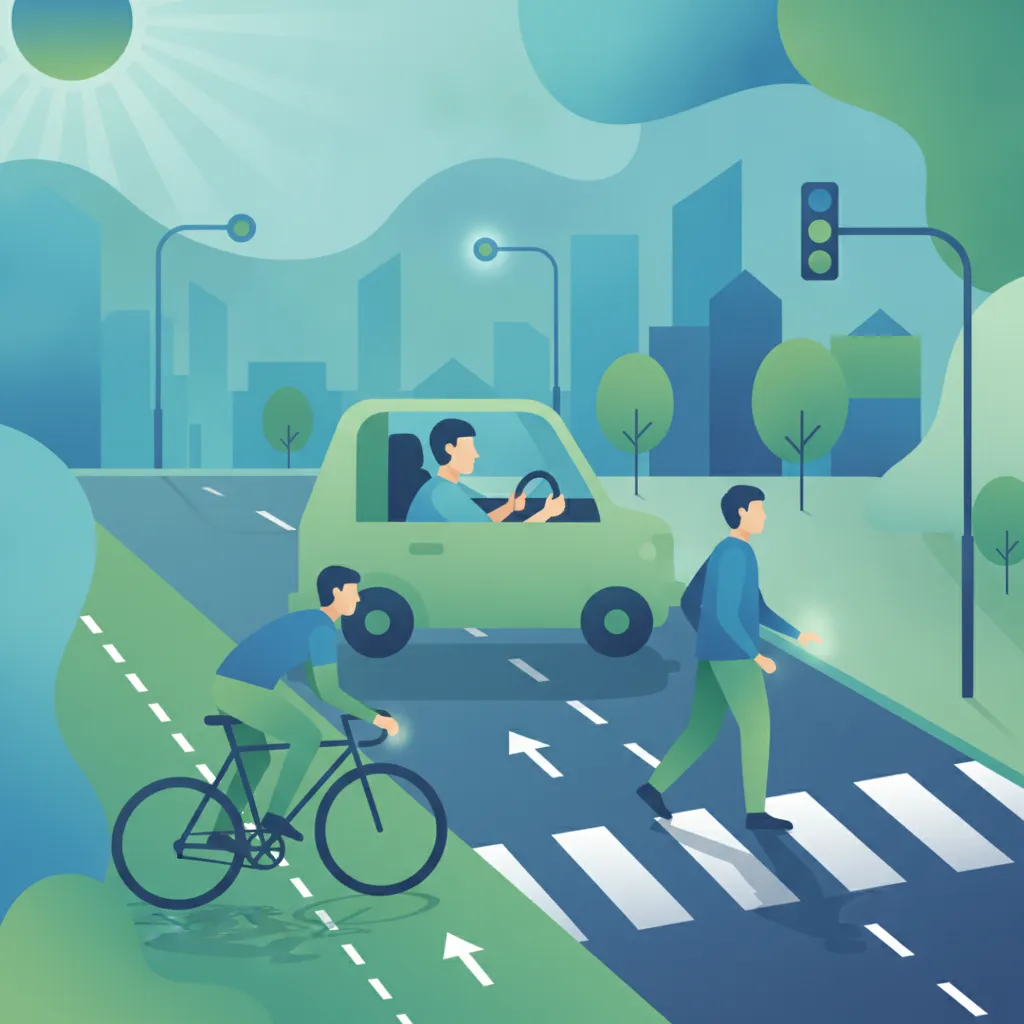
This lesson examines the specific challenges and responsibilities goods vehicle drivers face when interacting with pedestrians and cyclists in urban environments. Learners will understand right-of-way rules, the importance of yielding at pedestrian crossings, and safe turning practices that protect cyclists. The content emphasizes heightened driver vigilance, especially when navigating bike lanes and crowded sidewalks.

This lesson details the dangerous blind spots (angles morts) that surround heavy passenger vehicles and explains how to mitigate them. Drivers will master the systematic mirror check sequence (retro-information) before executing any turns or lane changes. It also covers the mandatory French "Angles Morts" warning stickers displayed on the vehicle exterior to alert vulnerable road users of danger zones.
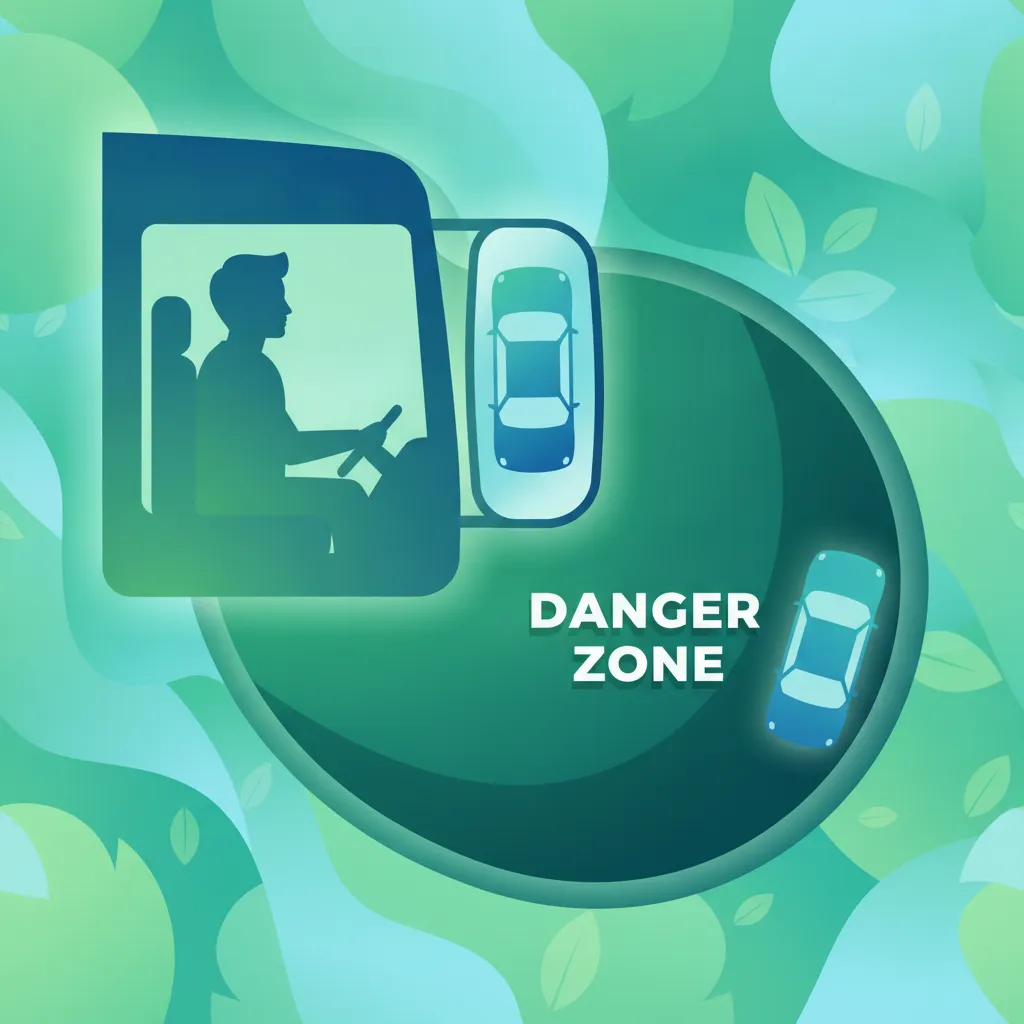
This lesson details the location and scale of blind spots around passenger cars and heavy goods vehicles, often referred to as the 'no-zone' or 'angles morts'. You will learn why truck drivers cannot see you directly behind or immediately adjacent to their cab doors. The lesson provides actionable strategies to minimize the time you spend in these dangerous zones, ensuring you always pass quickly and safely.
This lesson focuses on the specific considerations for operating goods vehicles on French motorways, including lane selection, speed management, and proper merging techniques. Learners will understand the importance of maintaining lane discipline, using appropriate overtaking practices, and respecting motorway-specific speed limits for heavy vehicles. The content also covers the use of emergency lanes and the handling of traffic flow.
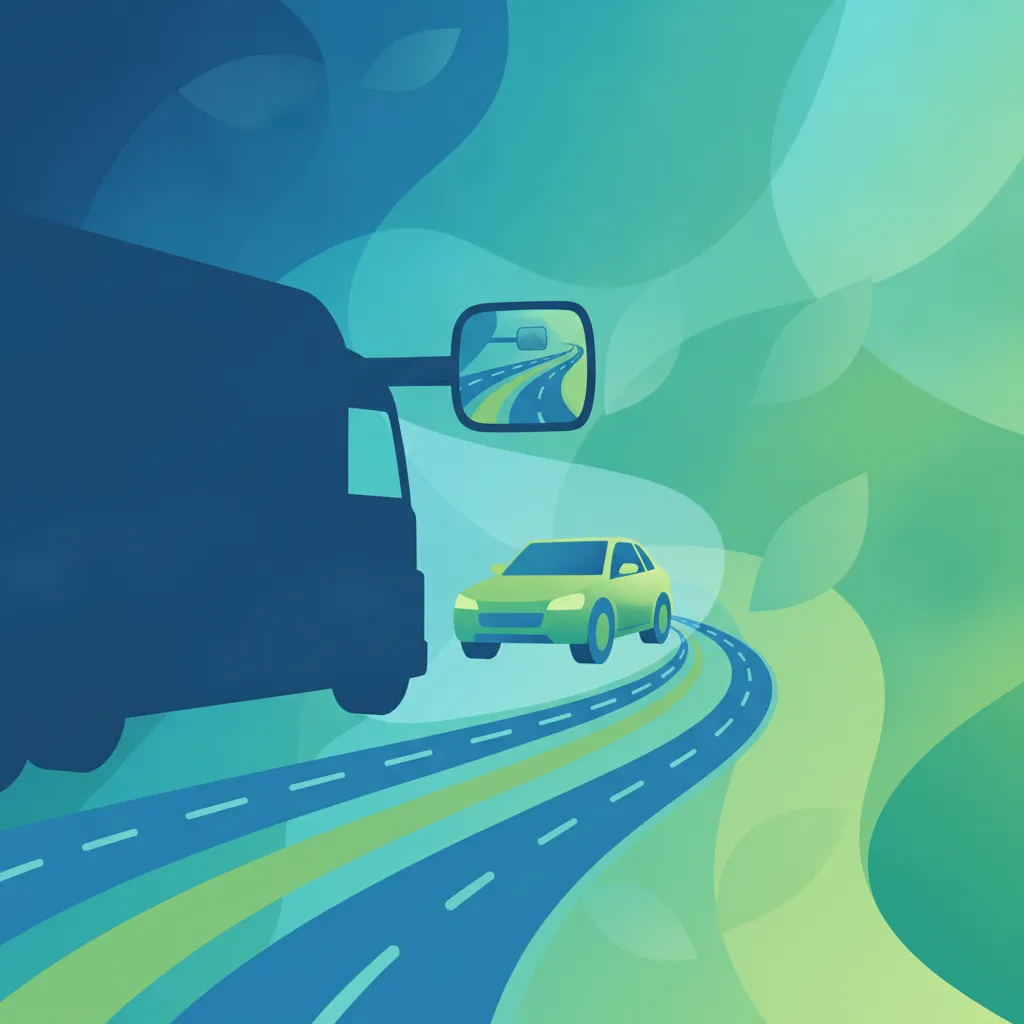
This lesson addresses the challenges of positioning near larger vehicles such as cars, vans, buses, and lorries on French roads. Learners will learn to identify blind spots (angles morts), maintain a safe distance, and position themselves to maximize visibility and predictability. Understanding these dynamics is crucial for AM riders to avoid dangerous situations and ensure safe overtaking and lane sharing.

In this lesson, drivers will explore the specific challenges presented by rural road environments, including narrower lanes, shared space with agricultural vehicles, and frequent wildlife crossings. The content emphasizes adapting speed to road curvature, surface conditions, and visibility while navigating hills and bends. Learners will also learn to interpret rural road signage and understand the importance of maintaining vigilance.
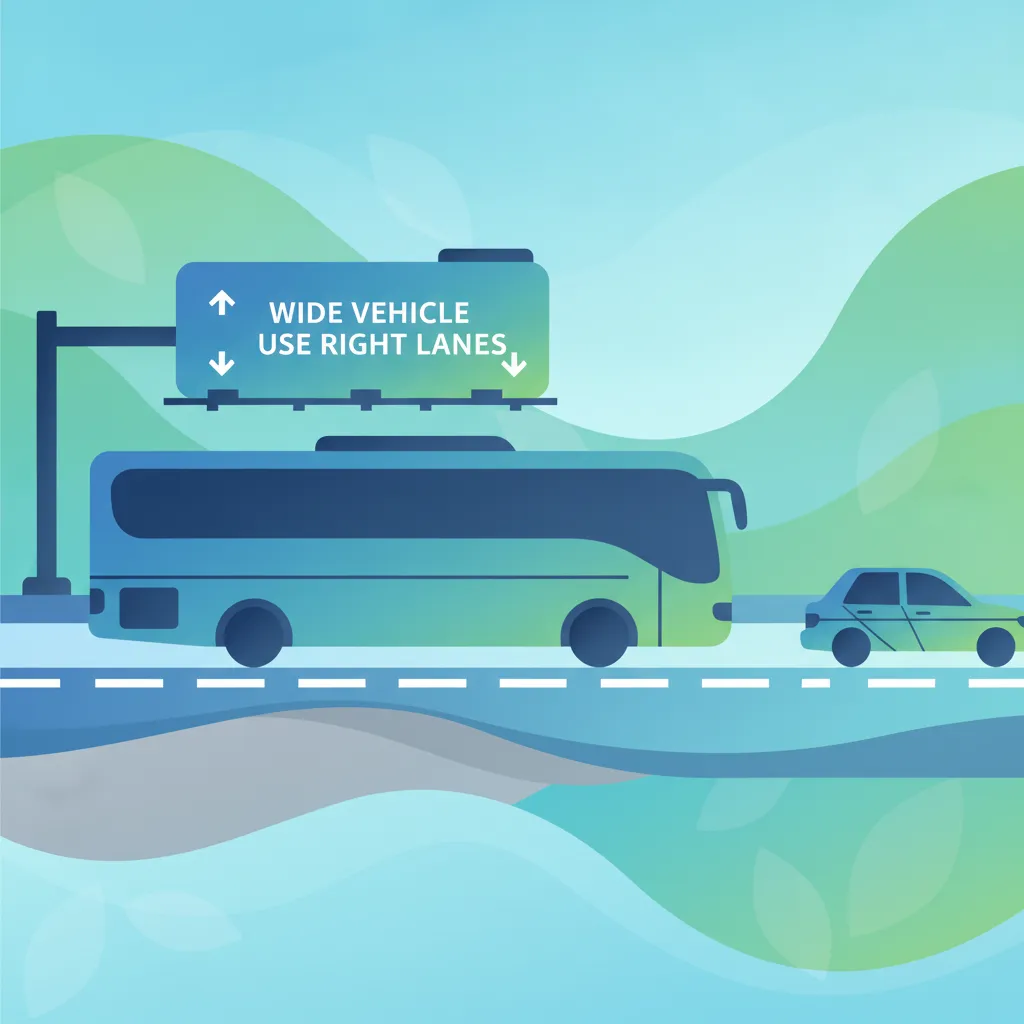
This lesson details the rules of lane discipline for operating wider and longer passenger transport vehicles on highway and city networks. Learners will explore proper lane positioning to prevent encroachment on adjacent lanes or sidewalks. It also covers the step-by-step visual and signaling sequence required to perform safe lane changes, avoiding sudden movements that could startle other drivers.
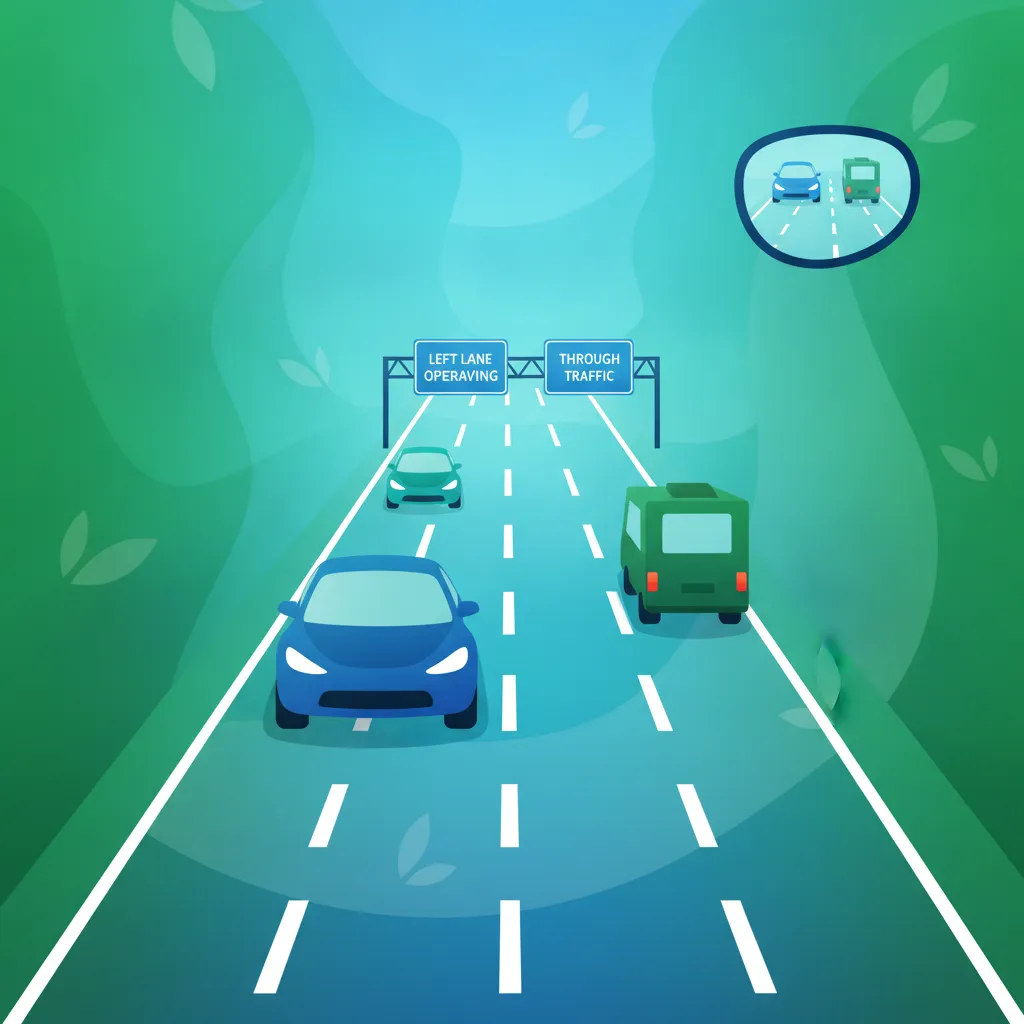
This lesson covers the rules of driving passenger vehicles on high-speed French motorways (autoroutes). Learners will study entry-ramp merging protocols, lane restrictions for vehicles over 3.5 tonnes, and motorway-specific speed limits. The lesson also highlights the correct use of toll booths (péages), emergency hard-shoulder safety procedures, and accessing dedicated coach rest areas.
Explore the impact of crosswinds and changing road surface conditions on the stability of lightweight AM vehicles. This lesson provides an overview of how environmental variables affect vehicle handling and provides clear guidance on adjusting your riding technique for safer travel under varied weather conditions in France.
This lesson examines how different road surfaces affect tire grip and vehicle stability. Learners will explore strategies for maintaining traction on wet surfaces, gravel, and irregular roadways, including appropriate lean angles and smooth throttle control under French road conditions. Understanding these principles helps riders avoid slip incidents and preserve control during cornering and braking.
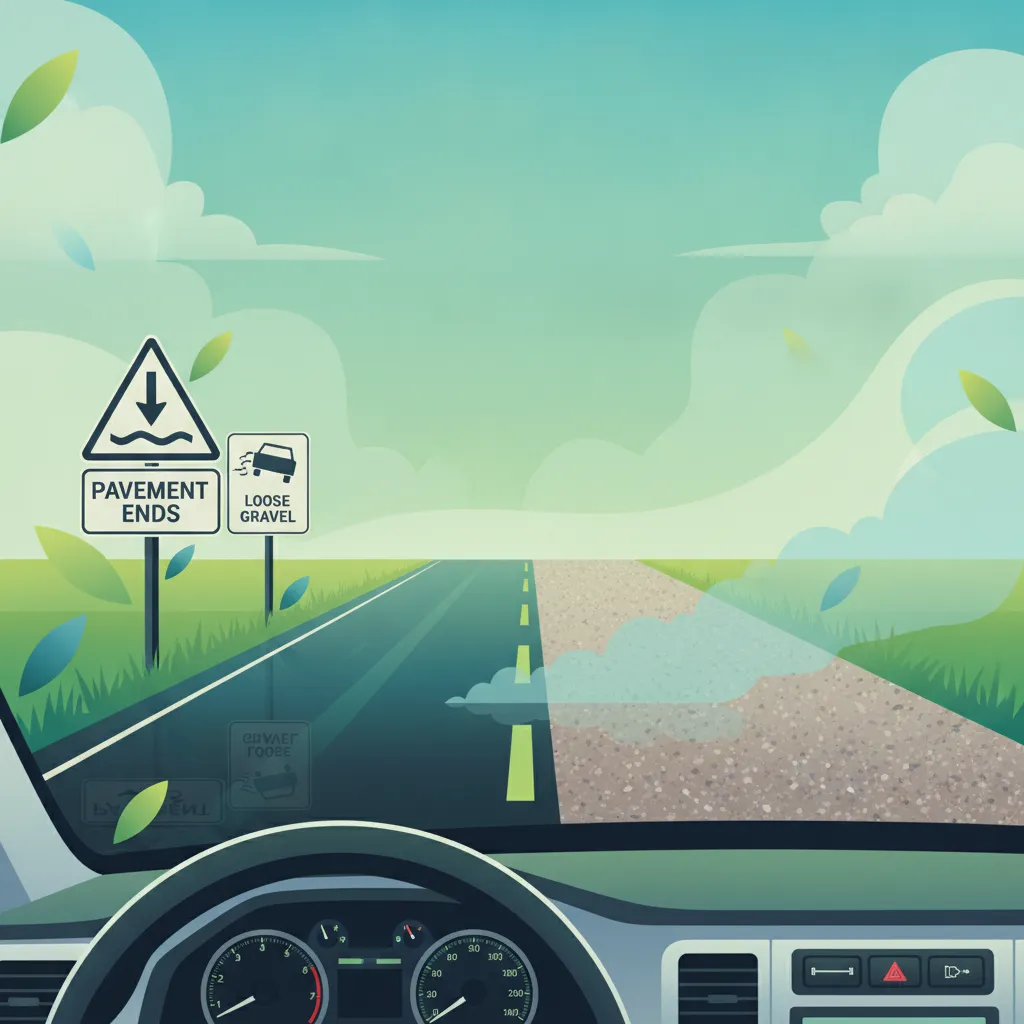
The physical composition of a road surface directly influences vehicle traction, braking performance, and tyre wear. This lesson explains how asphalt, cobblestones, and gravel impact your vehicle's handling, especially during wet or icy conditions. You will learn to recognize reduced friction signs, manage tyre adhesion, and adjust your speed to ensure stability and control on all road types.
In this lesson, drivers will learn how to adjust their driving techniques in response to adverse weather conditions such as rain, fog, snow, ice, and strong winds. The content covers strategies for maintaining visibility, managing reduced traction on wet or icy surfaces, and adjusting speed and braking distances accordingly. Learners will also be introduced to the use of anti-skid and stability control systems under challenging weather.

Adverse weather reduces tyre traction and limits visibility, dramatically raising the risk of multi-car accidents on highways. This lesson details speed reductions required during rainfall, techniques for avoiding aquaplaning, and demisting windshields for visibility. You will learn how to maintain extra stopping distance on snow-covered roads and the correct headlight adjustments to make during fog.
In this lesson, drivers will learn about the relationship between a vehicle’s centre of gravity and its susceptibility to rollover incidents. The content covers how high-center-of-gravity loads, load shifts, and overloading can compromise lateral stability, especially during cornering or evasive maneuvers. Learners will gain insight into calculating safety margins and understanding the impact of cargo weight distribution on the overall stability of the vehicle.

This lesson teaches riders how to negotiate loose surfaces such as gravel, sand, and poorly maintained urban asphalt without dropping the motorcycle. You will study correct body positioning, focusing on keeping your weight centered and your grip relaxed on the handlebars. The lesson also highlights why smooth, constant throttle delivery and avoiding abrupt front braking are essential to prevent the front wheel from washing out.

This lesson addresses the unique hazards of riding a motorcycle in wet conditions, emphasizing the danger of aquaplaning. You will learn how water pooling on the asphalt can cause tires to lose direct contact with the road, leading to a complete loss of steering control. The lesson offers practical advice on reducing your speed, using smooth throttle and brake inputs, and ensuring your tires have adequate tread depth to clear water.
Find clear answers to common questions learners have about Vulnerability of Light Vehicles in Traffic. Learn how the lesson is structured, which driving theory objectives it supports, and how it fits into the overall learning path of units and curriculum progression in France. These explanations help you understand key concepts, lesson flow, and exam focused study goals.
Because of their smaller mass, lower maximum speed, and lack of a protective chassis, AM vehicles are less visible to other drivers. This increases the risk of being overlooked in blind spots or during maneuvers by larger vehicles.
You should always keep your lights on, wear high-visibility gear, and position yourself in the lane where you are most likely to be seen by the driver ahead, rather than hiding in their blind spots.
Yes, the theory exam frequently tests your understanding of defensive behavior and the specific risks associated with light vehicles, such as how to interact safely with cars and trucks at intersections.
Always assume the driver may not see you. Maintain a safe following distance, stay out of their blind spots, and be ready to slow down or move to a safer part of your lane if they start an unexpected maneuver.
Ready to focus your study? Use the practice search to find exactly the French driving theory questions you need for the Code de la route and permis de conduire ETG. Refine your knowledge on specific topics or challenging rules to boost your confidence and exam readiness.