
This lesson guides you through the crucial techniques for safely operating your vehicle during adverse weather conditions, such as heavy rain, fog, or snowfall. By understanding how environmental factors impact your car's handling and braking, you will be better prepared to make split-second decisions required on the French Category B theory exam.

Lesson content overview
Operating a motor vehicle under ideal conditions requires concentration, but navigating adverse weather demands a profound understanding of vehicle physics and the strict regulations of the French Code de la route. Rain, fog, snow, ice, and high winds dramatically alter your car's handling, your visibility, and your safety margins.
To pass the French Category B driving theory exam (Épreuve Théorique Générale or ETG), you must master how adverse weather impacts stopping distances, which lights to use, and when speed limits are legally reduced. This lesson provides the advanced technical knowledge and legal rules needed to stay safe and compliant on French roads.
To control a vehicle, your tyres must maintain physical adhesion to the road. This relationship is governed by the coefficient of friction (represented by the Greek letter ), which measures the grip between your tyre tread and the pavement.
Under dry conditions, high-quality asphalt offers a high coefficient of friction (typically between 0.7 and 0.9). When water, snow, or ice covers the road, this coefficient drops severely:
Your tyres are the only points of contact between your vehicle and the ground. To evacuate water and maintain grip, French law mandates a minimum tyre tread depth.
In France, the legal minimum tyre tread depth for passenger cars is 1.6 mm. This is monitored via wear indicators (témoins d'usure) located in the tread grooves.
While 1.6 mm is the absolute legal minimum, tyre performance in heavy rain degrades significantly long before this limit is reached. Road safety organizations recommend replacing tyres when tread depth falls below 3 mm to maintain adequate water evacuation.
To compensate for reduced tyre friction and limited visibility, the French Code de la route enforces mandatory speed reductions during precipitation. These lower limits apply automatically as soon as it begins to rain or snow, and they are strictly enforced.
| Road Category | Standard Speed Limit (Dry) | Wet Weather Speed Limit (Rain/Snow) |
|---|---|---|
| Motorways (Autoroutes) | 130 km/h | 110 km/h |
| Urban Motorways / Dual Carriageways | 110 km/h | 100 km/h |
| Standard Out-of-Town Roads | 80 km/h | 80 km/h |
| Built-up Areas (Towns/Cities) | 50 km/h | 50 km/h |
Probationary Drivers (Jeunes Conducteurs): If you hold a probationary licence, your speed limits are already restricted to the wet weather limits (e.g., 110 km/h on motorways), even in perfectly dry conditions. During wet weather, your maximum speed limits do not decrease a second time, but you must still adjust your speed downward to match traffic flow and safety conditions.
There is a crucial exception to the standard speed limits that is frequently tested on the ETG exam. Regardless of the road category—even on a major motorway—if visibility drops below 50 metres due to dense fog, heavy snow, or torrential rain, your maximum speed is legally capped.
When visibility is less than 50 metres, the absolute maximum speed limit is 50 km/h on all public roads, including motorways.
Aquaplaning (or hydroplaning) occurs when a layer of water builds up between your car's tyres and the road surface. When this happens, the tyre cannot evacuate the water quickly enough. The vehicle loses all contact with the road and literally floats on a thin film of water.
If you feel your steering wheel suddenly go light and realize your vehicle is sliding on water, do not panic. Correct handling is critical to regaining control:
Do not slam on the brakes. Sudden braking locks the wheels, making it impossible to regain traction when the tyres touch asphalt again.
Ease off the accelerator smoothly. Allow the vehicle's engine braking to naturally slow you down until the tyres pierce through the water film.
Keep the steering wheel straight. Hold the wheel firmly in the direction of the road. Turning the wheels while floating will cause the car to spin out violently the moment traction is re-established.
Depress the clutch pedal (on manual cars). Disengaging the engine prevents sudden torque changes at the drive wheels, allowing them to spin freely and find grip.
Proper vehicle lighting is vital so that you can see the road and make yourself visible to others. The French Code de la route has very strict, non-negotiable rules regarding which lights must—and must not—be used during adverse weather.
Never use rear fog lights in the rain! The intense red light reflects off wet road surfaces, dazzling and blinding drivers behind you. Doing so is a traffic violation.
| Weather Condition | Dipped Beams (Croisement) | Front Fog Lights (Brouillard avant) | Rear Fog Lights (Brouillard arrière) | High Beams (Route) |
|---|---|---|---|---|
| Rain | Mandatory | Allowed | STRICTLY FORBIDDEN | Forbidden (causes glare) |
| Fog | Mandatory | Recommended | Allowed / Recommended | Forbidden (causes glare) |
| Snow | Mandatory | Recommended | Allowed / Recommended | Forbidden (causes glare) |
Your total stopping distance (distance d'arrêt) is made up of two components: the perception-reaction distance and the braking distance.
While your reaction distance depends on your alertness (averaging 1 second), your braking distance is entirely dependent on physics, tyre grip, and speed. Because braking distance doubles on wet roads, you must expand the space between you and the vehicle ahead.
Under normal, dry conditions, you must maintain a following distance of at least 2 seconds behind the vehicle ahead.
On French motorways, you can easily calculate your safe following distance by using the painted lines on the hard shoulder (bande d'arrêt d'urgence) on the right side of the road.
Winter driving introduces extreme hazards like black ice (verglas), which is highly dangerous because it is completely invisible on the road surface.
To prevent traffic gridlock and accidents on alpine and mountainous routes, France enforces specific winter equipment regulations.
From November 1st to March 31st, vehicles traveling in designated mountainous regions (including parts of the Alps, Pyrenees, Massif Central, Vosges, Jura, and Corsica) must comply with the Loi Montagne. You must choose one of the following setups:
High winds can destabilize your vehicle, push you out of your lane, or even cause a loss of control. This risk is especially high for lightweight cars, towing vehicles, and high-sided vehicles like SUVs, vans, and caravans.
Be prepared for sudden wind gusts in these common environments:
To maintain control, reduce your speed, grip the steering wheel firmly with both hands, and make small, progressive steering corrections to counter the lateral force.
Modern cars are equipped with active electronic safety systems designed to assist you during emergencies. However, these systems are bound by the laws of physics and cannot create traction where none exists.
The Antilock Braking System (ABS) prevents your wheels from locking up during emergency braking. This allows you to steer around an obstacle while braking hard.
The Electronic Stability Program (ESP) detects when your car is starting to skid or slip out of its intended path. It automatically brakes individual wheels to help steer the vehicle back on track.
This lesson covers how adverse weather affects vehicle physics and French road law. Key physics include the coefficient of friction dropping significantly on wet, snowy, or icy roads, which directly multiplies braking distances. The lesson teaches mandatory speed reductions for wet conditions (motorways drop from 130 to 110 km/h) and the critical 50-metre visibility rule that caps all speeds at 50 km/h regardless of road type. Lighting rules differ by condition: rear fog lights are forbidden in rain but allowed in fog and snow. Learners also gain practical skills for handling aquaplaning and understand the limitations of ABS and ESP on low-friction surfaces. The Loi Montagne requirement for winter tyres or chains in mountain regions from November to March is also covered.
A short set of high-value points that capture the most important learning from this lesson.
Wet roads cut tyre friction roughly in half, effectively doubling your braking distance compared to dry conditions.
In fog or snow with visibility below 50 metres, the absolute speed limit drops to 50 km/h on all roads regardless of the normal limit.
Dipped beam headlights (feux de croisement) are mandatory in rain, fog, and snow, but rear fog lights are strictly forbidden in rain because they blind following drivers.
When experiencing aquaplaning, ease off the accelerator smoothly and keep the steering wheel straight; sudden braking or steering will cause a spin-out.
Loi Montagne requires winter tyres (3PMSF marked) or snow chains in designated French mountain regions from November 1 to March 31.
Explore all units and lessons included in this driving theory course.
Motorway wet-weather limits: 130 km/h becomes 110 km/h; 110 km/h becomes 100 km/h.
Never use rear fog lights in rain—they reflect off wet surfaces and dazzle drivers behind you.
ABS preserves steering control during hard braking but does NOT shorten stopping distance on wet or icy roads.
The two-second following rule becomes three to four seconds in wet weather.
Black ice (verglas) reduces friction to approximately 0.1, making stopping distance up to ten times longer than on dry asphalt.
Assuming ABS reduces braking distance on slippery surfaces, when it actually only maintains steering control.
Using rear fog lights during heavy rain because they seem helpful for visibility, when they are actually prohibited and dangerous.
Forgetting that the 50 km/h visibility rule applies even on motorways, not just in towns or on secondary roads.
Believing that probationary drivers must further reduce their already-restricted speed limits during wet weather, when in fact their limits already match wet-weather maximums.
Entering mountain roads in winter without checking if the route falls under Loi Montagne requirements for mandatory winter equipment.
Lesson content overview
A short set of high-value points that capture the most important learning from this lesson.
Wet roads cut tyre friction roughly in half, effectively doubling your braking distance compared to dry conditions.
In fog or snow with visibility below 50 metres, the absolute speed limit drops to 50 km/h on all roads regardless of the normal limit.
Dipped beam headlights (feux de croisement) are mandatory in rain, fog, and snow, but rear fog lights are strictly forbidden in rain because they blind following drivers.
When experiencing aquaplaning, ease off the accelerator smoothly and keep the steering wheel straight; sudden braking or steering will cause a spin-out.
Loi Montagne requires winter tyres (3PMSF marked) or snow chains in designated French mountain regions from November 1 to March 31.
Explore all units and lessons included in this driving theory course.
Motorway wet-weather limits: 130 km/h becomes 110 km/h; 110 km/h becomes 100 km/h.
Never use rear fog lights in rain—they reflect off wet surfaces and dazzle drivers behind you.
ABS preserves steering control during hard braking but does NOT shorten stopping distance on wet or icy roads.
The two-second following rule becomes three to four seconds in wet weather.
Black ice (verglas) reduces friction to approximately 0.1, making stopping distance up to ten times longer than on dry asphalt.
Assuming ABS reduces braking distance on slippery surfaces, when it actually only maintains steering control.
Using rear fog lights during heavy rain because they seem helpful for visibility, when they are actually prohibited and dangerous.
Forgetting that the 50 km/h visibility rule applies even on motorways, not just in towns or on secondary roads.
Believing that probationary drivers must further reduce their already-restricted speed limits during wet weather, when in fact their limits already match wet-weather maximums.
Entering mountain roads in winter without checking if the route falls under Loi Montagne requirements for mandatory winter equipment.
Explore search topics learners often look for when studying Adjusting Driving to Adverse Weather Conditions. These topics reflect common questions about road rules, driving situations, safety guidance, and lesson level theory preparation for learners in France.
Browse additional driving theory lessons that cover connected traffic rules, road signs, and common driving situations related to this topic. Improve your understanding of how different rules interact across everyday traffic scenarios.
Learn the essential regulations for navigating French motorways, including proper lane discipline, correct merging techniques, and how to use service areas safely. This lesson covers the theory of high-speed traffic flow and the specific traffic laws that apply to all Category B drivers on major road networks.
French motorways (autoroutes) are fast, controlled-access roads with unique laws regulating lane discipline and emergencies. This lesson teaches standard lane-use: cruising in the right lane and reserving the middle or left lanes exclusively for passing. You will study emergency procedures, the use of orange emergency call boxes, safety barrier rules, and navigating toll booths (peages) safely.
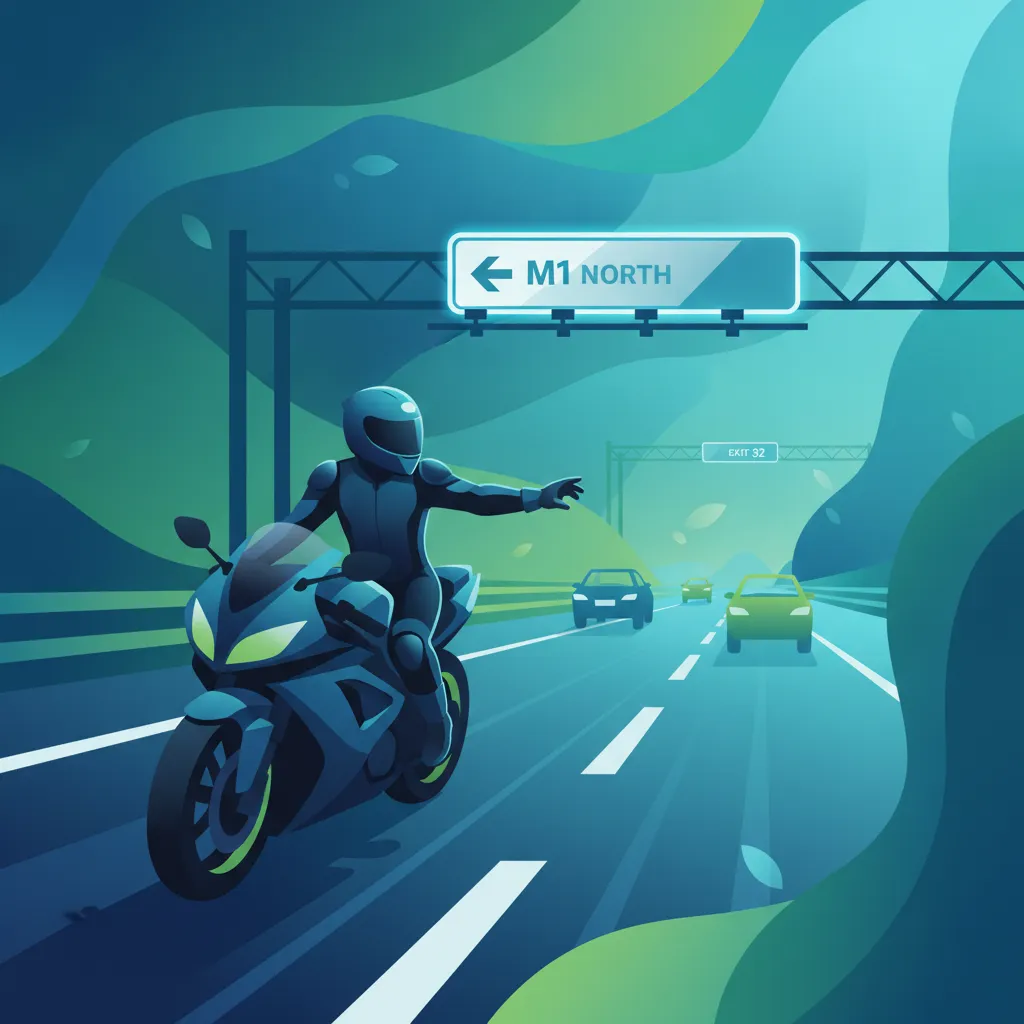
This lesson details how to safely enter, cruise on, and exit French motorways, known as autoroutes, which feature high-speed traffic flows. You will master the process of matching highway speeds in the acceleration lane and performing blind spot checks before merging. The lesson also explains correct lane positioning to avoid aerodynamic turbulences from large semi-trucks, and how to safely prepare for decelerating at exit ramps.
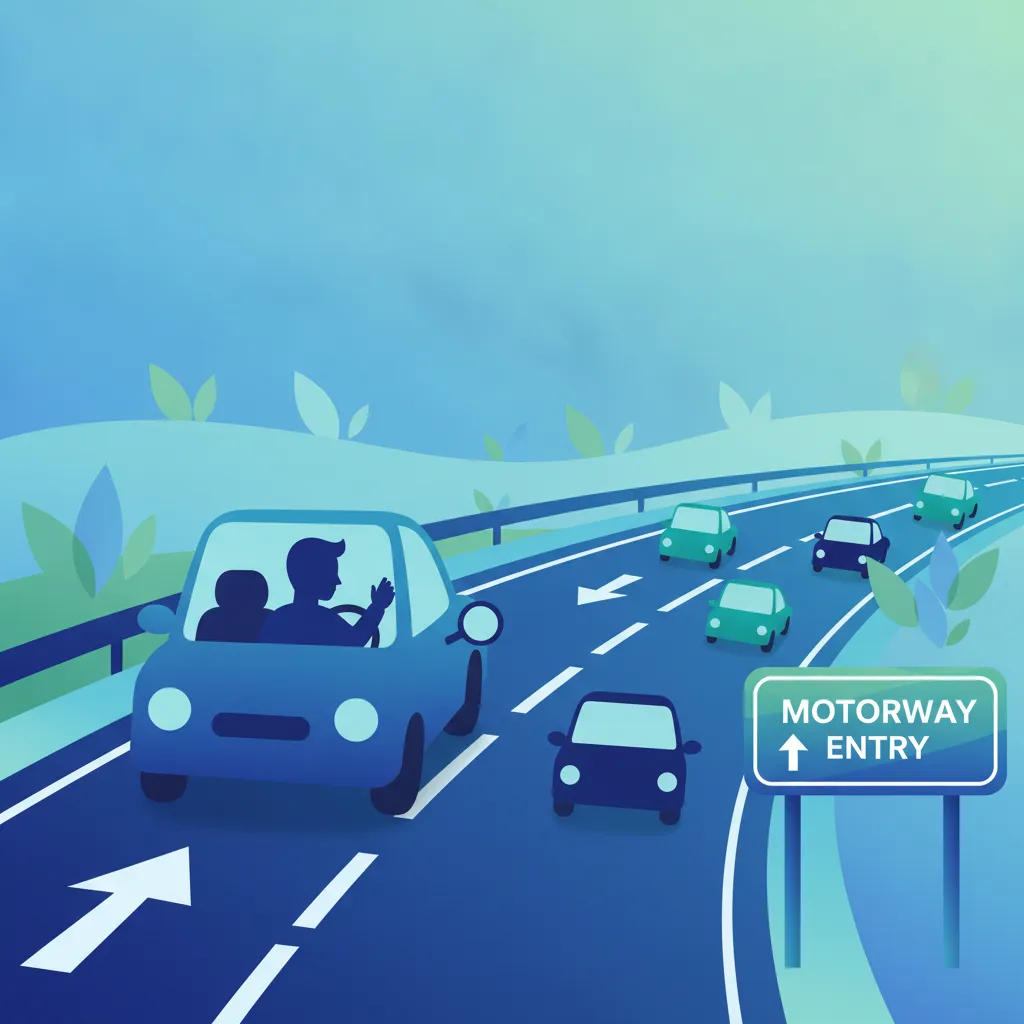
Merging onto a motorway or dual carriageway requires precise coordination of speed, lane observation, and indicator signalling. This lesson explains how to utilize the acceleration lane (voie d'insertion) to match the speed of highway traffic before merging. You will learn how to assess traffic gaps in your side mirrors, signal your intentions, and execute the merge without disrupting the traffic flow.
This lesson focuses on the specific considerations for operating goods vehicles on French motorways, including lane selection, speed management, and proper merging techniques. Learners will understand the importance of maintaining lane discipline, using appropriate overtaking practices, and respecting motorway-specific speed limits for heavy vehicles. The content also covers the use of emergency lanes and the handling of traffic flow.
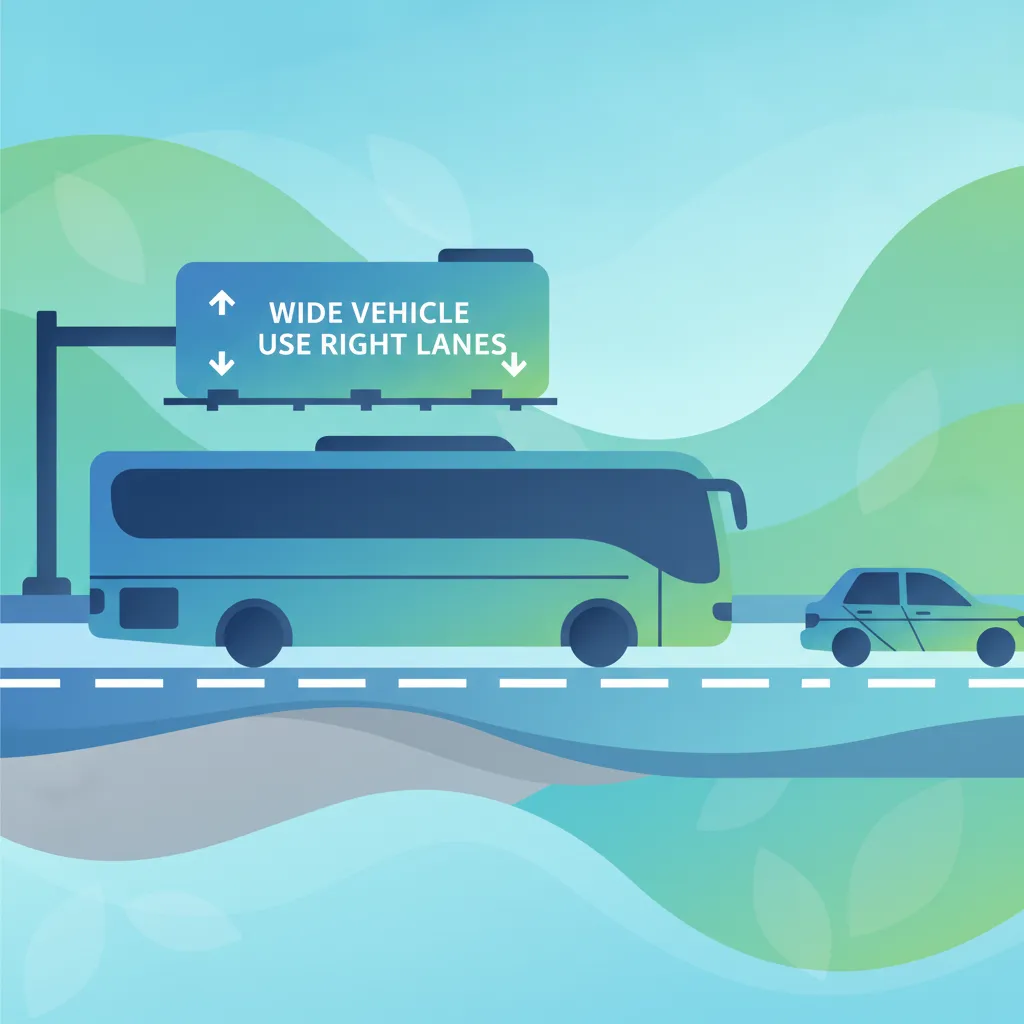
This lesson details the rules of lane discipline for operating wider and longer passenger transport vehicles on highway and city networks. Learners will explore proper lane positioning to prevent encroachment on adjacent lanes or sidewalks. It also covers the step-by-step visual and signaling sequence required to perform safe lane changes, avoiding sudden movements that could startle other drivers.
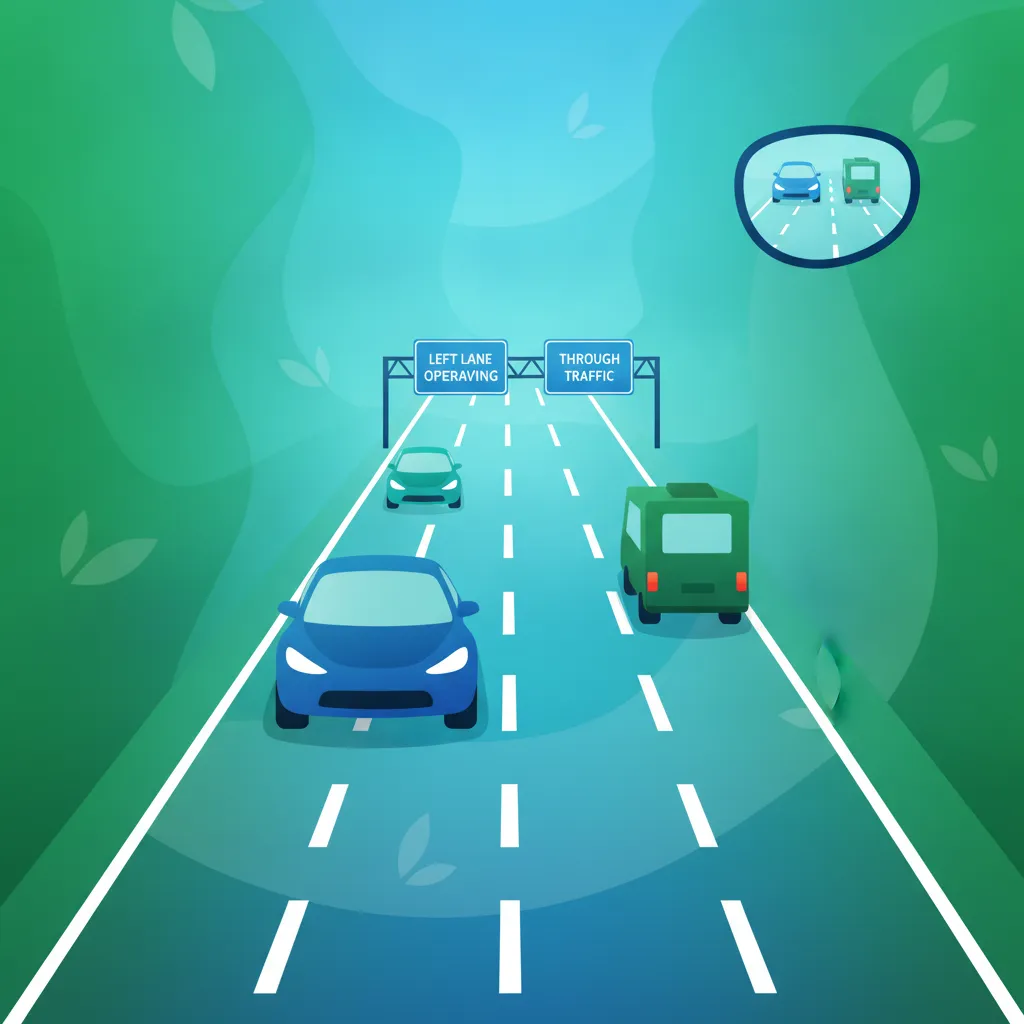
This lesson covers the rules of driving passenger vehicles on high-speed French motorways (autoroutes). Learners will study entry-ramp merging protocols, lane restrictions for vehicles over 3.5 tonnes, and motorway-specific speed limits. The lesson also highlights the correct use of toll booths (péages), emergency hard-shoulder safety procedures, and accessing dedicated coach rest areas.

This lesson explores how dividing your travel lane into three distinct vertical zones allows you to adjust your positioning for optimal safety. You will learn to shift your line to avoid oil slicks in the lane center, road debris at the edges, and wind blasts from passing trucks. Crucially, the lesson covers how to adapt your lane position on blind bends to widen your field of vision and stay clear of oncoming traffic.
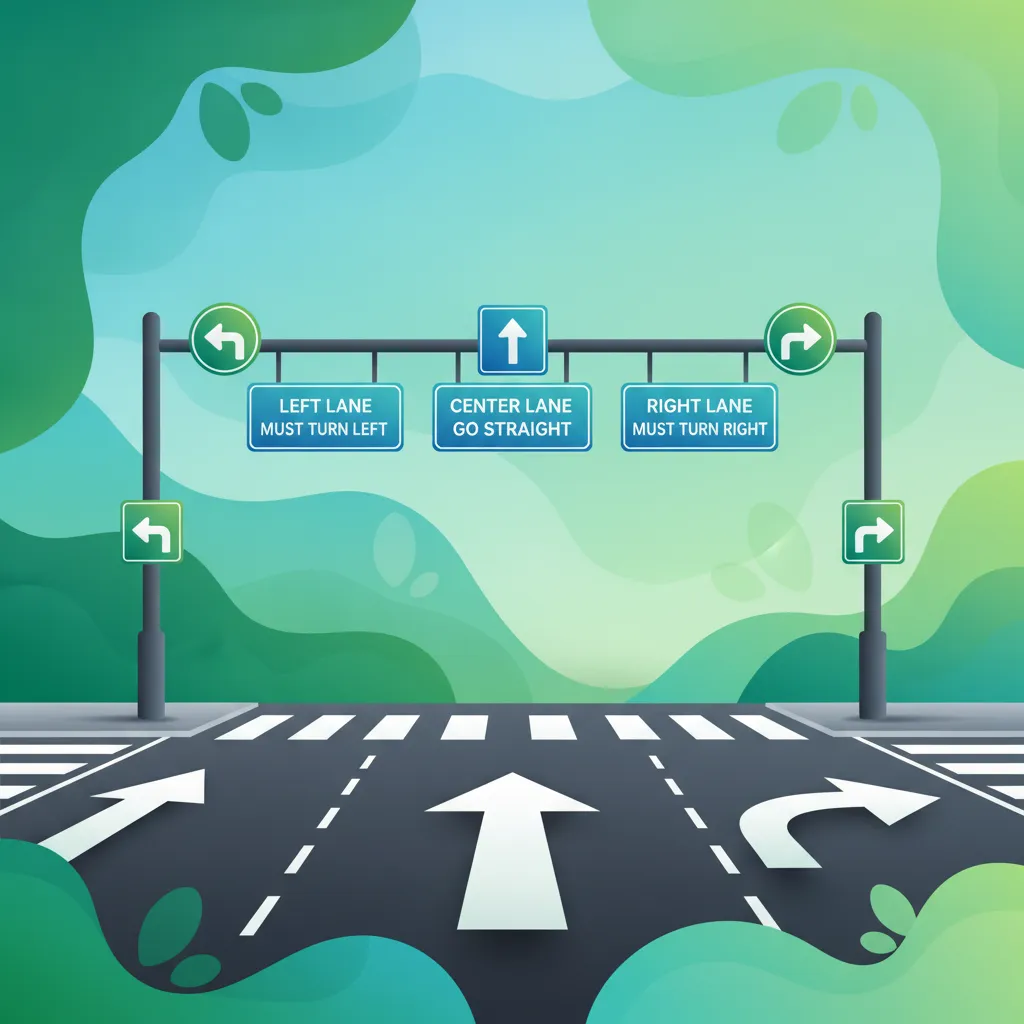
Preselection and direction arrows painted on the road surface instruct drivers on lane-specific movements at upcoming intersections or merges. This lesson teaches you how to interpret these arrows so you can position your vehicle correctly well in advance of a turn. You will learn the rules for lane merging, following curved guidance lines, and avoiding sudden, dangerous lane adjustments.
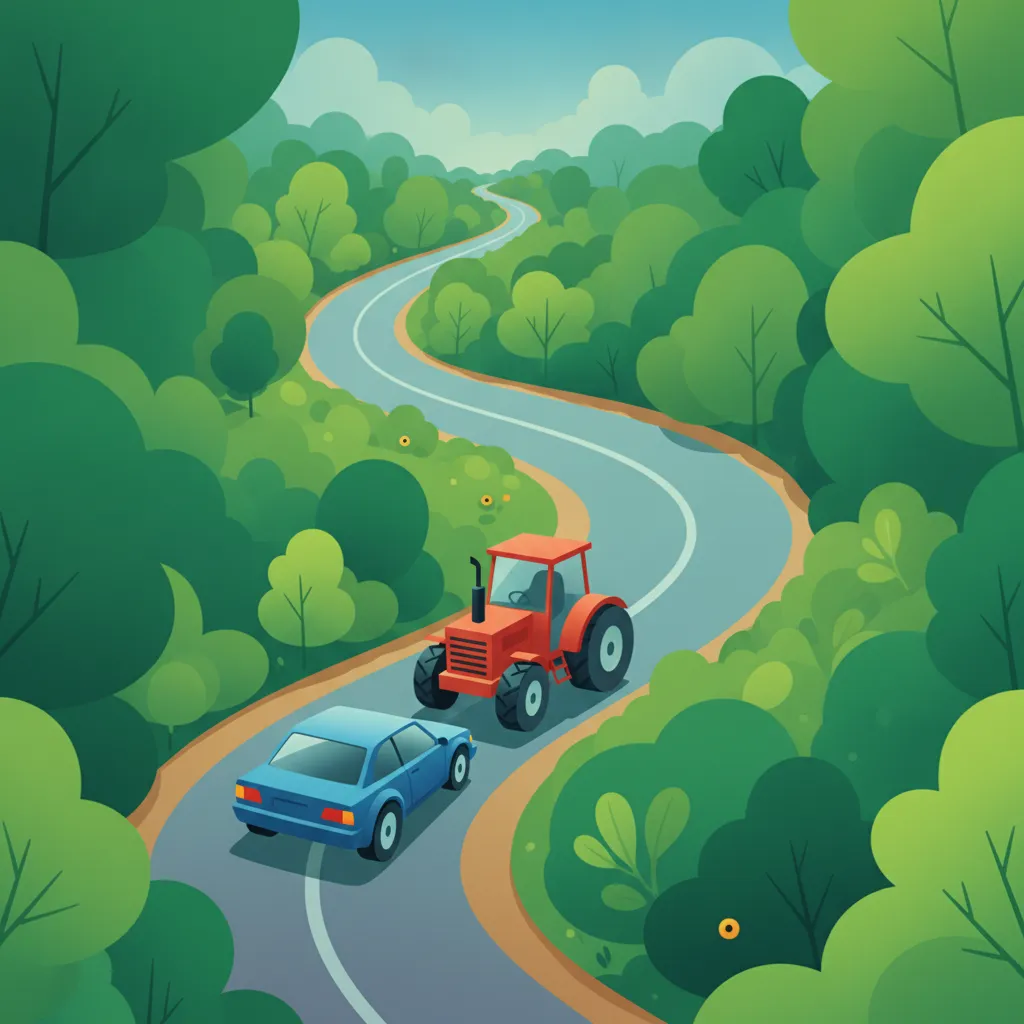
Rural roads account for a high percentage of severe accidents due to narrow widths, winding geometries, and sudden hazards. This lesson teaches strategies for negotiating sharp bends, handling agricultural machinery, and reacting to wildlife warning signs. You will learn to manage your vehicle's lane placement on roads with soft shoulders and understand speed limits on rural networks.
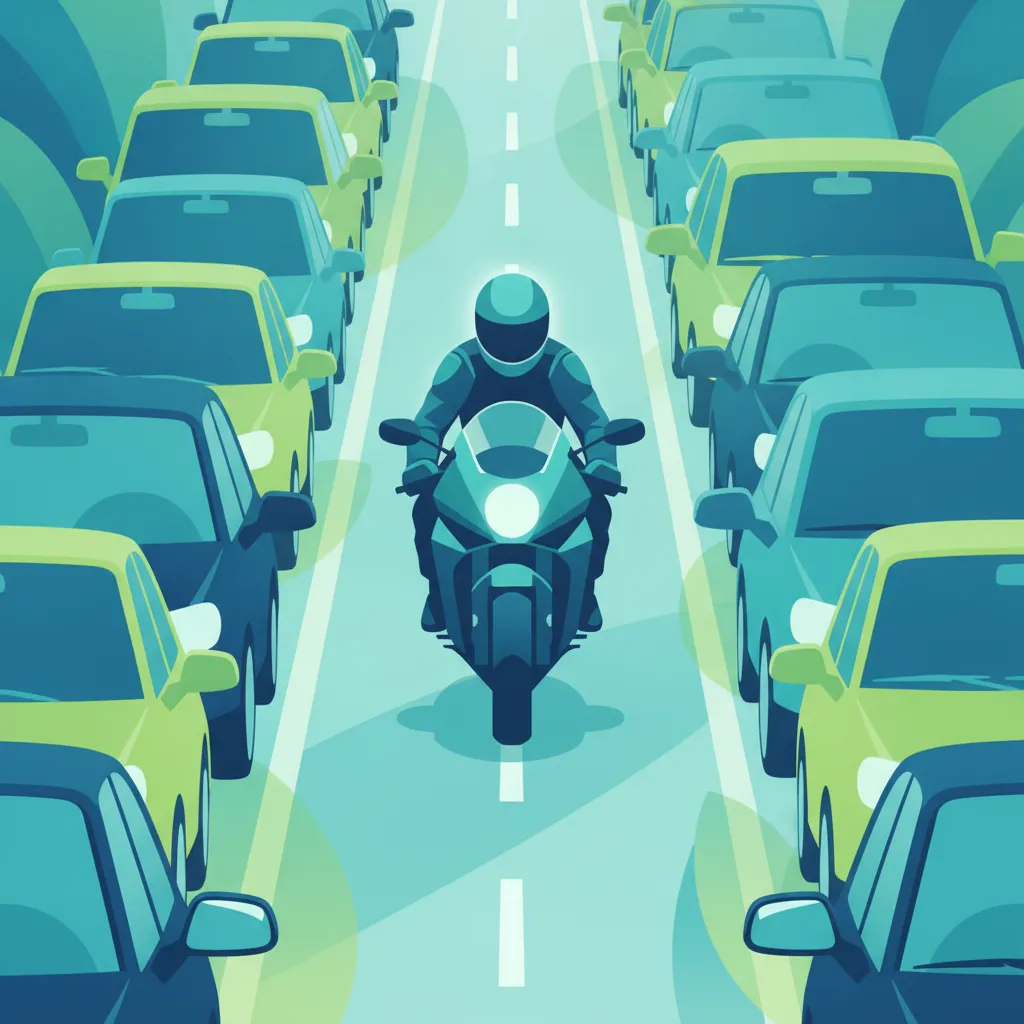
This lesson outlines the rules and practical safety limits of lane filtering, known as 'inter-files' riding, under French road guidelines. You will study the specific speed limits allowed during filtering, the conditions of high congestion where it is permitted, and where it remains completely banned. The lesson also highlights the critical need to anticipate sudden lane changes from frustrated car drivers stuck in stationary traffic queues.
Master the art of defensive driving by learning how to anticipate road hazards before they occur. This lesson provides a comprehensive overview of scanning techniques, identifying potential dangers in various road environments, and applying effective reaction strategies to ensure safety for all road users under diverse traffic conditions.

Proactive drivers scan the road constantly, detecting potential dangers before they turn into real-world emergency situations. This lesson teaches scanning techniques, the use of rear-view mirrors, and the interpretation of visual cues from other road users. You will learn to anticipate hazards like child play near roads, merging vehicles, and sudden lane changes, helping you drive defensively.
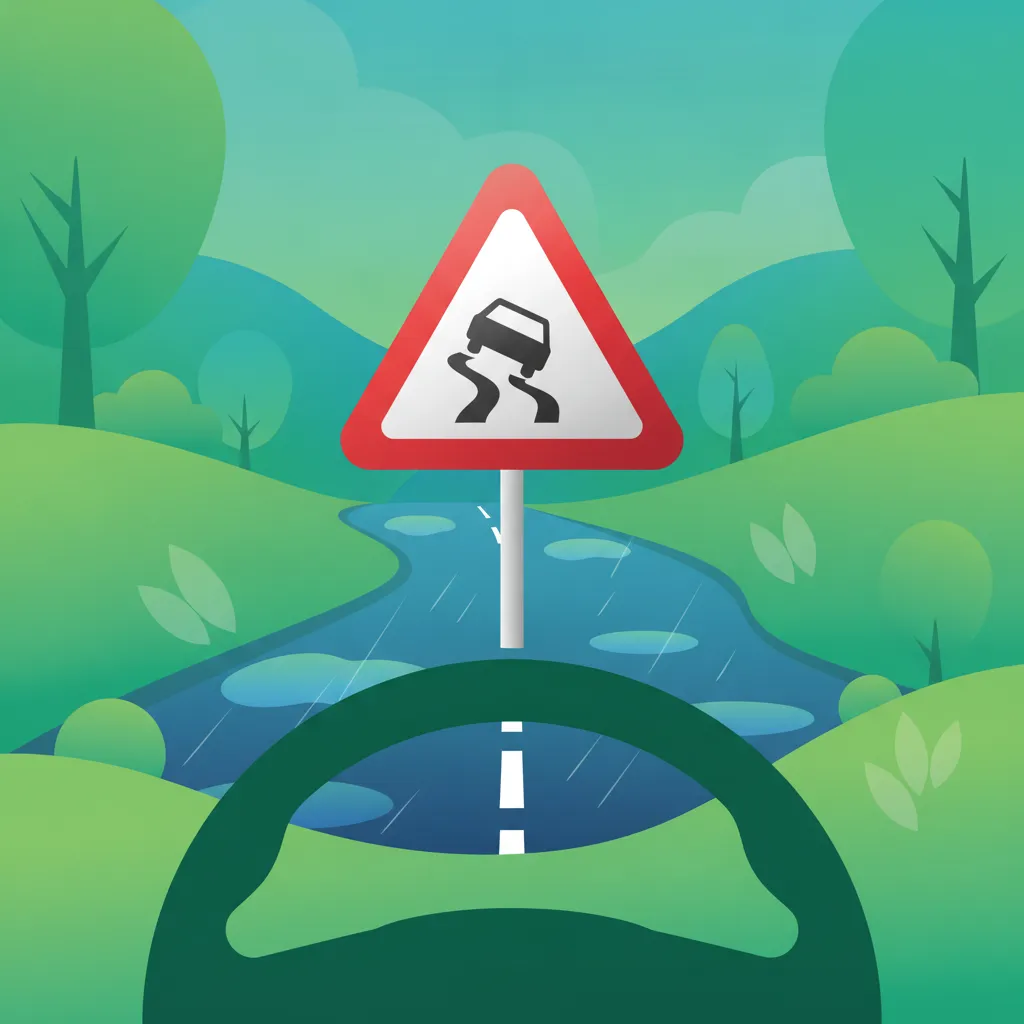
Warning signs on French roads are triangular with a red border, designed to alert drivers to upcoming dangers. This lesson teaches you how to interpret warnings for sharp curves, slippery surfaces, narrowing lanes, and wildlife or animal crossing hazards. You will understand the safety adjustments needed when approaching school zones, active roadworks, or crossings where vulnerable pedestrians are present.
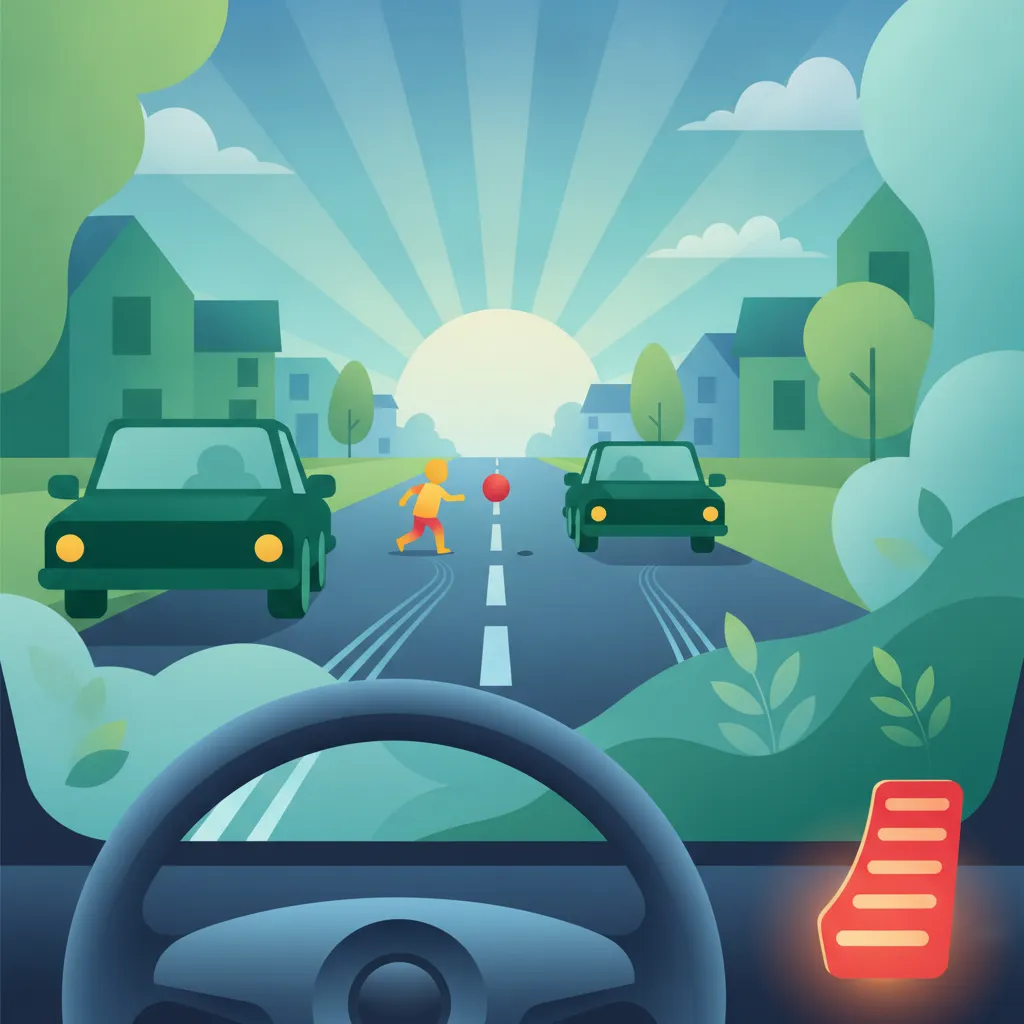
Learners will develop the ability to anticipate potential hazards on the road, enhancing reaction times and defensive riding strategies. The lesson emphasizes constant scanning, early identification of threats such as sudden stops, pedestrian crossings, or unexpected lane changes, and appropriate response measures. By cultivating proactive risk assessment, AM riders can significantly reduce accident likelihood.
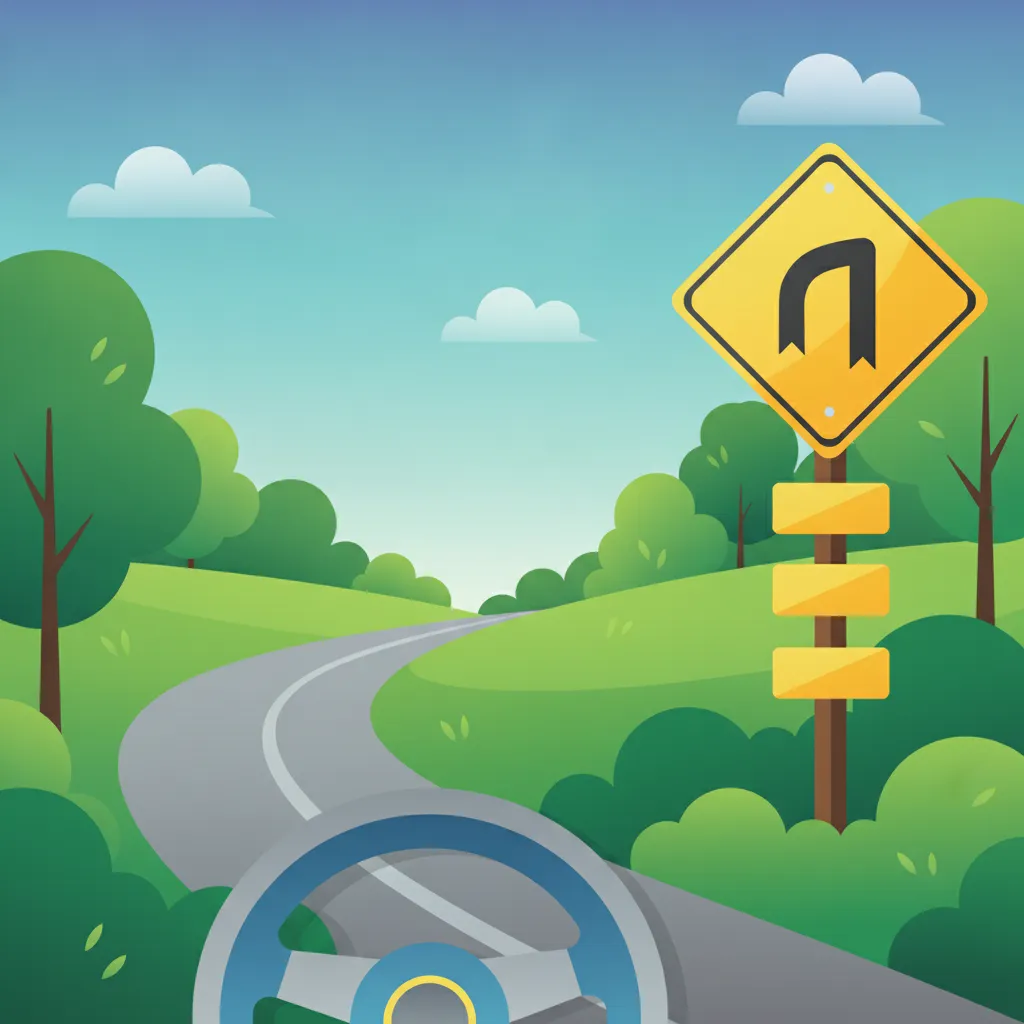
This lesson focuses on French warning signs that alert drivers to potential hazards ahead, such as curves, animal crossings, or slippery surfaces, with particular attention to signs relevant to AM riders. Learners will examine how to interpret these signs, understand the associated risks, and adapt riding behavior accordingly. By mastering warning sign recognition, riders can proactively manage safety risks in diverse road conditions.
Rural roads account for a high percentage of severe accidents due to narrow widths, winding geometries, and sudden hazards. This lesson teaches strategies for negotiating sharp bends, handling agricultural machinery, and reacting to wildlife warning signs. You will learn to manage your vehicle's lane placement on roads with soft shoulders and understand speed limits on rural networks.

In this lesson, drivers will learn strategies to avoid conflicts with smaller vehicles, such as cars and vans, which may not be as visible in large vehicle blind spots. The content emphasizes maintaining adequate spacing, using proper lane discipline, and being aware of small vehicles' behavior during lane changes and turns. Learners will also be introduced to communication techniques, such as signalling and eye contact.
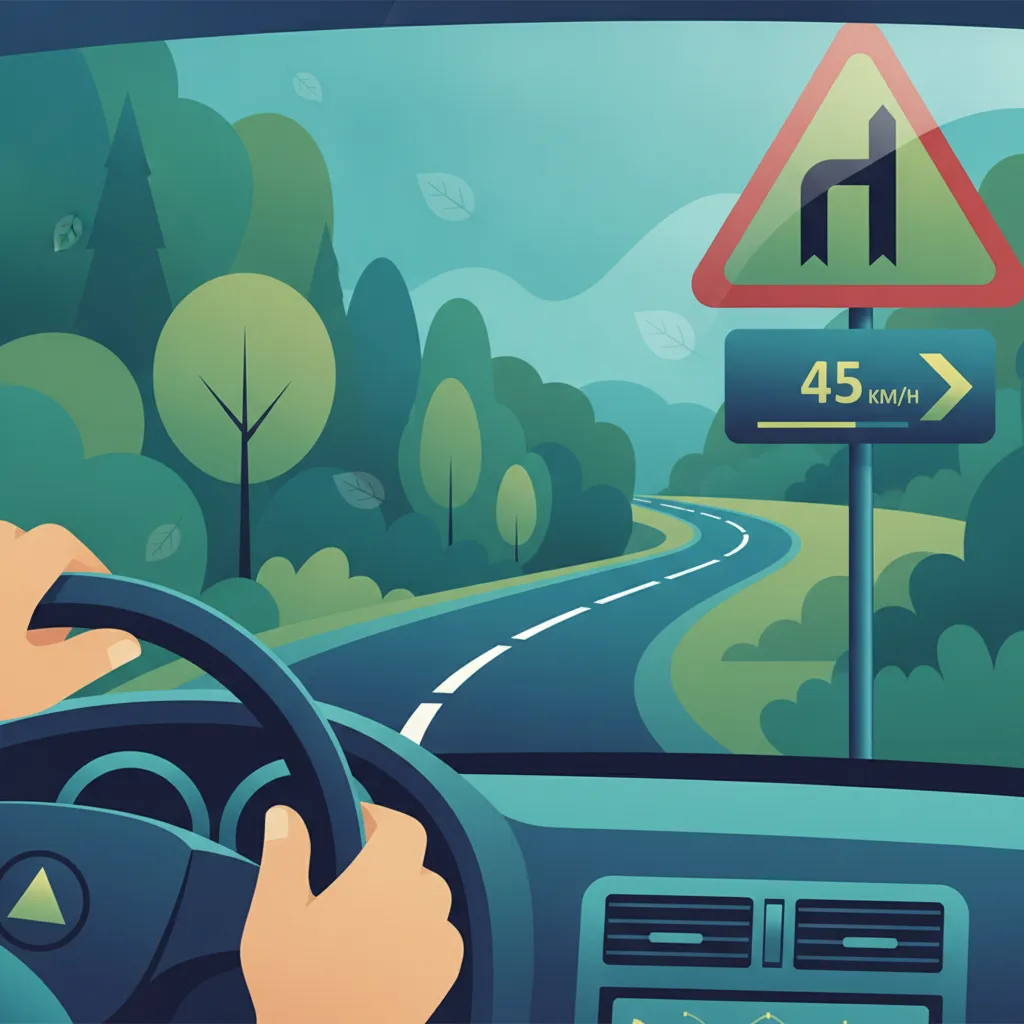
The legal speed limit is a maximum threshold, not a target speed that is always safe to maintain. This lesson teaches you how to select an appropriate, safe speed based on visibility, traffic congestion, and road topography. You will learn how to negotiate blind turns, approach summits with caution, and reduce speeds in heavy traffic to ensure you always maintain complete control of your vehicle.

In this lesson, drivers will explore the specific challenges presented by rural road environments, including narrower lanes, shared space with agricultural vehicles, and frequent wildlife crossings. The content emphasizes adapting speed to road curvature, surface conditions, and visibility while navigating hills and bends. Learners will also learn to interpret rural road signage and understand the importance of maintaining vigilance.
Find clear answers to common questions learners have about Adjusting Driving to Adverse Weather Conditions. Learn how the lesson is structured, which driving theory objectives it supports, and how it fits into the overall learning path of units and curriculum progression in France. These explanations help you understand key concepts, lesson flow, and exam focused study goals.
Yes, under the French Code de la route, speed limits on motorways are reduced from 130 km/h to 110 km/h, and on dual carriageways from 110 km/h to 100 km/h during rain or other precipitation.
You should avoid sudden braking or steering. Ease off the accelerator to allow the tyres to regain contact with the road surface and keep the steering wheel straight until you feel grip returning.
Front fog lights are optional in heavy rain or snowfall, but rear fog lights must only be used in cases of dense fog or falling snow. They must never be used in rain, as they can dazzle drivers behind you.
Stopping distances increase significantly on wet roads because tyre grip is reduced. By increasing your following distance, you compensate for the longer time needed to bring your vehicle to a complete stop.
Ready to focus your study? Use the practice search to find exactly the French driving theory questions you need for the Code de la route and permis de conduire ETG. Refine your knowledge on specific topics or challenging rules to boost your confidence and exam readiness.