
This lesson guides you on how to correctly adapt your speed to varying road conditions, visibility, and traffic density as required by the Code de la route. As part of your category AM training, it provides the essential knowledge to make safe, legal speed choices that prevent accidents in diverse French road scenarios.
Lesson content overview
Mastering speed control is one of the most critical skills for any rider preparing for the French Category AM licence (formerly known as the Brevet de Sécurité Routière or BSR). While light motorized vehicles—such as mopeds, scooters under 50cc, and light quadricycles (often called voitures sans permis)—are structurally limited to a maximum speed of 45 km/h, you cannot simply ride at this maximum speed at all times.
In France, the Code de la route mandates that you continuously adjust your speed to match your environment. Real-world hazards, shifting weather patterns, poor road surfaces, and the presence of other road users require active, safe, and legal speed reduction. This lesson provides the deep theoretical foundations and practical rules needed to master speed adaptation, comply with French traffic laws, and protect yourself and others on the road.
In French traffic law, speed limits are not targets to be maintained at all costs; they are legal maximums under ideal conditions. The law places a strict obligation on the driver to maintain constant control of their vehicle.
This article establishes that every driver must remain in control of their vehicle's speed at all times. It specifies that speed must be adapted to:
Failing to reduce speed when conditions require it is a distinct, punishable offense under French law, even if you are riding below the posted speed limit of 45 km/h.
Crucial Rule: Even if a road has a posted speed limit of 45 km/h or 50 km/h, you are legally required to slow down if a situation compromises your stopping capability or visibility. Maintaining maximum speed in adverse conditions violates Article R413-2.
Article R413-1 reinforces the principle of proportional speed, stating that a driver must never travel at a speed that compromises the safety or comfort of other road users. This is particularly relevant when navigating narrow urban streets, approaching pedestrian crossings, or driving in the presence of domestic animals or livestock in rural France.
To understand why speed adaptation is necessary, you must understand the basic physics of riding. Stopping distance is not instantaneous; it is composed of two distinct phases:
The total distance a vehicle travels from the exact moment the rider perceives a hazard to the moment the vehicle comes to a complete stop. It is calculated as: Stopping Distance = Reaction Distance + Braking Distance.
This is the distance your vehicle travels while you process a hazard and apply the brakes.
This is the physical distance the vehicle travels after the brakes are applied.
Road surfaces vary significantly across France, from smooth national highways to cobblestone city streets (pavés) and rural agricultural lanes. Each surface offers a different level of traction.
Water acts as a lubricant between your tyres and the asphalt.
In rural areas, you will often encounter gravel, dirt, or mud deposited by agricultural vehicles.
Winter conditions pose the ultimate hazard for two-wheeled vehicles.
Your ability to adapt speed is directly linked to how far ahead you can see. If you drive faster than your headlight's reach, you are "riding blind" into the dark.
During twilight (dusk/dawn) and nighttime, hazards become much harder to spot.
Activate Dipped Beams: In accordance with Article R412-30, ensure your dipped beam headlights (feux de croisement) are active to make yourself visible and illuminate the road.
Assess Ambient Lighting: If riding on a well-lit urban street in a French town, maintain a speed that allows you to spot pedestrians stepping off curbs.
Reduce Speed in Unlit Areas: If riding on an unlit rural road, reduce your speed (e.g., to 25–30 km/h) so that your total stopping distance remains well within the area illuminated by your headlight.
Fog and torrential rain drastically limit your visual field.
The 50-Metre Rule: In France, if visibility drops below 50 metres due to thick fog, heavy snow, or intense downpours, the absolute maximum speed limit for all vehicles on any road type is reduced to 50 km/h. Since Category AM vehicles are limited to 45 km/h, you must reduce your speed even further—often to 20 km/h or lower—depending on the density of the fog.
Urban traffic in France can be highly congested and unpredictable. When riding a moped or light quadricycle, you must adapt your speed to the flow of traffic to avoid rear-end collisions and side-impacts.
Vulnerable road users (VRUs) include pedestrians, children, elderly citizens, cyclists, and scooter riders. Because they have no structural protection, any collision with a VRU can result in severe injury or fatality.
The weight of your vehicle and its mechanical state directly dictate how effectively you can slow down.
If you are riding a two-person scooter (provided you have the legal right, the vehicle is homologated, and the passenger is of legal age) or carrying heavy luggage:
Under Article R311-1 of the French Code de la route, your vehicle must be kept in excellent working order. Worn tires or poorly adjusted brakes directly compromise your safety.
To consolidate your understanding for the French AM theory exam, keep these core principles in mind:
| Condition | Maximum Legal Limit | Recommended Safe Riding Speed | Primary Action / Reason |
|---|---|---|---|
| Dry Urban Road | 45 km/h | 40–45 km/h | Maintain standard situational awareness; scan for intersections. |
| Wet Road / Rain | 45 km/h | 30 km/h | Reduce speed by 1/3; double the following distance to account for reduced grip. |
| Dense Fog (Visibility < 50m) | 45 km/h | 20 km/h or less | Turn on dipped beams; ensure stopping distance is within visibility range. |
| Loose Gravel / Mud | 45 km/h | 15–20 km/h | Keep vehicle upright; avoid sudden braking or sharp steering inputs. |
| Active School Zone | 30 km/h / 45 km/h | 20 km/h | Scan sidewalks; expect sudden movements from children. |
| Fully Loaded Scooter | 45 km/h | 35 km/h | Increase braking cushion; brake earlier to compensate for added mass. |
Explore all units and lessons included in this driving theory course.
Lesson content overview
Explore all units and lessons included in this driving theory course.
Explore search topics learners often look for when studying Speed Adaptation to Road Conditions and Visibility. These topics reflect common questions about road rules, driving situations, safety guidance, and lesson level theory preparation for learners in France.
Browse additional driving theory lessons that cover connected traffic rules, road signs, and common driving situations related to this topic. Improve your understanding of how different rules interact across everyday traffic scenarios.
Learn the legal requirements for passing vulnerable road users in France. This lesson covers lateral safety distances, speed reduction near pedestrian crossings, and how to anticipate the movements of cyclists and children to ensure road safety for all participants under the Code de la route.
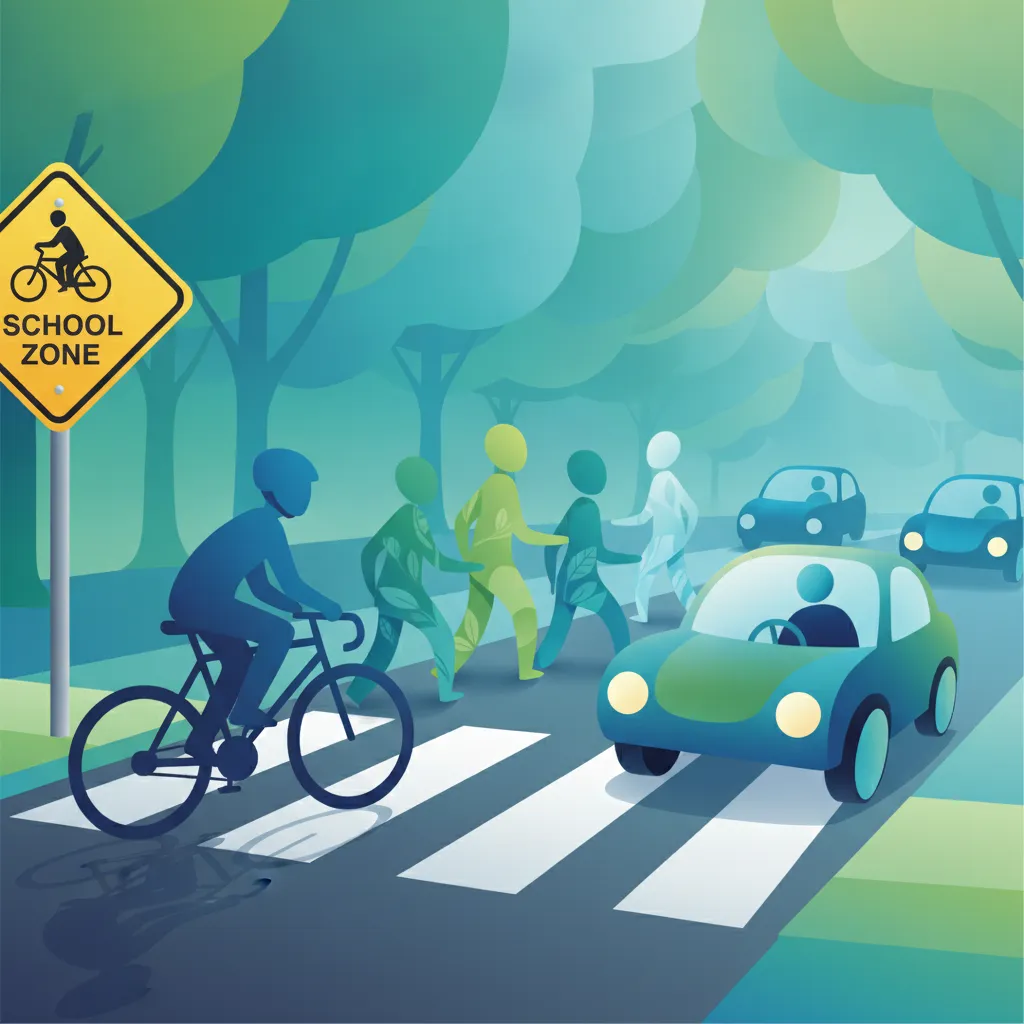
This lesson focuses on the legal requirement to yield to pedestrians on or about to step onto zebra crossings, a major focus of French road safety. You will learn how to approach school zones and pedestrian islands with heightened vigilance and reduced speed. Additionally, the lesson explores shared urban spaces, explaining how to maintain safe lateral distances when overtaking cyclists or personal electric scooters.
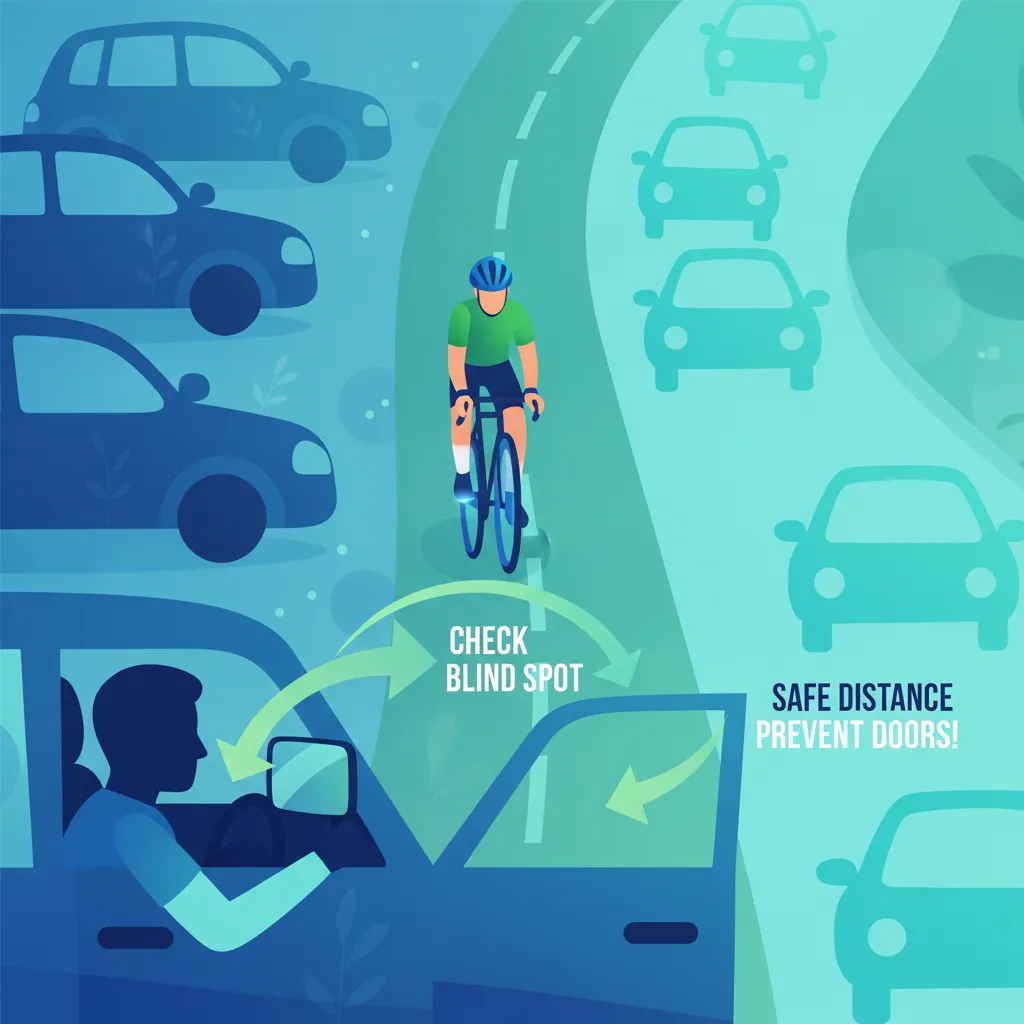
This lesson explains how to share the road safely with cyclists in both urban and rural environments. Drivers will study the legal minimum passing distances when overtaking cyclists, which is one meter in cities and one and a half meters outside urban areas. It also covers recognizing specialized cycling infrastructure, bike boxes at intersections, and preventing blind-spot collisions during right turns.

Learners will focus on the best practices for interacting safely with cyclists and pedestrians in mixed traffic environments. The lesson covers proper lane usage, overtaking protocols, maintaining adequate safety gaps, and non-verbal communication techniques in the French urban landscape. By applying these principles, AM riders can coexist harmoniously with vulnerable road users, reducing the likelihood of accidents.
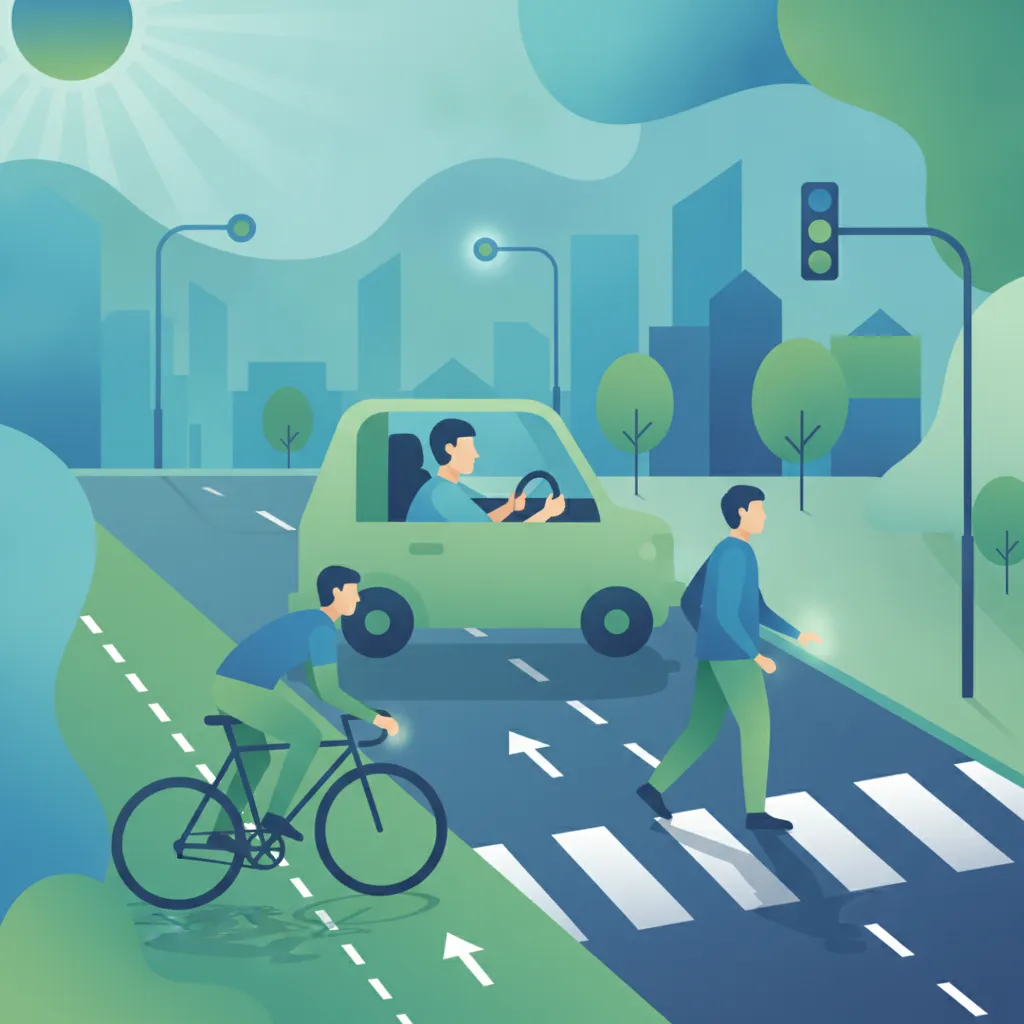
This lesson examines the specific challenges and responsibilities goods vehicle drivers face when interacting with pedestrians and cyclists in urban environments. Learners will understand right-of-way rules, the importance of yielding at pedestrian crossings, and safe turning practices that protect cyclists. The content emphasizes heightened driver vigilance, especially when navigating bike lanes and crowded sidewalks.

Certain groups of road users require heightened defensive attention from drivers due to physical limitations or unpredictable behaviors. This lesson covers how to recognize signs of visual impairment (white canes), mobility challenges, and the unpredictability of young children. You will learn to reduce your speed, extend yielding patience, and proactively secure extra space to protect these vulnerable users.
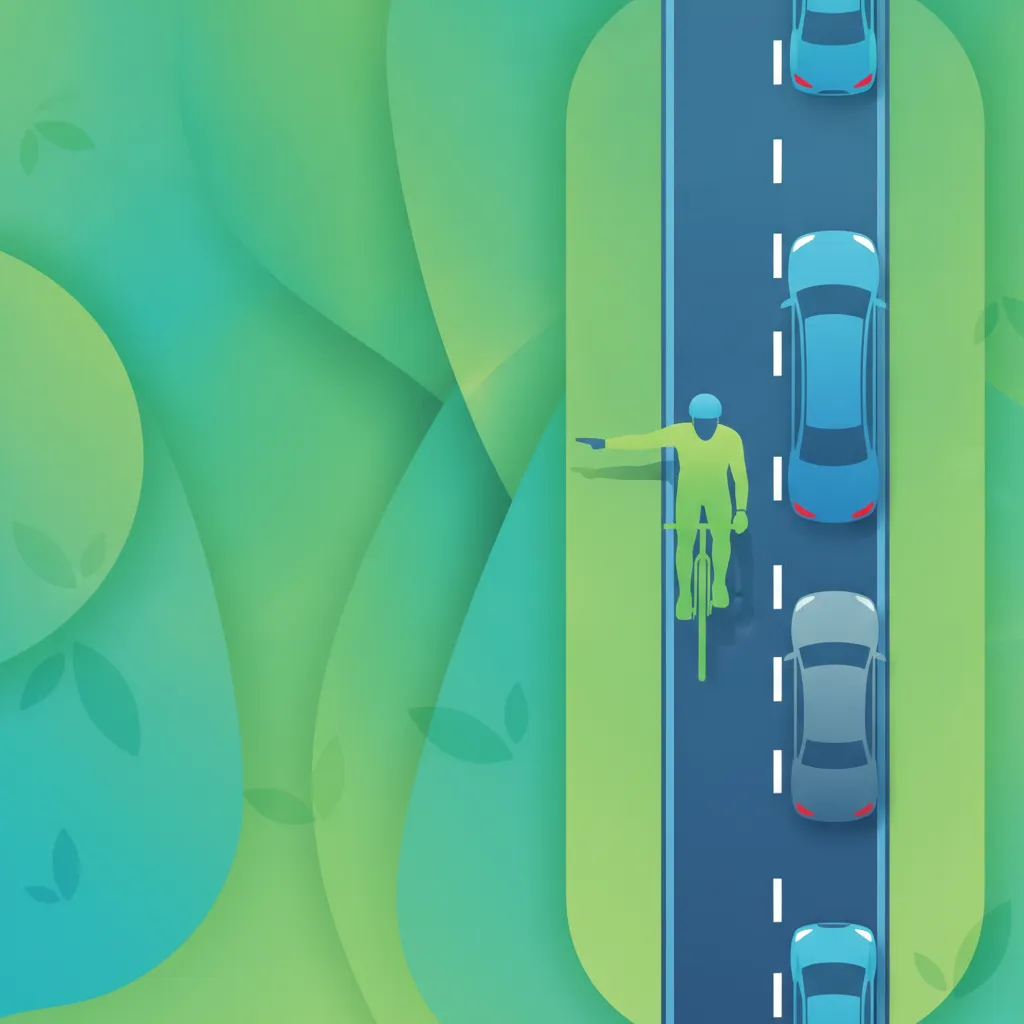
Bicycles represent an eco-friendly transport method with specific rights on French public roadways. This lesson teaches you how to identify dedicated cycle paths, respect bike lanes, and understand cyclist turning privileges at intersections. You will learn the legal minimum safety distance required when overtaking a cyclist: 1 meter in urban areas and 1.5 meters outside city limits.

Learners will explore the rules related to pedestrian crossings, focusing on the obligation to yield to pedestrians at zebra crossings and flashing pedestrian signals. The lesson highlights the importance of stopping before the stop line, reducing speed, and maintaining vigilance for pedestrian movement. Mastery of these practices ensures the safety of both pedestrians and AM riders at crossing points.

In France, pedestrians have clear legal priority when stepping onto or indicating an intent to use a crossing (passage pieton). This lesson details standard zebra crossings, refuge islands, and pedestrian crossings managed by synchronized traffic light systems. You will learn to scan crossings ahead, anticipate pedestrian movements, and safely come to a stop whenever a pedestrian attempts to cross.

This lesson details how to manage high-risk interactions with pedestrians who may step off curbs or cross the road near bus stops. Learners will study French Code de la route laws regarding pedestrian priority at crosswalks and near stopping transit vehicles. Developing heightened spatial awareness around blind zones near the front of the bus is emphasized to prevent tragic pedestrian collisions.

This lesson examines French Code de la route laws regarding pedestrian right-of-way, emphasizing the driver's legal duty to yield to any pedestrian engaged in crossing. It outlines proper approach speeds when approaching zebra crossings with obstructed views. Candidates will learn to maintain a safe physical buffer zone and verify that crosswalks are entirely clear of pedestrians before accelerating.
Gain a clear understanding of the relationship between reaction time and braking distance for AM vehicles. This lesson explains how speed, road surface conditions, and vehicle mass impact your ability to stop safely according to French traffic regulations and the physics of motion.
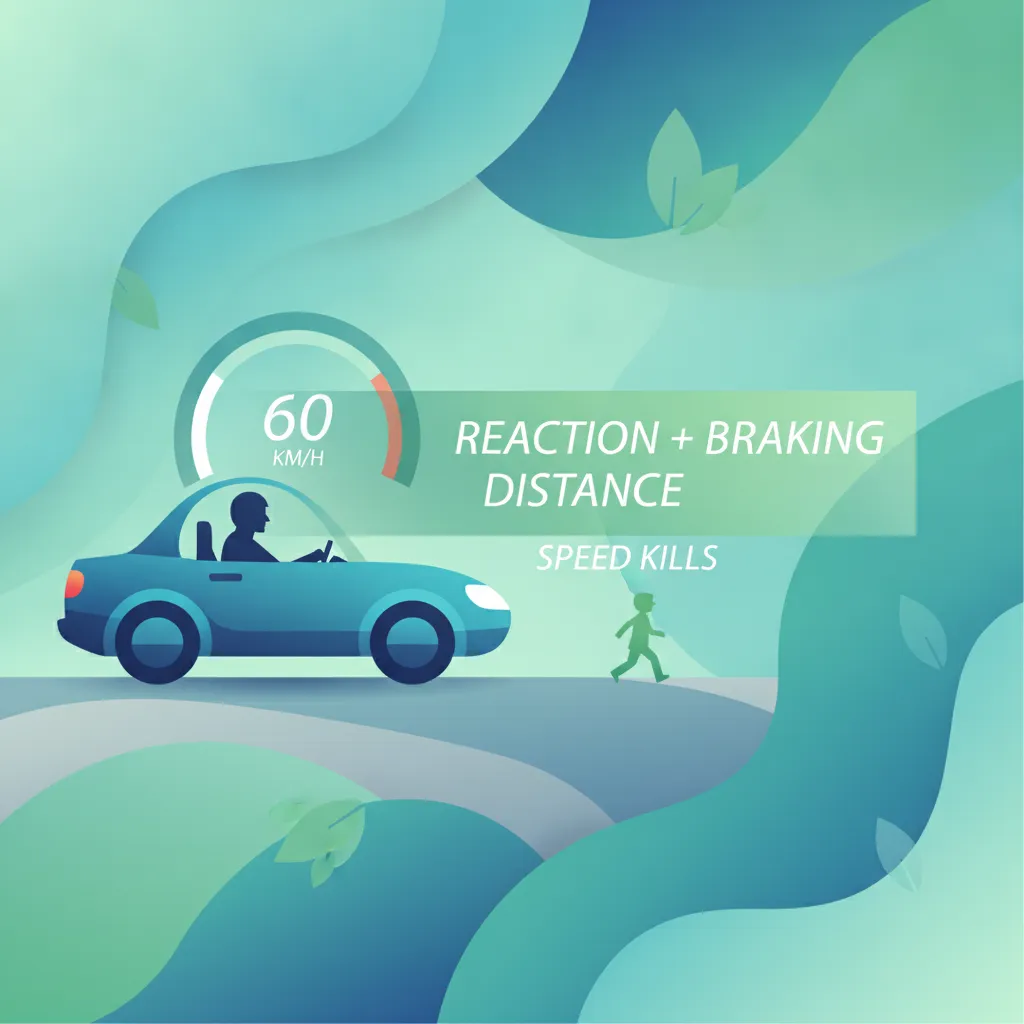
Total stopping distance is calculated as the sum of your reaction distance and the physical braking distance of the car. This lesson explains how reaction time is affected by driver focus and how speed exponentially increases the braking distance. You will learn how tire condition and slippery road surfaces degrade braking adhesion, requiring drivers to recognize and counteract these physical limits.
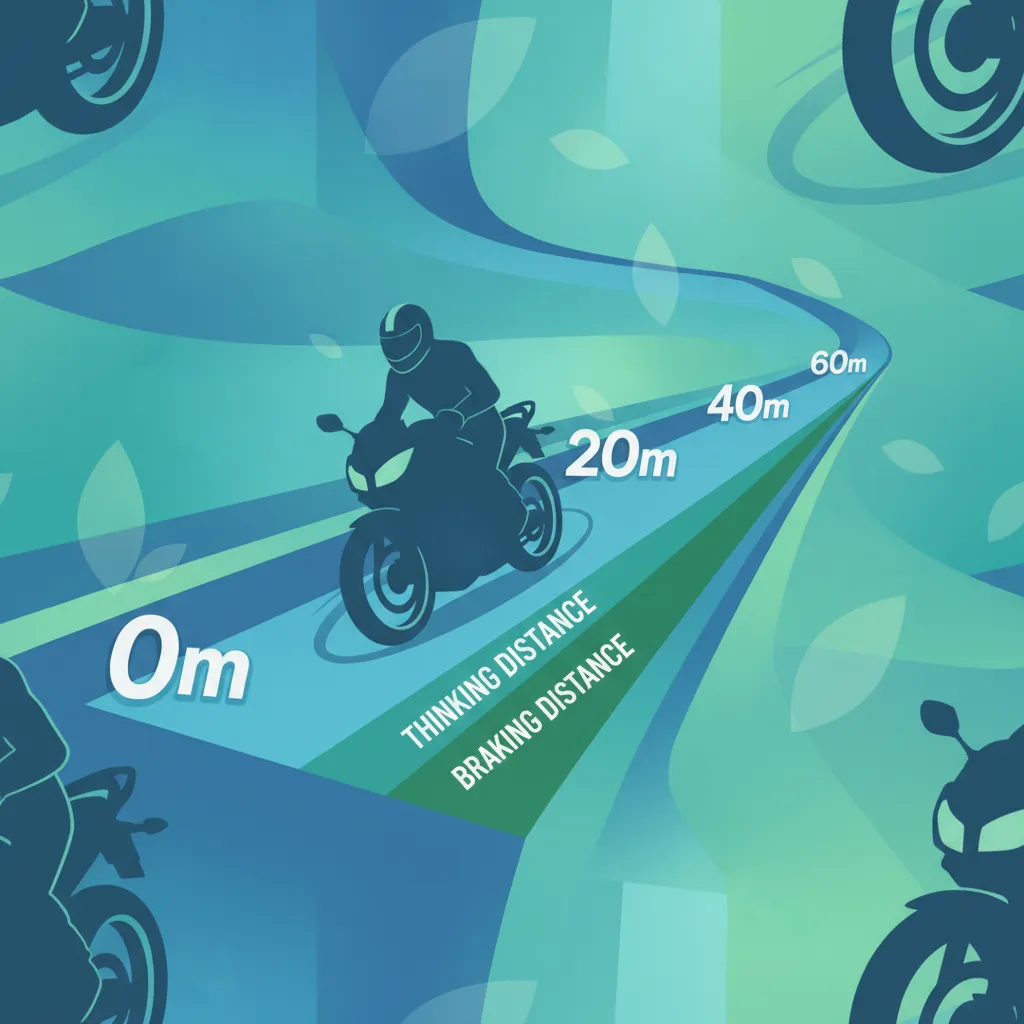
This lesson breaks down the physics of stopping a motorcycle, exploring how kinetic energy varies with the square of your speed. You will learn the mathematical components of total stopping distance, which includes both perception-reaction distance and physical braking distance. The lesson also explains how forward weight transfer during heavy braking increases traction on the front tire while reducing rear-wheel load.
Find clear answers to common questions learners have about Speed Adaptation to Road Conditions and Visibility. Learn how the lesson is structured, which driving theory objectives it supports, and how it fits into the overall learning path of units and curriculum progression in France. These explanations help you understand key concepts, lesson flow, and exam focused study goals.
AM vehicles are lighter and have smaller wheels, making them more sensitive to road surface changes like wet leaves, gravel, or ice. Their lower power-to-weight ratio and limited stability require more proactive speed management to maintain control.
You must reduce your speed immediately to increase your reaction time and visibility distance. Ensure your lights are on and you are positioned safely to remain visible to other road users, as per French regulations.
Yes. While standard limits apply, the Code de la route requires drivers to adapt their speed to road conditions. In heavy rain, driving at the maximum limit can be considered dangerous; you should always adjust to a speed that allows for a safe stop.
Focus on observing the visual cues in the exam questions, such as wet roads, poor lighting, or intersections. Always look for the 'safest' option that involves reducing speed or increasing caution when these hazards are present.
Ready to focus your study? Use the practice search to find exactly the French driving theory questions you need for the Code de la route and permis de conduire ETG. Refine your knowledge on specific topics or challenging rules to boost your confidence and exam readiness.