
This lesson details the legal speed restrictions for Category AM vehicles within the French road network. Understanding these limits is a cornerstone of the Code de la route, ensuring you can operate your vehicle safely and remain compliant during the official examination.

Lesson content overview
Operating a Category AM vehicle in France—whether a light scooter (cyclomoteur), a moped, or a light electric microcar (quadricycle léger à moteur like the Citroën Ami)—requires a thorough understanding of speed limits. These boundaries are not merely arbitrary suggestions; they are legally mandated thresholds designed to accommodate the unique physical characteristics, braking performance, and structural limits of small motorized vehicles.
In the French Code de la route, Category AM speed rules balance urban traffic flow, pedestrian safety, and the protection of light vehicle riders who operate without the crumple zones of standard passenger cars. This lesson details the legal speed limits across various road environments in France, the mechanical constraints of AM vehicles, and the severe penalties associated with speeding and illegal mechanical modifications.
The Category AM license, which replaced the old Brevet de Sécurité Routière (BSR) in 2013, governs light vehicles with small engines or low-power electric motors. Because these vehicles are light, have smaller tires, and feature basic braking systems, their maximum speeds are capped at a lower threshold than standard motorcycles or cars.
A light two-wheeled or three-wheeled vehicle (moped/scooter) with an engine displacement not exceeding 50 cm³ (for internal combustion engines) or a maximum net power not exceeding 4 kW (for electric motors). This category also includes light quadricycles (microcars/voitures sans permis) with an unladen mass under 425 kg, a maximum power of 6 kW (or 4 kW for older models), and a maximum design speed of 45 km/h.
The primary principle of Category AM operations is that the legal maximum design speed is 45 km/h. This cap is universal, overriding any higher posted speed limits on suburban or rural roads. However, within urban areas, temporary zones, and poor weather conditions, riders must frequently operate far below this 45 km/h ceiling to maintain legal compliance and physical safety.
Under Article R311-1 of the French Code de la route, all Category AM vehicles are manufactured and legally restricted to a maximum speed of 45 km/h. This speed restriction is built directly into the vehicle's mechanics or engine control unit (ECU) by the manufacturer.
On any road where the general speed limit is higher than 45 km/h (such as a departmental road limited to 80 km/h), an AM vehicle must still not exceed 45 km/h. Attempting to modify a vehicle to exceed this speed is a serious legal infraction with criminal consequences.
The 45 km/h limit is a structural cap, not a minimum speed requirement. You must never attempt to "keep up with traffic" by riding your moped beyond its legal design limit. If a road's traffic flow is unsafe at 45 km/h, you must adapt your positioning or seek an alternative route rather than breaking the speed limit or modifying your vehicle.
Urban areas (agglomérations) in France feature a variety of speed zones designed to protect pedestrians, cyclists, and other vulnerable road users. In these environments, Category AM riders must constantly adapt their speed, ensuring they do not exceed either the local posted limit or their vehicle's 45 km/h maximum cap.
Traditionally, entering a built-up area in France—indicated by a rectangular white sign with a red border containing the town’s name—signals a default speed limit of 50 km/h.
Since the AM vehicle's maximum design speed is 45 km/h, you can ride at your vehicle's maximum capability on these main streets, provided that traffic, weather, and safety conditions allow. You must never attempt to reach 50 km/h, as your vehicle is structurally and legally limited to 45 km/h.
An increasing number of French municipalities are standardizing a 30 km/h speed limit across entire urban centers to reduce the severity of pedestrian collisions. These areas are marked by a "Zone 30" entry sign.
In a Zone 30, the posted limit is lower than your vehicle's structural capacity. Therefore, you must reduce your speed to 30 km/h or less. Riding at 45 km/h in a Zone 30 is a speeding violation, subject to standard traffic fines and point deductions on your driver's license record.
In highly congested commercial areas, historic centers, or narrow residential streets, you may encounter a Zone de rencontre (Meeting Zone).
In these zones, pedestrians have absolute priority and are permitted to walk on the roadway. The maximum speed limit for all motorized vehicles, including scooters and light quadricycles, is strictly 20 km/h. You must ride defensively, keep your fingers hovering over the brake levers, and be prepared to stop instantly.
Areas surrounding schools, playgrounds, and child care centers require extreme caution. The French Code de la route utilizes both permanent and dynamic speed reductions to manage risk in these high-consequence zones.
Near schools, speed limits are routinely lowered to 30 km/h or 20 km/h to account for the unpredictable behavior of children crossing the street. These zones are signposted with warning signs depicting children, often paired with a specific speed limit sign.
Temporary speed limits are frequently established around construction sites, road maintenance zones, or accident scenes to protect workers and emergency personnel.
Once outside urban boundaries, AM riders enter rural and suburban road networks. These roads present unique hazards for slow-moving vehicles.
On standard two-lane bidirectional roads outside urban areas (without a central separator), the general speed limit for passenger cars in France is 80 km/h (though some departments have reverted specific routes to 90 km/h).
For a Category AM vehicle, the absolute legal maximum remains 45 km/h.
This means you will be traveling significantly slower than the surrounding traffic flow. This speed differential (up to 45 km/h difference) requires specific defensive driving habits:
Lane Positioning: Position your vehicle in the right-hand portion of your lane, but do not ride directly in the gutter or on the shoulder. Leave about 1 meter of space from the edge of the road to avoid debris, potholes, and drains.
Mirror Checks: Frequently check your rearview mirrors to monitor vehicles approaching from behind. If a long queue of vehicles forms behind you, find a safe, paved turnout or shoulder to pull over and let them pass.
Blind Spots and Turns: Be extremely cautious when preparing for left turns across oncoming high-speed traffic. Because you travel slowly, oncoming drivers may misjudge how long it will take you to clear the lane.
In France, certain high-speed corridors are completely off-limits to Category AM vehicles due to the extreme danger posed by the speed differential. Under Article L113-2 and Article R421-2 of the Code de la route, cyclomoteurs, light quadricycles, and other low-power vehicles are prohibited from entering:
If an AM vehicle limited to 45 km/h were to enter an autoroute where traffic flows at 130 km/h, the speed difference would be 85 km/h. High-speed traffic approaching from behind would close the distance too quickly to guarantee safe braking. Furthermore, the aerodynamic pressure wave (vortex) created by large semi-trucks passing an AM vehicle at 90 km/h or higher can easily destabilize a light moped or microcar, causing a fatal crash.
To comply with the law, you must quickly and accurately interpret speed limit signs and any accompanying supplementary panels (panonceaux) that modify or clarify the rules.
These are small rectangular signs placed directly underneath the main circular sign to specify when or to whom the limit applies:
The legal speed limit is a maximum threshold for ideal conditions. The law requires you to reduce your speed below the posted limits when environmental or physical factors compromise safety.
When rain begins to fall, water mixes with oil, dust, and fuel residue on the road surface, creating a highly slippery layer (often leading to aquaplaning or loss of traction).
Your speed must always allow you to stop within the distance you can see clearly ahead.
The weight your vehicle carries directly impacts its acceleration, stability, and stopping distance.
The French government strictly enforces speed limits and vehicle specifications for Category AM riders. Because AM riders are often young, the legal system uses stiff financial and administrative penalties to deter dangerous behaviors.
Speeding violations are categorized by how much the rider exceeded the posted speed limit:
"Débridage" refers to the practice of removing or modifying the mechanical spacer in the exhaust, swapping the carburetor, or flashing the ECU to allow a 50cc scooter or a microcar to run faster than 45 km/h (often up to 70–80 km/h). This is a major offense under French law.
Criminal Penalties: Under the Code de la route, riding an un-restricted AM vehicle is punishable by a fine of up to €3,000.
Vehicle Confiscation: Law enforcement officers have the authority to immediately seize and impound the vehicle. It may be permanently confiscated and destroyed at the owner's expense.
Insurance Voidance: This is the most financially devastating consequence. If you modify your vehicle to exceed 45 km/h, your insurance policy is rendered null and void. If you cause an accident with an un-restricted vehicle, the insurance company will refuse to cover damages. You (and your parents, if you are a minor) will be held personally and financially liable for medical bills, property damage, and lifelong compensation payments to injured parties, which can total millions of euros.
To truly understand why speed limits are set so low for Category AM vehicles, we must look at the physical forces at play during a sudden stop.
Kinetic energy () is the energy an object possesses due to its motion. It is calculated using the formula:
Where is the total mass (vehicle + rider) and is the velocity (speed).
Because velocity is squared (), even a small increase in speed results in a massive increase in kinetic energy.
Stopping distance is divided into two distinct phases:
The following dry-condition values illustrate how a 15 km/h speed difference changes your safety margin:
| Speed | Reaction Distance (1 sec) | Braking Distance (Dry) | Total Stopping Distance (Dry) | Total Stopping Distance (Wet) |
|---|---|---|---|---|
| 30 km/h | ~8.3 meters | ~6.9 meters | ~15.2 meters | ~22.2 meters |
| 45 km/h | ~12.5 meters | ~15.6 meters | ~28.1 meters | ~43.75 meters |
At 45 km/h in wet conditions, your stopping distance is nearly 44 meters—nearly double your stopping distance in dry conditions. This underscores why slowing down during rainy weather is a physical necessity, not just a legal suggestion.
This lesson covers the legally mandated 45 km/h maximum speed for all Category AM vehicles in France, which is a structural cap that cannot be exceeded even on roads with higher posted limits. The lesson details specific urban speed zones (50 km/h general, 30 km/h Zone 30, 20 km/h Zone de Rencontre), school zone protocols with flashing beacons, and the complete prohibition from autoroutes. Riders must adapt speed below posted limits in adverse weather, reduced visibility (50-meter rule), and when carrying passengers. Penalties for speeding range from fines and point deductions to severe consequences for débridage, including €3,000 fines, vehicle confiscation, and insurance voidance, making illegal modifications financially catastrophic.
A short set of high-value points that capture the most important learning from this lesson.
All Category AM vehicles are legally and mechanically capped at 45 km/h regardless of posted road limits.
In urban areas, you must obey the lower of either the posted speed limit or your vehicle's 45 km/h maximum (e.g., 30 km/h in Zone 30, 20 km/h in Zone de Rencontre).
Category AM vehicles are strictly prohibited from entering autoroutes and voies à accès réglementé due to extreme speed differential dangers.
Speed adaptation is mandatory: reduce speed in rain (braking distance doubles), fog (50-meter visibility rule), and near schools when beacons flash.
Illegal modification (débridage) voids insurance, risks vehicle confiscation, and can result in €3,000 fines and criminal liability.
Explore all units and lessons included in this driving theory course.
The 45 km/h cap is a structural/mechanical limit built into the vehicle's design, not just a suggested maximum.
Stopping distance at 45 km/h in wet conditions is nearly 44 meters—almost double the dry condition stopping distance.
School zones use flashing yellow beacons during active hours; reduced limits (20 or 30 km/h) are strictly enforced during these times.
If visibility drops below 50 meters, all vehicles must reduce to 50 km/h maximum, though your 45 km/h cap remains unchanged.
Lane positioning on rural roads should be in the right portion of your lane with about 1 meter from the edge for safety.
Riding at 45 km/h in a Zone 30 is a speeding violation because the posted limit overrides the vehicle's structural capability.
Assuming the 45 km/h cap means you can always travel at 45 km/h—environmental conditions often legally require much lower speeds.
Entering an autoroute because the posted limit is high, forgetting that AM vehicles are categorically prohibited regardless of speed.
Failing to reduce speed for wet roads, not realizing braking distance doubles and stopping at 45 km/h requires nearly 44 meters.
Modifying a moped to exceed 45 km/h (débridage), not understanding that this voids insurance and creates massive financial liability.
Lesson content overview
A short set of high-value points that capture the most important learning from this lesson.
All Category AM vehicles are legally and mechanically capped at 45 km/h regardless of posted road limits.
In urban areas, you must obey the lower of either the posted speed limit or your vehicle's 45 km/h maximum (e.g., 30 km/h in Zone 30, 20 km/h in Zone de Rencontre).
Category AM vehicles are strictly prohibited from entering autoroutes and voies à accès réglementé due to extreme speed differential dangers.
Speed adaptation is mandatory: reduce speed in rain (braking distance doubles), fog (50-meter visibility rule), and near schools when beacons flash.
Illegal modification (débridage) voids insurance, risks vehicle confiscation, and can result in €3,000 fines and criminal liability.
Explore all units and lessons included in this driving theory course.
The 45 km/h cap is a structural/mechanical limit built into the vehicle's design, not just a suggested maximum.
Stopping distance at 45 km/h in wet conditions is nearly 44 meters—almost double the dry condition stopping distance.
School zones use flashing yellow beacons during active hours; reduced limits (20 or 30 km/h) are strictly enforced during these times.
If visibility drops below 50 meters, all vehicles must reduce to 50 km/h maximum, though your 45 km/h cap remains unchanged.
Lane positioning on rural roads should be in the right portion of your lane with about 1 meter from the edge for safety.
Riding at 45 km/h in a Zone 30 is a speeding violation because the posted limit overrides the vehicle's structural capability.
Assuming the 45 km/h cap means you can always travel at 45 km/h—environmental conditions often legally require much lower speeds.
Entering an autoroute because the posted limit is high, forgetting that AM vehicles are categorically prohibited regardless of speed.
Failing to reduce speed for wet roads, not realizing braking distance doubles and stopping at 45 km/h requires nearly 44 meters.
Modifying a moped to exceed 45 km/h (débridage), not understanding that this voids insurance and creates massive financial liability.
Explore search topics learners often look for when studying Legal Speed Limits for AM Vehicles. These topics reflect common questions about road rules, driving situations, safety guidance, and lesson level theory preparation for learners in France.
Browse additional driving theory lessons that cover connected traffic rules, road signs, and common driving situations related to this topic. Improve your understanding of how different rules interact across everyday traffic scenarios.
Learn the essential traffic rules and priority systems for operating a moped or light quadricycle in French cities. This lesson covers key concepts like priority to the right, navigating roundabouts, and understanding road markings in complex urban environments and residential zones.
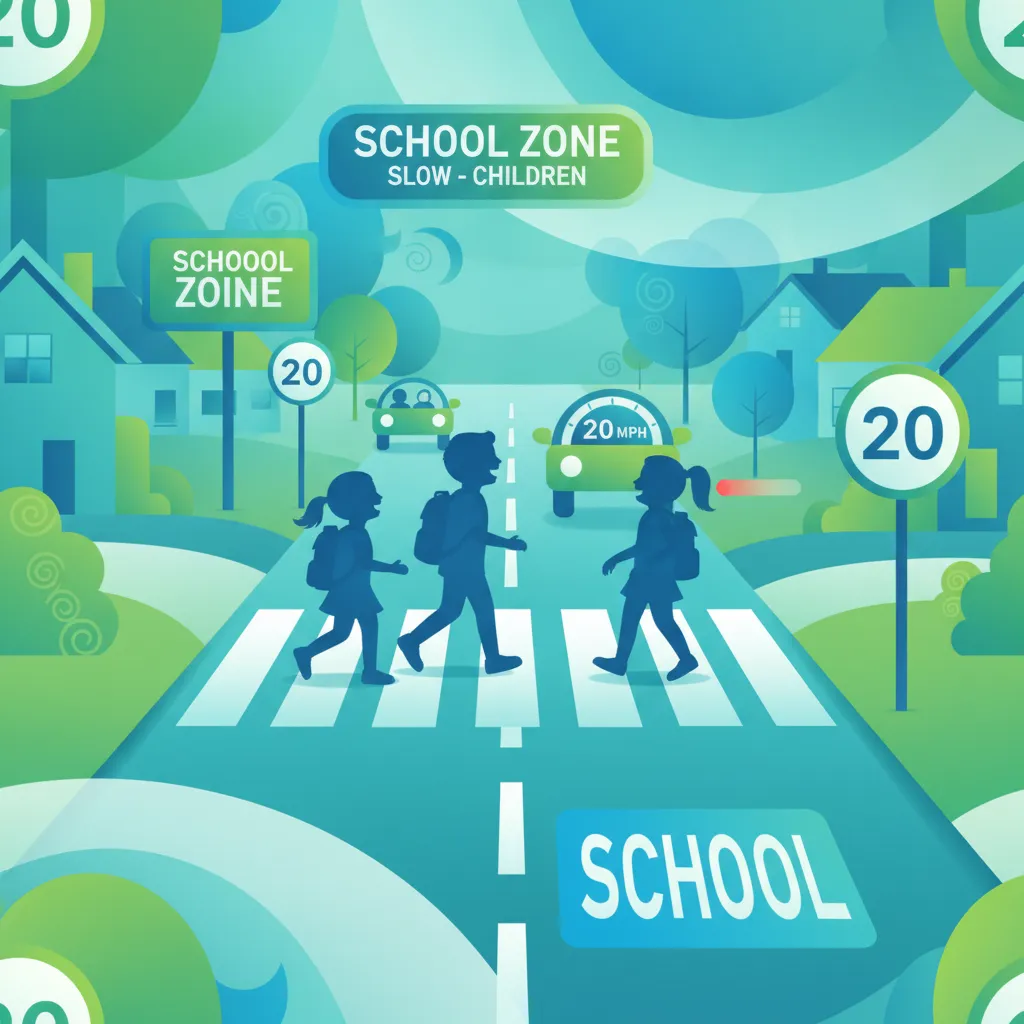
French municipalities utilize distinct low-speed configurations to foster pedestrian safety in residential and educational neighborhoods. This lesson details speed restrictions in 'zone 30', pedestrian-only districts, and shared 'zones de rencontre' where speed is capped at 20 km/h. You will learn how priority hierarchies shift in these zones, giving pedestrians legal priority to use the entire roadway.

Learners will study the fundamental priority rules that dictate right-of-way at intersections, focusing on the 'priorité à droite' principle prevalent in French road design. The lesson explains how to identify priority roads, interpret yield signs, and apply these rules safely when operating an AM vehicle. Understanding priority ensures orderly movement and reduces conflict points in mixed traffic scenarios.

This lesson provides a comprehensive breakdown of priority rules under French law, with special focus on the default rule of priorité à droite. You will learn to recognize when this rule applies, even in the absence of explicit signage, and how to verify that entering vehicles see you. It also explains how to read priority road indicators, stop signs, and yield signs, helping you manage right-of-way safely and confidently.

Learners will explore the rules related to pedestrian crossings, focusing on the obligation to yield to pedestrians at zebra crossings and flashing pedestrian signals. The lesson highlights the importance of stopping before the stop line, reducing speed, and maintaining vigilance for pedestrian movement. Mastery of these practices ensures the safety of both pedestrians and AM riders at crossing points.

This lesson focuses on the legal requirement to yield to pedestrians on or about to step onto zebra crossings, a major focus of French road safety. You will learn how to approach school zones and pedestrian islands with heightened vigilance and reduced speed. Additionally, the lesson explores shared urban spaces, explaining how to maintain safe lateral distances when overtaking cyclists or personal electric scooters.

Learners will learn the critical steps for safely approaching and traversing intersections, emphasizing speed reduction, priority assessment, and adherence to right-of-way rules, including priorité à droite. The lesson covers recognizing stop lines, interpreting road markings, and maintaining a safe distance from other vehicles. By mastering these practices, AM riders can confidently navigate intersections while minimizing collision risk.

This lesson clarifies the legal boundaries of urban infrastructure, highlighting the strict ban on riding motorcycles within bus lanes or cycle paths. You will study French regulations concerning traffic flow, including where and when experimental lane filtering is permitted between lines of stationary cars. Understanding these boundaries ensures you can keep moving through congested areas without risking heavy fines or dangerous collisions.
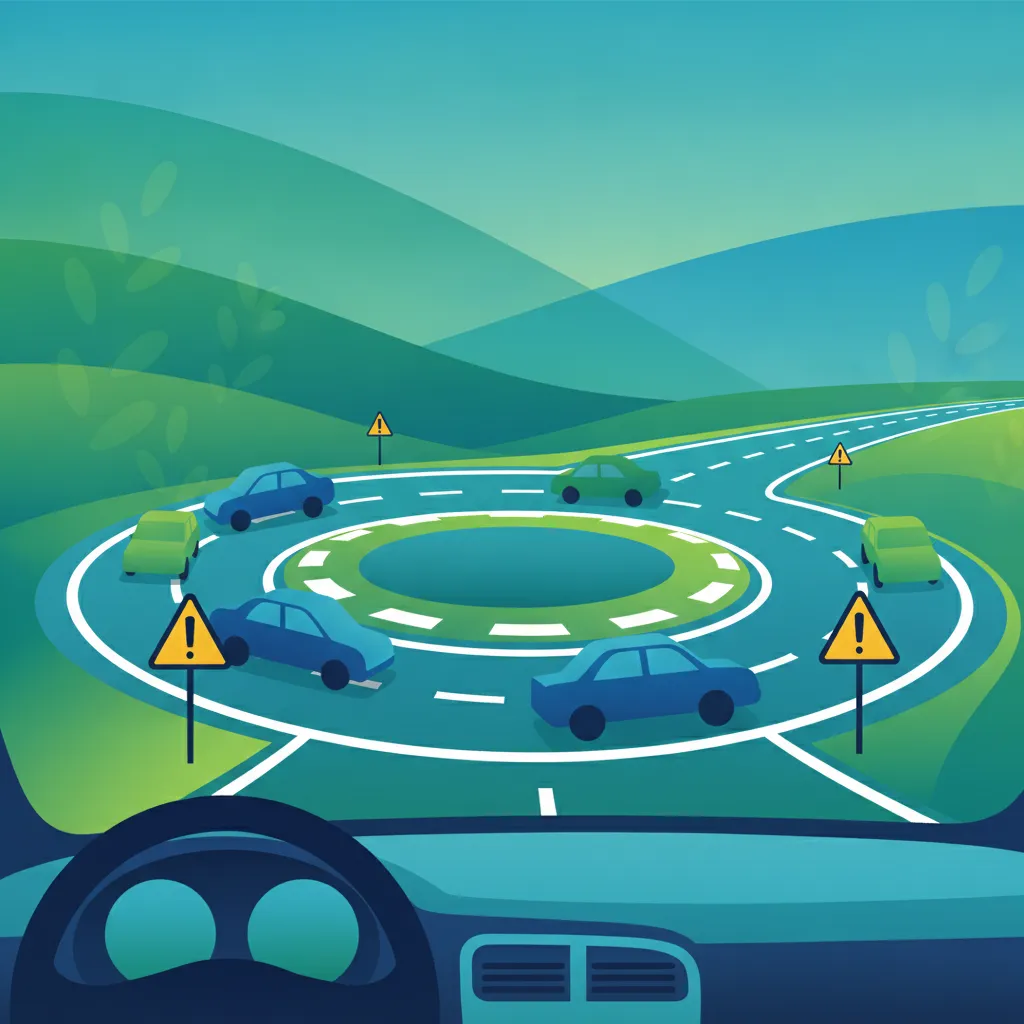
This lesson focuses on the skills required to safely enter, navigate, and exit roundabouts, a common feature in French urban environments. Learners will understand the need to yield to circulating traffic, select the appropriate lane upon entry, and signal intentions when exiting. By mastering these techniques, AM riders can safely integrate into roundabout traffic flow and reduce conflicts with other road users.

In France, the default rule at any intersection without clear priority signage is priority-to-the-right (priorite a droite). This lesson explains how to identify unsignaled junctions in urban and rural environments and when you must yield to incoming vehicles. You will learn to spot the standard yellow diamond priority signs and triangular warning signs that indicate whether you hold the priority.

Negotiating crossroads that lack active traffic light signals requires a clear reading of signs and painted stop or yield lines. This lesson details the obligations of stopping completely at stop signs and slowing down to yield at 'cedez le passage' markings. You will learn to assess cross-traffic speeds, determine priorities when multiple vehicles arrive, and execute turns safely.
Understand the specific challenges and safety strategies for operating light AM vehicles in dense traffic. This guide explains how to manage risks, maintain visibility, and adapt your riding style to avoid common hazards while navigating French urban and rural road networks.

Learners will develop the ability to anticipate potential hazards on the road, enhancing reaction times and defensive riding strategies. The lesson emphasizes constant scanning, early identification of threats such as sudden stops, pedestrian crossings, or unexpected lane changes, and appropriate response measures. By cultivating proactive risk assessment, AM riders can significantly reduce accident likelihood.

Learners explore the specific responsibilities that accompany operating a small, exposed vehicle, emphasizing the need for heightened defensive driving techniques under French law. The lesson stresses the importance of maintaining visibility and predictability, adhering strictly to the Code de la route, and understanding the dynamics of sharing the road safely. By internalizing these responsibilities, riders can significantly reduce risks and contribute to a safer traffic environment for all users.

This lesson focuses on French warning signs that alert drivers to potential hazards ahead, such as curves, animal crossings, or slippery surfaces, with particular attention to signs relevant to AM riders. Learners will examine how to interpret these signs, understand the associated risks, and adapt riding behavior accordingly. By mastering warning sign recognition, riders can proactively manage safety risks in diverse road conditions.

This lesson focuses on the inherent vulnerability of AM vehicles due to their limited mass, exposure, and visibility within mixed traffic flows on French roads. Learners will examine how blind spots, sudden lane changes by larger vehicles, and higher impact severity affect small vehicle safety. The content underscores the necessity for riders to adopt proactive safety measures, maintain safe distances, and be constantly aware of surrounding traffic dynamics.

This lesson provides guidance on safe riding practices during nighttime, emphasizing proper headlamp usage, reflective clothing, and strategies to manage glare from oncoming traffic. Learners will learn to compensate for reduced peripheral vision and increased fatigue, as well as to identify common night road hazards in France. By applying these techniques, riders can enhance their visibility and safety after dark.
This lesson focuses on the legal requirement to yield to pedestrians on or about to step onto zebra crossings, a major focus of French road safety. You will learn how to approach school zones and pedestrian islands with heightened vigilance and reduced speed. Additionally, the lesson explores shared urban spaces, explaining how to maintain safe lateral distances when overtaking cyclists or personal electric scooters.

This lesson addresses the challenges of positioning near larger vehicles such as cars, vans, buses, and lorries on French roads. Learners will learn to identify blind spots (angles morts), maintain a safe distance, and position themselves to maximize visibility and predictability. Understanding these dynamics is crucial for AM riders to avoid dangerous situations and ensure safe overtaking and lane sharing.

This lesson addresses the distinct safety considerations for riding during daylight hours versus nighttime, covering topics such as managing glare from the sun and ensuring adequate lighting after dark. Learners will learn strategies to maintain visibility, stay alert, and adapt riding techniques to varying light conditions, including the use of reflective gear. Emphasis is placed on proactive planning to mitigate risks associated with reduced visibility, thereby fostering safe riding practices.

Learners will explore techniques for maintaining control and safety while riding in rain, focusing on reduced braking efficiency, hydroplaning prevention, and visibility challenges. The lesson emphasizes appropriate speed reduction, tire condition checks, and the use of rain gear to enhance rider comfort and protection. By mastering these adaptations, riders can navigate wet French conditions with confidence.

In this lesson, drivers will learn how to safely share the road with motorcycles and scooters, focusing on the specific blind spots and speed differentials that create risk. The content highlights proper lane positioning, caution when overtaking, and strategies for predicting motorcycle trajectories. Learners will also be introduced to the importance of being aware of scooter movements, especially in narrow streets.
Find clear answers to common questions learners have about Legal Speed Limits for AM Vehicles. Learn how the lesson is structured, which driving theory objectives it supports, and how it fits into the overall learning path of units and curriculum progression in France. These explanations help you understand key concepts, lesson flow, and exam focused study goals.
Yes, 45 km/h is the regulatory cap for Category AM vehicles. However, you must always drive at a speed that is safe for the specific road conditions, which means you may need to drive slower than 45 km/h in poor weather, heavy traffic, or near schools.
No, AM vehicles have specific, much lower speed limits compared to cars. Even if a road is signed for 50 km/h or higher, your AM vehicle is legally restricted to a maximum of 45 km/h at all times.
The exam often uses images of road signs or traffic scenarios where you must decide if the current speed is appropriate. You might be asked to identify the maximum speed for your vehicle or how to react to a specific regulatory speed sign.
Exceeding the legal speed limit is a violation of the Code de la route. Beyond the risk of fines and points on your licence, it makes your vehicle technically non-compliant, which can cause severe safety issues and insurance problems.
Ready to focus your study? Use the practice search to find exactly the French driving theory questions you need for the Code de la route and permis de conduire ETG. Refine your knowledge on specific topics or challenging rules to boost your confidence and exam readiness.