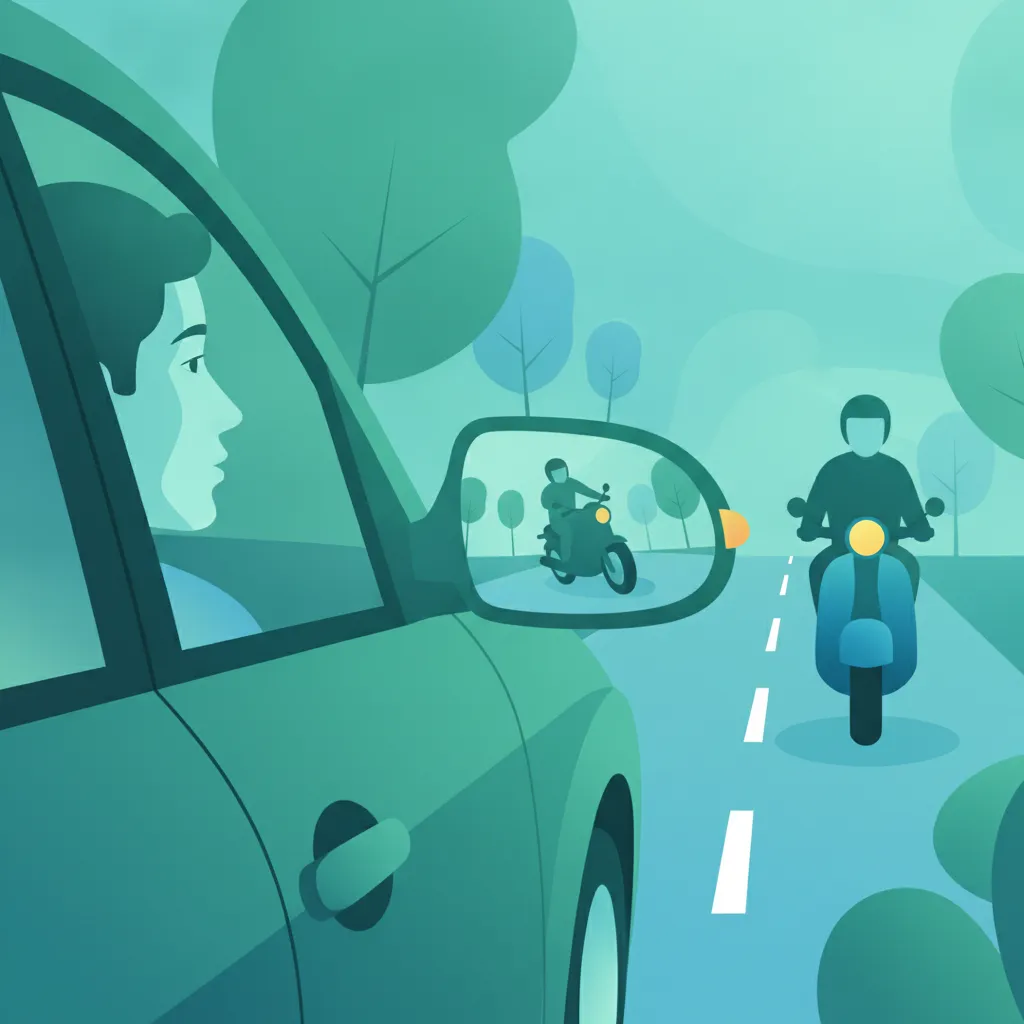
As a professional driver, understanding how to interact safely with motorcycles and scooters is a critical component of your Category C and CE theory training. This lesson explores the unique risks posed by two-wheelers, providing you with the defensive driving techniques needed to navigate traffic effectively. It builds on your knowledge of vehicle dimensions and blind spots, ensuring you are prepared for real-world risks and exam-style hazard scenarios.
Lesson content overview
As a professional driver operating a heavy goods vehicle (HGV) under Category C or CE, your vehicle’s sheer size, weight, and blind spots present immense risks to lighter, more vulnerable road users. Among these, motorcycles and scooters are particularly susceptible to catastrophic accidents.
In France, two-wheelers represent only a small percentage of total road traffic but account for a disproportionate number of severe and fatal road injuries. Sharing the road with them safely requires a deep understanding of their physical limitations, their behavioral patterns under the French Code de la route, and the specific hydrodynamic and visual challenges created by large commercial vehicles.
To coexist safely with motorcycles and scooters, a professional truck driver must understand the physics governing two-wheeled travel. Unlike a heavy truck, which relies on a multi-axle, high-traction platform, a two-wheeler is inherently unstable and relies entirely on gyroscopic forces and forward momentum to remain upright.
A typical motorcycle or scooter has only two contact patches with the road, each approximately the size of a credit card. This limited surface area means that traction is highly volatile. Road imperfections, wet painted lines, manhole covers, and debris that a 44-tonne semi-trailer would roll over without noticing can cause a motorcyclist to lose traction instantly. Consequently, two-wheelers must constantly alter their positioning within a lane to avoid road hazards, meaning their path is rarely a perfectly straight line.
When a Category C or CE vehicle travels at high speeds, it displaces a massive volume of air, creating a high-pressure bow wave at the front and a low-pressure vacuum (slipstream) along the sides and rear.
This aerodynamic displacement can easily destabilize a lightweight motorcycle or scooter. As you approach a two-wheeler from behind or pass one in an adjacent lane, your vehicle's air pressure wave will first push the rider away. As the rider is cleared by the tractor unit, the low-pressure zone along the trailer can violently suck them toward your wheels. This physical effect is highly amplified in wet weather or strong crosswinds.
Under French regulations, all heavy vehicles over 3.5 tonnes must display warning stickers (Angles Morts) on their sides and rear to alert vulnerable road users. However, as a professional driver, the primary responsibility for managing these blind spots lies with you.
Due to their narrow profiles, motorcycles and scooters can easily disappear into these zones.
A standard vehicle blind spot is stationary relative to the vehicle's mirrors. However, the Motorcycle Blind Spot (MBS) is dynamic.
When a motorcyclist negotiates a turn, they must lean their vehicle. This change in lean angle shifts the rider's physical position downward and outward, creating a specific visual challenge:
In dense French urban centers (such as Paris, Lyon, or Marseille), motorized scooters present a unique variant of the blind spot problem:
The Front Blind Spot Danger: Never assume the space immediately in front of your truck's cab is clear when starting from a stop. A scooter may have filtered directly in front of your bumper. Always check your front-proximity mirror (antéviseur) before releasing the parking brake.
The French Code de la route mandates strict rules to protect two-wheelers, which heavy vehicle drivers must master.
When overtaking any two-wheeler (motorcycle, scooter, or bicycle), the law requires you to maintain a strict minimum lateral clearance. This distance compensates for the rider's potential lateral deviation and the aerodynamic turbulence generated by your vehicle.
If you cannot maintain this distance due to oncoming traffic, narrow lanes, or road works, you are legally prohibited from overtaking. You must remain behind the two-wheeler until the road opens up.
Assess the road ahead to ensure there is sufficient visibility and that no oncoming vehicles or road narrowings are present.
Signal your intention early using your left indicator to warn vehicles behind you and the rider ahead.
Move completely into the adjacent lane (or as far left as possible), ensuring you clear the rider by at least 1.5 metres (outside urban areas) or 1.0 metre (inside urban areas).
Maintain a steady, moderate speed differential. Do not accelerate aggressively, as this increases the air displacement and turbulence.
Do not merge back into the right lane until you can clearly see the entire motorcycle in your primary rear-view mirror.
In France, the practice of lane filtering—where two-wheelers ride between two lanes of slow or stationary traffic—is legally regulated under specific trial frameworks (circulation inter-files or CIF).
This practice is permitted only on motorways (autoroutes) and dual carriageways (voies rapides) with at least two lanes in each direction separated by a central reservation, and where the speed limit is 70 km/h or higher.
Because of the extreme mass differential between an HGV and a two-wheeler, passive driving is insufficient. You must employ active, defensive strategies to predict their movements and keep them in view.
Your positioning within your lane directly impacts how well two-wheelers can see you, and how well you can see them.
To prevent collisions, you must learn to read the "body language" of a motorcycle or scooter. Unlike cars, which remain flat, a two-wheeler’s trajectory is highly signaled by the rider’s physical alignment and the lean of the machine.
Urban delivery routes present the highest concentration of scooter traffic. In city centers, scooters are often operated by commercial delivery couriers who may prioritize speed over defensive riding.
The risks associated with sharing the road with two-wheelers escalate dramatically when weather and light conditions deteriorate.
In rain, a motorcyclist's visibility is severely compromised by helmet visor fogging and water spray. Furthermore, their braking distance increases significantly.
At night, a motorcycle is represented by a single headlight, making it incredibly difficult to accurately judge its speed and distance.
Understanding the errors most commonly made by heavy vehicle drivers can help you actively avoid them during your daily operations.
| Violation / Error | Dangerous Practice | Safe Standard / Corrective Action | Consequence of Failure |
|---|---|---|---|
| Insufficient Lateral Space | Passing a scooter at a distance of less than 1.0 m in town to save time. | Always maintain a minimum of 1.0 m (urban) or 1.5 m (rural) clearance. | Aerodynamic slipstream pulls the scooter under the trailer wheels. |
| Overtaking on Bends | Attempting to pass a slower motorcycle on a curve. | Wait for a straight, high-visibility stretch of road before passing. | Sideswipe collision in the apex blind spot as the motorcycle leans. |
| Neglecting the Front Blind Spot | Starting immediately when the traffic light turns green without checking front mirrors. | Check the antéviseur (front-view mirror) and side-view mirrors before moving. | Crushing a filtering scooter positioned directly below your windshield. |
| Abrupt Lane Changes | Changing lanes quickly during traffic congestion. | Signal early, perform multiple mirror checks, and scan for filtering riders. | Collision with a filtering motorcycle traveling legal inter-files. |
| Over-reliance on Electronic Aids | Relying solely on radar or blind-spot sensors to detect two-wheelers. | Always combine electronic warnings with manual, physical mirror checks. | System misses a low-profile scooter, resulting in a side-collision. |
Explore all units and lessons included in this driving theory course.
Lesson content overview
Explore all units and lessons included in this driving theory course.
Explore search topics learners often look for when studying Sharing Roads with Motorcycles and Scooters. These topics reflect common questions about road rules, driving situations, safety guidance, and lesson level theory preparation for learners in France.
Browse additional driving theory lessons that cover connected traffic rules, road signs, and common driving situations related to this topic. Improve your understanding of how different rules interact across everyday traffic scenarios.
Understand the specific challenges of operating heavy goods vehicles in dense urban environments. Learn techniques for safely managing tight corners, navigating delivery access points, and reducing risks associated with pedestrians and small vehicles in narrow city streets as required for Category C driving theory.
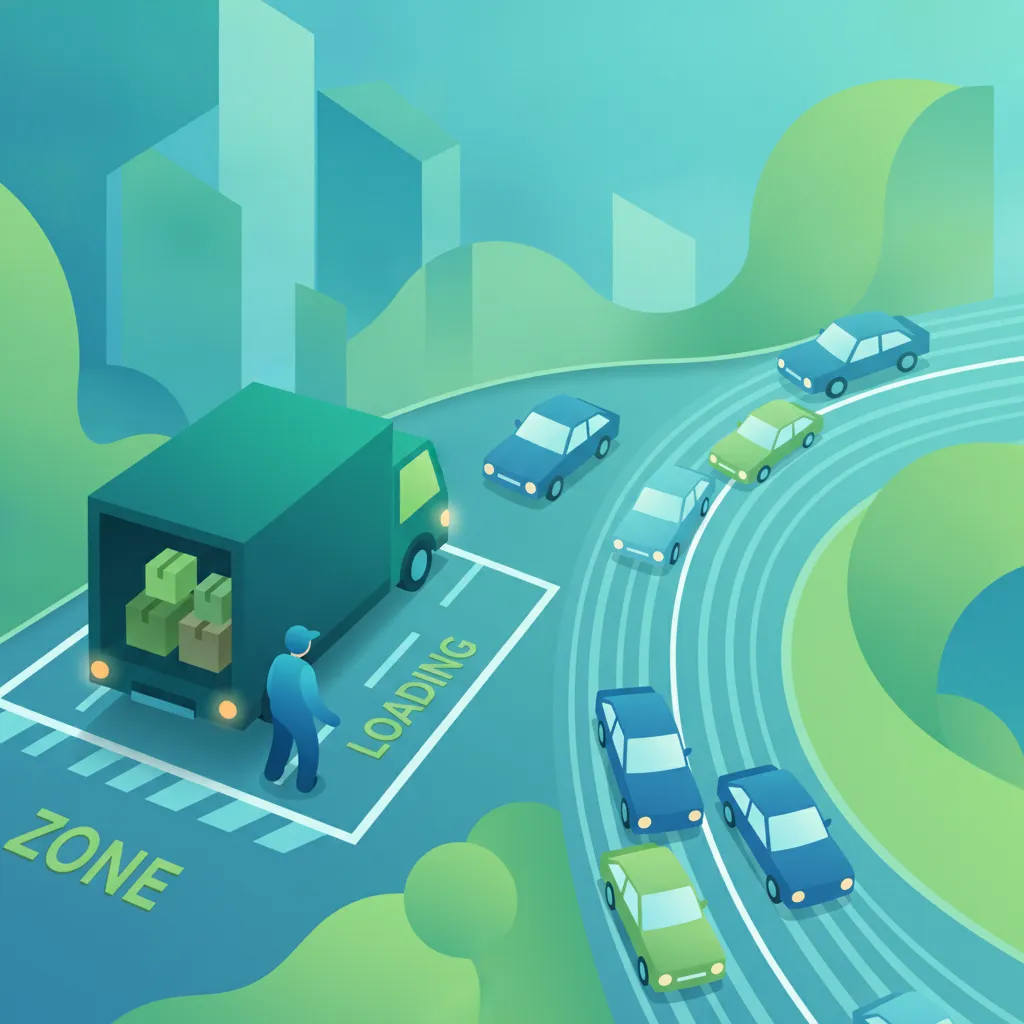
In this lesson, drivers will learn how to navigate urban delivery zones, understanding the rules surrounding loading bays, time windows, and restricted access areas. The content includes the process for obtaining delivery permits, strategies for safe maneuvering in congested city streets, and best practices for minimizing impact on pedestrian traffic. Learners will also be introduced to French city-specific regulations that govern goods vehicle deliveries.
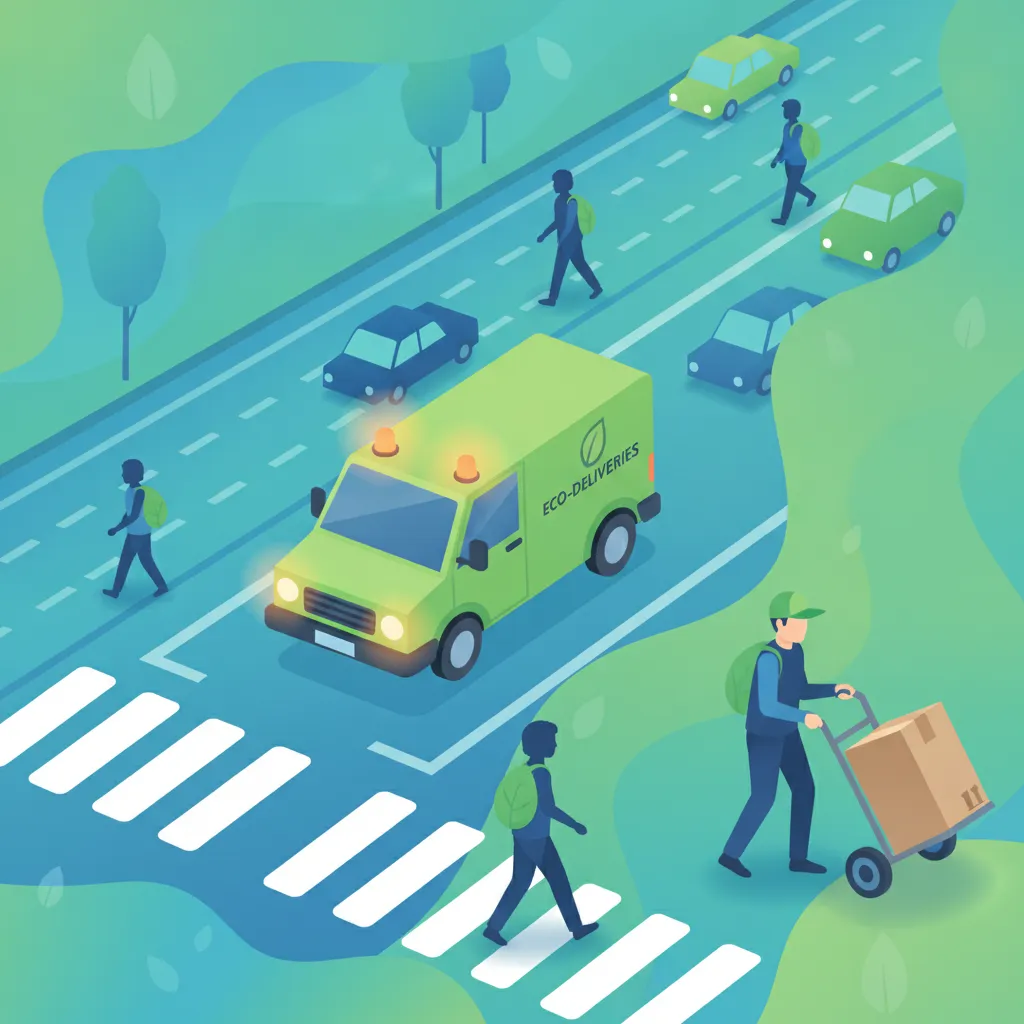
This lesson focuses on the unique challenges of performing deliveries in dense urban areas. Learners will explore best practices for loading and unloading safely, navigating traffic congestion, and minimizing risks to pedestrians and cyclists. The content also covers compliance with city regulations for delivery zones, scheduling considerations, and the importance of careful maneuvering to avoid accidents.
This lesson analyzes the various traffic challenges unique to operating large passenger vehicles in historic and modern French urban areas. Drivers will learn to manage narrow street layouts, double-parked delivery trucks, and high-density multi-lane roundabouts safely. The lesson emphasizes defensive driving strategies, route adjustments, and maintaining mental focus under severe schedule and time pressures.
This lesson examines the regulatory limits and environmental controls applied to large passenger vehicles operating in dense French urban centers. Drivers will study the Crit'Air clean air sticker system and low-emission zones (ZFE) that restrict access for older, high-polluting vehicles. It also addresses navigating physical constraints, such as narrow streets, tight turning radii, and strict municipal weight limits.
This lesson focuses on maneuvering in extremely crowded areas, passenger terminals, or narrow streets blocked by parked vehicles and obstacles. Drivers will learn to assess clearance distances precisely before committing to narrow pathways. The content teaches steering techniques that maintain stability, optimize space usage, and prioritize public safety during slow-speed, high-difficulty maneuvers.
This lesson examines the specific challenges and responsibilities goods vehicle drivers face when interacting with pedestrians and cyclists in urban environments. Learners will understand right-of-way rules, the importance of yielding at pedestrian crossings, and safe turning practices that protect cyclists. The content emphasizes heightened driver vigilance, especially when navigating bike lanes and crowded sidewalks.

In this lesson, drivers will learn how to plan and execute wide turns with goods vehicles, taking into account turning radius, pivot points, and articulation angles. The content emphasizes the necessity of using the full width of the lane, correctly aligning the vehicle through the turn, and anticipating the movement of the trailer. Learners will also explore road marking guidelines for turning and the importance of giving clear signals to surrounding traffic.
In this lesson, drivers will learn best practices for manoeuvring goods vehicles into loading docks and other confined spaces. The content covers the use of spotting aids, guidance markings, and reverse assistance technologies. Learners will understand how to align the vehicle and trailer correctly with dock doors, maintain situational awareness, and use proper signaling for safety. The lesson also emphasizes the importance of communication with dock personnel.

This lesson provides practical strategies for managing the physical demands of slow, heavily congested city traffic. You will learn how to maintain excellent low-speed balance through correct body posture, rear brake modulation, and smooth clutch control. It also emphasizes the importance of preserving an adequate safety buffer when stopping behind other vehicles, allowing an immediate escape route if you face a rear-end threat.
This lesson covers the physical dimensions of passenger vehicles and how their high profile, length, and width alter spatial awareness on the road. Learners will study tail-swing mechanics and track the path of the rear wheels during sharp turns to avoid hitting roadside obstacles. Accurate measurement of overhead structures, bridges, and underpass clearances is taught to prevent catastrophic structural collisions.
Explore professional techniques to identify and mitigate blind spot hazards when driving large vehicles. This theory lesson focuses on the physics of visibility, the proper use of mirrors including the antéviseur, and predictive strategies to detect vulnerable road users like cyclists and motorcyclists in high-risk zones.
This lesson focuses on the importance of recognizing and mitigating blind spots in goods vehicles, especially when towing trailers. Learners will explore techniques such as proper mirror adjustment, the use of blind spot mirrors, and visual checks to ensure that obstacles and vulnerable road users are detected before executing maneuvers. The content also discusses the limitations of blind spot monitoring systems and the need for supplementary visual checks.
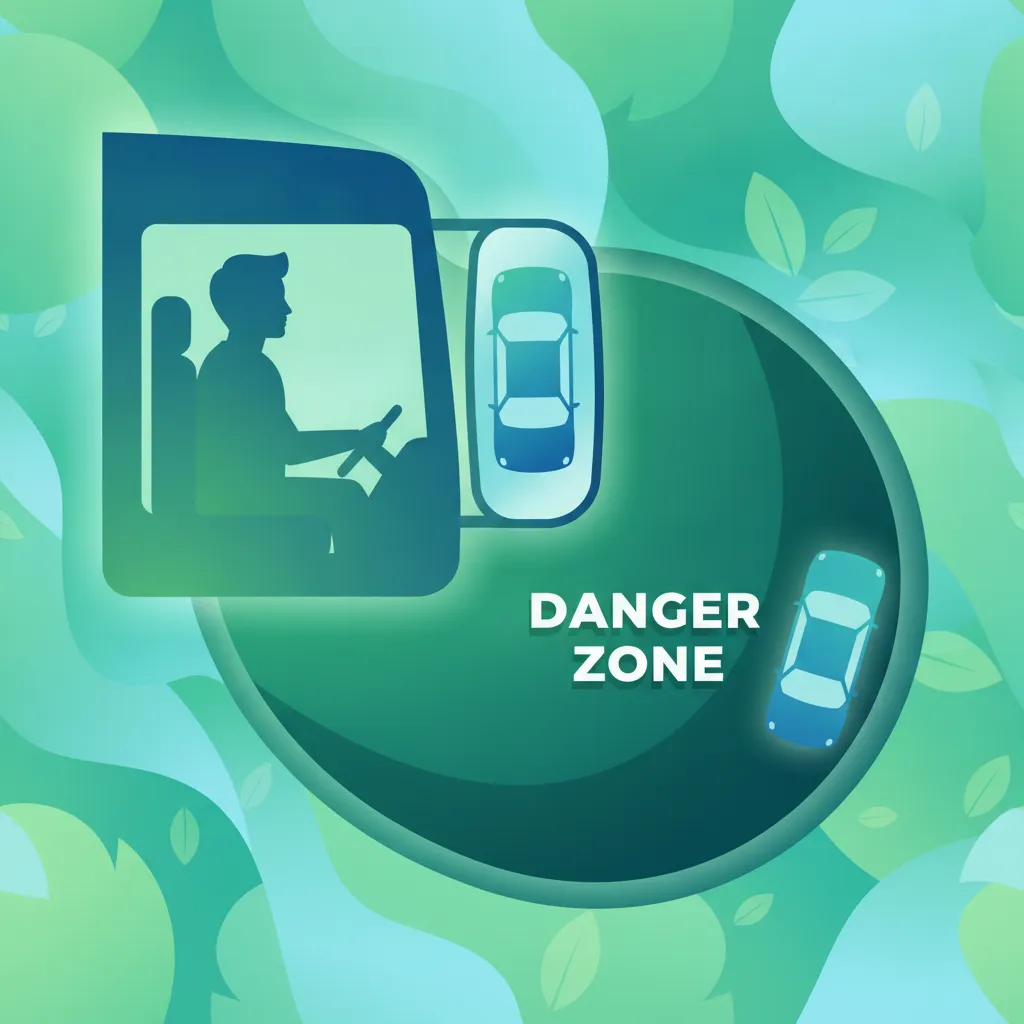
This lesson details the location and scale of blind spots around passenger cars and heavy goods vehicles, often referred to as the 'no-zone' or 'angles morts'. You will learn why truck drivers cannot see you directly behind or immediately adjacent to their cab doors. The lesson provides actionable strategies to minimize the time you spend in these dangerous zones, ensuring you always pass quickly and safely.

This lesson details the dangerous blind spots (angles morts) that surround heavy passenger vehicles and explains how to mitigate them. Drivers will master the systematic mirror check sequence (retro-information) before executing any turns or lane changes. It also covers the mandatory French "Angles Morts" warning stickers displayed on the vehicle exterior to alert vulnerable road users of danger zones.

In this lesson, drivers will learn strategies to avoid conflicts with smaller vehicles, such as cars and vans, which may not be as visible in large vehicle blind spots. The content emphasizes maintaining adequate spacing, using proper lane discipline, and being aware of small vehicles' behavior during lane changes and turns. Learners will also be introduced to communication techniques, such as signalling and eye contact.
This lesson addresses the challenges of positioning near larger vehicles such as cars, vans, buses, and lorries on French roads. Learners will learn to identify blind spots (angles morts), maintain a safe distance, and position themselves to maximize visibility and predictability. Understanding these dynamics is crucial for AM riders to avoid dangerous situations and ensure safe overtaking and lane sharing.
This lesson teaches specific visual scanning methods to detect vulnerable road users, such as children, elderly individuals, and cyclists near stops. Drivers will learn to anticipate sudden movements, like a passenger running to catch a bus or stepping off a sidewalk unexpectedly. Managing the massive blind spots around the front and right-hand sides of passenger vehicles is highlighted as a critical safety duty.
This lesson examines the specific challenges and responsibilities goods vehicle drivers face when interacting with pedestrians and cyclists in urban environments. Learners will understand right-of-way rules, the importance of yielding at pedestrian crossings, and safe turning practices that protect cyclists. The content emphasizes heightened driver vigilance, especially when navigating bike lanes and crowded sidewalks.
This lesson focuses on the inherent vulnerability of AM vehicles due to their limited mass, exposure, and visibility within mixed traffic flows on French roads. Learners will examine how blind spots, sudden lane changes by larger vehicles, and higher impact severity affect small vehicle safety. The content underscores the necessity for riders to adopt proactive safety measures, maintain safe distances, and be constantly aware of surrounding traffic dynamics.
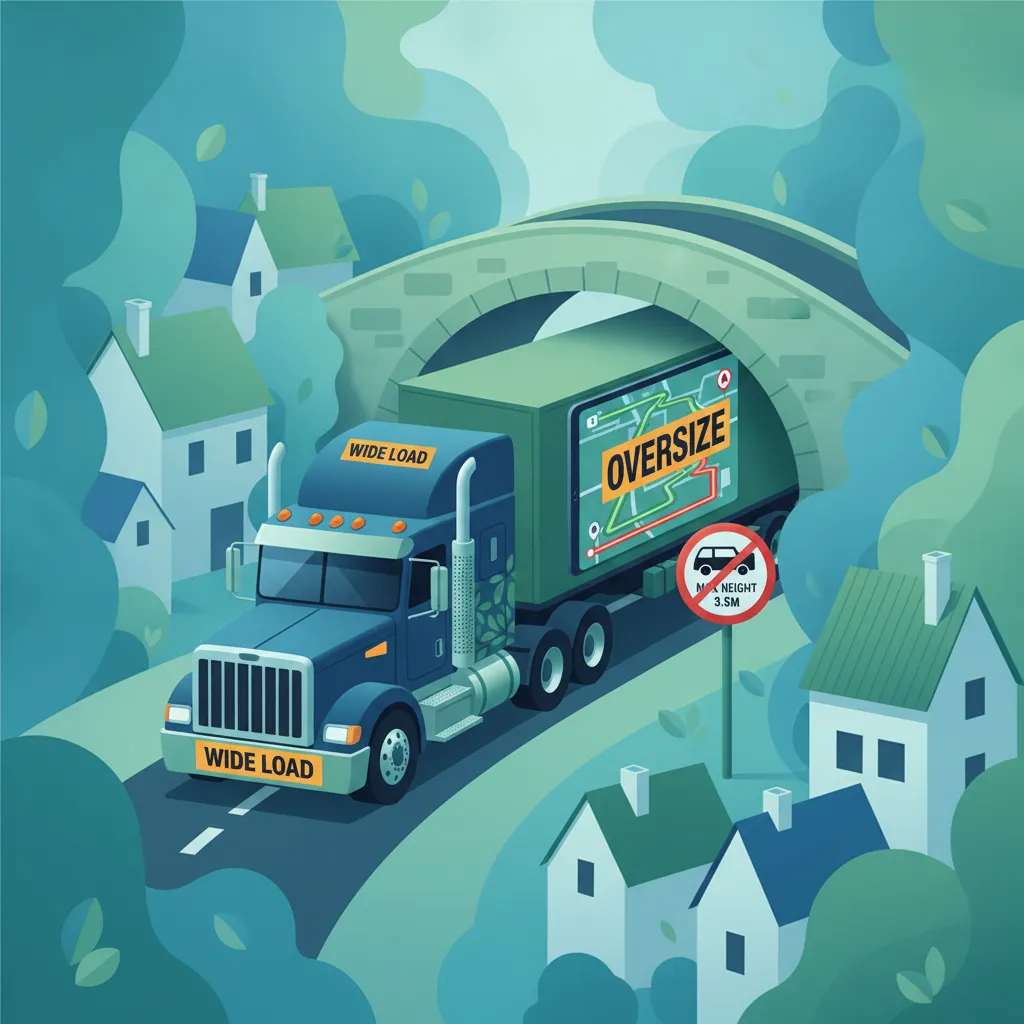
This lesson provides strategies for planning routes that accommodate oversized goods vehicles while complying with French road restrictions. Learners will learn how to identify prohibited routes, evaluate bridge and tunnel limitations, and obtain necessary access permits. The content also addresses the use of specialised GPS systems for heavy vehicle routing and the importance of contingency planning for detours, ensuring safe and efficient transport operations.

In this lesson, drivers will learn how to calculate safe following distances based on vehicle speed, load, road conditions, and traffic density. The content explains the components of total stopping distance, including reaction time and braking distance, and how these are affected by factors such as wet road surfaces and heavy loads. Learners will also be introduced to French road safety guidelines for maintaining appropriate gaps to ensure sufficient time to react.
Find clear answers to common questions learners have about Sharing Roads with Motorcycles and Scooters. Learn how the lesson is structured, which driving theory objectives it supports, and how it fits into the overall learning path of units and curriculum progression in France. These explanations help you understand key concepts, lesson flow, and exam focused study goals.
Large goods vehicles have significant blind spots due to their size and cabin height. Motorcycles are small and can easily become hidden, particularly during turns or when they are positioned near your rear wheels or the front of the vehicle.
You must maintain a larger safety buffer than you would for a car. Motorcycles are more sensitive to the wind turbulence caused by heavy goods vehicles, so keeping a wider lateral distance is essential for their stability.
Always double-check your mirrors and blind-spot monitoring systems for filtering motorcycles. They may try to pass on the right or left in tight spaces, which is a high-risk scenario for drivers of heavy goods vehicles.
Ready to focus your study? Use the practice search to find exactly the French driving theory questions you need for the Code de la route and permis de conduire ETG. Refine your knowledge on specific topics or challenging rules to boost your confidence and exam readiness.