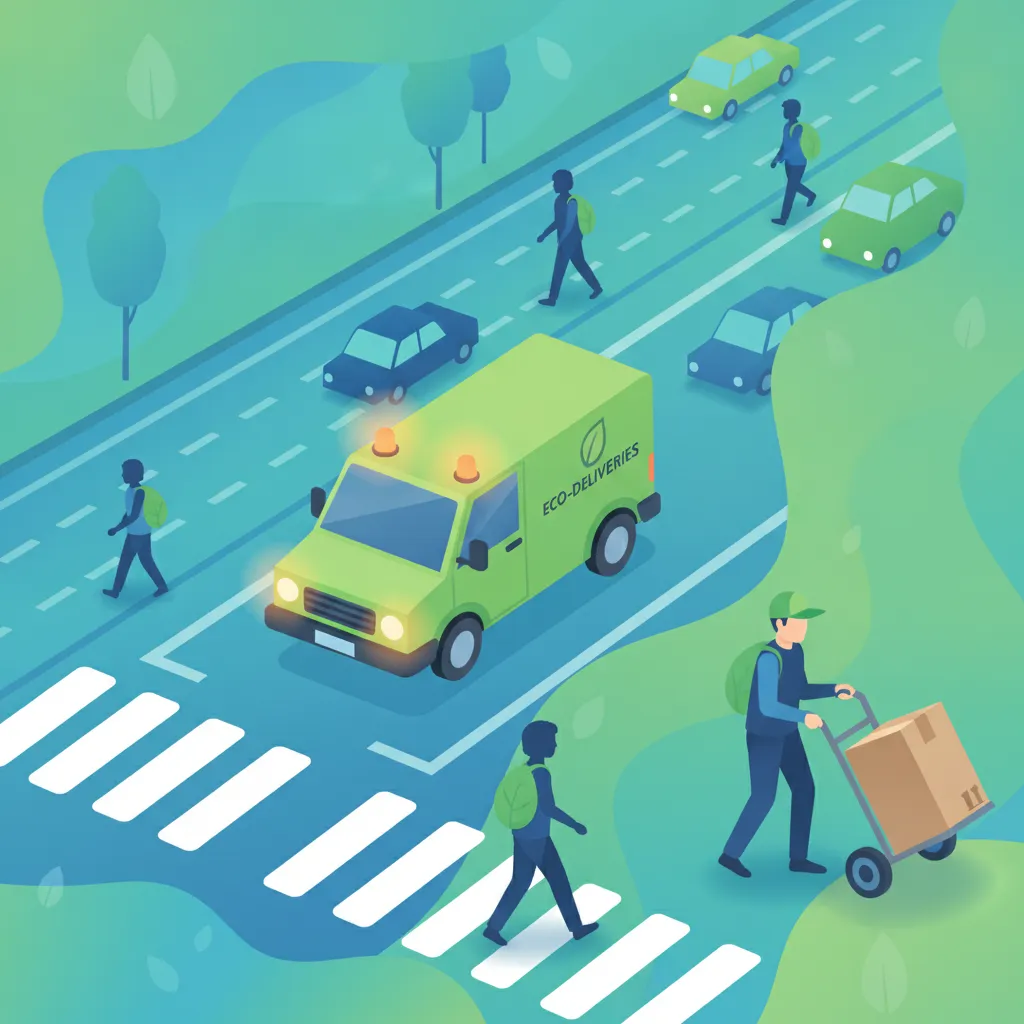
This lesson focuses on the specific challenges of operating heavy goods vehicles in dense urban environments. You will learn how to navigate traffic congestion, manage delivery zone compliance, and prioritize the safety of vulnerable road users in accordance with the French Code de la route.
Lesson content overview
Operating a heavy goods vehicle (HGV) in dense urban environments is one of the most demanding tasks a professional driver will face. Navigating narrow historical streets, managing frequent delivery stops, and sharing constrained road space with vulnerable road users (VRUs) requires exceptional spatial awareness, perfect vehicle control, and an intimate understanding of local and national regulations.
As part of the French Goods Vehicle Licence Theory Course (Category C & CE), this lesson covers the essential skills, legal responsibilities, and safety principles required to execute urban deliveries safely, efficiently, and in full compliance with the French Code de la route and municipal ordinances.
Urban space is highly regulated to balance the needs of commerce with public safety and environmental quality. Under the French Code de la route, stopping or parking a heavy vehicle to load or unload goods is strictly regulated. Violating these rules can result in heavy fines, vehicle impoundment, and safety hazards.
In France, physical space on the roadway designated for deliveries is indicated by specific road markings and vertical signs. Knowing how to interpret these markings is a core competency for any Category C driver.
The "Disque de Livraison" Requirement: Some French cities require the use of a specific commercial delivery disc (disque de livraison) displayed on the dashboard. This disc notes your arrival time and proves compliance with maximum stay limits (typically 20 or 30 minutes) in designated loading bays.
Under Articles L121-3 to L121-6 of the Code de la route, the registered owner or operator of a commercial vehicle can be held financially liable for parking and stopping offenses unless they prove who was driving at the time of the infraction. This means that municipal authorities can issue electronic fines (procès-verbal) based on automated street cameras or parking officer reports, which are then routed directly to your transport employer.
In France, mayors hold the legal authority to regulate traffic and parking within their municipal boundaries through local decrees known as arrêtés municipaux. This local autonomy means that delivery rules can change significantly from one city to another, or even between different districts of the same city.
To combat urban congestion and reduce environmental noise pollution, most major French cities (such as Paris, Lyon, Marseille, and Bordeaux) implement strict delivery schedules (plages horaires).
Failing to adhere to local delivery time windows or vehicle size restrictions will result in a Class 4 fine (contravention de la 4e classe), and officers may order the immediate removal of your vehicle from the restricted zone. Always check the municipal bylaws or your transport manager's route plan before entering a historic or dense city center.
The process of stopping a rigid or articulated goods vehicle on an urban street and discharging cargo involves significant physical risks. Drivers must follow a disciplined, safety-first sequence of actions to protect themselves, their cargo, and other road users.
When arriving at an urban delivery point, drivers should execute the following safety-driven checklist:
Identify a Legal Space: Scan ahead to locate a designated loading zone (emplacement de livraison) or a safe, permissible curbside area. Never stop in a manner that blocks intersections, pedestrian crossings, or bike lanes.
Secure the Vehicle: Bring the vehicle to a complete stop, engage the parking brake, shut off the engine (unless PTO/power take-off is required for the hydraulic tail lift), and remove the ignition key to prevent unauthorized entry or theft.
Deploy Warning Devices: Activate the vehicle's hazard warning lights (feux de détresse) to maximize visibility. If unloading is expected to block any part of the adjacent road or if visibility is low, place high-visibility safety cones (cônes de chantier) at the rear corners of the vehicle.
Conduct a Walk-Around Risk Assessment: Before opening the rear doors or operating the tail lift, step out and visually inspect the immediate surroundings for low-hanging branches, overhead utility cables, high curbs, and approaching pedestrians or cyclists.
Unload with Care: Deploy the tail lift safely, keeping your feet clear of the moving parts. Ensure that cargo is moved smoothly on flat, stable ground. Never leave the rear of the truck open and unattended.
According to Article R417-10 of the Code de la route, hazard warning lights must be activated whenever a stationary vehicle presents a danger or an unexpected obstacle to other road users.
However, many professional drivers make the critical mistake of assuming that activating their hazard lights legitimizes illegal stopping (such as double-parking or blocking a sidewalk). Hazard lights are a safety warning mechanism, not an immunity signal. Stopping illegally with your hazard lights on will still result in a severe fine and poses a major hazard to passing traffic.
The physical architecture of Category C and CE vehicles creates extensive blind spots (angles morts). In dense urban centers, where pedestrians, cyclists, and users of personal mobility devices (such as e-scooters) navigate close to heavy vehicles, these blind spots present an extreme risk of fatal collisions.
Since January 1, 2021, French law mandates that all heavy vehicles over 3.5 tonnes operating in urban areas must be equipped with official visual signaling stickers showing the position of the vehicle’s blind spots. These stickers must be placed on both sides of the vehicle (near the front cabin) and at the rear, at a height between 0.9 and 1.5 metres from the ground.
The blind zones around a heavy goods vehicle where the driver cannot see other road users through the windshield or standard side mirrors. On Category C and CE vehicles, these zones are located directly in front of the cabin, directly behind the vehicle, and along both side flanks (particularly the passenger side).
       [ Blind Spot Diagram: Category C Rigid Truck ]

                 +-------------------+
                 |    Front Blind    |  <-- Directly under windshield
                 |       Zone        |
                 +-------------------+
                 |      [CAB]        |
  [Left Blind]   |                   |   [Right Blind Zone]
  [   Zone   ]   |                   |   [ Most Dangerous  ]
                 |   [CARGO BODY]    |
                 |                   |
                 +-------------------+
                 |    Rear Blind     |  <-- Entirely obscures cars,
                 |       Zone        |      cyclists, and pedestrians
                 +-------------------+
Reversing (marche arrière) is responsible for a high percentage of urban delivery accidents. Under Article R312-9, before executing any reverse maneuver, a driver must ensure that the path behind the vehicle is completely clear.
If your rear view is obstructed (which is almost always the case with box trucks or trailers), you must perform a physical check of the area behind the truck before starting the maneuver. If visibility is severely restricted or pedestrian traffic is heavy, French safety regulations dictate that you must use a guide (guide de manœuvre) to direct you from a safe vantage point outside the vehicle.
An HGV's driving dynamics are directly influenced by the weight, balance, and security of its cargo. During an urban delivery route, your vehicle's load state changes constantly as goods are discharged at each stop. This requires continuous load management to prevent hazardous weight imbalances and load shifts.
Every time you accelerate, brake, or corner in an urban setting, physical forces act upon your cargo. If goods are not properly secured, they will slide or tip over.
A common and dangerous mistake is neglecting to re-secure the cargo after making a delivery. Drivers often assume that because they are only driving a short distance to the next block, securing the remaining load is unnecessary.
Article R321-1 of the Code de la route: This regulation mandates that all cargo carried by a vehicle must be secured using appropriate methods (such as tie-down straps, friction mats, shoring bars, or cargo nets) to prevent any part of the load from shifting, falling, or dragging on the ground.
To comply with this rule and protect your vehicle’s stability, you must perform the following actions at every single stop:
Speed limits in urban areas are designed to protect the dense population of road users and reduce emission levels. As an HGV driver, you must master speed control, taking into account the sheer mass and increased stopping distance of your vehicle.
While the general speed limit in French built-up areas is 50 km/h, municipalities have increasingly converted urban centers into lower-speed zones:
The physical formula for kinetic energy () dictates that doubling your vehicle's mass doubles the energy that your brakes must dissipate to bring the vehicle to a stop.
When your Category C vehicle is fully loaded, your stopping distance is substantially longer than when it is empty. In wet, icy, or greasy urban road conditions, this distance is further multiplied. You must adjust your speed downward, increase your following distance, and scan the road far ahead to anticipate changes in traffic signals or pedestrian movements.
Operating a heavy goods vehicle in complex urban environments introduces specific scenario-based challenges. Understanding these common violations and edge cases will help you avoid legal penalties and dangerous road situations.
Entering restricted municipal zones often requires a special commercial delivery permit (autorisation de livraison). These permits are issued by the city hall (Mairie) and are typically linked to specific license plates or logistics contracts.
| Violation | Legal/Safety Consequence | Code de la route / Legal Basis | Correct Action |
|---|---|---|---|
| Stopping in a No Stopping Zone | Class 4 Fine, immediate tow risk, blocks traffic flow. | Article R121-3 | Continue driving to find a legal, marked loading bay. |
| Blocking a Dedicated Bike Lane | Class 4 Fine (€135), endangers cyclists by forcing them into traffic. | Article R412-9 | Ensure your vehicle is parked entirely clear of any marked bike lanes. |
| Reversing Without a Guide in Tight Space | High risk of pedestrian/cyclist collision; severe liability. | Article R312-9 | Get out and perform a visual check; use a guide if view is obstructed. |
| Overloading Beyond Registered PTAC | Severe fines per excess tonne; vehicle immobilization. | Article R312-2 | Verify cargo weight papers before departure; never exceed maximum GVM. |
| Failing to Secure Cargo Between Stops | Cargo damage, unstable vehicle dynamics, risk of load loss. | Article R321-1 | Re-apply shoring bars and tie-down straps after discharging goods. |
To guarantee safety and maintain compliance with French traffic laws during urban delivery operations, memorize and apply these five core principles:
Explore all units and lessons included in this driving theory course.
Lesson content overview
Explore all units and lessons included in this driving theory course.
Explore search topics learners often look for when studying Urban Delivery Challenges and Best Practices. These topics reflect common questions about road rules, driving situations, safety guidance, and lesson level theory preparation for learners in France.
Browse additional driving theory lessons that cover connected traffic rules, road signs, and common driving situations related to this topic. Improve your understanding of how different rules interact across everyday traffic scenarios.
Learn how to manage blind zones and maintain visibility around heavy vehicles in dense urban environments. This lesson covers the legal requirements for blind spot signaling in France and safety protocols to protect pedestrians, cyclists, and scooter users during daily delivery operations.

This lesson focuses on the importance of recognizing and mitigating blind spots in goods vehicles, especially when towing trailers. Learners will explore techniques such as proper mirror adjustment, the use of blind spot mirrors, and visual checks to ensure that obstacles and vulnerable road users are detected before executing maneuvers. The content also discusses the limitations of blind spot monitoring systems and the need for supplementary visual checks.

This lesson teaches specific visual scanning methods to detect vulnerable road users, such as children, elderly individuals, and cyclists near stops. Drivers will learn to anticipate sudden movements, like a passenger running to catch a bus or stepping off a sidewalk unexpectedly. Managing the massive blind spots around the front and right-hand sides of passenger vehicles is highlighted as a critical safety duty.

In this lesson, drivers will learn strategies to avoid conflicts with smaller vehicles, such as cars and vans, which may not be as visible in large vehicle blind spots. The content emphasizes maintaining adequate spacing, using proper lane discipline, and being aware of small vehicles' behavior during lane changes and turns. Learners will also be introduced to communication techniques, such as signalling and eye contact.
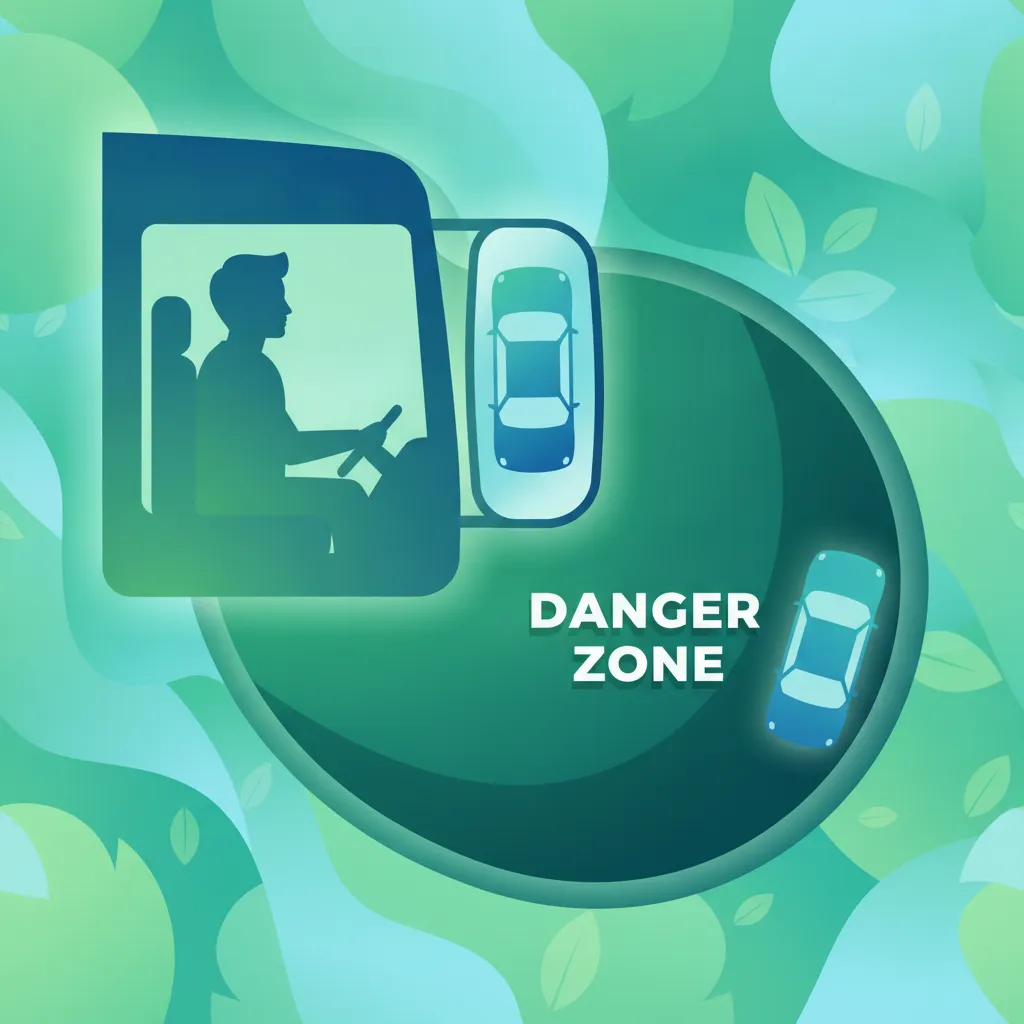
This lesson details the location and scale of blind spots around passenger cars and heavy goods vehicles, often referred to as the 'no-zone' or 'angles morts'. You will learn why truck drivers cannot see you directly behind or immediately adjacent to their cab doors. The lesson provides actionable strategies to minimize the time you spend in these dangerous zones, ensuring you always pass quickly and safely.

This lesson details the dangerous blind spots (angles morts) that surround heavy passenger vehicles and explains how to mitigate them. Drivers will master the systematic mirror check sequence (retro-information) before executing any turns or lane changes. It also covers the mandatory French "Angles Morts" warning stickers displayed on the vehicle exterior to alert vulnerable road users of danger zones.

This lesson addresses the challenges of positioning near larger vehicles such as cars, vans, buses, and lorries on French roads. Learners will learn to identify blind spots (angles morts), maintain a safe distance, and position themselves to maximize visibility and predictability. Understanding these dynamics is crucial for AM riders to avoid dangerous situations and ensure safe overtaking and lane sharing.

In this lesson, drivers will learn how to safely share the road with motorcycles and scooters, focusing on the specific blind spots and speed differentials that create risk. The content highlights proper lane positioning, caution when overtaking, and strategies for predicting motorcycle trajectories. Learners will also be introduced to the importance of being aware of scooter movements, especially in narrow streets.

Certain groups of road users require heightened defensive attention from drivers due to physical limitations or unpredictable behaviors. This lesson covers how to recognize signs of visual impairment (white canes), mobility challenges, and the unpredictability of young children. You will learn to reduce your speed, extend yielding patience, and proactively secure extra space to protect these vulnerable users.

This lesson focuses on the inherent vulnerability of AM vehicles due to their limited mass, exposure, and visibility within mixed traffic flows on French roads. Learners will examine how blind spots, sudden lane changes by larger vehicles, and higher impact severity affect small vehicle safety. The content underscores the necessity for riders to adopt proactive safety measures, maintain safe distances, and be constantly aware of surrounding traffic dynamics.
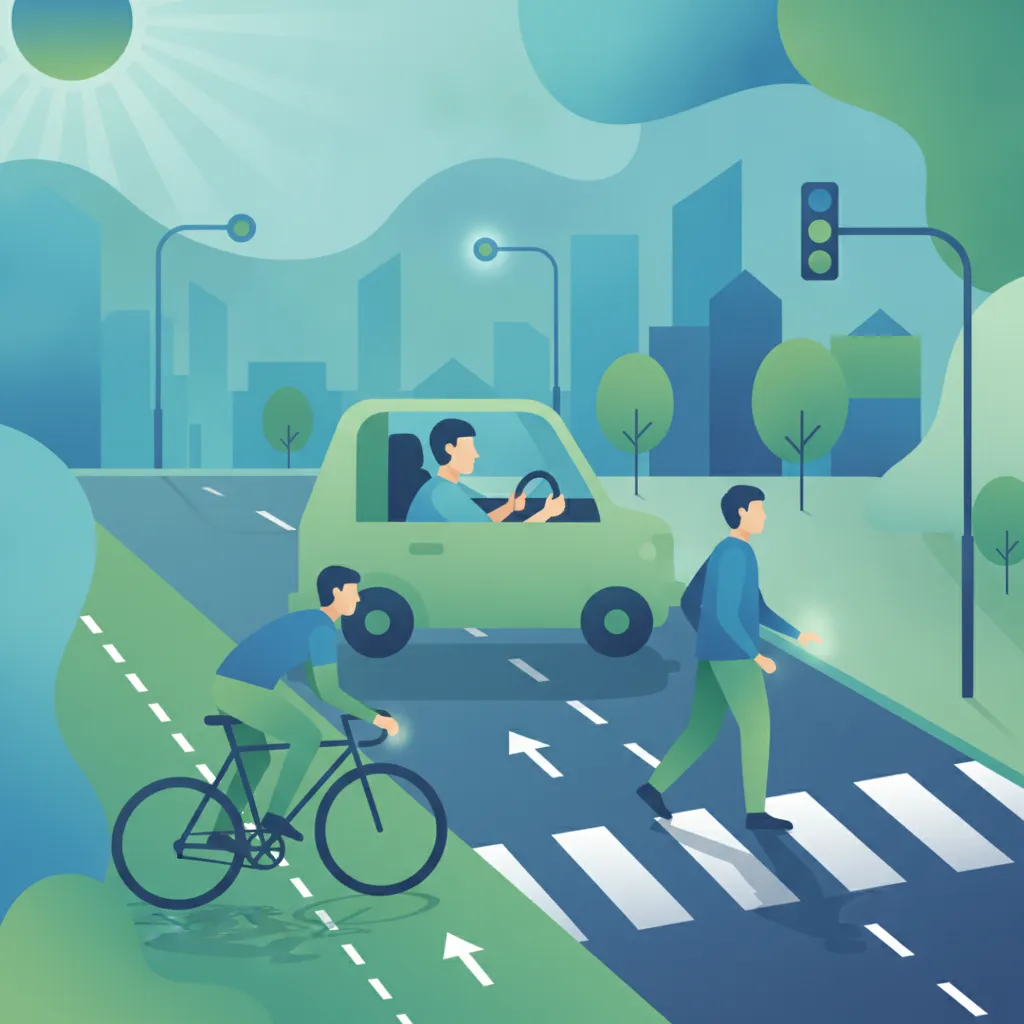
This lesson examines the specific challenges and responsibilities goods vehicle drivers face when interacting with pedestrians and cyclists in urban environments. Learners will understand right-of-way rules, the importance of yielding at pedestrian crossings, and safe turning practices that protect cyclists. The content emphasizes heightened driver vigilance, especially when navigating bike lanes and crowded sidewalks.
Understand the legal framework for loading and unloading in French cities. This guide covers municipal delivery windows, regulated loading zones, and the documentation needed to comply with local traffic decrees while operating heavy goods vehicles in restricted urban centers and low-emission zones.
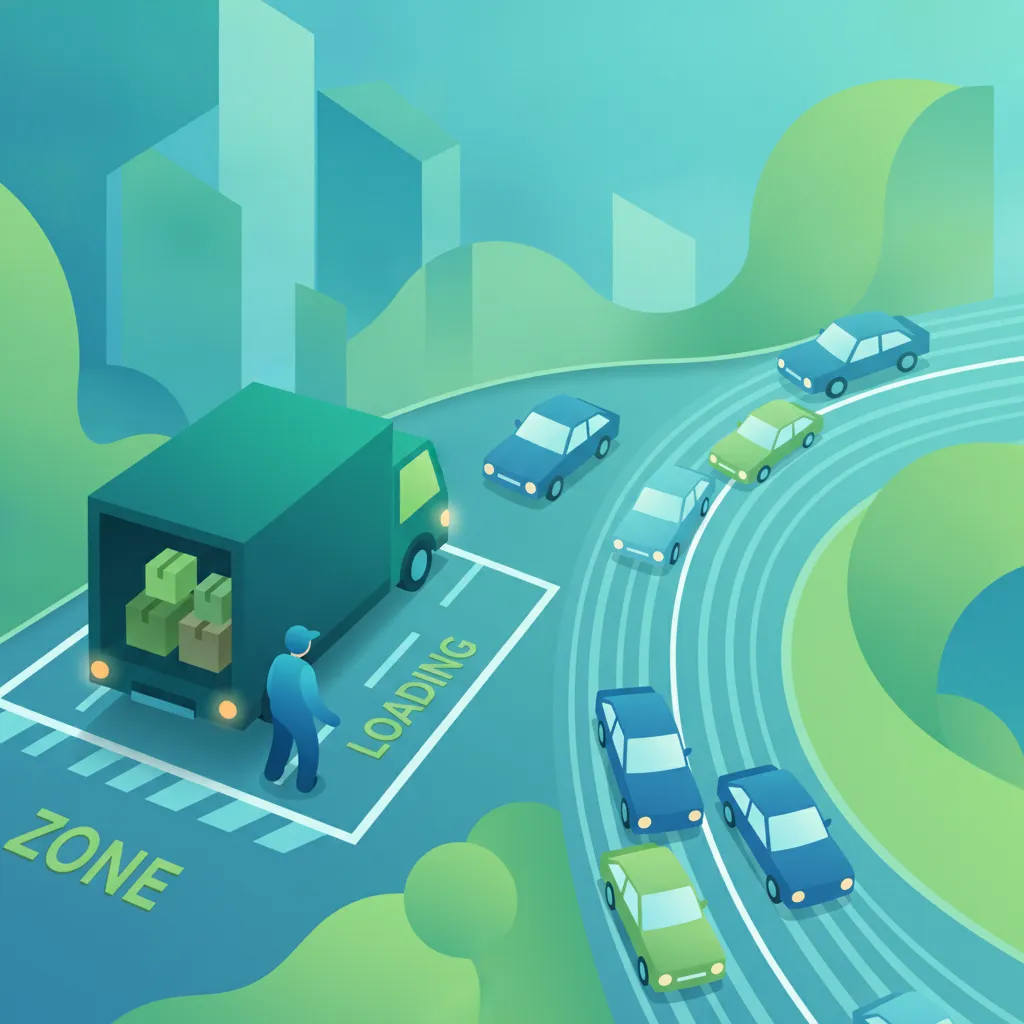
In this lesson, drivers will learn how to navigate urban delivery zones, understanding the rules surrounding loading bays, time windows, and restricted access areas. The content includes the process for obtaining delivery permits, strategies for safe maneuvering in congested city streets, and best practices for minimizing impact on pedestrian traffic. Learners will also be introduced to French city-specific regulations that govern goods vehicle deliveries.
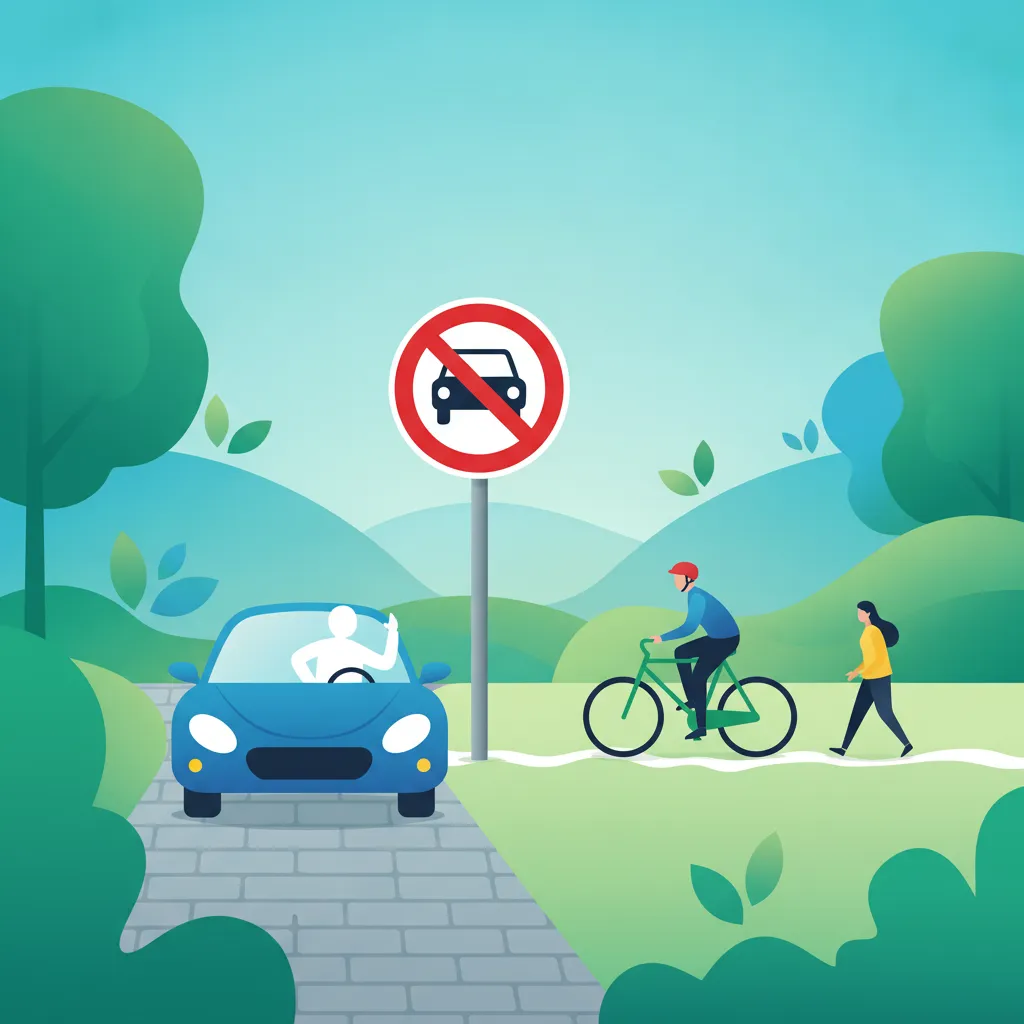
In this lesson, learners will explore the various access restrictions that apply to goods vehicles in France, such as low emission zones and weight-restricted areas. The focus is on understanding the process to obtain necessary access permits and authorisations, and how these restrictions influence route planning and operational decisions. Learners will also be introduced to specific regulations governing vehicle entry into city centres and environmentally sensitive zones.

This lesson examines how goods vehicle drivers should approach and navigate roadworks zones and temporary traffic restrictions. Learners will be taught to recognize temporary speed limit signs, follow detour routes safely, and respect lane closures. The content also highlights the importance of maintaining safe distances from workers, adjusting for reduced lane width, and ensuring compliance with temporary regulations to avoid penalties.
This lesson examines the regulatory limits and environmental controls applied to large passenger vehicles operating in dense French urban centers. Drivers will study the Crit'Air clean air sticker system and low-emission zones (ZFE) that restrict access for older, high-polluting vehicles. It also addresses navigating physical constraints, such as narrow streets, tight turning radii, and strict municipal weight limits.

In this lesson, the focus is on French environmental zones (ZFE) and low emission requirements that affect goods vehicle access to certain urban areas. Learners will explore how emissions criteria determine vehicle eligibility, the process for obtaining permits, and the consequences of non-compliance. The content also covers strategies for route planning that consider environmental restrictions while maintaining operational efficiency.
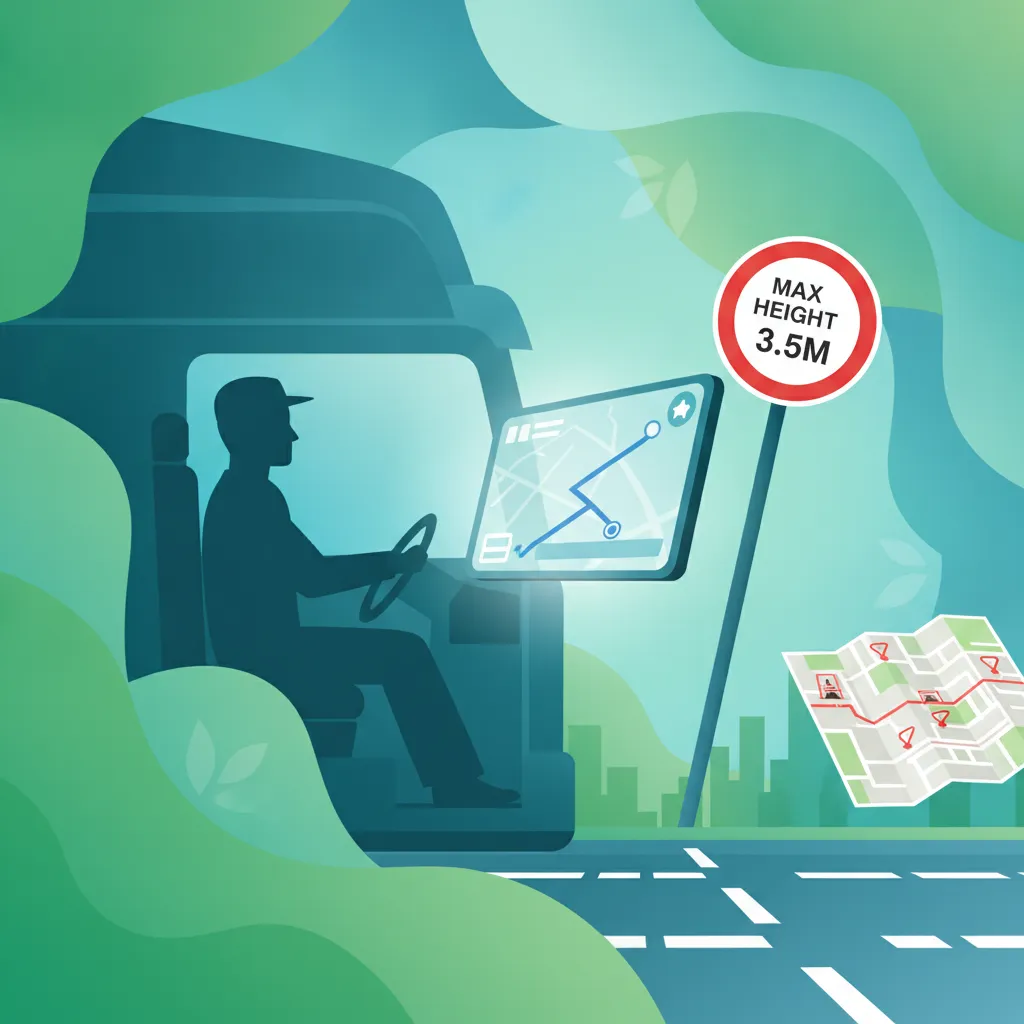
This lesson provides guidance on selecting preferred routes for heavy vehicles, taking into account freight corridors, toll roads, and restricted zones. Learners will be introduced to practical tools for route optimization, including GPS systems tailored for goods vehicles, and strategies for minimizing travel time while adhering to legal constraints. Emphasis is placed on balancing delivery efficiency with compliance to French transport policies.
French municipalities utilize distinct low-speed configurations to foster pedestrian safety in residential and educational neighborhoods. This lesson details speed restrictions in 'zone 30', pedestrian-only districts, and shared 'zones de rencontre' where speed is capped at 20 km/h. You will learn how priority hierarchies shift in these zones, giving pedestrians legal priority to use the entire roadway.

This lesson analyzes the various traffic challenges unique to operating large passenger vehicles in historic and modern French urban areas. Drivers will learn to manage narrow street layouts, double-parked delivery trucks, and high-density multi-lane roundabouts safely. The lesson emphasizes defensive driving strategies, route adjustments, and maintaining mental focus under severe schedule and time pressures.

This lesson covers the specific lane usage rules and best practices for articulated goods vehicles, emphasizing the correct positioning within lane markings and the impact of vehicle length on lane width. Learners will understand how to navigate lane changes safely, the importance of maintaining appropriate gaps with other road users, and the challenges posed by narrow lanes in urban environments. The content also addresses the French road markings standard.
This lesson covers the rules of driving passenger vehicles on high-speed French motorways (autoroutes). Learners will study entry-ramp merging protocols, lane restrictions for vehicles over 3.5 tonnes, and motorway-specific speed limits. The lesson also highlights the correct use of toll booths (péages), emergency hard-shoulder safety procedures, and accessing dedicated coach rest areas.
Find clear answers to common questions learners have about Urban Delivery Challenges and Best Practices. Learn how the lesson is structured, which driving theory objectives it supports, and how it fits into the overall learning path of units and curriculum progression in France. These explanations help you understand key concepts, lesson flow, and exam focused study goals.
The primary risk is interaction with vulnerable road users, specifically cyclists and pedestrians who may enter your blind spots. Always use your mirrors and electronic assistance systems when turning or manoeuvring in city traffic.
Always look for specific signage indicating delivery times or vehicle class restrictions. If a zone is marked as prohibited for heavy vehicles, you must identify an alternative loading area to avoid penalties and potential accidents.
Yes, urban delivery must often adhere to local noise ordinances and environmental zone (ZFE) requirements. As a professional driver, you must ensure your vehicle complies with emission standards and designated loading hours.
For Category CE vehicles, the trailer swing is a major hazard. You must plan wide turns well in advance and monitor the space inside your turn to ensure you do not collide with street furniture or other road users.
Ready to focus your study? Use the practice search to find exactly the French driving theory questions you need for the Code de la route and permis de conduire ETG. Refine your knowledge on specific topics or challenging rules to boost your confidence and exam readiness.