This lesson guides you through the complexities of navigating roundabouts on Irish roads, a vital skill for both your theory exam and practical riding. You will learn the correct lane discipline and signaling protocols required to manage traffic flow effectively and stay safe on your motorcycle.
Lesson content overview
Roundabouts are an integral feature of the Irish road network, designed to reduce severe collisions and keep traffic flowing smoothly at busy intersections. However, for motorcyclists preparing for their Category A, A1, or A2 theory and practical exams, roundabouts present a unique set of physical and tactical challenges.
Unlike car drivers, riders must balance their machines on sloped surfaces, maintain steady traction on varying road conditions, and protect themselves against drivers who frequently fail to spot two-wheeled vehicles. This lesson provides a comprehensive, textbook-grade guide to mastering roundabouts safely in accordance with the Road Safety Authority (RSA) Rules of the Road.
To safely navigate any roundabout, you must master three fundamental pillars: priority, lane discipline, and signaling. Failing to execute any of these pillars disrupts the flow of traffic and significantly increases your risk of a collision.
The golden rule of Irish roundabouts is simple: always give way to traffic already circulating on the roundabout, approaching from your right.
This rule is legally binding under Irish road traffic regulations. When you approach the yield line (indicated by a broken white line across the entry road), you must slow down and look to your right. If there is a safe gap in the circulating traffic, you may proceed. If not, you must stop and wait.
Vehicles that have already crossed their respective entry lines and are actively traveling around the central island of the roundabout. This traffic always has priority over entering vehicles.
A common misunderstanding among learner riders is assuming that their speed or momentum gives them priority. Even if you are traveling at the speed limit, you must yield to any vehicle—including slow-moving bicycles or heavy goods vehicles (HGVs)—already circulating on the roundabout.
Your choice of lane on the approach to a roundabout is determined by your intended exit. Choosing the wrong lane creates a high risk of crossing paths with other vehicles within the roundabout, leading to "side-swipe" collisions.
As a general rule, unless road markings or signs indicate otherwise:
Navigating a roundabout smoothly requires you to position your motorcycle defensively in the center of your chosen lane to prevent other drivers from attempting to "squeeze" past you.
When intending to exit at the first exit (typically at the "9 o'clock" position):
When intending to travel straight through (typically at the "12 o'clock" position):
Taking a late exit (typically at the "3 o'clock" position or beyond) requires dynamic lane management:
Approach: Select the right-hand lane on approach. Activate your right indicator early to signal your intent to turn right.
Entry: Yield to traffic from the right. When a safe gap appears, enter the inner lane (closest to the central island). Maintain your right-hand signal while circulating.
Circulation: Maintain a steady speed and keep a consistent path within the inner lane. Do not drift outward.
Preparation to Exit: As you pass the exit immediately before your intended exit (the second exit, in this case), check your left mirror and perform a left shoulder check to ensure no vehicles are in your blind spot.
Signal Switch & Exit: Switch your indicator from right to left. Smoothly drift from the inner lane to the outer lane, and exit the roundabout safely.
Clear communication is vital on a motorcycle because of your smaller visual profile. Other road users rely on your indicators to make their own entry decisions.
Never signal too early or too late. If you signal too early, drivers waiting to enter may pull out in front of you, assuming you are exiting sooner than you actually are. If you signal too late, you block the flow of traffic behind and beside you.
Motorcyclists must contend with physical forces that do not affect car drivers. Roundabouts are often designed with "camber" or "banking"—sloped surfaces designed to assist with water drainage and counteract centrifugal forces.
Many roundabouts feature reverse camber (sloping downward toward the outer edge) or a high crown in the middle. This changes how your motorcycle handles:
To maintain maximum traction and control through a banked roundabout:
Even if you execute every maneuver perfectly, other road users will make mistakes. Because motorcycles are smaller and harder to see, drivers frequently misjudge your speed or overlook you entirely.
Many drivers enter a roundabout in the wrong lane and attempt to correct their mistake mid-way through.
Drivers waiting to enter a roundabout often look for large gaps in traffic but miss smaller vehicles like motorcycles.
You must also share the roundabout with even more vulnerable road users:
Your approach to roundabouts must adapt to changes in weather, light, and vehicle configurations.
In typical Irish wet weather, the hazard level on roundabouts doubles.
At night, exit signs and road markings can be much harder to see.
If you are carrying a pillion passenger or heavy luggage:
To ensure success on your Irish Motorcycle Theory Exam (Category A, A1, A2), memorize these core rules of the road:
Explore all units and lessons included in this driving theory course.
Lesson content overview
Explore all units and lessons included in this driving theory course.
Explore search topics learners often look for when studying Strategies for Riding Roundabouts Effectively. These topics reflect common questions about road rules, driving situations, safety guidance, and lesson level theory preparation for learners in Ireland.
Browse additional driving theory lessons that cover connected traffic rules, road signs, and common driving situations related to this topic. Improve your understanding of how different rules interact across everyday traffic scenarios.
Learn the official Rules of the Road regarding priority at junctions, roundabouts, and crossroads. This guide explains how to identify priority markings, yield correctly to other road users, and navigate complex intersection scenarios safely according to Irish driving theory requirements.
This lesson teaches the fundamental principles of priority and right-of-way at controlled and uncontrolled intersections across Ireland. It explains the legal obligations at yield signs, stop lines, and when meeting oncoming traffic turning across your lane. Motorcyclists will learn to carefully verify other drivers' intentions rather than assuming they will yield the correct right-of-way.
Right-of-way rules establish a clear order of precedence when the paths of two or more vehicles cross. This lesson explains how traffic on a major road has priority over traffic emerging from a minor road, and the general rule of yielding to oncoming vehicles when turning right. You will develop a solid understanding of how to approach intersections defensively, assessing speed and distance to make safe decisions.

Uncontrolled junctions represent a high-risk scenario because they lack physical signs, lines, or lights to dictate priority. This lesson covers the crucial 'priority to the right' principle, where you must yield to any traffic approaching from your right-hand side. You will learn the importance of reducing your speed, preparing to stop, and verifying the intentions of other drivers at these equal-status crossings.
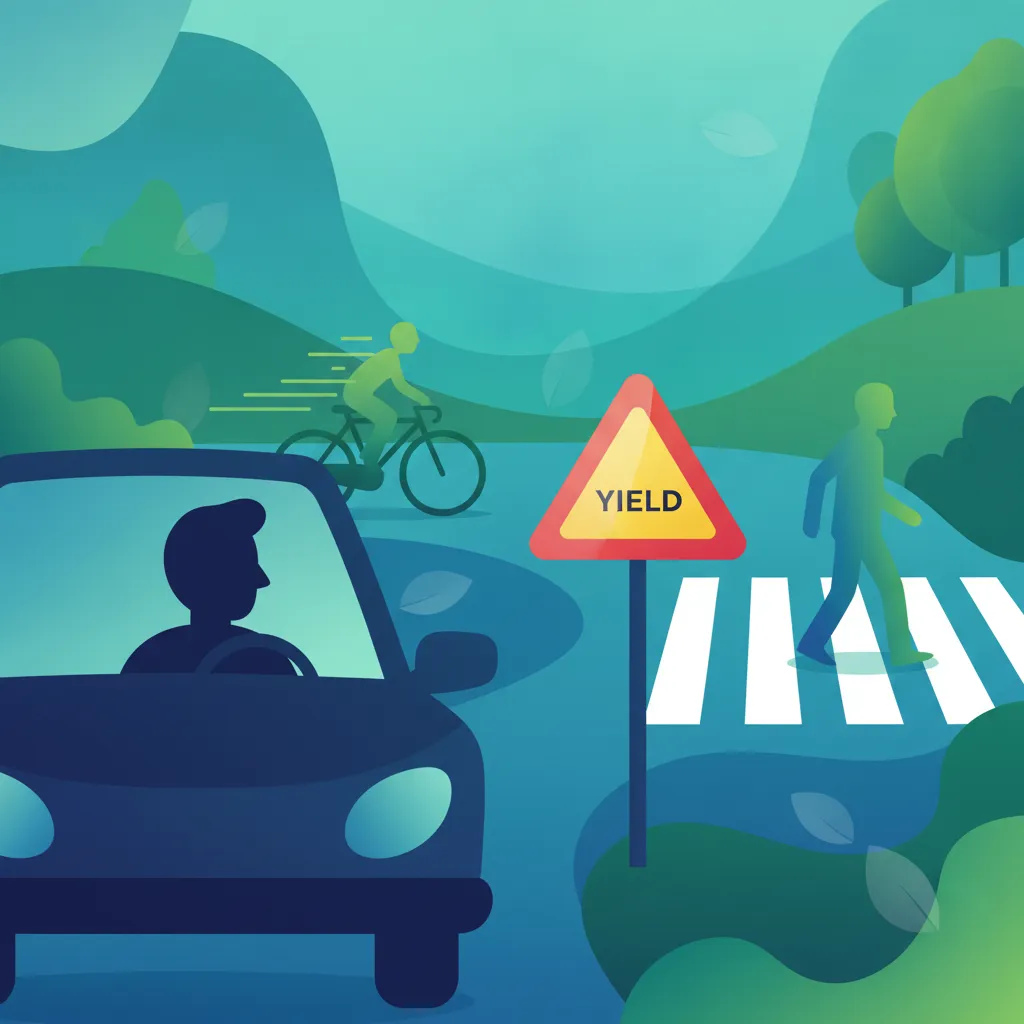
This lesson covers the absolute rules of priority that regulate junctions, roundabouts, and pedestrian crossings in Ireland. It teaches riders when they must yield, who has right-of-way, and how to read Stop and Yield signs correctly. Understanding these priority hierarchies prevents collisions and maintains orderly, predictable movement at busy junctions.

Stop and yield signs require drivers to surrender right-of-way to crossing traffic, but they command different physical actions. This lesson explains that a stop sign mandates a complete, absolute halt behind the line, whereas a yield sign requires you to slow down and stop only if other traffic is approaching. You will learn how to manage restricted visibility at junctions and how to creep forward safely when clear.

Navigating multi-lane roundabouts requires precise lane selection, continuous scanning, and timely signaling. This lesson teaches you the 'clock rule' for determining which lane to enter, how to yield to traffic already on the roundabout from your right, and when to activate your left indicator to exit. Mastering these procedures minimizes lane-drift accidents and ensures a seamless flow of traffic on busy roundabouts.
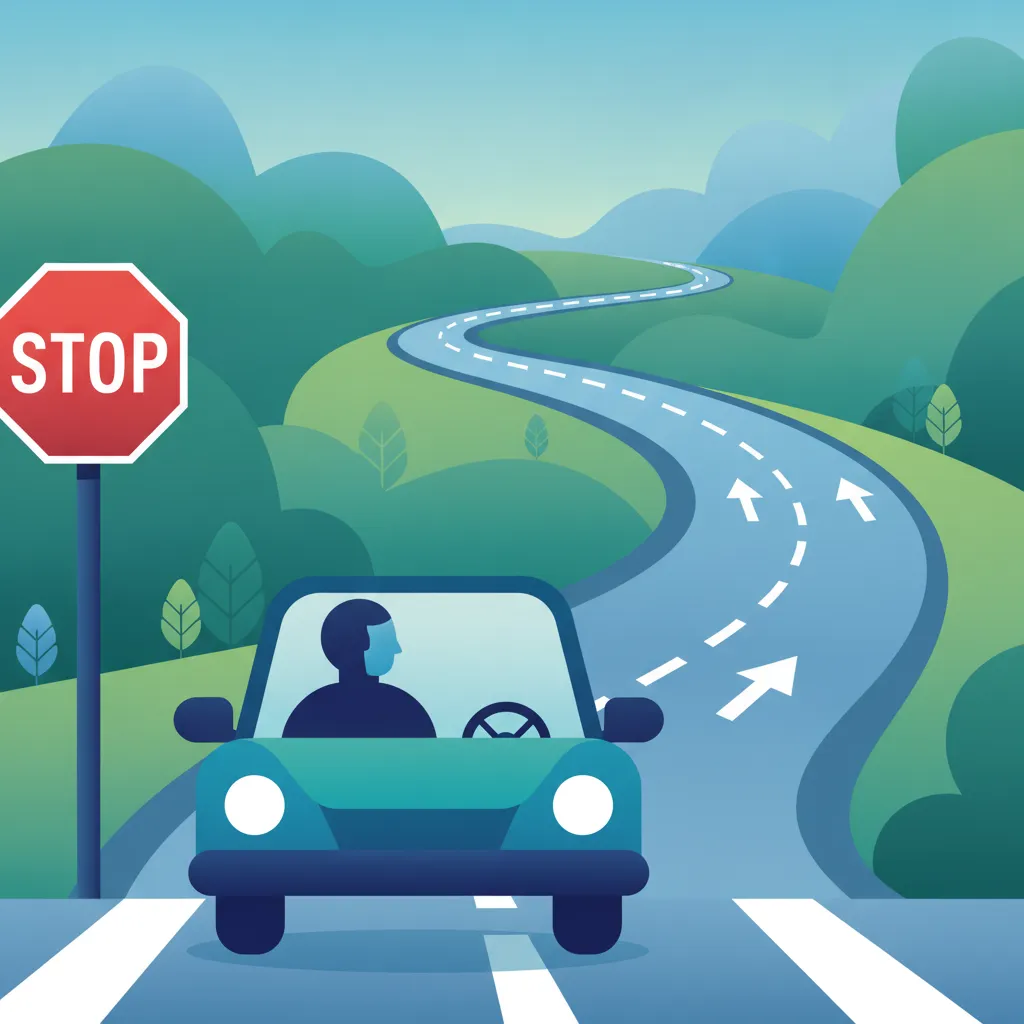
This lesson details the sequential steps required to approach and exit junctions safely under the Irish driving rules. It teaches riders how to select the correct lane, utilize mirrors, apply early signals, and reduce speed appropriately. Effective observation strategies are highlighted to help riders identify crossing pedestrians or approaching side traffic.

This lesson focuses on the safe approach and execution of turns at T-junctions, staggered intersections, and blind crossroads. It explains the critical mirror-signal-manoeuvre routine and how to select the best position for maximum visibility to cross-traffic. Motorcyclists will learn to identify potential hazards like vehicles pulling out suddenly or turning across their direct path.

Irish driving theory demands that drivers keep to the left-hand side of the road unless overtaking or turning right. This lesson explains how to maintain consistent lane discipline on multi-lane roads, how to perform safe lane changes, and the dangers of drifting. You will learn the safety sequence of checking mirrors, checking blind spots, signalling, and smoothly executing a lane change without disrupting trailing traffic.
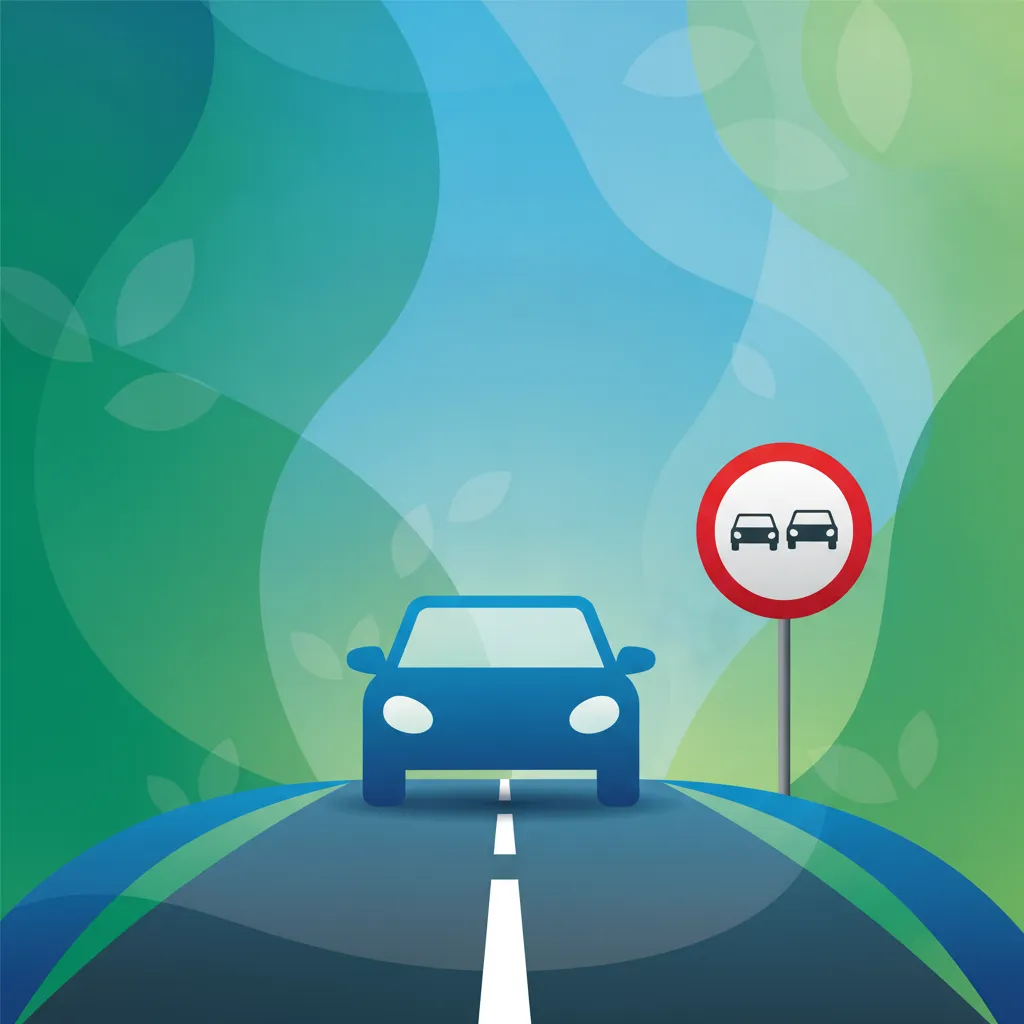
No-overtaking zones are marked in areas with restricted visibility, such as approaching bends, humps, or narrow bridges. This lesson details how continuous solid white lines legally prohibit passing, along with the very narrow exceptions allowed under Irish law. You will learn to identify these high-risk areas from visual markings, ensuring you never initiate a passing manoeuvre that puts oncoming traffic in immediate danger.
Explore techniques for maintaining safety in busy urban areas, including managing lane positions, navigating blind spots, and interacting with cyclists and pedestrians. This lesson provides an overview of defensive riding principles to help you anticipate hazards and navigate complex Irish city traffic conditions effectively.

This lesson analyzes traffic flow characteristics in dense municipal areas and teaches safe riding methods for congested gridlock situations. It covers the maintenance of adequate safety cushions, scanning for opening car doors, and monitoring pedestrians stepping from between parked cars. Riders will learn to manage frequent stopping, constant clutch wear, and the stress of urban commuting.

This lesson teaches how to cultivate a proactive defensive riding mindset, focusing on situational awareness and constant hazard scanning. It describes the system of motorcycle control, encouraging riders to anticipate potential mistakes from other drivers, pedestrians, and cyclists. Motorcyclists will learn to position themselves defensively, leaving clear escape routes in all driving environments.

Irish rural roads are often narrow, winding, and bordered by high hedges, presenting unique hazards compared to urban streets. This lesson focuses on scanning for hidden hazards such as slow-moving farm machinery, mud on the road surface, and loose livestock. You will learn how to adjust your speed before entering blind bends, sound your horn at blind crests, and safely share the road with local agricultural traffic.
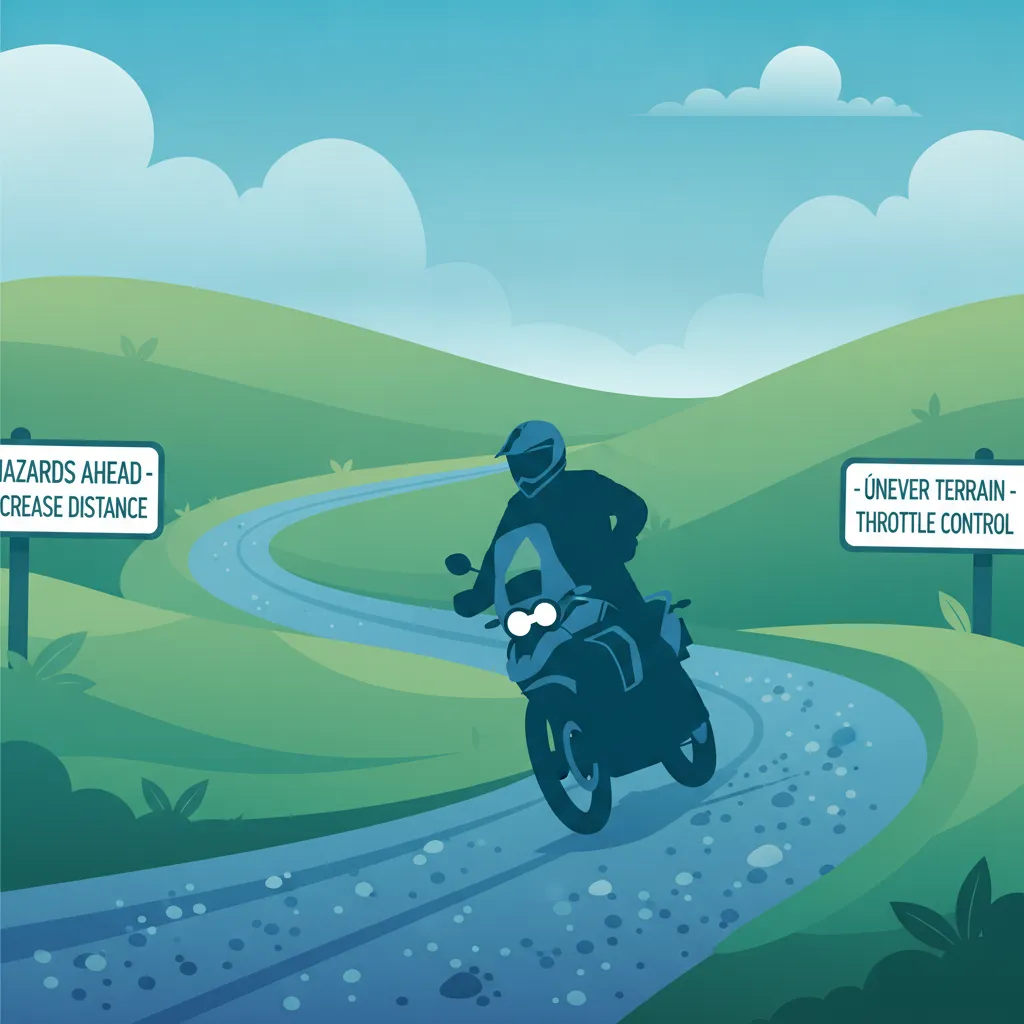
This lesson focuses on riding techniques suited for gravel, loose surfaces, and rural roads. Learners will understand how to maintain stability, adjust braking and cornering approaches, and anticipate hazards such as potholes and farm vehicles, following RSA guidance for safe riding in the Irish countryside.

This lesson outlines how motorcyclists should respond when permanent road signs are dirty, damaged, or hidden by overgrown trees and hedges. It introduces the temporary signage, warning cones, and detour markers commonly deployed at active roadwork zones in Ireland. Riders will learn to read the road ahead defensively, reducing speed when visual information is incomplete or compromised.

Safeguarding vulnerable road users requires more than simple obedience to traffic signs; it demands a defensive driving mindset. This lesson summarizes safe practices, including scanning far ahead in urban areas, keeping massive safety margins in wet weather, and executing thorough blind spot checks before reversing. By anticipating the unpredictable movements of others, you can prevent accidents and support a safe road culture.
This lesson covers the strategic aspects of journey management, emphasizing the safety benefits of proactive route planning and weather checks. It teaches riders how to select safer roads, avoid high-congestion zones during rush hour, and schedule regular rest intervals. Motorcyclists will learn to pack essential tools, emergency contacts, and spare safety gear to remain prepared for any roadside situation.

Irish rural routes are often narrow, lacking central markings, and bordered by tall hedges that restrict forward visibility on sharp bends. This lesson teaches drivers how to negotiate blind curves, anticipate slow-moving agricultural machinery, and respond to wandering farm animals. Drivers will learn to regulate vehicle speed proactively, maintaining a safe stopping margin in rural areas.

This lesson focuses on managing the interactions between commercial goods vehicles and non-motorized or lightweight commuters. It outlines defensive driving techniques to utilize when overtaking cyclists, navigating pedestrian crossings, or negotiating shared junctions in Irish cities. Drivers will examine common cyclist behaviors at roundabouts and understand how to maintain massive safety margins to protect lives.
Proactive hazard perception involves constantly scanning the road ahead to identify potential dangers before they turn into actual emergencies. This lesson covers active scanning techniques, helping you look far ahead, check mirrors regularly, and identify subtle risk clues such as exhaust smoke from parked cars or children playing near kerbs. Anticipating these developments gives you the time to adjust speed and position safely.
Find clear answers to common questions learners have about Strategies for Riding Roundabouts Effectively. Learn how the lesson is structured, which driving theory objectives it supports, and how it fits into the overall learning path of units and curriculum progression in Ireland. These explanations help you understand key concepts, lesson flow, and exam focused study goals.
Unless signs or road markings state otherwise, you should approach in the right-hand lane and keep to the right until you need to move into the left lane to exit the roundabout.
Yes, you should signal left if taking the first exit, or right if taking an exit further round. If you are going straight, you generally do not signal until you have passed the exit before the one you intend to take.
As a motorcyclist, avoiding the very edge is safer because road surfaces there are often oily, uneven, or prone to debris, which can compromise your grip and balance.
Yes, the principles of lane discipline and priority remain consistent across A1, A2, and A categories, as they are based on the standard Irish Rules of the Road applicable to all vehicle users.
Use the practice question search tool to pinpoint specific topics, road signs, or rules you need to master for your official Driver Theory Test. Refine your study strategy and ensure comprehensive preparation for all aspects of the Irish driving exam. Start your focused revision now and build confidence for your learner permit test.