
This lesson focuses on the vital defensive driving skills and emergency techniques required for safe vehicle operation. It builds upon your understanding of road hazards and physics to ensure you can handle unexpected situations on Irish roads with confidence.
Lesson content overview
Driving on public roads requires more than just basic vehicle control. To successfully pass your Category B Irish Driver Theory Test and remain safe throughout your driving life, you must master the principles of defensive driving and learn how to execute critical emergency manoeuvres.
Defensive driving is a proactive approach. It prepares you to anticipate hazards, manage vehicle handling limits, and react appropriately when sudden mechanical failures, poor road conditions, or unexpected road hazards occur. This lesson covers emergency stops using Anti-lock Braking Systems (ABS), recovering from front- and rear-wheel skids, and managing vehicle dynamics under stress.
Defensive driving is defined as a driving style where you actively anticipate potential hazards, plan for unexpected events, and take early action to avoid them. Rather than simply reacting to danger as it happens, a defensive driver continuously scans the environment to ensure they never exceed the vehicle’s handling limits or their own cognitive processing limits.
To drive defensively, you must understand the critical relationship between speed, road conditions, and tyre grip. The Road Safety Authority (RSA) emphasises that safety is a shared responsibility, but maintaining control of your vehicle at all times is your primary legal duty.
An emergency stop is a rapid deceleration manoeuvre executed when an immediate hazard appears on your path and stopping is the only way to avoid a collision. Modern Category B passenger cars are equipped with an Anti-lock Braking System (ABS) as a mandatory safety feature.
A safety system that prevents a vehicle's wheels from locking up during heavy or sudden braking. By preventing lock-up, the system maintains tyre-road friction, which allows the driver to retain steering control while decelerating.
When you apply extreme pressure to the brakes of a vehicle without ABS, the brake calipers clamp the brake discs so tightly that the wheels stop rotating entirely. This is known as "wheel lock-up." Once your wheels lock, they lose kinetic friction with the road surface and begin to slide. At this point, steering becomes completely useless because sliding tyres cannot direct the vehicle.
An ABS system uses speed sensors on each wheel. If the system detects that a wheel is about to lock up, it rapidly releases and reapplies pressure to that brake caliper up to dozens of times per second. This keeps the tyre rotating at the threshold of maximum grip, allowing you to steer around an obstacle while slowing down.
Apply Immediate, Full Force: Depress the brake pedal hard and fast. Do not ease into the braking force; apply maximum pressure instantly.
Depress the Clutch: At the same time, depress the clutch pedal fully (in a manual vehicle) to prevent the engine from stalling, which could cut power assistance to your steering and brakes.
Keep Pressing - Do Not Pump: Keep continuous, heavy pressure on the brake pedal. Do not pump the brakes. Pumping manually disables the ABS logic and increases your stopping distance.
Steer to Avoid Obstacles: Look where you want to go. Keep your hands firmly on the steering wheel and use smooth, controlled steering inputs to navigate around any hazards.
Secure the Vehicle: Once the car has come to a complete stop, apply the handbrake, select neutral, and take a moment to regain your composure before moving off.
The Pulsating Brake Pedal: When ABS activates, you will feel a rapid, violent pulsing or vibration through the brake pedal, accompanied by a grinding or clicking noise. This is completely normal and indicates the system is working. Never release the brake pedal when you feel this pulsing.
Under the Road Traffic (Safety) Act 1999, drivers must remain aware that while ABS is highly effective, it does not bypass the laws of physics. On extremely wet, muddy, or icy roads, the reduction in tyre-road friction means your stopping distance will still increase dramatically. On loose surfaces like gravel or fresh snow, ABS can sometimes slightly increase stopping distances compared to locked wheels, but maintaining the ability to steer remains a critical safety advantage.
A skid occurs when one or more of your vehicle's tyres lose traction (grip) on the road surface. This causes the vehicle to slide out of alignment with your intended path. Skids are generally classified into two categories: front-wheel skids and rear-wheel skids.
Understeer occurs when the front tyres lose traction before the rear tyres. This typically happens when you enter a corner too quickly, or accelerate or brake too hard while turning.
Oversteer occurs when the rear tyres lose traction before the front tyres. This causes the rear of the vehicle to swing outward, threatening to spin the car around.
In an emergency, human survival instincts can sometimes work against safe driving techniques. The most common and dangerous instinctive reaction is panic-steering.
Sudden, erratic, and exaggerated steering inputs made in response to an unexpected obstacle or skid. This sharp movement often exceeds the vehicle's handling limits, leading to a complete loss of control, rollovers, or collisions with oncoming traffic.
In contrast, defensive driving requires clear steering. This involves making firm, deliberate, and smooth steering inputs. Smooth steering keeps the vehicle's suspension and weight balanced across all four tyres, preventing sudden weight shifts that break traction.
If an obstacle appears suddenly and you cannot stop in time, you must perform an evasive action. This involves a controlled swerve combined with braking.
Your vehicle's handling limits are not static; they change constantly based on environmental conditions and the state of your vehicle.
An unbalanced or overloaded vehicle behaves differently during emergency manoeuvres.
Irish road traffic legislation places clear, non-negotiable responsibilities on drivers regarding vehicle control and emergency situations.
Under the National Driver Regulation (NDR 2010), drivers must demonstrate proper emergency braking technique. When performing an emergency stop in a vehicle equipped with ABS, the driver must apply continuous, maximum pressure to both the brake and clutch pedals. Manual pumping of the brakes is legally noted as an incorrect driving technique during the Irish driving test, as it reduces system efficiency.
Under Section 51A and 52 of the Road Traffic Act 1961 (as amended), failing to maintain control of your vehicle due to speed, poor maintenance, or inappropriate reactions to road hazards can be prosecuted as Careless Driving or Dangerous Driving. The law does not accept "the road was slippery" or "I panicked" as valid excuses if your speed was inappropriate for the prevailing road or weather conditions.
Explore all units and lessons included in this driving theory course.
Lesson content overview
Explore all units and lessons included in this driving theory course.
Explore search topics learners often look for when studying Basic Defensive Driving and Emergency Maneuvres. These topics reflect common questions about road rules, driving situations, safety guidance, and lesson level theory preparation for learners in Ireland.
Browse additional driving theory lessons that cover connected traffic rules, road signs, and common driving situations related to this topic. Improve your understanding of how different rules interact across everyday traffic scenarios.
Learn to identify and respond to potential road hazards early to avoid collisions. This guide explains how to maintain an effective scan of the road environment and adapt your driving behavior when encountering vulnerable road users or unexpected traffic situations on Irish roads.
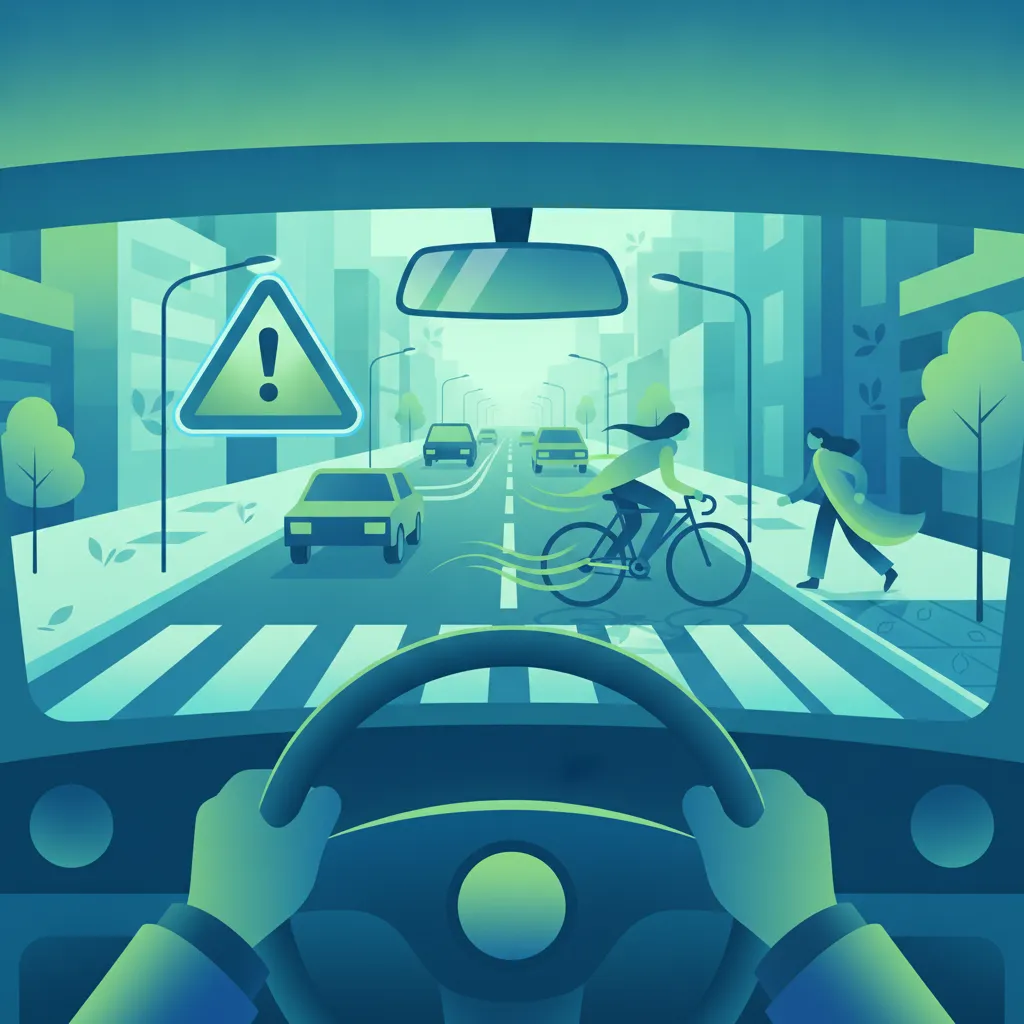
Proactive hazard perception involves constantly scanning the road ahead to identify potential dangers before they turn into actual emergencies. This lesson covers active scanning techniques, helping you look far ahead, check mirrors regularly, and identify subtle risk clues such as exhaust smoke from parked cars or children playing near kerbs. Anticipating these developments gives you the time to adjust speed and position safely.

Heavy vehicles require continuous visual scanning to identify small or slow-moving road users who may enter the path of travel. This lesson explores the typical behaviors of young children, elderly pedestrians, and visually impaired road users. Drivers will build strong hazard perception skills to anticipate sudden movements, ensuring they can brake safely and avoid serious accidents.
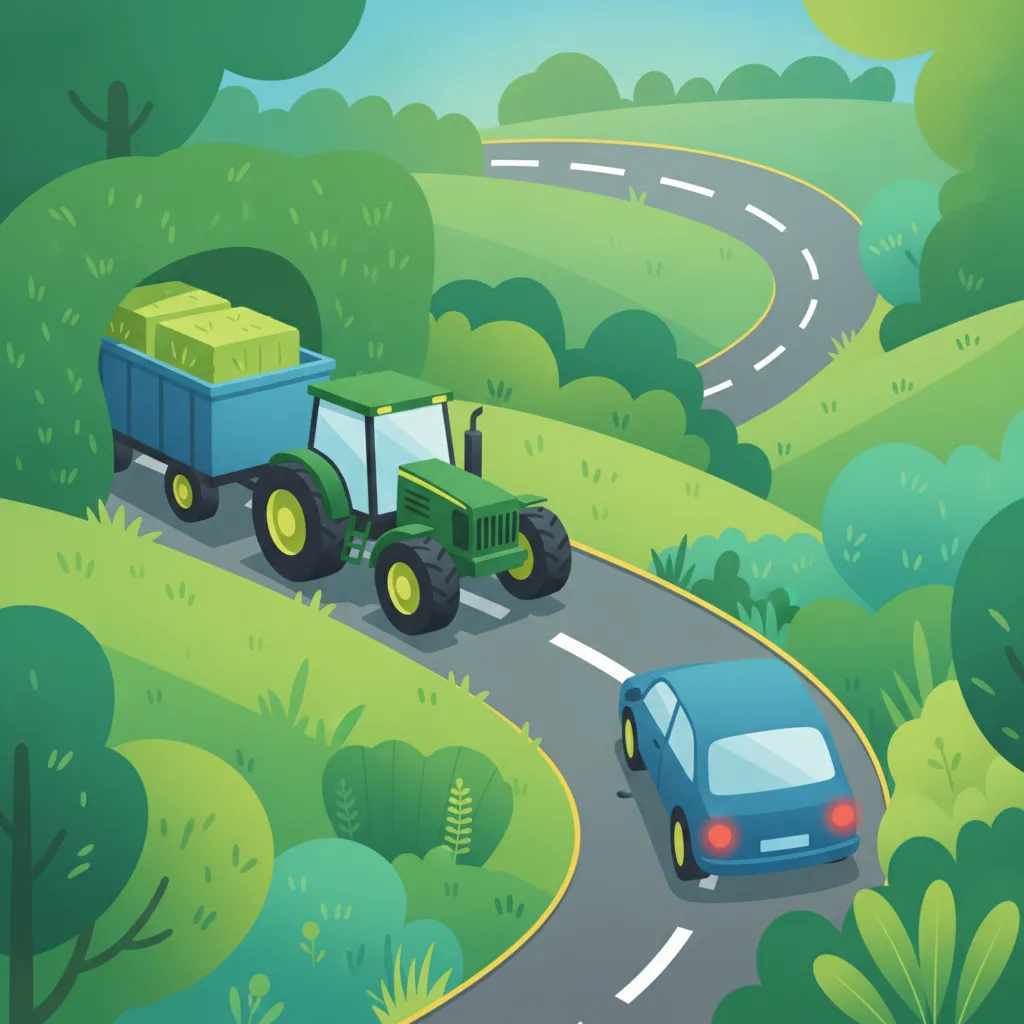
Irish rural roads are often narrow, winding, and bordered by high hedges, presenting unique hazards compared to urban streets. This lesson focuses on scanning for hidden hazards such as slow-moving farm machinery, mud on the road surface, and loose livestock. You will learn how to adjust your speed before entering blind bends, sound your horn at blind crests, and safely share the road with local agricultural traffic.
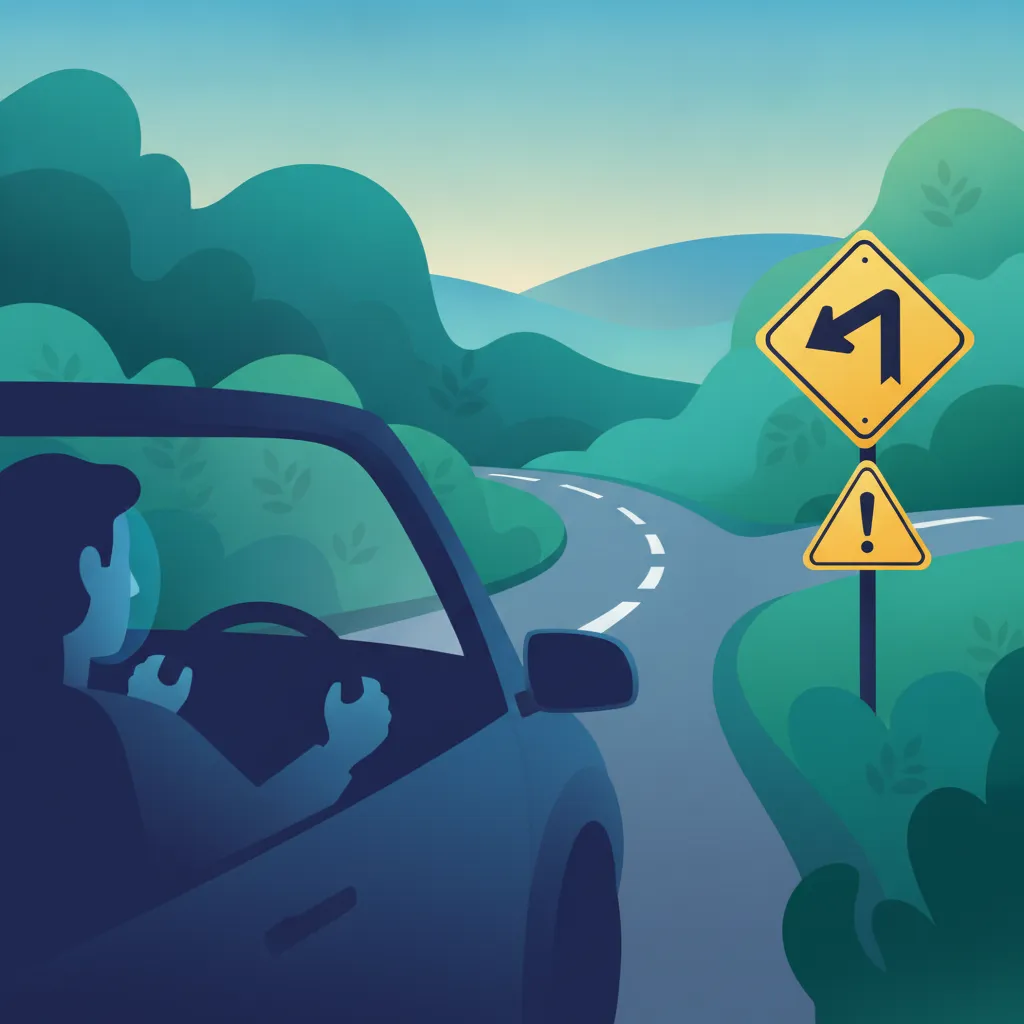
Warning signs in Ireland are typically diamond-shaped with yellow backgrounds and black symbols, indicating potential dangers on the road ahead. This lesson details signs for upcoming sharp bends, narrow roads, steep hills, pedestrian activity, and animal hazards. Learning to spot these warning indicators early allows you to reduce speed safely and adjust your vehicle positioning before encountering the hazard itself.

Irish rural routes are often narrow, lacking central markings, and bordered by tall hedges that restrict forward visibility on sharp bends. This lesson teaches drivers how to negotiate blind curves, anticipate slow-moving agricultural machinery, and respond to wandering farm animals. Drivers will learn to regulate vehicle speed proactively, maintaining a safe stopping margin in rural areas.
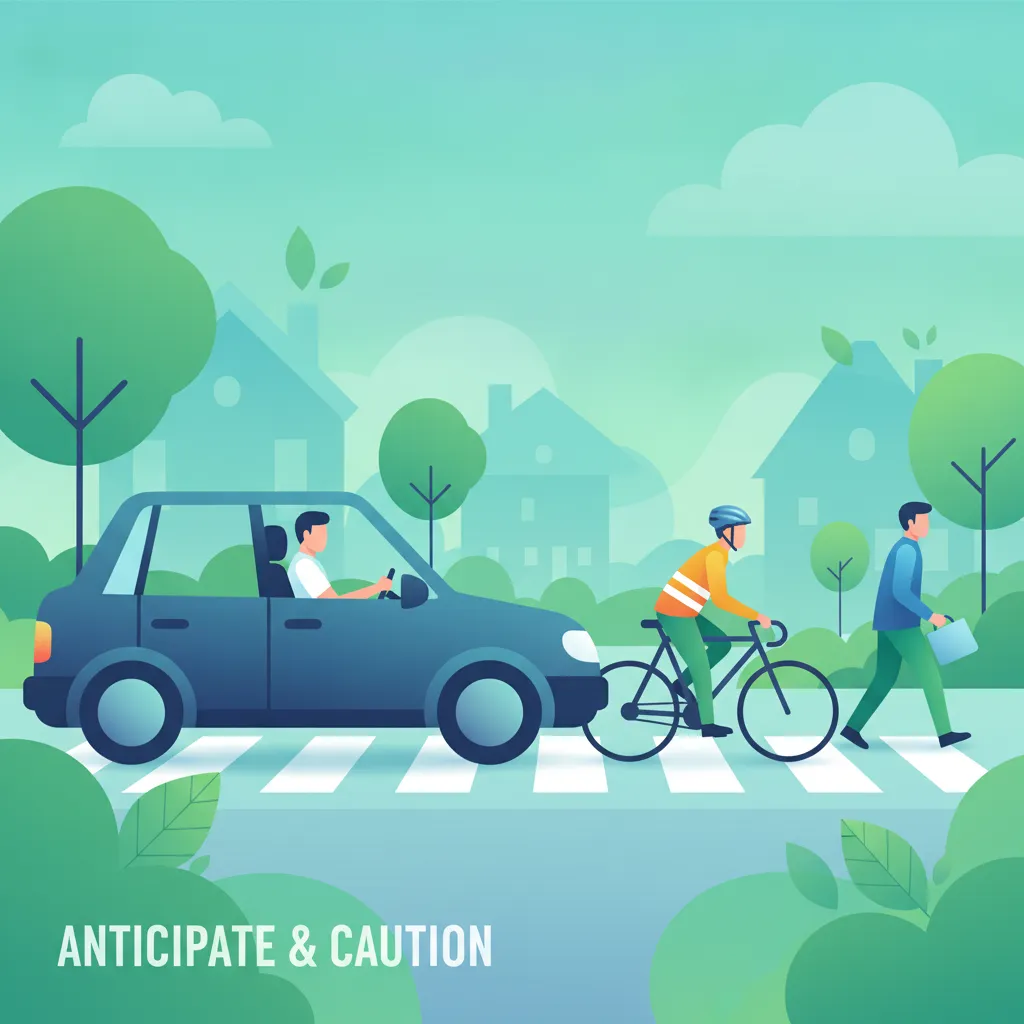
Safeguarding vulnerable road users requires more than simple obedience to traffic signs; it demands a defensive driving mindset. This lesson summarizes safe practices, including scanning far ahead in urban areas, keeping massive safety margins in wet weather, and executing thorough blind spot checks before reversing. By anticipating the unpredictable movements of others, you can prevent accidents and support a safe road culture.
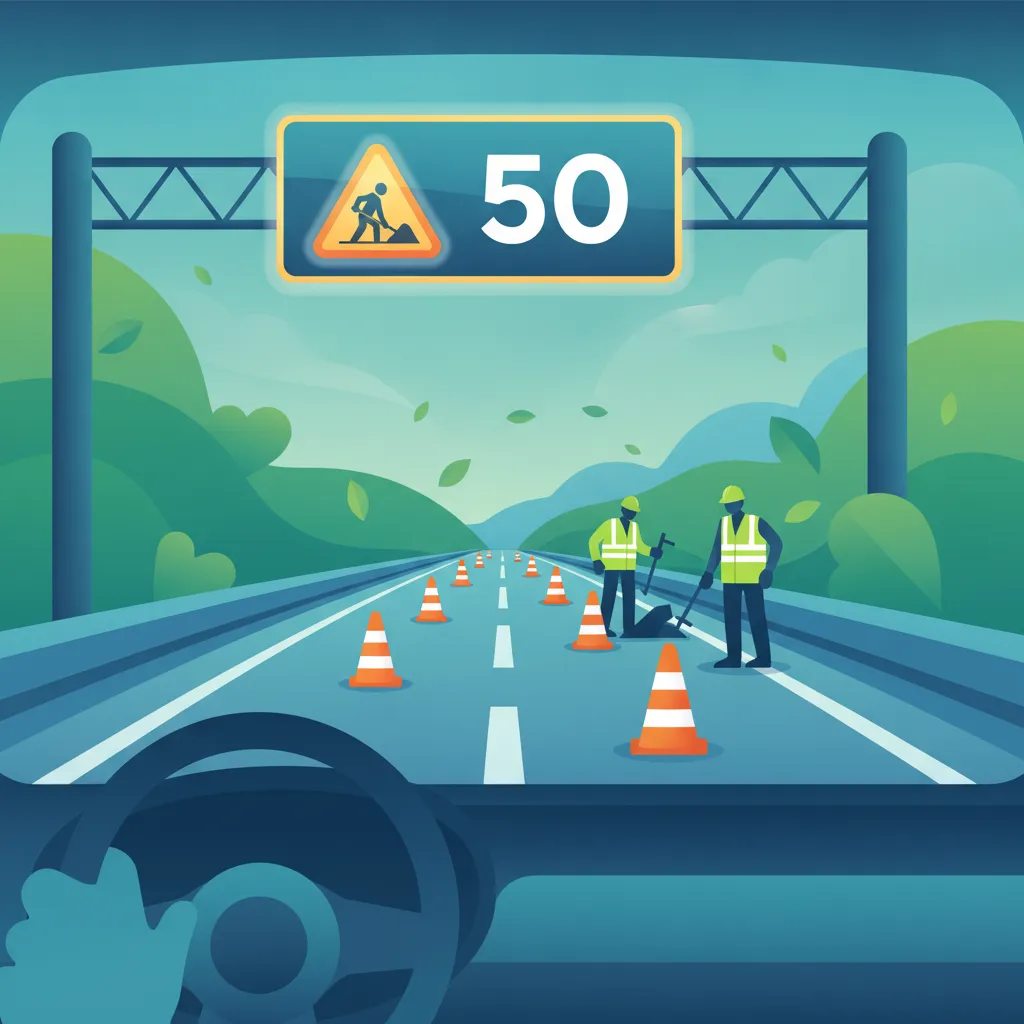
Variable Message Signs and roadwork indicators communicate temporary safety conditions, such as lane closures, heavy delays, or dynamic speed restrictions. This lesson teaches you how to interpret digital overhead gantries, temporary hazard cones, and specific detour layouts often encountered on Irish motorways and regional routes. Adhering to these real-time instructions protects both you and the vulnerable road crews working ahead.

Driving at night presents severe challenges due to reduced visibility, driver fatigue, and headlight glare from oncoming vehicles. This lesson teaches you how to manage your headlights, use road edge markers to steer through dark curves, and look away from oncoming bright lights. You will learn to drive within the range of your headlights and remain highly alert for pedestrians or cyclists not wearing reflective gear.
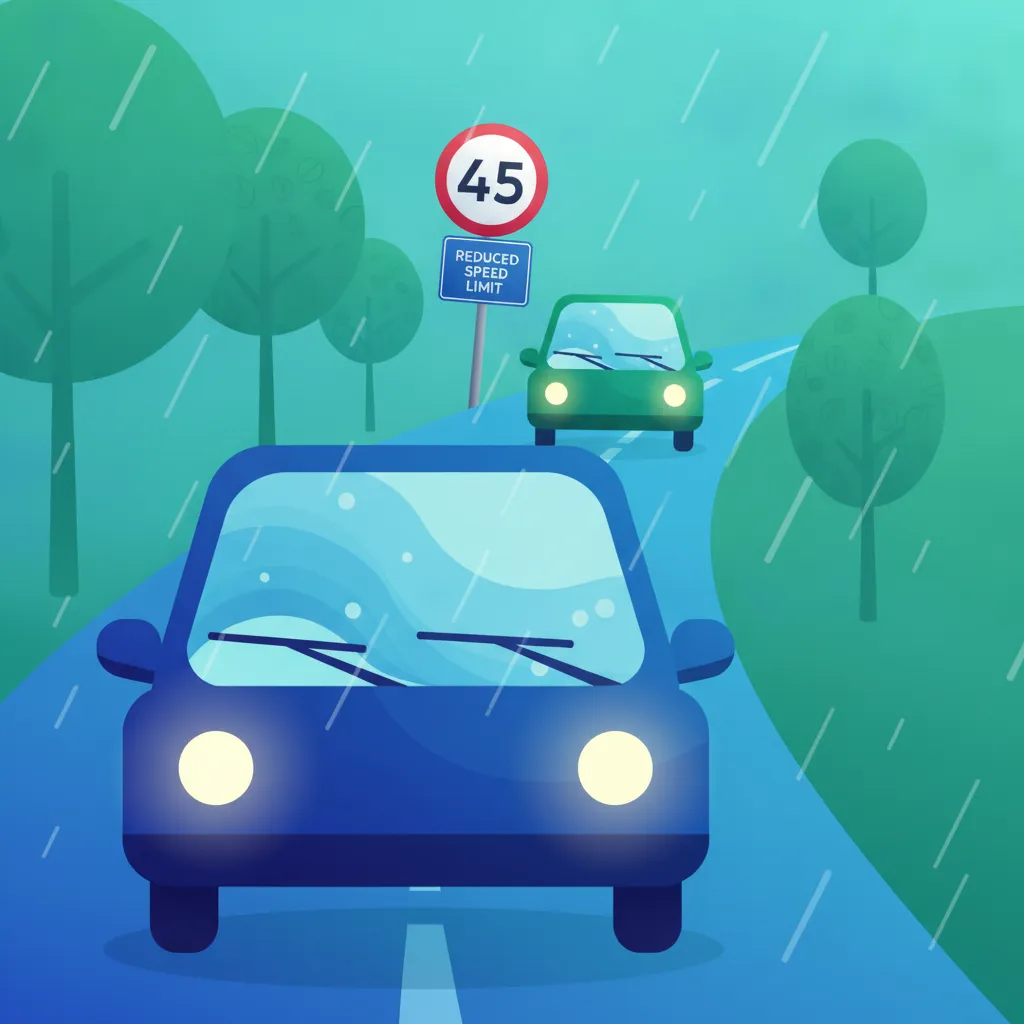
Adverse weather severely compromises tyre traction and forward visibility, demanding immediate speed reductions and extra space. This lesson focuses on the physics of aquaplaning in heavy rain, driving safely on black ice, and navigating thick fog using designated fog lamps. You will learn how to manage your windshield defoggers, adjust wipers, and handle high crosswinds that can destabilise your vehicle.

This lesson teaches how to cultivate a proactive defensive riding mindset, focusing on situational awareness and constant hazard scanning. It describes the system of motorcycle control, encouraging riders to anticipate potential mistakes from other drivers, pedestrians, and cyclists. Motorcyclists will learn to position themselves defensively, leaving clear escape routes in all driving environments.
Understand the impact of heavy rain, fog, and icy surfaces on vehicle stability and braking performance. This lesson covers how to adjust your speed, following distance, and steering inputs to maintain vehicle control when tyre grip is compromised on different road types.
Adverse weather severely compromises tyre traction and forward visibility, demanding immediate speed reductions and extra space. This lesson focuses on the physics of aquaplaning in heavy rain, driving safely on black ice, and navigating thick fog using designated fog lamps. You will learn how to manage your windshield defoggers, adjust wipers, and handle high crosswinds that can destabilise your vehicle.

This lesson focuses on the critical techniques required to ride safely during severe rain or heavy fog in Ireland. It teaches riders how to handle aquaplaning risks, use headlights correctly, and significantly increase their following distances. Adapting speed to visibility ensures that riders can brake safely when road conditions deteriorate.
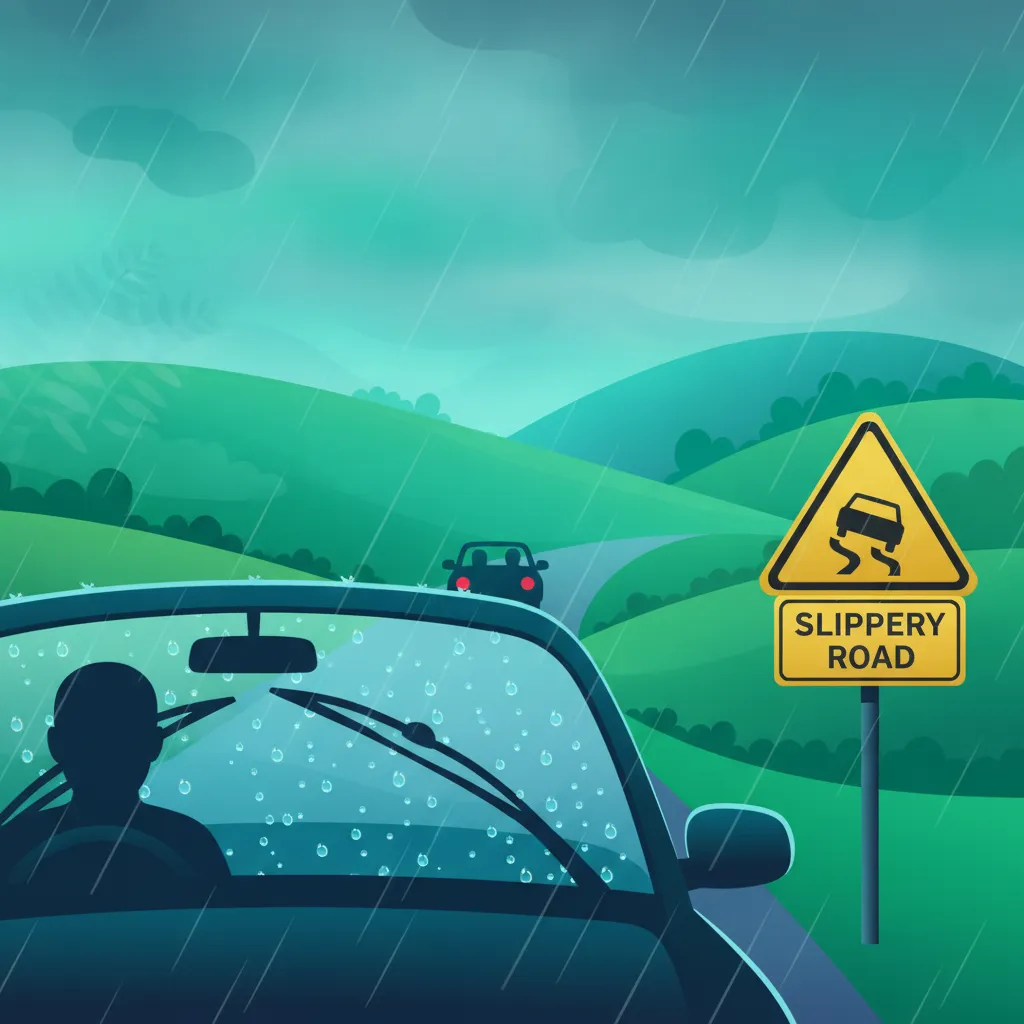
Wet roads, heavy winter fog, and strong lateral winds present major safety challenges for high-sided passenger vehicles in Ireland. This lesson explains how to prevent aquaplaning, double following distances on wet surfaces, and use fog lights correctly to maintain visibility. Drivers will learn handling adjustments to counteract sudden wind gusts when crossing exposed bridges or motorways.

This lesson explores the safe operation of heavy transport vehicles during severe meteorological hazards typical of the Irish climate. It teaches techniques for adjusting speed and doubling following distances to prevent loss of steering traction and control on waterlogged or icy roadways. Drivers will understand how to manage lateral aerodynamic forces from crosswinds on high-sided goods vehicles.

This lesson explains how to modify riding techniques when navigating wet tarmac, focusing on the heightened risk of hydroplaning and reduced tire grip. It details the necessity of increasing following distances, avoiding painted road markings, and executing smoother control inputs. Riders will understand how surface water accumulates in ruts, presenting severe hazards during heavy rainstorms.

This lesson teaches riders how to manage extreme weather conditions such as high crosswinds, thick fog, and low sun glare. It details how wind forces can push a motorcycle off course and how to use minor body adjustments and lane placement to maintain stability. Riders will learn how to manage visibility limits in dense fog, utilizing specialized riding gear and reducing speeds safely.
Irish rural roads are often narrow, winding, and bordered by high hedges, presenting unique hazards compared to urban streets. This lesson focuses on scanning for hidden hazards such as slow-moving farm machinery, mud on the road surface, and loose livestock. You will learn how to adjust your speed before entering blind bends, sound your horn at blind crests, and safely share the road with local agricultural traffic.
Driving at night presents severe challenges due to reduced visibility, driver fatigue, and headlight glare from oncoming vehicles. This lesson teaches you how to manage your headlights, use road edge markers to steer through dark curves, and look away from oncoming bright lights. You will learn to drive within the range of your headlights and remain highly alert for pedestrians or cyclists not wearing reflective gear.
Irish rural routes are often narrow, lacking central markings, and bordered by tall hedges that restrict forward visibility on sharp bends. This lesson teaches drivers how to negotiate blind curves, anticipate slow-moving agricultural machinery, and respond to wandering farm animals. Drivers will learn to regulate vehicle speed proactively, maintaining a safe stopping margin in rural areas.
Adhering to legal speed limits is not always sufficient; you must continuously adapt your speed to match real-world hazards. This lesson teaches you how to reduce speed when encountering rain, fog, heavy traffic, or narrow winding rural roads with restricted visibility. You will learn the importance of matching your speed to your range of clear vision, ensuring you can stop safely within the distance you can see ahead.
Find clear answers to common questions learners have about Basic Defensive Driving and Emergency Maneuvres. Learn how the lesson is structured, which driving theory objectives it supports, and how it fits into the overall learning path of units and curriculum progression in Ireland. These explanations help you understand key concepts, lesson flow, and exam focused study goals.
The most important rule is to remain calm and avoid sharp, sudden movements. You should steer gently in the direction of the skid while avoiding heavy braking, which can worsen the loss of traction.
With ABS, you should apply firm, continuous pressure to the brake pedal. Unlike older vehicles where you might need to pump the brakes, ABS automatically prevents the wheels from locking, allowing you to retain steering control.
The RSA emphasises defensive driving because it focuses on anticipating the mistakes of others and reacting to changing road conditions early. This proactive approach is the primary way to reduce road fatalities.
Panic steering refers to sudden, jerky, or excessive steering inputs made in response to a surprise hazard. It often leads to loss of vehicle control, especially at higher speeds or on wet road surfaces.
Use the practice question search tool to pinpoint specific topics, road signs, or rules you need to master for your official Driver Theory Test. Refine your study strategy and ensure comprehensive preparation for all aspects of the Irish driving exam. Start your focused revision now and build confidence for your learner permit test.