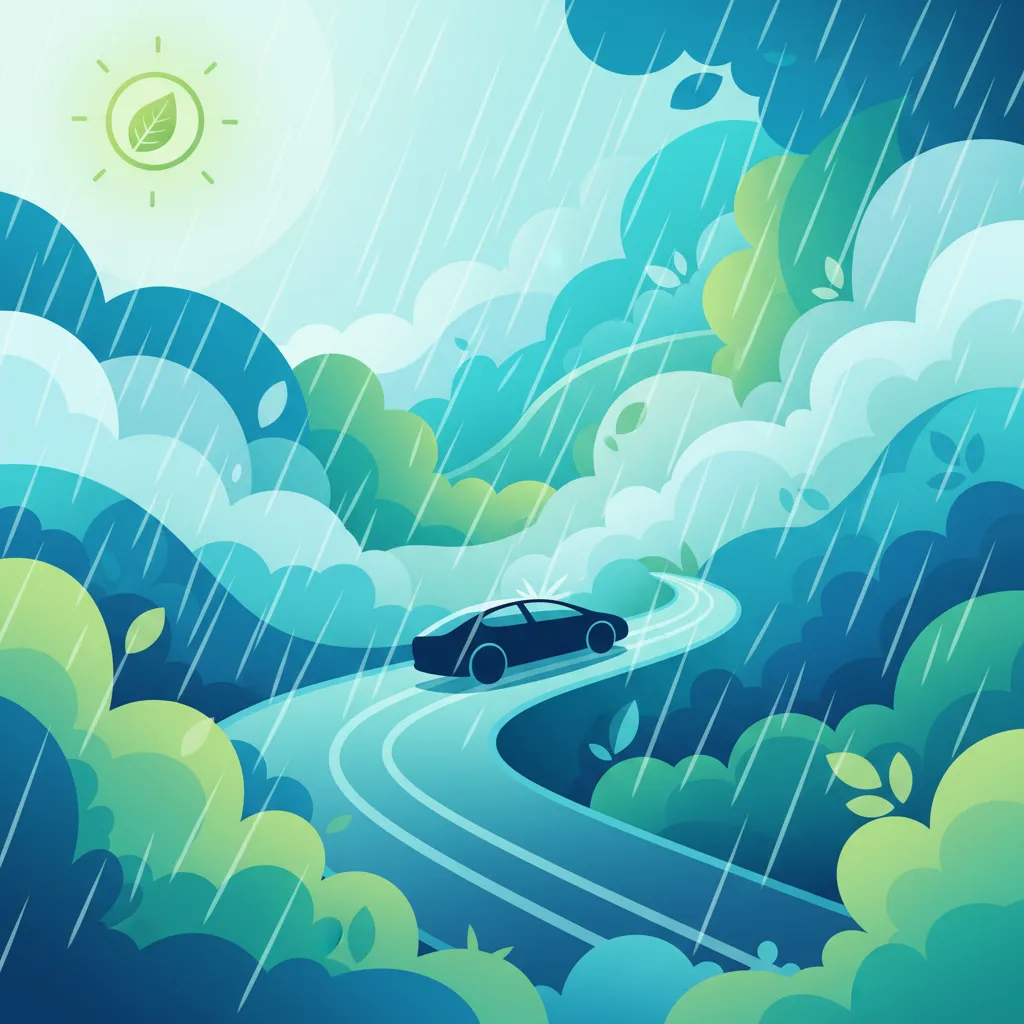
This unit prepares you for the challenges of driving in adverse weather conditions. We'll cover how rain, fog, snow, and ice impact your vehicle's performance and visibility, along with essential adaptive driving techniques. You'll also learn about eco-driving principles to minimize your environmental impact and improve fuel efficiency, crucial knowledge for both the Polish theory exam and safe road practices.
Browse all lessons that make up Adverse Weather and Environmental Conditions. Each lesson focuses on specific topics, learning objectives, and core concepts, helping you build essential knowledge and follow a clear, structured progression toward your study goals in Poland.
This lesson focuses on the specific challenges of driving in rainy conditions. It explains the phenomenon of hydroplaning, where tires lose contact with the road surface, and how to prevent it by reducing speed. The importance of good tire condition, effective windscreen wipers, and extending following distances is also covered in detail.
This lesson provides essential guidance for driving in fog, one of the most dangerous conditions. It instructs on the correct use of low-beam headlights and fog lights to maximize visibility without causing glare. The core advice is to significantly reduce speed and use the edge of the road or markings as a guide.
This lesson focuses on the skills needed for safe winter driving. It explains how to use gentle acceleration, steering, and braking to avoid losing traction on snow and ice. The lesson also discusses how to recognize and handle a skid, and the critical role that appropriate winter tires play in maintaining vehicle control.
This lesson addresses the challenges of driving after dark. It covers the correct use of high and low beam headlights to see and be seen, and techniques to avoid being dazzled by oncoming traffic. The content also touches on the increased risk of fatigue and reduced ability to judge speed and distance at night.
This lesson introduces the concept of eco-driving, a style that promotes fuel efficiency and reduces environmental impact. It teaches techniques such as maintaining a steady speed, anticipating traffic flow to avoid unnecessary braking, and ensuring the vehicle is well-maintained. These simple habits can lead to significant savings on fuel and reduce a driver's carbon footprint.
Explore high-intent keywords and long-tail search topics learners use when researching Adverse Weather and Environmental Conditions. These terms reflect how people search for reliable study materials, structured explanations, and unit-level theory preparation support in Poland.
Find clear answers to the most common questions learners ask about Adverse Weather and Environmental Conditions. Understand how the unit is organized, what learning goals it supports, and how it contributes to your study progression with structured explanations and practical guidance tailored for learners in Poland.
In heavy rain, your braking distance significantly increases due to reduced tyre grip on the wet road surface. This phenomenon is called aquaplaning, where your tyres lose contact with the road. Polish driving theory emphasizes increasing your following distance and reducing speed to compensate for this longer stopping time.
Polish regulations require specific headlight use in fog. During the day, you must use either dipped headlights (światła mijania) or daytime running lights. In dense fog, you should also use the front fog lights (światła przeciwmgielne przednie) if equipped. At night, always use dipped headlights and front fog lights if visibility is severely reduced.
On icy roads, extreme caution is necessary. Drive at very low speeds, brake and accelerate gently, and avoid sudden steering movements. Maintain a much larger following distance than usual. Always check if your vehicle is equipped with winter tyres, which are highly recommended for icy conditions in Poland.
Reduced visibility in fog makes judging distances and the speed of other vehicles very difficult. It's crucial to slow down significantly, use your fog lights, and increase your following distance to give yourself ample time to react. Rely more on sound and the road edge markings than visual cues if visibility is extremely poor.
Eco-driving in Poland focuses on driving in a way that is fuel-efficient and environmentally friendly. This involves smooth acceleration and braking, anticipating traffic to avoid unnecessary stops, maintaining a steady speed, and ensuring your vehicle is well-maintained. It also includes using the correct gear and shutting off the engine during long stops.
While winter tyres are not universally mandatory by law in Poland, they are highly recommended and often legally required in specific regions or during severe weather events as declared by authorities. Driving with appropriate winter tyres significantly improves traction and safety on snow and ice, a key consideration for the theory exam.
All included lessons
Lessons in Adverse Weather and Environmental Conditions
See who benefits most from studying Adverse Weather and Environmental Conditions. This overview explains how the unit supports different learning needs, what level of knowledge is helpful before starting, and how it fits into the overall study path in Poland.
This unit is essential for all learners preparing for the Polish Category B driving theory test, especially those who may be unfamiliar with driving in challenging weather. It's also beneficial for drivers seeking to refresh their knowledge on safe practices during winter months or when facing poor visibility.

Dive into our curated curriculum designed for Polish driving license aspirants. Select a course, follow its guided modules, and master every aspect of traffic rules and road signs necessary to pass your theory exam with confidence.
Polish Theory CurriculumExplore all units and lessons included in this driving theory course.
Dive into our curated curriculum designed for Polish driving license aspirants. Select a course, follow its guided modules, and master every aspect of traffic rules and road signs necessary to pass your theory exam with confidence.
Polish Theory Curriculum