
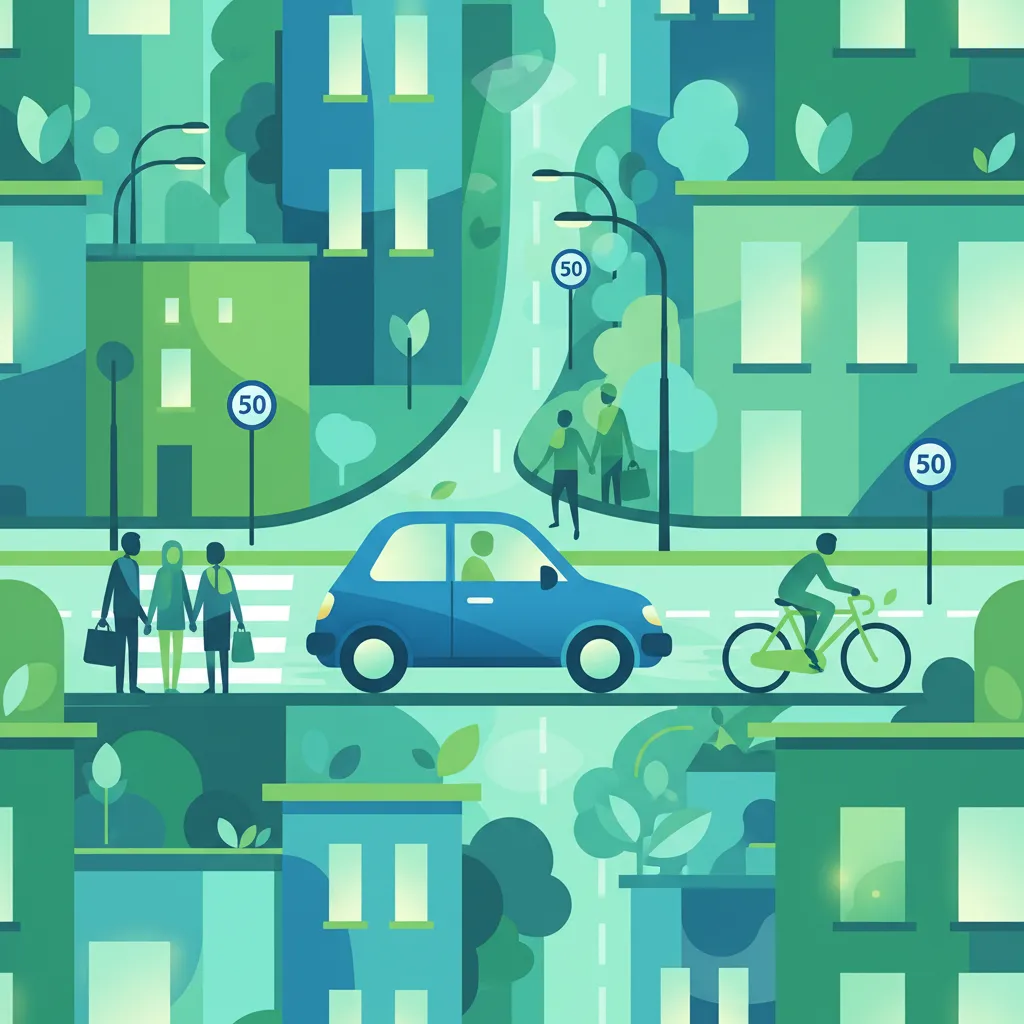
Navigate Polish cities and residential areas with confidence. This unit dives into the specific rules for built-up zones ('obszar zabudowany'), covering lower speed limits, special pedestrian areas, and safe interaction with vulnerable road users like pedestrians and cyclists. Mastering these rules is crucial for passing your Category B theory test and ensuring safety in busy environments.
Browse all lessons that make up Urban and Residential Driving. Each lesson focuses on specific topics, learning objectives, and core concepts, helping you build essential knowledge and follow a clear, structured progression toward your study goals in Poland.
This lesson defines what constitutes a 'built-up area' in Poland, marked by specific informational signs. It explains the default speed limit of 50 km/h that applies within these zones unless otherwise indicated. The content highlights the need for increased vigilance due to higher traffic density and the frequent presence of pedestrians.
This lesson focuses on areas with high pedestrian activity, requiring special caution. It covers the rules for 'living zones' (strefa zamieszkania), where pedestrians have priority and the speed limit is 20 km/h. The content also addresses regulations for school zones and other designated pedestrian areas to ensure the safety of the most vulnerable road users.
This lesson provides strategies for safely navigating the numerous intersections typical of urban environments. It reinforces the application of priority rules in situations with limited visibility and high traffic volume. Techniques for making turns in narrow streets and being aware of pedestrians and cyclists at junctions are central to the instruction.
This lesson details the various parking regulations encountered in residential areas. It explains how to interpret signs indicating permitted parking zones, time restrictions, and areas where parking is prohibited. Correctly positioning the vehicle within marked bays and understanding rules about pavement parking are also covered to avoid fines and obstruction.
This lesson focuses on safe coexistence with cyclists and pedestrians, who are prevalent in urban areas. It covers the rules for driving alongside dedicated bicycle lanes and the legal requirement to yield to pedestrians at marked crossings. The content stresses the importance of constant awareness, especially when turning at intersections, to prevent conflicts with vulnerable road users.
Explore high-intent keywords and long-tail search topics learners use when researching Urban and Residential Driving. These terms reflect how people search for reliable study materials, structured explanations, and unit-level theory preparation support in Poland.
Find clear answers to the most common questions learners ask about Urban and Residential Driving. Understand how the unit is organized, what learning goals it supports, and how it contributes to your study progression with structured explanations and practical guidance tailored for learners in Poland.
The primary difference is the significantly lower speed limit. In an 'obszar zabudowany' (built-up area), the general speed limit is 50 km/h during the day (6:00-23:00) and 60 km/h at night (23:00-6:00), unless otherwise posted. You must also be extra vigilant for pedestrians, cyclists, and specific traffic calming measures.
Within a built-up area, pedestrians and cyclists are generally given higher priority. You must be prepared to stop for pedestrians at crossings and exercise caution when passing cyclists, often requiring more space than on open roads. Some areas, like play streets or specific pedestrian zones, have very strict rules about vehicle access and speed.
Residential areas often have limited parking. You'll encounter various signs indicating parking restrictions, time limits, or zones requiring payment. It's crucial to understand these signs to avoid fines and ensure you're not obstructing traffic or pedestrian access. Parallel parking is common, and knowing how to do it efficiently is key.
Yes, school zones often have reduced speed limits, sometimes as low as 20 or 30 km/h, and may feature specific signage indicating child activity areas. Drivers must be extremely cautious, anticipating children crossing unexpectedly, especially during school drop-off and pick-up times. Always be prepared to stop.
Urban intersections can be complex with higher traffic volumes and more lanes. Always maintain situational awareness, observe traffic lights and signs carefully, and be decisive with your intentions. Yield to pedestrians at crossings and be aware of cyclists who may filter between lanes. Understanding priority rules remains paramount, even in dense traffic.
All included lessons
Lessons in Urban and Residential Driving
See who benefits most from studying Urban and Residential Driving. This overview explains how the unit supports different learning needs, what level of knowledge is helpful before starting, and how it fits into the overall study path in Poland.
This unit is essential for all Category B license applicants preparing for the Polish theory exam who will be driving in cities or residential areas. It's particularly beneficial for learners who find urban traffic scenarios challenging or want to deepen their understanding of pedestrian and cyclist interactions.

Dive into our curated curriculum designed for Polish driving license aspirants. Select a course, follow its guided modules, and master every aspect of traffic rules and road signs necessary to pass your theory exam with confidence.
Polish Theory CurriculumExplore all units and lessons included in this driving theory course.
Dive into our curated curriculum designed for Polish driving license aspirants. Select a course, follow its guided modules, and master every aspect of traffic rules and road signs necessary to pass your theory exam with confidence.
Polish Theory Curriculum