
Mastering speed is fundamental to safe driving in Poland. This unit delves into Poland's specific speed limits across different road types and teaches you how to calculate total stopping distances. Understanding these elements is crucial for maintaining safe following distances and passing your Category B theory exam.
Browse all lessons that make up Speed Management and Stopping Distances. Each lesson focuses on specific topics, learning objectives, and core concepts, helping you build essential knowledge and follow a clear, structured progression toward your study goals in Poland.
This lesson details the statutory speed limits for different road environments in Poland. It covers the 50 km/h limit in built-up areas (obszar zabudowany), as well as the higher limits for rural roads, expressways, and motorways. Understanding these default limits is fundamental for legal and safe driving across the country.
This lesson teaches the crucial concept that drivers must always adapt their speed to the current conditions. It explains how factors like rain, fog, ice, heavy traffic, and poor visibility reduce safety margins and require a lower speed than the posted limit. This principle of defensive driving is essential for preventing accidents in challenging situations.
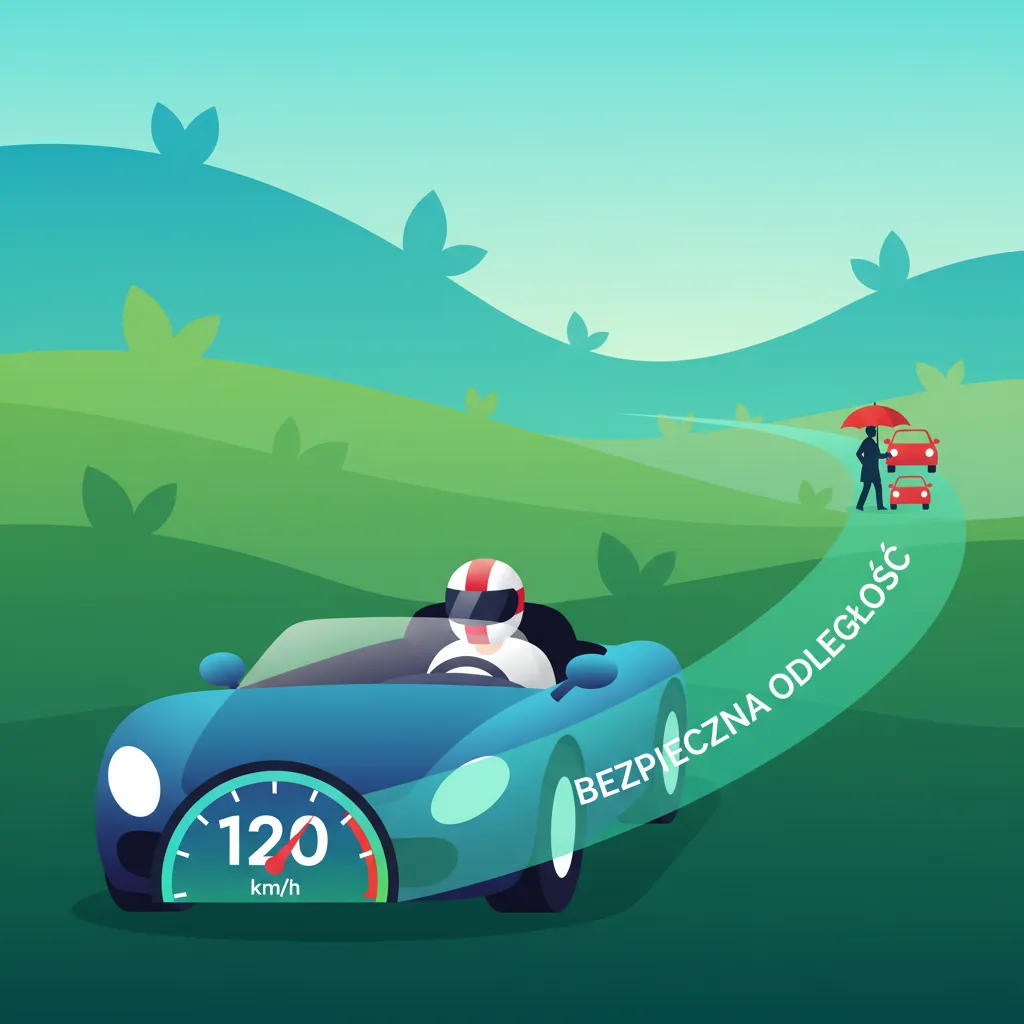
This lesson provides practical methods for maintaining a safe buffer zone behind the vehicle in front. It explains the 'two-second rule' as a minimum following distance in good conditions and how to increase it to three or more seconds in adverse weather. This skill is critical for allowing enough time to react and brake safely to avoid rear-end collisions.
This lesson breaks down the physics of stopping a vehicle. It defines reaction distance (the distance traveled before applying the brakes) and braking distance (the distance traveled while braking). The content explains how factors like speed, road condition, and tire grip influence the total stopping distance, and introduces proper braking techniques.
This lesson examines the internal factors that can impact a driver's performance. It explains how fatigue, distractions (like mobile phones), and the influence of alcohol or drugs significantly increase reaction time and impair judgment. Understanding these risks is fundamental to making responsible decisions before and during every journey.
Explore high-intent keywords and long-tail search topics learners use when researching Speed Management and Stopping Distances. These terms reflect how people search for reliable study materials, structured explanations, and unit-level theory preparation support in Poland.
Find clear answers to the most common questions learners ask about Speed Management and Stopping Distances. Understand how the unit is organized, what learning goals it supports, and how it contributes to your study progression with structured explanations and practical guidance tailored for learners in Poland.
In Poland, the standard speed limits for Category B drivers are: 50 km/h in built-up areas (obszar zabudowany), 90 km/h outside built-up areas on secondary roads, 120 km/h on express roads (droga ekspresowa), and 140 km/h on motorways (autostrada). Always check for specific signage, as these limits can be reduced by road signs.
Total stopping distance is the sum of reaction distance and braking distance. Reaction distance is the distance your vehicle travels from the moment you perceive a hazard until you apply the brakes. Braking distance is the distance your vehicle travels from the moment you apply the brakes until it comes to a complete stop. Understanding both components helps you gauge safe following distances.
Maintaining a safe following distance is crucial because it gives you adequate time and space to react and brake if the vehicle ahead stops suddenly. It also provides a buffer zone in case of unexpected events, significantly reducing the risk of rear-end collisions, which are common in traffic.
Adverse weather conditions like rain, snow, or ice dramatically increase braking distance by reducing tire grip and road friction. Wet roads can double braking distance, while icy conditions can increase it tenfold. Always adjust your speed and increase your following distance significantly in poor weather.
Yes, the type of vehicle, its condition, and its load significantly affect braking distance. Heavier vehicles generally require longer braking distances. The condition of the brakes, tires, and suspension also plays a vital role. Ensuring your vehicle is well-maintained is key to predictable braking performance.
A common guideline for safe following distance in good conditions is the 'two-second rule'. Pick a fixed point (like a sign) the car ahead passes, and count how many seconds it takes you to reach that same point. In adverse conditions (rain, fog, snow), increase this to three or four seconds.
All included lessons
Lessons in Speed Management and Stopping Distances
See who benefits most from studying Speed Management and Stopping Distances. This overview explains how the unit supports different learning needs, what level of knowledge is helpful before starting, and how it fits into the overall study path in Poland.
This unit is essential for all Category B license applicants in Poland, especially those who find speed limits confusing or struggle to judge safe distances. It is also beneficial for drivers looking to refresh their understanding of speed management and its impact on road safety.

Dive into our curated curriculum designed for Polish driving license aspirants. Select a course, follow its guided modules, and master every aspect of traffic rules and road signs necessary to pass your theory exam with confidence.
Polish Theory CurriculumExplore all units and lessons included in this driving theory course.
Dive into our curated curriculum designed for Polish driving license aspirants. Select a course, follow its guided modules, and master every aspect of traffic rules and road signs necessary to pass your theory exam with confidence.
Polish Theory Curriculum