
This lesson provides a critical foundation for navigating Turkish intersections by explaining the hierarchy of traffic control devices. You will learn to decode signal sequences and apply fundamental priority rules, ensuring you can ride your moped safely while preparing for the MTSK e-sınav.
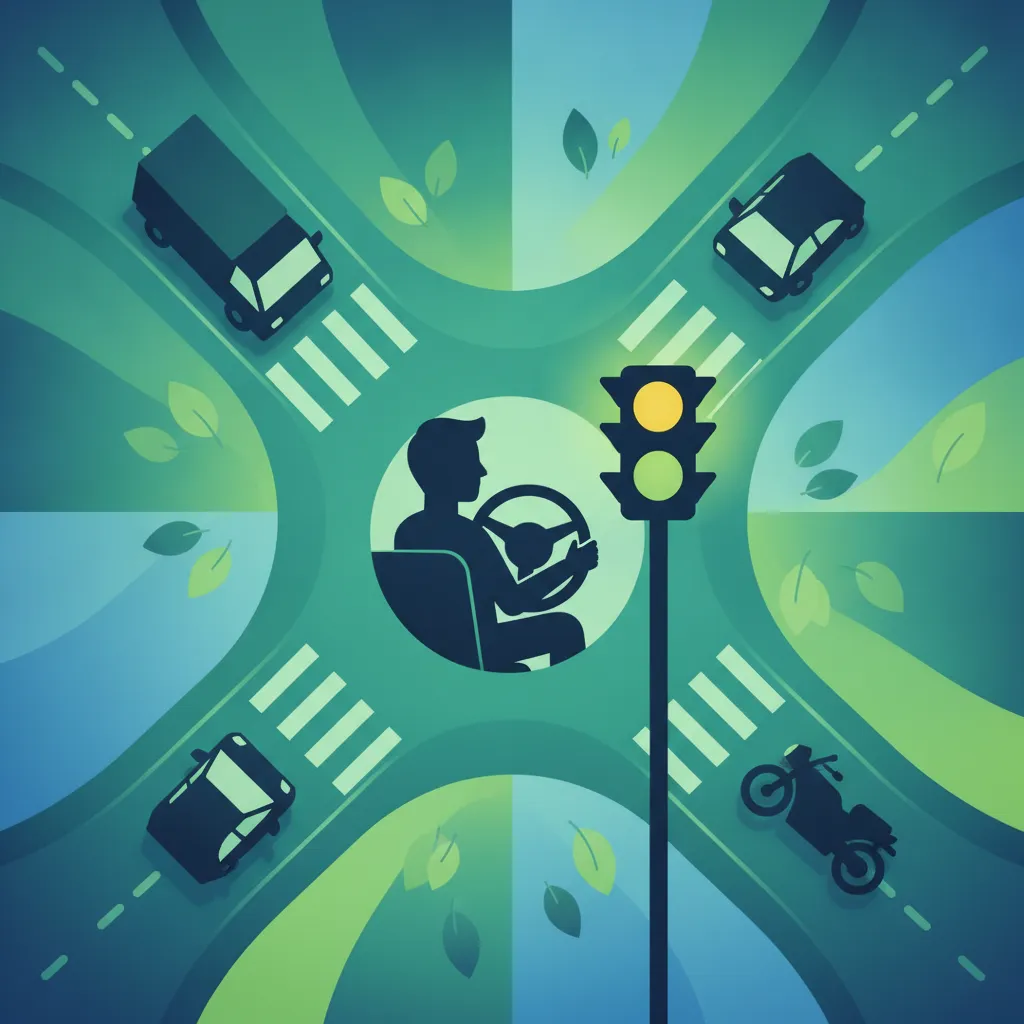
Lesson content overview
Navigating intersections safely requires a split-second understanding of traffic control systems and legal priorities. For riders preparing for the Turkish Category AM moped licence (MTSK e-sınav), mastering these rules is not just a requirement for passing the theoretical exam—it is a critical safety shield. Because mopeds and light motorized bicycles have a smaller profile and lower acceleration compared to passenger cars, riders are highly vulnerable to right-angle collisions and cut-off incidents at junctions.
This lesson provides an in-depth breakdown of traffic light sequences, flashing signals, the legal hierarchy of traffic control, and default right-of-way rules under the Turkish Highway Code.
When approaching any intersection, junction, or pedestrian crossing in Turkey, you must instantly recognize which traffic control system takes precedence. There is a strict, legally mandated hierarchy. If two or more control systems provide conflicting instructions, you must obey the highest-ranking control system present.
1. Directions by a Traffic Officer (Trafik Polisi): Visual hand signals or instructions from an authorized officer override all other signals, signs, and rules.
2. Illuminated Traffic Signals (Trafik Işıkları): Electric traffic lights override static road signs and default right-of-way rules.
3. Traffic Signs (Trafik Levhaları): Regulatory and warning signs override default roadway rules (such as the right-hand rule).
4. Road Markings (Yol Çizgileri): Painted lines on the asphalt, such as stop lines, pedestrian crossings, and lane arrows, guide positioning and behavior.
5. General/Default Traffic Rules: When no officer, light, sign, or marking is present (an uncontrolled junction), you must rely on the default legal rules of priority.
Crucial Exam Concept: If you approach an intersection where a traffic light is glowing green, but a traffic officer is holding up a hand signaling you to stop, you must stop immediately. Disobeying an officer's signal is a severe traffic violation, even if the physical traffic light contradicts the officer.
Standard traffic light installations in Turkey utilize a dynamic, multi-phase system designed to safely segregate conflicting movements. Understanding the precise meaning of each phase and transition is essential for Category AM riders to avoid sudden braking or getting trapped in the middle of an intersection.
During off-peak hours, at rural junctions, or in designated high-risk zones, traffic signals may switch to flashing modes. These signals alter the standard priority rules and require highly specific responses from drivers.
A flashing red light operates exactly like a physical Stop Sign (Dur).
A flashing amber (yellow) light operates similarly to a Yield Sign (Yol Ver).
An uncontrolled intersection (kontrolsüz kavşak) is any junction that lacks traffic lights, traffic signs, road markings, or police direction to regulate priority. In these situations, specific default legal rules dictate who must yield to whom.
At an uncontrolled intersection of equal-status roads, the vehicle approaching from your right has the right-of-way.
Vehicles changing their direction of travel have a lower priority than those continuing straight.
Road class always overrides the right-hand rule. If you are on a designated side road, you must yield to all vehicles on the main road, regardless of whether they are approaching from your left or right.
Under standard Turkish highway regulations, vehicles already circulating inside a roundabout have priority over vehicles entering the roundabout.
During accidents, heavy congestion, power outages, or special public events, a traffic officer (trafik polisi) will direct traffic manually. You must memorize their primary body postures and hand signals, as they are a frequent topic on the MTSK e-sınav.
| Officer Position / Gesture | Legal Meaning | Action Required by the Driver |
|---|---|---|
| Chest or Back Facing You | Stop / Red Light | You must stop before the intersection. The officer's body acts as a physical barrier to traffic facing their front or back. |
| Shoulders / Arms Aligned Parallel to Your Lane | Go / Green Light | Traffic approaching from the directions parallel to the officer's extended or relaxed arms may proceed through the intersection. |
| One Arm Raised Vertically | Attention / Amber Light | All traffic in all directions must prepare to stop. This signal indicates a transition in the flow direction. |
| Active Wave/Gesture Directed at You | Specific Command | If the officer points at your vehicle and makes a forward sweeping motion, you are directed to proceed. If they point and hold a flat palm out, you must stop. |
Nighttime Officer Signals: At night, traffic officers use a glowing red wand. A wide sweeping arc of the wand indicates you must slow down. A sharp, direct point with the wand followed by a fixed stop gesture means you must stop your vehicle immediately.
Operating a moped or light motorized bicycle requires active defensive riding. Because of your smaller size, other motorists often misjudge your speed or fail to see you entirely at junctions.
Right-angle collisions (often called "T-bone" accidents) are highly destructive. They occur most frequently when a driver runs a red light, fails to yield at an uncontrolled intersection, or turns left directly across the path of an oncoming rider.
To protect yourself:
Your braking distance on a moped increases significantly on wet, dusty, or greasy road surfaces.
To help solidify these priority rules, let's analyze how they apply in real-world situations.
You are riding your moped straight through an uncontrolled intersection. Vehicle A is on your right, turning left. Vehicle B is directly opposite you, also turning left.
You approach an intersection with a flashing red light. The cross road has a flashing amber light and no stop signs.
Explore all units and lessons included in this driving theory course.
Lesson content overview
Explore all units and lessons included in this driving theory course.
Explore search topics learners often look for when studying Understanding Traffic Signals and Priorities. These topics reflect common questions about road rules, driving situations, safety guidance, and lesson level theory preparation for learners in Turkey.
Browse additional driving theory lessons that cover connected traffic rules, road signs, and common driving situations related to this topic. Improve your understanding of how different rules interact across everyday traffic scenarios.
Understand the legal priority rules for entering and circulating in roundabouts according to the Turkish Highway Code. This guide explains how to position your vehicle safely and yield correctly when approaching multi-lane junctions and uncontrolled intersections in various urban traffic scenarios.
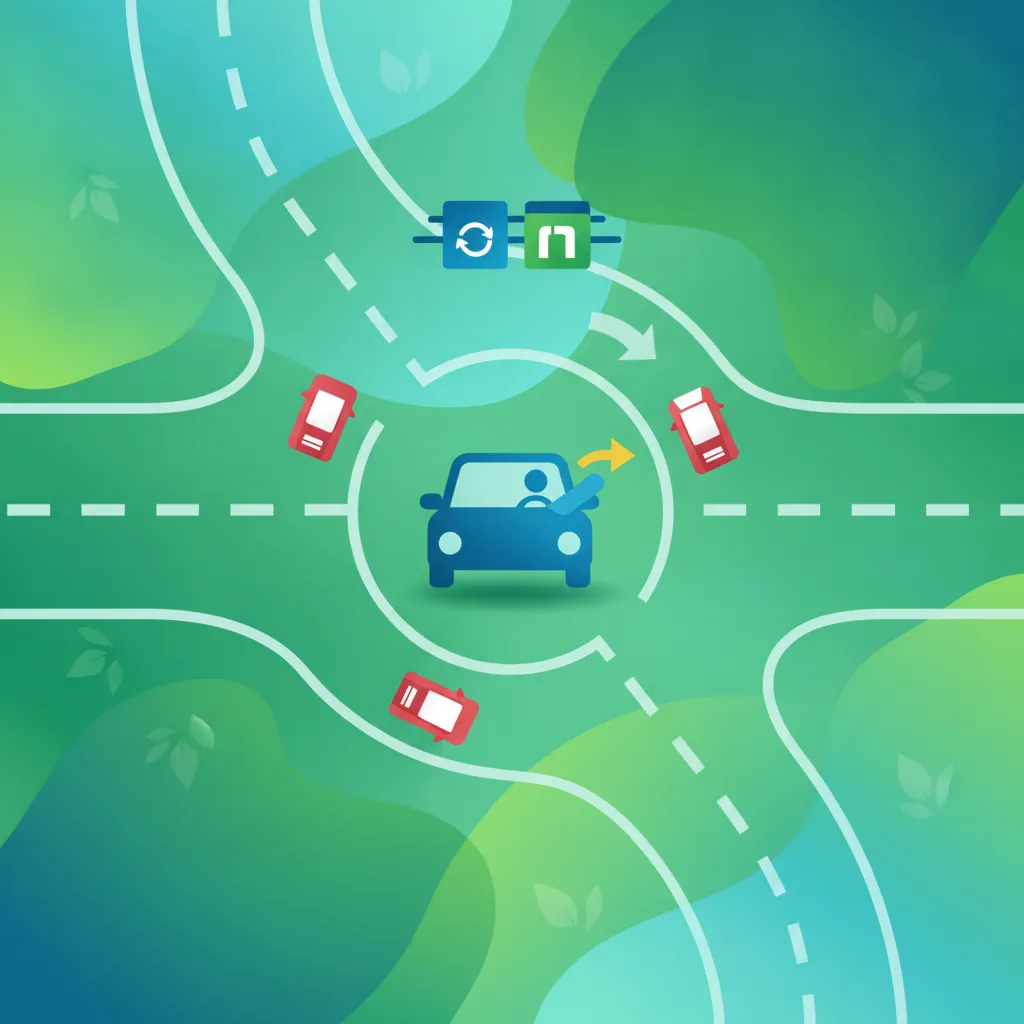
In this lesson, learners explore the specific priority rules and navigation techniques for roundabouts. Topics include yielding to traffic already in the roundabout, proper lane selection upon entry, and safe exit strategies. The lesson also addresses interactions with pedestrians and cyclists near roundabouts and the importance of maintaining appropriate speed.
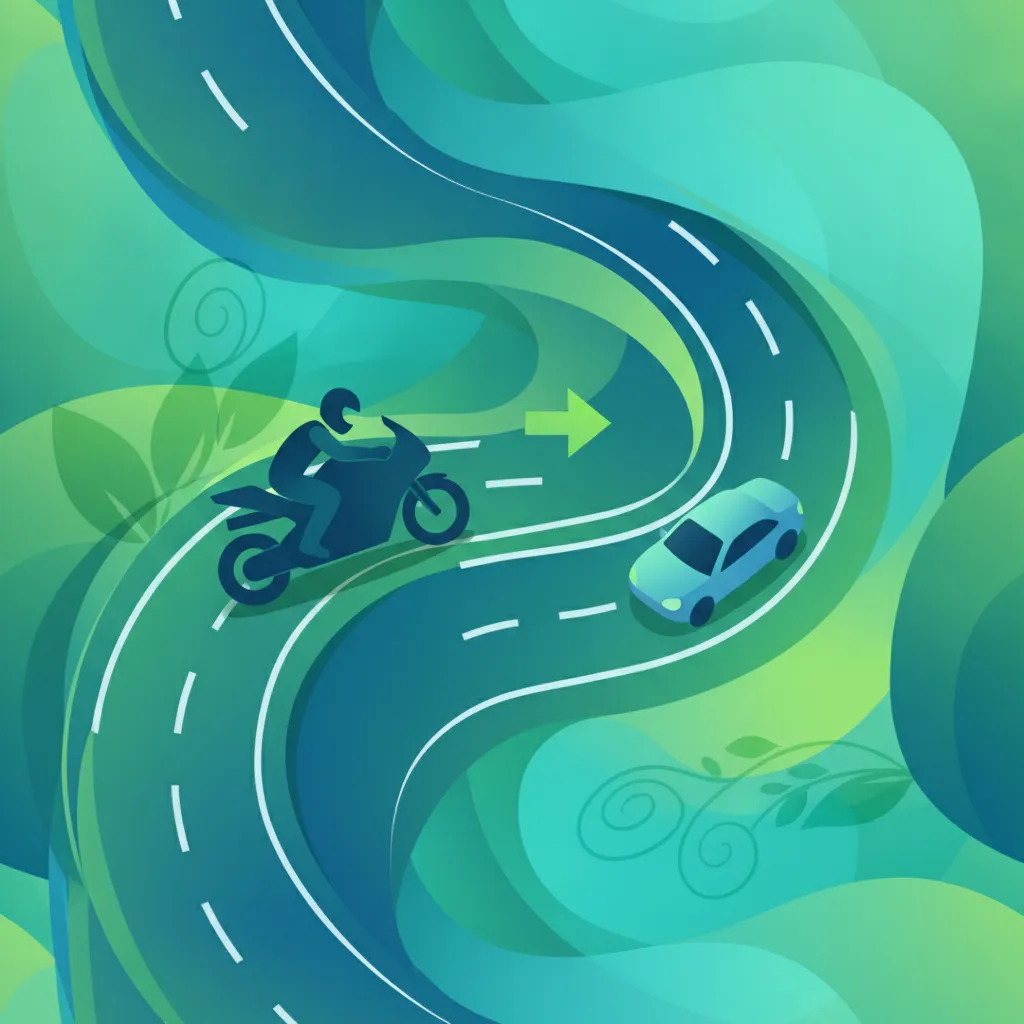
Roundabouts require a clear understanding of yield regulations and precise signaling to avoid conflicts with larger vehicles. This lesson details the legal requirements under Turkish road rules, which demand that entering vehicles yield to traffic already circulating inside the roundabout. You will learn how to select the appropriate lane upon entry, maintain a steady speed, signal your exit intentions clearly with your indicators, and remain alert to drivers who cut across lanes.
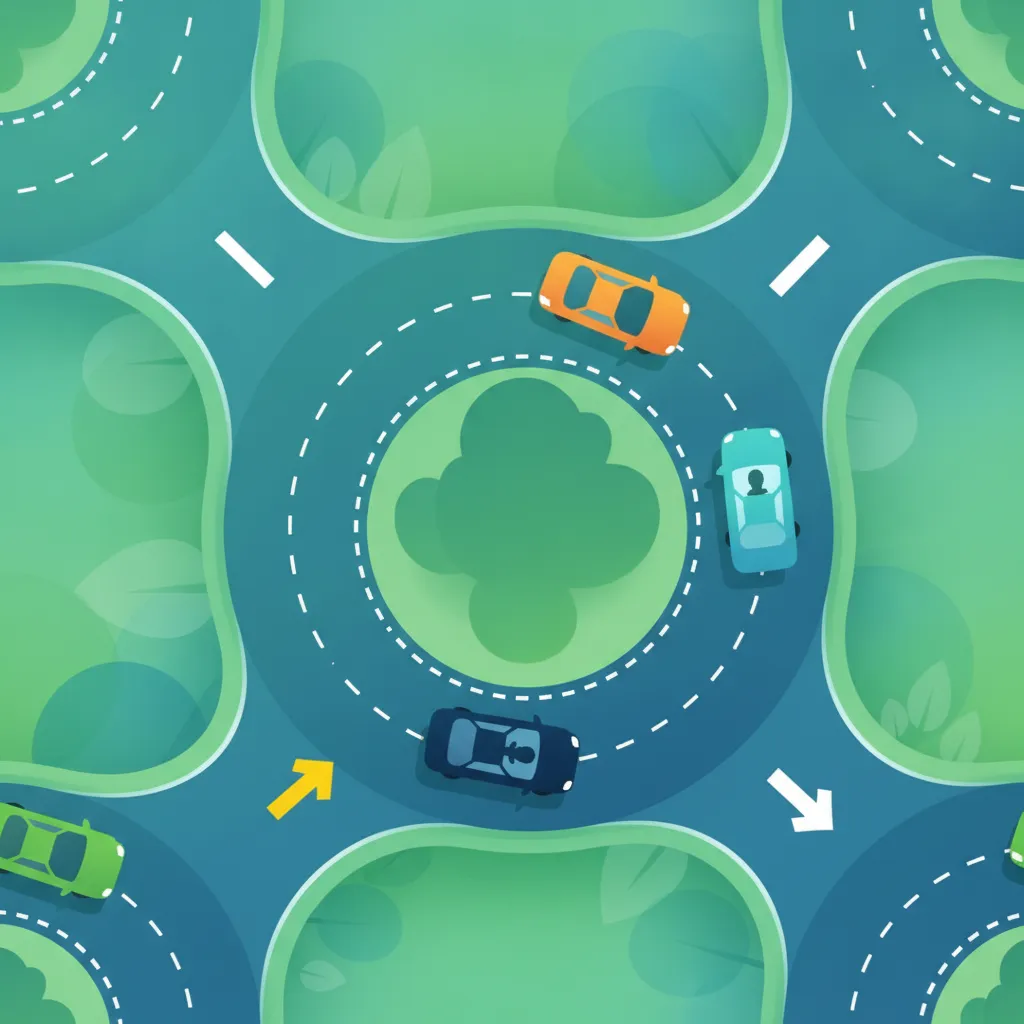
This lesson delves into the specific challenges and procedures associated with navigating roundabouts on a motorcycle. It outlines the importance of approaching at a safe speed, selecting the correct lane, and yielding to vehicles already within the roundabout. The content also covers the proper use of signals when exiting and emphasizes the need for heightened awareness of blind spots, especially when larger vehicles are present.
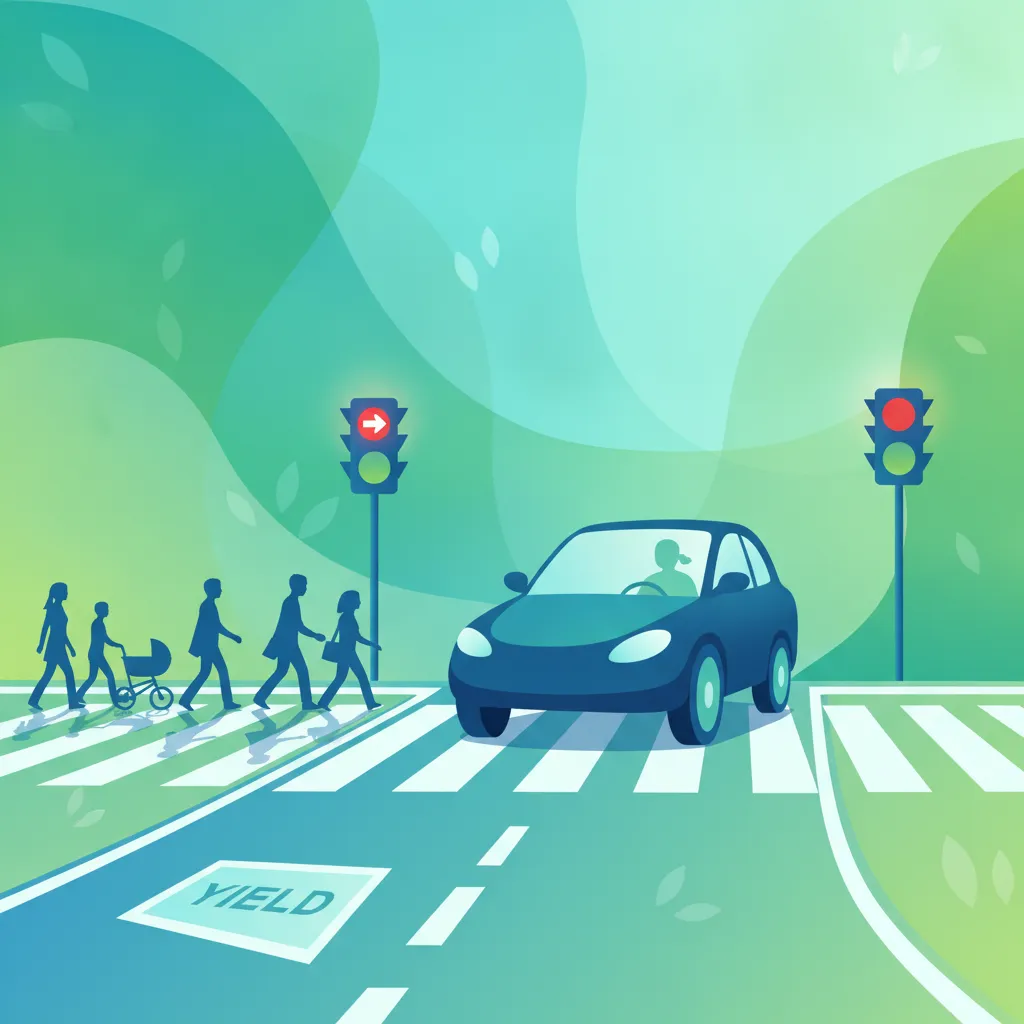
In this lesson, learners will master the skills required to safely navigate various types of intersections encountered in Turkish urban settings. The content covers interpreting traffic signals, understanding right-of-way rules, and executing proper lane positioning. Practical strategies for managing blind spots and ensuring visibility to other road users are emphasized. By the end of this session, participants will be equipped with safe crossing techniques.
This lesson outlines the precise legal and safety procedures for overtaking slower vehicles on two-lane and multi-lane roads. It details when overtaking is strictly prohibited by signs or solid road lines, and how to calculate passing distances. Drivers will learn how to communicate their intentions using indicators and pass other vehicles safely.

This lesson explores the hazards characteristic of rural roads, including narrow paths, lack of lighting, slow agricultural vehicles, and sharp curves. It teaches drivers how to anticipate blind corners, adjust speed, and pass slow-moving tractors safely. Motorists will learn to remain highly alert for unexpected roadway obstructions.
This lesson delves into specific manoeuvring strategies required when navigating both tight urban environments and open rural roads with large passenger vehicles. Learners will explore techniques for handling narrow streets, tight turns, and intersections, while maintaining safety and efficiency. The content emphasizes planning and execution of manoeuvres based on road conditions and vehicle dimensions.

This lesson focuses on the safe interaction with other traffic participants at bus stops and traffic intersections. Learners will explore right-of-way rules, signal compliance, and techniques for maintaining safe distances while stopping and departing. Understanding these interactions is vital for preventing accidents in complex traffic environments.
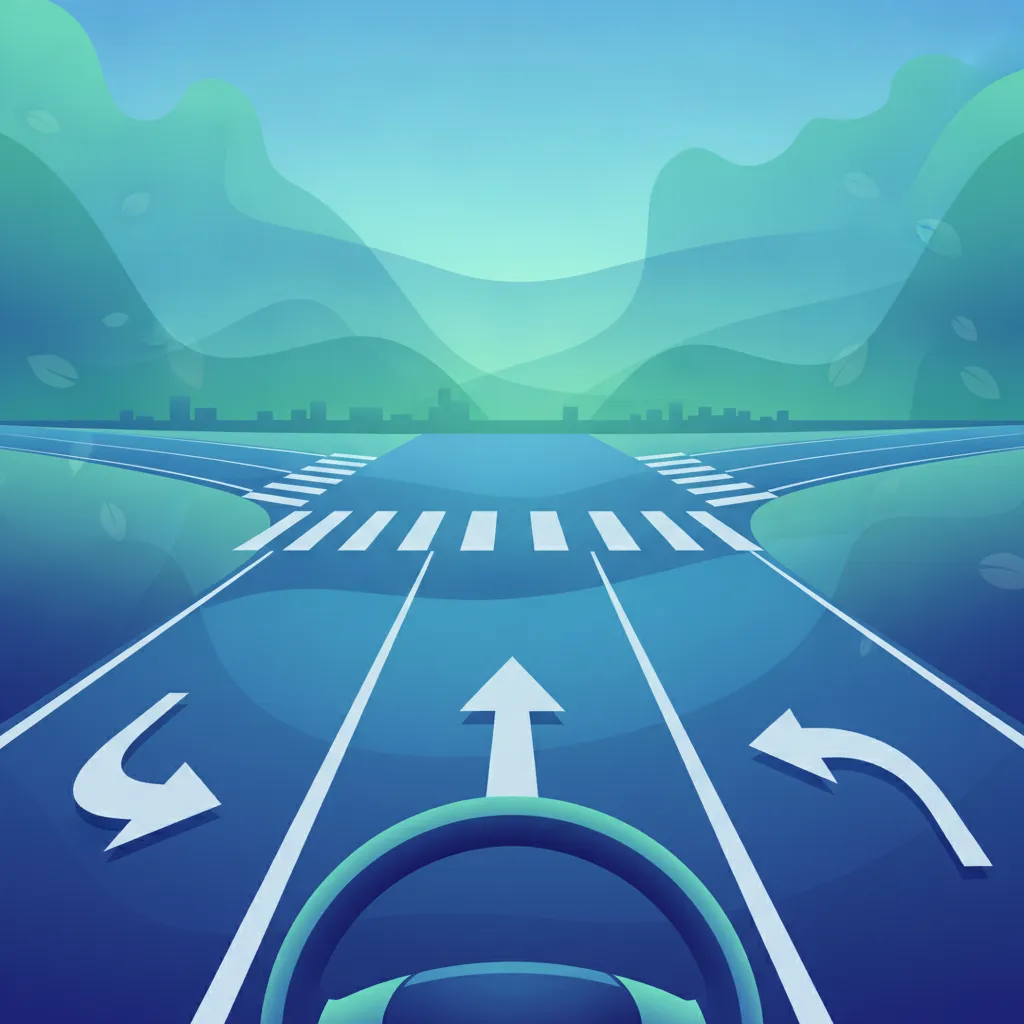
This lesson focuses on the role of directional arrows and guidance markings in indicating lane assignments and intended vehicle movements. Learners will learn to interpret turn arrows, lane-specific directions, and lane assignment at intersections and roadways. Real-world examples demonstrate how these markings aid drivers in navigating complex road networks, especially at junctions and roundabouts.
This lesson guides motorists on how to safely navigate active roadwork zones, detours, and temporary lane configurations. It details the meaning of construction signs, temporary speed reductions, and the legal requirement to protect highway workers. Drivers will learn to expect sudden stops and maintain slow, steady speeds through work areas.
Learn to recognize common risky behaviors and potential conflict points at signalized intersections. This explanation focuses on defensive riding strategies for AM category vehicles, helping you anticipate dangers like right-angle collisions and cut-off incidents caused by other road users in Turkish traffic.
Intersections represent the highest-risk zones for moped riders due to crossing traffic paths and poor visibility. This lesson teaches you the structured approach method: slowing down, selecting the correct lane early, scanning in all directions, and yielding according to priority laws. You will learn safe techniques for executing left and right turns, maintaining stability, and continuously looking out for oncoming vehicles that might fail to yield or turn unexpectedly across your path.
In this lesson, learners will master the skills required to safely navigate various types of intersections encountered in Turkish urban settings. The content covers interpreting traffic signals, understanding right-of-way rules, and executing proper lane positioning. Practical strategies for managing blind spots and ensuring visibility to other road users are emphasized. By the end of this session, participants will be equipped with safe crossing techniques.
Find clear answers to common questions learners have about Understanding Traffic Signals and Priorities. Learn how the lesson is structured, which driving theory objectives it supports, and how it fits into the overall learning path of units and curriculum progression in Turkey. These explanations help you understand key concepts, lesson flow, and exam focused study goals.
The hierarchy always begins with the instructions of a traffic police officer, followed by traffic lights, then road signs and markings, and finally, the general rules of the road.
Yes, in the absence of traffic signs, signals, or markings at an intersection, the basic rule in Turkey is to yield to vehicles approaching from your right side.
A flashing amber light signals that the intersection is uncontrolled or the light is malfunctioning, requiring you to slow down, proceed with extreme caution, and check for traffic from all directions.
If you fail to follow a police officer's hand signal at an intersection, it is considered a critical traffic violation in the theory exam and real-world driving, as officer instructions always supersede traffic lights.
Use our comprehensive practice search to find exactly the Turkish driving theory questions you need to master. Whether reviewing specific road signs, traffic rules, or first aid scenarios, select your perfect practice set and boost your confidence for the official ehliyet sınavı.