
This lesson focuses on the critical techniques required to safely navigate large passenger vehicles through both congested urban streets and open rural roads. You will learn how to adjust your driving style for vehicle dimensions, ensuring passenger comfort and strict compliance with Turkish traffic regulations.

Lesson content overview
Navigating a passenger vehicle under a Class D licence (Sınıf D Ehliyeti) requires a sophisticated level of spatial awareness, physical control, and anticipatory planning. Unlike standard passenger cars, large buses and coaches possess unique vehicle dynamics due to their extended wheelbase, substantial rear and front overhangs, and significantly higher centre of gravity.
To pass the official Turkish Class D driving licence theory exam and ensure safe, professional passenger transport on public roads, you must master the distinct manoeuvring strategies required for both densely packed urban environments and open, high-speed rural highways. This lesson provides an exhaustive breakdown of the technical, mechanical, and regulatory aspects of managing a large passenger vehicle across diverse road networks.
To understand manoeuvring, you must first master the physical forces and spatial boundaries that dictate how a large passenger vehicle travels. A bus does not follow the same path as a passenger car; its rear wheels do not track the same line as its front steering wheels.
When a large vehicle turns, the rear wheels follow a shorter path than the front wheels. This physical phenomenon is known as off-tracking or rear-wheel cheat. The longer the distance between the front axle and the drive axle (the wheelbase), the greater the off-tracking effect.
Large passenger transport vehicles have significant bodywork extending beyond both the front and rear axles.
Every successful manoeuvre depends on a systematic cognitive process. To prevent collisions and maintain passenger comfort, you should apply these six fundamental principles.
| Principle | Definition | Purpose / Rationale | Implications for the Driver |
|---|---|---|---|
| Anticipation | Foreseeing upcoming road conditions, traffic flow, and path changes. | Allows for smoother, safer execution and provides sufficient time for signalling. | Reduces sudden braking, improves passenger comfort, and minimizes kinetic load changes. |
| Spatial Awareness | Understanding the vehicle’s physical dimensions relative to surrounding obstacles. | Critical for judging clearances in tight urban spaces and wide rural curves. | Prevents collisions with curbs, structures, overhead branches, and other road users. |
| Controlled Speed Management | Adjusting speed appropriately before, during, and after any manoeuvre. | Ensures vehicle stability, provides reaction time, and aids in precise control. | Reduces risk of skidding, rollovers, or losing steering authority in adverse conditions. |
| Active Use of Visibility Aids | Consistent monitoring of mirrors, cameras, and sensor systems. | Compensates for large blind spots inherent in heavy passenger vehicles. | Enhances detection of vulnerable road users, especially during reversing and turning. |
| Clear Communication | Using indicators, hazard lights, and horn/gestures predictably. | Establishes predictability and prevents misunderstandings with other drivers. | Lowers the likelihood of collision by giving clear warnings of intended path changes. |
| Ergonomic Positioning | Maintaining proper seating, mirror adjustment, and hand positions. | Facilitates maximum visibility, reach of controls, and physical control input. | Reduces physical strain and fatigue while improving steering accuracy. |
Urban driving presents a constant stream of low-speed, high-precision hazards. City centres are dense with pedestrians, cyclists, narrow lanes, delivery vehicles, and complex junctions.
When executing turns in urban environments, especially right turns (which are tighter in countries driving on the right side of the road, such as Turkey), you must utilize specialized spatial paths.
Under Turkish Highway Traffic Law (Karayolları Trafik Kanunu), large passenger vehicles must strictly adhere to priority-of-way rules at junctions. At uncontrolled intersections, heavy commercial passenger vehicles do not automatically have priority over smaller passenger cars unless they are travelling on a designated priority road (Anayol).
Reversing a Category D vehicle should always be treated as a high-risk manoeuvre. It should only be performed when absolutely necessary (e.g., entering parking bays or terminals).
Rural driving changes the nature of risks from low-speed spatial tight spots to high-speed dynamic control challenges. Country roads in Turkey often feature sharp bends, variable road surfaces, high gradient changes, and unpredictable rural traffic.
Buses have a high centre of gravity due to their height and the weight of passengers and luggage. When entering a sharp bend at high speeds, lateral forces (centrifugal force) act upon the vehicle's upper structure, creating a risk of rollover or lateral sliding.
The Golden Rule of Cornering: Always complete your braking and gear reduction before entering the turn, while the wheels are still pointing straight. Applying heavy brakes midway through a sharp rural bend shifts weight to the outside tires, destabilizing the suspension and risking a catastrophic loss of control.
Rural roads are frequently shared with agricultural tractors, construction equipment, and slow-moving commercial transport vehicles.
Many rural regional roads lack clearly painted lane markings, street lighting, or standardized curbs.
Large commercial passenger vehicles have extensive blind spots (kör noktalar) that can easily swallow entire passenger cars, motorcycles, or pedestrians. Managing these blind spots is critical to executing safe lane changes, turns, and merges.
A standard Class D bus has four massive "no-zones" where direct and indirect visibility is completely blocked:
Modern passenger vehicles are equipped with a complex array of mirrors and electronic driver aids. Understanding how to use these tools systematically is essential for safe driving.
Check the interior rearview mirror (if applicable) to assess the internal passenger situation and immediate rear area.
Consult the main flat exterior mirror on the side of the intended lane change to determine the speed and distance of approaching vehicles.
Scan the wide-angle convex mirror on the same side to identify any vehicles or cyclists riding parallel in your blind spots.
Perform a physical shoulder check (omuz üstü bakış) by turning your head toward the side window to verify clearance near the front pillars.
Confirm that your indicator has been flashing for at least 3 seconds before initiating any lateral vehicle movement.
Manoeuvring a large passenger vehicle on public roads in Turkey is governed strictly by the Karayolları Trafik Kanunu (KTK) and associated road safety regulations. Failing to comply with these rules can result in traffic fines (idari para cezası), penalty points on your licence, or the suspension of your Professional Competence Certificate (SRC Belgesi).
According to Turkish traffic laws, vehicles entering a roundabout must yield the right-of-way to vehicles already inside the roundabout. For Class D vehicles:
Your choice of manoeuvring speed, path, and braking application must adjust to variable environmental factors and the state of your vehicle.
The handling characteristics of a bus change dramatically depending on its passenger load.
To solidify your theoretical understanding, let us analyze real-world driving situations commonly encountered by Class D drivers.
Understanding common driving errors can help you avoid dangerous situations and prepare for your practical exam.
To further prepare for your Turkish Class D Licence Exam, explore the following topics:
To test your knowledge on vehicle control, passenger safety, and highway regulations, practice with our dedicated revision sets:
This lesson covers the unique physical dynamics of Class D vehicles, including off-tracking and tail-swing phenomena that make large buses handle differently from passenger cars. Urban manoeuvring requires swing-wide techniques on right turns and careful cyclist/pedestrian checks at intersections, while rural driving demands completing all braking before curves to prevent rollover from centrifugal forces. Four major blind spot zones require systematic mirror routines and physical shoulder checks before any lateral movement. Turkish traffic law mandates a 3-second indicator activation rule and strict pedestrian priority at crossings, with penalties potentially affecting SRC Belgesi certification.
A short set of high-value points that capture the most important learning from this lesson.
Large passenger vehicles experience off-tracking, where rear wheels follow a tighter path than front wheels, requiring drivers to swing wide on right turns to avoid curb strikes.
The rear tail-swing effect means when turning right, the rear of the bus swings to the left, creating collision risk with obstacles on the left side of the vehicle.
The 3-second indicator rule under Turkish traffic law must be followed before any lane change, turn, or departure from stationary position to prevent rear-end collisions.
Four major blind spot zones exist around Class D vehicles: front (1.5-3m), rear (up to 60m), left flank, and right flank, with the right flank being the largest danger zone.
Heavy braking during a curve transfers weight to outside tires and destabilizes the vehicle; all braking must be completed before entering the turn.
Explore all units and lessons included in this driving theory course.
Brake and downshift before entering any rural curve; never apply heavy brakes mid-turn.
In tight urban right turns, drive deeper into the intersection before turning to allow rear wheels to clear the curb safely.
When reversing, physically inspect the area behind the vehicle and use a ground guide in confined spaces; stop immediately if the guide disappears from mirrors.
Fully loaded buses extend stopping distance and increase lateral body roll; empty buses have less traction and stiffer suspension.
Pedestrians at crossings have absolute right-of-way under Yaya Geçidi Önceliği regulations and must be yielded to completely.
Turning the steering wheel too early on tight urban right turns, causing rear tires to climb the curb or strike obstacles.
Using proximity sensors as the exclusive reversing aid without combining them with active mirror scanning and physical inspection.
Cutting corners on left turns at intersections, entering the wrong lane and risking collision with oncoming traffic.
Driving at normal speeds on wet urban corners without reducing speed by 30-50%, causing hydroplaning and loss of steering control.
Following slow vehicles too closely on rural roads, which blocks forward visibility and eliminates safe overtaking assessment distance.
Lesson content overview
A short set of high-value points that capture the most important learning from this lesson.
Large passenger vehicles experience off-tracking, where rear wheels follow a tighter path than front wheels, requiring drivers to swing wide on right turns to avoid curb strikes.
The rear tail-swing effect means when turning right, the rear of the bus swings to the left, creating collision risk with obstacles on the left side of the vehicle.
The 3-second indicator rule under Turkish traffic law must be followed before any lane change, turn, or departure from stationary position to prevent rear-end collisions.
Four major blind spot zones exist around Class D vehicles: front (1.5-3m), rear (up to 60m), left flank, and right flank, with the right flank being the largest danger zone.
Heavy braking during a curve transfers weight to outside tires and destabilizes the vehicle; all braking must be completed before entering the turn.
Explore all units and lessons included in this driving theory course.
Brake and downshift before entering any rural curve; never apply heavy brakes mid-turn.
In tight urban right turns, drive deeper into the intersection before turning to allow rear wheels to clear the curb safely.
When reversing, physically inspect the area behind the vehicle and use a ground guide in confined spaces; stop immediately if the guide disappears from mirrors.
Fully loaded buses extend stopping distance and increase lateral body roll; empty buses have less traction and stiffer suspension.
Pedestrians at crossings have absolute right-of-way under Yaya Geçidi Önceliği regulations and must be yielded to completely.
Turning the steering wheel too early on tight urban right turns, causing rear tires to climb the curb or strike obstacles.
Using proximity sensors as the exclusive reversing aid without combining them with active mirror scanning and physical inspection.
Cutting corners on left turns at intersections, entering the wrong lane and risking collision with oncoming traffic.
Driving at normal speeds on wet urban corners without reducing speed by 30-50%, causing hydroplaning and loss of steering control.
Following slow vehicles too closely on rural roads, which blocks forward visibility and eliminates safe overtaking assessment distance.
Explore search topics learners often look for when studying Manoeuvring Strategies in Urban and Rural Settings. These topics reflect common questions about road rules, driving situations, safety guidance, and lesson level theory preparation for learners in Turkey.
Browse additional driving theory lessons that cover connected traffic rules, road signs, and common driving situations related to this topic. Improve your understanding of how different rules interact across everyday traffic scenarios.
Understand the critical blind spot zones inherent to Class D buses. This lesson explains the systematic use of main, convex, and kerb mirrors, alongside camera systems, to safely navigate traffic and prevent collisions with vulnerable road users during turns and lane changes.

This lesson introduces the proper utilization of mirrors, rearview cameras, and additional sensor systems to enhance situational awareness for goods vehicle drivers. Learners will understand the importance of correctly adjusting mirrors for optimal coverage, interpreting camera feeds, and relying on sensor alerts. The lesson emphasizes integrating modern safety technology into daily driving practices.

This lesson focuses on identifying and managing blind spots specific to goods vehicles, which are larger and have more extensive blind zones compared to standard cars. Learners will explore techniques for blind spot detection using mirrors, rearview cameras, and sensor systems, ensuring safe lane changes and maneuvering. The lesson emphasizes the importance of continuous observation and modern safety technology.

Learners will explore the proper adjustment and utilization of mirrors, rear-view cameras, and blind spot sensors to maximize visibility while operating a passenger vehicle. The lesson covers the optimal positioning of mirrors for comprehensive coverage, interpreting camera and sensor alerts, and integrating these tools into safe driving practices. Proper use of these technologies reduces blind spots and enhances overall situational awareness.

This lesson addresses the challenges of safely reversing a goods vehicle, including the identification of blind spots and rear visibility limitations. It covers proper mirror and rearview camera usage, as well as strategies for maintaining awareness of obstacles and the trailer's path. The lesson also emphasizes the importance of reversing alarms and slow, controlled vehicle movements.

This lesson focuses on the execution of safe right and left turns with large passenger vehicles, emphasizing the identification and management of blind spots. Learners will understand the correct use of turn signals, proper positioning within the turn, and the importance of thorough observation before and during turning. Strategies for minimizing blind spot exposure are also covered.

This lesson highlights the critical nature of blind spots for motorcyclists, teaching strategies to recognize and mitigate these hidden areas. Learners will practice techniques for checking blind spots before lane changes and overtaking, ensuring they are fully aware of surrounding traffic. The lesson emphasizes how proper mirroring and head checks can significantly reduce the risk of collisions.

This lesson focuses on protecting vulnerable road users, such as pedestrians, cyclists, and motorcyclists, in mixed traffic environments. Learners will examine specific strategies for increased vigilance, anticipatory driving, and properly yielding to these users. The lesson also covers high-risk zones, such as school areas and public transport stops, emphasizing the need for heightened safety.
Learn the specific traffic laws and driving dynamics for operating buses on highways and rural roads in Turkey. This guide covers centrifugal force management, overtaking techniques for heavy vehicles, and strategies for navigating narrow rural passages safely while ensuring passenger comfort.

This lesson focuses on the unique requirements and best practices for operating passenger vehicles on highways and expressways. Topics include maintaining appropriate speed, adhering to lane discipline, executing safe overtaking maneuvers, and managing merges and exits. Emphasis is placed on ensuring a smooth ride for passengers while integrating safely with faster-moving traffic.
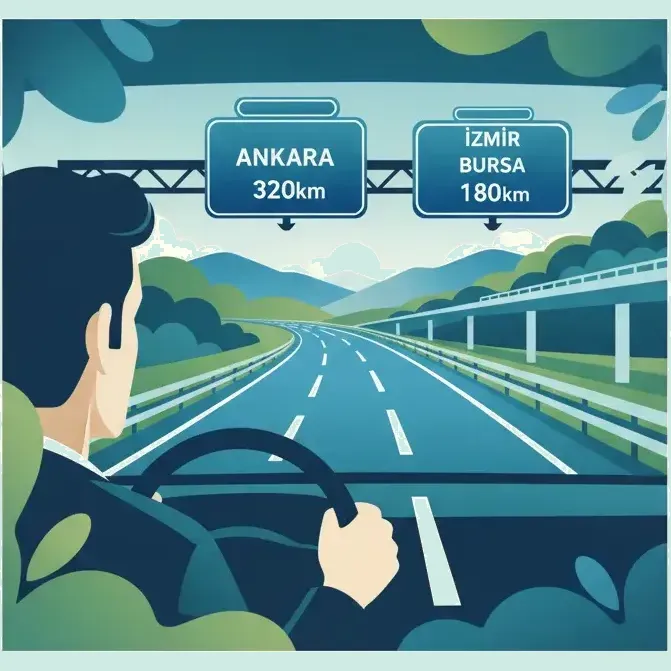
Learners will examine strategies for planning and executing long-distance and intercity routes with passenger vehicles. The lesson covers effective route planning, managing driver fatigue, scheduling rest stops, and addressing passenger comfort and informational needs during extended journeys. Understanding these aspects ensures safe, efficient, and passenger-friendly long-distance service.
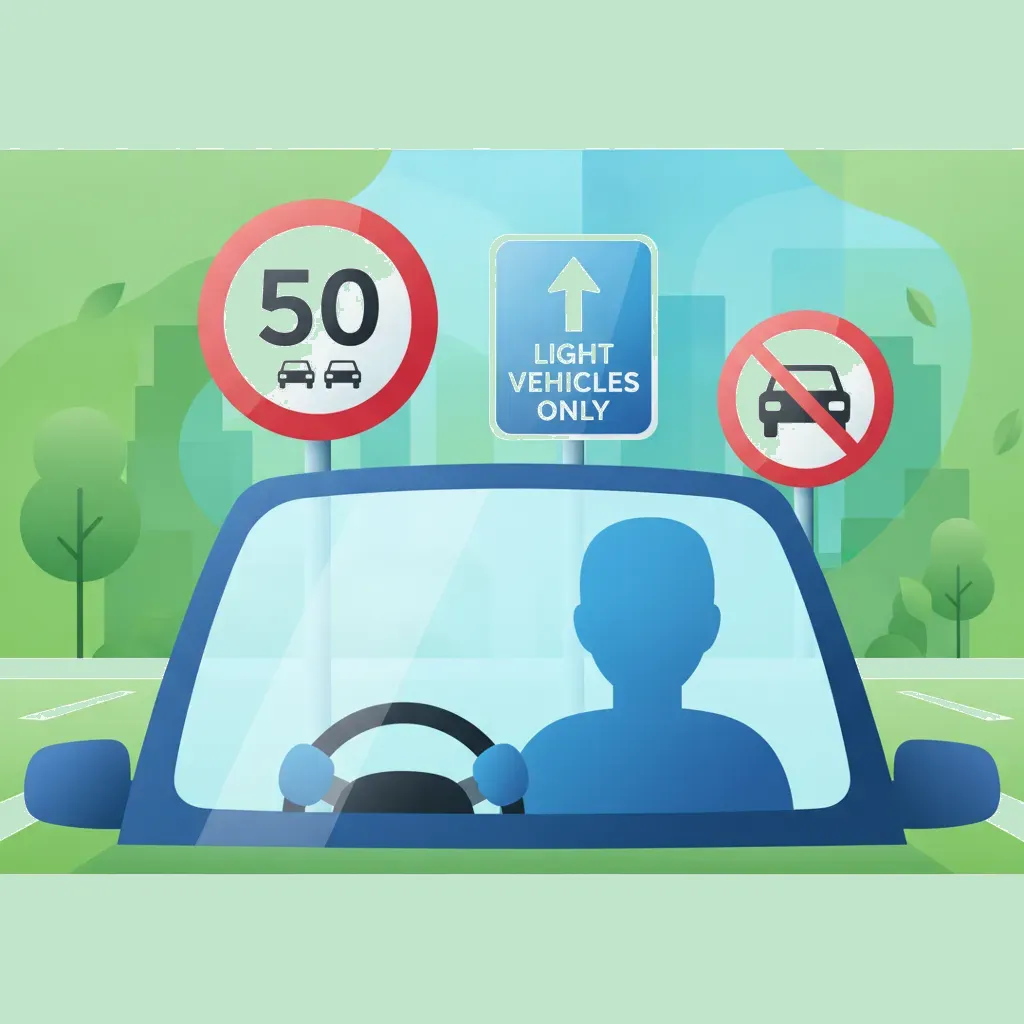
This lesson focuses on the identification and interpretation of traffic signs and road markings that are particularly relevant to passenger vehicle drivers, such as bus lane indications, priority road signs, and specific speed limits. Learners will explore how these signs affect route planning, compliance, and the overall flow of traffic. Mastery of sign interpretation ensures safe and lawful operation in various traffic conditions.
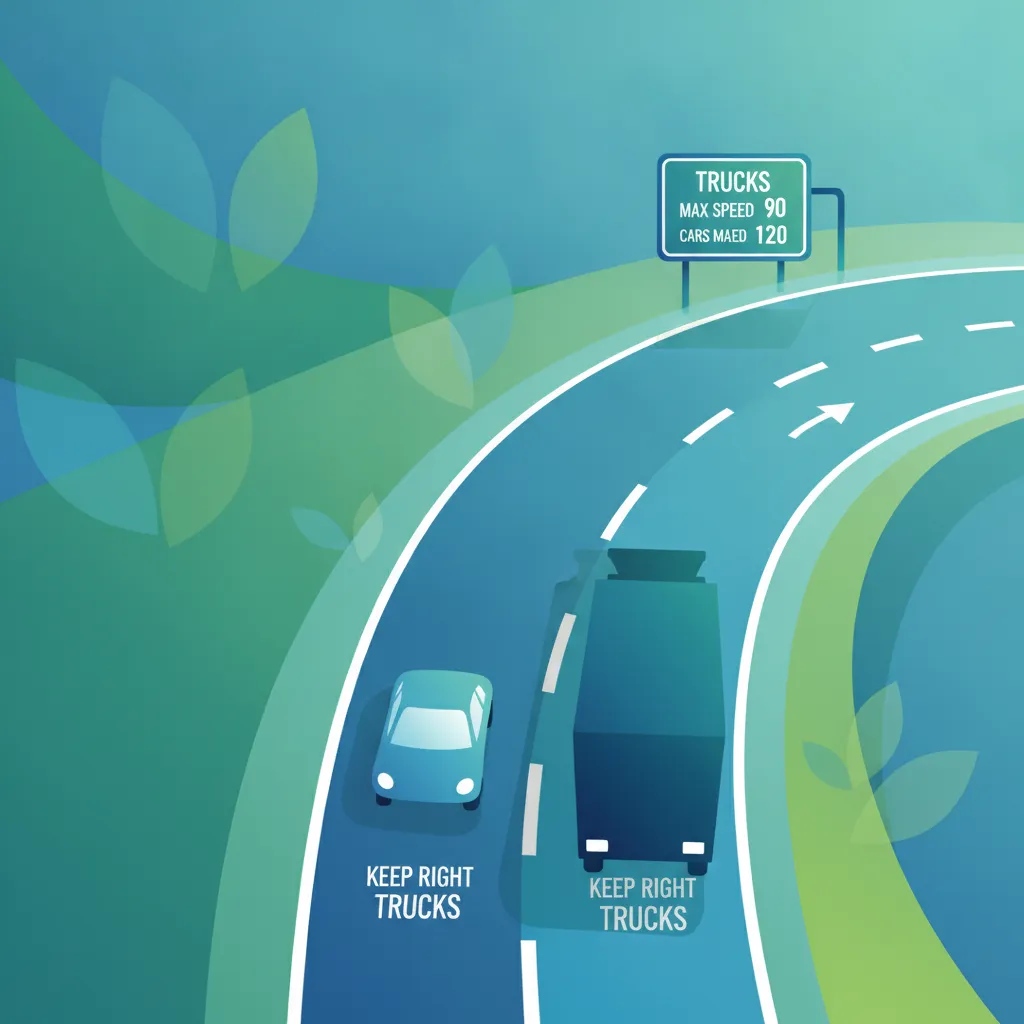
This lesson addresses the specific considerations for goods vehicle operation on highways and expressways, covering speed limits, lane discipline, safe merging, and overtaking. Learners will learn how to adapt to traffic flow, manage heavy vehicle dynamics at higher speeds, and ensure safe operation. The lesson emphasizes the importance of vigilance and proper lane usage to prevent accidents.

Learners will learn how to calculate and maintain safe following distances, accounting for the longer braking distances and reaction times inherent to larger passenger vehicles. The lesson emphasizes the importance of a sufficient time gap to allow for safe stopping and to prevent rear-end collisions, particularly in varying traffic conditions.

Learners will explore the fundamentals of maintaining correct lane discipline, focusing on appropriate lane positioning, understanding lane markings, and executing lane changes safely. Emphasis is placed on the unique considerations for large passenger vehicles within the lane, such as width and maneuverability. The lesson also addresses the impact of proper lane discipline on overall traffic flow and safety.

Learners will explore methods for achieving smooth acceleration and deceleration, focusing on gradual throttle application and progressive brake pressure to maintain passenger comfort and vehicle stability. The lesson highlights the importance of anticipating road conditions and traffic flow to avoid abrupt speed changes, thereby enhancing safety and reducing fuel consumption.
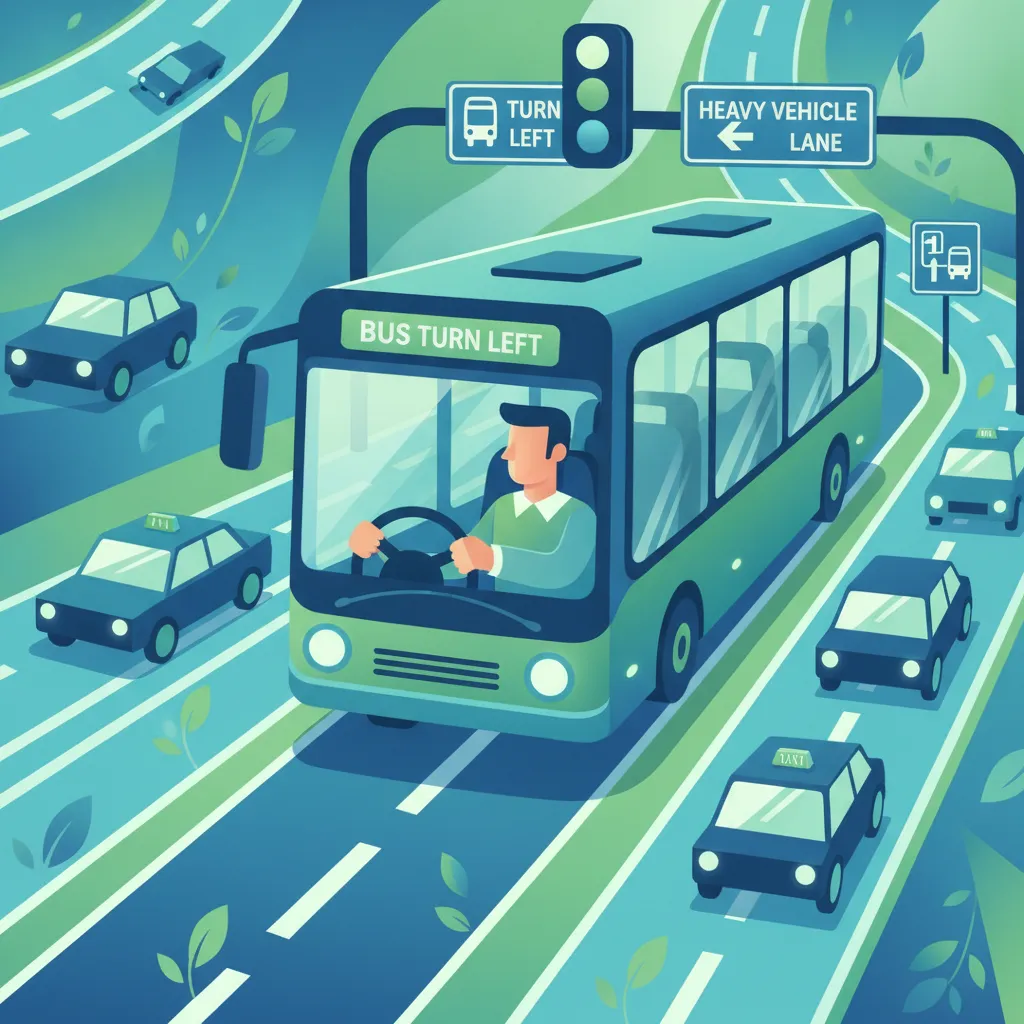
Learners will explore strategies for navigating congested urban traffic environments while operating large passenger vehicles. The lesson covers lane selection, adherence to traffic signals, and the use of bus lanes where applicable. Understanding how to maintain smooth traffic flow while ensuring passenger safety is crucial for efficient urban transportation.

Learners will explore techniques for adjusting driving styles based on different road surface conditions, such as gravel, potholes, and wet pavement. The lesson emphasizes the importance of adapting speed, braking, and steering inputs to maintain vehicle control and passenger comfort. Strategies for detecting and responding to road hazards are discussed to ensure safety across diverse driving environments.

This lesson focuses on the critical importance of lane discipline and proper lane usage for large goods vehicles. Learners will understand the challenges posed by wider vehicle dimensions, the necessity of maintaining adequate lane occupancy, and the need for precise lane keeping. Emphasis is placed on selecting appropriate lanes, adhering to traffic flow, and ensuring general highway safety.
Find clear answers to common questions learners have about Manoeuvring Strategies in Urban and Rural Settings. Learn how the lesson is structured, which driving theory objectives it supports, and how it fits into the overall learning path of units and curriculum progression in Turkey. These explanations help you understand key concepts, lesson flow, and exam focused study goals.
Tail-swing occurs when the rear of a long vehicle swings in the opposite direction of a turn. You must monitor this closely to avoid hitting stationary objects or other vehicles during sharp turns in urban areas.
In urban areas, the challenge is managing tight spaces and pedestrian interactions. On rural roads, the focus shifts to maintaining smooth momentum, managing road camber, and preparing for higher-speed turns that require wider arcs.
The key is gradual input. Avoid jerky steering, sudden braking, or rapid acceleration. Anticipate the path ahead early so you can steer with gentle, fluid motions that keep passengers stable in their seats.
While you may not need to calculate precise measurements, you will face scenario-based questions that test your understanding of proper vehicle positioning. You must demonstrate that you know when to swing wide and when to hold the inside line to ensure safety.
Use our comprehensive practice search to find exactly the Turkish driving theory questions you need to master. Whether reviewing specific road signs, traffic rules, or first aid scenarios, select your perfect practice set and boost your confidence for the official ehliyet sınavı.