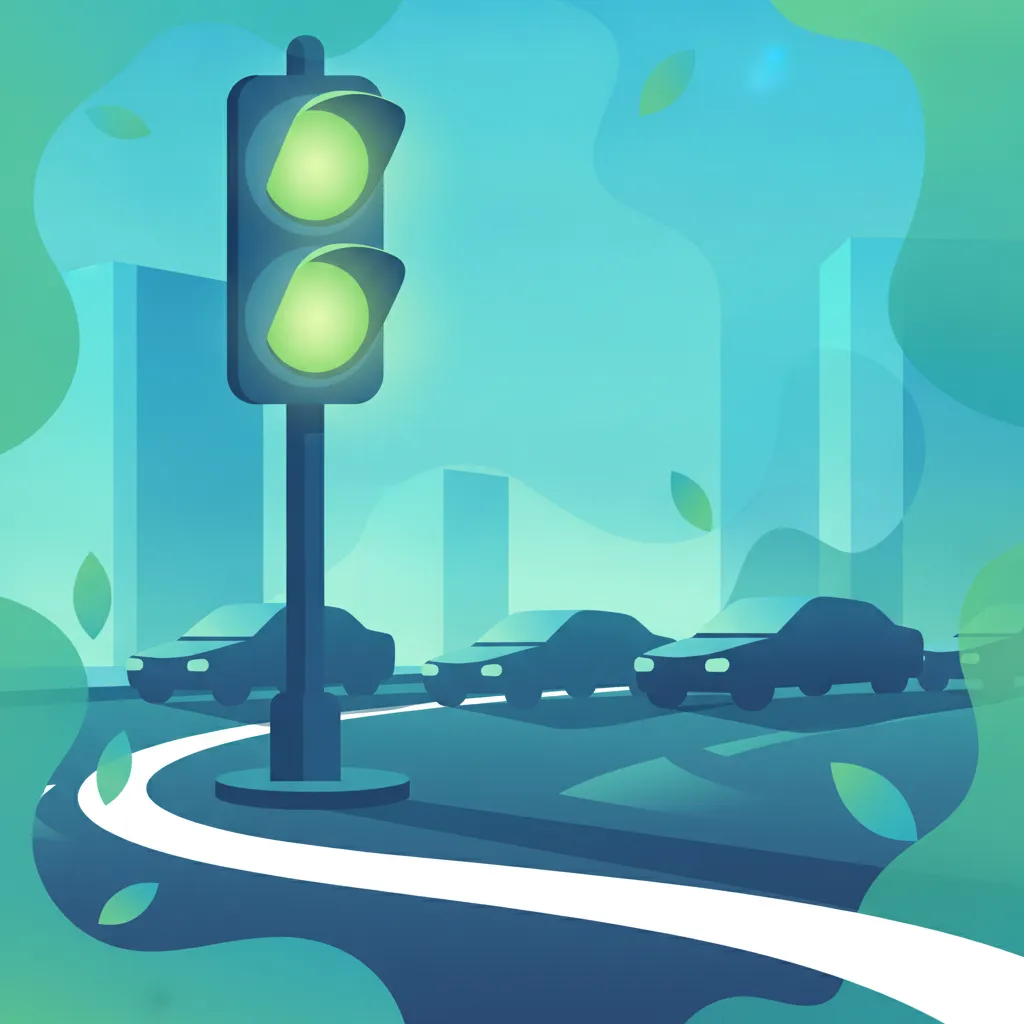
This lesson provides a comprehensive guide to understanding traffic light signals as required for your Category B driver's licence in Turkey. By mastering these signals, you will learn to navigate complex intersections safely and respond correctly to varying traffic conditions. It is a critical component of your preparation for the official MTSK e-sınav.
Lesson content overview
Understanding traffic light signals (ışıklı trafik işaret cihazları) is one of the most critical aspects of securing a Category B passenger car license in Turkey. Regulated under the Turkish Highway Traffic Regulation (Karayolları Trafik Yönetmeliği - KRYT), traffic lights establish order at intersections, coordinate traffic flow, and safeguard vulnerable road users.
For the official MTSK e-sınav theory exam, candidates must master not only the basic color indications but also complex scenarios. These include intersection priority hierarchies, flashing signal protocols, and emergency vehicle interactions. This guide covers all aspects of traffic light signals to ensure you drive safely and pass your theory exam on the first attempt.
Intersections are high-risk zones where multiple directional paths cross, merge, or diverge. Traffic light signals provide a time-controlled system that manages these conflicting movements. By allocating exclusive or shared right-of-way (geçiş hakkı) to specific traffic streams at different times, signals dramatically reduce collision points.
The design of traffic signalization rests on three core principles:
The conventional three-color vertical or horizontal signal is the universal foundation of traffic control. In Turkey, vertical signals are arranged with red at the top, yellow in the middle, and green at the bottom. Understanding the exact transitions and legal duties of each phase is essential for compliance and safety.
A steady red light is an absolute command to stop. Under Article 41 of the Turkish Traffic Code, drivers must bring their vehicle to a complete stop before the stop line (dur çizgisi) marked on the pavement. If there is no marked stop line, you must halt before entering the crosswalk or the intersection itself.
The yellow light is a cautionary transition phase. Its meaning depends on whether it appears alone or in combination with another light.
A steady green light indicates permission to proceed.
The Dilemma Zone: When approaching an intersection at speed and the green light turns yellow, you enter the "dilemma zone." This is the point where you must make a split-second decision: can you stop safely, or will stopping cause a rear-end crash? Always monitor your rear-view mirror so you know if a vehicle is tailgating you before you brake for a yellow light.
At complex intersections with dedicated turn lanes, standard round lights are augmented or replaced by arrow signals (ışıklı oklu işaretler). These signals control specific movements independent of the main traffic flow.
During late-night hours, at rural junctions, or in low-traffic zones, standard traffic lights may switch to flashing (pulsing) modes. These signals change the right-of-way rules of the intersection.
A flashing red light has the exact same legal status as a physical Stop sign.
A flashing yellow light serves as a cautionary warning and has the exact same legal status as a Yield sign.
Vulnerable road users require dedicated signal phases to cross vehicle paths safely. Drivers must understand these signals and respect their priority.
These signals display a red standing figure (Do Not Cross) or a green walking figure (Safe to Cross).
At intersections with dedicated bicycle paths (bisiklet yolu), you will find signals displaying a bicycle symbol.
Traffic lights can fail due to power outages, electrical faults, or physical damage. When a signal is entirely dark or displays contradictory lights (such as green in all directions), drivers must react immediately using the legal hierarchy of traffic control.
Traffic Officers (Trafik Polisi): If an officer is directing traffic, their hand signals override all other signs, lights, or pavement markings.
Traffic Light Signals (Trafik Işıkları): In the absence of an officer, functioning traffic lights take precedence over physical signs and road markings.
Traffic Signs (Trafik Levhaları): If the traffic lights are out of order (dark), you must look for physical signs at the intersection, such as "Priority Road" (Anayol) or "Yield" (Yol Ver).
Road Markings (Yol Çizgileri): Pavement markings indicate lane usage and stop lines, which guide your behavior under sign rules.
General Right-of-Way Rules (Uncontrolled Intersection): If there is no officer, the lights are dark, and there are no signs, the junction becomes an uncontrolled intersection. Under Article 45, drivers must yield to vehicles approaching from their right side.
Under Article 110 of the Turkish Traffic Code, specific emergency vehicles have emergency priority (geçiş üstünlüğü) when actively responding to an emergency with their lights flashing and sirens sounding.
Unlike some international jurisdictions (such as the United States, where turning right on red is standard practice after a complete stop), the rules in Turkey are much more restrictive.
Violating traffic light signals is a primary cause of intersection collisions. Reviewing these common mistakes will help you maintain a clean driving record and stay safe.
Many drivers treat a yellow light as an invitation to speed up. This increases the likelihood of colliding with vehicles that are anticipating their green light on the cross-street.
When turning left or right on a standard green light, drivers often forget they must yield to oncoming traffic going straight, as well as pedestrians crossing the side street.
Drivers sometimes speed through a flashing yellow light without assessing cross-streets, assuming they have automatic priority.
To build a complete understanding of Turkish driving laws and prepare thoroughly for your Category B theory exam, explore these highly related topics:
To test your knowledge on traffic signal phases, flashing lights, and intersection priority rules, access the dedicated interactive practice sets:
Explore all units and lessons included in this driving theory course.
Lesson content overview
Explore all units and lessons included in this driving theory course.
Explore search topics learners often look for when studying Traffic Light Signals. These topics reflect common questions about road rules, driving situations, safety guidance, and lesson level theory preparation for learners in Turkey.
Browse additional driving theory lessons that cover connected traffic rules, road signs, and common driving situations related to this topic. Improve your understanding of how different rules interact across everyday traffic scenarios.
Understand the core legal principles that dictate right of way at controlled and uncontrolled intersections. This guide explains the hierarchy of traffic signs, markings, and the fundamental rules for navigating junctions safely according to Turkish traffic legislation and the requirements for the Category B theory examination.
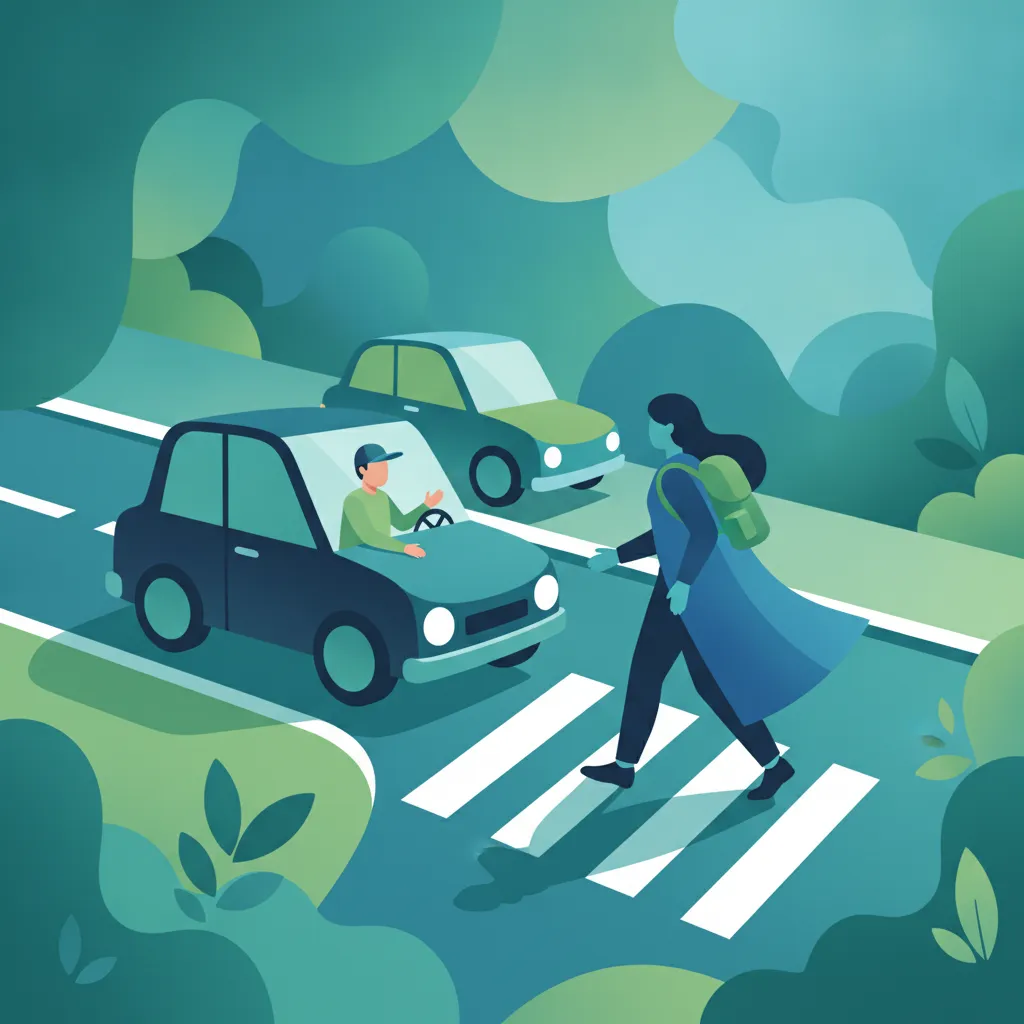
This lesson provides an overview of the general priority principles that dictate right-of-way on Turkish roads. Topics include the hierarchy of road users, such as pedestrians, cyclists, and emergency vehicles, and how these hierarchies apply at various intersections. Learners will understand the fundamental concepts of yielding, stopping, and proceeding, as well as the importance of clear decision-making.
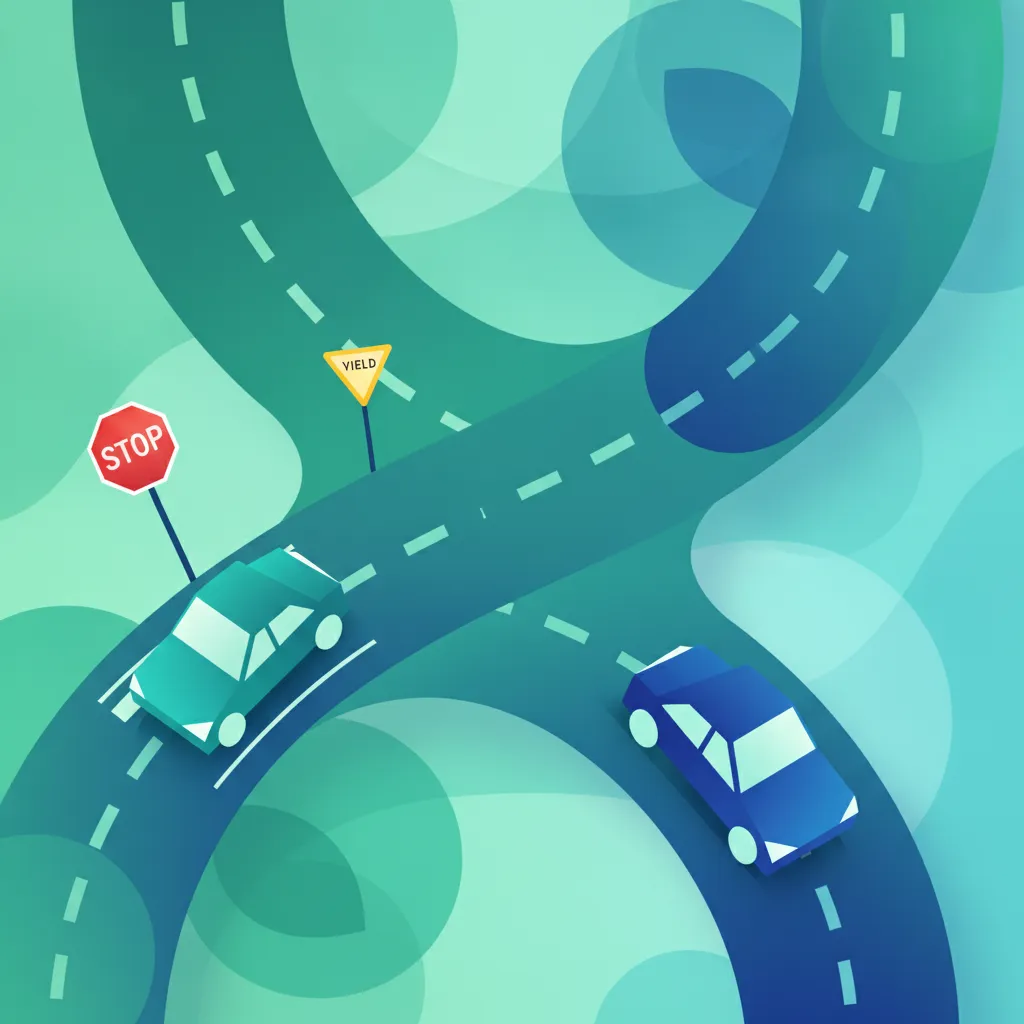
This lesson focuses on priority rules at controlled intersections equipped with traffic signals, stop signs, or yield signs. Learners will understand how to interpret traffic light phases, comply with stop and yield indications, and assess right-of-way at these intersections. The lesson also covers pedestrian and cyclist considerations, as well as emergency vehicle priority.
In this lesson, learners explore priority rules specific to uncontrolled intersections, where traffic signals or signs are absent. Topics include determining right-of-way based on vehicle classification, approach angle, and arrival sequence. The lesson emphasizes the importance of stopping, yielding, and assessing potential hazards before proceeding.
Correctly interpreting traffic signal sequences and priority rules is crucial for preventing devastating right-angle collisions at intersections. This lesson breaks down the phase progression of standard lights, the meanings of flashing amber or red indicators, and the hierarchy of traffic control when a police officer is directing vehicles. You will also master the basic legal default rules of right-of-way, such as yielding to vehicles coming from the right at uncontrolled junctions.
In this lesson, learners will master the skills required to safely navigate various types of intersections encountered in Turkish urban settings. The content covers interpreting traffic signals, understanding right-of-way rules, and executing proper lane positioning. Practical strategies for managing blind spots and ensuring visibility to other road users are emphasized. By the end of this session, participants will be equipped with safe crossing techniques.
This lesson focuses on the safe interaction with other traffic participants at bus stops and traffic intersections. Learners will explore right-of-way rules, signal compliance, and techniques for maintaining safe distances while stopping and departing. Understanding these interactions is vital for preventing accidents in complex traffic environments.
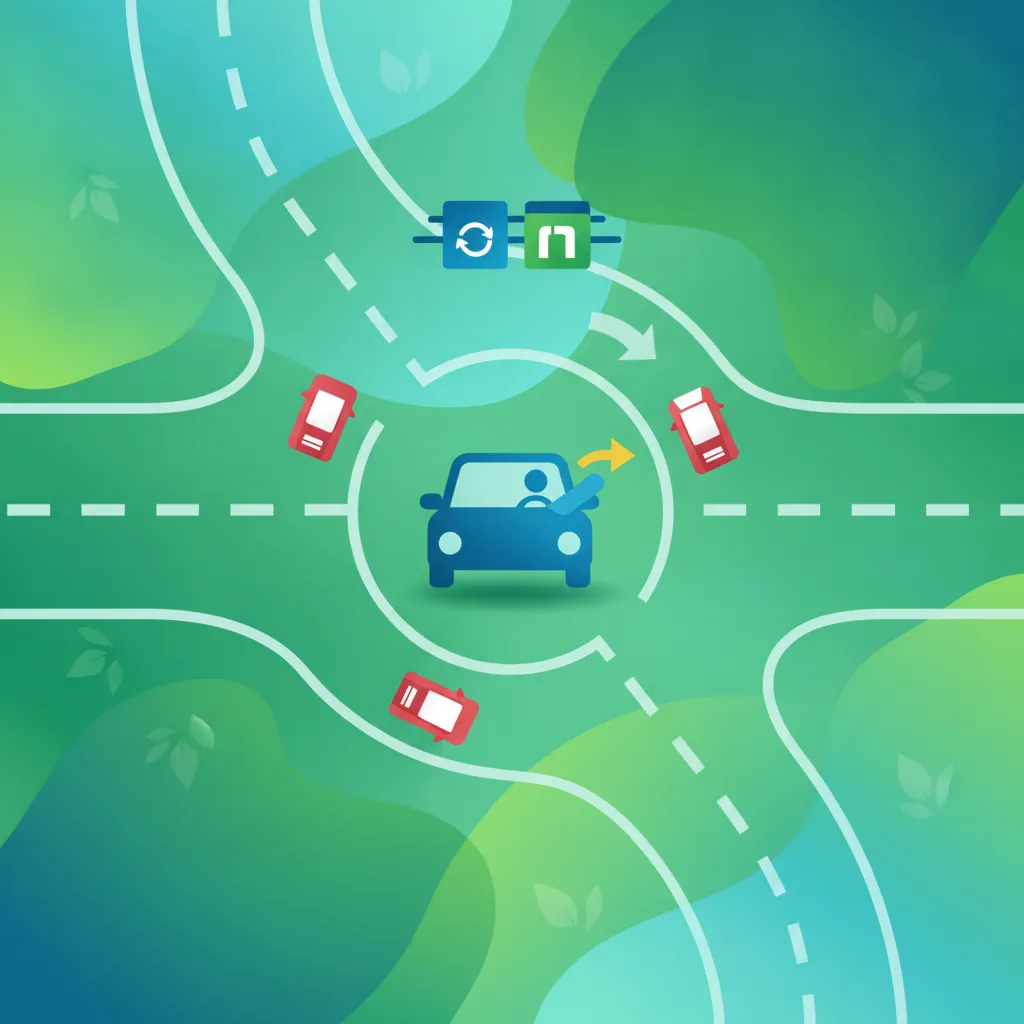
In this lesson, learners explore the specific priority rules and navigation techniques for roundabouts. Topics include yielding to traffic already in the roundabout, proper lane selection upon entry, and safe exit strategies. The lesson also addresses interactions with pedestrians and cyclists near roundabouts and the importance of maintaining appropriate speed.

This lesson focuses on pedestrian rights and safety measures to ensure their protection on Turkish roads. Topics include proper use of crosswalks, pedestrian signals, and yielding to pedestrians at intersections. The lesson also addresses specific considerations for vulnerable pedestrians such as children, the elderly, and the visually impaired. Real-world scenarios illustrate safe crossing practices.
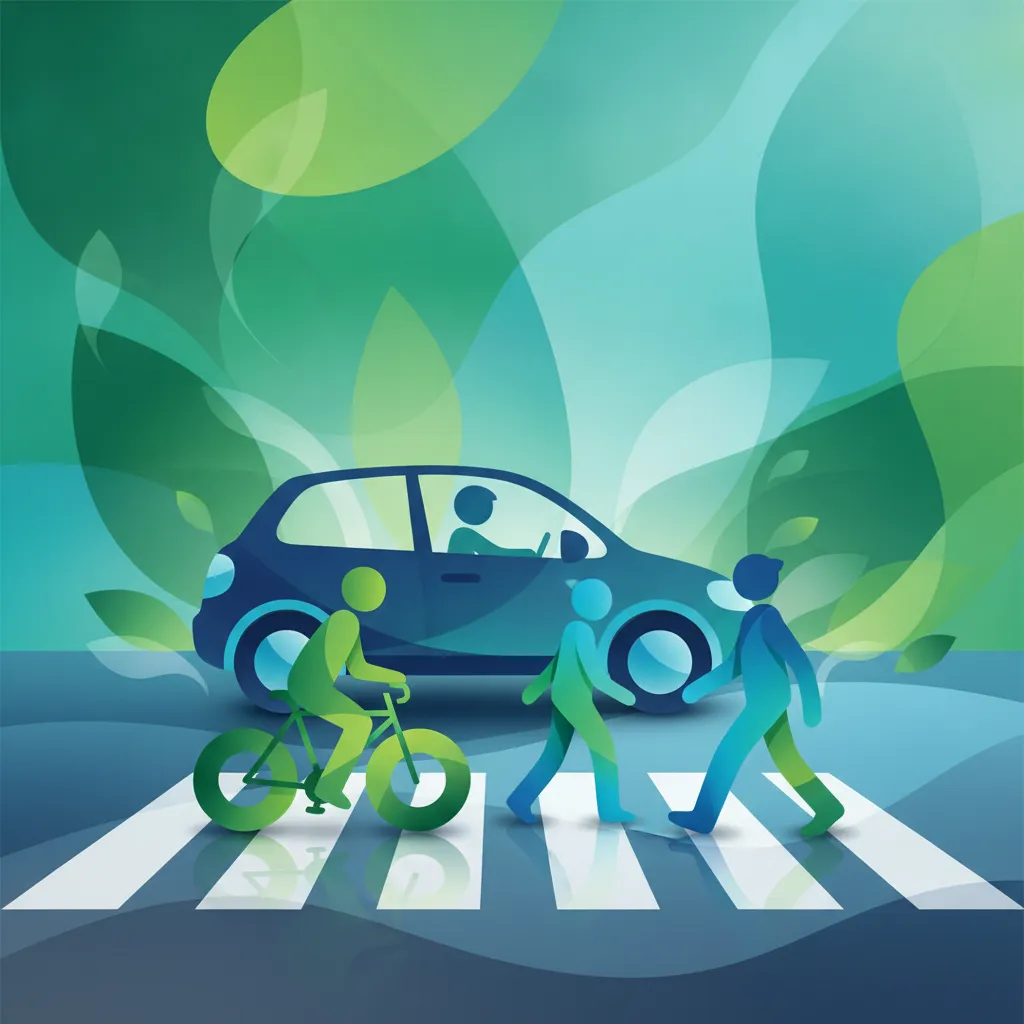
This lesson emphasizes the importance of yielding to pedestrians and cyclists at intersections, crosswalks, and designated lanes. Learners will understand the legal obligations to provide safe passage to vulnerable road users and the correct procedures for stopping and allowing them to cross. Real-world examples illustrate scenarios where failing to yield can lead to accidents.
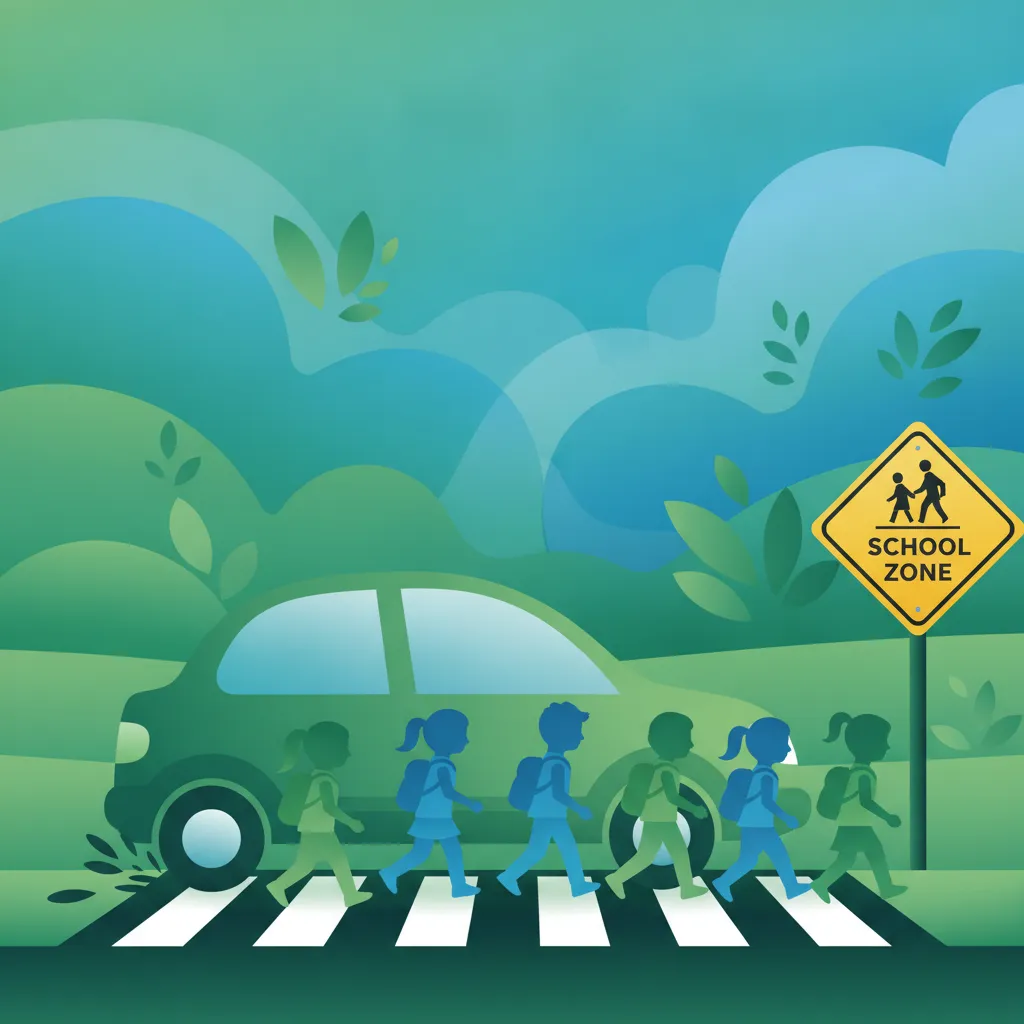
Protecting vulnerable road users is a core legal and ethical responsibility for all motorized vehicle operators in Turkey. This lesson covers the absolute requirement to yield to pedestrians at marked crosswalks, zebra crossings, and designated school zones. You will learn how to identify these zones early, reduce your speed proactively, and maintain heightened situational awareness for children or distracted pedestrians who may step onto the road unexpectedly.
Learn how to anticipate hazards and manage risks when navigating busy urban intersections. This lesson covers defensive strategies for dealing with emergency vehicles, pedestrian movements, and visibility challenges, helping you apply traffic theory to real-world driving situations safely and responsibly on Turkish roads.
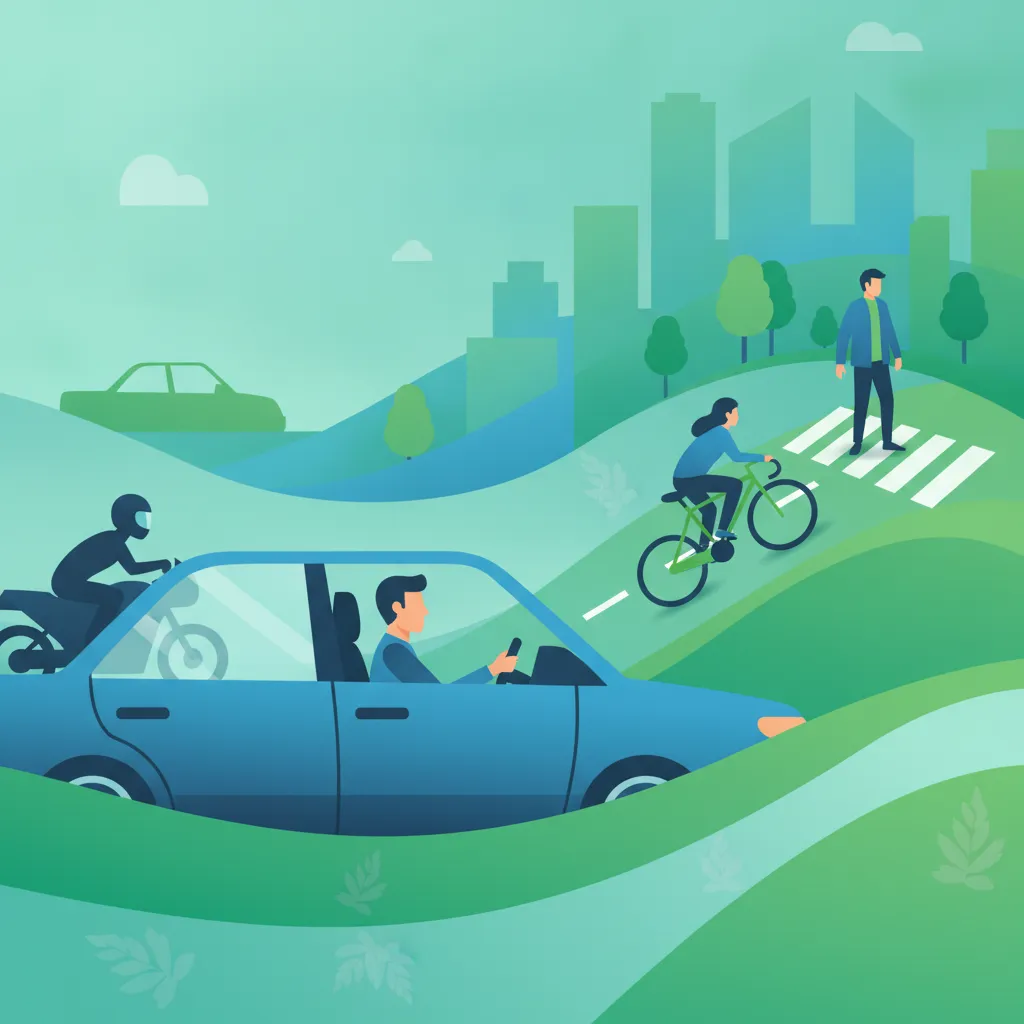
Learners will examine the complexities of operating in environments where various road users, including pedestrians, cyclists, and motorcyclists, coexist. The lesson emphasizes the need for heightened situational awareness, defensive driving techniques, and proactive hazard anticipation. Strategies for navigating mixed traffic safely, especially in congested urban areas, are highlighted.
This lesson delves into specific manoeuvring strategies required when navigating both tight urban environments and open rural roads with large passenger vehicles. Learners will explore techniques for handling narrow streets, tight turns, and intersections, while maintaining safety and efficiency. The content emphasizes planning and execution of manoeuvres based on road conditions and vehicle dimensions.
This lesson focuses on protecting vulnerable road users, such as pedestrians, cyclists, and motorcyclists, in mixed traffic environments. Learners will examine specific strategies for increased vigilance, anticipatory driving, and properly yielding to these users. The lesson also covers high-risk zones, such as school areas and public transport stops, emphasizing the need for heightened safety.
This lesson focuses on the safe interaction with other traffic participants at bus stops and traffic intersections. Learners will explore right-of-way rules, signal compliance, and techniques for maintaining safe distances while stopping and departing. Understanding these interactions is vital for preventing accidents in complex traffic environments.
In this lesson, learners will master the skills required to safely navigate various types of intersections encountered in Turkish urban settings. The content covers interpreting traffic signals, understanding right-of-way rules, and executing proper lane positioning. Practical strategies for managing blind spots and ensuring visibility to other road users are emphasized. By the end of this session, participants will be equipped with safe crossing techniques.

Defensive riding is the practice of anticipating potential road conflicts and acting early to prevent accidents before they occur. This lesson teaches you how to systematically scan the road ahead for changing conditions, keep an adequate safety cushion around your moped, and pre-plan exit routes in tight spots. You will learn to assume you are invisible to other drivers and adapt your speed and road position proactively to protect yourself against sudden maneuvers.
This lesson explores the critical skill of hazard identification and anticipation while driving. Topics include recognizing potential risks in traffic, road conditions, and environmental factors. Learners will develop skills in anticipatory driving to proactively address hazards before they become dangerous. Real-world examples illustrate how to maintain vigilance.
Managing your speed effectively is not just about obeying posted legal limits; it is about adjusting your pace to the immediate traffic context. This lesson teaches you how to evaluate traffic density, pedestrian presence, and blind corners to select an appropriate speed that guarantees safe stopping distances. You will learn to anticipate flow fluctuations, allowing you to avoid sudden, unstable speed changes that can compromise your balance and traction in mixed traffic.
This lesson examines the critical interactions between goods vehicles and vulnerable road users such as pedestrians, cyclists, and motorcyclists, particularly in urban environments. Learners will explore right-of-way rules, maintaining safe distances, and strategies for anticipating the actions of these road users. The lesson emphasizes the importance of clear communication and protective driving.
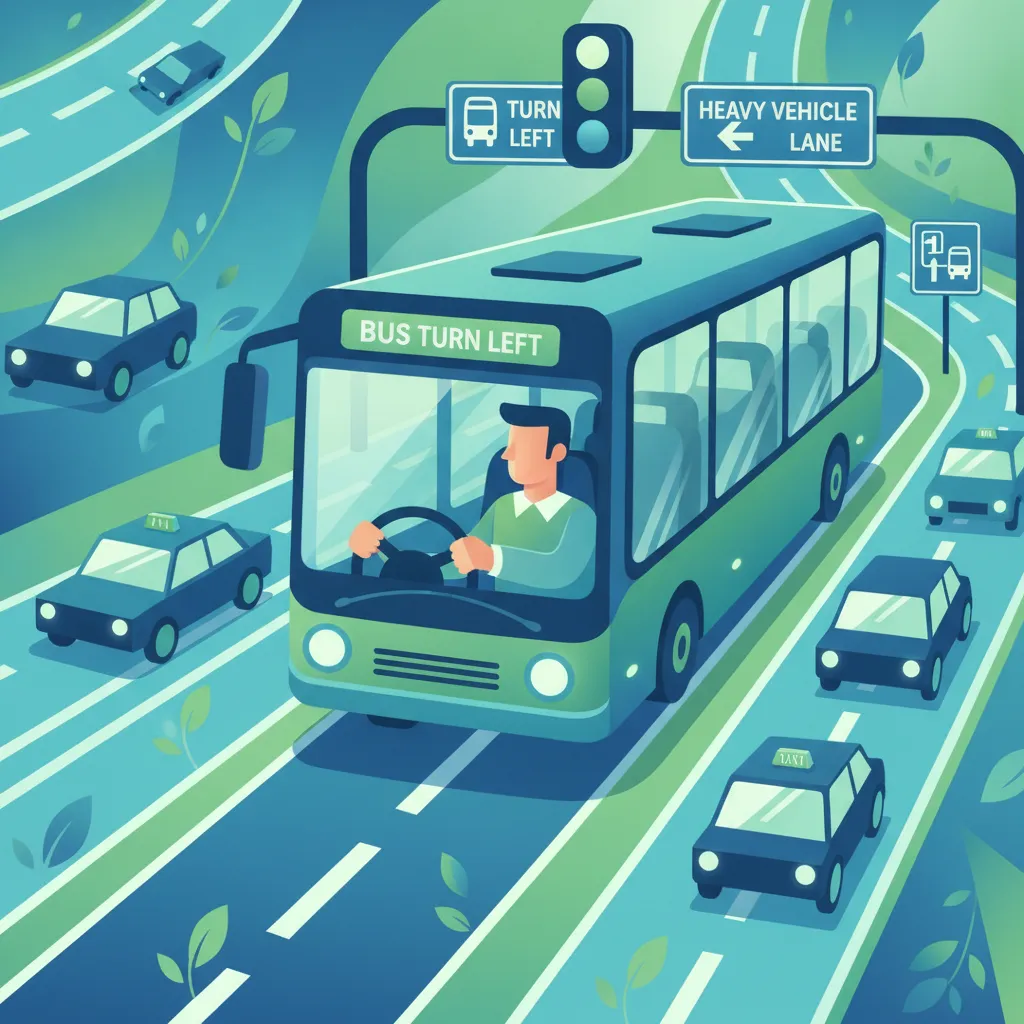
Learners will explore strategies for navigating congested urban traffic environments while operating large passenger vehicles. The lesson covers lane selection, adherence to traffic signals, and the use of bus lanes where applicable. Understanding how to maintain smooth traffic flow while ensuring passenger safety is crucial for efficient urban transportation.
Find clear answers to common questions learners have about Traffic Light Signals. Learn how the lesson is structured, which driving theory objectives it supports, and how it fits into the overall learning path of units and curriculum progression in Turkey. These explanations help you understand key concepts, lesson flow, and exam focused study goals.
A flashing yellow light means you must proceed with caution. You should slow down, scan the intersection for other vehicles or pedestrians, and ensure it is safe to proceed, yielding if necessary as per standard priority rules.
No, you must wait for the green signal unless there is a specific green arrow signal indicating that a turn is permitted while other lights are red. Always obey the specific signal controlling your lane.
A steady yellow light serves as a warning that the signal is about to turn red. You must stop if you can do so safely; if you are already in the intersection or too close to stop safely without causing a collision, proceed with caution.
When traffic lights are malfunctioning, you must treat the intersection as an uncontrolled junction. Follow the standard priority rules, looking for traffic signs like 'stop' or 'yield', and if none are present, yield to vehicles on the right.
Use our comprehensive practice search to find exactly the Turkish driving theory questions you need to master. Whether reviewing specific road signs, traffic rules, or first aid scenarios, select your perfect practice set and boost your confidence for the official ehliyet sınavı.