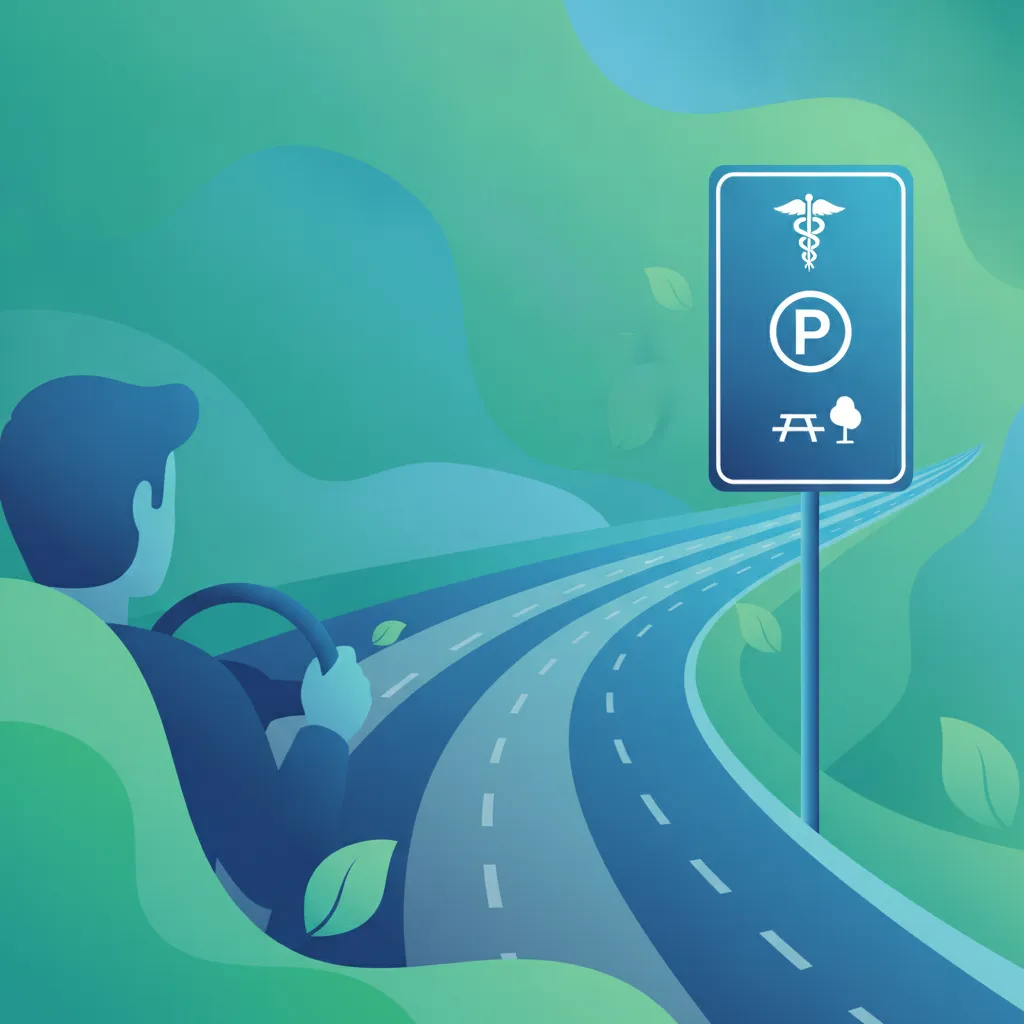
This lesson guides you through the various informational traffic signs used across Turkey to help you navigate public roads with confidence. Understanding these signs is a vital part of your Category B licence training as they provide essential guidance on locations, services, and directions. You will build upon your knowledge of regulatory and warning signs to complete your mastery of the road sign system.
Lesson content overview
Mastering the Turkish traffic system requires a thorough understanding of road signs, which are categorized to help drivers navigate safely and predictably. While warning signs alert you to danger and regulatory signs dictate what you must or must not do, informational traffic signs (bilgi işaretleri) are designed to guide you. They provide essential details about your route, nearby services, geographical locations, and points of interest.
For candidates preparing for the Turkish Category B driving license theory exam (MTSK e-sınav), understanding these signs is crucial. They not only appear frequently in the exam questions but are also vital for practical, safe navigation on Turkish highways, state roads, and urban streets.
Informational signs deliver non-mandatory guidance to drivers. Unlike red-bordered prohibitory signs, informational signs do not impose direct legal penalties or traffic fines if you choose not to follow their directions. However, neglecting them can lead to poor route planning, driver fatigue, and sudden, dangerous maneuvers on the road.
Even though informational signs are non-mandatory, you must still comply with all general traffic laws while following them. For example, if an informational sign points to an exit on your right, you must not cross a solid white lane line or make a sudden lane change to reach it.
These signs are engineered to:
In Turkey, informational signs use a strict color-coding system. By recognizing the background color of a sign, you can instantly determine the type of road you are traveling on or the nature of the destination ahead.
Signs with a green background are exclusive to motorways (otoyollar). In Turkey, motorways are high-speed, controlled-access toll roads (marked with an "O" prefix, such as O-4). Green informational signs indicate exits, distances to major cities along the motorway, toll booths (HGS/OGS), and service areas.
Blue signs are used on national state highways (devlet yolları, marked with a "D" prefix, such as D-100). These roads connect major cities and regions but are not controlled-access motorways. Blue signs guide you to towns, cities, and major intersections outside of urban municipal zones.
White signs with black lettering indicate local destinations, municipal districts (ilçe), city centers (şehir merkezi), or villages (köy). When you enter an urban area or leave a main state highway, the informational signs transition from blue or green to white.
Turkey’s rich history and natural beauty are navigated using brown signs. These point toward archeological sites, museums, national parks, historical monuments, and scenic lookouts.
Directional signs indicate which lane or exit to take to reach a specific destination. In Turkey, these signs are placed at critical intervals before intersections, roundabouts, and highway exits to allow drivers to change lanes safely.
These signs are designed for:
When approaching a junction guided by directional signs, you must use your turn signals early and align your vehicle with the corresponding lane. If you realize you have selected the wrong lane or missed an exit, you must proceed to the next available turning point. Reversing, stopping, or crossing physical lane dividers is strictly prohibited and carries severe penalties under Turkish traffic law.
Distance signs show the remaining distance in kilometers to specific cities or municipal centers along your current route. They are vital for planning, fuel management, and fatigue mitigation.
On Turkish highways, you will regularly observe these markers on the right shoulder. They display:
Using these signs, drivers can estimate their arrival times and decide where to stop. For instance, if your vehicle’s fuel indicator shows low range and the next major city is 80 kilometers away, distance signs help you determine whether you must look for an immediate local service station.
Service signs are rectangular blue or white boards with highly recognizable, standardized symbols. They notify drivers of services that can be accessed directly from the road or via a nearby exit.
Common service symbols include:
Driving for extended periods without rest causes cognitive decline, slower reaction times, and microsleep, which are leading causes of head-on collisions and single-vehicle run-off-road accidents. Service signs allow you to plan rests effectively.
Under professional driving regulations in Turkey, commercial drivers must rest for at least 45 minutes every 4.5 hours. For private Category B drivers, it is highly recommended to stop for a 15-minute break every 2 hours or 200 kilometers.
Turkey features a vast network of brown-colored tourist attraction signs. These signs guide drivers to historical ruins (ören yerleri), national parks (milli parklar), historical mosques, castles, and natural wonders.
Because these sites are often located off the main highway network, tourist signs are frequently placed on narrower, winding, or rural roads.
When you follow a brown tourist sign, you must adjust your driving behavior to account for localized risks:
The usefulness of informational traffic signs depends heavily on visibility and how well drivers adapt to changing conditions.
At night, informational signs rely on the retroreflective sheeting applied to their surfaces. Your vehicle's headlights illuminate the sign, reflecting the light back to your eyes.
In dense fog or heavy downpours, informational signs may become visible only at very close range.
On high-speed motorways (otoyol), exits and services are announced far in advance (typically 2000 meters, 1000 meters, and 500 meters prior). This gives you ample time to check your mirrors, signal, and transition to the deceleration lane. On local municipal roads, signs are placed much closer to the intersection, requiring lower speeds to react safely.
During the MTSK e-sınav, examiners test your ability to differentiate between mandatory regulatory signs and optional informational signs. Here are critical mistakes to avoid both on the test and on the road:
When navigating using highway directional signs, follow this safe driving sequence:
Observe the Pre-Signalization Sign: Identify your exit on the green or blue sign, typically positioned 1000 to 2000 meters ahead. Note which lane you need to occupy.
Mirror Check and Signal: Check your rearview and side mirrors for overtaking vehicles. Activate your turn signal to communicate your intent early.
Change Lanes Safely: Smoothly transition to the outermost right-hand lane (or the designated exit lane) well before the exit point.
Enter the Deceleration Lane (Yavaşlama Şeridi): Do not slow down on the main highway. Maintain your speed until your entire vehicle has crossed into the deceleration lane, then apply your brakes to match the speed limit of the exit ramp.
Confirm the Route: Look for the route confirmation sign on the new road to ensure you are heading in the correct direction.
Because road classification codes and sign designs can be updated by national transport departments, keep your local knowledge fresh.
Understanding informational signs is key to mapping out your drives and finding critical services without hazard. To complement this knowledge, you should master regulatory signs (which tell you what is illegal) and road markings (which define lane limits).
Turkish informational traffic signs (bilgi işaretleri) are non-mandatory guidance tools that help drivers navigate by indicating directions, distances, services, and tourist attractions. The color-coding system is essential: green for motorways, blue for state roads, white for local roads, and brown for touristic sites. Understanding these signs is critical for the MTSK e-sınav and practical safety, as following them incorrectly or ignoring priority rules can lead to dangerous situations. Service and distance signs support fuel management and fatigue mitigation, while tourist signs require adjusted driving to account for pedestrian activity and variable road conditions.
A short set of high-value points that capture the most important learning from this lesson.
Turkish informational signs use four distinct background colors: green for motorways (otoyol), blue for state roads (devlet yolları), white for local and urban roads, and brown for touristic sites.
Informational signs are non-mandatory guidance tools that do not override traffic laws or grant right-of-way at intersections.
Service facility signs use standardized symbols to direct drivers to fuel stations, hospitals, restaurants, rest areas, and police stations.
Tourist attraction signs (brown) require adjusted driving behavior due to pedestrian activity, slower vehicles, and potentially poor road conditions.
Motorway exits are announced well in advance (typically 2000m, 1000m, and 500m), allowing time for lane changes, while local roads require lower speeds due to closer sign placement.
Explore all units and lessons included in this driving theory course.
Green signs = motorways/otoyol with toll booths (HGS/OGS); Blue signs = state highways (D prefix like D-100); White signs = local destinations and city centers.
Distance markers show route number, section number, and current kilometer to help emergency services locate you.
Never stop on a motorway hard shoulder to read a sign; if you miss an exit, proceed to the next available turning point.
When exiting a highway, use the deceleration lane (yavaşlama şeridi) to slow down rather than braking on the main carriageway.
Dirty headlights can reduce the effective reading distance of signs at night by up to 50 percent.
Assuming an informational sign directing you to a destination grants priority at intersections or overrides yield rules.
Braking suddenly or making erratic lane changes when spotting a service sign at the last moment instead of continuing to the next exit.
Confusing similar symbols such as mistaking a repair shop (tamirhane) for a car wash or parking zone.
Stopping on the motorway hard shoulder to consult a map or read directional signs when lost.
Peering intensely at roadside signs in poor visibility, which diverts attention from lane discipline and vehicles ahead.
Lesson content overview
A short set of high-value points that capture the most important learning from this lesson.
Turkish informational signs use four distinct background colors: green for motorways (otoyol), blue for state roads (devlet yolları), white for local and urban roads, and brown for touristic sites.
Informational signs are non-mandatory guidance tools that do not override traffic laws or grant right-of-way at intersections.
Service facility signs use standardized symbols to direct drivers to fuel stations, hospitals, restaurants, rest areas, and police stations.
Tourist attraction signs (brown) require adjusted driving behavior due to pedestrian activity, slower vehicles, and potentially poor road conditions.
Motorway exits are announced well in advance (typically 2000m, 1000m, and 500m), allowing time for lane changes, while local roads require lower speeds due to closer sign placement.
Explore all units and lessons included in this driving theory course.
Green signs = motorways/otoyol with toll booths (HGS/OGS); Blue signs = state highways (D prefix like D-100); White signs = local destinations and city centers.
Distance markers show route number, section number, and current kilometer to help emergency services locate you.
Never stop on a motorway hard shoulder to read a sign; if you miss an exit, proceed to the next available turning point.
When exiting a highway, use the deceleration lane (yavaşlama şeridi) to slow down rather than braking on the main carriageway.
Dirty headlights can reduce the effective reading distance of signs at night by up to 50 percent.
Assuming an informational sign directing you to a destination grants priority at intersections or overrides yield rules.
Braking suddenly or making erratic lane changes when spotting a service sign at the last moment instead of continuing to the next exit.
Confusing similar symbols such as mistaking a repair shop (tamirhane) for a car wash or parking zone.
Stopping on the motorway hard shoulder to consult a map or read directional signs when lost.
Peering intensely at roadside signs in poor visibility, which diverts attention from lane discipline and vehicles ahead.
Explore search topics learners often look for when studying Informational Traffic Signs. These topics reflect common questions about road rules, driving situations, safety guidance, and lesson level theory preparation for learners in Turkey.
Browse additional driving theory lessons that cover connected traffic rules, road signs, and common driving situations related to this topic. Improve your understanding of how different rules interact across everyday traffic scenarios.
Learn the legal significance of prohibitory and mandatory traffic signs in Turkey. This guide covers the specific rules and traffic laws associated with regulatory road signs to help you understand your legal responsibilities while navigating state and municipal road networks during your daily driving.
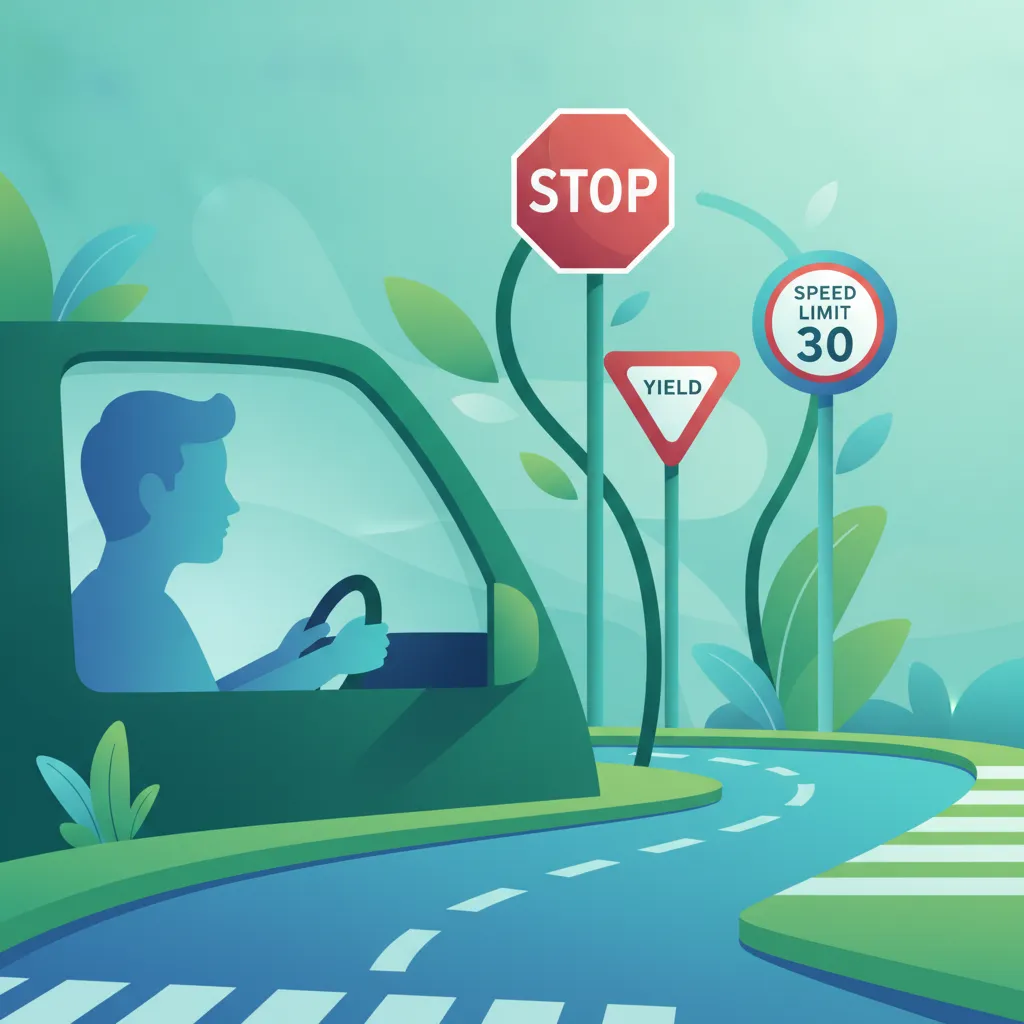
This lesson delves into the regulatory traffic signs that dictate mandatory and prohibited actions for drivers. Learners will study signs indicating speed limits, stop and yield requirements, no-entry zones, and lane usage directives. The lesson also covers temporary regulatory signs used in construction or special events, emphasizing the importance of adhering to these signs to avoid penalties.
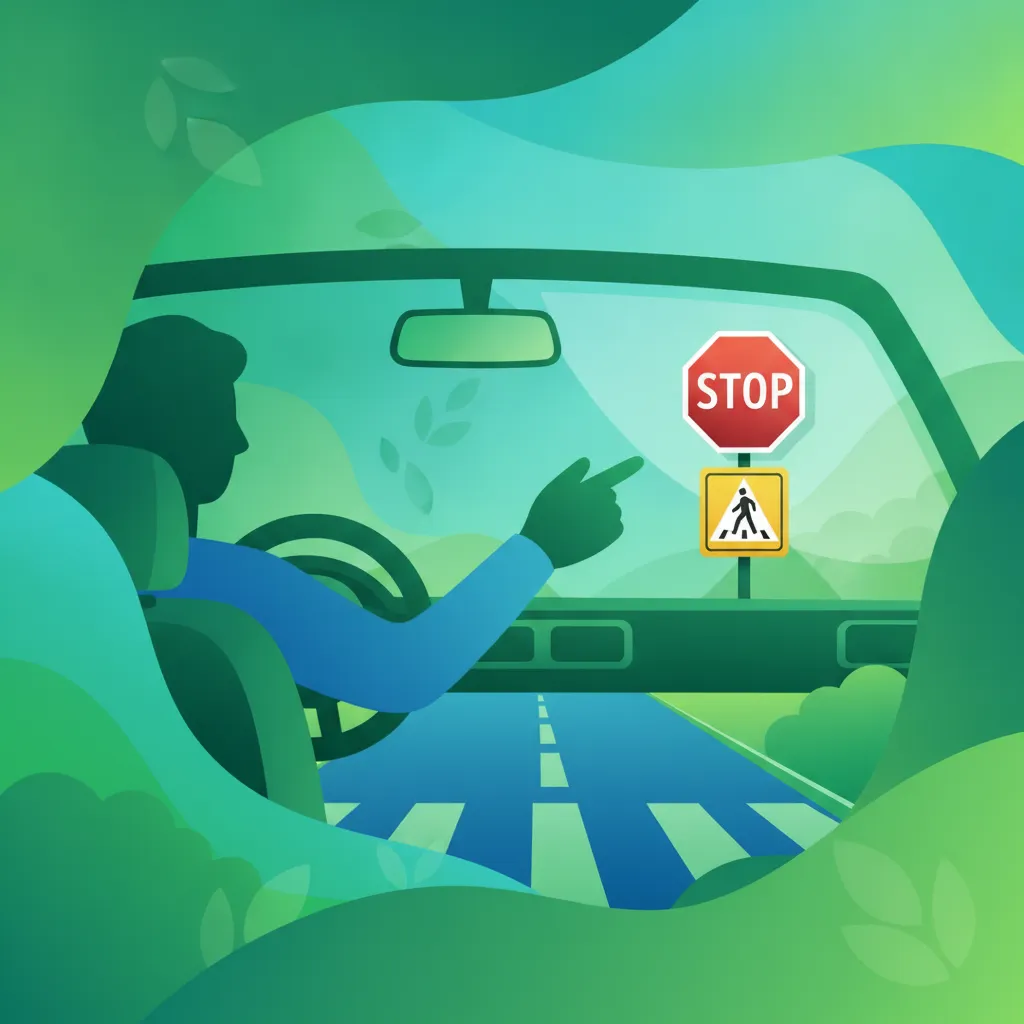
In this lesson, learners will master the meanings of various traffic signs as defined by Turkish traffic legislation. The focus will be on understanding regulatory, warning, and informational signs, with particular attention to those that directly affect motorcyclists, such as speed limits and lane usage. By the end of this session, participants will be able to quickly recognize sign categories and apply the required actions safely.
Regulatory traffic signs convey absolute legal commands that riders must obey to avoid heavy fines and ensure safe, orderly movement. This lesson walks through prohibitory indicators, mandatory speed limits, turn restrictions, and specific moped bans on motorways or designated high-speed corridors. You will learn to recognize the distinctive shapes and colors of these signs, enabling rapid, accurate decision-making while operating your lightweight vehicle under Turkish highway laws.
In this lesson, learners explore vertical road markings, primarily focusing on signs mounted on poles or overhead structures. Topics include direction indicators, speed limit signs, warning signs, and regulatory signs. The lesson emphasizes the importance of sign placement, illumination, and visibility in ensuring driver compliance. Real-world scenarios demonstrate how drivers should interpret and react to vertical markings.

In this lesson, learners explore warning traffic signs designed to alert drivers to potential hazards ahead. Topics include signs indicating curves, steep descents, slippery surfaces, pedestrian crossings, and school zones. The lesson emphasizes the importance of interpreting these signs correctly to adjust speed and driving behaviour, thereby preventing accidents.
This lesson focuses on traffic signs and road markings that are specifically relevant to goods vehicles in Turkey. Learners will become familiar with signs indicating prohibited routes, weight limits, height restrictions, hazardous material transport, and lane usage regulations. The lesson emphasizes the importance of accurately interpreting these signs to ensure compliance with traffic laws.
This lesson focuses on the identification and interpretation of traffic signs and road markings that are particularly relevant to passenger vehicle drivers, such as bus lane indications, priority road signs, and specific speed limits. Learners will explore how these signs affect route planning, compliance, and the overall flow of traffic. Mastery of sign interpretation ensures safe and lawful operation in various traffic conditions.

This lesson provides an in-depth understanding of traffic light signals and their role in regulating intersection traffic. Learners will study the meanings of red, yellow, and green lights, as well as pedestrian and bicycle signals. The lesson also covers special conditions such as flashing signals and signal malfunctions. Emphasis is placed on the correct driver response to each signal phase.
This lesson outlines the spectrum of penalties and legal consequences that goods vehicle drivers may face for violating traffic regulations. It details the types of infractions, ranging from minor violations to serious offenses, and explains the corresponding fines, points, and license suspensions. Learners will gain an understanding of the enforcement mechanisms and how repeat offenses can exacerbate penalties.
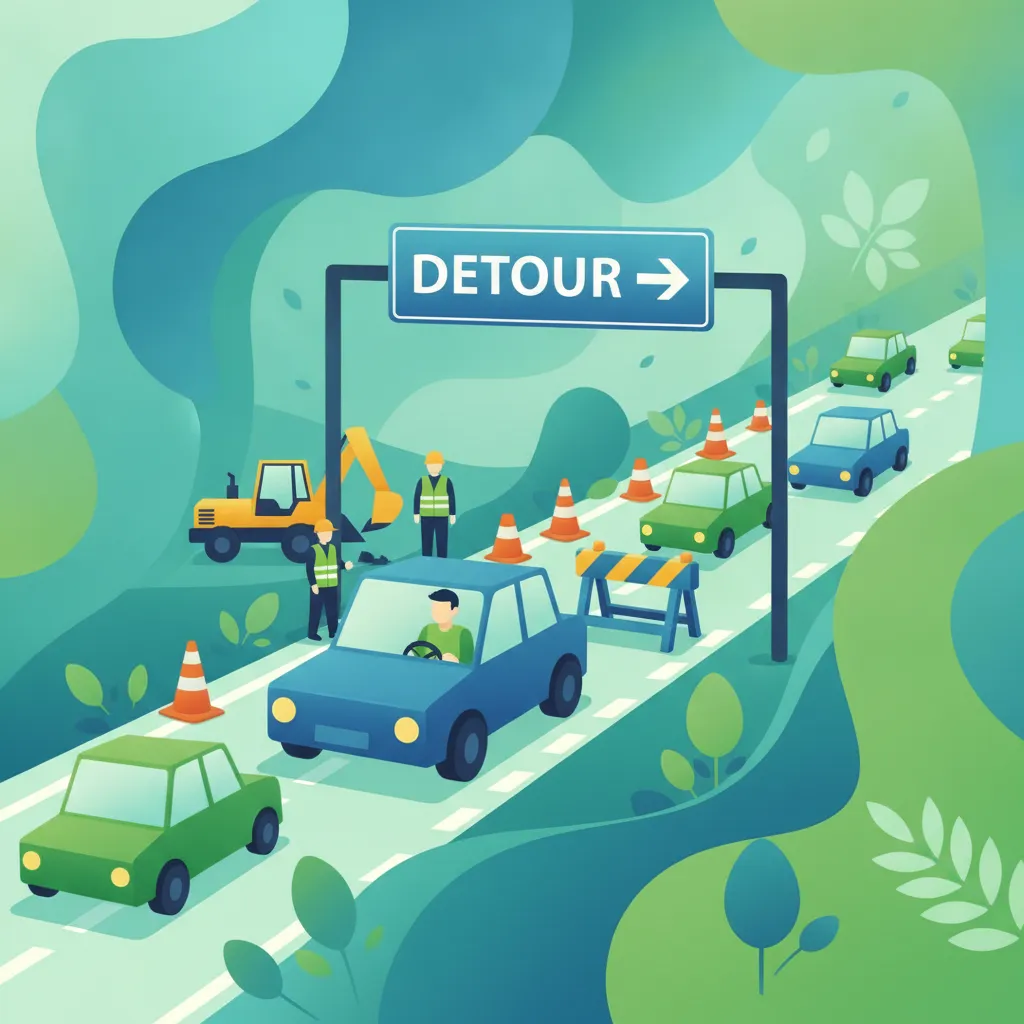
This lesson guides motorists on how to safely navigate active roadwork zones, detours, and temporary lane configurations. It details the meaning of construction signs, temporary speed reductions, and the legal requirement to protect highway workers. Drivers will learn to expect sudden stops and maintain slow, steady speeds through work areas.
Master the principles of lane usage on high-speed motorways and state roads. This theory lesson explains safe merging, proper lane discipline, and the correct procedures for utilizing deceleration lanes when exiting highways, ensuring you navigate complex road junctions with confidence and safety.
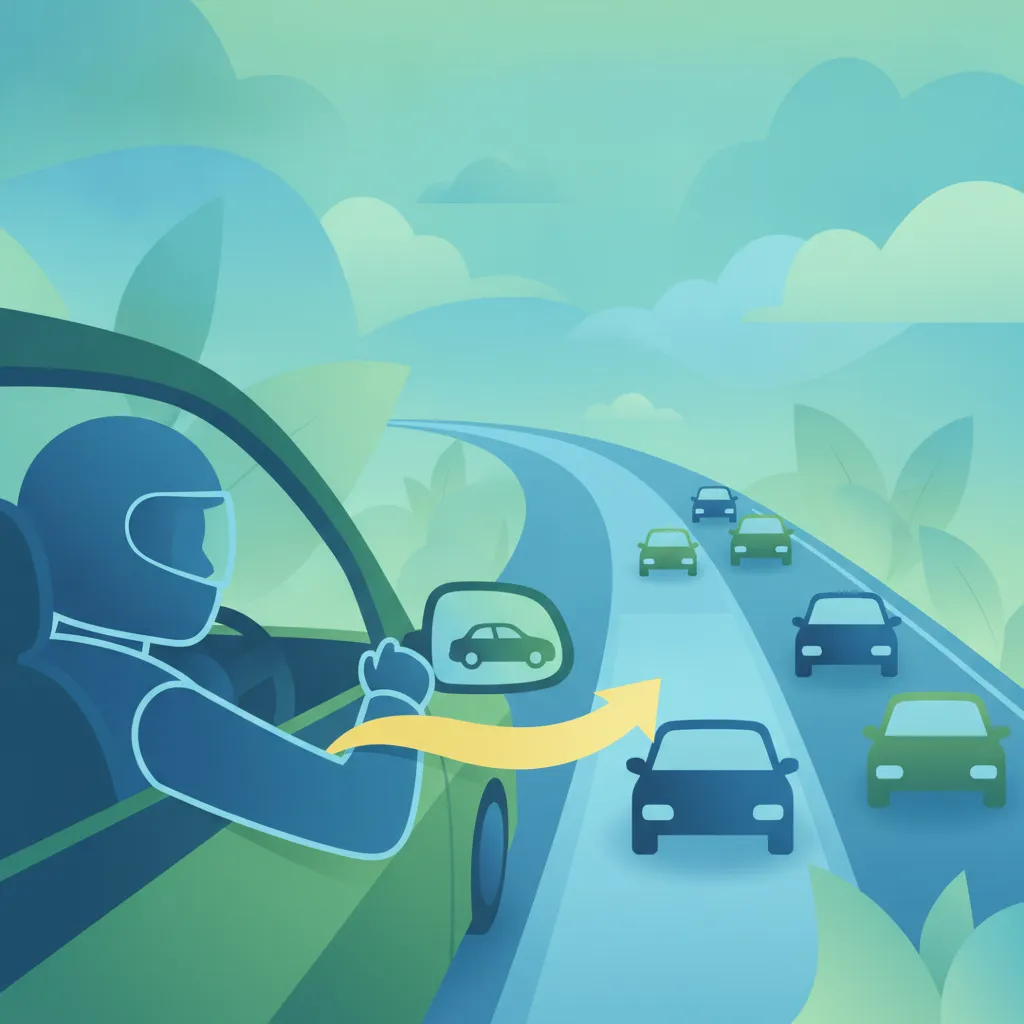
This lesson details the techniques for merging onto busy expressways and executing safe lane changes in urban traffic conditions. It explains how to match the speed of highway traffic in the acceleration lane and select safe gaps for merging. Drivers will learn how to eliminate blind spots and signal early to maintain smooth traffic flow.
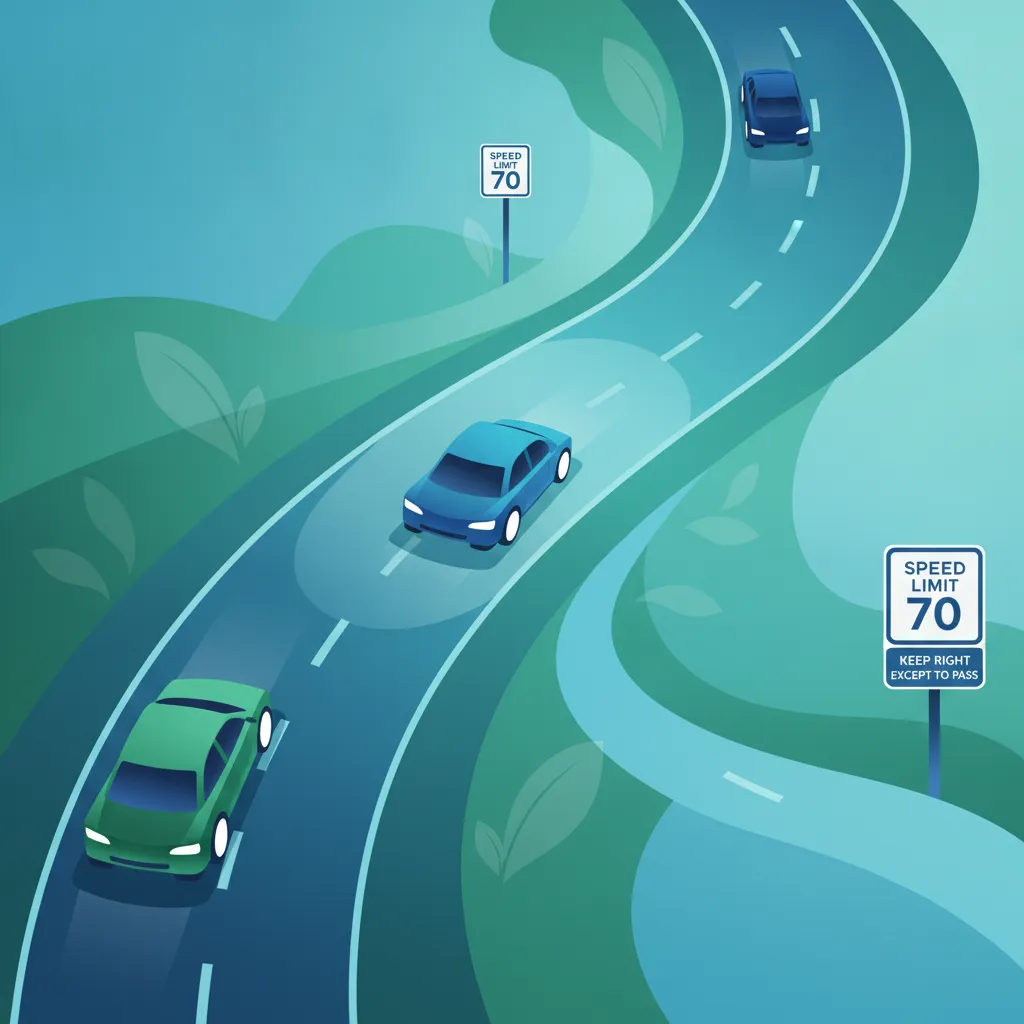
This lesson explains the specific rules, driving etiquette, and safety protocols for operating a vehicle on high-speed Turkish motorways. It covers correct lane usage, overtaking procedures, emergency lane restrictions, and how to maintain consistent high speeds safely. Drivers will learn to avoid dangerous tailgating and sudden lane changes.

This lesson examines lane division and proper lane usage on multi-lane roads and highways. Learners will understand the purpose of lane markings in guiding drivers to maintain appropriate lane discipline. Topics include correct lane selection for different vehicle types, overtaking procedures, and lane-changing techniques. Real-world examples illustrate the importance of respecting lane usage rules.
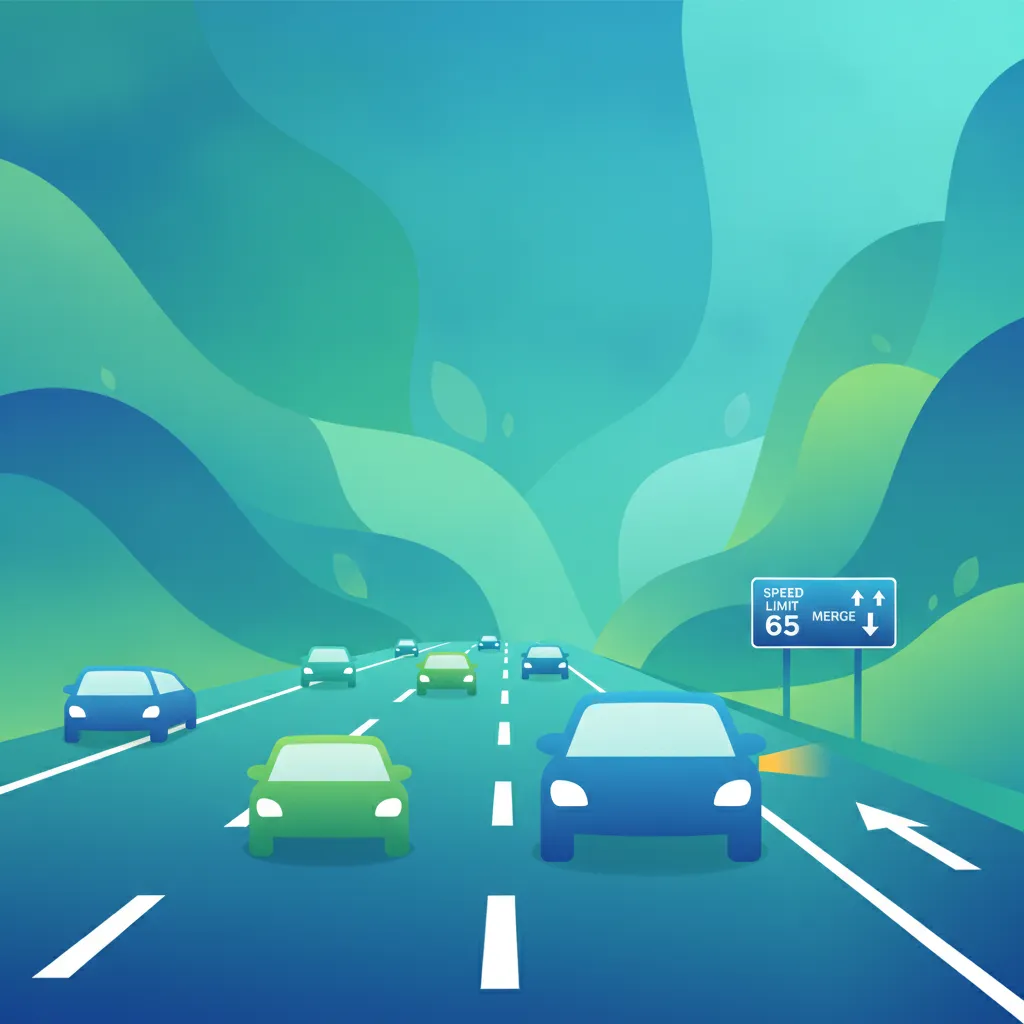
This lesson focuses on the unique requirements and best practices for operating passenger vehicles on highways and expressways. Topics include maintaining appropriate speed, adhering to lane discipline, executing safe overtaking maneuvers, and managing merges and exits. Emphasis is placed on ensuring a smooth ride for passengers while integrating safely with faster-moving traffic.
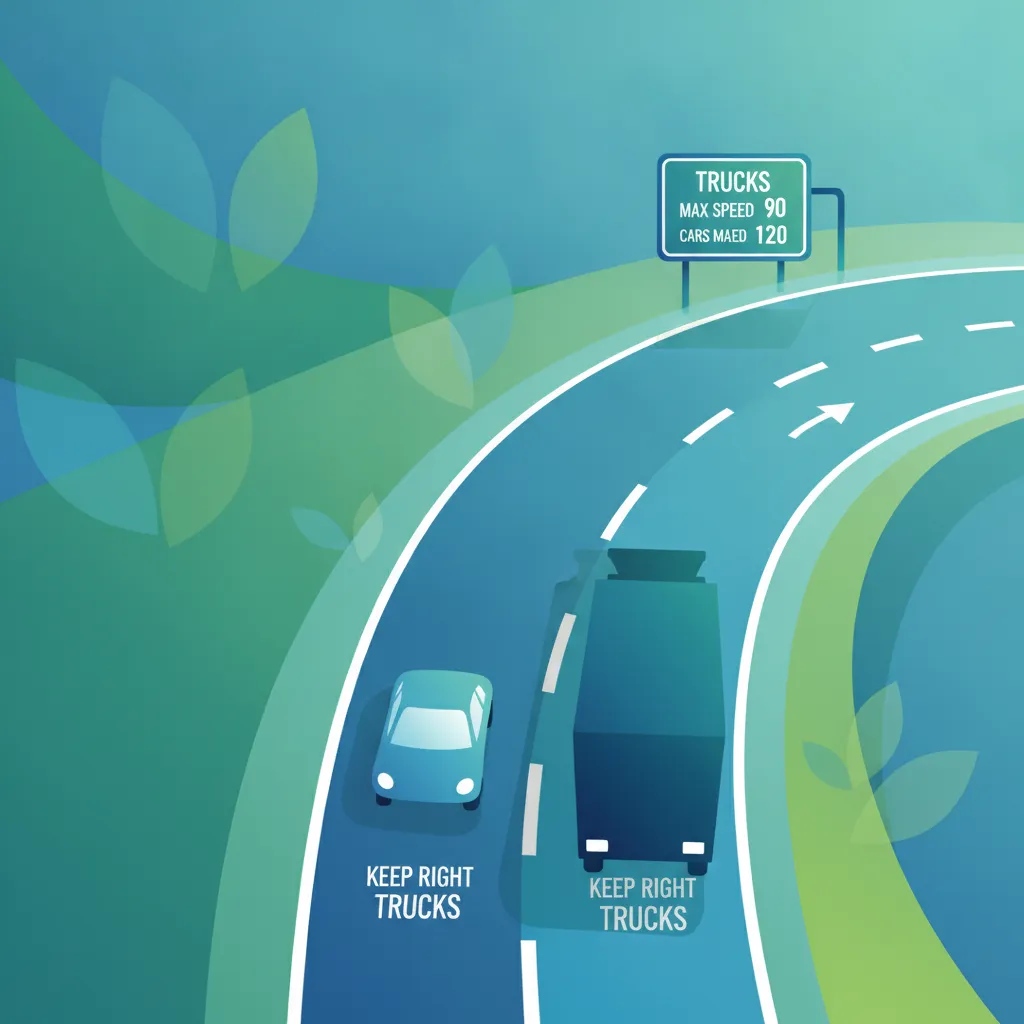
This lesson addresses the specific considerations for goods vehicle operation on highways and expressways, covering speed limits, lane discipline, safe merging, and overtaking. Learners will learn how to adapt to traffic flow, manage heavy vehicle dynamics at higher speeds, and ensure safe operation. The lesson emphasizes the importance of vigilance and proper lane usage to prevent accidents.
Learners will explore the fundamentals of maintaining correct lane discipline, focusing on appropriate lane positioning, understanding lane markings, and executing lane changes safely. Emphasis is placed on the unique considerations for large passenger vehicles within the lane, such as width and maneuverability. The lesson also addresses the impact of proper lane discipline on overall traffic flow and safety.
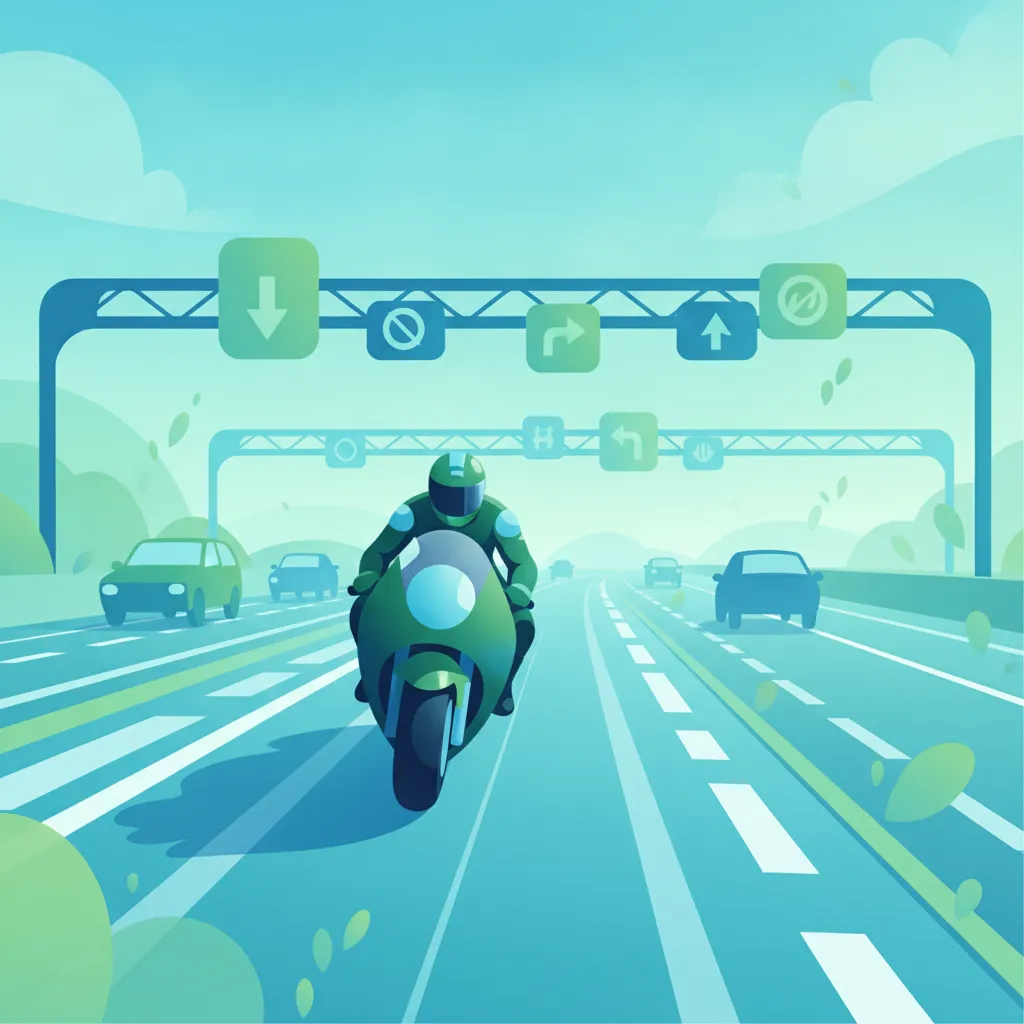
In this lesson, learners will focus on the specific considerations and safety practices required when riding motorcycles on high-speed roads and motorways. Topics covered include maintaining appropriate lane discipline, safe overtaking at high speeds, dealing with increased wind resistance, and the importance of accurate speed control and appropriate following distances on faster roadways.
This lesson focuses on the critical importance of lane discipline and proper lane usage for large goods vehicles. Learners will understand the challenges posed by wider vehicle dimensions, the necessity of maintaining adequate lane occupancy, and the need for precise lane keeping. Emphasis is placed on selecting appropriate lanes, adhering to traffic flow, and ensuring general highway safety.
Proper road positioning is your primary shield against being squeezed, sideswiped, or overlooked by larger motor vehicles in daily traffic. This lesson explains how to ride in the center or slightly off-center of your lane to prevent unsafe overtaking within the same lane. You will study how to identify the massive blind spots of buses and trucks, maintain appropriate following distances, and execute overtaking maneuvers with maximum safety margin and clear signal warning.
This lesson delves into the specific challenges and procedures associated with navigating roundabouts on a motorcycle. It outlines the importance of approaching at a safe speed, selecting the correct lane, and yielding to vehicles already within the roundabout. The content also covers the proper use of signals when exiting and emphasizes the need for heightened awareness of blind spots, especially when larger vehicles are present.
Find clear answers to common questions learners have about Informational Traffic Signs. Learn how the lesson is structured, which driving theory objectives it supports, and how it fits into the overall learning path of units and curriculum progression in Turkey. These explanations help you understand key concepts, lesson flow, and exam focused study goals.
Regulatory signs inform you of mandatory laws and prohibitions you must follow, whereas informational signs provide guidance to help you navigate, locate services, and reach destinations safely.
Yes, the theory exam often includes questions identifying symbols for hospitals, fuel stations, and rest areas to ensure you can locate emergency services when needed.
In Turkey, blue signs typically provide directions on standard roads, while green signs are generally used on highways to indicate distance and destination information.
While less frequent than regulatory signs, brown signs indicating tourist sites are part of the curriculum and you should be able to recognize their purpose for the exam.
Use our comprehensive practice search to find exactly the Turkish driving theory questions you need to master. Whether reviewing specific road signs, traffic rules, or first aid scenarios, select your perfect practice set and boost your confidence for the official ehliyet sınavı.