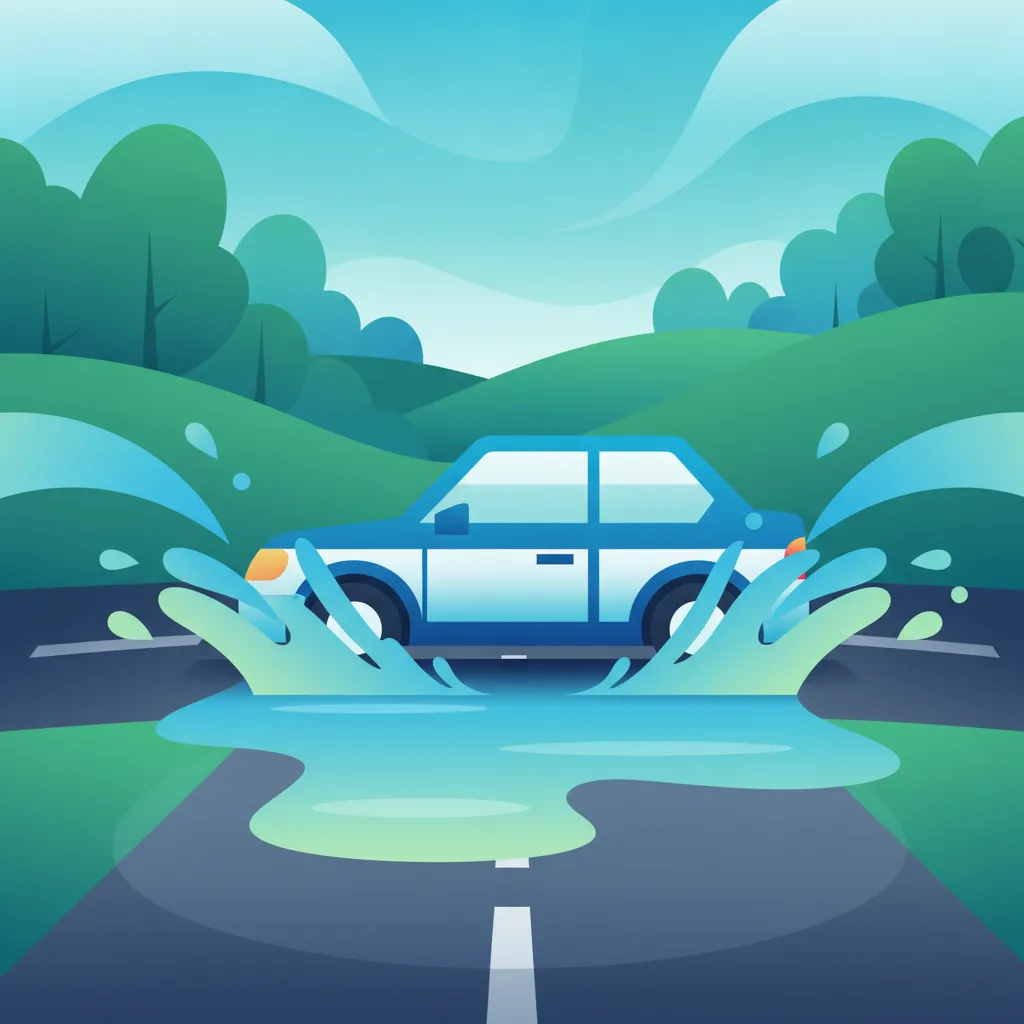
Slippery roads occur when the friction between your vehicle's tires and the road surface significantly decreases. This reduction in traction can be caused by various environmental factors like ice, snow, heavy rain, or loose materials, making it harder to steer, accelerate, or brake effectively. Understanding these conditions and how to react is vital for safe driving and passing your Turkish driving theory test.
Theory topic content overview
Read the full theory topic guide for Slippery Road Safety with structured, easy-to-scan content built for learners in Turkey. This detailed section explains the exact rule, meaning, traffic context, comparison points, and exam logic behind this Turkish driving theory topic so you can study faster, understand the concept more clearly, and avoid common interpretation mistakes on the theory test.
Slippery roads are surfaces where the crucial friction between your vehicle's tyres and the road surface is significantly reduced. This reduction in friction, known as a loss of traction, makes it harder for a driver to maintain control, steer accurately, accelerate effectively, or brake safely. When traction is compromised, your vehicle becomes more prone to skidding – losing grip and sliding uncontrollably.
Understanding the causes and effects of slippery roads is fundamental for safe driving in Türkiye, given the country's varied climate and road conditions. From the heavy rains in coastal areas to the severe ice and snow in Anatolian plateaus, drivers must be prepared to adapt.
Navigating slippery conditions safely is not just a practical skill; it's a critical component of the Turkish driving theory exam (Ehliyet Sınavı). The exam frequently assesses a candidate's understanding of hazard perception, safe driving techniques, and vehicle control in adverse conditions. Misjudging slippery surfaces is a leading cause of accidents, making this topic paramount for both passing your test and ensuring your safety on Türkiye's roads.
Common scenarios in Türkiye where slippery roads pose significant risks include:
When the road becomes slippery, the usual dynamic relationship between your tyres and the asphalt changes dramatically, affecting every aspect of vehicle control:
Understanding what makes a road slippery helps you anticipate hazards:
To safely navigate slippery roads and demonstrate competence in your Ehliyet Sınavı, always remember the mantra: Slow Down, Increase Space, and Be Smooth.
To ensure safety and pass your Ehliyet Sınavı, internalize these three pillars of slippery road driving:
By adopting these habits, you will be well-prepared to handle the diverse and often challenging road conditions across Türkiye, keeping yourself and others safe.
Start with a short, direct summary of Slippery Road Safety before reading the full explanation below.
Slippery roads are surfaces where tire grip is severely reduced due to factors like water, ice, snow, oil, or loose gravel. This loss of traction makes a vehicle prone to skidding, increasing braking distances and making steering difficult. Drivers must reduce speed, increase following distances, and use smooth, gentle inputs for steering, braking, and acceleration to maintain control and prevent accidents in Türkiye.
Review the most important terms, rule signals, and traffic concepts linked to Slippery Road Safety.
Explore related theory topic pages connected to Slippery Road Safety and continue with the next useful rule explanation.
See the common search queries learners use when trying to understand Slippery Road Safety in Turkey.

Dive deeper into specific Turkish driving theory topics like traffic signs, first aid, or vehicle mechanics. Each section offers clear explanations to enhance your understanding of official traffic legislation and prepare you effectively for every aspect of your upcoming ehliyet exam in Türkiye.
Explore Turkish Driving Theory TopicsTheory topic content overview
Start with a short, direct summary of Slippery Road Safety before reading the full explanation below.
Slippery roads are surfaces where tire grip is severely reduced due to factors like water, ice, snow, oil, or loose gravel. This loss of traction makes a vehicle prone to skidding, increasing braking distances and making steering difficult. Drivers must reduce speed, increase following distances, and use smooth, gentle inputs for steering, braking, and acceleration to maintain control and prevent accidents in Türkiye.
Review the most important terms, rule signals, and traffic concepts linked to Slippery Road Safety.
Explore related theory topic pages connected to Slippery Road Safety and continue with the next useful rule explanation.
See the common search queries learners use when trying to understand Slippery Road Safety in Turkey.
Dive deeper into specific Turkish driving theory topics like traffic signs, first aid, or vehicle mechanics. Each section offers clear explanations to enhance your understanding of official traffic legislation and prepare you effectively for every aspect of your upcoming ehliyet exam in Türkiye.
Explore Turkish Driving Theory TopicsUse this exam-focused revision tip to understand how Slippery Road Safety is likely to appear in theory questions for learners in Turkey. This section helps you identify the most testable part of the rule, avoid common traps, and remember the concept more effectively during Turkish driving theory exam preparation.
When approaching slippery conditions in the exam, always think 'smooth and gentle'. Sudden braking, acceleration, or steering are common traps. Remember to also drastically increase your following distance to give yourself more time and space to react to reduced traction.
Read direct answers to the most common learner questions about Slippery Road Safety in Turkey. This FAQ focuses on rule confusion, practical meaning, comparison with similar concepts, and the exact uncertainties that appear most often in Turkish driving theory revision and exam preparation.
Roads become slippery when the friction between your tires and the road surface is significantly reduced. Common causes include water (especially mixed with oil), ice, snow, loose gravel, sand, mud, or even wet fallen leaves.
On slippery roads, your vehicle's ability to accelerate, steer, and brake is severely compromised. Braking distances increase dramatically, turning can cause skidding, and even gentle acceleration can lead to a loss of control.
The biggest risk is losing control of the vehicle, leading to skidding, hydroplaning, or collisions. This is especially dangerous when drivers fail to adjust their speed and driving style to the reduced traction.
If your car skids, remain calm. Do not slam on the brakes or accelerate. Steer gently in the direction you want the front of the car to go. Ease off the accelerator if the rear wheels are skidding. Avoid sudden movements.
Heavy rain, especially after a dry spell, creates a particularly slick surface as oil and dirt mix with water. While not as extreme as ice, it significantly reduces grip and increases the risk of hydroplaning, similar to driving in mud or loose gravel.
The Ehliyet Sınavı tests your knowledge of how to adapt to hazardous conditions. You will be expected to know that you must reduce speed, increase following distance, and use smooth controls to maintain safety on slippery surfaces. Questions often focus on preventing skids and managing braking distances.
In Türkiye, you should use hazard lights (dörtlü flaşörler) to warn other drivers if your vehicle is creating a hazard or is moving significantly slower due to adverse conditions, such as extremely slippery roads. Turn them off once normal driving resumes or if you are moving at a normal speed again.
Hydroplaning occurs when a layer of water builds up between your tires and the road, causing your vehicle to lose contact and traction. To avoid it, reduce speed in heavy rain, ensure your tires have good tread depth, and avoid sudden steering or braking.
Use our comprehensive practice search to find exactly the Turkish driving theory questions you need to master. Whether reviewing specific road signs, traffic rules, or first aid scenarios, select your perfect practice set and boost your confidence for the official ehliyet sınavı.